Common Sweetshrub
Calycanthus floridus
An eastern U.S. suckering shrub with maroon many-tepalled flowers, aromatic foliage and bark, variable fragrance, and poisonous seeds.
Published Last updated
At a glance
- Light
- Full sun to partial shade
- Water
- Moderate
- Soil
- Average to rich, moist, well-drained loam; adaptable to clay
- Hardiness
- Zones 4–9
- Bloom
- Mid-spring to early summer
- Height
- 6–12 ft · 1.8–3.6 m
In this guide
Overview
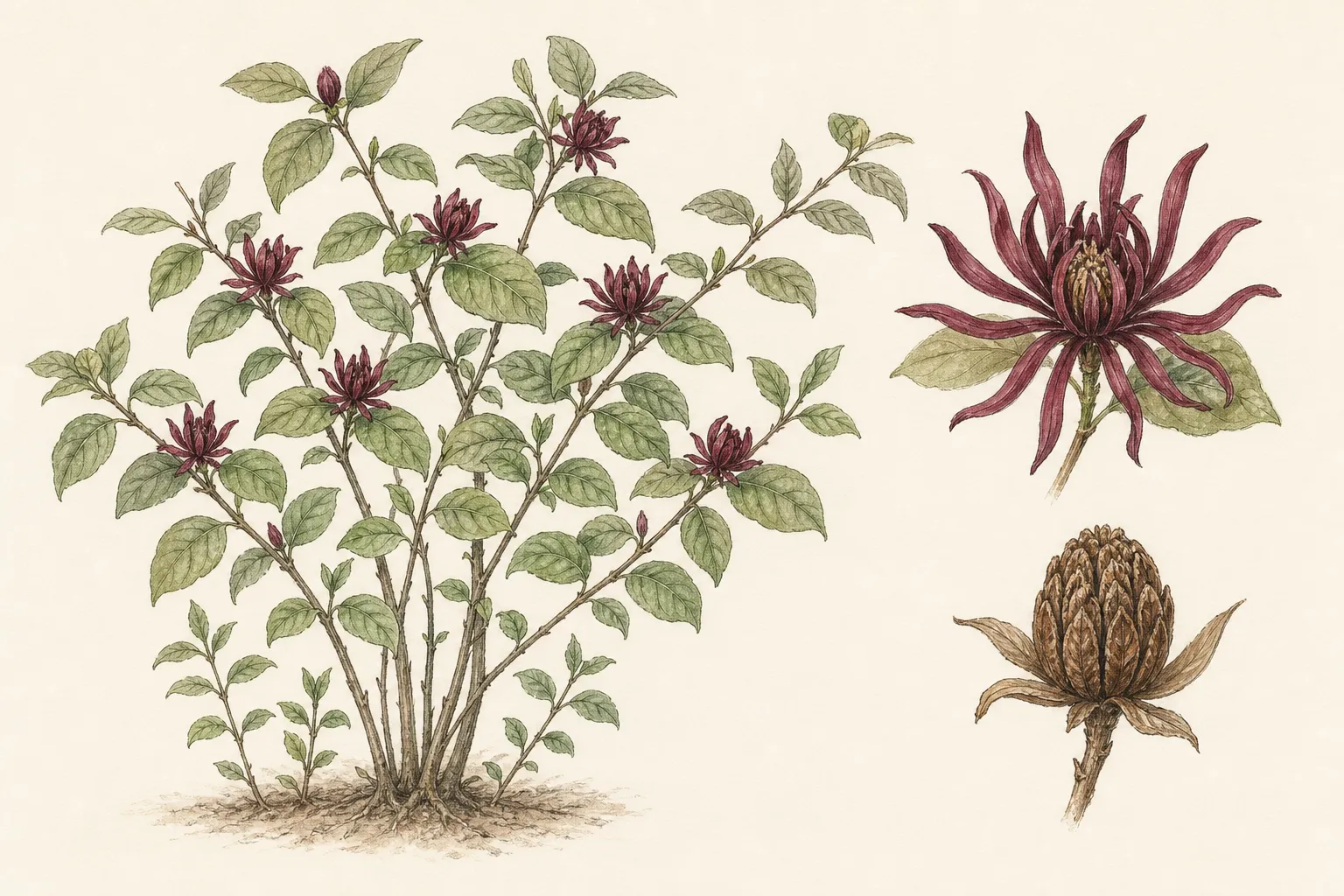
Calycanthus floridus is a dense deciduous shrub with multiple stems and a strong tendency to sucker. Solitary brown-maroon flowers carry many narrow strap-like tepals on short branchlets, and the opposite oval leaves are rough above, paler beneath, and aromatic when bruised. Leathery urn-shaped capsules mature from green to brown and hold the poisonous seeds.
The species usually grows 6–12 ft high and 6–12 ft wide before additional colony spread is counted. It works as an informal screen, woodland-edge shrub, back-of-border mass, or specimen near a route where flowers can be approached. A narrow clipped foundation slot fights both its natural arch and its new shoots from the clump edge.
Fragrance is not uniform: seedlings and cultivars can differ markedly, and warmer weather can intensify scent. Purchase the exact plant while it is flowering if fragrance is the reason for choosing it. Named hybrids sold as sweetshrub may also differ in flower size, color, and parentage, so retain the botanical label.
Full sun to partial shade supports a denser, more floriferous shrub; deeper shade is tolerated but produces a taller, looser plant. Average to rich moist loam is ideal, clay is accepted, and brief flooding can be tolerated, but persistent drought and very sandy soil reduce performance. Treat the broad pH range as adaptability, not a reason to amend without a soil test.
Set the woody root flare at finished grade, correct circling roots, backfill with site soil, and water the root ball and adjacent bed together. Keep mulch away from the basal stems. At planting time, mark the line beyond which suckers will be removed so a desired thicket does not become an accidental one.
The species can flower on both new and old wood, but pruning immediately after the main spring display preserves the most bloom and reveals what to retain. Thin selected old, dead, or crossing stems at their origin and remove unwanted suckers while small. Treat every seed capsule as non-food: the seeds contain calycanthin and related alkaloids.
- Family
- Calycanthaceae
- Range
- Eastern United States, from Pennsylvania through the Southeast
- Soil pH
- 5–8
- Spread
- 6–12 ft · 1.8–3.6 m
Planting & careHow to grow common sweetshrub
The species is generally grown in USDA zones 4–9. Plants become taller and more open in shade, flower fragrance varies among seedlings and cultivars, and suckering width depends on whether new shoots are retained. Confirm the identity of hybrids and named selections because their flowers and mature size can differ from the species.
- 1Verify fragrance in bloom
Smell the exact nursery plant while its flowers are open and confirm the label reads Calycanthus floridus or the intended named selection. Fragrance and flower traits cannot be guaranteed from the common name alone.
- 2Draw the colony boundary
Allow 6–12 ft for both height and initial spread, then decide where suckers may extend. Keep the eventual thicket clear of paths, walls, utilities, and plants that cannot compete.
- 3Choose sun or open shade
Use full sun to partial shade for a dense flowering shrub. In hot regions, afternoon shade can be useful; expect taller, looser growth as shade deepens.
- 4Confirm moisture with drainage
Choose average to rich soil that remains moist but drains after ordinary rain. Avoid a drought-dry sandy pocket and do not create a small amended hole that holds water unlike the surrounding bed.
- 5Plant at the root flare
Expose the first structural roots, set the flare at finished grade, and spread or correct circling roots. Backfill with site soil, water thoroughly, and leave all basal stems clear of mulch.
- 6Keep seeds out of reach
Do not place the shrub where fallen capsules become play objects or livestock browse. Collect accessible mature capsules when exposure risk outweighs their winter interest.
Pruning common sweetshrub
Prune immediately after the main spring bloom. Remove dead or crossing wood, thin selected old stems at ground level, and cut unwanted suckers at their point of origin while they are small. Preserve the informal arching framework and avoid routine shearing; although flowers can occur on both new and old wood, post-bloom work protects the established display. Collect seed-bearing debris because the seeds are poisonous if ingested.
Seasonal care
Spring
Evaluate flower fragrance and distribution before making structural cuts. After the main display, thin selected aging stems and remove new suckers that have crossed the chosen colony line.
Summer
Water new plants and established shrubs during prolonged drought, especially beneath competing trees. Enjoy occasional later flowers without continuing to shear new growth.
Autumn
Watch leathery capsules turn brown and collect those accessible to children, pets, or livestock. Let yellow foliage fall naturally and note new suckers for removal after dormancy if needed.
Winter
Use the leafless outline to check the intended thicket boundary, broken stems, and buried root flare. Remove hazardous breakage, but reserve ordinary shaping for the post-bloom window.
Safety and garden spread
Common problems
Little or unpleasant fragrance
- Look for
- Flowers look normal but have weak scent or a scent different from what the common name suggested.
- Action
- Recognize this as plant-to-plant variation rather than a fertilizer problem. If fragrance is essential, replace only after smelling and identifying the exact candidate in bloom.
Suckers beyond the boundary
- Look for
- New upright shoots appear outside the intended shrub or thicket edge and begin merging with nearby crowns.
- Action
- Trace each young sucker back to its origin and remove it before it becomes woody. Retain suckers only where a deliberate colony is part of the design.
Drought-thinned growth
- Look for
- Leaves wilt or scorch, extension growth shortens, and flowering weakens in dry sandy soil or beneath thirsty established trees.
- Action
- Check moisture at root depth, water during prolonged drought, and restore a shallow mulch layer clear of stems. Move the shrub if chronic competition prevents a moist root zone.
Seed ingestion risk
- Look for
- Broken brown capsules, missing seeds, or chewed plant material where a child, pet, or grazing animal had access.
- Action
- Remove access and contact the appropriate poison-control center or veterinarian promptly. Do not use the Carolina allspice name as evidence that any part is culinary.
Plant details
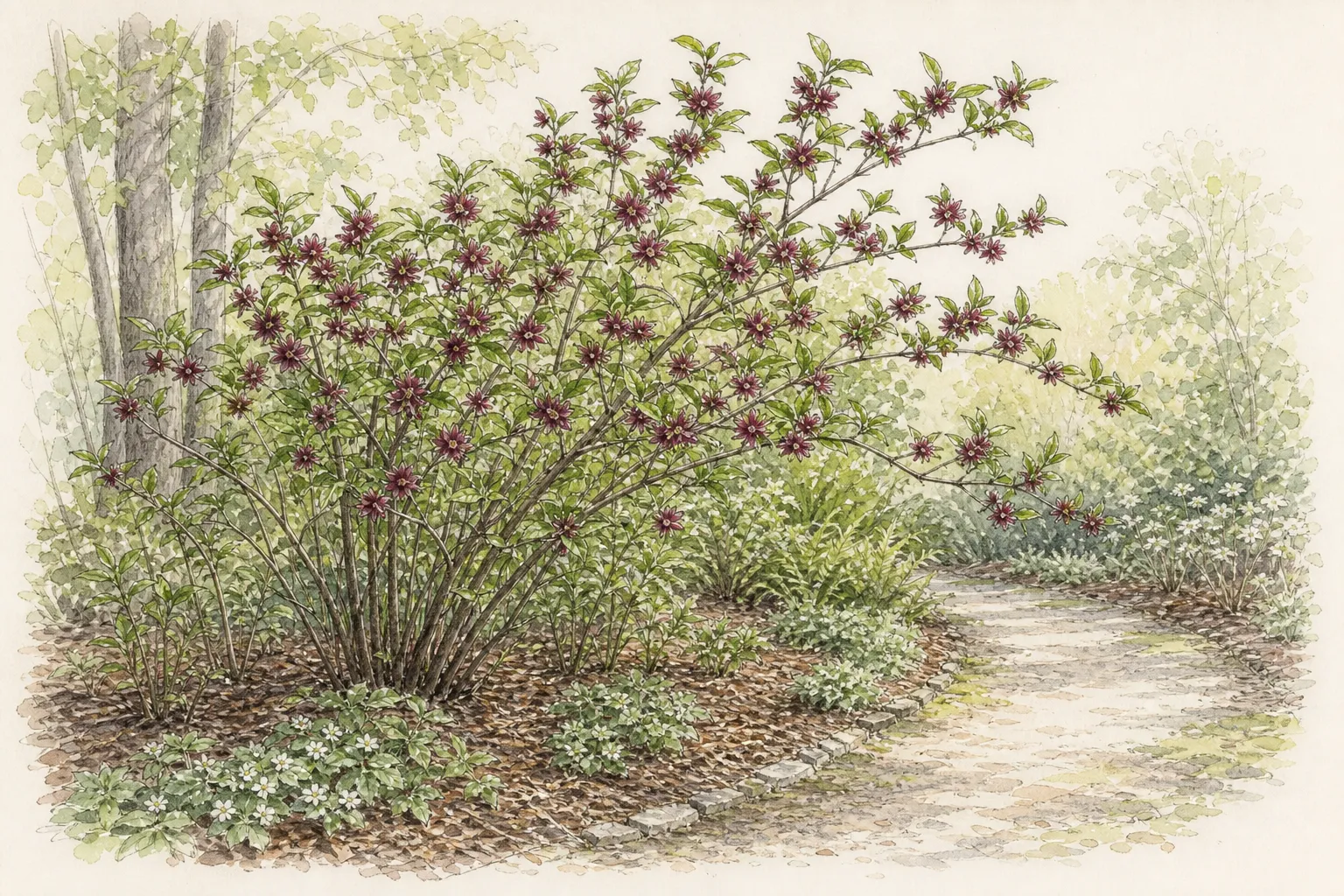
Woodland-edge garden with a broad multistem common sweetshrub beside a path and young suckers at the colony edge
Sources
- Calycanthus floridus. North Carolina State Extension. Source record · Accessed 2026-08-30.
- Sweetshrub. Clemson Cooperative Extension. Source record · Accessed 2026-08-30.
- Calycanthus floridus: Carolina Allspice, Sweetshrub. University of Florida IFAS Extension. Source record · Accessed 2026-08-30.
- Calycanthus floridus L.. Royal Botanic Gardens, Kew. Source record · Accessed 2026-08-30.