Common Lilac
Syringa vulgaris
A substantial guide to identifying, siting, planting, pruning, renewing, and containing Syringa vulgaris, with cultivar and regional flowering limits.
Published Last updated
At a glance
- Light
- Full sun for strongest flowering; light shade only where regional heat makes it useful
- Water
- Moderate through establishment and active growth; established plants tolerate some drought but flower and grow poorly under chronic stress
- Soil
- Moist but well-drained loam or clay, generally neutral to alkaline; avoid persistent saturation and strongly acidic conditions
- Hardiness
- Zones 3–7
- Bloom
- Mid- to late spring after winter chill, with exact timing and reliability varying by cultivar and region
- Height
- 8–16 ft · 2.4–4.9 m
In this guide
Overview
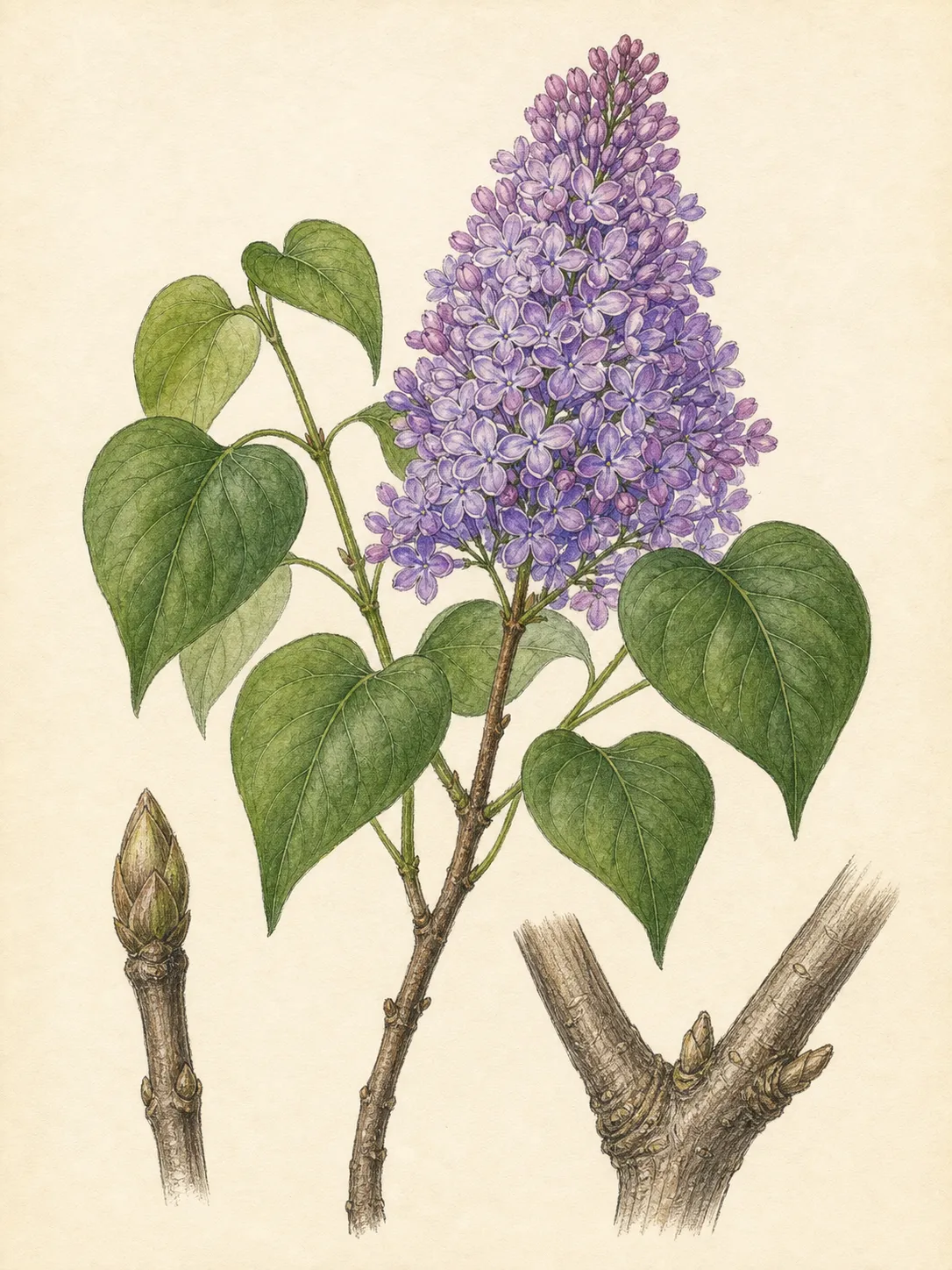
Common lilac is a large, deciduous, multi-stem shrub valued for a concentrated spring display of intensely fragrant flower panicles. Mature plants usually become broader and more irregular than their neat nursery form, with stout older trunks, vigorous basal shoots, and a vase-shaped to rounded outline. It belongs where that natural scale and renewal habit can be accommodated, not beneath a low window or in a narrow foundation strip that demands annual shearing.
Identify the foliage before relying on scent or flower color. Leaves occur in opposite pairs, are usually simple, and have an ovate to heart-shaped outline with a smooth margin and pointed tip. New stems are stout and angled, while older bark becomes gray-brown. Flower clusters are terminal panicles composed of many small tubular flowers whose four lobes spread at the mouth; smooth dry capsules can follow where spent flowers remain.
The accepted species is Syringa vulgaris in the olive family, Oleaceae. Kew records its native range from the northern Balkan Peninsula to north-central Romania and lists it as introduced widely beyond that range. A plant sold simply as lilac may instead be a different Syringa species or a hybrid with another mature size, bloom time, mildew response, suckering habit, or climate range. Preserve the complete botanical and cultivar name.
Cultivar choice is a structural decision. Virginia Cooperative Extension highlights flower color, fragrance, single or double form, disease resistance, tendency to sucker, and size as selection criteria. Named common-lilac cultivars include choices such as 'Ludwig Spaeth', 'Sensation', 'Congo', and 'Agincourt Beauty', but local availability and performance differ. Compare regional trials and botanical references rather than choosing only from a flower photograph.
Winter chill is central to flowering performance. NC State notes that flower buds need an extended cold rest, and Virginia Tech limits common lilac chiefly to Zones 3–7 while warning about hot parts of Zone 7. A plant can survive yet flower sparsely where winters are too warm or summers impose prolonged heat stress. Conversely, a late freeze can injure buds after dormancy has been satisfied. Regional survival and dependable bloom are separate questions.
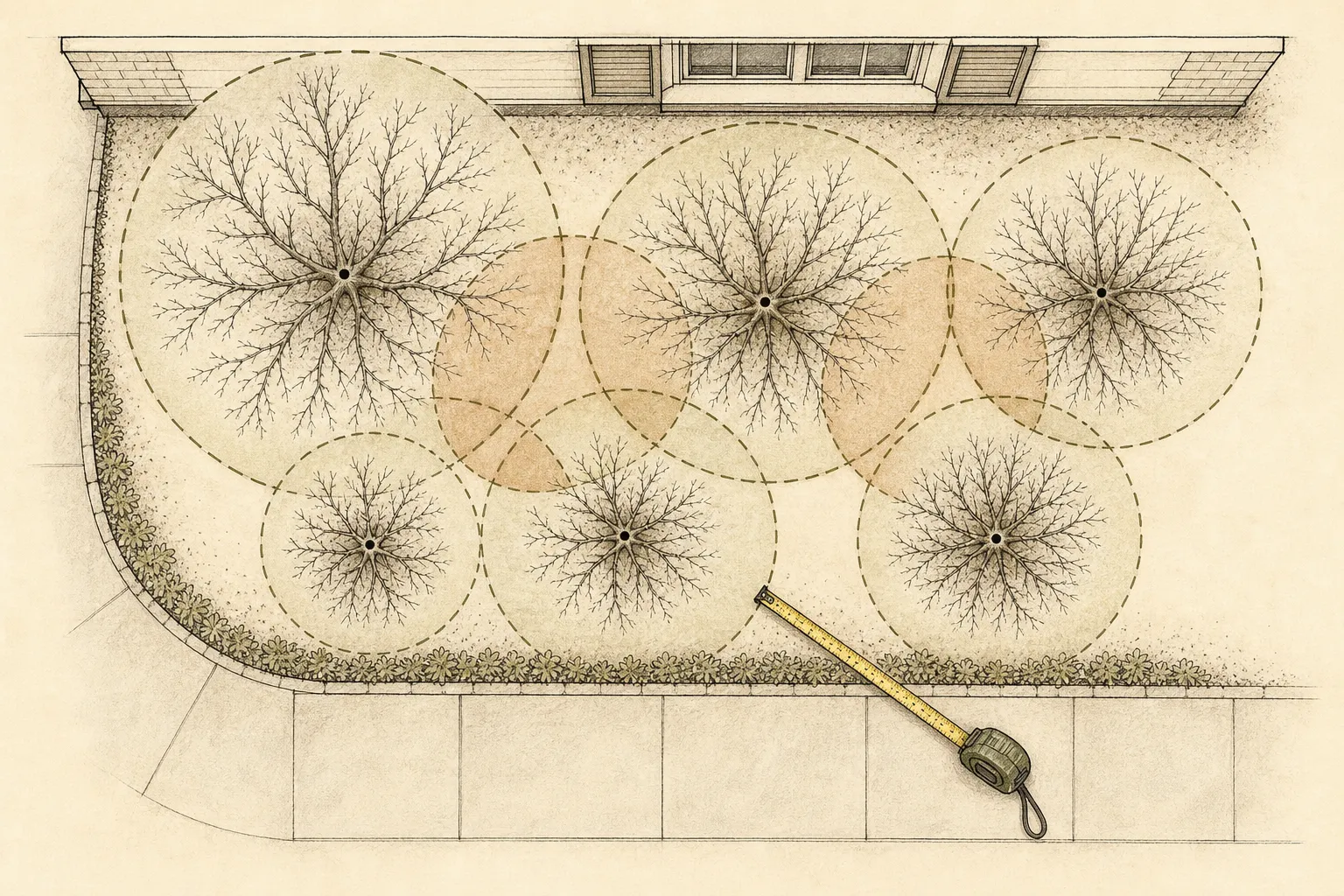
Full sun supports the strongest flowering and a denser framework in most of its suitable climate range. In a hot inland or marginal site, light protection from reflected afternoon heat may help, but shade is not a substitute for adequate winter chill. Avoid a cramped, still pocket against a wall where branches remain crowded and mildew-prone foliage receives poor light. Provide the mature spread and a service route around at least part of the shrub.
Common lilac prefers drainage and generally neutral to alkaline soil. NC State lists good drainage and a broad neutral-to-alkaline reaction and warns against highly acidic or poorly drained conditions. Use a soil test before changing pH; do not add lime by habit. Correct a wet site structurally or choose another shrub rather than raising the crown on a small mound that redirects water elsewhere.
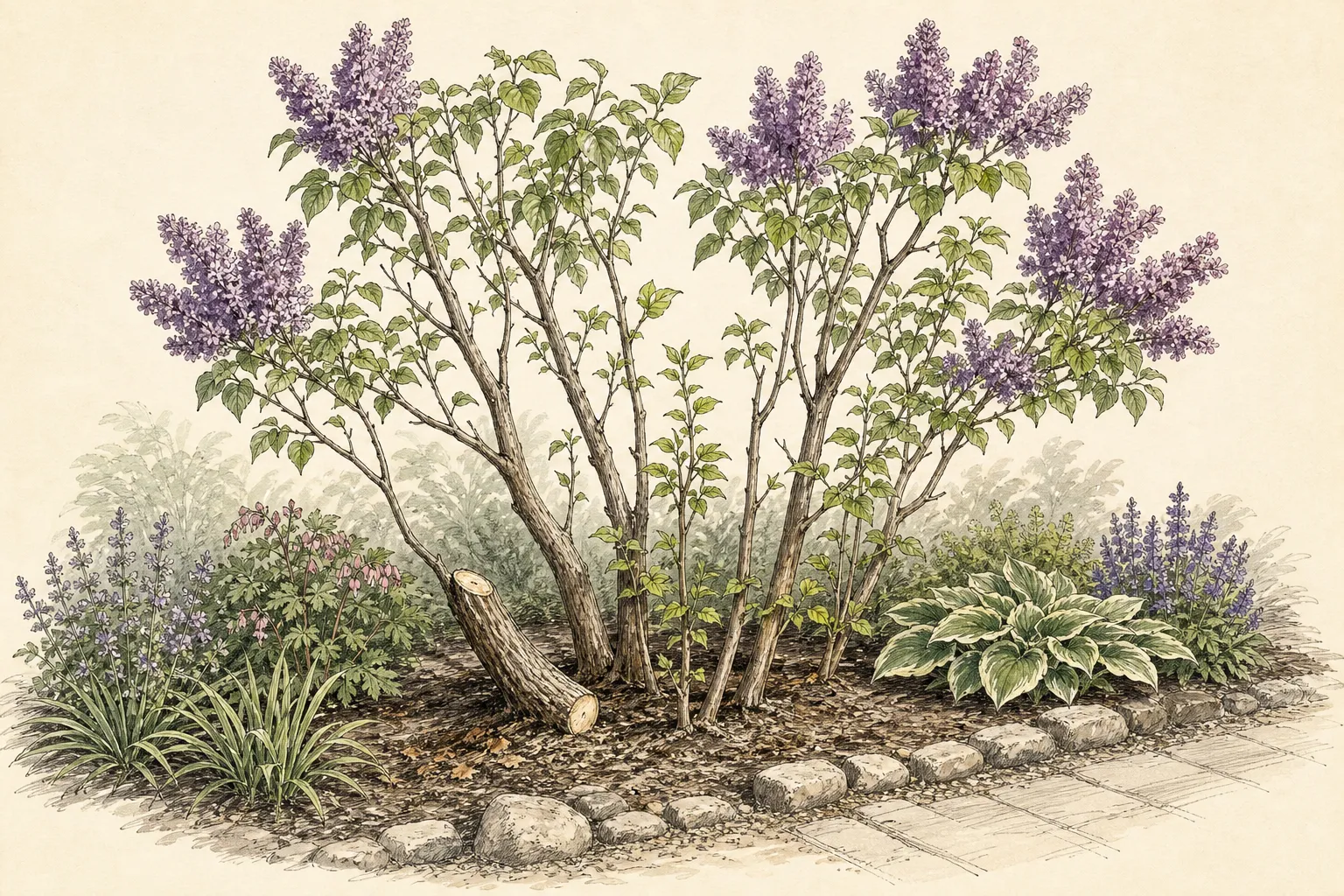
Suckers require identification, not automatic removal. An own-root common lilac can use well-placed basal shoots to renew old trunks and may expand into a colony. A grafted plant can produce shoots from the rootstock below the graft; those will not preserve the scion cultivar and should be removed at their origin. Ask how the plant was propagated, locate any graft union, and label the cultivar before selecting replacement canes.
Flower buds for the next spring develop on wood made during the preceding growing season, so routine shaping belongs immediately after the main bloom. A hard dormant renovation can restore an overgrown framework but sacrifices flowers and creates a flush of shoots that still needs selection. The most durable approach is cultivar fit, generous spacing, and gradual exchange of old trunks rather than repeated topping.
- Family
- Oleaceae
- Range
- Northern Balkan Peninsula to north-central Romania, including native records in Bulgaria, Greece, the northwestern Balkans, and Romania
- Soil pH
- 6–8
- Spread
- 6–12 ft · 1.8–3.7 m
Planting & careHow to grow common lilac
Zones 3–7 are a broad cold-hardiness and performance range, not a promise of bloom in every site. Syringa vulgaris needs a meaningful winter rest; NC State and Virginia Tech both caution that it performs poorly in hot southern conditions, including the hotter portions of Zone 7. Late frost can damage flower buds even after adequate chill. Low-chill selections may extend use but still require local evidence. In regions with humid summers, provide full sun where feasible, good spacing, and cultivar-level powdery-mildew information. The species, common-lilac cultivars, hyacinthiflora hybrids, Meyer lilac, Korean lilac, and Japanese tree lilac are not interchangeable names or plants.
- 1Confirm species, cultivar, and propagation
Record Syringa vulgaris, the full cultivar name, nursery source, expected mature size, flower form and color, fragrance, mildew information, sucker tendency, and whether the plant is own-root or grafted. Reject a generic lilac label when climate fit or future sucker identity cannot be determined.
- 2Test regional bloom suitability
Use local Extension, public-garden, or established-neighborhood evidence to confirm that common lilac receives enough winter chill and tolerates summer heat in the site. In warm Zone 7 or milder regions, do not treat a hardiness-zone label or a low-chill marketing phrase as proof of dependable flowering.
- 3Choose open sun and mature space
Select a position with strong light, useful air movement, and room for the named cultivar's mature width without blocking windows, paths, utilities, or neighboring plants. Keep reflected heat and late-frost pockets in mind. Reserve access for pruning at the base and for removing future suckers.
- 4Verify soil and drainage
Observe the site after rain and use a soil test for pH or nutrient decisions. Common lilac generally suits moist but well-drained neutral-to-alkaline soil and performs poorly in persistent saturation or strongly acidic ground. Correct broad drainage problems before planting rather than amending only the hole.
- 5Set the root flare at finished grade
Dig a broad hole no deeper than needed for the root system, loosen or correct circling container roots according to woody-plant best practice, and set the root flare at the settled soil surface. Keep a visible graft union above soil where present and do not bury lower stem tissue to conceal the transition.
- 6Backfill with the existing soil
Return suitable site soil around the roots, firm gently, and water to remove large air pockets without compacting the bed. Avoid creating a highly amended planting pocket that holds water differently from surrounding ground. Recheck root-flare and graft height after settling.
- 7Mulch without hiding the base
Apply a locally suitable mulch over the root zone while keeping it away from trunks, graft union, and emerging basal shoots. Leave the base visible so the source of suckers and the condition of old stems can be inspected. Do not raise soil or mulch annually around the crown.
- 8Establish an observation record
Water according to root-ball moisture, soil, weather, and plant response through establishment, then reduce only as evidence supports. Photograph the framework, label the cultivar, and map the original crown. Record bloom, heat response, mildew, and sucker origin before making fertilizer or pruning changes.
Pruning common lilac
Prune common lilac as a flowering, renewing multi-stem shrub rather than as a clipped hedge. Remove dead, broken, and clearly crossing wood when identified, then schedule routine thinning and modest shaping immediately after the main spring display. This timing preserves the greatest opportunity for new shoots to mature and form the following year's flower buds. Trace a stem to a branch union or to the base and make a selective thinning cut; do not shorten every branch to one exterior plane. Topping removes flower-bearing wood, stimulates a congested shell of shoots, and does not make an oversized cultivar fit a small site. For an old but vigorous shrub, Virginia Cooperative Extension presents gradual renewal by removing roughly one-third of the largest stems each year as one strategy. Treat that fraction as a ceiling and species-specific framework, not a mandate: retain enough sound, well-spaced flowering wood and young replacement canes for the actual plant. Remove selected old trunks near the base without leaving tall stubs, protect vigorous replacements, and reassess before taking more. Complete hard renovation is possible on a suitable vigorous common lilac, but it removes most or all display for a period and produces many shoots that require later selection; use it only when identity, health, ownership, and recovery space are clear. Distinguish suckers before cutting. On an own-root plant, retain a few well-placed basal shoots when they are needed to replace aging trunks and remove surplus shoots that extend beyond the planned colony. On a grafted plant, remove rootstock growth arising below the graft at its origin because it will not be the named scion cultivar. Deadheading is optional for appearance and seed control and does not replace structural pruning. Stop when the framework has balanced young and old wood, an open serviceable base, and its natural outline.
Seasonal care
Spring
Watch swelling buds for late-freeze exposure without assuming damage before growth resumes. Enjoy and record bloom timing, fragrance, panicle size, and branch distribution by cultivar. After the principal display, deadhead only where desired, remove dead or crossing wood, thin selected old trunks, and shape minimally. Mark basal shoots as scion, own-root replacement, or uncertain before cutting. Water newly planted shrubs from root-zone evidence and keep mulch off the base.
Summer
Protect the new shoots that can carry next year's flower buds. Avoid repeated tip clipping after the post-bloom window. Monitor soil moisture during establishment and meaningful drought, especially in heat-marginal regions, while avoiding persistent wetness. Note white powdery coating, leaf spotting, scorch, and premature defoliation with photographs and site conditions. Improve spacing and irrigation practice before assuming fertilizer is needed, and keep graft-rootstock suckers from becoming established.
Autumn
Review the mature outline and plan any necessary dormant safety work separately from flower-preserving pruning. Plant in the locally suitable window while soil can settle and roots can establish, maintaining root-flare and graft visibility. Clear diseased fallen foliage according to local diagnostic guidance, update the cultivar and sucker map, and avoid late fertilization that pushes soft growth. Preserve working drainage and do not mound winter mulch against trunks.
Winter
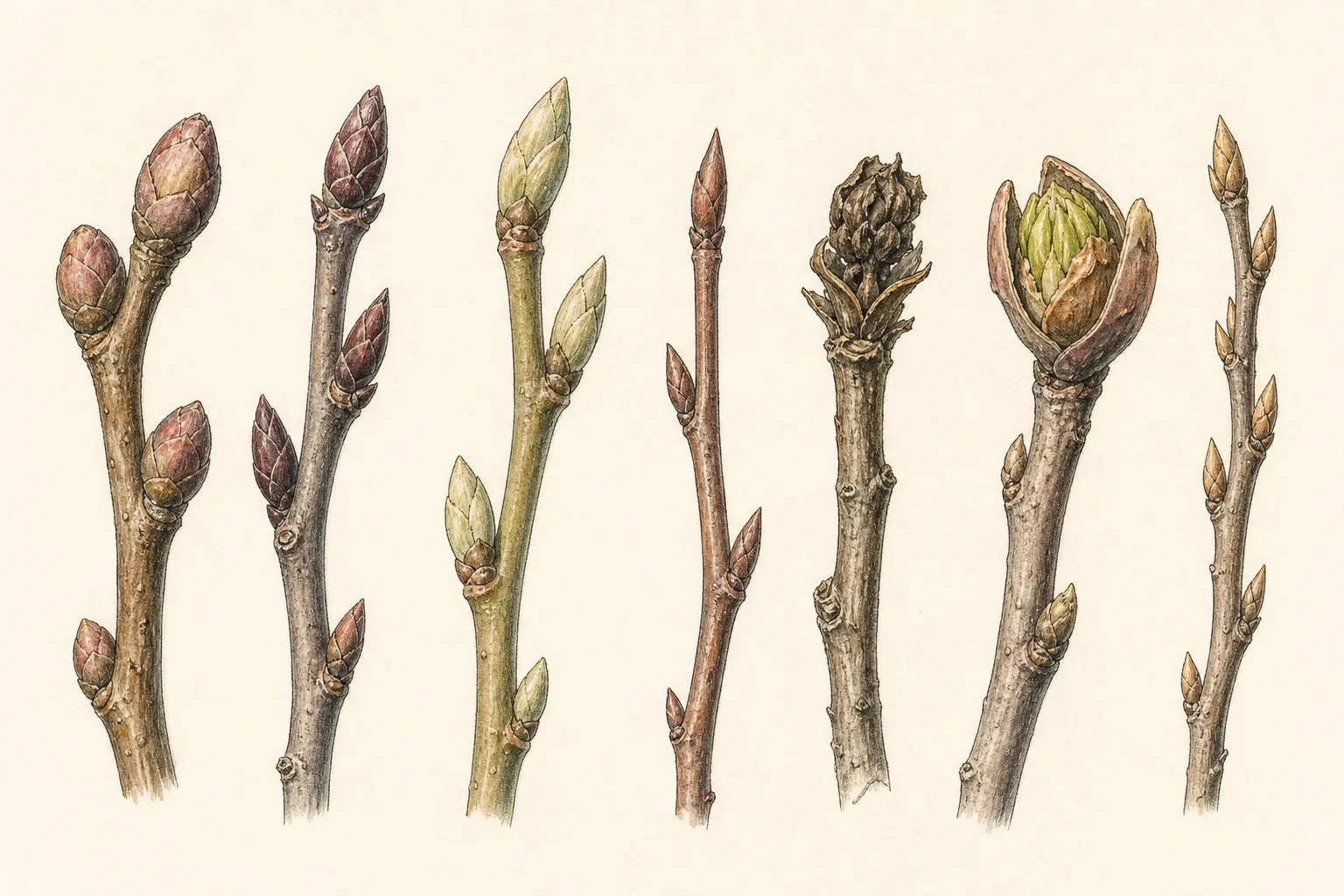
Read the leafless framework: identify dead, damaged, rubbing, and oldest trunks, but remember that elective cuts now remove spring flowers. Reserve dormant pruning for safety, severe renovation, or work whose bloom cost is accepted. Check for snow or ice damage, saturated soil, animal rubbing, and hidden graft unions. In marginal warm climates, use the season to compare local bloom records rather than assuming survival alone confirms adequate chill.
Safety and garden spread
Common problems
Few or no flowers
- Look for
- A warm-winter site, deep shade, vigorous post-bloom or late-season pruning, recent hard renovation, late-freeze injury, excess young growth, or a mislabeled cultivar with different climate needs.
- Action
- Recover the cultivar and pruning record, compare local winter and freeze conditions, and inspect light before adding fertilizer. Preserve new summer wood, move only if the site is fundamentally unsuitable, and replace common lilac with a regionally adapted Syringa or another shrub where winter chill is inadequate.
Powdery mildew
- Look for
- A white powdery coating on leaves, often more conspicuous later in the season on susceptible common-lilac cultivars in crowded or humid positions.
- Action
- Confirm the diagnosis, improve light and air movement through selective post-bloom thinning, avoid unnecessary foliage wetting, and clear affected debris as locally advised. When replacement is warranted, use regional evidence for a less susceptible named cultivar or another lilac species.
Excess suckering or unwanted colony spread
- Look for
- Numerous shoots arising beyond the intended base, possibly with leaf or flower traits that differ from the labeled scion on a grafted plant.
- Action
- Determine whether the plant is own-root or grafted and trace shoots to their origin. Retain only well-placed own-root replacements needed for renewal; remove surplus or rootstock suckers at origin. Do not use repeated topping, which can increase congested regrowth without resolving colony boundaries.
Leggy, flower-poor old framework
- Look for
- Tall bare lower trunks, flowers concentrated beyond reach, crowded old stems, and few vigorous young canes inside the planned footprint.
- Action
- Begin gradual renewal after bloom by removing selected unproductive old trunks near the base while protecting sound replacements. Continue over multiple cycles according to vigor. Use hard renovation only with an accepted loss of bloom and a plan to thin the resulting shoot flush.
Leaf scorch or heat decline
- Look for
- Brown margins, premature leaf drop, weak growth, or sparse flowering in reflected heat or the hotter part of the species range, without evidence of saturated roots.
- Action
- Check root-zone moisture, soil drainage, reflected heat, and cultivar history. Provide appropriate establishment water and reduce avoidable heat load, but do not maintain a chronically unsuitable common lilac through constant irrigation. Replace with a locally proven heat-adapted shrub when regional performance remains poor.
Root decline in wet or acidic soil
- Look for
- Weak growth or wilt associated with persistent saturation, buried base, poor drainage, or a soil test showing a strongly acidic condition outside the retained profile range.
- Action
- Expose the root flare carefully, stop automatic excess irrigation, and obtain a local diagnosis. Correct site drainage broadly and use a soil test before any pH amendment. Move or replace the shrub if the site cannot provide a draining, compatible root zone.
Shoot or flower blight symptoms
- Look for
- Sudden blackening, water-soaked lesions, dieback, or distorted flower and shoot tissue that differs from uniform frost injury or dry marginal scorch.
- Action
- Photograph the sequence, avoid working while foliage is wet, and seek an Extension or plant-diagnostic identification before pruning broadly or treating. Remove confirmed affected material with clean tools and follow diagnosis-specific sanitation and disposal guidance.
Related reading

Sources
- Syringa vulgaris. NC State Extension Gardener Plant Toolbox. Source record · Accessed 2026-08-30.
- Lilacs. Virginia Cooperative Extension. Source record · Accessed 2026-08-30.
- Syringa vulgaris L.. Royal Botanic Gardens, Kew, Plants of the World Online. Source record · Accessed 2026-08-30.
- Plant Poisoning Prevention Guide. Utah Poison Control Center. Source record · Accessed 2026-08-30.