Grow · dormant bud pruning decision
Read Dormant Buds Before Pruning an Ornamental Shrub
Use bud shape, twig condition, flowering wood, weather, and plant identity to decide what can be cut before growth resumes.
Published Last updated
In this guide
- Name the plant before interpreting its buds
- Wait for workable weather and safe footing
- Compare buds across the whole shrub
- Test uncertain wood conservatively
- Map flowering wood before reducing size
- Make the smallest cut that serves the objective
- Record the result through bloom and leaf-out
- Make one sample cut and leave evidence
- Steps
Name the plant before interpreting its buds
A dormant twig is not a generic pruning diagram. Bud arrangement, size, scales, hair, color, and position vary among genera, species, cultivars, and flower types. Begin with the nursery label, a garden record, and the shrub’s summer photographs. If identity is uncertain, postpone size-control pruning until leaves or flowers provide stronger evidence. Dead, broken, or hazardous wood can still be addressed with appropriate care.
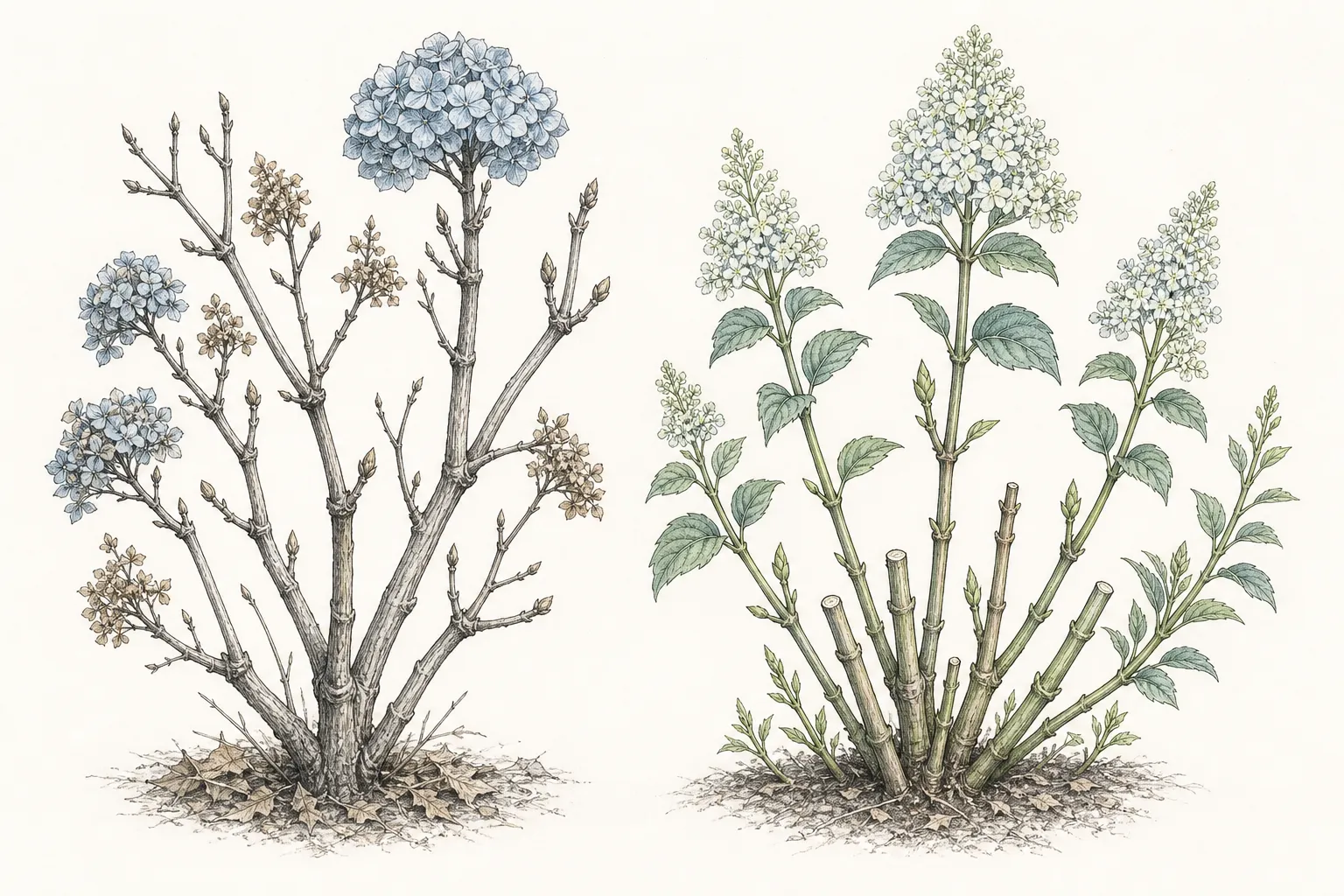
Confirm whether the plant flowers on shoots made the previous season, on new growth produced after pruning, or on a mixture of wood ages. Colorado State and Maryland Extension guidance groups pruning time around flowering habit because a sound cut made in the wrong season can remove the coming display. Old-wood spring shrubs often carry visible flower buds through winter; many summer-flowering shrubs can be shaped before new growth begins.
Named hydrangeas, clematis, roses, and reblooming cultivars can complicate broad rules. Use the exact cultivar guidance where available. A plant sold under a marketing series may include selections with different parentage or pruning response. Do not infer flowering wood from flower color or from the treatment of a neighboring shrub that merely looks similar while leafless.
Set the pruning objective in one sentence: remove a dead branch, correct a crossing stem, reduce one limb to a lateral, renew selected old canes, or leave the plant intact for bloom. “Tidy it” is not specific enough. Bud reading supports a defined cut; it should not become a reason to shorten every twig to the nearest visible pair.
Wait for workable weather and safe footing
Dormant pruning is often scheduled in late winter, but the calendar is subordinate to conditions. Avoid climbing, overhead work, frozen tools, ice, strong wind, and branches loaded with snow. Do not walk or place ladders on saturated beds where weight compacts soil and damages crowns. Large limbs, storm damage, utility conflicts, and uncertain structural defects belong with a qualified arborist.
Warm winter spells can advance buds. University of Minnesota Extension advises delaying pruning when a plant has visibly broken dormancy during unusually warm conditions. Swollen or opening tissue is more vulnerable to a following freeze, and a shrub already reallocating resources may respond differently from a fully dormant plant. Record the stage rather than assuming February always means the same physiology.
Choose a dry interval when disease-specific guidance recommends it, and clean tools before work. Routine disinfection between every healthy cut is not universally required, but confirmed or suspected disease can change the protocol. Follow the current diagnosis and disinfectant label. Never mix cleaning chemicals, and avoid corrosive products on cutting edges unless the cited method and aftercare account for them. Inspect the work zone from all sides. Move pots and decorations, protect nearby emerging bulbs, and identify stems that might spring when released. Wear eye protection and gloves suited to the plant. Toxic sap, thorns, and skin sensitivity require species-specific precautions. A clear route for carrying prunings prevents trampling the very buds and crowns the winter inspection is meant to protect.
Compare buds across the whole shrub
Select several vigorous twigs from upper, lower, sunny, and shaded parts of the crown. Look at paired versus alternate arrangement, terminal versus lateral position, relative plumpness, scale condition, and attachment to sound bark. Flower buds are often larger or rounder than leaf buds on a particular plant, yet that distinction must be learned within the same taxon rather than applied as a universal shape rule.
Trace each sample twig backward. A terminal cluster may sit on last season’s extension growth; short side spurs may carry many flower buds; old gray wood may support new reddish twigs. Follow the branch to its origin and note where previous cuts produced crowded shoots. This history shows what the shrub did after earlier pruning and which wood ages now carry the ornamental display.
Healthy dormant buds should be firmly attached and consistent with nearby buds at the same stage. Shriveled, hollow, loose, blackened, or abnormally sunken buds deserve closer inspection, but one damaged bud does not condemn the branch. Compare the pattern. Injury confined to exposed tips after a freeze suggests a different response from progressive discoloration moving down one side of a stem.
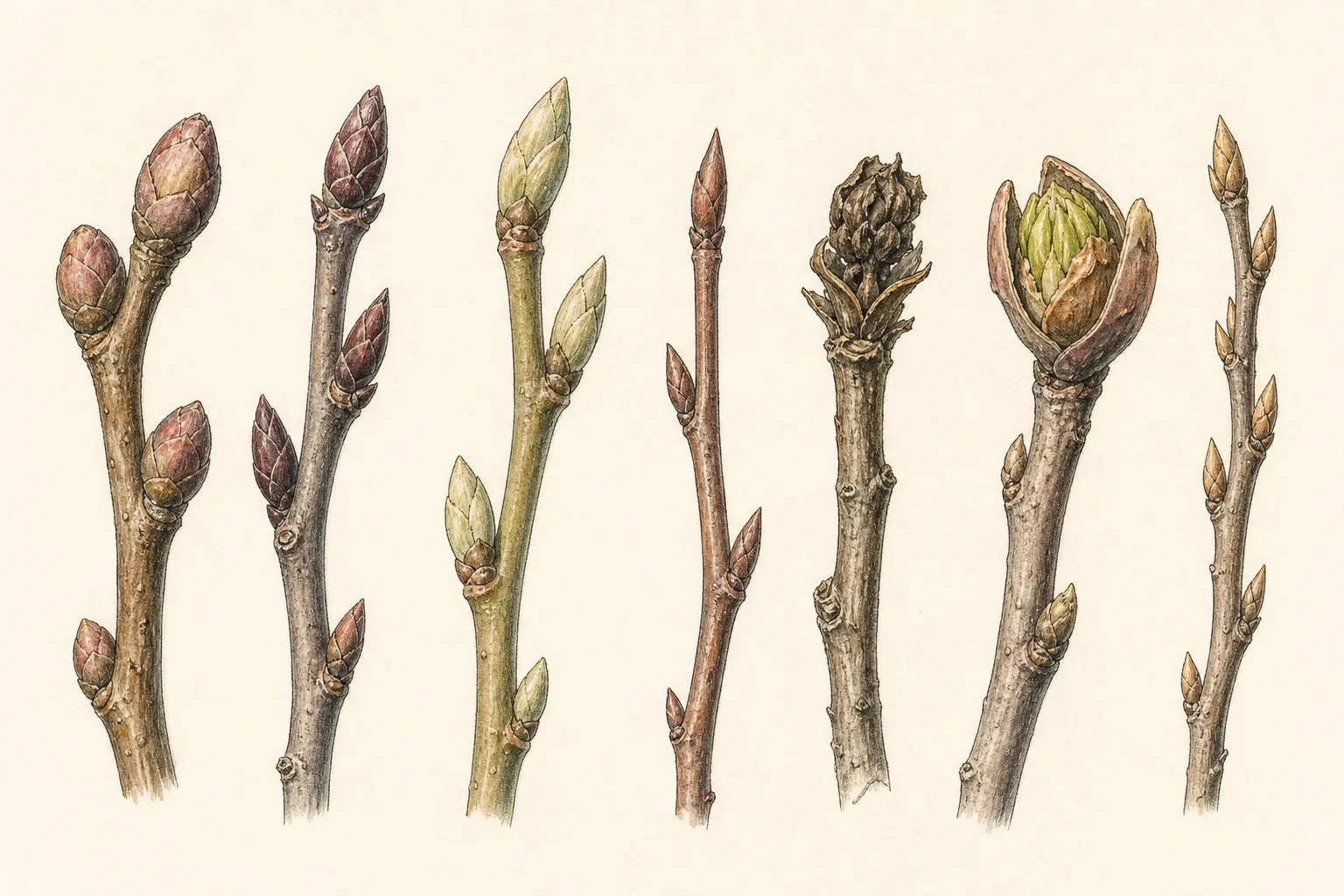
Photograph a representative live twig and an uncertain twig against a plain background. Include a ruler and the entire branch connection. Images help when consulting Extension or a diagnostic service and become a useful reference after leaf-out. Avoid peeling many buds open for curiosity; destructive checks should be few, clean, and taken from tissue that a planned cut will remove.
Test uncertain wood conservatively
Start at a suspect twig tip and bend it gently. Live young wood is often flexible, while dead tissue may snap dryly, but species differ and cold wood can be brittle. Use this as one clue. Examine bud attachment and bark continuity, then make a tiny test cut on a section already scheduled for removal rather than scratching conspicuous main stems across the shrub.
A shallow cut through a doubtful bud or twig may reveal green or pale moist tissue in living parts and brown dry tissue in dead parts. Color alone can be misleading in naturally dark pith or pigmented bark. Compare the test with a known live sample from the same plant. Sterilize or clean the blade as required by the diagnosed risk before moving to another shrub.
Trace dead tissue toward the base in small increments. Stop when sound wood and a viable lateral branch or bud are clear. Do not leave a long dead stub, and do not cut flush into the branch collar. If discoloration continues into a large limb, canker margins are present, or the branch contributes to structural support, seek qualified diagnosis before extending the wound.
Delay cosmetic removal when the boundary is unclear. Many shrubs reveal winter injury only as unaffected buds open. Mark the uncertain stem with a loose temporary tie that cannot girdle it, photograph the position, and return at leaf-out. Waiting preserves live flower buds and prevents a small question from becoming a large unnecessary cut.
Map flowering wood before reducing size
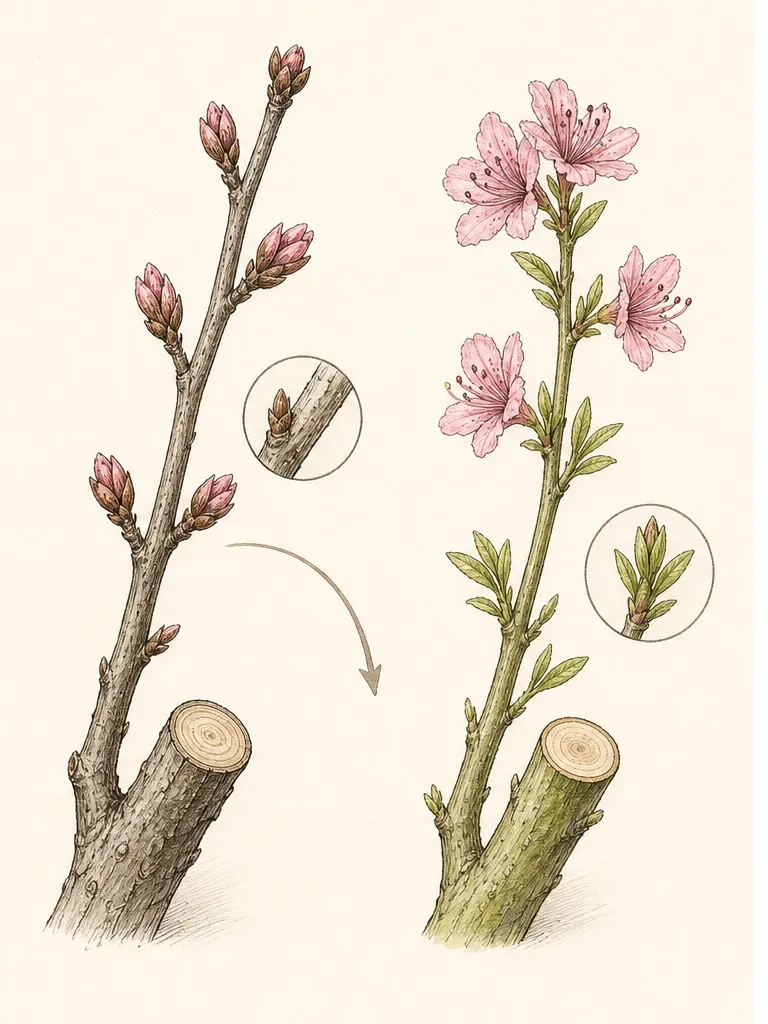
On an old-wood spring-flowering shrub, outline the budded framework in your mind before cutting. Lilac, forsythia, many viburnums, and numerous other shrubs commonly carry the next display on growth made earlier, though exact treatment varies. Remove a budded terminal now and its flowers cannot reappear that spring. Post-bloom selective thinning usually protects more of the show.
On a new-wood summer-flowering shrub, dormant pruning may be appropriate, but intensity still changes plant form. Heading every stem to one height creates a dense shell of shoots. Selective thinning removes some stems at their origin; reduction cuts shorten a branch to a suitable lateral; cane renewal removes a limited number of older stems. Choose the cut that matches the plant’s natural habit and the stated objective.
A mixed or reblooming shrub deserves a conservative strategy. Preserve a substantial framework, remove only confirmed dead or conflicting wood, and observe where the first and later flowers appear. Garden records can then support future pruning. A more aggressive one-season experiment may produce a clean-looking shrub and erase the evidence needed to understand its flowering cycle.
Size pressure often begins with poor placement. If mature branches block a window, gate, meter, or path every year, pruning is managing a design error. Reduce immediate conflict with sound cuts, then plan relocation or replacement at the correct season. Repeatedly forcing a broad shrub into a narrow slot weakens branch architecture and turns flower-bud decisions into permanent maintenance.
Make the smallest cut that serves the objective
For a small live stem, use a sharp bypass pruner sized for the branch. Place the cutting blade toward the retained tissue and support the branch so bark does not tear. A heading or reduction cut near a bud should leave a short protective margin without a long stub. The exact angle matters less than preserving the bud, clean tissue, and a sensible future direction.
A thinning cut removes a branch at its point of origin while retaining the branch collar. Do not cut flush with the trunk or parent stem, and do not leave a peg. For heavier branches, use a pruning saw and a staged cut that prevents bark stripping. Work from stable ground; pole tools and overhead limbs introduce hazards that can exceed ordinary home pruning.
Step back after every important cut. The open winter crown can make removal feel modest until branches are on the ground. Recheck balance, remaining flower buds, crossing relationships, and the original objective. Stop when the problem is solved. A shrub does not need symmetrical twig counts, and small asymmetry often belongs to its natural habit.
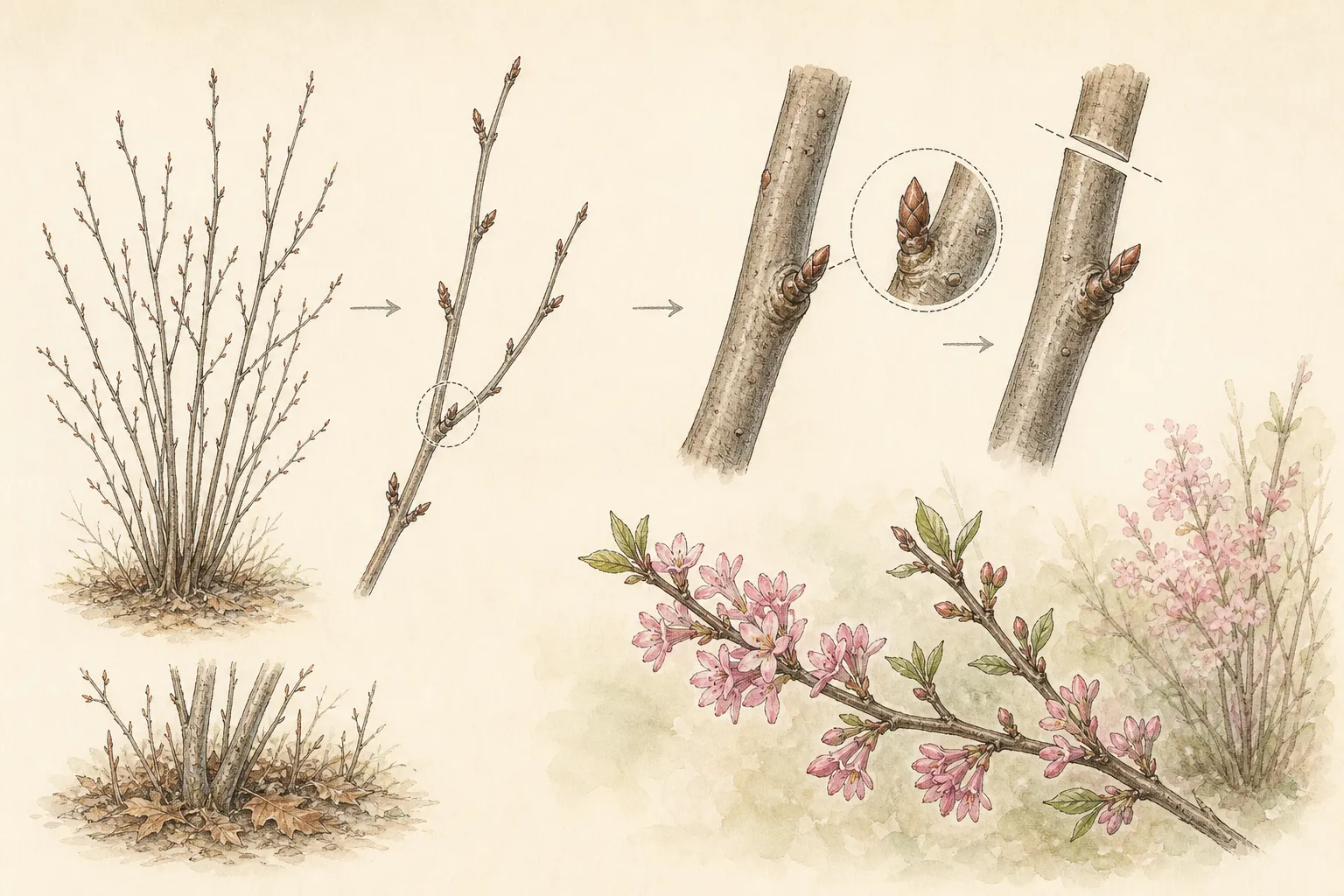
Keep wound paint, sealant, and improvised dressings off ordinary pruning cuts unless current plant-specific guidance directs otherwise. Clean cuts and appropriate timing support the plant’s own compartmentalization. Do not fertilize reflexively after pruning. Water, mulch position, root health, and site fit usually matter more than forcing a flush of soft shoots.
Record the result through bloom and leaf-out
Photograph the shrub from fixed viewpoints immediately after pruning. Mark which stems were removed and why. When flowers open, compare the retained budded wood with untouched reference branches. At leaf-out, inspect uncertain tips, the direction of new shoots below cuts, and any stubs or tears that need correction. This closes the decision loop rather than treating pruning as a one-day cleanup.
A flush of upright shoots below heading cuts shows how strongly the plant responded. Excessive regrowth may indicate that too many tips were shortened, that cuts were poorly placed, or that the plant is inherently vigorous in that site. Thin only where needed and avoid repeating the same blanket treatment. Use the response to choose fewer, more structural cuts next year.
Sparse bloom after winter pruning is evidence, not proof of one cause. Review how much old wood was removed, the previous summer’s drought, winter minimum temperatures, cultivar identity, and light. Flower buds can be lost to cold or formed poorly before pruning begins. The record prevents every disappointing spring from being blamed on soil fertility.
Update the plant label or garden map with flowering wood, local bloom date, and preferred pruning window. The next winter inspection becomes faster because the shrub’s identity and behavior are known. Bud reading then serves its proper purpose: protecting live ornamental value while allowing precise correction, rather than turning dormancy into permission for indiscriminate cutting.
Make one sample cut and leave evidence
When identity, bud position, and weather all support pruning, begin with one low-consequence branch rather than moving immediately across the crown. Photograph its attachment and buds, choose a cut that solves a named problem, and inspect the exposed wood. Fresh green or pale tissue beneath the bark supports viability; dry brown tissue may indicate dieback, but color varies among species and should be compared with known live twigs on the same plant. Stop if the cut reveals staining, cavities, or an uncertain canker margin.
Keep removed branches beside the shrub until the first decisions are checked. Lay them in order and compare flower buds, leaf buds, internode length, and old pruning scars. This small field collection exposes accidental removal of the strongest flowering shoots before the error is repeated. It also distinguishes a naturally sparse section from a pruning-created hole. If the branch architecture no longer makes sense from ground level, step back and reassess the objective rather than making extra cuts to force symmetry.
Record the date, plant identity, weather, objective, and approximate amount removed. Revisit at leaf-out and bloom. A sample cut that produces healthy extension and preserves the intended flowers can inform later work; a cut followed by dieback or a missed bloom reveals that timing, identification, or technique needs correction. The record converts dormant pruning from an annual habit into an evidence-based decision and protects neighboring shrubs from receiving the same treatment merely because the tools are already outside.
Steps
- Level
- moderate
- Time
- 30–75 minutes for a medium shrub after identification
- Tools
- Sharp bypass hand pruners, Pruning saw for branches beyond pruner capacity, Eye protection, Gloves suited to the plant, Camera and temporary loose markers
- Materials
- Plant label or garden record, Current species or cultivar pruning guidance, Approved cleaning or disinfecting supplies when diagnosis requires them
- 1Confirm identity and flowering wood
Match the shrub to its botanical or cultivar record and determine whether the coming flowers sit on old wood, new wood, or both. If identity remains uncertain, confine work to clearly dead, broken, hazardous, or rubbing branches and wait for leaves or flowers before controlling size.
- 2State one pruning objective
Write the reason for the work in concrete terms. Removing one dead branch, opening a crossing pair, renewing two old canes, or reducing one path-side limb each calls for a different cut. A vague desire for tidiness encourages unnecessary shortening across the crown.
- 3Sample buds from several exposures
Compare vigorous twigs from sun, shade, top, and lower crown. Record arrangement, shape, firmness, scales, and position on the branch. Identify a known live reference before cutting open one doubtful bud or twig from material already intended for removal.
- 4Trace the live boundary
Move from a dead tip toward the base in small steps, comparing tissue with the live reference. Stop at a sound bud, suitable lateral, or branch origin. Escalate extensive discoloration, cankered main limbs, or structural uncertainty to a diagnostic service or qualified arborist.
- 5Cut to the retained structure
Use a tool sized for the branch, preserve the branch collar, protect nearby buds, and prevent bark tearing on heavier wood. Step back after each major removal. Stop once the original conflict is resolved and enough flowering framework remains for the plant’s natural habit.
- 6Review at bloom and leaf-out
Photograph the finished crown and return when buds open. Note retained flowers, missed dead tips, and shoot response below cuts. Add the local flowering wood and pruning window to the garden record so the next dormant inspection begins with evidence rather than a generic calendar rule.
- 7Review the result at leaf-out and bloom
Photograph the sample branch when leaves expand and when the shrub reaches its expected flowering period. Compare dieback, shoot direction, flower retention, and the balance of the crown with the pre-cut record. Use that evidence to refine next season’s timing and cut choice. Do not generalize the result to another species or an unidentified neighboring shrub.
Plants in this guide
Related reading
Sources
- How Does a Warm Winter Affect My Plants?. University of Minnesota Extension. Source record · Accessed 2026-08-19.
- Pruning Shrubs and Hedges in the Home Garden. University of Maryland Extension. Source record · Accessed 2026-08-19.
- Pruning Flowering Shrubs. Colorado State University Extension. Source record · Accessed 2026-08-19.