Fountain Grass
Cenchrus alopecuroides
A practical species profile of Cenchrus alopecuroides (syn. Pennisetum alopecuroides), with identification, placement and seasonal care.
Published Last updated
At a glance
- Light
- Full sun
- Water
- Moderate while establishing; some drought tolerance
- Soil
- Average, well-drained soil
- Hardiness
- Zones 5–9
- Bloom
- Late summer to autumn
- Height
- 1–4 ft, depending on cultivar · 30–120 cm, depending on cultivar
In this guide
Overview
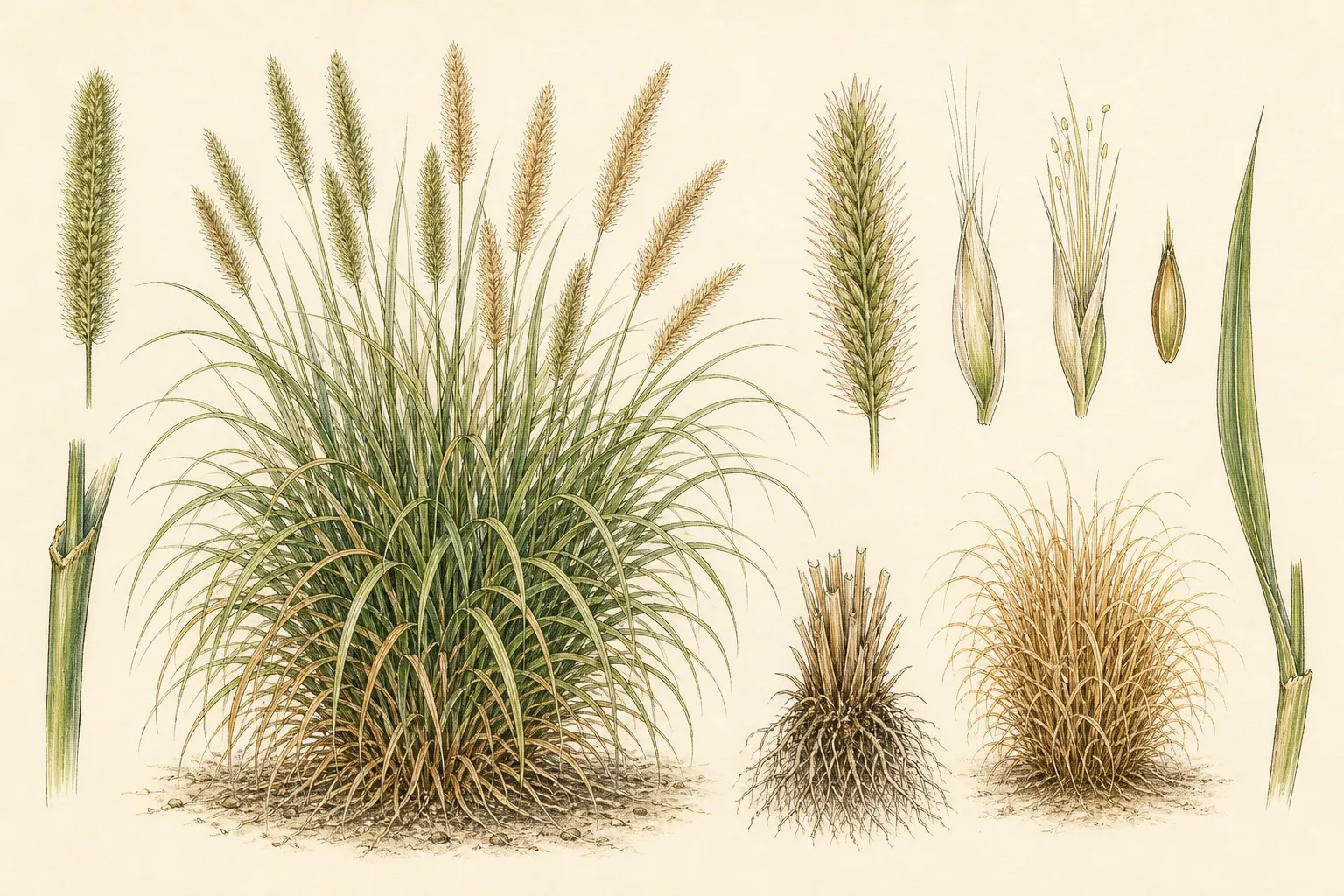
Fountain grass is a warm-season, clump-forming perennial grass. Fine green leaves rise upright and then arch outward, creating the fountain outline behind the common name. Fuzzy bottlebrush flower spikes appear above the foliage in late summer, then the leaves turn orange-bronze and fade to beige. Some references now place the species in Cenchrus, so nursery labels may use Cenchrus alopecuroides or Pennisetum alopecuroides.
Cultivar identity determines scale and behavior. Wisconsin Extension records forms from roughly 12 to 48 inches tall, with dwarf selections such as 'Little Bunny' and larger forms with later, darker flower spikes. Reserve room for the mature arch of the named selection; a plant set too close to a path will be brushed or cut back long before its natural outline develops.
Full sun produces the strongest clump and flowering. Part shade is tolerated, but flowering may be sparse, and a very short growing season can also prevent the late-summer display. Place the backlit seed heads where they can be seen without relying on them for the whole winter: the inflorescences begin to break apart after hard freezes even though the straw-colored leaves may remain upright.
Most ordinary soils are suitable if excess water can leave the crown. Established plants tolerate fairly dry ground, yet leaf tips can brown during drought. Persistent wetness is the more serious placement error: the source guidance warns of crown decline in poorly drained soil and advises keeping the crown above ground level, especially in moist sites.
This is a deciduous grass, not an evergreen shrub. Its old leaves and seed heads can stand through winter, then the entire dry clump is cut before warm-season shoots emerge. An aging clump that dies in the center has outgrown simple trimming and is ready for spring division and replanting.
Seed production differs among selections and climates. Species plants and fertile cultivars may self-sow freely, while some named cultivars are sterile or less prolific. Confirm regional invasive status and select the cultivar deliberately, particularly near natural areas or in climates where seedlings establish readily.
- Family
- Poaceae
- Range
- China through temperate East Asia and western to central Malesia, plus northwestern and eastern Australia
- Soil pH
- 5.5–7.5
- Spread
- 2–4 ft · 60–120 cm
Planting & careHow to grow fountain grass
Cold hardiness and reseeding vary substantially by cultivar and climate. University of Wisconsin Extension describes the species as marginal in Zone 4 and northern Zone 5 and notes that some selections seed much more freely in warm regions. Check the locally accepted name, regional invasive-plant guidance, and the named cultivar's fertility and hardiness before planting; do not assume that a dwarf or sterile selection behaves like the species.
- 1Keep the full cultivar name
Record the botanical name, cultivar, expected mature height and width, hardiness, and whether the selection is known to set viable seed. Do not substitute purple fountain grass or ornamental millet, which are different species with different winter survival.
- 2Choose sun and arching room
Use a full-sun position with enough width for mature leaves to bend outward without covering a path or low companion. Account for the named cultivar's range rather than using one species-wide height for every selection.
- 3Check drainage before digging
Observe the bed after rain and reject a site that remains saturated around the grass base. Fountain grass accepts many soil textures, but poor drainage and a buried crown increase the risk of winter and wet-season decline.
- 4Keep the crown exposed
Set the root mass so the crown finishes at or slightly above the surrounding soil level, following the retained Wisconsin guidance for moist situations. Backfill without piling soil or mulch into the center of the clump.
- 5Water through establishment
Settle the root ball and monitor moisture through the first growing season. Once rooted, water during meaningful drought when the soil is dry at root depth or leaf tips show stress; continuous wetness is not an establishment treatment.
- 6Track winter loss and seedlings
After the first full year, record flowering time, crown survival, center dieback, and seedlings beyond the clump. Use that evidence to decide whether the cultivar is hardy and responsible for the site before adding more plants.
Pruning fountain grass
Leave the tan foliage and remaining seed heads while they provide winter structure, then remove the previous year's growth before new warm-season shoots rise through it. Wisconsin Extension gives a cut height of about 3–6 inches above the ground. Tie the dry clump first if that makes cleanup safer, wear gloves around sharp leaf edges, and keep emerging green shoots out of the cut. A hollow or dead center is not corrected by cutting lower; lift, divide, and replant sound outer sections as spring growth begins.
Seasonal care
Spring
Before new shoots lengthen, cut the old clump to 3–6 inches and clear loose debris from the crown. Divide an old ring with a dead center as growth starts, retaining vigorous outer pieces. In colder sites, wait for genuine warm-season emergence before declaring the crown dead.
Summer
Watch the clump fill and arch in full sun. Water established plants during prolonged drought when root-depth soil is dry, especially if tips brown, while keeping irrigation from producing a continuously wet crown. Note sparse flowers separately from ordinary early-season foliage.
Autumn
Enjoy the flower spikes and orange-bronze foliage, then decide whether viable seed is acceptable in this region. Remove seed heads before shattering when the cultivar self-sows where it should not; otherwise leave the dry clump standing for seasonal texture.
Winter
Inspect the dormant clump after thaws for standing water, crown heaving, or a lopsided area killed by cold. The beige leaves may remain upright after the inflorescences break apart. Save the full cutback for the pre-emergence spring window.
Safety and garden spread
The Wisconsin, RHS, and USDA sources do not identify Cenchrus alopecuroides as poisonous. That absence does not establish food or pet safety; prevent routine ingestion and use gloves when dry leaf edges make spring cleanup uncomfortable.
Regional invasive risk
Fertile plants can escape by seed and are problematic in some U.S. regions. Check local invasive-plant guidance and the fertility of the exact cultivar.
Reported region: Some regions of the United States
Common problems
Few or no flower spikes
- Look for
- A leafy clump in part shade, a very short growing season, or a cultivar that normally flowers later than the site allows.
- Action
- Confirm the cultivar and compare its light and flowering season with the retained guidance. Move a shaded plant only when the replacement site also drains well; extra fertilizer will not supply missing sun or growing time.
Wet or winter-damaged crown
- Look for
- Soft or dead basal tissue, a badly lopsided spring return, or recurring losses where water stands after rain or snowmelt.
- Action
- Expose the crown, stop routine irrigation into saturated soil, and correct the broad drainage problem. Replant only sound divisions at the proper level; in marginal cold zones, replace repeated failures with a locally proven cultivar.
Dead center in an old clump
- Look for
- New shoots forming a ring around an empty or declining middle while the outer portions remain vigorous.
- Action
- Lift and divide the clump in spring after cutting away the old foliage. Discard the dead center and reset healthy outer sections with their crowns exposed, leaving room for each division to rebuild.
Unwanted self-sowing
- Look for
- Numerous young grasses appearing beyond the original clump, especially from a fertile cultivar in a warm climate.
- Action
- Verify the seedlings before they mature, remove them promptly, and cut future inflorescences before seed shatters. Where regional guidance identifies an invasive risk, replace the plant with a sterile, locally responsible selection or another grass.
Plant details
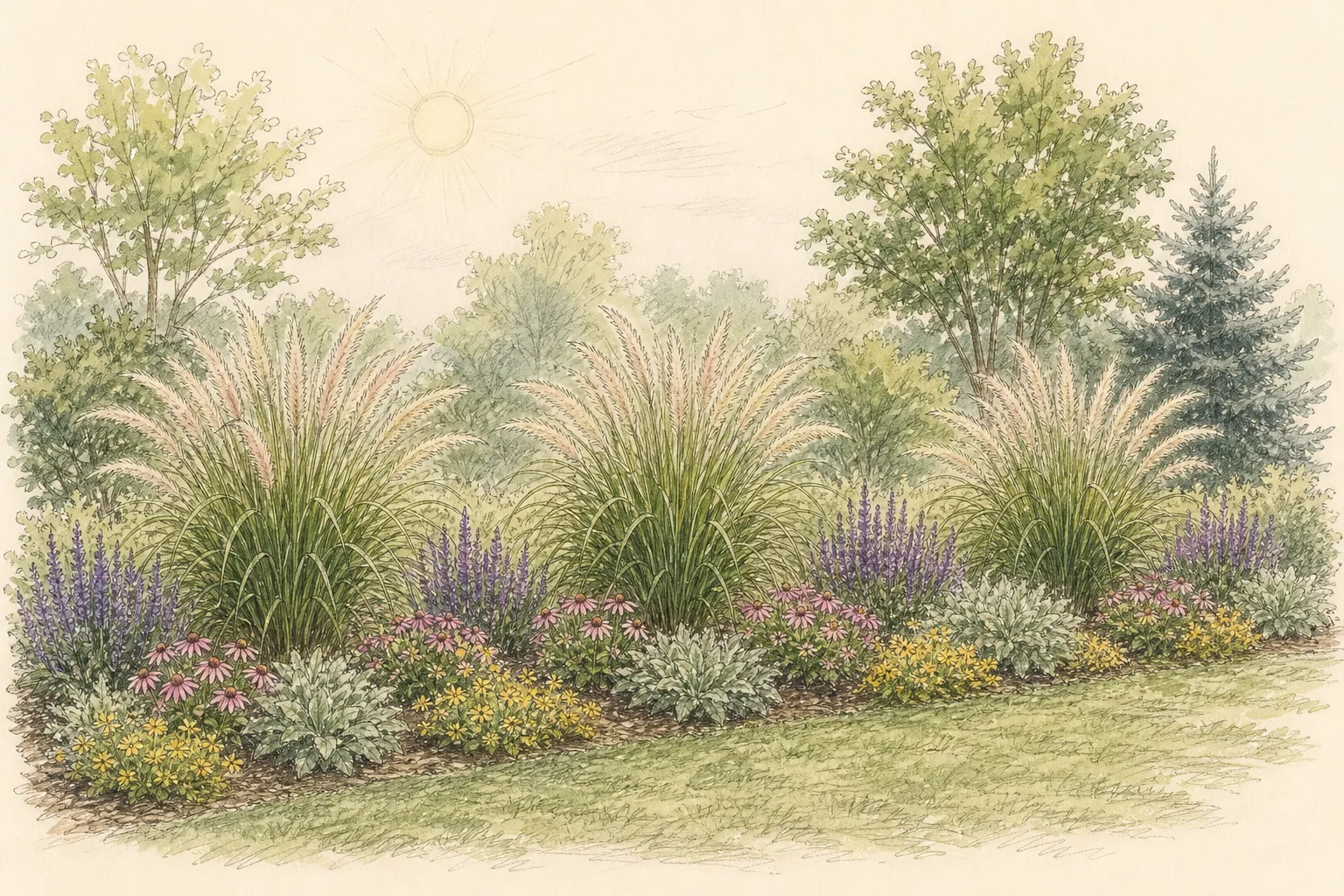
Garden placement study showing mature Fountain Grass in an ornamental planting
Sources
- Fountain grass, Cenchrus (Pennisetum) alopecuroides. University of Wisconsin Extension. Source record · Accessed 2026-08-30.
- Pennisetum alopecuroides. Royal Horticultural Society. Source record · Accessed 2026-08-30.
- USDA Plants Database. USDA PLANTS Database. Source record · Accessed 2026-08-30.
- Cenchrus alopecuroides growing and spread guidance. North Carolina Extension Gardener Plant Toolbox. Source record · Accessed 2026-09-07.