Japanese Painted Fern
Athyrium niponicum
A practical species profile of Athyrium niponicum, with identification, garden placement, soil and seasonal care guidance.
Published Last updated
At a glance
- Light
- Partial to full shade
- Water
- Regular moisture; avoid drought
- Soil
- Humus-rich, moist, well-drained soil
- Hardiness
- Zones 4–9
- Bloom
- Grown for foliage; nonflowering
- Height
- 18–24 in · 45–60 cm
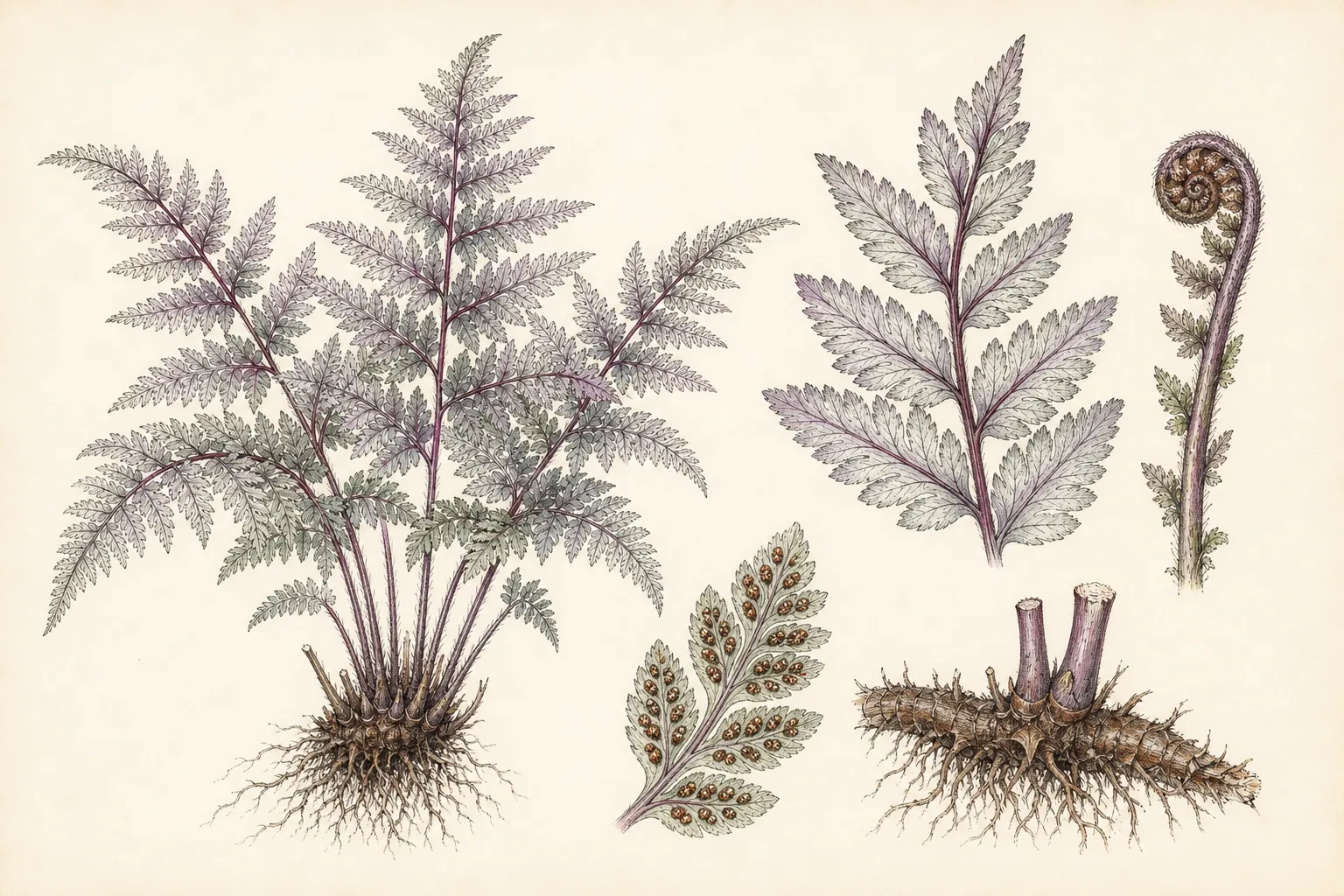
In this guide
Overview
Japanese painted fern is a deciduous fern from rich East Asian woodlands. Triangular, finely divided fronds combine silver-gray and green tissue with burgundy to red midribs, forming an arching vase rather than a flower-bearing clump. It reproduces by spores and expands slowly from compact, creeping, branching rhizomes.
The species commonly reaches about 18–24 inches in height and width, although named selections vary. Reserve enough open surface for every frond to unfurl without being pressed under hosta leaves or scraped by a path edge. The slow rhizomes eventually make a clump but are not described as aggressive.
Light shade gives the best foliage color. NC State warns that excess sun washes the color out, while deep shade is tolerated. The useful decision is therefore not how to make it flower—it never flowers—but how to balance shade, visible silver color, and steady root-zone moisture.
Rich soil with high organic content should remain moist and still drain. A dry pocket under competitive tree roots produces scorched or shortened fronds; a saturated depression deprives rhizomes of air. Planting in woodland soil means matching those moisture conditions, not simply adding a small pocket of compost.
Fronds emerge later than many spring perennials and new ones may continue through summer. Mark the rhizome position, leave early spring cultivation shallow, and delay any judgment of winter death. Once growth begins, keep feet, tools, and coarse mulch away from the unfurling crowns.
The fern has no flowers, seeds, or woody branches. Seasonal cleanup consists of removing collapsed deciduous fronds, ideally before new croziers rise through them. NC State reports no serious insect or disease problems, so unexplained decline should begin with checks of light, moisture, planting depth, and physical disturbance.
- Family
- Aspleniaceae
- Range
- Eastern Himalaya through temperate East Asia to northern Indochina
- Soil pH
- 5–7
- Spread
- 18–24 in · 45–60 cm
Planting & careHow to grow japanese painted fern
NC State lists Japanese painted fern for Zones 4–9 and notes that its new fronds emerge late in spring. In cold gardens, mark the dormant clump and wait for that normal schedule before assuming winter loss. In hot or bright regions, prioritize cool shade and dependable moisture; the zone range does not make the fern tolerant of drying sun.
- 1Choose a visible shade position
Use light, dappled, or deeper shade, with light shade preferred when the silver and burgundy frond color is the main purpose. Keep the clump away from hot reflected sun and reserve roughly 18–24 inches for its mature arch.
- 2Test woodland moisture
Check the bed after rain and during a dry interval. The soil should retain moisture around the rhizomes without remaining saturated, and nearby tree roots should not draw the position dry as soon as leaves expand.
- 3Set the rhizomatous crown
Plant in spring or autumn at the container's existing depth, keeping the compact crown and rhizome tops close to the finished surface. Do not bury emerging points beneath extra soil or a deep mulch layer.
- 4Settle and keep evenly moist
Water after planting so soil contacts the root system, then monitor moisture through establishment and dry weather. Apply water at soil level and stop before the bed becomes waterlogged.
- 5Mark the late-emerging clump
Place a low marker beside the crown and keep spring cultivation outside the expected 18–24-inch spread. A visible marker prevents the normal late emergence from being mistaken for an empty planting position.
- 6Read frond color and condition
During the first summer, compare frond color, edge browning, and soil moisture across the clump. Washed color points toward excess light, while crisp margins with dry soil point toward insufficient moisture.
Pruning japanese painted fern
Japanese painted fern is managed by frond cleanup, not woody pruning. Leave healthy fronds to feed the rhizomes through the growing season. Remove individual broken or collapsed fronds at their base, and clear the fully dead deciduous top before late-spring croziers emerge. If cleanup is delayed, lift old fronds by hand and cut them one by one so new unfurling growth is not sheared off.
Seasonal care
Spring
Clear last year's dead fronds before new croziers rise, then wait through the species' naturally late emergence. Keep the crown marked, top up only a light organic surface layer away from growth points, and water if the rich soil begins to dry.
Summer
Maintain even moisture and watch newly produced fronds. Compare silver color in light shade with any bleached areas in direct sun, and check crisp margins against root-depth dryness before moving or feeding the plant.
Autumn
Allow sound fronds to continue until frost and natural senescence. Spring or autumn are suitable planting windows in the retained RHS guidance; reset divisions at crown level and water them in without leaving the bed saturated.
Winter
The deciduous fronds collapse and the rhizomes remain dormant below the marker. Check for standing winter water or mulch covering the crown, and leave cleanup until it can be done without trampling soft soil.
Safety and garden spread
The retained NC State, RHS, and Kew profiles carry no poison warning for Athyrium niponicum. Treat the fronds and rhizomes as ornamental rather than edible, prevent routine chewing by children or pets, and seek appropriate advice after a concerning exposure.
Common problems
Washed-out frond color
- Look for
- Silver, green, or burgundy markings becoming pale and bleached on the side receiving the strongest direct sun.
- Action
- Compare the daily light pattern and move the fern to light or dappled shade if direct exposure is excessive. Preserve moisture during relocation and do not interpret the absence of flowers as a symptom; this fern is nonflowering.
Dry, browning fronds
- Look for
- Crisp margins, shortened fronds, or early collapse where the humus-rich soil has dried or tree roots compete heavily.
- Action
- Check moisture at rhizome depth, restore even watering, and renew a light organic surface layer without covering the crown. If the site cannot retain moisture in shade, move the plant rather than watering only the visible surface.
No spring emergence
- Look for
- A marked crown with no croziers while earlier perennials are already in growth, or a soft rhizome in soil that stayed saturated.
- Action
- Wait for the documented late-spring emergence and avoid probing the crown. If growth still fails, assess winter drainage and crown condition; seek a local diagnosis before replacing a clump in the same wet position.
Plant details
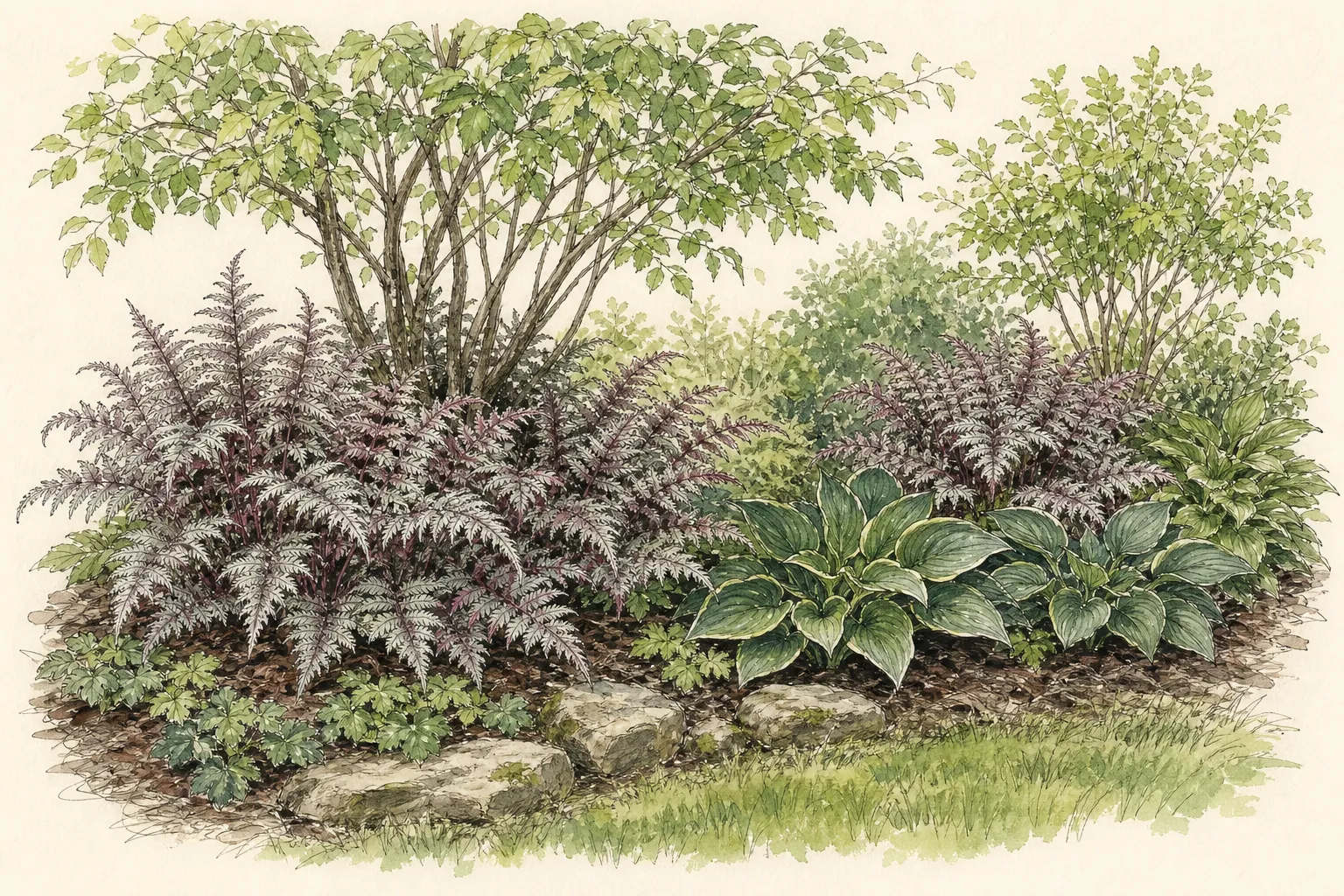
Garden placement study showing mature Japanese Painted Fern in an ornamental planting
Sources
- Athyrium niponicum. North Carolina Extension Gardener Plant Toolbox. Source record · Accessed 2026-08-30.
- Athyrium niponicum. Royal Horticultural Society. Source record · Accessed 2026-08-30.
- Athyrium niponicum (Mett.) Hance. Royal Botanic Gardens, Kew. Source record · Accessed 2026-08-30.