Red Twig Dogwood
Cornus sericea
Grow Cornus sericea for vivid young winter stems in moist ornamental plantings while planning its broad suckering habit, selective renewal, summer foliage, and site access.
Published Last updated
At a glance
- Light
- Full sun to partial shade; strong light generally supports the brightest young-stem color where roots remain adequately moist
- Water
- Medium to wet; best with consistent moisture and tolerant of seasonally wet or boggy ground
- Soil
- Organically rich, moist soil; tolerates clay and a range of textures but is poorly suited to hot chronically dry sites
- Hardiness
- Zones 3–7
- Bloom
- Late spring to early summer, followed by pale fruit; young stems provide the principal winter display
- Height
- 6–9 ft · 1.8–2.7 m
In this guide
Overview
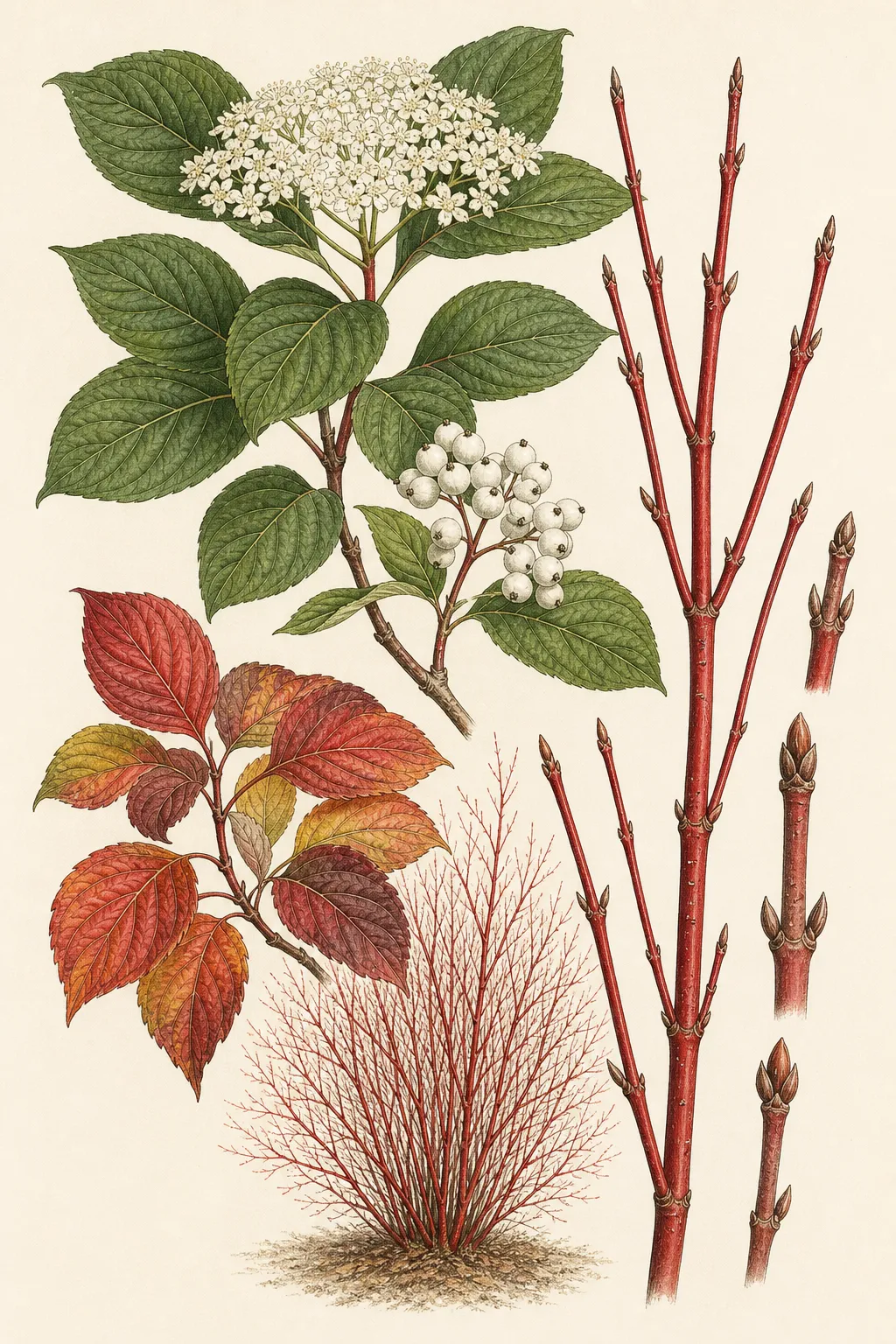
Red twig dogwood is a broad deciduous shrub valued for vivid color on young leafless stems. Summer leaves, small pale flower clusters, whitish drupes, and autumn color support the display, but the winter framework is the reason it is usually placed against evergreens, snow, grasses, or a quiet wall. It is not a narrow vertical accent: the species naturally spreads and can sucker beyond the original crown.
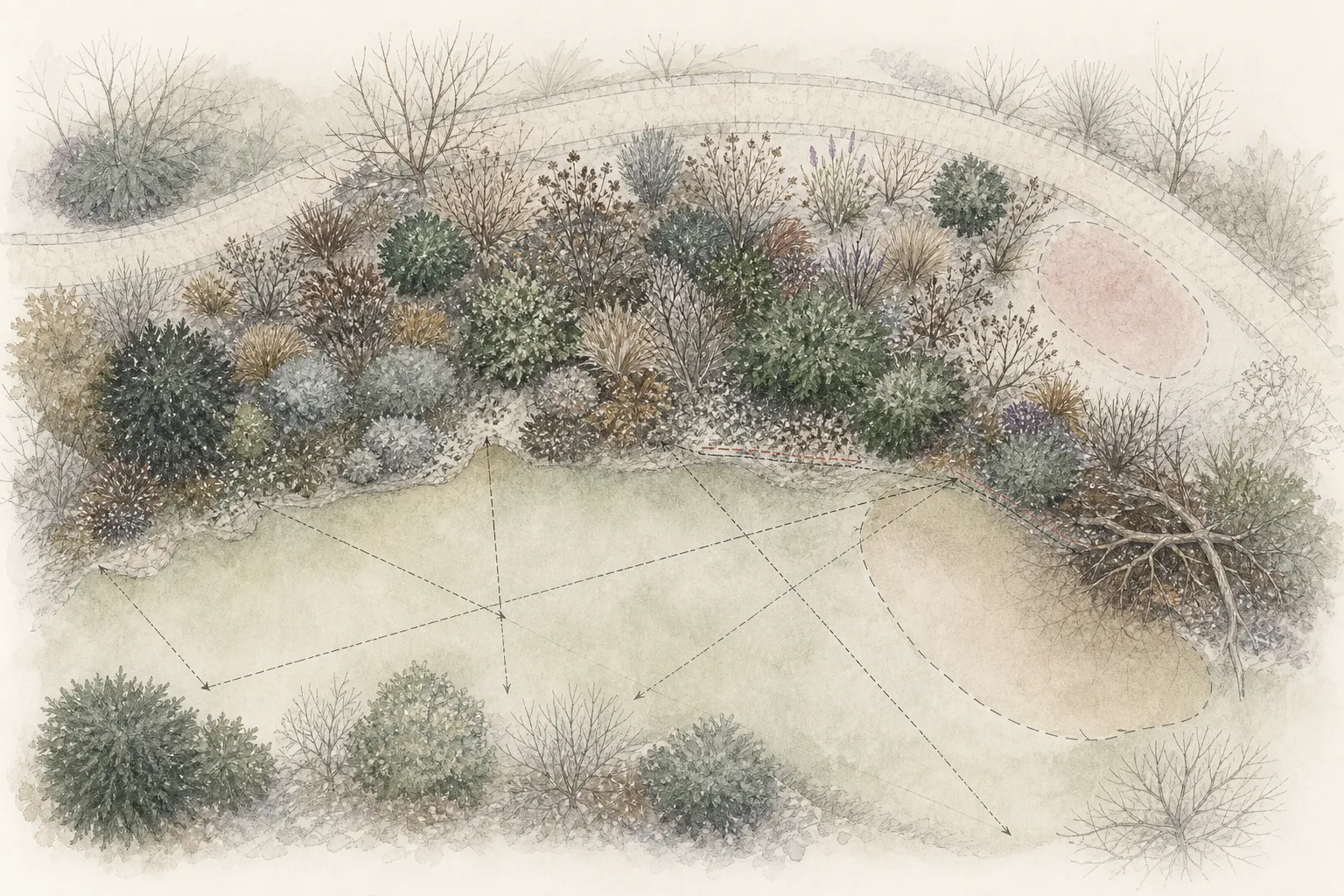
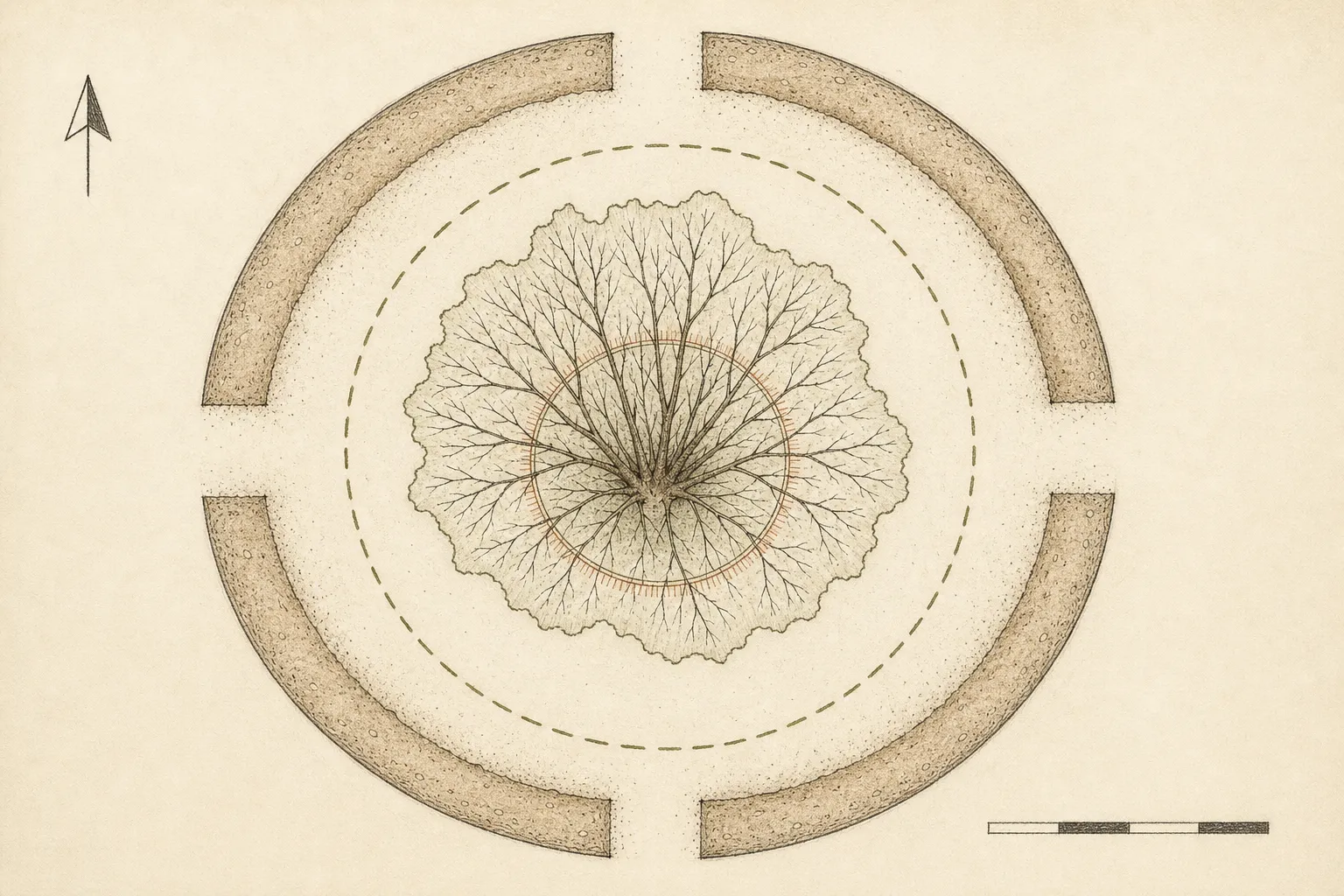
The best site combines moisture, enough light for stem color, and space for renewal. Rain-garden margins, moist shrub borders, pond edges, and broad naturalistic plantings can suit it. A dry foundation bed or a tiny strip beside paving creates conflict that annual cutting cannot solve. Draw the complete crown and a sucker-control route before choosing a cultivar.
Young stems carry the strongest color, but pruning is a design and plant-health decision. Missouri Botanical Garden describes either removing 20–25 percent of the oldest stems in early spring each year or coppicing an established plant to about eight inches every two to three years. NC State likewise places renewal in early spring, while Utah State calls for periodic pruning to retain color. Choose a regime for the exact plant, climate, age, and intended display rather than applying coppicing automatically.
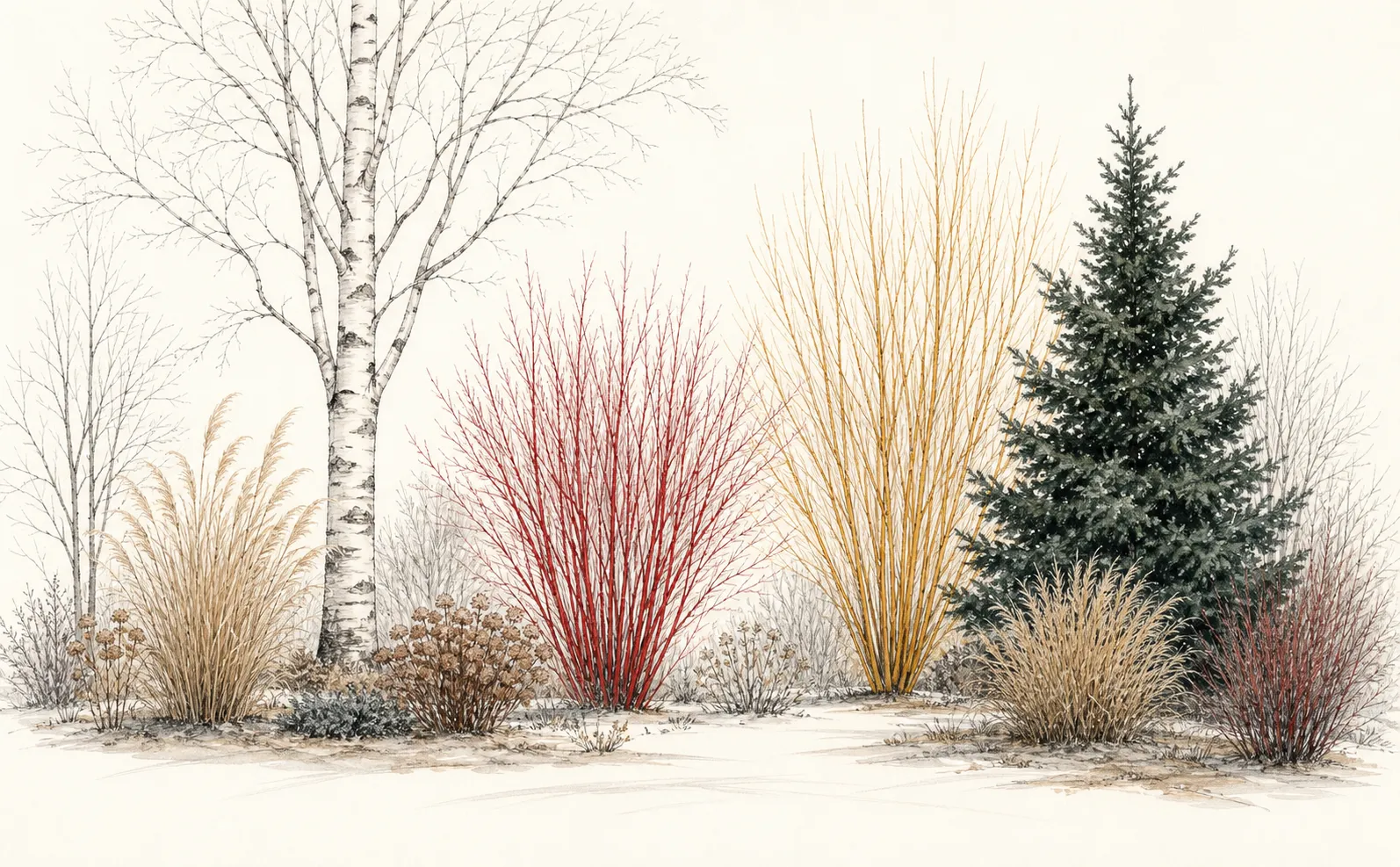
Use the shrub as a group or mass where winter line can be read from normal distance. Preserve separation from a dark backdrop and combine it with fewer quieter companions. Its root system, moisture demand, and summer volume need to belong in the border all year; brilliant February stems do not justify crowding paths or repeatedly stressing the plant through drought.
- Family
- Cornaceae
- Range
- Broadly native across temperate North America, from Alaska and Canada through much of the United States into northern Mexico, especially in moist riparian and wetland habitats
- Soil pH
- 5.5–7.5
- Spread
- 7–10 ft · 2.1–3 m
Planting & careHow to grow red twig dogwood
The species can spread by suckers and form colonies in suitable moisture. Check local ecological guidance, cultivar dimensions, and whether a North American native species is appropriate to the intended region. Named cultivars may emphasize red, coral, or yellow stems and can differ in size and disease performance.
- 1Choose the moisture zone
Map summer drought, winter saturation, runoff, and competing roots. Select a site that remains consistently moist but can support healthy aerated roots and safe maintenance access.
- 2Draw the mature colony
Use the documented cultivar spread plus a realistic sucker zone, keeping the center away from paths, drains, fences, and neighboring crowns.
- 3Plant at correct grade
Set the root flare and upper root system at nursery grade, correct circling roots where current woody-plant guidance supports it, backfill, water thoroughly, and avoid burying stems.
- 4Establish and label the renewal plan
Maintain even moisture, mulch shallowly away from stems, label the cultivar, and record whether future pruning will be selective renewal or a documented harder cycle.
Pruning red twig dogwood
Allow a young shrub to establish before beginning renewal. In early spring, first remove dead, damaged, diseased, rubbing, or badly placed wood. For an established plant grown primarily for winter stems, either remove about 20–25 percent of the oldest dull stems at the base each year or, where a locally proven full-renewal display is intended, coppice all stems to about eight inches every two to three years. Selective renewal preserves more flowers, fruit, height, and habitat; coppicing trades those features for a uniform crop of bright young stems. Keep cuts clean, control unwanted suckers separately, and do not shear the outside into a dense mound.
Seasonal care
Spring
Inspect stem health and color, perform the recorded renewal method at the appropriate time, refresh shallow mulch, and water new growth before drought develops.
Summer
Maintain even moisture, watch suckers and full crown width, avoid root-zone cultivation, and diagnose leaf spotting or dieback before treating.
Autumn
Observe foliage and fruit, water before freeze if conditions are dry, mark unwanted suckers, and preserve the path and backdrop that make winter stems visible.
Winter
Read color, line, snow response, and crowding from the main view; remove only hazardous breakage and reserve planned renewal for the correct season.
Safety and garden spread
The retained institutional sources do not identify a species-specific poisoning hazard for Cornus sericea, and NC State lists the pale drupes as edible as well as valuable to wildlife. This profile does not establish food preparation, dose, or pet safety. Confirm identity and pesticide history before any food use, keep treated plant material away from children and animals, and seek medical or veterinary advice when an exposure causes concern.
Common problems
Dull winter stems
- Look for
- A high proportion of older gray-brown wood, deep shade, weak new growth, drought stress, or a pruning cycle that no longer replaces stems.
- Action
- Confirm light and moisture, identify stem ages, and revise renewal according to the exact taxon and region rather than cutting the entire shrub reflexively.
Unwanted spread
- Look for
- Suckers beyond the intended group, stems entering paths, or a colony merging with neighboring shrubs.
- Action
- Remove new suckers promptly with targeted cuts, protect adjacent roots, preserve a management strip, and relocate or replace the plant if the allocated space is fundamentally too small.
Leaf spots, canker, or dieback
- Look for
- Repeated spotting, discolored or sunken twigs, dead tips, dense wet growth, or decline beginning in one section.
- Action
- Remove clearly affected tissue with clean tools when advised, improve site and air conditions, avoid overhead stress, and obtain a local diagnosis when symptoms are extensive or uncertain.
Plant details
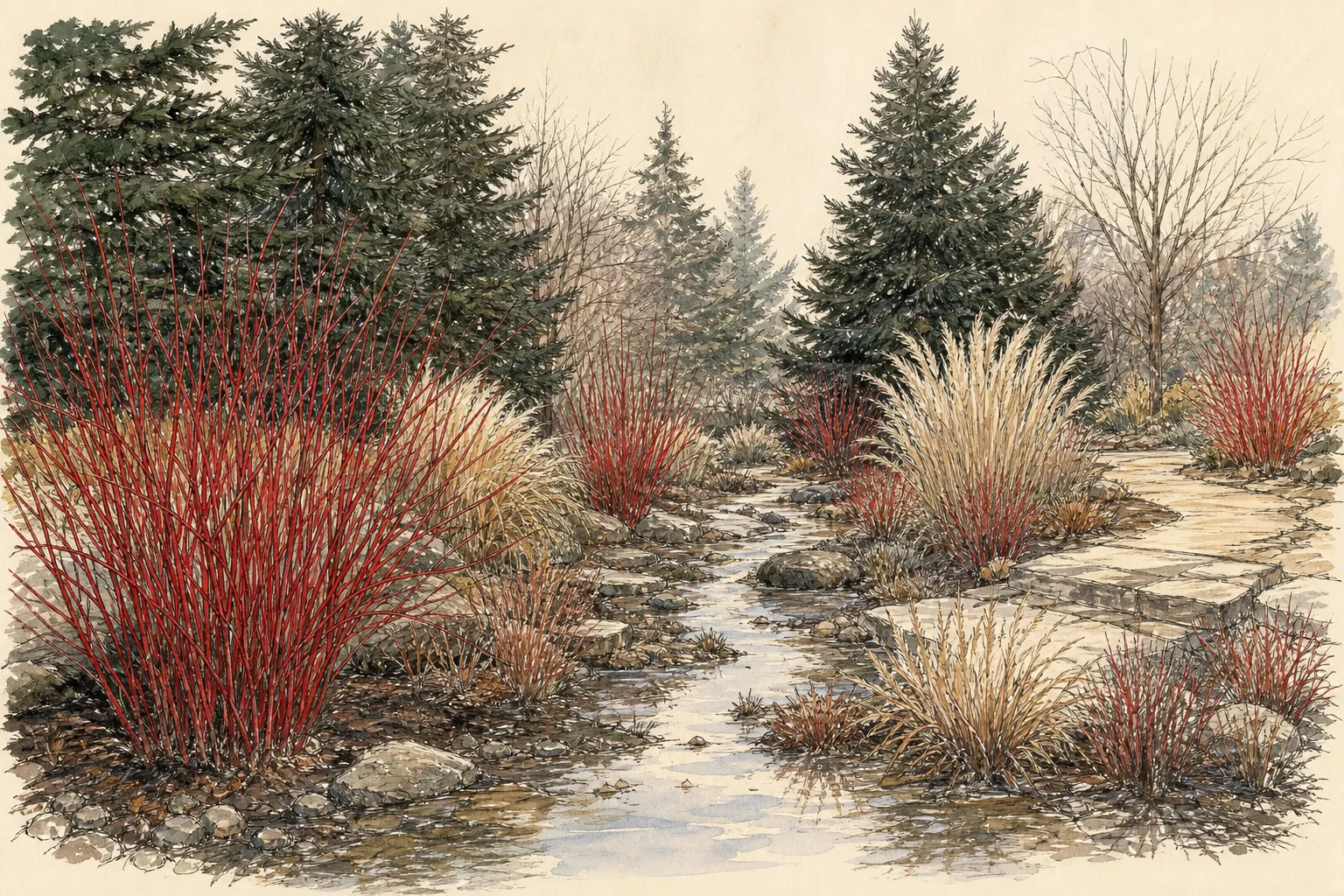
Mature red twig dogwood clumps beside a moist swale with dark evergreens, pale grasses, and open access
Related reading
Sources
- Redstem Dogwood. NC State Extension Gardener Plant Toolbox. Source record · Accessed 2026-08-30.
- Cornus sericea. Missouri Botanical Garden Plant Finder. Source record · Accessed 2026-08-30.
- Cornus sericea L.. Royal Botanic Gardens, Kew. Source record · Accessed 2026-08-30.
- Red-Osier Dogwood. Utah State University Extension. Source record · Accessed 2026-08-30.
- Cornus sericea, redosier dogwood. USDA Forest Service Research and Development. Source record · Accessed 2026-08-30.