Pigsqueak
Bergenia crassifolia
Identify Bergenia crassifolia by leathery evergreen rosettes and surface rhizomes, then site, divide, and clean the clump without shearing it.
Published Last updated
At a glance
- Light
- Full sun in cool climates to partial shade
- Water
- Moderate
- Soil
- Humus-rich, well-drained soil
- Hardiness
- Zones 3–8
- Bloom
- Early to mid-spring
- Height
- 1–1.5 ft · 30–45 cm
In this guide
Overview
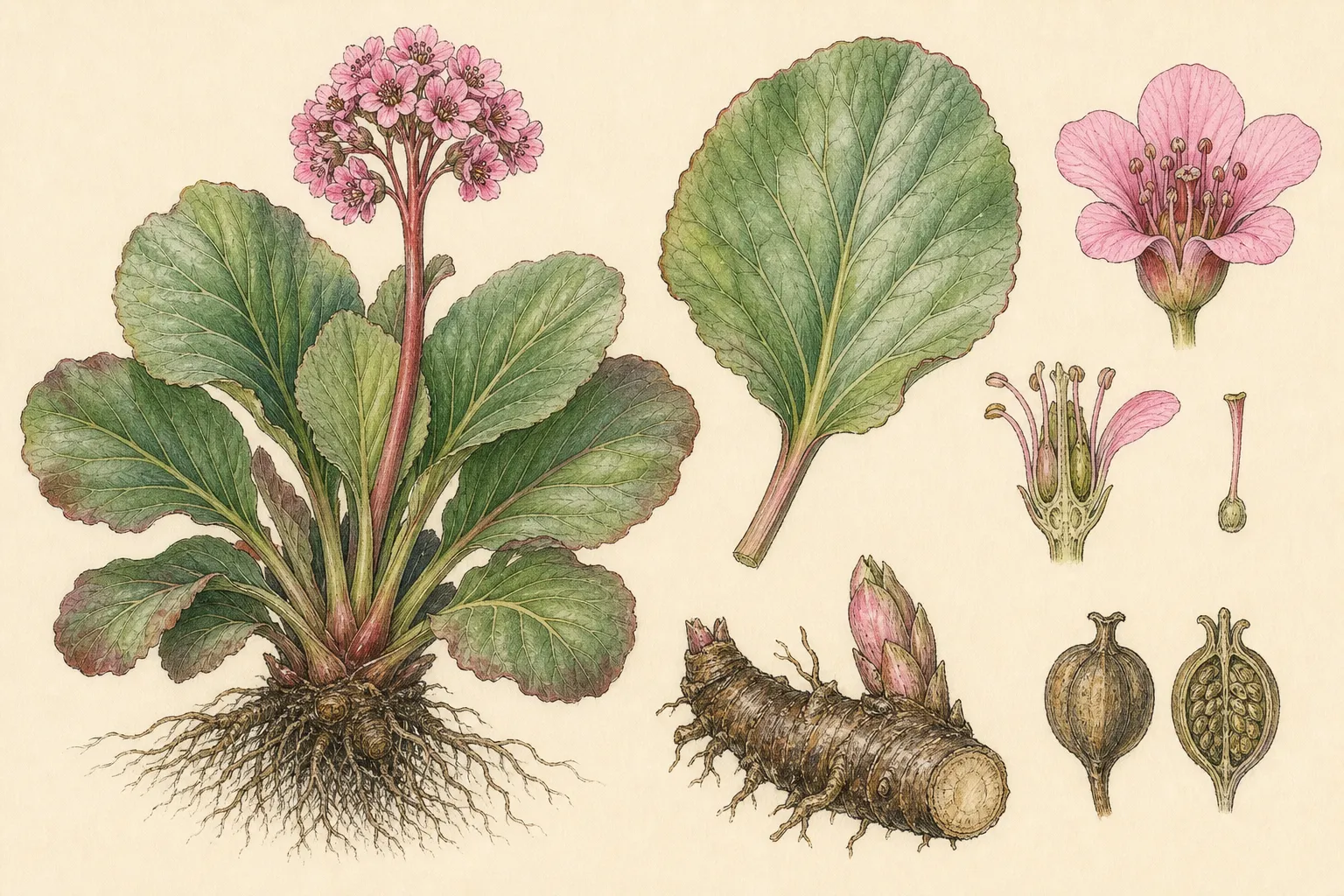
Pigsqueak is a slow-spreading evergreen rhizomatous perennial with thick, glossy, rounded leaves in basal rosettes. Pink to purple-pink flower clusters rise on leafless stems in spring. Rubbing two leathery leaves can produce the squeak behind the common name, while toothed leaf margins and thick surface rhizomes are more dependable identification features.
A clump reaches about 1–1.5 ft high and up to 2 ft wide. Use its broad leaves beneath open shrubs, beside fine ferns, or along a shaded path with enough setback for the rosettes. Cold and exposure can turn foliage bronze or red, extending interest beyond the flowers but not necessarily indicating damage.
Humus-rich soil that stays moderately moist yet drains well supports the cleanest foliage. The species tolerates broad pH and light conditions, from sun in cool climates to deep shade, but extremes have costs: deep shade reduces bloom, hot sun scorches, and prolonged drought dries leaf margins.
Keep the thick rhizome and crown at their existing shallow grade, settle soil around the fibrous roots, and keep mulch away from active rosette centers. Water new plants until leaves remain firm, then check soil before watering; a dry-tolerant established plant still suffers if drought persists.
Short rhizomes gradually create a broad clump. Divide after flowering when the center becomes bare, taking firm rhizome sections that carry roots and a leaf rosette. Reset them at the same shallow level and do not bury exposed living growth points under successive mulch layers.
Remove winter-damaged leaves individually at the base in late winter or early spring and cut faded flower stalks after bloom. Shearing the whole evergreen mound sacrifices sound leaves and can clip rising flower buds. RHS also lists vine weevil, slugs, snails, and leaf spot as possible rather than inevitable problems.
- Family
- Saxifragaceae
- Range
- Siberia through Mongolia and northern China to North Korea
- Soil pH
- 5.5–8
- Spread
- 1.5–2 ft · 45–60 cm
Planting & careHow to grow pigsqueak
Evergreen foliage can be winter-damaged in colder exposed gardens, while extreme heat and prolonged drought scorch leaves. Adjust sun and shelter to climate rather than applying one exposure rule everywhere.
- 1Reserve the mature footprint
Allow 1–1.5 ft of height and as much as 2 ft of width. Leave access to remove individual old leaves and enough offset that broad rosettes will not cover a path.
- 2Match exposure to climate
Choose more sun in a cool climate and partial or dappled shade where summers are hot. Use humus-rich soil that drains after rain and shelter evergreen leaves from cold drying winds.
- 3Retain the shallow rhizome grade
Set the crown and thick rhizome at the same level as in the container, spread roots below, and backfill without covering the rosette centers. Water thoroughly to settle the soil.
- 4Water the soil, not the schedule
Maintain moderate conditions while roots establish. Probe below the surface before watering again, and adjust for season, soil texture, exposure, and the plant’s actual response.
- 5Keep rosette centers open
Mulch between plants but leave the active centers and upper rhizomes visible. This prevents gradual burial and makes rot, vine-weevil damage, and new offsets easier to inspect.
- 6Divide only an aging center
After flowering, lift a clump only if its center is bare or its space is exhausted. Replant rooted outer rosettes at their previous shallow grade and water them through establishment.
Pruning pigsqueak
Cut battered leaves and spent flower stalks individually at the base. After bloom, divide an open-centered clump and replant firm rhizome sections with healthy roots at their original shallow depth.
Seasonal care
Spring
Cut damaged leaves individually before flower stalks rise, remove faded stalks after bloom, and divide an open-centered clump only when renewal is needed.
Summer
Check moisture beneath the broad leaves during heat and water new divisions before prolonged drying. Inspect low foliage for slug feeding without keeping the crown wet.
Autumn
Retain sound evergreen leaves and clear only diseased or collapsed material. Keep fallen leaves and new mulch out of the rosette centers.
Winter
Bronze or red color may be a normal cold response; remove leaves only when tissue is actually dead. Shelter the clump from drying wind and prevent winter water from pooling at the rhizomes.
Safety and garden spread
The retained institutional profiles do not identify a poisoning hazard. This profile treats the plant as an ornamental and does not recommend preparing its tannin-rich leaves or rhizomes for food or medicine.
Common problems
Heat or drought scorch
- Look for
- Leaf margins bleach or brown, or the whole canopy wilts during bright, hot weather.
- Action
- Check moisture beneath the broad leaf canopy and water deeply if the root zone is dry. Move future divisions out of hot afternoon sun and remove a scorched leaf only after its tissue is dead.
Leaf spot or crown decline
- Look for
- Spots enlarge across leaves, or rosette centers soften where mulch and water remain trapped.
- Action
- Remove affected leaves at the base, clear the crown, and correct drainage or airflow. Seek a local diagnosis before applying a labeled treatment.
Bare woody center
- Look for
- New growth is packed around the edge while the center weakens, or neighboring plants merge into the crown.
- Action
- Divide after flowering, discard exhausted center pieces, and reset rooted outer rosettes at the same shallow rhizome grade with room to expand.
Vine-weevil, slug, or snail damage
- Look for
- Irregular holes and scraped leaf surfaces appear close to damp soil, especially on new growth.
- Action
- Inspect after dark for slugs and check roots for vine-weevil larvae before choosing a control. Reduce hiding places and use a locally appropriate targeted method only when damage is material.
Plant details
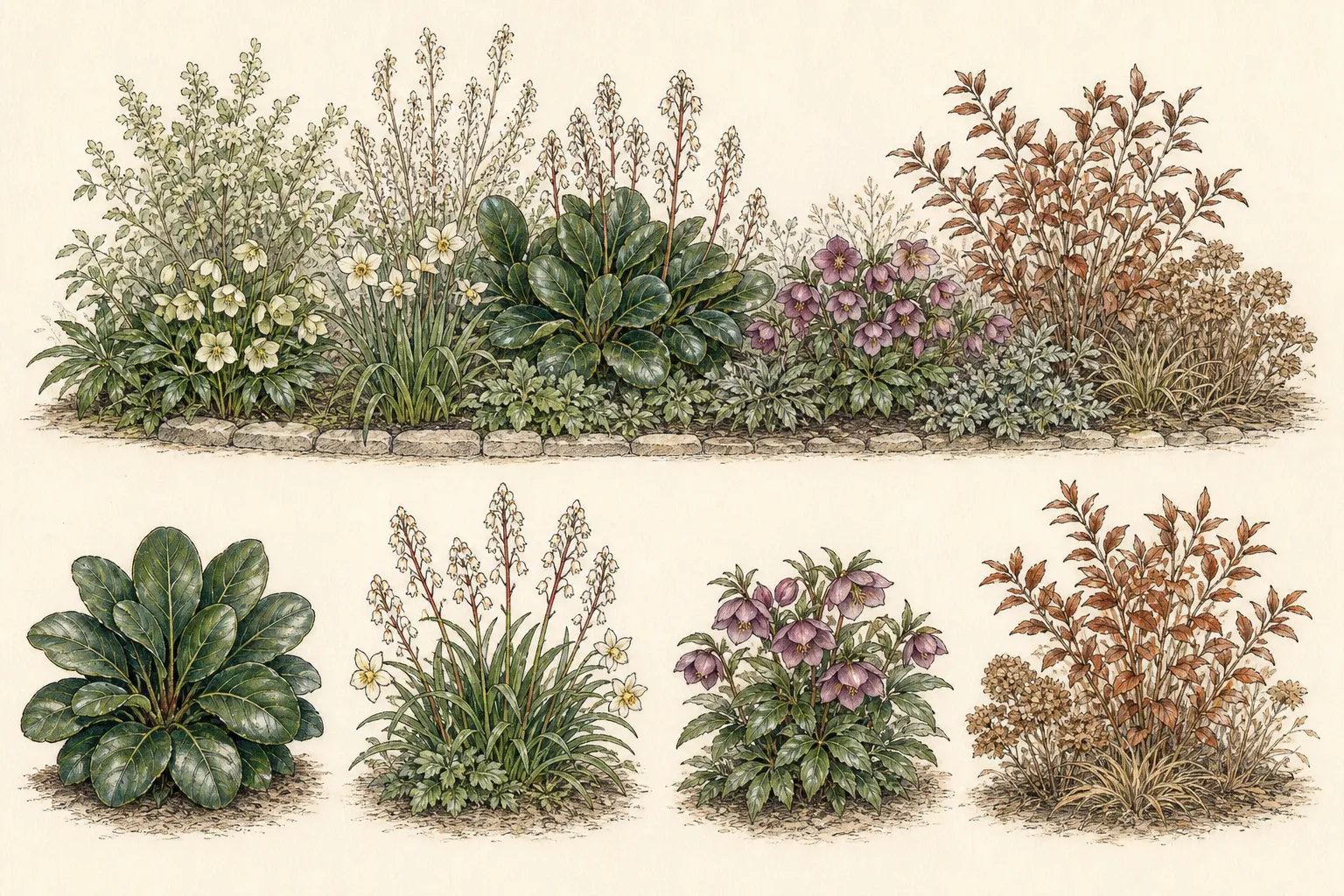
Garden study showing the placement and growth habit of Pigsqueak
Sources
- Pigsqueak cultivation profile. NC State Extension. Source record · Accessed 2026-08-30.
- Bergenia crassifolia plant profile. Royal Horticultural Society. Source record · Accessed 2026-08-30.
- Bergenia crassifolia taxonomy and native range. Royal Botanic Gardens, Kew. Source record · Accessed 2026-08-30.