Black Cohosh
Actaea racemosa
A source-checked profile of native black cohosh, covering its rhizomatous woodland habit, moist-shade care, wild-harvest concerns, and safety.
Published Last updated
At a glance
- Light
- Partial to full shade; gentle morning sun
- Water
- Evenly moist throughout active growth
- Soil
- Deep, humus-rich, moisture-retentive soil
- Hardiness
- Zones 3–8
- Bloom
- Early to late summer
- Height
- 4–7 ft · 120–210 cm
In this guide
Overview
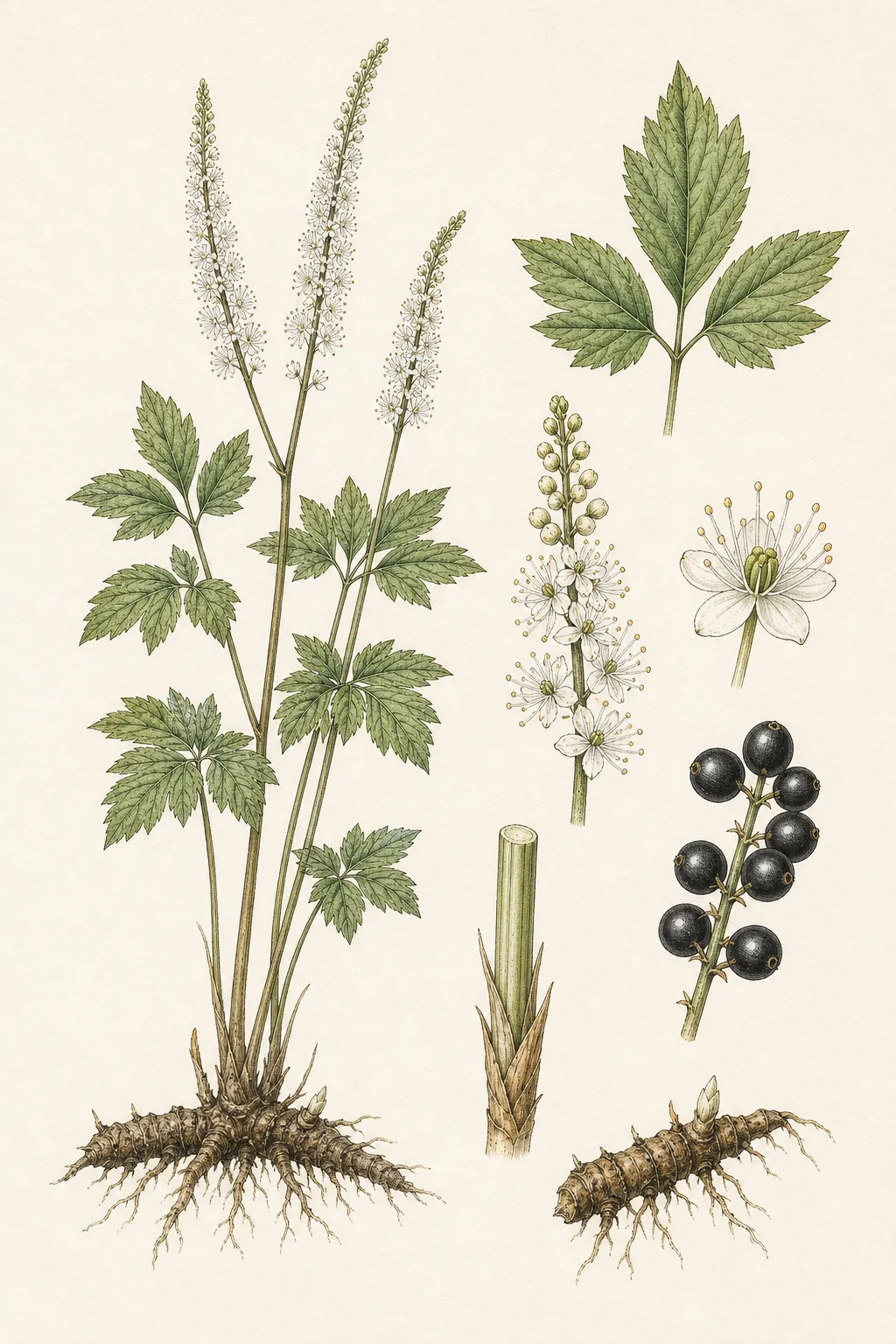
Black cohosh is a deciduous rhizomatous woodland perennial. Large compound leaves form a substantial basal mound, while branched racemes of petal-less creamy white flowers rise on smooth stems from early through late summer. The dry fruits are follicles rather than the fleshy berries borne by some other Actaea species.
A mature clump can occupy 2–4 ft of width and send flower stems 4–7 ft high. Give it the back of a moist shade border where the pale racemes catch filtered light and wind is moderated. It is not suited to a narrow dry strip under competitive tree roots.
Rich, humus-heavy soil that remains evenly moist supports the tall display. Partial to full shade is appropriate, with roughly two to three hours of gentle morning sun helping flowering. Strong afternoon sun, drought, or exposed wind can scorch leaves and collapse flower stems.
Set the crown at soil level, preserve the fleshy rhizome and roots, and water thoroughly. Spread leaf-mould mulch over the surrounding root zone without covering the crown. Mark the position because spring emergence may lag behind nearby bulbs and accidental cultivation can damage the slow-establishing plant.
The rhizome enlarges into a clump but does not run rapidly. Let a new plant establish for several years before judging its final flowering, and divide only when necessary. Obtain nursery-propagated material: harvesting the medicinal rhizome kills wild plants and has contributed to conservation concern.
RHS lists Actaea as harmful if eaten, while NCCIH's clinical cautions concern manufactured black-cohosh supplements, not a recipe for using a garden plant. Do not ingest or prepare roots or foliage. Leave sound seed stalks for winter structure if desired, then cut all dead stems before spring emergence.
- Family
- Ranunculaceae
- Range
- Southeastern Canada to the north-central and eastern United States
- Soil pH
- 5–7
- Spread
- 2–4 ft · 60–120 cm
Planting & careHow to grow black cohosh
Wild harvesting removes the medicinal rhizome and therefore the whole plant; Kew reports conservation concern in parts of the range. Buy verifiably nursery-propagated stock and never collect wild colonies.
- 1Reserve the mature footprint
Reserve 2–4 ft of root-zone width and clearance for flower racemes up to 7 ft tall. Keep the plant out of strong wind and leave a route for watering without trampling the crown.
- 2Choose moist woodland light
Use partial to full shade with two or three hours of morning sun where possible. Confirm that deep humus-rich soil stays evenly moist but does not remain stagnant after rain.
- 3Set the rhizomatous crown at soil level
Handle the fleshy roots gently, place the crown level with surrounding soil, backfill without compacting, and water thoroughly. Mark the site and keep leaf mould outside the crown itself.
- 4Maintain even root-zone moisture
Probe beneath the mulch and water before the deep root zone dries, especially during establishment and summer flowering. Keep the crown aerated rather than applying frequent shallow splashes.
- 5Mulch the roots, not the crown
Use leaf mould across the broad root zone to conserve moisture, but maintain a visible ring around the crown. This also preserves a clear emergence marker for spring.
- 6Protect the source population
Buy propagated, correctly labeled Actaea racemosa from a reputable nursery. Do not transplant from wild colonies, and retain the nursery label to prevent confusion with other medicinally named plants.
Pruning black cohosh
Cut spent racemes after flowering if seed is not wanted, or leave their dry follicles for winter structure. Remove all dead stems before spring emergence and avoid routine division of the slow-establishing rhizome.
Seasonal care
Spring
Use the marker to protect late-emerging shoots, clear last year's stems, renew leaf-mould mulch outside the crown, and begin moisture checks as growth rises.
Summer
Keep the deep root zone evenly moist through flowering, watch exposed stems before storms, and check scorched margins for drought or afternoon-sun stress.
Autumn
Retain dry seed racemes for structure or remove them cleanly. Leave the crown marker in place and replenish only the surrounding leaf-mould layer.
Winter
The top is dormant while the rhizome remains below. Keep water and compacted leaves from sitting on the crown, then remove dry stems before new shoots appear.
Safety and garden spread
Common problems
Drought or sun scorch
- Look for
- Leaf margins bleach or brown, or the whole canopy wilts during bright, hot weather.
- Action
- Restore even moisture through the deep root zone, renew leaf mould outside the crown, and shield the plant from strong afternoon sun. Do not add fertilizer to drought-stressed roots.
Wind-bent flowering racemes
- Look for
- Flowering stems fall outward, expose the center, or need support despite normal weather.
- Action
- Restore even moisture, add discreet support before further storms, and use a more sheltered position for any future division. Do not cut healthy basal foliage to reduce the plant's height.
Rust or leaf spot
- Look for
- Orange-brown pustules or enlarging spots develop on leaves while the crown remains firm.
- Action
- Remove badly affected leaves, avoid wetting foliage late in the day, and submit progressive symptoms to a local diagnostic service before using a labeled treatment.
Little or no flowering
- Look for
- An established leafy clump produces few racemes in very deep shade, or a young plant has not yet reached flowering size.
- Action
- Allow a new clump several seasons, then compare morning light and moisture with this profile. Increase gentle light only if the plant is established and otherwise healthy.
Plant details
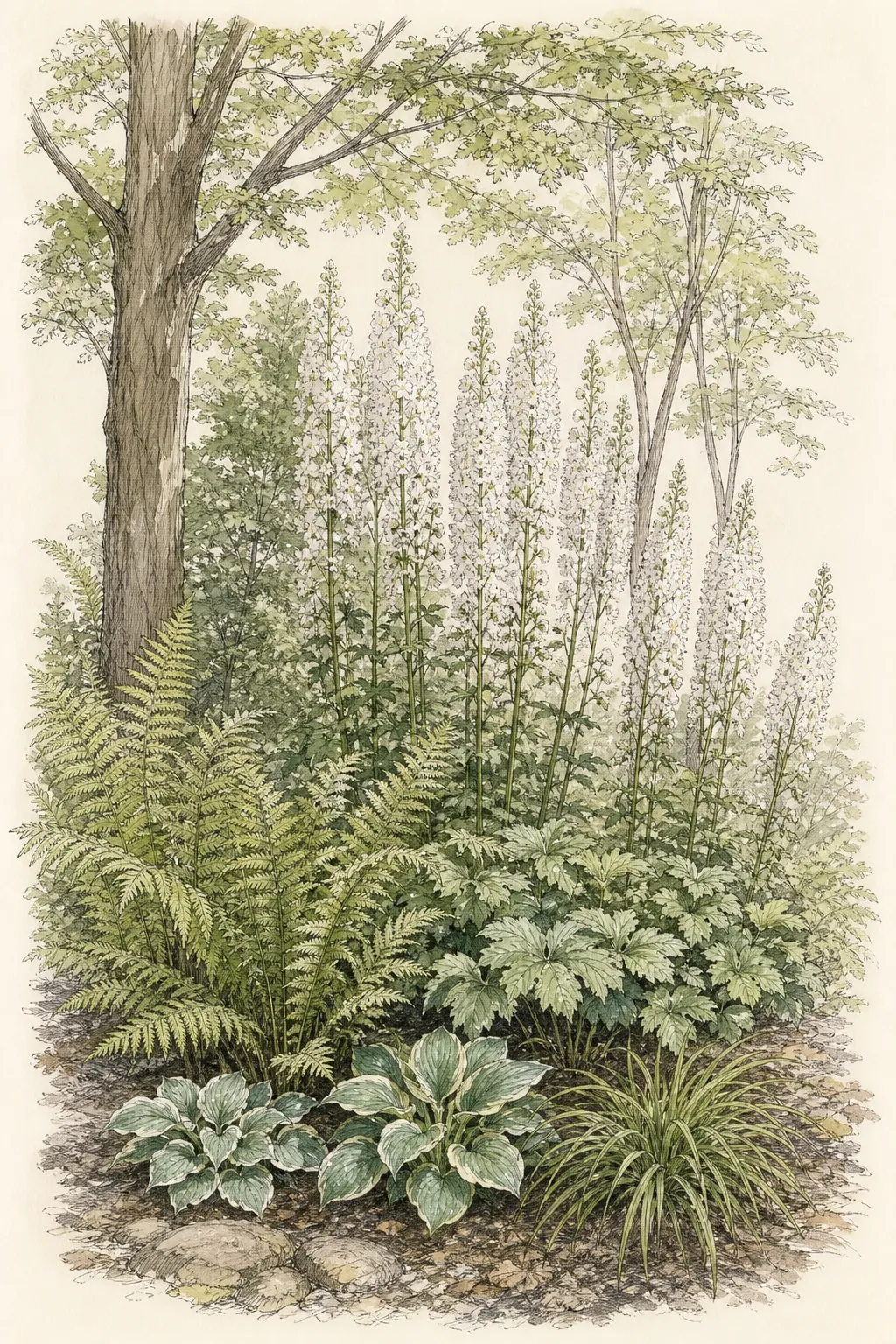
Garden study showing the placement and growth habit of Black Cohosh
Sources
- Black Cohosh cultivation profile. NC State Extension. Source record · Accessed 2026-08-30.
- Potentially harmful garden plants. Royal Horticultural Society. Source record · Accessed 2026-08-30.
- Actaea racemosa taxonomy, range, and species profile. Royal Botanic Gardens, Kew. Source record · Accessed 2026-08-30.
- Black cohosh clinical safety overview. National Center for Complementary and Integrative Health. Source record · Accessed 2026-08-30.