Lady’s Mantle
Alchemilla mollis
A low mounding perennial with pleated water-beading leaves and chartreuse summer flowers, adaptable to sun or shade but prone to prolific self-seeding.
Published Last updated
At a glance
- Light
- Full sun in cool climates to partial shade
- Water
- Moderate and even
- Soil
- Moist, well-drained soil with organic matter
- Hardiness
- Zones 3–8
- Bloom
- Early to late summer
- Height
- 1–1.5 ft · 30–45 cm
In this guide
Overview
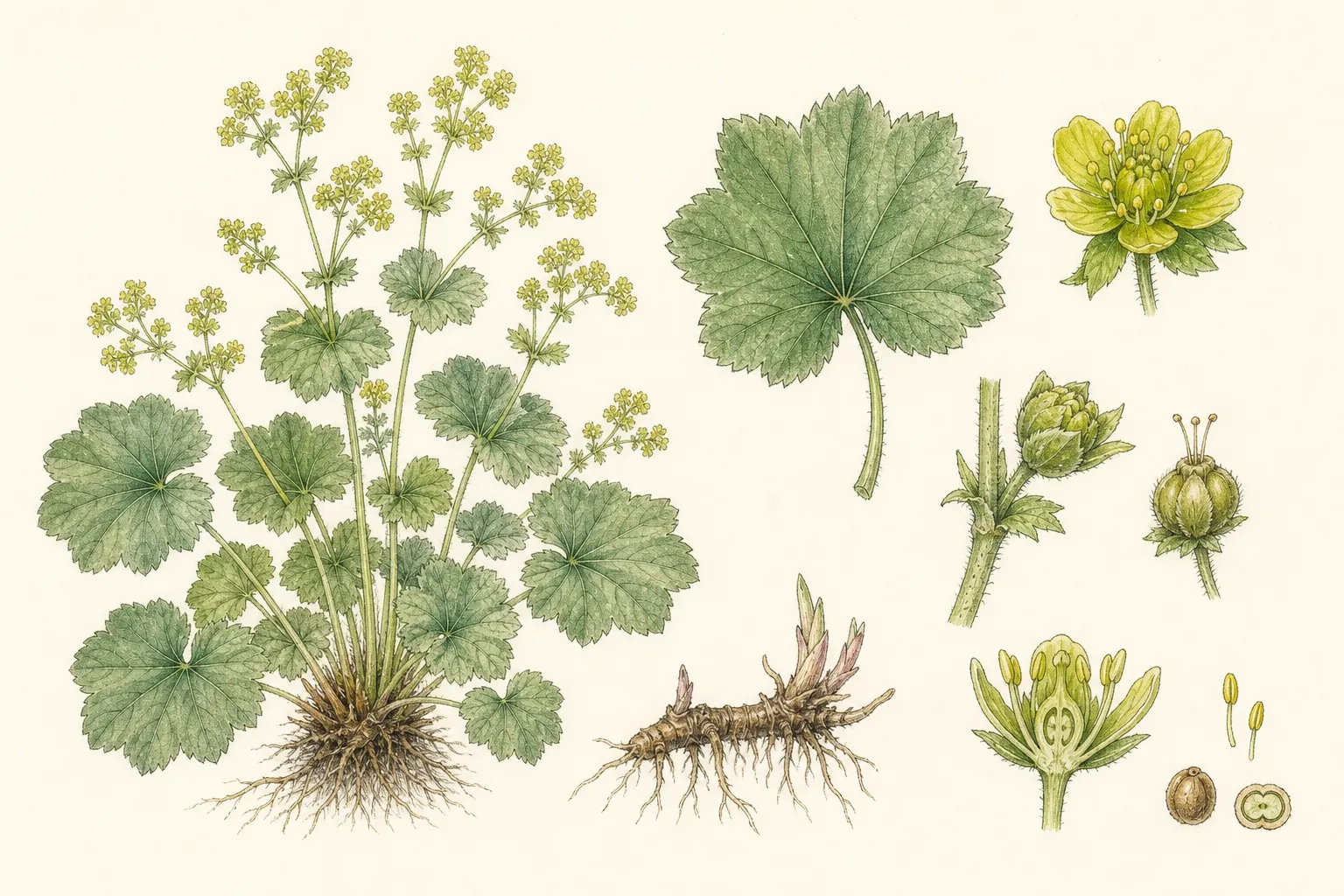
Lady’s mantle is a deciduous herbaceous perennial with softly hairy, rounded leaves divided into shallow scalloped lobes. Fine sprays of tiny chartreuse flowers rise just above the foliage in summer, and the water-resistant leaf surface holds rain in conspicuous droplets.
Use the 1–1.5 ft mound to soften path edges, rose stems, or the base of taller perennials. Leave enough clearance that rain-weighted flower sprays do not fall across paving and so spent stems can be reached before they set seed.
The species accepts sun, partial shade, and even deeper shade where soil remains moist but well drained. Strong sun in dry or hot regions can scorch the foliage; deep shade may make flower stems looser. Avoid both waterlogged ground and a site that dries hard in summer.
Set the crown at its nursery depth, water the whole root ball, and mulch lightly outside the leaf mound. Space plants about 1 ft apart for groundcover and preserve air around the crown.
Flower sprays set abundant seed. Cut them before ripening where volunteers are unwanted, or shear both spent stems and tired outer foliage after bloom to prompt a fresh low mound. Divide established crowns in spring or autumn and remove seedlings while small.
- Family
- Rosaceae
- Range
- Romania and the eastern Carpathians through the Caucasus
- Soil pH
- 5.5–7.5
- Spread
- 1–1.5 ft · 30–45 cm
Planting & careHow to grow lady’s mantle
Full sun is suitable where soil stays moist, but leaves can scorch in hot or dry exposure. The species self-seeds freely in favorable climates, so deadhead before seed ripens and check regional invasive-plant guidance where volunteers escape cultivation.
- 1Space low mounds
Allow roughly 1–1.5 ft in both height and spread, leaving access to shear flower sprays before seed ripens and to divide an older crown.
- 2Match light to moisture
Use sun where the soil stays moist or partial shade where summers are hot and dry. The crown needs organic, moisture-retentive soil that still drains after rain.
- 3Set the crown at nursery depth
Keep the crown at the same level it occupied in the container, backfill, water the full root ball, and leave the center of the mound uncovered.
- 4Water the first summer
Keep a new crown evenly moist through its first summer, especially in sun. Water again when the root zone begins to dry rather than sprinkling on a fixed schedule.
- 5Expose the herbaceous crown
Mulch lightly outside the leaf mound, keeping the single herbaceous crown exposed so new basal leaves and any soft tissue remain visible.
- 6Control self-sowing
Decide before bloom whether seedlings are welcome. Cut flower sprays before seed ripens in formal borders and remove volunteers while their small crowns lift easily.
Pruning lady’s mantle
Shear spent flower stems and weathered leaves just above the crown after bloom, then water if conditions are dry. Remove self-sown seedlings early and cut old foliage before spring growth expands.
Seasonal care
Spring
Clear dead foliage as fresh leaves emerge, divide an older crown if needed, and remove overwintered seedlings before their roots anchor among neighboring plants.
Summer
Maintain even moisture, especially in sun. Shear spent flower sprays and tired leaves after bloom to prevent seed and encourage a clean new mound.
Autumn
Remove remaining seedlings and divide only while soil is still warm enough for roots to establish. Let sound foliage continue feeding the crown until frost.
Winter
The foliage is dormant. Check that meltwater drains away and that mulch has not buried the crown before new leaves appear.
Safety and garden spread
The retained institutional profiles do not identify a specific poisoning hazard for Alchemilla mollis. Do not treat ornamental plants as food, and keep cut material away from unsupervised children and pets.
Spreads vigorously
Self-seeding can become a problem in favorable conditions. Remove spent flowers before seed ripens where volunteers are unwanted.
Common problems
Scorched or collapsing foliage
- Look for
- Leaf margins bleach or brown, or the whole canopy wilts during bright, hot weather.
- Action
- Check root-zone moisture and afternoon exposure. Restore even moisture or move the plant to light shade; damaged leaves can be sheared after flowering when new growth can replace them.
Leaning or splayed stems
- Look for
- Flowering stems fall outward, expose the center, or need support despite normal weather.
- Action
- Increase light if the site is deeply shaded, avoid excess fertilizer, and shear after bloom. Leave enough space that wet flower sprays do not rest on neighboring foliage.
Growth beyond the allotted patch
- Look for
- Numerous small fan-leaved seedlings appear in paths and inside neighboring crowns after flowers ripen.
- Action
- Pull seedlings while small and shear future flower sprays before seed matures. Divide the parent only when the crown itself has outgrown its space.
Crown or root decline
- Look for
- Stems wilt in wet soil, the crown softens, roots darken, or sections fail after winter.
- Action
- Pull mulch away, stop routine irrigation, and improve drainage. Remove soft tissue and reset sound divisions at crown level rather than in a persistently wet pocket.
Plant details
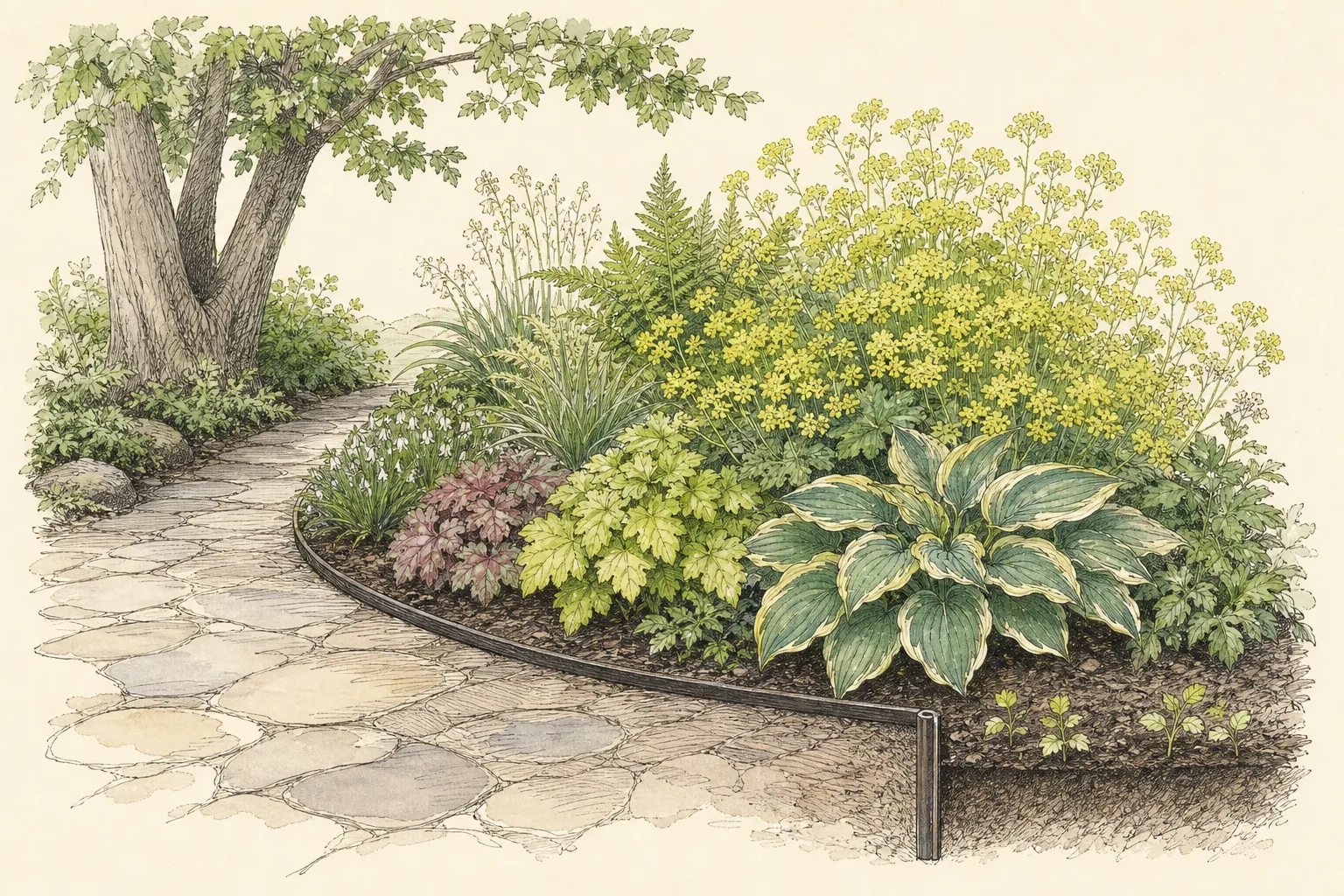
Garden study showing the placement and growth habit of Lady’s Mantle
Sources
- Alchemilla mollis. NC State Extension. Source record · Accessed 2026-09-07.
- Alchemilla mollis. Royal Horticultural Society. Source record · Accessed 2026-08-30.
- Alchemilla mollis (Buser) Rothm.. Royal Botanic Gardens, Kew. Source record · Accessed 2026-08-30.