Purple Coneflower
Echinacea purpurea
A coarse-textured eastern North American perennial with rough leaves, sturdy summer stems, purplish rays, and a prominent bristling central cone.
Published Last updated
At a glance
- Light
- Full sun to partial shade; flowering and stem strength are generally best in full sun
- Water
- Dry to medium once established, with even moisture during establishment and no prolonged waterlogging
- Soil
- Average, well-drained loam, clay, sandy, or shallow rocky soil; avoid a persistently saturated crown
- Hardiness
- Zones 3–8
- Bloom
- Summer, commonly June through August in the cited Midwestern reference climate
- Height
- 2–5 ft · 0.6–1.5 m
In this guide
Overview
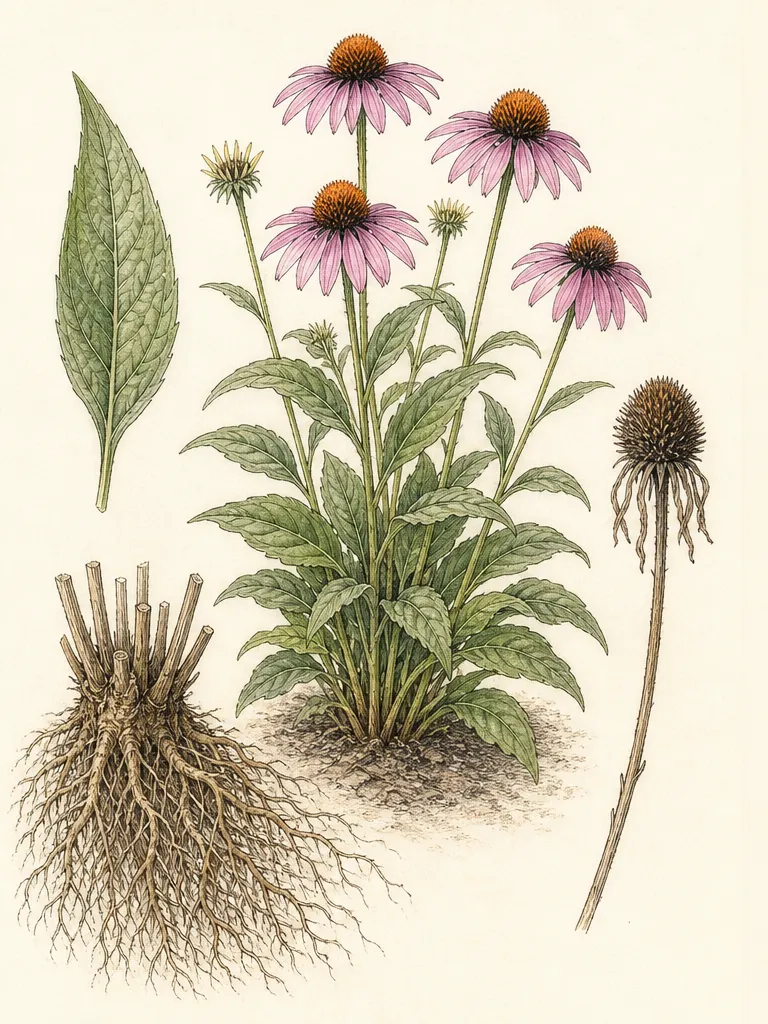
Purple coneflower is a strong, coarse-textured perennial for sunny borders, meadow-style plantings, cutting gardens, and naturalistic groups. The species forms a basal and lower-stem framework of rough, often toothed leaves, then sends up stiff stems that may branch near the top. Each stem carries a daisy-like head whose pink to purplish ray florets surround a raised orange-brown to purplish-brown disc. As the disc matures, its firm projecting structures create the bristling cone that gives the genus its familiar garden identity.
The species is native to the central and eastern United States. Kew describes rocky open woods and prairie habitat, with some occurrence on wetter soils beside rivers and streams; Missouri Botanical Garden notes moist prairies, meadows, and open woods. That range of habitats explains adaptability, but not indifference to drainage. In a home garden, Echinacea purpurea is most dependable in average, well-drained soil where roots receive even moisture during establishment and the crown is not left in stagnant winter wetness.
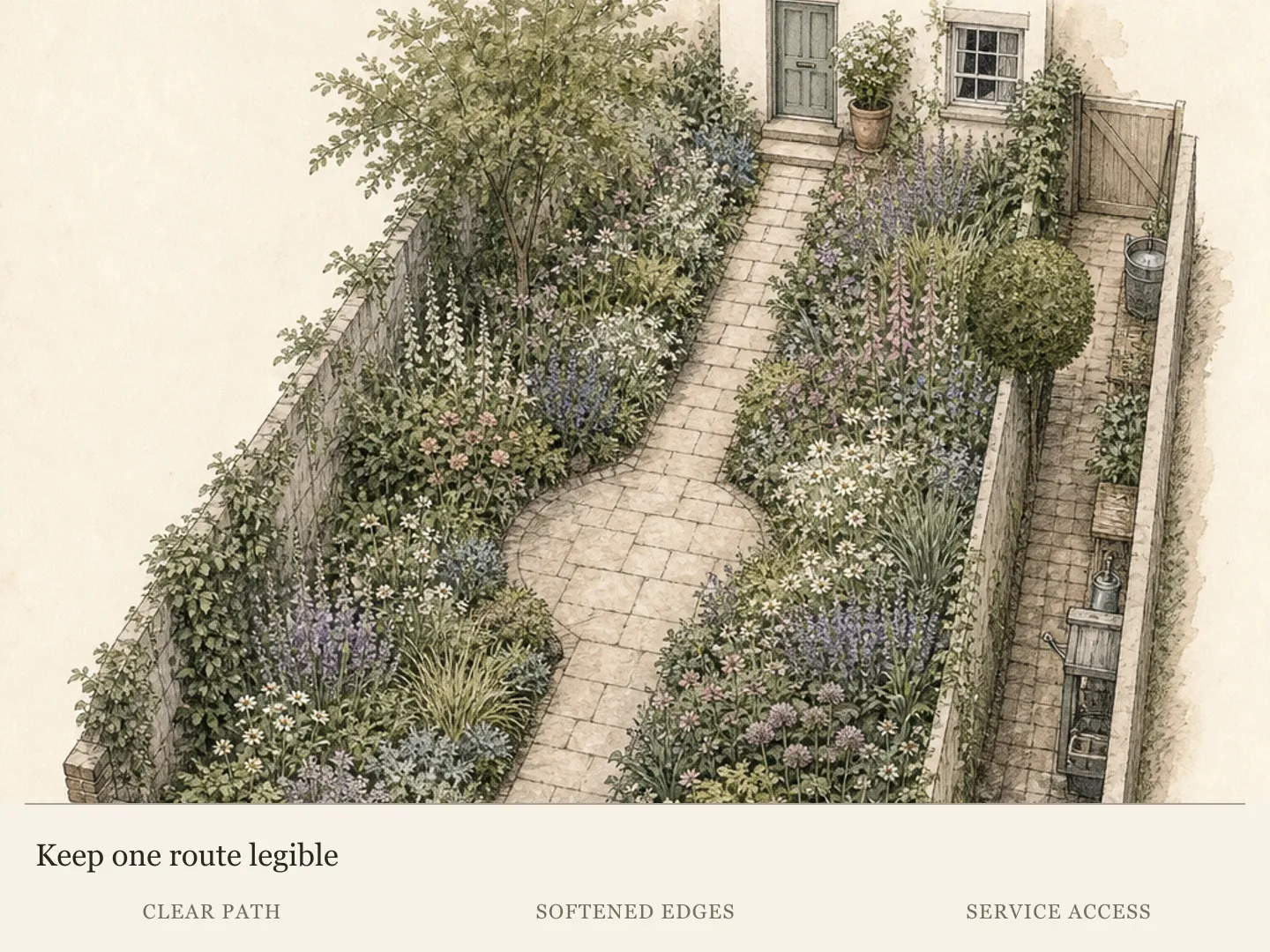
Full sun usually produces the densest flowering display and firmest outline, although the species tolerates partial shade. In less light, expect fewer flowers and a looser clump, especially where neighboring plants also compete. Place it where the mature stems can be seen without leaning across a walk. The leafy footprint is narrower than the flowering outline, so draw both on a plan and allow nearby plants enough room for air movement and maintenance access.
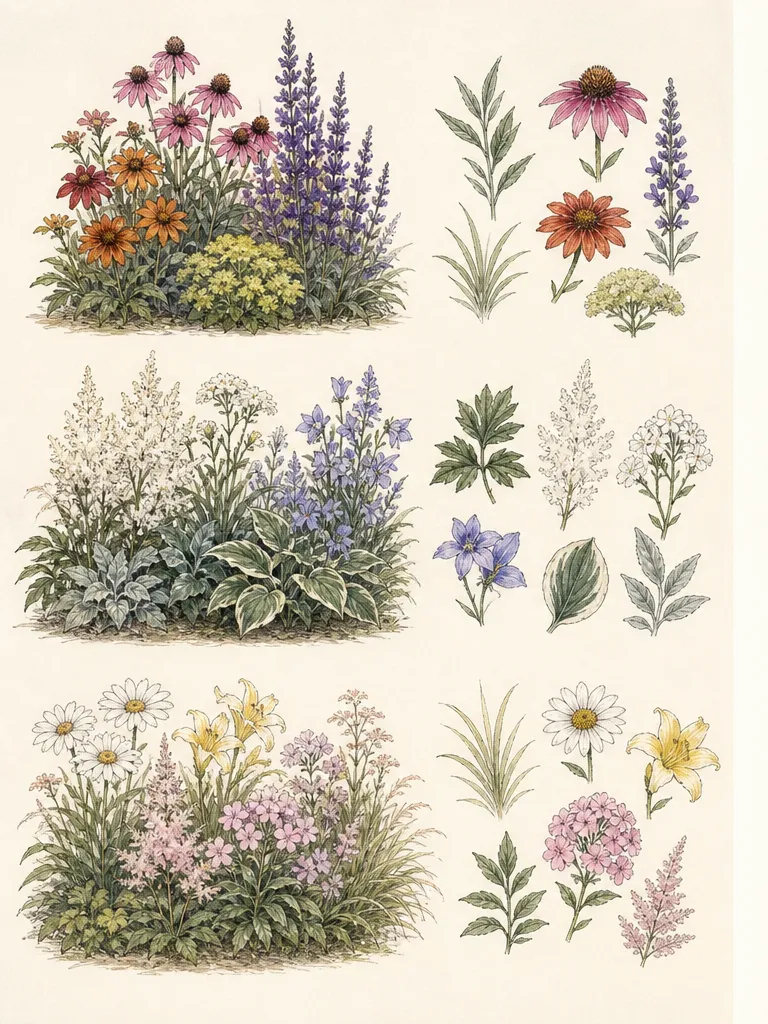
Species plants generally bear pink-purple rays that spread or droop around the prominent cone. White, red, orange, yellow, double, dwarf, and strongly horizontal-rayed forms in commerce may be named selections or hybrids. Those colors and shapes should not be presented as the normal species morphology. A plant sold only as coneflower may also belong to another Echinacea species. Retain the full botanical name and cultivar name from the nursery label if identification, mature size, or hardiness matters to the design.
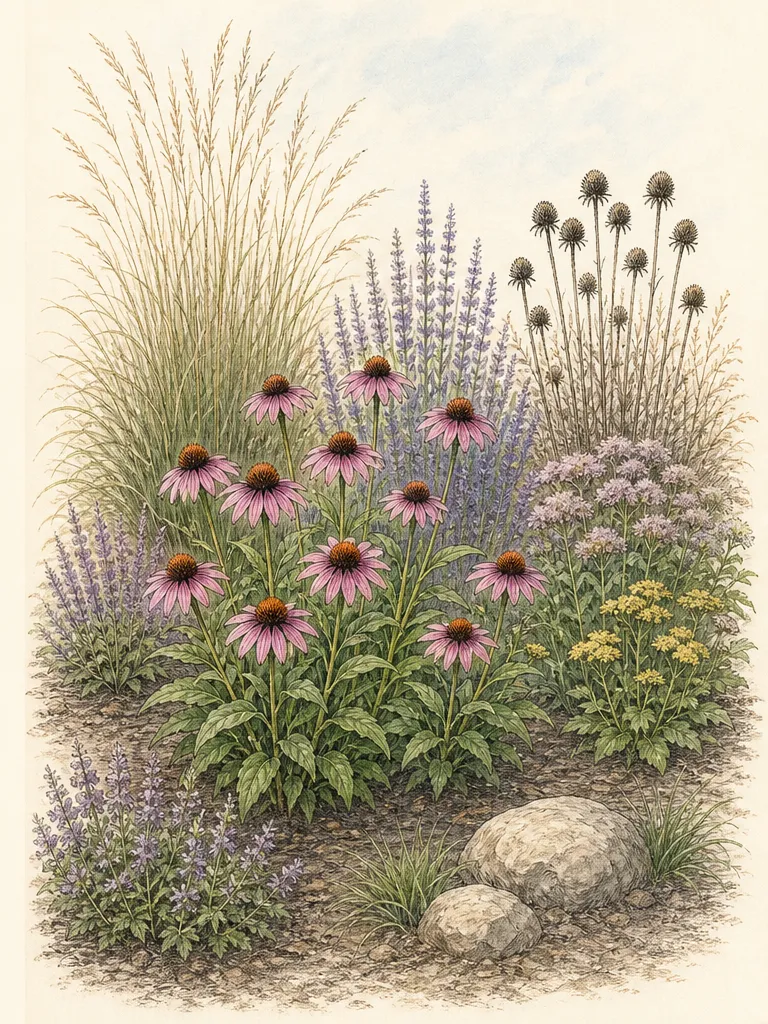
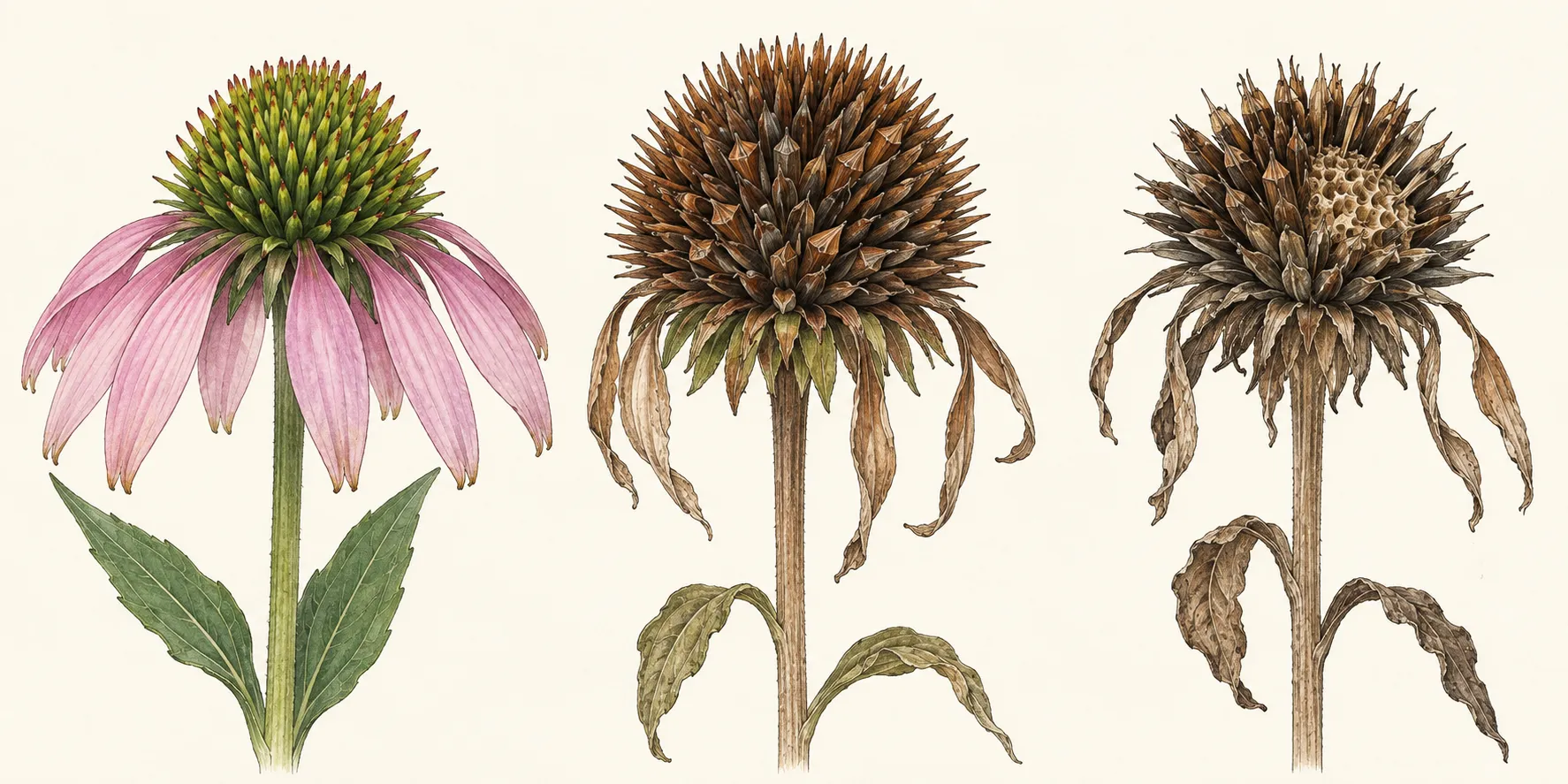
Use purple coneflower in repeated groups rather than as isolated dots. A drift of several species plants can hold the middle of a border, with finer grasses or smaller mounds in front and later-season structure behind. Its rough foliage contrasts well with narrow blades and softer leaves. The dark cones remain visually useful after petals fade, and selected stems can stand into autumn or winter. Balance that persistence with sanitation if a serious disease affected the planting.
The plant is adaptable once established, but establishment still requires attention. A drought-tolerance description refers to rooted plants, not a newly installed container whose root ball can dry while surrounding soil remains moist. Water the original root ball and adjacent soil, then widen the wetted area as roots expand. Avoid heavy fertility that produces lush weak growth. A soil test, observed plant response, and local recommendations are better guides than routine feeding.
Purple coneflower is often treated as an effortless perennial, yet its longevity and appearance vary by site, genetics, and disease pressure. Seedlings may appear when cones are retained, and they will not necessarily duplicate a cultivar. Clumps can become crowded, while repeated crown loss may signal poor drainage or a selection unsuited to the climate. Preserve the species-focused baseline—rough leaves, upright herbaceous habit, purplish rays, summer bloom, and a prominent cone—then evaluate named plants against their own documented traits.
- Family
- Asteraceae
- Range
- Central and eastern United States
- Soil pH
- 6–8
- Spread
- 1.5–2 ft · 0.45–0.6 m
Planting & careHow to grow purple coneflower
This profile describes the species Echinacea purpurea within the broad USDA zone 3–8 range reported by NC State and Missouri Botanical Garden. Local ecotype, winter wetness, summer heat, soil drainage, and provenance affect performance. Many nursery plants are selected cultivars or hybrids whose height, ray color, flower form, disease response, sterility, and cold tolerance can differ substantially; use the exact label for cultivar-specific planning.
- 1Verify the species and label
Look for Echinacea purpurea on the nursery label and retain any cultivar name. Do not identify the plant from flower color alone; modern coneflower selections include colors and forms outside the usual species appearance, and hybrids may be sold under shortened names. Check the label's mature size and hardiness when it differs from the species envelope on this page.
- 2Choose the brightest practical site
Select full sun for the strongest flowering and firmest stems, or partial shade where regional heat and the design justify it. Observe neighboring plants and structures through the growing season. A site that receives spring sun but summer shade may not perform like an open border, and a reflected-heat pocket can increase establishment water demand.
- 3Confirm drainage at crown level
Use average soil that drains after rain rather than a depression that remains waterlogged. The species tolerates several textures, but texture does not guarantee drainage. In heavy or compacted ground, assess the whole bed and correct the broader condition rather than filling one planting hole with a sharply different mix that can hold water around the root ball.
- 4Reserve the mature flowering outline
Plan for the species range of roughly 2–5 feet tall and 1.5–2 feet wide, then check the actual selection. Keep tall stems away from narrow paths and place groups where spent cones can remain without blocking access. If a cultivar is compact, use its documented spread instead of crowding species plants in the hope that pruning will hold them small.
- 5Set the root ball at existing grade
Dig a hole no deeper than the root ball and broad enough to settle roots without forcing them. Place the top of the root ball level with the surrounding finished soil. Backfill with the site soil, firm gently, and water thoroughly. Do not bury the crown beneath soil, compost, or a cone of mulch.
- 6Mulch the soil, not the crown
Apply a modest organic surface layer where appropriate for the bed, preserving a visible gap at the crown and stems. Count any existing material before adding more. Mulch should reduce bare-soil stress and weed pressure without holding constant moisture against the plant base or concealing the emergence point during spring maintenance.
- 7Water through establishment
Keep the root ball evenly moist while roots move into surrounding soil, checking below the surface rather than sprinkling by habit. Extend each watering across the developing root zone and reduce frequency from evidence of establishment, weather, and soil moisture. Do not use the plant's mature drought tolerance as a reason to let a new transplant dry out.
- 8Mark and monitor the clump
Keep a label or map showing the exact species or cultivar, planting date, and mature dimensions. Watch stem strength, flowering, crown condition, and spread through the first full season. If several plants fail in the same low spot, investigate drainage and planting depth before replacing them with more coneflowers.
Pruning purple coneflower
Purple coneflower blooms on the current season's herbaceous stems, so no old woody framework must be preserved. During bloom, remove individual spent heads only if a tidier appearance or reduced self-seeding is the goal; the plant generally continues through its normal flowering period without deadheading. Leaving selected cones carries dark structure into autumn and may provide seed for birds, while removing some heads can keep a formal border quieter. After hard frost, choose between a late-autumn cleanup and retained winter stems according to disease history, appearance, and local habitat practice. If leaves or stems showed a serious foliar disease, remove affected debris rather than leaving it beside the crown. Otherwise, sound dry stems may stand until late winter or early spring. Cut them before new basal growth becomes difficult to see, using clean tools and avoiding the crown. Named cultivars vary in stem density, flower form, sterility, and persistence; a double or sterile selection may not provide the same seed-head function as the species. Do not shear living summer foliage to control mature size. If the clump is too tall or wide for the site, move or divide it in a suitable cool season, or select a documented compact cultivar for the next planting.
Seasonal care
Spring
Locate the crown before working the bed and remove retained dry stems without cutting emerging leaves. Pull accumulated mulch and wet debris away from the growth point. Divide or move a crowded clump as growth begins if local conditions are suitable, keeping viable crown sections with roots and replanting at the original grade. Check drainage after spring rain, then water new divisions consistently while they establish. Avoid routine fertilizer unless a soil test or clear deficiency supports it.
Summer
Watch the full clump rather than individual flowers. Firm upright stems and sequential heads indicate adequate light and establishment; leaning, sparse bloom, or repeated wilting calls for a light, competition, and moisture check. Water deeply when the root zone is dry, especially for first-year plants, but do not maintain a saturated crown. Deadhead selectively for appearance or seed control, and inspect distorted flower heads, unusual green floral growth, leaf spotting, and crown collapse before moving tools to healthy plants.
Autumn
Decide which sound cones will remain for structure and which seedlings would be unwanted. Collect or remove heads before seed drop if preserving a named cultivar's appearance matters, because volunteer seedlings may differ. After frost, clear diseased foliage and keep the crown visible. Do not add a heavy annual mulch layer by habit; measure what remains and prevent organic material from settling over the plant base. Mark the clump if winter cleanup removes all stems.
Winter
Allow retained healthy stems and cones to stand where they remain stable and suit the garden. After storms, remove broken stems that fall across paths without tugging the crown. Check that heaving, runoff, or displaced mulch has not exposed roots or buried the growth point. Near the cold or wet edge of the plant's useful range, focus on drainage and stable soil temperature rather than a mound over the crown. Plan division or relocation from the prior season's notes rather than from the dormant outline alone.
Safety and garden spread
Common problems
Aster yellows-like distortion
- Look for
- Green, distorted, tufted, or abnormally formed flower heads and unusual branching rather than the normal purplish rays around one defined cone.
- Action
- Compare the whole plant with healthy coneflowers and seek local diagnostic confirmation. Do not propagate a suspicious plant or move cutting tools directly from it to healthy clumps; follow local guidance for removal if aster yellows is confirmed.
Leaf spotting
- Look for
- Expanding discolored lesions, premature leaf decline, or repeated spotting that is more severe in dense, wet foliage.
- Action
- Improve spacing and water the soil rather than routinely wetting leaves. Remove badly affected debris according to local guidance, document the pattern, and obtain a diagnosis before using any treatment because several disorders can look similar.
Crown decline in wet soil
- Look for
- A collapsing center, soft discolored tissue at the base, or repeated loss after cool wet periods while nearby well-drained plants remain sound.
- Action
- Pull mulch away, stop unnecessary irrigation, and assess planting depth and drainage. Do not replant another crown into the same saturated pocket until the site limitation is corrected or a more suitable plant is chosen.
Few flowers and leaning stems
- Look for
- A loose clump reaching toward light, with fewer heads and stems falling into neighboring plants.
- Action
- Measure summer light and check crowding or excessive fertility. Move the plant during a suitable season if the site cannot provide enough sun; do not rely on repeated shearing, which removes the natural flowering framework.
Crowded or thinning clump
- Look for
- Reduced vigor, congested crowns, or a center that no longer produces strong shoots despite otherwise suitable conditions.
- Action
- Lift and divide in a locally appropriate cool season, retaining firm rooted outer sections and discarding dead tissue. Replant at the original grade with enough mature spacing, and reassess drainage if decline returns quickly.
Unexpected seedlings
- Look for
- Young rough-leaved rosettes appearing around retained seed heads, potentially with later flowers unlike a named parent cultivar.
- Action
- Keep seedlings only where naturalizing is wanted and identity does not need to match the parent. Remove extras while small, or deadhead earlier in future seasons. Do not distribute volunteers under a cultivar name.
Related reading
Sources
- Echinacea purpurea (L.) Moench. Royal Botanic Gardens, Kew. Source record · Accessed 2026-08-19.
- Echinacea purpurea. North Carolina Extension Gardener Plant Toolbox. Source record · Accessed 2026-08-19.
- Echinacea purpurea - Plant Finder. Missouri Botanical Garden. Source record · Accessed 2026-08-19.