Grow · purple coneflower fall seed collection
Collect Purple Coneflower Seed in Fall and Leave Heads for Birds
Test dry purple coneflower heads for ripe seed, collect a labeled share, leave winter bird food, and choose an E. purpurea sowing path.
Published Last updated
In this guide
Choose ripe heads and leave a standing share
In a temperate garden in early October, collect seed only from purple coneflower heads that are dry and release seed with a gentle rub. Leave other sound heads upright for birds and winter structure. The calendar is a reminder to inspect, a useful inspection prompt: a late flower can still be unripe while an earlier head has already been emptied. A small, labeled collection from a known plant is more useful than stripping the whole clump and later guessing what the packet contains.
The following seed choices apply to purple coneflower, Echinacea purpurea, grown in an ornamental home garden. Other Echinacea species can have different germination requirements. USDA NRCS describes E. purpurea seed as able to germinate after spring sowing even when seed has had no cold treatment, while outdoor winter exposure can improve spring germination. The RHS germination guide treats Echinacea at genus level and says cold moist stratification may help seed that does not germinate. For a verified E. purpurea lot, winter exposure is one option; a cold period is not mandatory for every lot.
Walk the bed while the living plant still has a readable label. Confirm the species and note whether it is a named hybrid or cultivar. Seedlings from a selected hybrid may vary in flower color, form, or vigor, so a packet should not promise copies of its parent. If the label has disappeared, describe the source honestly as an unidentified garden coneflower and label any shared seed with that uncertainty. Inspect the parent now, while its flowers, leaves, and bed position are still visible.
Give standing heads a deliberate place in the plan. Iowa State Extension notes that coneflower heads feed birds and remain attractive through winter. Illinois Extension specifically observes goldfinches using coneflower heads. Leave the strongest stems in a visible part of the border, then take a modest share from less prominent positions. Illinois Extension suggests taking no more than a third when gathering native seed. Use that conservative ceiling in a garden with many ripe heads, an approximate ceiling after birds and weather have taken their share: birds, weather, and prior deadheading have already changed the available seed.
Read the cone before clipping it
A faded ray flower is not the same as a mature seed head. Inspect the central cone, which becomes darker and drier as its small fruits develop. In the illustrative comparison, the green head still carries fresh tissue; the brown head represents material worth testing; the pale, open head may already be spent. Use the drawing to compare stages, then test the actual head. Use touch and the actual seed as well as color, because rain, cultivar color, and weathering can make two heads look similar.
On a dry day, hold a paper bag below one head and rub a small area through a glove. Firm, filled seed should separate readily from a mature head; if it clings, leave that head longer. A fully hollow or very light fragment offers little to save. A separate USDA guide for Echinacea sanguinea gives easy separation as a maturity cue and warns that shriveled or insect-damaged material can lower seed quality. Use this as a practical genus-level check alongside the E. purpurea guide’s instruction to collect ripe autumn seed; treat it as a field cue, not a guaranteed viability test for every garden head.
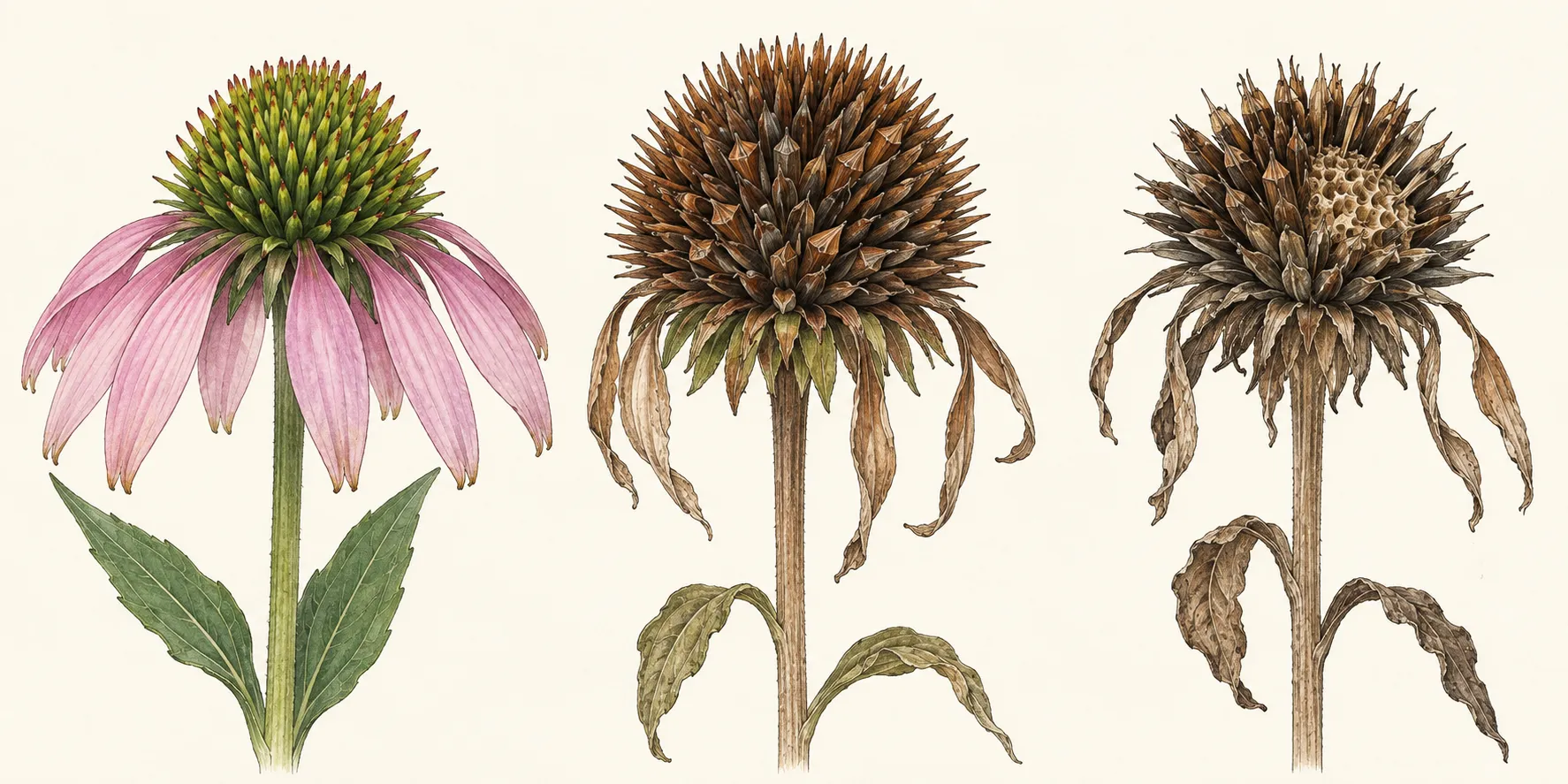
Examine more than one position on the same plant. Early central blooms may be ready while later side shoots remain green. A head can also be brown outside and damp within after prolonged rain.
Wait until surface moisture has evaporated; Illinois Extension recommends harvesting dry heads after dew or frost has lifted. If rain is forecast, collecting a nearly ready head early is less reliable than collecting a smaller number of clearly ripe heads now and checking the rest later. Put damp heads in a breathable container until they have dried fully.
The spiny cone is uncomfortable to grasp. Gloves make both the maturity rub and the clipping easier. Work with one identified plant at a time, carry its label to the bag, and write the date before moving to another clump. An accidental mixture of different taxa is harder to correct once the cone fragments are scattered on a tray. The maturity image belongs beside this decision because it shows three states in one view; the collection sequence later addresses handling after the decision has been made.
Choose the share to keep and the share to leave
The goal is not a perfectly symmetrical division of the plant. Keep heads that are ripe, reachable, and traceable to the parent you intend to propagate. Leave standing heads that still hold seed, especially where winter silhouettes will be seen from a path or window. A gardener with only two viable heads may reasonably leave both for birds and buy named seed for propagation. A larger established clump gives more flexibility. The decision depends on actual head quality and garden purpose, not on a fixed number of stems per plant.
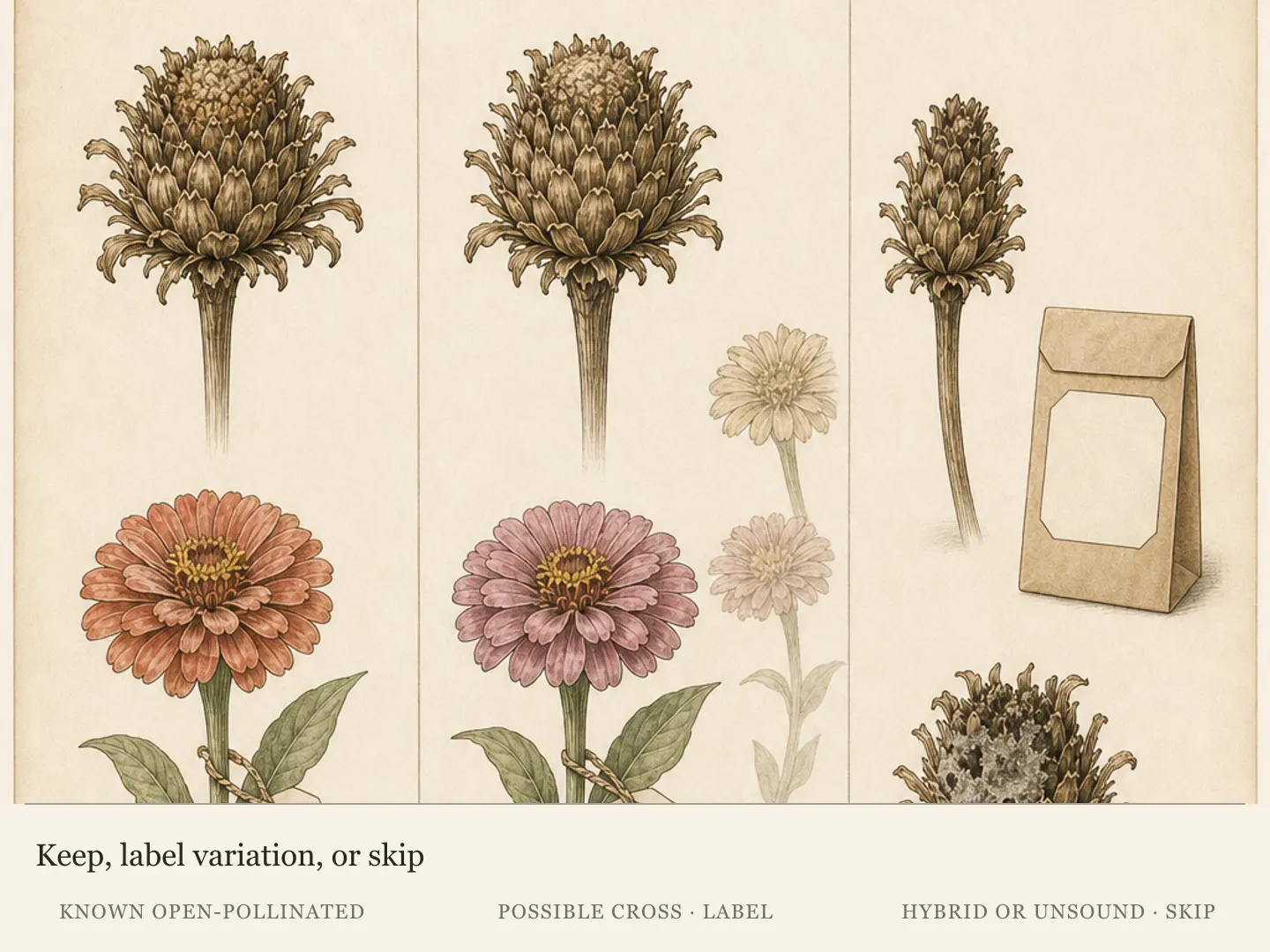
Illinois Extension's native-seed advice says to take no more than a third and let the rest reseed naturally. In a home border, apply that as a ceiling for a healthy abundant patch, then take less if birds are already feeding or only a few heads remain. Collecting from several healthy plants of the same verified species preserves more of the garden's variation than taking every head from a single exceptional flower. Keep distinct named cultivars separate if their identity matters; seed descendants still need the honest “grown from” wording instead of claiming an inherited cultivar name.
Pay attention to the landscape role of an upright cone. Iowa State lists purple coneflower among perennials whose dried heads remain decorative through winter. A tall stem may collapse after a storm, while shorter sheltered stems persist longer. Choose which heads remain based on their condition now, then revisit the bed in spring. If a stem breaks later, it has still offered seed and shelter while standing. There is no need to cut every perennial to a uniform height just because one seed head was harvested.
If the plant had distorted flowers, abnormal green leafy growth in the flower head, or conspicuous decay, leave that material out of the seed lot and investigate the plant before propagating it. The purpose of sorting is to keep a clean, clearly identified batch, not to diagnose disease from a single symptom. If the only heads available are damaged or already empty, call the harvest unsuccessful and try another plant or another year. A packet of uncertain fragments is not improved by a precise date on its envelope.
Keep one seed lot dry and identifiable
Clip selected dry heads into a paper bag that already bears the species, parent or bed location, and date. A paper bag contains loose fruits while allowing residual surface moisture to escape better than a sealed jar used at the moment of harvest. Leave enough stem to handle the prickly head while keeping fingers clear of the cone. Carry each labeled clump separately; dried heads become difficult to distinguish. The adjacent drawing shows how small wedge-shaped fruits are released from the cone, with standing heads still visible in the garden.
Work over a shallow tray indoors or in a windless place. Rub a dry head gently between gloved fingers so the small fruits fall into the tray, then lift out large pieces of cone and chaff. Rub gently, because grinding the head makes the lot harder to inspect and can damage material. Look for firm, developed pieces and discard conspicuously empty, shriveled, bored, or moldy fragments. A paper envelope marked before filling keeps the cleaned lot with its field identity while the remaining heads are processed.
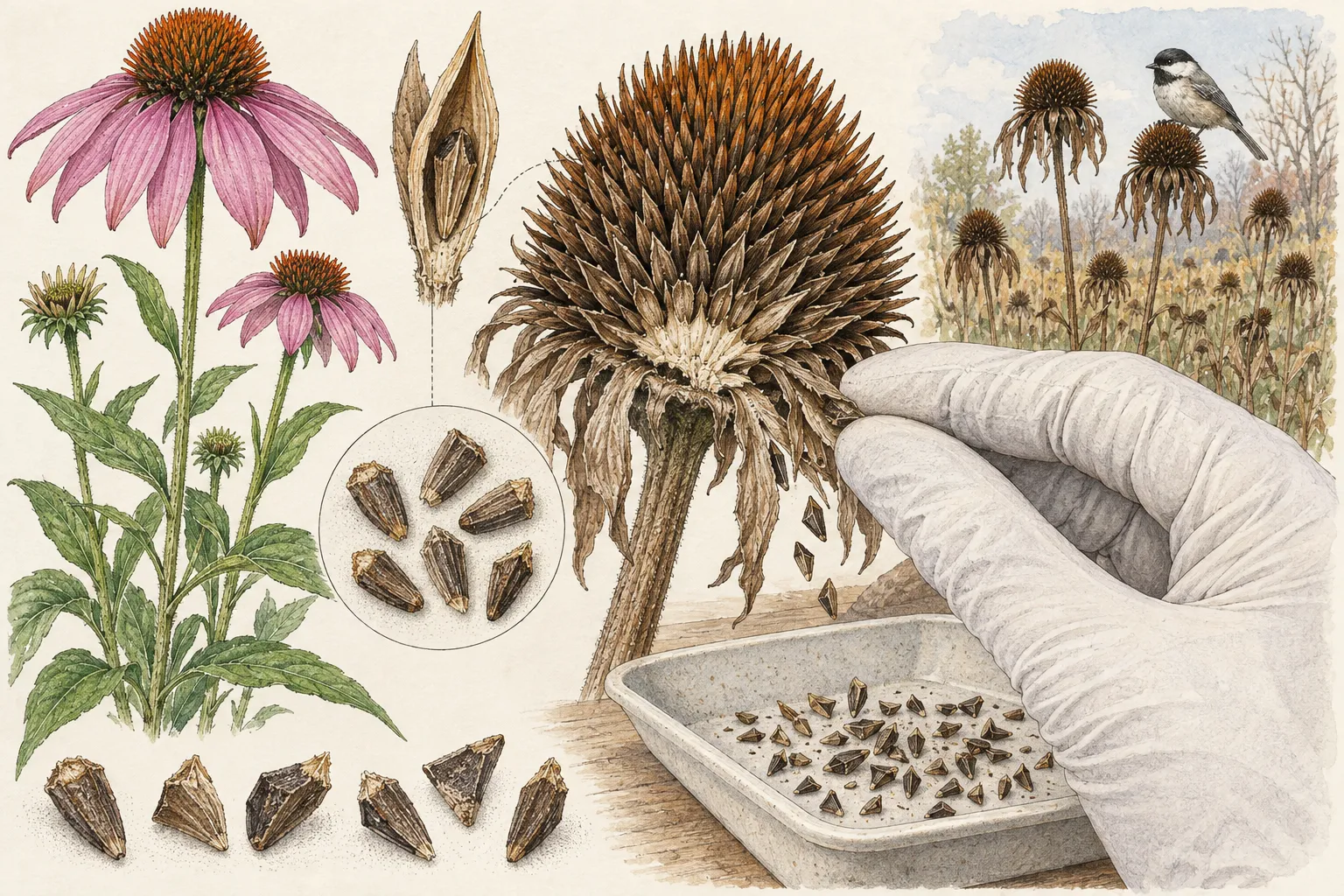
Spread the cleaned material thinly to finish drying before longer storage. If it bends or clumps because it is damp, leave it in a breathable container in a dry indoor place and check again. Once dry, store the labeled lot cool, dark, and dry until its intended sowing date. A date, species, parent location, and note such as “seedling color may vary” are more useful next spring than an ornate packet. If two bags have conflicting labels, keep them separate as uncertain lots and keep their uncertainty visible.
Keep the standing heads outside in mind while cleaning. A high yield from one cone is still only one part of the harvest plan. If the indoor tray contains more than the seed-starting space can handle, share a labeled surplus with someone who understands its parentage, or save less next year. Collecting is a small decision in a living border, a way to preserve a known lot and a living winter display. The species-specific head test and the remaining bird forage determine how much this patch can spare.
Choose a sowing path for Echinacea purpurea
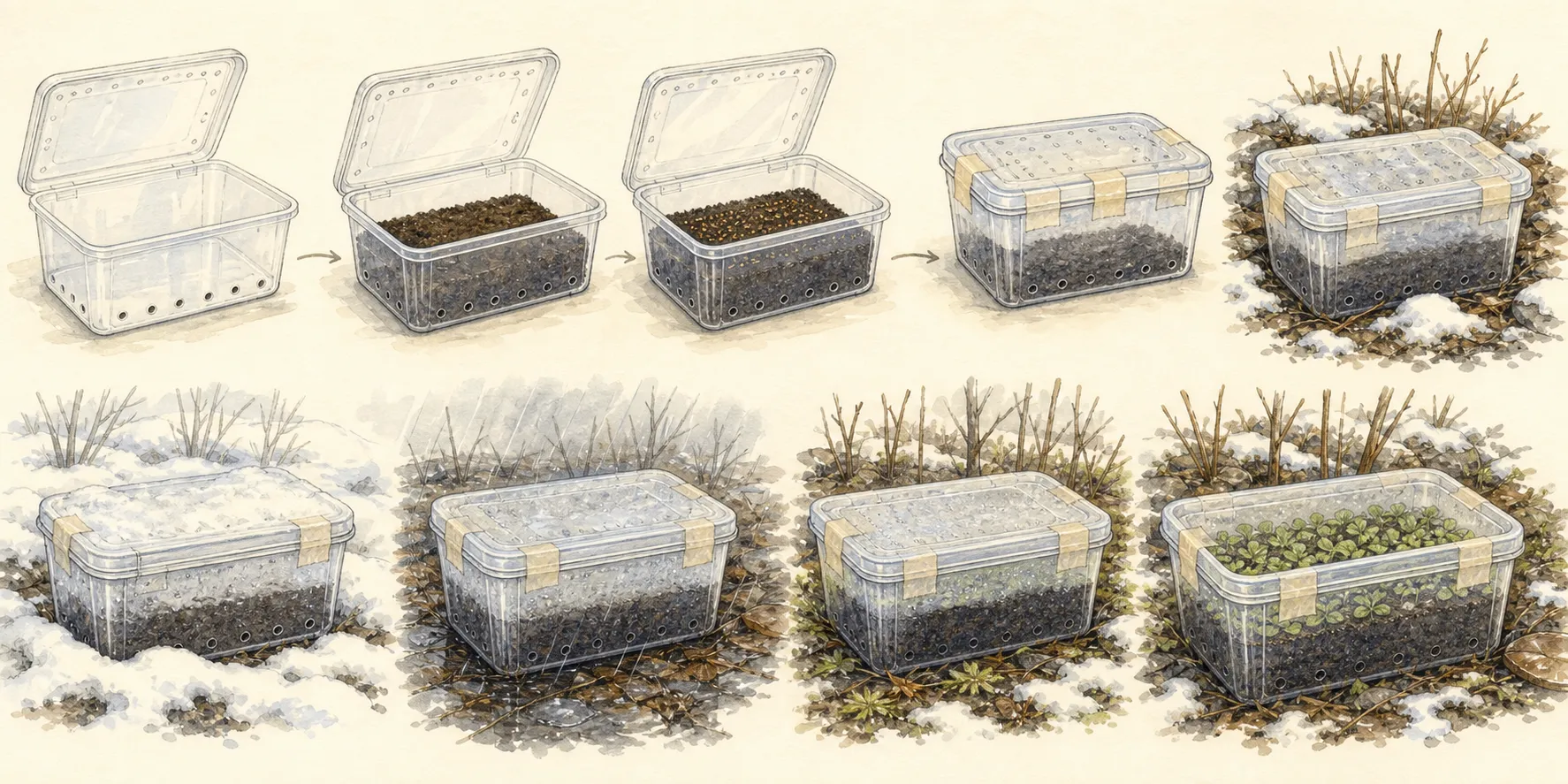
There are two defensible paths for a verified E. purpurea lot. Sow some into an outdoor flat that will experience winter conditions, or keep a dry labeled portion for spring sowing. USDA NRCS describes outdoor flats sprinkled with E. purpurea seed, lightly covered with about one-quarter inch of potting soil, then left outside through winter; it also states that spring planting with no cold treatment can germinate. That is no promise that both methods have equal speed or success in every climate. Compare small labeled portions if the outcome matters to you.
The RHS germination guide advises surface sowing Echinacea and notes that ungerminated seed may need cold moist stratification. Its genus-wide recommendation uses a different covering description from the USDA's E. purpurea example. For a home tray, favor the directions supplied with a verified seed lot and keep any covering thin enough that seedlings can emerge; document which method you used. For purple coneflower, cold can help some lots; E. angustifolia has different dormancy and root behavior and needs its own directions.
An outdoor flat needs drainage, a stable place away from foot traffic, and a durable label that remains readable after freeze and rain. USDA suggests a light screen to temper heavy precipitation and keep animals out of flats. Check the medium before watering: it should not become a stagnant pool, and a dry spell may still require moisture. If a region has mild winters with little cold, the outdoor path may not behave like the northern examples. The packet's species and local propagation guidance should guide the timing chosen for this flat.
Spring sowing gives a second chance to inspect the lot and use controlled trays. The RHS lists a broad 30-to-90-day germination window for Echinacea, illustrating why a tray that has not yet produced seedlings is still worth monitoring. Keep the label, log the sowing date and method, and watch the medium. Move seedlings only after they are large enough to handle; the USDA E. purpurea guide describes potting on at the second set of true leaves. Protect the young plants from weeds and drying because young plants still need attention despite the hardiness of mature clumps.
Use the next season to judge the choice
In spring, compare the two outcomes separately: how many sound seedlings appeared from a known quantity of seed, and how many standing cones survived winter or were used by birds. Neither result needs to be perfect to make the autumn plan worthwhile. If an outdoor flat fails, check drainage, seed maturity, labeling, and the actual cold conditions before concluding that all purple coneflower seed requires a different treatment. If the stored portion germinates, that result is consistent with USDA's species guidance; it does not prove every future batch will behave identically.
Keep seedlings with enough light and air movement, and transplant when they have developed a manageable root system and local planting weather is suitable. A crowded tray can disguise weak individual seedlings and make lifting them damaging. Note any variation in foliage and eventual flowers, especially if the parent was a named selection. Share seedlings as seed-grown offspring; use a cultivar name only when seed propagation is known to preserve that cultivar. Honest “seed grown from” labels preserve useful garden history while keeping genetic identity uncertain.
Look at the uncut part of the bed before spring cleanup. If the heads remained sound, they supplied structure even after birds had taken much of the seed. If they fell, consider whether a slightly more sheltered position or a sturdier neighboring plant would display them better next winter. Illinois Extension notes that removing seed heads limits seed production and bird forage. A garden that needs to control volunteer seedlings can choose fewer standing heads next year while still leaving a deliberate share; observation should guide that tradeoff.
Keep a simple record: which clump provided seed, how many heads were clipped, whether the rest were left, which sowing method was used, and what appeared. The record links the October decision to the next growing season. It also makes the next harvest smaller and more precise. The useful answer is not to empty every brown cone at the first frost; it is to test maturity, keep a traceable portion, and let the remaining heads continue their job outdoors.
Steps
- Level
- easy
- Time
- About 30 to 60 minutes for a small established patch, plus drying and later sowing
- Tools
- Gloves, Clean pruners, Shallow tray, Permanent marker
- Materials
- Paper collection bags, Paper seed envelopes, Durable plant and flat labels, Free-draining seed-starting medium for optional outdoor flats
- 1Confirm the parent and reserve standing heads
Find a reliably identified Echinacea purpurea plant while the living clump and its label can still be checked. Choose which healthy upright cones will stay for birds and winter form before cutting anything. Take no more than a modest share of an abundant patch; if only a few sound heads remain, leave them and use purchased seed.
- 2Test a head on a dry day
Wait until dew or frost has evaporated. Through a glove, rub part of a brown dry cone over a paper bag. Firm seed that separates readily is a useful maturity cue. Leave green or stubborn heads to ripen, and reject conspicuously empty, shriveled, bored, or moldy material.
- 3Clip and label one lot
Write Echinacea purpurea, parent location, and collection date on a paper bag before clipping. Catch each selected head in that bag. Keep uncertain hybrids or other species in separate bags with honest labels. Use sturdy gloves because the cone is stiff and prickly.
- 4Clean and finish drying
Over a shallow tray, rub one dry head gently to release its fruits. Remove large cone pieces and obvious chaff, keeping the seed intact. Keep the lot thinly spread in a dry airy place until residual dampness is gone, then transfer it to a dated paper envelope for cool dark dry storage.
- 5Choose one or two sowing paths
For verified E. purpurea, use an outdoor flat through winter or retain a dry portion for spring sowing. USDA NRCS describes lightly covered outdoor flats and also spring germination when no cold was given. Label each method and protect flats from heavy rain while ensuring drainage. Follow lot-specific instructions if they differ.
- 6Record the spring result
Monitor slow trays over the expected germination window. Pot on seedlings when they can be handled and keep cultivar offspring labeled as seed grown, not cloned. Note which autumn heads stayed standing for birds and whether the harvested portion supplied enough seedlings before deciding how much to collect next year.
Plants in this guide
Related reading
Sources
- EASTERN PURPLE CONEFLOWER. USDA NRCS. Source record · Accessed 2026-09-24.
- Sanguine Purple Coneflower (Echinacea sanguinea) Plant Guide. USDA NRCS. Source record · Accessed 2026-09-24.
- Beginner’s Guide to Collecting Native Seeds for Autumn. University of Illinois Extension. Source record · Accessed 2026-09-24.
- Perennials with Winter Interest. Iowa State University Extension and Outreach. Source record · Accessed 2026-09-24.
- Germination Guide. Royal Horticultural Society. Source record · Accessed 2026-09-24.
- Coneflowers in the garden. University of Illinois Extension. Source record · Accessed 2026-09-24.