Chinese Astilbe
Astilbe chinensis
A moisture-loving East Asian perennial with divided foliage and upright late-summer plumes, suited to cool, humus-rich shade.
Published Last updated
At a glance
- Light
- Partial shade; sun only where soil remains reliably moist
- Water
- Consistently moist during active growth
- Soil
- Humus-rich, moisture-retentive, well-drained soil
- Hardiness
- Zones 4–8
- Bloom
- Midsummer to early autumn
- Height
- 2–4 ft · 60–120 cm
In this guide
Overview
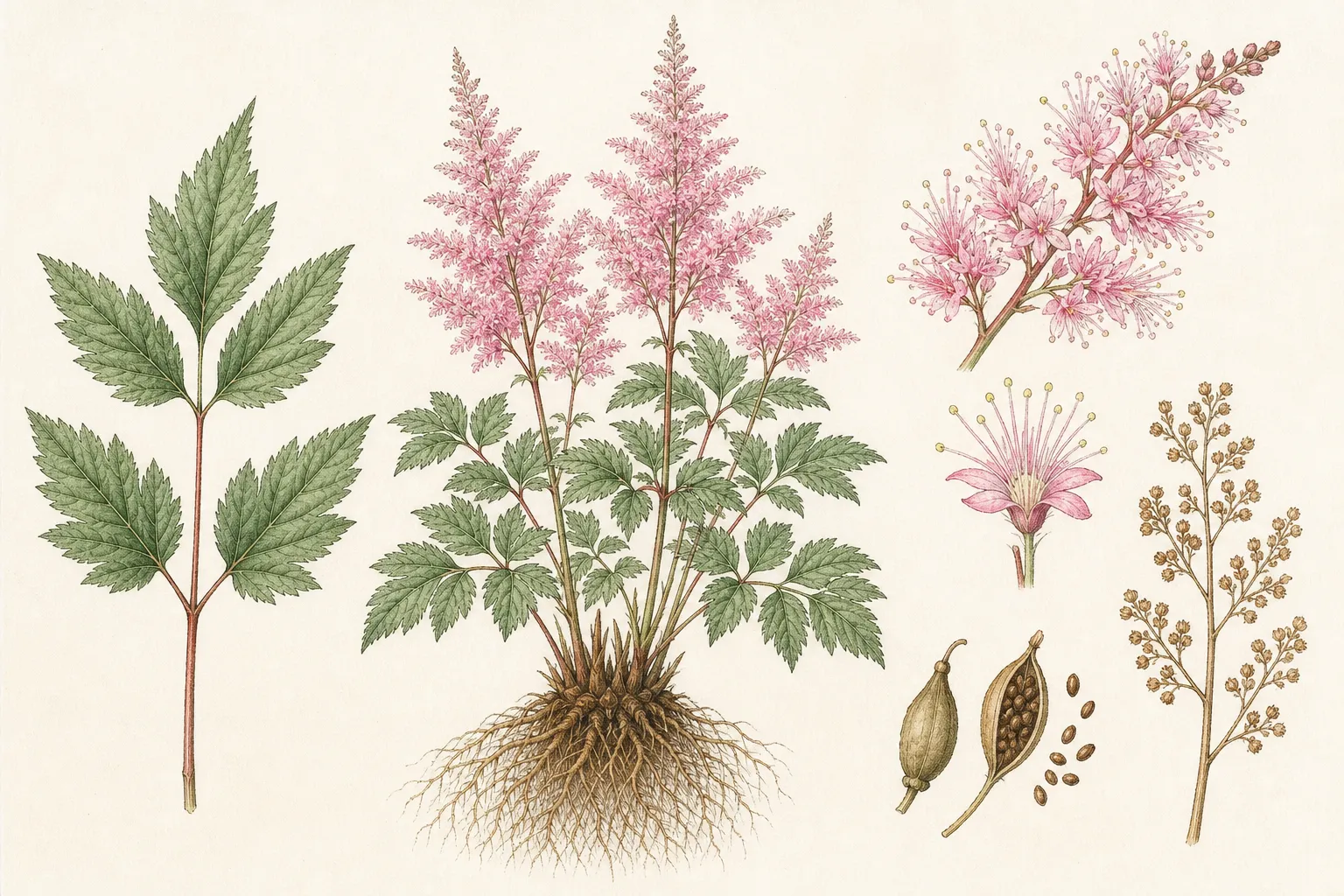
Chinese astilbe is a deciduous, rhizomatous perennial with divided, toothed leaflets and narrow upright panicles of many small pinkish or white flowers. Young foliage may open bronze before turning dark green. The species and its cultivars flower relatively late in the astilbe season, although exact color and stature belong to the named selection.
The root zone must stay cool and evenly moist from spring emergence through flowering. Partial shade is the dependable position; more sun is workable only where the soil retains moisture, while hot sun or drought produces brown leaf margins and early foliage decline. Humus-rich soil should hold water without leaving the crown in stagnant winter wet.
Use the vertical plumes as a middle layer beside ferns, hostas, and other moisture-loving shade plants. Most garden selections occupy roughly 2–4 ft in height and about 1.5–2 ft in width, but dwarf and strongly spreading selections differ enough that the cultivar label should set spacing.
Set a container plant at the same crown depth at which it was growing, with visible shoot buds at or just above the finished soil surface. Water the full root ball and surrounding bed, then mulch around rather than over the crown. Roots of nearby trees can dry a shaded bed quickly, so check below the mulch instead of judging moisture from shade alone.
Short rhizomes enlarge the clump. Divide in late winter or early spring when an older plant becomes congested or flowers poorly, retaining healthy buds and roots in each piece. Faded plumes may remain through winter; remove old stems and leaves before new shoots expand in spring.
- Family
- Saxifragaceae
- Range
- Russian Far East through China and Korea to southern Japan
- Soil pH
- 5.5–7
- Spread
- 1.5–2 ft · 45–60 cm
Planting & careHow to grow chinese astilbe
Chinese astilbe is somewhat more tolerant of a brief dry interval than many hybrid astilbes, but it is not drought-tolerant. Give it afternoon shade in hot regions, and use the cultivar label for final height, flower color, and spreading habit.
- 1Confirm lasting moisture
Choose partial shade where the root zone stays evenly moist through summer but does not remain stagnant in winter. Check competition from tree roots before planting.
- 2Space the named selection
Allow about 18–24 in for a typical species selection and more where its label gives a broader spread. Keep the crown reachable for watering and later division.
- 3Set the crown at nursery grade
Place the root ball so the crown and shoot buds remain at the original soil level. Backfill without burying the crown, then water the root ball and adjacent soil thoroughly.
- 4Keep new roots moist
Water generously during the first growing season and whenever the top inch begins to dry thereafter. A deep soaking is more useful than frequent surface sprinkling.
- 5Mulch outside the crown
Use a light organic mulch to conserve moisture, leaving the crown and emerging buds uncovered so rot, frost heaving, and new growth remain visible.
- 6Mark the dormant clump
Leave a label beside the crown after foliage dies back so late winter cleanup and spring digging do not damage the shallow rhizomes.
Pruning chinese astilbe
Spent plumes may be removed after flowering or left for winter texture. Cut old stems and leaves to the crown before spring shoots expand. Divide an aging clump in late winter or early spring rather than repeatedly cutting back living foliage.
Seasonal care
Spring
Clear last year’s stems before shoots elongate. Divide a congested clump now, reset each piece at crown level, and begin watering before the new foliage unfurls.
Summer
Check moisture beneath the mulch and soak the root zone when the top inch dries. Brown margins usually point first to heat or drought, especially where afternoon sun reaches the bed.
Autumn
Leave sound buff plumes if winter structure is wanted, remove collapsed foliage, and keep the root zone moist until dormancy. Mark the crown before neighboring plants obscure it.
Winter
The crown is dormant. Prevent water from pooling over it, check for frost heaving, and keep heavy mulch or stored materials from covering the marked clump.
Safety and garden spread
The retained institutional profiles do not identify a specific poisoning hazard. Keep ornamental plant material away from unsupervised children and pets and wash after routine handling.
Common problems
Scorched or collapsing foliage
- Look for
- Leaf margins bleach or brown, or the whole canopy wilts during bright, hot weather.
- Action
- Check moisture several inches down and note afternoon exposure. Restore even moisture and add heat relief where possible; scorched leaves will not recover, so judge the correction by new growth.
Weak or sparse plumes
- Look for
- An established clump produces small plumes, few flowering stems, or an open and tired center.
- Action
- Check for deep shade, repeated drought, or an old congested crown. Correct the site problem or divide the clump in early spring, then allow a full season for recovery.
Soft crown after winter
- Look for
- Sections fail to emerge and the crown is buried, soft, or sitting in persistently saturated soil.
- Action
- Pull mulch away, inspect drainage, and remove decayed tissue. Reset sound pieces at crown level only after the cause of standing water or excess depth has been corrected.
Notched leaves and weak roots
- Look for
- Adult feeding leaves notches along leaf edges, while a badly affected plant may loosen or decline as larvae feed below ground.
- Action
- Inspect for vine weevil before blaming drought or fertilizer. Remove badly damaged material and follow current local biological-control guidance if the pest is confirmed.
Plant details
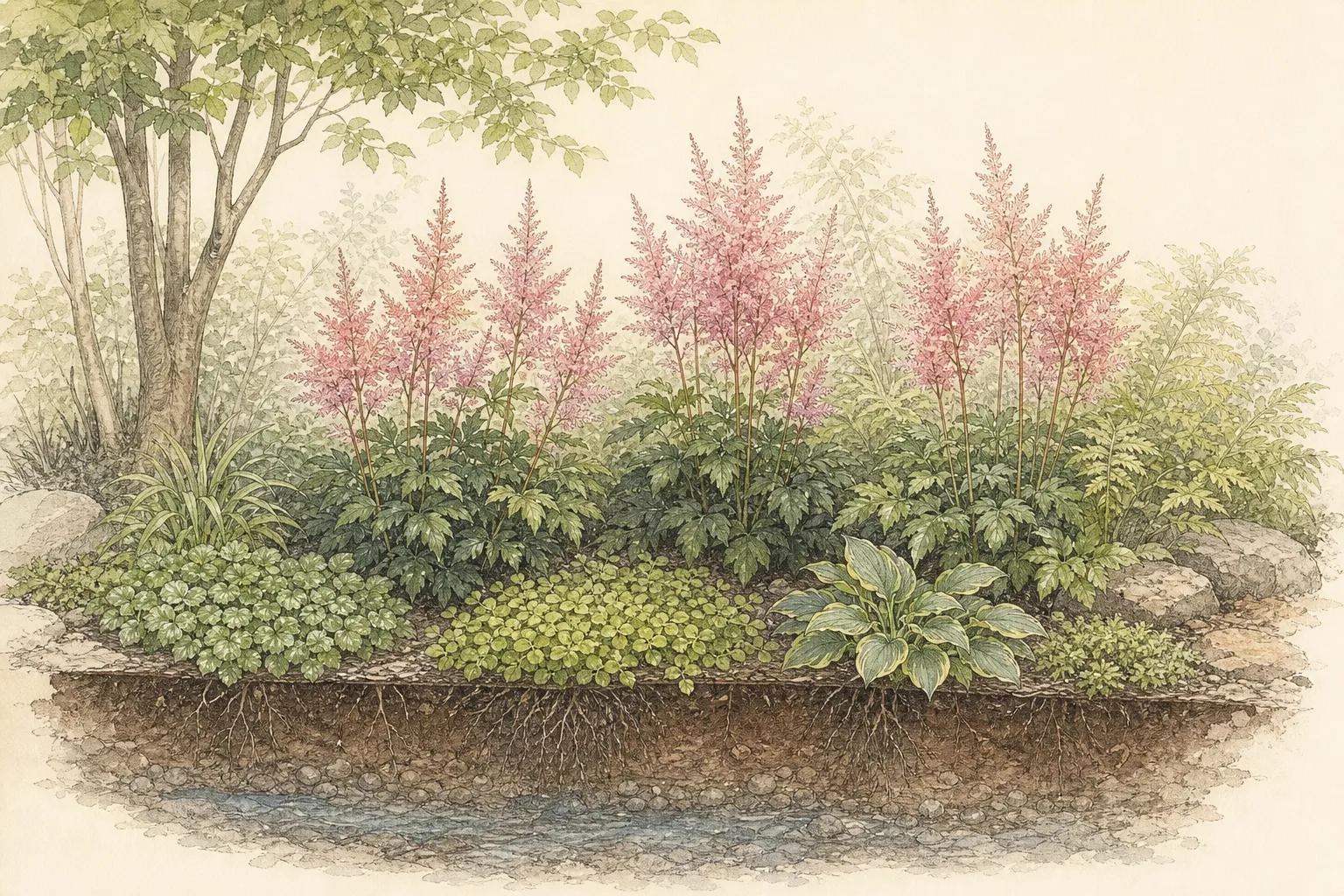
Garden study showing the placement and growth habit of Chinese Astilbe
Sources
- Chinese astilbe. The Morton Arboretum. Source record · Accessed 2026-08-30.
- Astilbe chinensis. Royal Horticultural Society. Source record · Accessed 2026-08-30.
- Astilbe chinensis (Maxim.) Franch. & Sav.. Royal Botanic Gardens, Kew. Source record · Accessed 2026-08-30.