Summersweet
Clethra alnifolia
A species-focused guide to summersweet's fragrant new-wood flowers, acidic wet-ground tolerance, species scale and suckering colony habit.
Published Last updated
At a glance
- Light
- Full sun to partial shade
- Water
- Moderate to high; tolerates wet periods
- Soil
- Moist, acidic, organically rich soil
- Hardiness
- Zones 3–9
- Bloom
- Midsummer to early autumn
- Height
- 5–10 ft · 1.5–3 m
In this guide
Overview
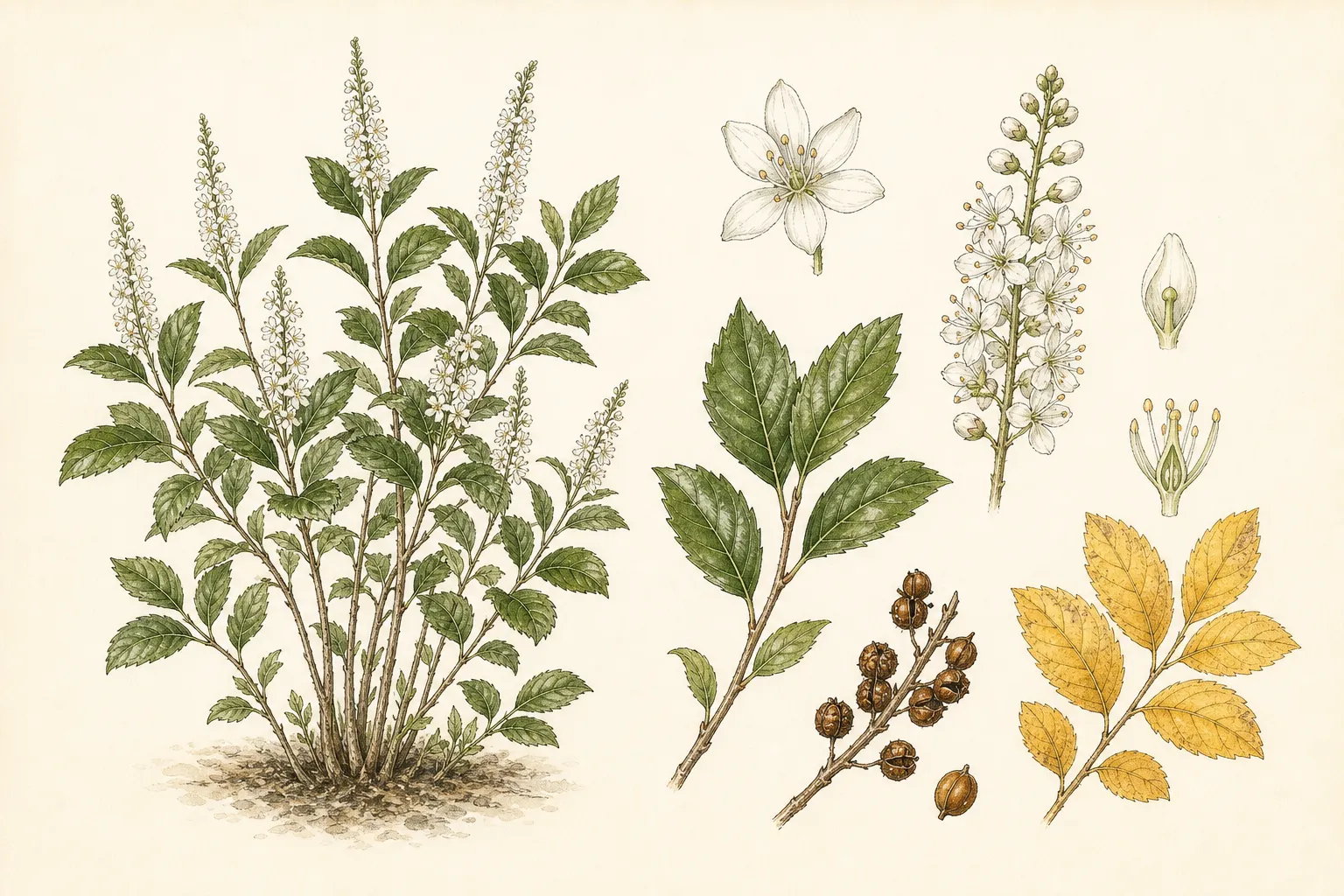
Summersweet is a deciduous, multi-stemmed native shrub with glossy serrated leaves. In summer, narrow spikes of small white or pink flowers open along the current season's stems and release a strong fragrance. Brown seed capsules ripen in autumn and can remain through winter.
Species plants commonly reach 5–10 feet tall and 4–6 feet wide, while dwarf cultivars may stay near 2–4 feet. Use the species in a rain garden, wet border, or woodland edge where a widening colony is useful; choose a documented compact selection beside a path or foundation.
Full sun to partial shade produces dependable growth, and the plant can tolerate more shade within its native range. The site must not become hot and dry. Flowering is usually strongest with useful light and moisture available during current-season shoot growth.
Moist, acidic soil rich in organic matter matches its natural habitat. Established plants tolerate periodic flooding and short dry spells, and University of Maryland Extension notes tolerance of sand, silt, clay, and even occasional brackish flooding. That range still calls for monitoring a new root ball until it joins the surrounding soil.
Summersweet flowers on new wood, so winter or early-spring pruning does not remove a preformed spring flower crop. Remove only what the design requires, and cut unwanted suckers at the edge of the colony instead of shearing the fragrant flowering tips.
The species is generally resistant to serious insect and disease trouble when its moisture needs are met. A declining plant in a dry, reflected-heat site is more likely to need a site correction than a routine spray program.
- Family
- Clethraceae
- Range
- Eastern North America
- Soil pH
- 4.5–6.5
- Spread
- 4–6 ft · 120–180 cm
Planting & careHow to grow summersweet
Summersweet is native from Maine south to Florida and west to Texas, especially in wetlands, floodplains, damp thickets, and sandy woods. Species plants can form suckering colonies; dwarf cultivars are much shorter. Confirm regional native status and the mature size of the named selection before placing it in a small bed.
- 1Choose species or dwarf scale
Allow a species plant about 5–10 feet of height and 4–6 feet of initial width, plus room for suckers; use a named dwarf cultivar where the colony must remain lower.
- 2Find a cool, moist site
Select full sun to partial shade in soil that remains moist without becoming a hot, drought-prone pocket; rain-garden and pond-margin positions can suit the species.
- 3Set the root ball level
Place the top of the root ball even with the surrounding bed and keep extra soil and mulch away from the clustered stem bases where future suckers will emerge.
- 4Join potting mix to wet soil
Water the original root ball and adjacent ground thoroughly, then check both through the first growing season; a wetland-tolerant shrub can still fail if its container mix dries in a moist bed.
- 5Mulch for even moisture
Use an organic mulch over the future colony area to limit rapid drying, leaving the stem bases uncovered and avoiding a deep mound over new root shoots.
- 6Mark the colony boundary
Decide where suckers are welcome before they appear, and pull or cut new shoots at that boundary while they are small instead of repeatedly reducing the top growth.
Pruning summersweet
Summersweet blooms on the current season's growth and responds to pruning in winter or early spring. Remove dead stems and, when renewal is needed, take selected old stems to the base before new growth expands. Control a widening patch by removing root suckers at its edge; shearing the whole shrub during summer cuts off developing fragrant flower spikes.
Seasonal care
Spring
Complete selective renewal pruning before active growth, remove unwanted suckers at the colony edge, and replenish organic mulch while keeping the stem bases visible.
Summer
Keep newly planted roots moist as fragrant racemes develop from June into August. A plant wilting in hot, dry exposure needs a moisture and site check before fertilizer or pesticide.
Autumn
Allow yellow foliage and brown seed capsules to finish their display, document the season's sucker spread, and plant or relocate shrubs while soil remains workable and moist.
Winter
Leave persistent capsules for winter texture or remove them with stems selected for renewal. Plan pruning before spring because flowers will be produced on the next new shoots.
Safety and garden spread
The North Carolina and Maryland Extension profiles do not flag summersweet as poisonous, but this profile does not establish edibility. Use ordinary garden hygiene and keep unidentified plant material out of the mouth.
Common problems
Few summer flower spikes
- Look for
- Leafy current-season shoots with little bloom in heavy shade, drought, or after midsummer shearing.
- Action
- Restore even moisture, increase useful light if the site is deeply shaded, and move any size pruning to winter or early spring.
Hot-site leaf stress
- Look for
- Scorched margins, midday wilt that does not recover, or sparse growth beside reflected heat and dry soil.
- Action
- Check moisture at root depth, cool the surface with appropriate mulch, and relocate the shrub if the position remains hotter and drier than summersweet tolerates.
Container root ball dries separately
- Look for
- A recently planted shrub wilts although the surrounding rain-garden soil feels moist or wet.
- Action
- Probe the original potting mix as well as the native soil and water the root ball directly until new roots bridge the different textures.
Suckers cross the bed edge
- Look for
- New stems arise from roots beyond the intended mass and begin entering paths or smaller neighboring plants.
- Action
- Remove the young sucker with its connecting root where practical, reset a visible boundary, or use a compact cultivar if an expanding colony is incompatible with the site.
Plant details
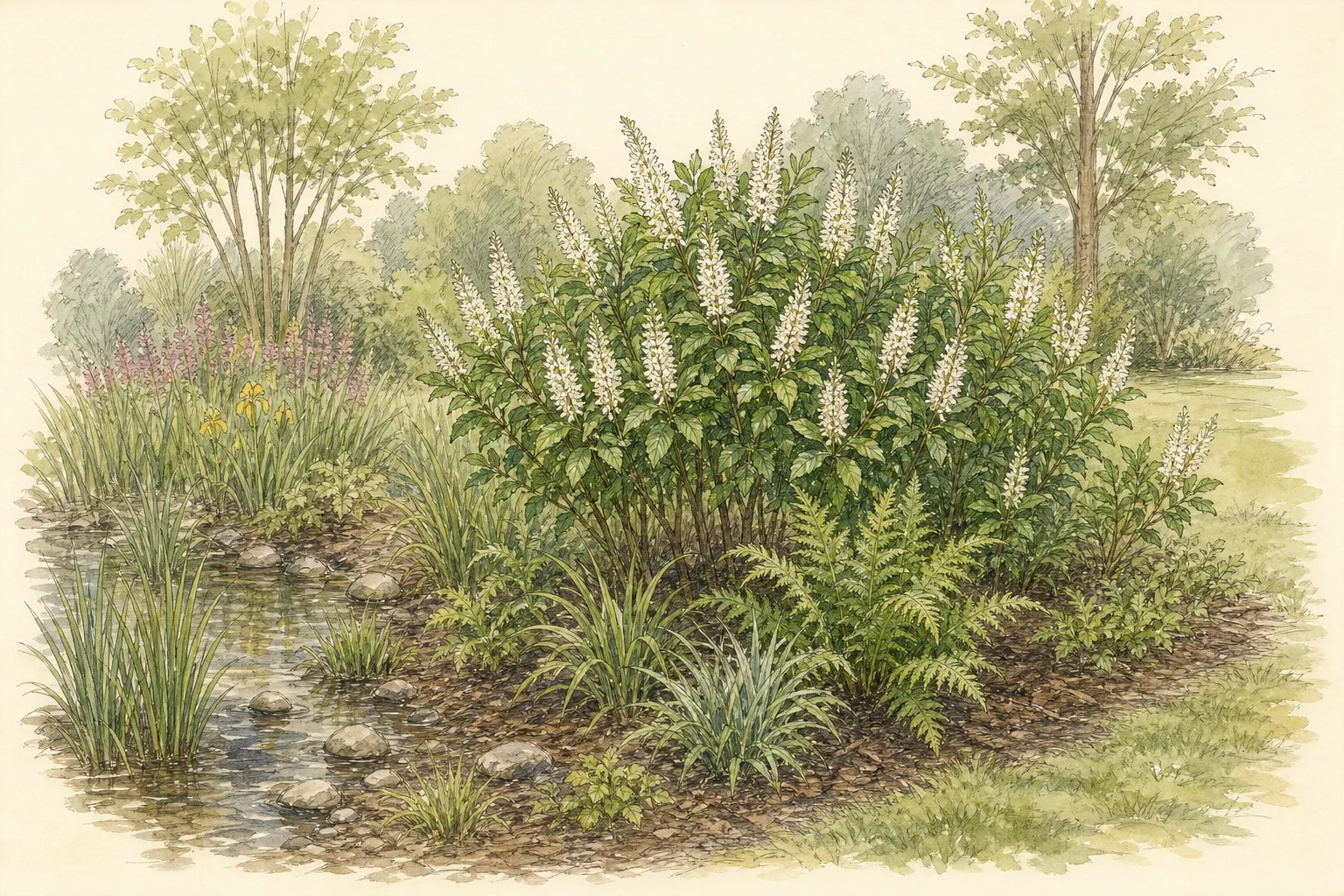
Garden placement study showing mature Summersweet in an ornamental planting
Sources
- Clethra alnifolia. North Carolina Extension Gardener Plant Toolbox. Source record · Accessed 2026-08-20.
- Summersweet. University of Maryland Extension. Source record · Accessed 2026-08-20.
- Clethra alnifolia L.. Royal Botanic Gardens, Kew. Source record · Accessed 2026-08-20.