Pennsylvania Sedge
Carex pensylvanica
A cool-season, rhizomatous native sedge that makes soft semi-evergreen mats in dry shade, with early spring spikes and little need for mowing.
Published Last updated
At a glance
- Light
- Partial shade to shade
- Water
- Low to moderate once established
- Soil
- Dry to average, acidic, well-drained woodland soil
- Hardiness
- Zones 3–8
- Bloom
- Subtle flowers in spring
- Height
- 6–12 in · 15–30 cm
In this guide
Overview
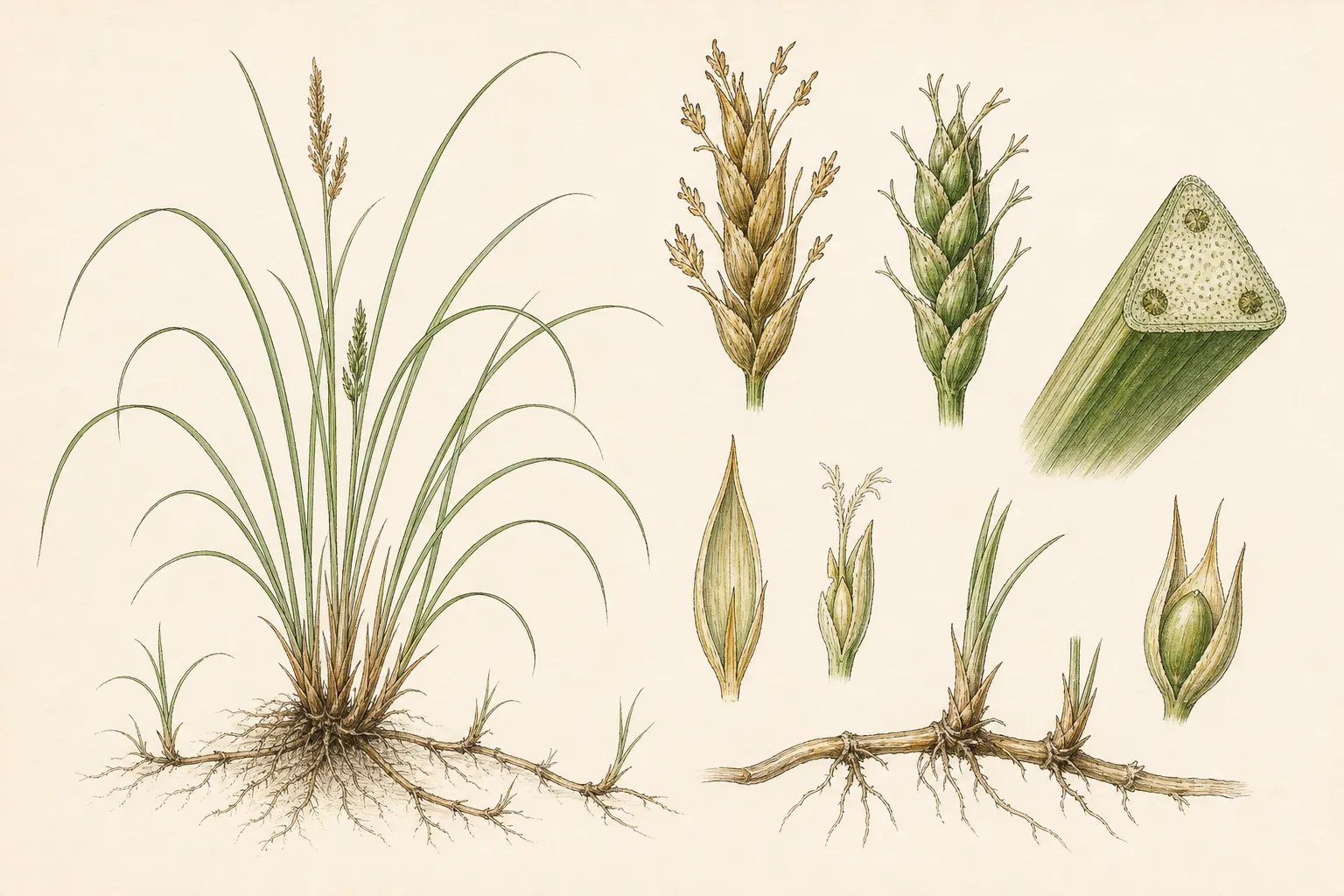
Carex pensylvanica is a low, grass-like perennial sedge with soft arching leaves, small brown-purple spring spikes, and cordlike rhizomes. It forms both resilient tufts and a gradually connected mat. The cool-season shoots begin early, often before deciduous trees leaf out and before warm-season grasses start active growth.
Foliage is commonly 6–12 in high, and an individual garden clump or plug spreads about 12–18 in before rhizomes continue into adjacent openings. Use it as a loose matrix beneath oaks or other deciduous trees, around woodland perennials, or as an unmown groundcover where a soft, uneven surface is acceptable.
Part shade to full shade and dry to medium, well-drained soil are the most dependable garden conditions. It tolerates summer dryness after establishment and often grows in sandy or slightly acidic woodland soils. It is not a substitute for turf where regular heavy foot traffic or vehicle movement compacts the root zone.
Set plugs with the leaf bases and crown at the same soil level they occupied in the container. Space them according to how quickly a continuous mat is wanted, recognizing that the shallow rhizomes will fill openings over time. Water through the first season before relying on the species’ drought tolerance.
Mowing is optional, not a biological requirement. For an ornamental matrix, comb out loose brown foliage or make one light cut before spring growth. A managed lawn-like area can receive occasional higher mowing, but repeated close cutting removes the arching form that distinguishes this sedge.
Growth is strongest during the cool early season, flowering occurs in spring, and new shoots can also begin in autumn. Some leaves remain functional through winter, while very cold climates produce more dieback. Keep the label because southern populations can be difficult to distinguish from related Carex.
- Family
- Cyperaceae
- Range
- Eastern and central North America
- Soil pH
- 4.5–6.5
- Spread
- 12–18 in · 30–45 cm
Planting & careHow to grow pennsylvania sedge
Carex taxonomy is difficult, and North Carolina Extension notes that some southern plants currently placed in Carex pensylvanica may represent another species. Buy regionally propagated, correctly identified stock, expect the best semi-evergreen performance in cooler climates, and use a local flora when identity matters in a restoration.
- 1Plan a mat, not a single fixed clump
Allow 6–12 in of foliage height and about 12–18 in of initial spread per plant. Map the eventual matrix edge and leave stepping access, because shallow rhizomes will continue into open soil.
- 2Choose dry to medium shade
Use part shade to full shade in loose, well-drained soil. Observe the bed after rain and beneath summer tree roots; the target is a shaded site that drains, not a compacted wet hollow.
- 3Keep leaf bases at container depth
Set each plug so the crown and leaf bases remain level with the surrounding soil. Loosen only the outer pot-bound roots, backfill, and water without burying the center of the tuft.
- 4Establish shallow roots before tapering water
Check plugs below the surface through their first growing season and water before the small root balls dry through. Once rhizomes connect the planting, reserve irrigation for prolonged drought.
- 5Use leaf litter without smothering tufts
Retain a light woodland litter between plants, but pull thick matted leaves off the crowns. Exposed growth points let the early spring shoots expand and help the sedge form a denser stand.
- 6Mark the rhizome boundary
At the end of the first cool-season growth cycle, note where new tufts appeared and whether paths remain clear. Lift an edge section during cool weather if the matrix has crossed its planned boundary.
Pruning pennsylvania sedge
Pennsylvania sedge needs no woody pruning. Before fresh spring growth, comb out loose brown leaves or make one light cut above the crown when winter foliage is untidy. Leave healthy semi-evergreen leaves when they still contribute cover. Occasional higher mowing is possible in a lawn-like planting, but repeated close mowing and heavy traffic thin the mat.
Seasonal care
Spring
Comb or lightly cut old foliage before new blades extend, uncover crowns buried by leaf litter, and watch for the small April-to-May flower spikes. Divide or add plugs now if the soil is workable and moisture can be maintained.
Summer
Expect growth to slow in summer heat. Water first-year plugs through extended dry periods, while established mats can tolerate drier soil. Keep repeated foot traffic on a path rather than across the foliage.
Autumn
Look for new cool-season shoots and adjust the rhizome edge while the soil is workable. Remove only leaf litter thick enough to mat the crowns, leaving a light woodland layer between tufts.
Winter
In milder or sheltered sites, much of the foliage remains functional; colder sites show more tan dieback. Leave the mat intact through winter and schedule any cleanup just before spring growth.
Safety and garden spread
The retained institutional profiles do not identify a specific human poisoning hazard. This ornamental sedge is not presented as edible; use normal garden hygiene and keep unidentified plant material out of the mouth.
Common problems
The mat thins along a route
- Look for
- Bare soil and flattened crowns follow the line of repeated walking while protected tufts remain dense.
- Action
- Redirect traffic to stepping stones or a path, loosen only lightly compacted surface soil, and replant healthy divisions during cool weather.
Tufts decline in wet compacted soil
- Look for
- Leaf bases soften or whole patches fail where water lingers and soil has lost pore space.
- Action
- Stop routine irrigation, relieve the compaction without damaging nearby tree roots, and move replacement plugs to dry-to-medium, well-drained soil.
Smut, rust, or leaf spot
- Look for
- Darkened flower structures, rusty pustules, or expanding leaf lesions recur through multiple tufts.
- Action
- Remove heavily affected debris, improve air movement, and avoid wetting foliage late in the day. Confirm the disease with a local diagnostic service before using any labeled control.
Rhizomes cross the intended edge
- Look for
- New tufts appear in a path joint, delicate neighboring clump, or other opening beyond the mapped matrix.
- Action
- Trace the shallow rhizome back to the planting, lift the unwanted connected section, and reset the physical edge. Reuse sound divisions elsewhere if identity and site are appropriate.
Plant details
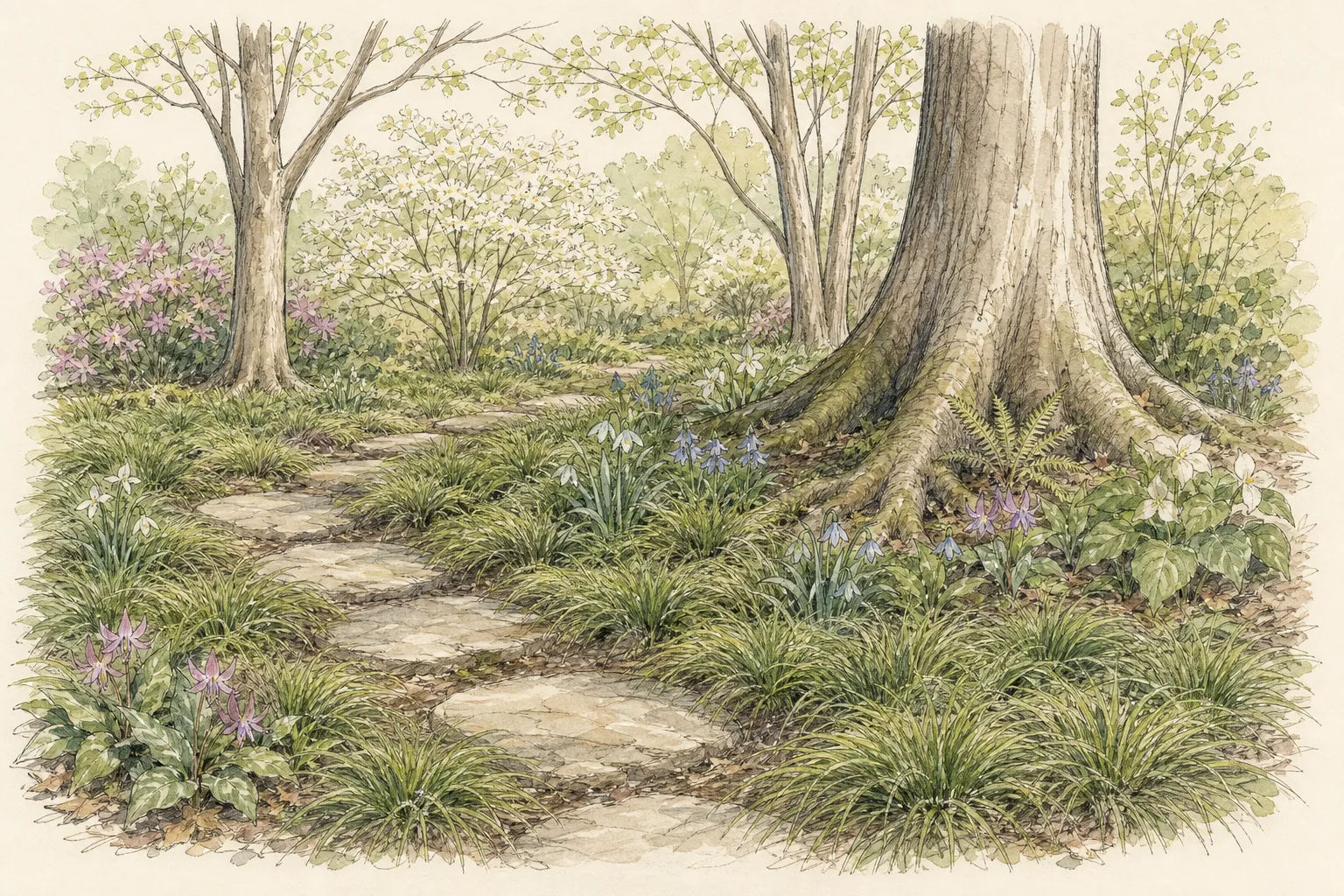
Garden placement study showing mature Pennsylvania Sedge in an ornamental planting
Related reading
Sources
- Carex pensylvanica, Pennsylvania sedge. USDA Forest Service. Source record · Accessed 2026-08-30.
- Carex pensylvanica. North Carolina Extension Gardener Plant Toolbox. Source record · Accessed 2026-08-30.
- Carex pensylvanica Lam.. USDA PLANTS Database. Source record · Accessed 2026-08-30.
- Pennsylvania Sedge. Cornell Botanic Gardens. Source record · Accessed 2026-08-30.
- Carex pensylvanica — Pennsylvania sedge. Native Plant Trust. Source record · Accessed 2026-08-30.