Lavender
Lavandula angustifolia
A species-focused profile of English lavender, with clear guidance on identity, drainage, establishment water, mature spacing, woody pruning and winter limits.
Published Last updated
At a glance
- Light
- Full sun
- Water
- Moderate during establishment; low once rooted, with the soil allowed to drain between waterings
- Soil
- Lean, sandy, gravelly or chalky soil with rapid drainage; avoid heavy winter-wet ground
- Hardiness
- Zones 5–9
- Bloom
- Early to late summer, varying by climate and cultivar
- Height
- 1–3 ft · 30–90 cm
In this guide
Overview
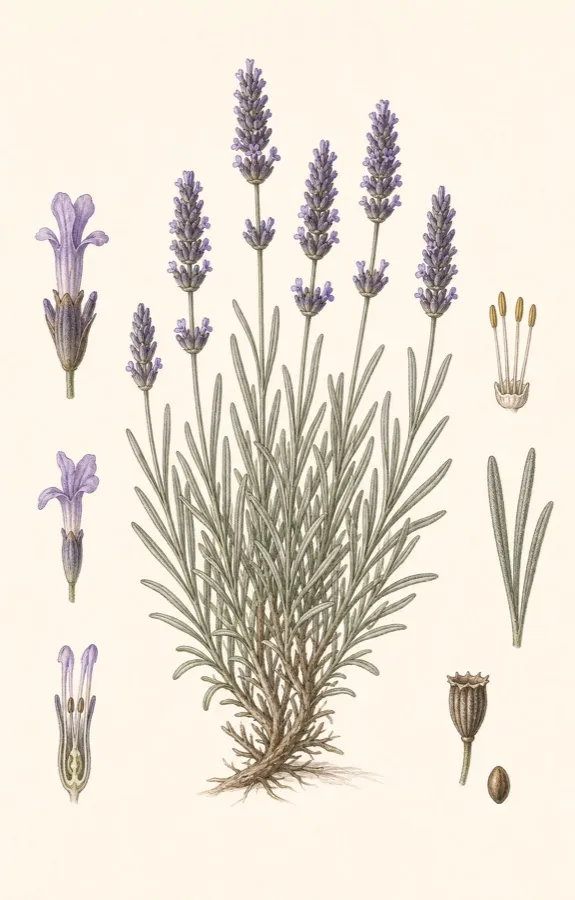
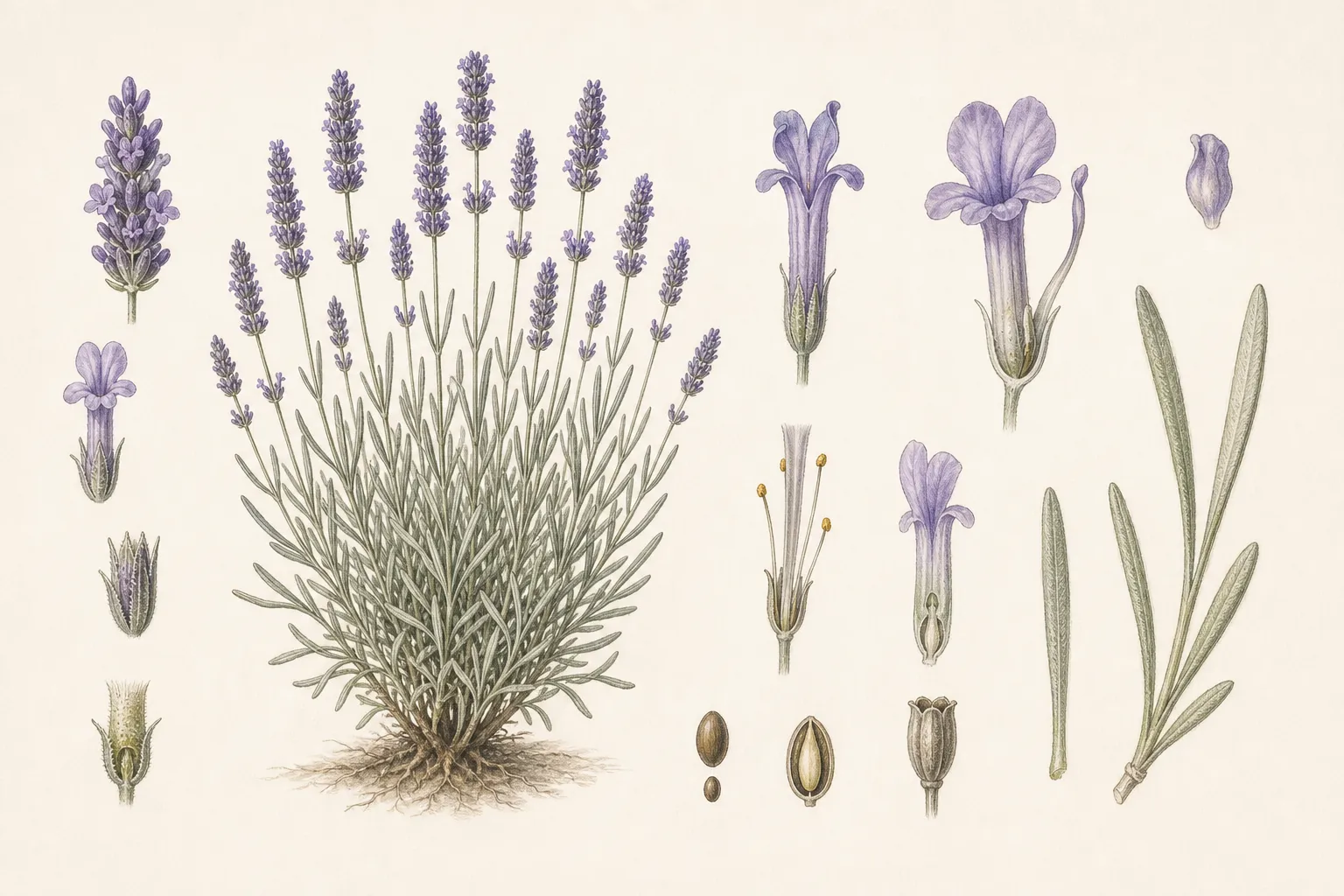
English lavender is a woody evergreen subshrub, not an herbaceous perennial that renews from a buried crown each spring. Many short stems branch from a persistent base and carry opposite, narrow gray-green leaves with rolled margins and a strong fragrance when rubbed. In summer, long mostly leafless stalks lift compact terminal spikes of small two-lipped flowers above the mound. Purple is typical, while named selections may be blue-purple, pink or white.
This profile is anchored to Lavandula angustifolia. The common label English lavender is sometimes applied more broadly to the hybrid lavandin, Lavandula × intermedia. RHS distinguishes the species as a compact bushy shrub that flowers from early summer and describes lavandin as generally larger and later. Keep the complete botanical and cultivar name: size, bloom timing, hardiness and flower color cannot be inferred from the word lavender alone.
The species is native from northeastern Spain through France to Italy. Its garden requirements reflect that open, mineral-soil setting: full sun, moving air and a root zone that releases water quickly. Sandy, gravelly, chalky or otherwise well-structured soil can work, but a low clay pocket that stays saturated after winter rain is a poor site. Improve drainage across the planting area or choose a different position before installing the shrub.
Drought tolerance belongs to an established root system. A fresh transplant can dry inside its nursery root ball even while the surrounding soil feels cool, so check both zones and water thoroughly during establishment. Once roots occupy the bed, reduce irrigation according to actual soil moisture, rainfall and growth rather than a fixed calendar. Constantly wet soil is a more serious threat than a dry surface, while a container may still need water sooner than the same cultivar in the ground.
Plan for the woody mound as well as the flower stalks. Species references range from roughly one to three feet in height and two to three feet or more in width, and compact cultivars may be smaller. Reserve enough width that neighboring plants do not shade the lower foliage or hold damp debris against the stems. Use the silvery mound as a path edge, low hedge or gravel-garden repeat where the plant can remain open to sun on all sides.
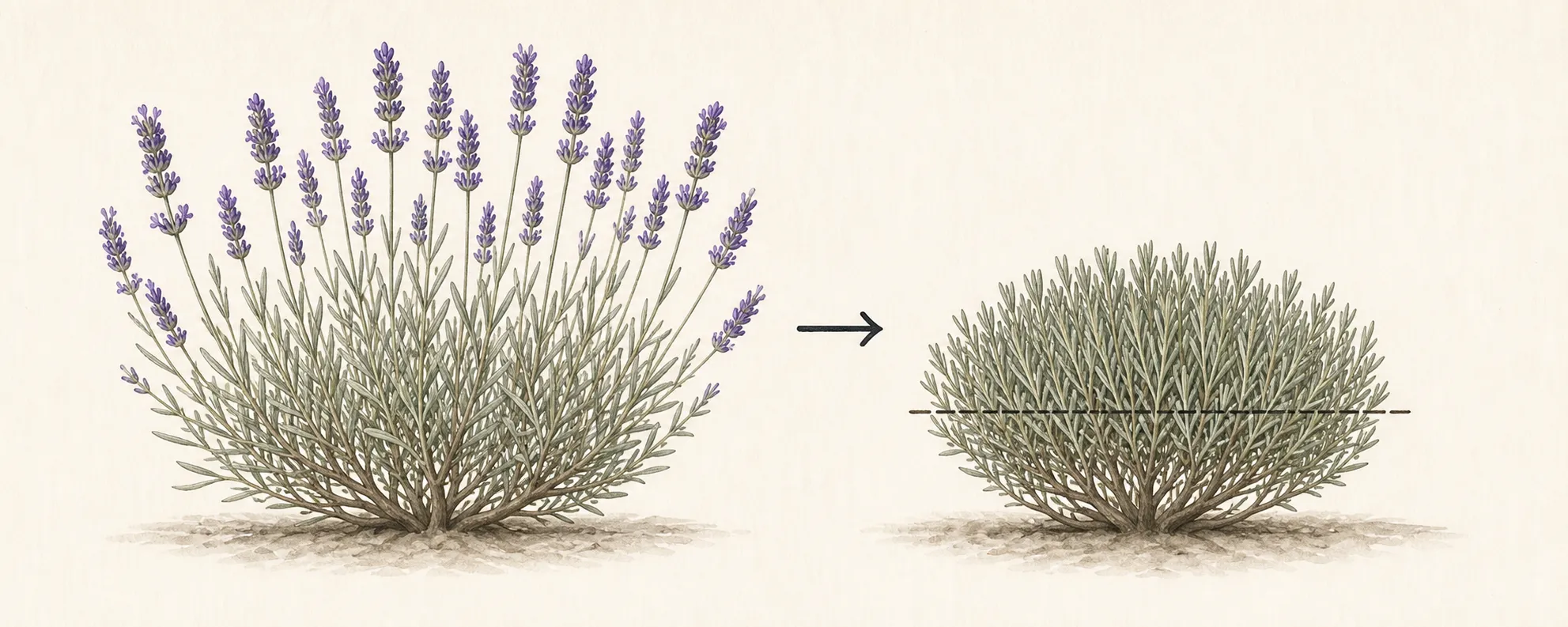
The plant's long-term shape depends on annual cuts made while shoots are still leafy. Trimming after the main flower display encourages branching near the outside of the mound. A cut driven into old bare wood may leave a permanent hole because lavender does not reliably break new shoots from that tissue. An old plant with a split, leafless center is usually a cutting-and-replacement decision, not a candidate for a severe rejuvenation cut.
Leaves and flowers have culinary and fragrance traditions, but a garden identity is not a dosing guide. NC State lists linalool and linalyl acetate and flags English lavender as a low-severity ingestion concern for people and several domestic animals. Keep prunings and concentrated products out of reach, use only correctly identified untreated material for any culinary purpose, and direct a suspected exposure to an appropriate medical or veterinary professional.
- Family
- Lamiaceae
- Range
- Northeastern Spain to Italy, including France
- Soil pH
- 6.5–8
- Spread
- 2–3 ft · 60–90 cm
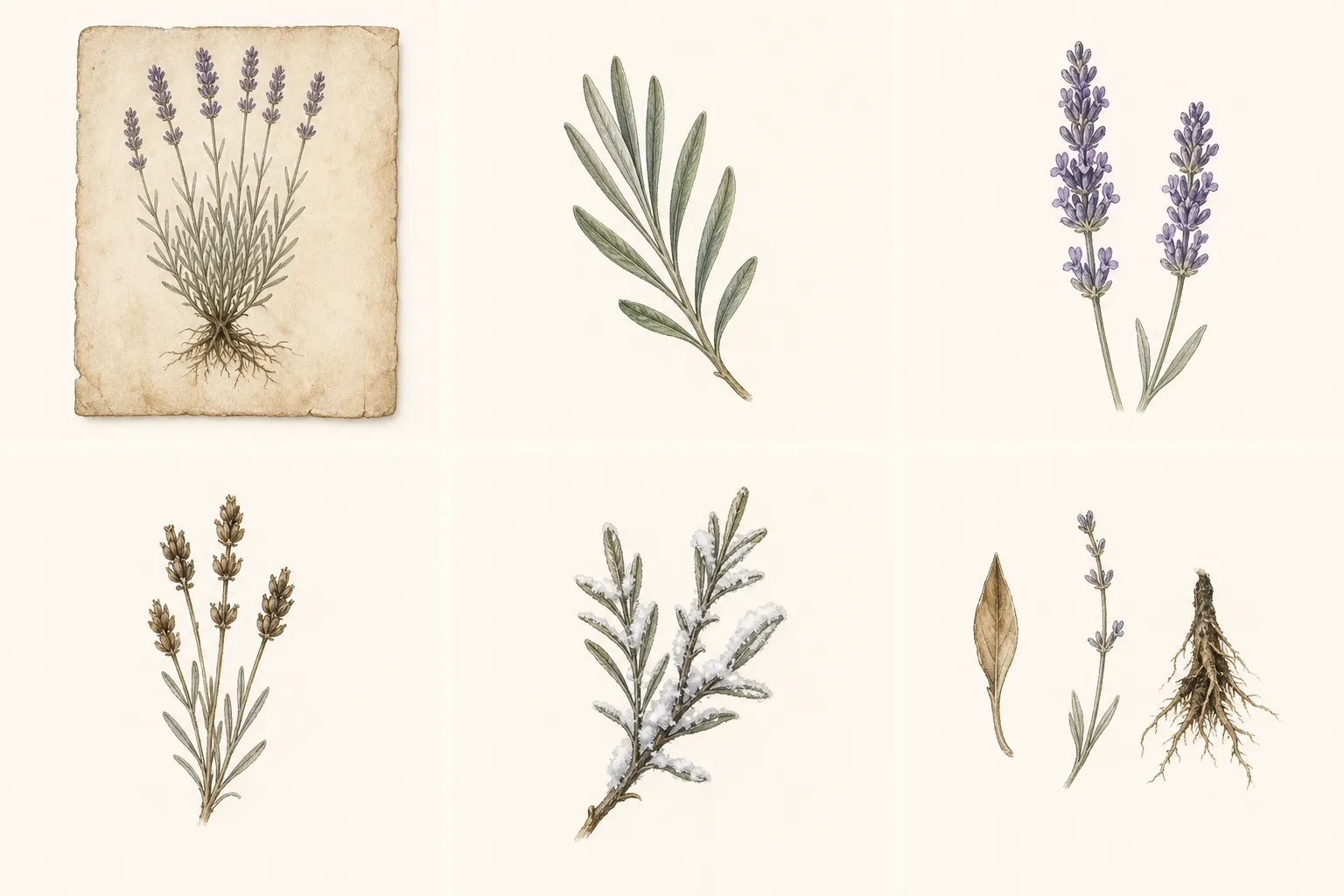
Archival-style specimen showing the plant's overall form.
Planting & careHow to grow lavender
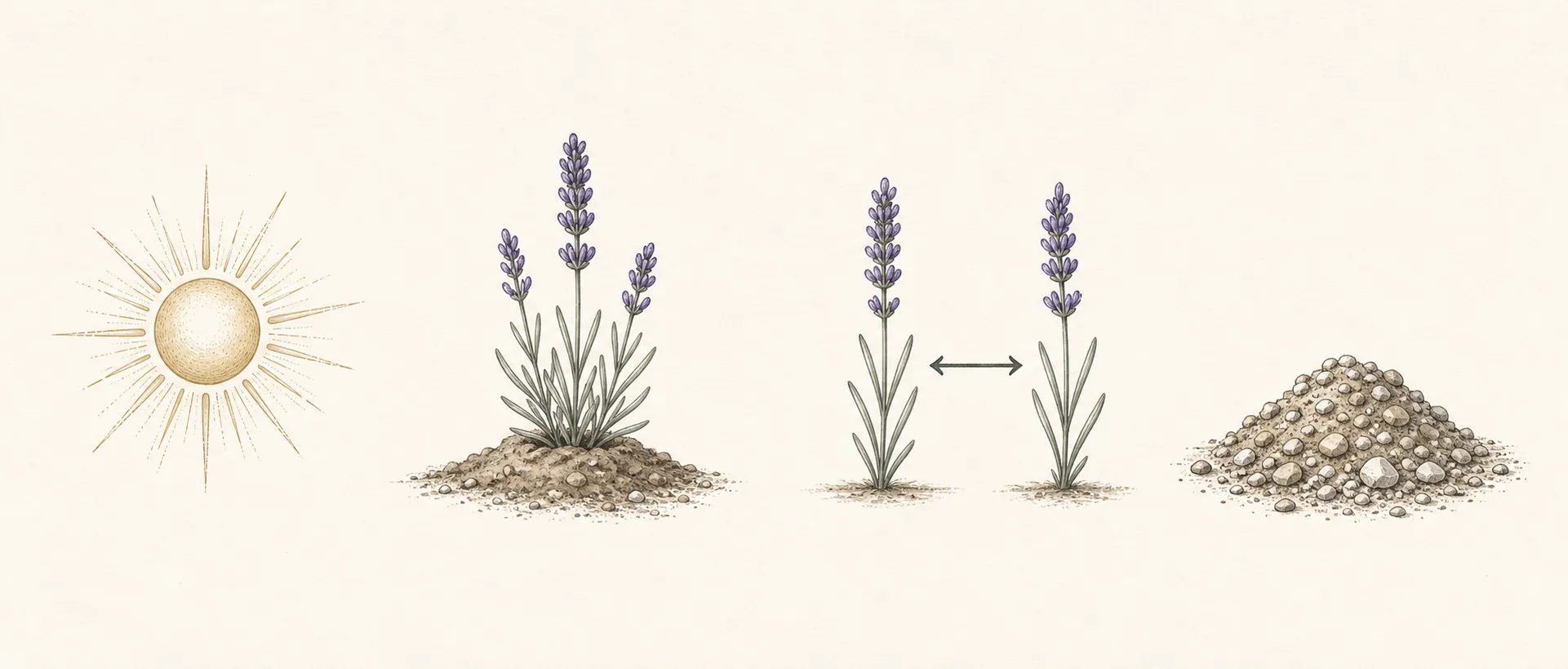
- Climate
Thrives in warm, airy sites with good circulation.
- Planting position
Choose a sunny, sheltered spot with at least six hours of direct sun.
- Spacing
Allow 18–24 in between plants so mature foliage dries quickly.
- Soil
Use lean, alkaline-to-neutral soil that drains freely.
Kew records the species as native to northeastern Spain through France to Italy. NC State lists USDA zones 5–9, while the Utah State guide discusses zones 5–10; those broad numbers do not cancel local limits from winter wet, summer humidity, snow cover or cultivar provenance. English lavender selections also vary in mature size and flower color. Lavandin, Lavandula × intermedia, is a distinct hybrid that is often marketed beside English lavender and generally makes a larger, later-flowering plant.
- 1Confirm species and cultivar
Look for Lavandula angustifolia and retain the cultivar name. Do not substitute a plant labeled only lavender or lavandin without checking its mature width, flower season and regional hardiness; Lavandula × intermedia is a different, generally larger hybrid.
- 2Test sun and drainage together
Choose an open position receiving at least six hours of direct sun, then observe it after sustained rain or irrigation. Reject a depression that ponds or stays sticky and airless. In heavy ground, improve the full bed or use a genuinely raised, freely drained position instead of building a gravel pocket inside clay.
- 3Reserve the named plant's mound
Use the cultivar width when available. For a species-scale plan, allow about two to three feet of spread and keep additional clearance from encroaching groundcovers, path traffic and irrigation spray. Flower stalks rise above that permanent woody footprint.
- 4Prepare a lean continuous root zone
Remove perennial weeds and loosen a broad area without creating a rich isolated planting pocket. Favor sandy, gravelly, chalky or well-structured loam with rapid drainage. Use a soil test before changing pH; the Utah State range of 6.5–7.5 is regional guidance, while RHS notes that the species tolerates acidic through alkaline conditions if drainage is sound.
- 5Set the root ball at its existing grade
Plant at the depth held in the nursery container, keeping the woody stem bases above the finished soil and mulch. Tease only correctable circling roots, backfill with the surrounding soil and water slowly to settle contact without burying the center of the mound.
- 6Water the transplant, then follow the roots
Wet the original root ball and adjacent soil thoroughly after planting. During establishment, recheck moisture below the surface before the root ball dries completely. As roots extend, widen the wetted area and lengthen the interval, always allowing excess water to leave the soil.
- 7Keep the base open
Use a thin gravel or other locally appropriate surface treatment where it helps suppress weeds without trapping moisture. Keep organic mulch, fallen leaves and neighboring stems away from the woody base. Take labeled summer cuttings if the cultivar is valuable or the site lies near its winter limit.
Pruning lavender
Prune English lavender as a leafy evergreen subshrub. After the main summer flower display, remove spent stalks and shorten the current leafy growth enough to restore a compact mound, keeping every structural cut above visible green shoots. RHS warns that old bare wood does not regenerate reliably and advises against autumn pruning in wet or cold regions, where fresh cuts may be vulnerable to winter damage. In spring, wait until growth clarifies the living boundary, then remove only frost-killed tips or untidy leafy growth. Do not cut the entire plant to the ground, shear through a leafless center or treat the woody framework like dormant herbaceous stems. A plant that has opened into a broad bare center can be replaced with a rooted cutting; severe rejuvenation is unlikely to rebuild its original outline. Clean tools between plants when dieback is unexplained, and keep aromatic cut material away from animals that may chew it.
Seasonal care
Spring
Clear leaves and wet organic debris from the woody base, then wait for active growth to distinguish live gray-green shoots from frost-killed tips. Remove only confirmed damage and preserve foliage below each cut. Plant new stock after severe frost risk in cold regions, restore establishment water and check whether winter rain exposed a drainage failure before replacing any dead plant.
Summer
Let full sun and open air reach the whole mound. Check new plants and containers below the surface, watering thoroughly when the occupied root zone approaches dryness rather than sprinkling on schedule. Cut flower stalks for use as the first flowers open, or retain the display through bloom. After the main flush, trim the leafy outer growth without entering bare old wood and take semi-hardwood cuttings from a named cultivar if replacements are needed.
Autumn
Stop high-nitrogen feeding and avoid a late hard trim, especially in cold or wet climates. Pull encroaching plants and fallen leaves away from the base, verify that downspouts and irrigation do not saturate the root zone, and move vulnerable containers to an open sheltered position where rain can drain. A fall planting needs enough mild weather to root before freezing; otherwise wait for spring.
Winter
The mound remains woody and usually evergreen rather than disappearing underground. Keep it exposed to light and air, prevent pots from standing in runoff and protect container roots from repeated hard freezing appropriate to the local climate. Do not wrap damp foliage tightly or mound wet mulch over the stems. Record which shoots suffer cold damage and postpone pruning until spring growth shows the living boundary.
Safety and garden spread
Common problems
Foot or root rot
- Look for
- Progressive wilt or browning while soil remains wet, dark soft tissue at the stem base, declining roots or a whole plant that loosens in saturated ground.
- Action
- Stop automatic watering, pull moisture-holding material away and assess drainage across the bed. Remove a failed plant and correct or abandon the wet site before replanting; do not assume that more water will revive roots already deprived of air.
Sparse flowers and soft growth
- Look for
- Long green shoots, a loose mound and few flower spikes where shade or rich high-nitrogen soil dominates.
- Action
- Measure direct summer light, stop unneeded fertilizer and open competing growth. Move the plant in a suitable season if the site cannot provide full sun and free drainage; pruning alone cannot compensate for persistent shade.
Bare split center
- Look for
- A woody interior with foliage only at the ends, branches splaying apart or holes left after cuts entered leafless stems.
- Action
- Continue only light cuts in leafy growth and plan replacement from a labeled cutting or young plant. Do not cut the entire mound into old wood expecting dormant basal shoots to rebuild it.
Winter dieback
- Look for
- Brittle exposed tips or whole branches after cold, with green flexible tissue surviving lower or on the sheltered side.
- Action
- Wait for spring growth, then trace each damaged shoot to living leafy tissue and cut above it. Reassess cultivar hardiness, winter wet, wind exposure and container protection before replacing the plant.
Leaf spotting or gray mold
- Look for
- Expanding spots, fuzzy gray growth or shoot dieback concentrated in crowded foliage that stays damp.
- Action
- Open spacing, keep irrigation off the canopy, remove badly affected material in dry weather and seek a local diagnosis when dieback continues. Clean tools before moving to another lavender and use a treatment only when the diagnosis and local label support it.
Ingestion exposure
- Look for
- Chewed stems, leaves or flowers, or nausea, vomiting or loss of appetite after a person or animal accesses the plant.
- Action
- Prevent further access and contact an appropriate medical professional, veterinarian or poison service. Do not use culinary tradition, scent or this garden profile to estimate a safe dose or to choose a home treatment.
Related reading
Sources
- Lavandula angustifolia Mill.. Royal Botanic Gardens, Kew. Source record · Accessed 2026-08-30.
- Lavandula angustifolia | English lavender. Royal Horticultural Society. Source record · Accessed 2026-08-30.
- English Lavender - Lavandula angustifolia. North Carolina Extension Gardener Plant Toolbox. Source record · Accessed 2026-08-30.
- How to Grow English Lavender in Your Garden. Utah State University Extension. Source record · Accessed 2026-08-30.