Grow · autumn hydrangea flower water drying
Dry Hydrangea Flowers in Autumn Once the Heads Feel Papery
Choose papery autumn hydrangea heads, protect the parent shrub, and use shallow-water drying for indoor vases with naturally muted colors.
Published Last updated
In this guide
- Wait for a papery head that still holds its shape
- Compare texture across the whole flowerhead
- Decide which flowers the shrub can spare
- Collect surface-dry flowers and keep heads separate
- Prepare the vessel around the actual stems
- Start with shallow water and let the level fall
- Use a small hanging batch when upright space is scarce
- Judge completion by the material, not an empty vase alone
- Arrange dry heads with fewer handling steps
- Keep the finished display dry and retain a useful harvest note
- Steps
Wait for a papery head that still holds its shape
Dry hydrangea flowers after the heads have matured on the shrub and feel papery, while their shape is still worth keeping. Cut a small selection, remove the leaves and stand the stems in a shallow amount of water indoors. Allow that water to be used and evaporate as the heads finish drying. Begin with one vase before harvesting enough flowers for a wreath or a large arrangement.
In temperate Northern Hemisphere gardens, late September is a useful time to examine summer flowers for this stage. It is not a universal harvest date. Oregon State Extension suggests checking about six to eight weeks after flowering, and Mississippi State likewise emphasizes a papery feel. A late-opening head may still be too soft when an earlier head on the same shrub is ready.
The result is a dried version of the mature flower, often in subdued green, rose, mauve or tan tones. This method does not promise the saturated color of a newly opened bloom. Choose it when you want recognizable hydrangea form in a dry indoor vase, and let the existing color of the head guide the arrangement.
Compare texture across the whole flowerhead
Examine a head from the side and underneath before deciding it is ready. Gently touch several outer florets without rubbing or crushing them, then look into the more sheltered interior. A mature head should feel noticeably different from a newly opened, soft flower nearby. The comparison is more useful than trying to remember how a fresh bloom felt several weeks ago.
Color change alone is an incomplete test. A head may look antique pink yet still feel soft; another may have the right papery texture while retaining patches of its earlier color. Look for a full outline and intact individual florets. Set aside heads with extensive torn edges, collapsed sections or visible mold. Drying will preserve those defects as part of the arrangement.
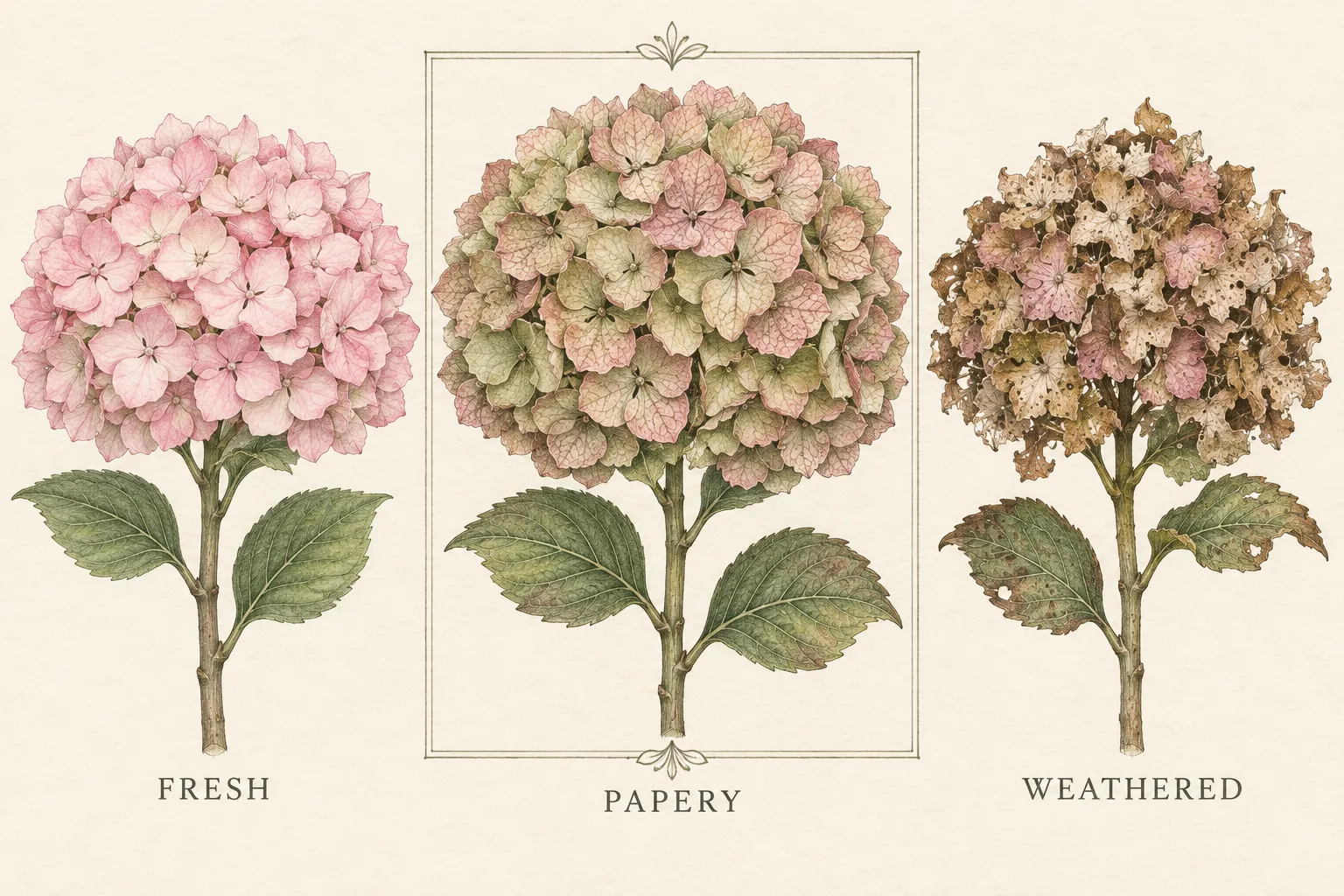
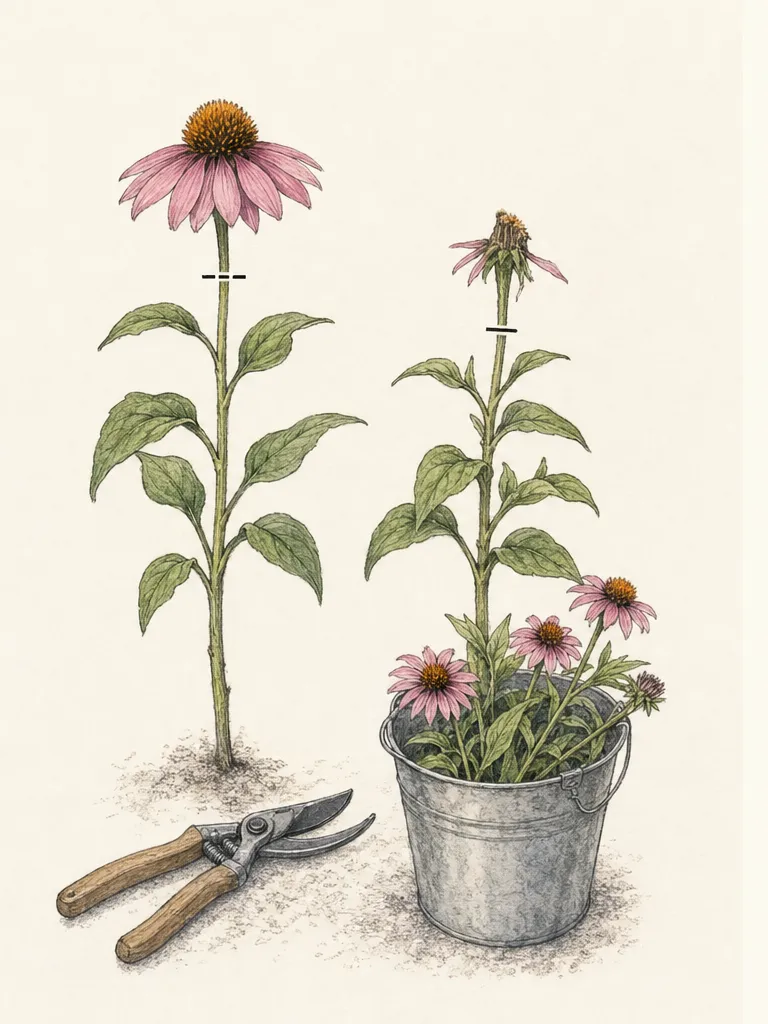
Compare candidate heads on the same plant first. Rounded mopheads and conical panicles have different outlines, so a loose panicle should not be rejected just because it lacks the dense sphere of a mophead. The illustration compares stages within one rounded flower form. Apply the texture test to your own hydrangea without expecting it to match that silhouette.
Tag two or three promising heads with loose labels below the flowers if they need more time. Keep the labels clear of buds and use a photograph to show the chosen stems. This makes a return visit quicker and prevents the best candidate from being mistaken for a flower you already rejected. Leave unready heads attached while preparing the drying space.
Decide which flowers the shrub can spare
Identify the hydrangea before cutting a long stem for a tall vase. Bigleaf and mountain hydrangeas can carry the next season’s flowers on retained wood. RHS advises keeping faded mopheads through winter for some frost protection of the buds below, particularly outside mild locations. Where that protection matters, leave the mopheads and use another source of mature flowers for drying.
Panicle hydrangeas flower on new growth, as Mississippi State explains, so their harvest decision differs from that of old-wood mopheads. Even there, taking a few heads is not an instruction to shorten the entire shrub in autumn. Keep structural pruning separate and follow the species guide at its appropriate season. A long bare stick is not necessary for a successful dried flower.
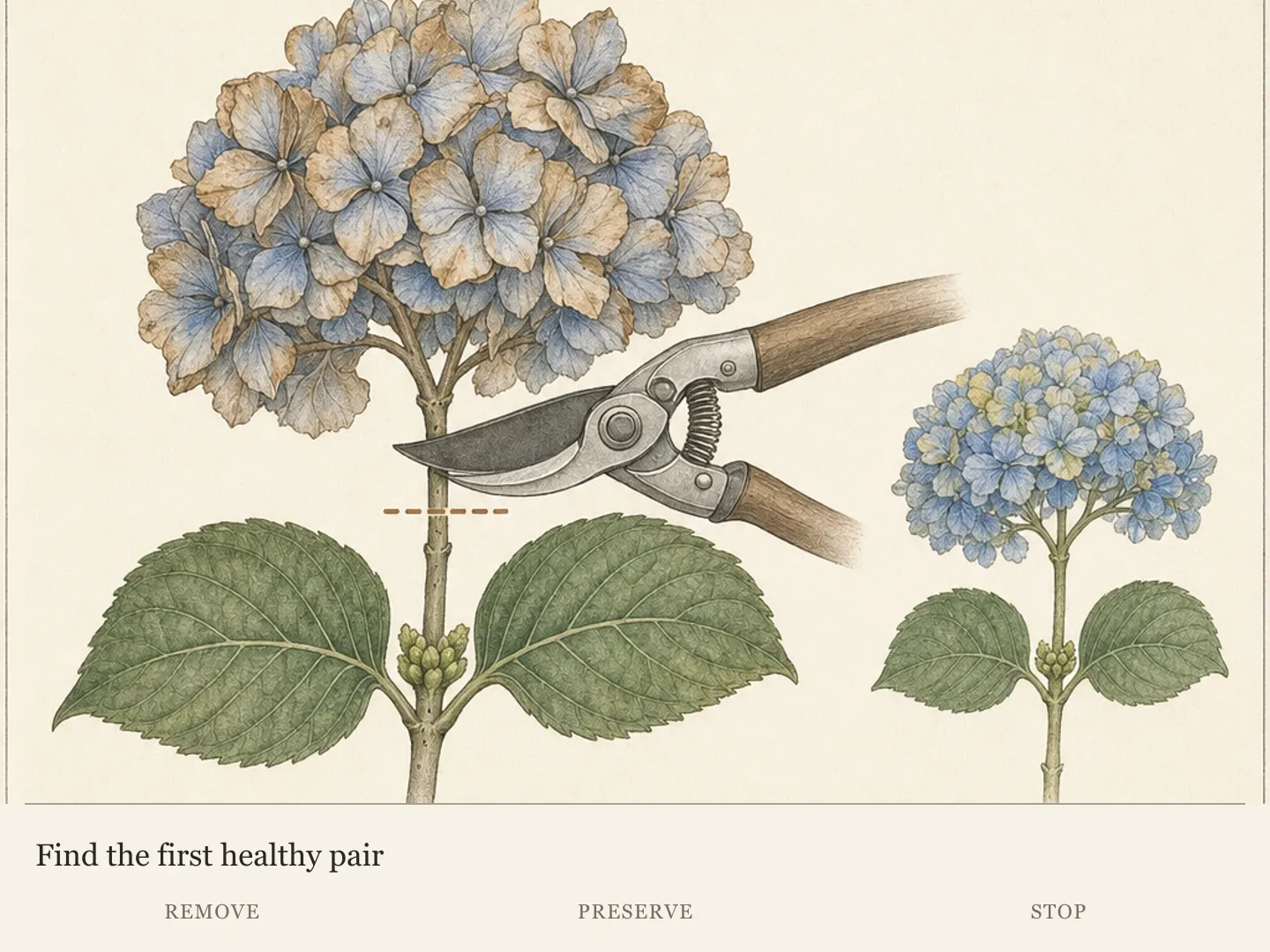
Choose the container before choosing stem length. A low jug or bowl may accept the short flower stem that can be removed without entering a valued branch. If the desired cut would remove healthy buds or a substantial section of the framework, change the vessel or leave that flower. For a permitted short harvest, retain the first healthy bud pair beneath the head; a cold-exposed mophead may still be better left intact.
Stand back from the shrub after each small group is selected. Leave flowers that make its outline legible from the path or window, and take from places where removal will be less conspicuous. This is a design choice, not a fixed harvest percentage. One plant may have many spare heads, while a recently planted specimen may contribute more by keeping all of its display.
Collect surface-dry flowers and keep heads separate
Choose a dry interval and wait until rain or dew has left the florets. Morning collection is suggested by Oregon State, but a wet morning is a reason to wait for dry surfaces. Bring clean pruners and a wide tray or separate receiving vessels. Carry each cut stem below the flowerhead so the fragile parts do not become handles.
Before cutting, trace the selected stem with a finger and find the buds and branch junctions that need to remain. Support the flower while making the cut with the other hand. Move it directly to the receiving tray without dragging it through neighboring heads. On a crowded shrub, releasing one flower carefully can take longer than making several cuts.
Keep the first collection small enough that no head has to be compressed beneath another. Lay short stems in a shallow tray with their heads apart, or stand longer stems in individual containers. A deep bucket packed with flowerheads makes it difficult to see damage and hard to remove the bottom stems. Return for another batch after the first has a place to dry.
Prepare the vessel around the actual stems
Strip leaves from the cut stems, supporting each stem as you work. Set the removed foliage aside so it cannot fall into the drying water. Take this opportunity to inspect the underside of every head. A floret that was hidden by a leaf in the garden may now reveal a torn or discolored patch that changes which side you want to show.
Use a clean, stable vase or jar that lets the stem ends reach its base while supporting the flowers above the rim. Test the arrangement empty before adding water. If all the weight sits far beyond one side of the vessel, use a broader container or divide the stems between two vases. A decorative narrow bottle is a poor choice when it cannot stand securely with the selected head.
Allow visible space between the flowers while they dry. Turn each stem gently until its head clears the next one, and stop adding material when the remaining space disappears. Keep enough room to lift one stem without pulling the whole group apart. A finished bouquet can be assembled later; the drying vase needs to be easy to inspect.
Start with shallow water and let the level fall
Clemson describes water-drying hydrangeas with the stem bases in a couple of inches of water, followed by uptake and evaporation. For this small batch, begin with about 2 inches, approximately 5 cm, in the bottom of the vase. Only the bare stem ends enter the water; the flowerheads remain well above it. The water is a starting allowance, not a level to maintain.
Mark the initial line on a piece of removable tape outside a clear vessel. Check it as the batch dries, allowing the level to fall without routine refilling. This differs from keeping a fresh-cut bouquet hydrated for continued display. A large deep vase should still receive a shallow starting depth, even when its upper portion looks mostly empty.
Place the vase in a dry, dim, well-ventilated indoor location away from direct sunlight. Clemson specifies a warm, dry, dark place, while Oregon State emphasizes shade and circulating air. A shaded indoor shelf can satisfy the shared intent without a sealed cupboard or deliberate heating. Neither source supplies a universal thermostat setting for this household method.
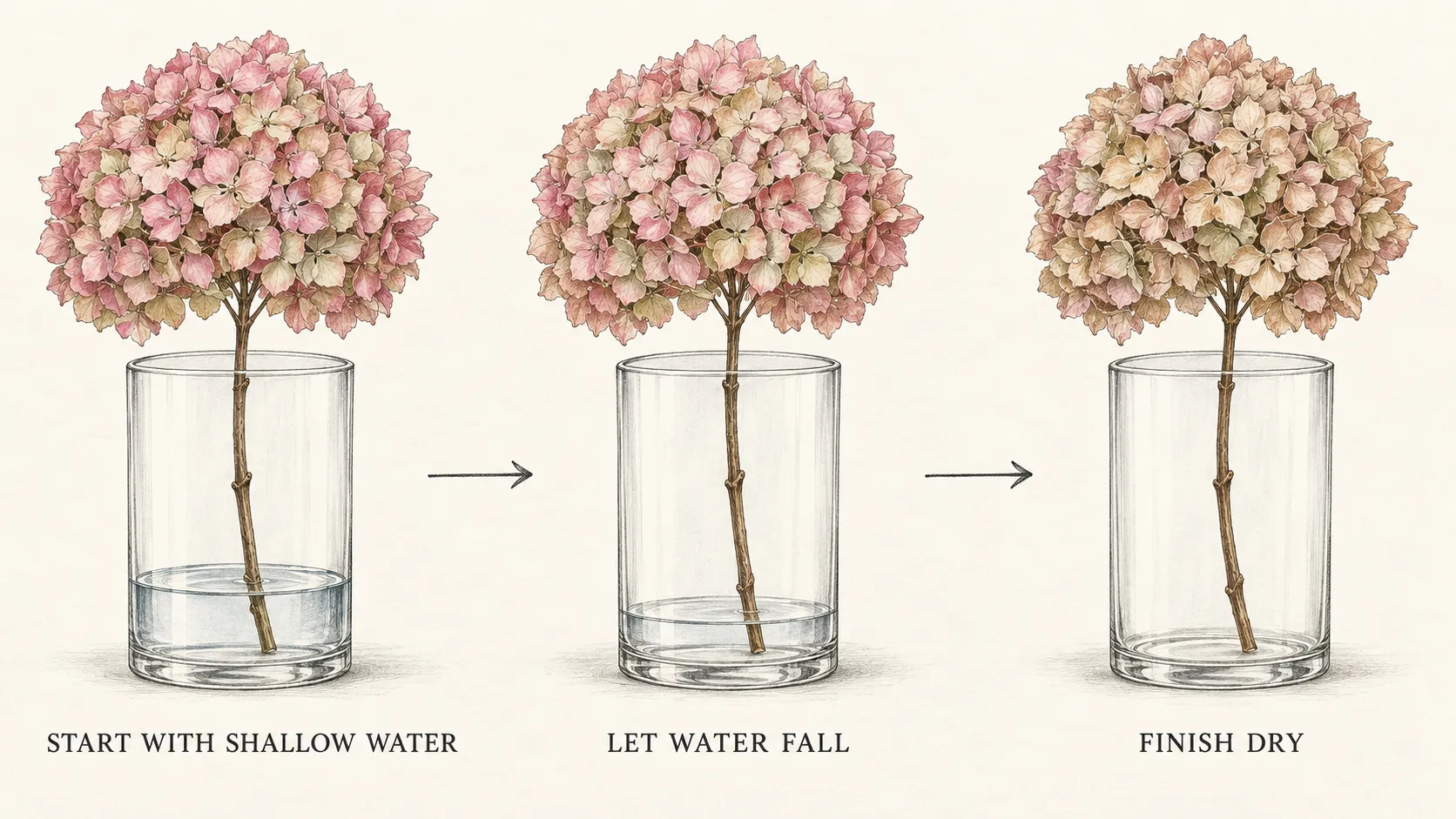
Put the date and plant identity beside the vase. If someone else tends fresh flowers in the house, add a clear note that this water is meant to disappear. Use a tray beneath the vessel where spills would damage furniture, but leave the flowerheads open to the room. Check that opening a nearby cupboard door will not strike the blooms.
Use a small hanging batch when upright space is scarce
Air-drying is another supported route for mature hydrangea flowers. Mississippi State describes leafless stems hung upside down in an airy, dim place. Use it when suitable hanging space is easier to provide than a shelf of vases. Keep the same harvest and parent-shrub limits; the drying method does not justify a deeper cut into the plant.
For a first comparison, hang one or two heads separately and keep another similar head in the shallow-water vase. Attach the tie around bare stems and leave the flowerheads clear of the wall and each other. Make sure you can remove a stem without pushing a hand through the blooms. Mark which method belongs to each small batch.
Compare the results only after both batches have dried. Note the head’s outline, floret condition and color as well as which arrangement was easier to manage in your room. Do not assume that a different flower harvested on a different date proves one method superior. This home comparison is useful for choosing next season’s routine, not for declaring a universal winner.
Judge completion by the material, not an empty vase alone
An empty vase tells you the starting water is gone; it does not prove that every part of a dense flowerhead has finished drying. Lift a stem by its base and examine the underside and center without squeezing the head. Look for any remaining soft, damp area among the florets. Let the batch continue in its open drying position until the material is consistently dry.
Check for mold during the drying interval and remove affected material from the batch. RHS recommends checking drying flowers for mold and reconsidering the location when it appears. Also review how closely the heads were packed and whether they entered the room wet. A dark room can still be damp, especially if it doubles as a laundry-drying space.
Shriveled heads and faded color are different outcomes. If a head collapsed soon after cutting, revisit the maturity notes before repeating the same harvest. If its form held but its color softened, decide whether that result suits the intended display. No spray, fertilizer or extra vase water is included as a remedy here. Keep the next trial small enough to compare without sacrificing the rest of the shrub’s flowers.
Arrange dry heads with fewer handling steps
Choose the final vase and the approximate heights before shortening the dried stems. Lay the vessel and a spare length of string on the work surface so you can estimate height without repeatedly inserting and removing each flower. Work over a clean tray that catches loose fragments. Handle the lower stem and support the head lightly only when necessary.
For a simple arrangement, place the largest rounded head off center, then add a smaller head slightly lower and turn their best faces toward the main viewing position. If you have a dried panicle, test its sloping outline alongside them before cutting its stem. These are compositional options: the flowers you actually saved determine whether a compact cluster or an open arrangement looks better.
Let the vessel do some of the visual work. A plain low jug can support a short-stemmed head without disguising it among many fillers. An especially beautiful single head may need no companion at all. Check the arrangement from the chair or doorway where it will be seen, then make the final stem cuts once, below the flowerheads.
Keep the finished display dry and retain a useful harvest note
Display dried flowers away from direct sun and humid rooms, following RHS guidance for dried arrangements. Choose a place where the heads will not be brushed by curtains, coats or passing hands. If the display must be moved, lift the vase from its base and steady the stems below the flowers. Remove the flowers first when washing the vessel and dry it fully before returning them.
For surplus fully dried heads, choose a shallow box that can hold them without flattening their outlines. Label the contents and keep heavier stored objects off the lid. Leave any head with uncertain dryness in the open drying area instead of rushing it into storage. A box is useful for organizing finished material; it does not complete an unfinished drying process.
Record the shrub name, cutting date, texture at harvest, starting method and the result you liked. Add a photograph of the parent plant showing how much display remained. Next autumn, those two images will help you choose both better drying material and less conspicuous harvest positions. Replace flowers when their condition no longer suits the arrangement; there is no fixed lifespan promised for a household batch.
Steps
- Level
- easy
- Time
- About 30 minutes to select and prepare a small batch, followed by drying checks
- Tools
- Clean pruning shears, Wide carrying tray, Stable vase or glass jar, Pencil and labels
- Materials
- Mature papery hydrangea flowerheads suitable for limited harvesting, Water, Optional string for a small hanging comparison, Shallow box for fully dried surplus heads
- 1Select a small batch on the plant
Compare several heads on the same shrub, touching florets gently and checking the underside. Choose intact papery material with a shape worth retaining. Leave soft newly opened heads attached. Photograph your candidates and identify the hydrangea before deciding which stems can be removed. Keep cold-exposed mopheads when their retained heads are part of winter bud protection. Keep rejected and selected heads on separate notes so a later visit starts with the right group.
- 2Match the harvest to a vessel
Set out a stable jar or low vase before cutting. Use its height to judge how little stem is needed, then locate the healthy buds and framework that will remain on the shrub. Change the vessel if the planned cut is too deep. Collect during a surface-dry interval, carry by the stems and keep the heads apart in a tray.
- 3Prepare and space the flowers
Remove foliage from the harvested stems and inspect the now-visible underside of each head. Stand the stems in the empty vase first. Divide the collection if heads press into each other or the vessel becomes unstable. Add about 2 inches of water around the bare stem bases, leaving every flowerhead above the rim and water.
- 4Set the vase aside for drying
Mark the initial waterline and date, then place the vase in a dry, shaded, ventilated indoor spot. Tell anyone who tends household flowers that this water should run down naturally. Check the batch without refilling it as a fresh bouquet. Keep an optional hanging comparison separately labeled so the results can be compared after drying.
- 5Inspect before arranging
When the water has disappeared, examine the head beneath and within its outline for remaining damp areas. Continue open drying if needed, and remove moldy material from the collection. Select a final vessel, estimate the stem heights and make the last cuts over a tray. Store only fully dried surplus heads without crushing them, and note the harvest stage for next autumn. Place the finished arrangement where passing people and curtains will not brush against its flowers.
Plants in this guide
Related reading
Sources
- General care for hydrangeas. Oregon State University Extension Service. Source record · Accessed 2026-09-13.
- Hydrangeas for Mississippi Gardens. Mississippi State University Extension Service. Source record · Accessed 2026-09-13.
- Drying Flowers. Clemson Cooperative Extension. Source record · Accessed 2026-09-13.
- Hydrangea pruning. Royal Horticultural Society. Source record · Accessed 2026-09-13.
- How to dry flowers and foliage. Royal Horticultural Society. Source record · Accessed 2026-09-13.