Grow · evergreen groundcover autumn leaf cleanup
Clean Evergreen Groundcovers Before Snow Cover
Read the leaf load over evergreen groundcovers, uncover vulnerable crowns without stripping useful habitat, and move only the material that could mat or hold disease against living foliage.
Published Last updated
In this guide
- Read the leaf load while the plants are still visible
- Remove a smothering mat without clearing the whole bed
- Separate a useful layer from a smothering mat
- Choose a dry, workable cleanup window
- Open the plant without combing it bare
- Remove disease evidence as a separate stream
- Move surplus leaves to a better winter job
- Recheck collection points before lasting cover
- Hand the unfinished work to spring
- Steps
Read the leaf load while the plants are still visible
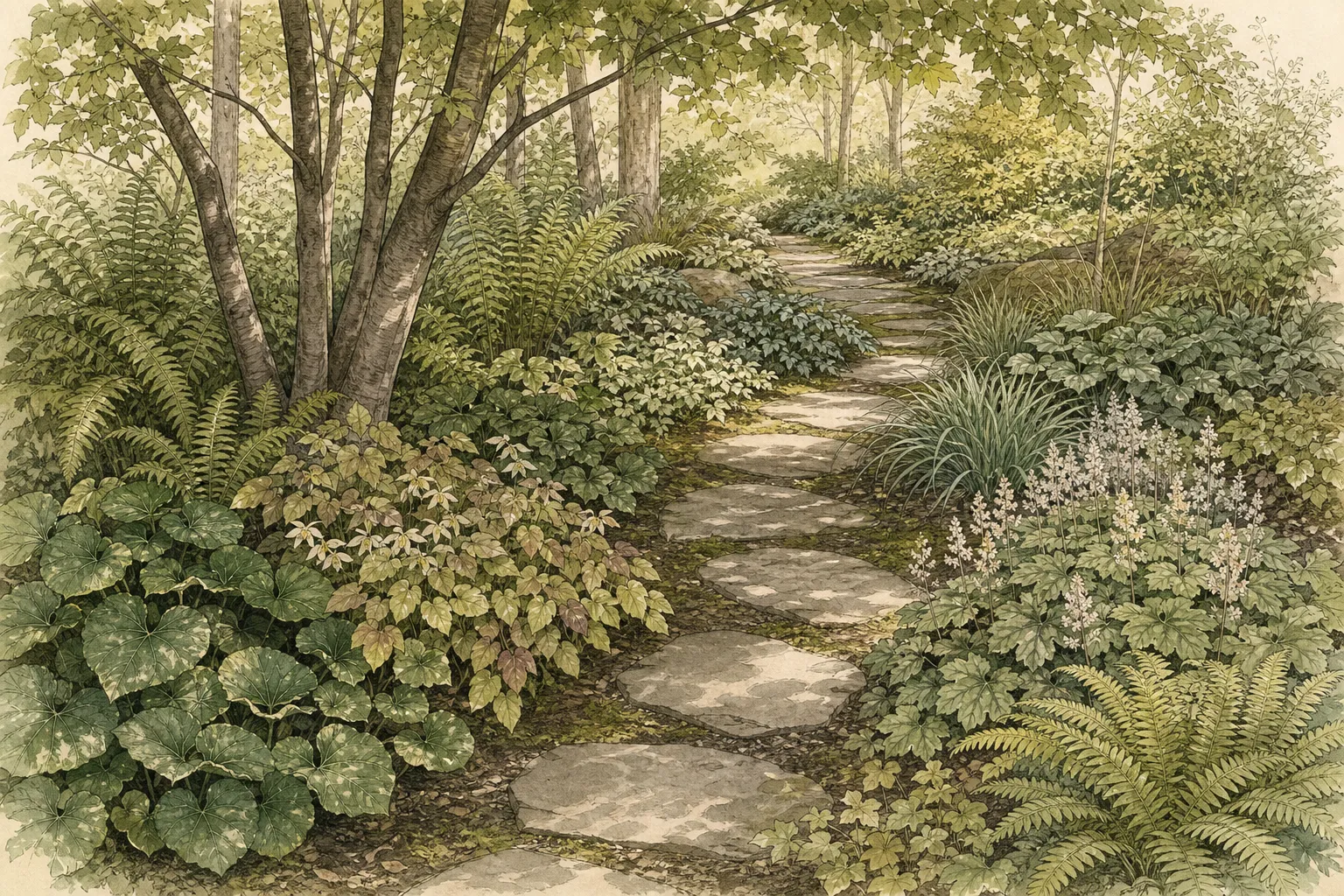
Evergreen groundcovers enter winter with living leaves at soil level. Creeping phlox, hellebores, low ferns, and many woody spreaders therefore meet autumn litter differently from a fully dormant perennial whose top growth has collapsed. The useful first pass happens after the main fall of leaves, while the groundcover can still be traced and before a lasting snow layer removes that view. Walk the whole bed and look down into the planting rather than judging it from the path. Mark where leaves are scattered, where wind has packed them into a corner, and where a crown or evergreen mat has disappeared completely.
A clean-looking bed is not the objective. Iowa State University Extension explains that fallen leaves in perennial beds contribute organic matter, suppress weeds, moderate moisture, and can insulate plants. University of Maryland Extension likewise recommends leaving woodland leaf litter in place in many groundcover plantings because soil organisms gradually reduce it and intact leaves support overwintering wildlife. The question is narrower: has the leaf layer become deep and cohesive enough to cover foliage or crowns that need air and light, or is it still a loose layer through which the planting remains legible?
Use several observations before moving anything. A single curled maple leaf resting on a phlox shoot is not a mat. A low pocket behind a stone may hold a damp slab of leaves even while the rest of the bed remains open. Lift one edge with your fingers and inspect the plant beneath it. Healthy evergreen foliage should retain its normal firmness and color for the season. Soft, flattened, discolored, or odor-bearing tissue calls for closer inspection, while clean dry foliage beneath loose litter usually needs less intervention than the surrounding bare soil might suggest.
Remove a smothering mat without clearing the whole bed
Lift cohesive litter from living evergreen foliage and separate suspect material from clean leaves that can remain elsewhere. Keep the work focused on mapped collection pockets. Revisit those pockets after wind, leaf fall or thaw; if the mat has not returned, leave the planting alone. Persistent softness or pooling needs diagnosis beyond another round of raking.
Separate a useful layer from a smothering mat
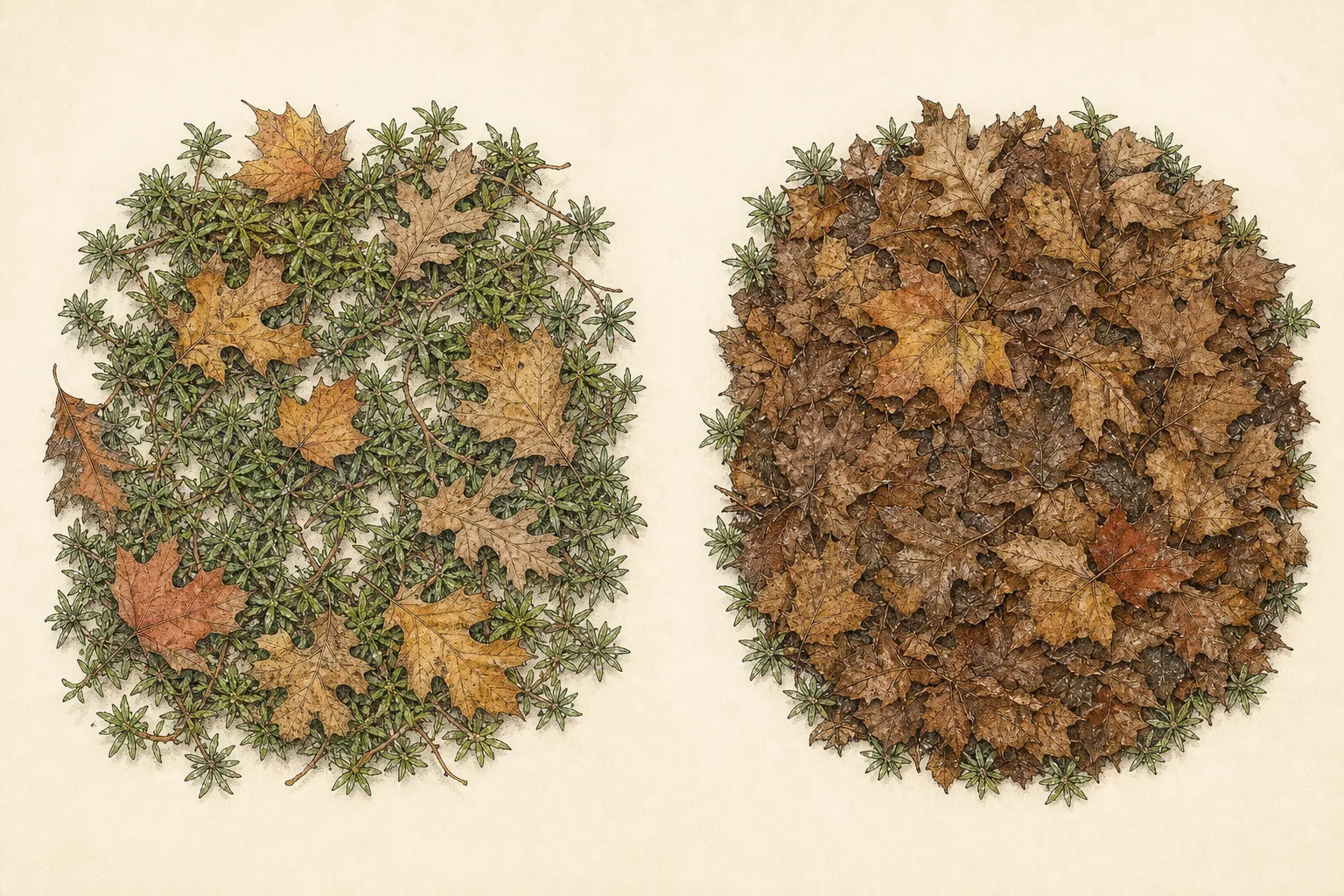
The distinction is physical. Loose leaves sit in separate pieces, admit small gaps of air and light, and shift when lifted. A mat has knitted together through moisture, repeated rain, or the pressure of accumulating layers. It comes away in a sheet, holds its shape, and conceals the plant below. Iowa State specifically advises keeping thick leaf mats from perennial crowns and keeping leaves off evergreen perennials such as creeping phlox and Lenten rose. Maryland gives the complementary rule: retain leaf litter, but gently move extra-deep piles when they threaten sensitive plants with smothering or leaf infection.
Let the plant set the threshold. A woodland groundcover adapted to receiving deciduous leaves can carry more litter than a dense sun-loving mat already holding moisture among fine stems. Newly established divisions, small rosettes, and low crowns disappear sooner than an established colony. The same depth can therefore be harmless in one part of a mixed bed and excessive a few feet away. Clear visible channels through vulnerable foliage and expose the crown or central growth point; leave compatible litter in the open intervals and beneath shrubs where it is not banked against bark. Snow is not the reason to sterilize the surface. It is the reason to correct the few places that will be hard to inspect once winter closes in. Snow can insulate a garden, and standing perennial growth can trap protective snow around crowns. The University of New Hampshire recommends retaining many healthy stems and seed heads for wildlife, structure, and protection while removing diseased growth. Treat the groundcover pass with the same discrimination. Open the living evergreen layer, preserve healthy architecture above it, and keep harmless leaves working elsewhere in the bed.
Choose a dry, workable cleanup window
Make the final pass when foliage is visible, the soil surface is firm enough to reach without compaction, and the leaves are dry or only lightly damp. Dry leaves separate cleanly from evergreen shoots. Saturated leaves cling to stems, and walking on wet soil compresses the very pore space roots will need through winter. Frozen ground is also a poor working surface because brittle shoots and crowns are harder to feel. The calendar date matters less than this combination of completed leaf fall, visible plant structure, stable footing, and a forecast that still leaves time for one check before persistent cover.
Use the gentlest tool that can do the job. Fingers in sturdy gloves are safest around small crowns and interlaced stems. A hand fork can lift the edge of a leaf sheet from open soil without entering the plant. A spring-tine rake may help on a broad, robust planting, but keep its teeth above the living mat and draw leaves toward an open collection point. A blower at its lowest useful setting can move loose leaves from durable foliage, provided it does not scour soil, scatter diseased material, or strip habitat from the whole bed.
Set up the destination before you start. Keep one container for visibly diseased or infested debris and another for clean surplus leaves that will be moved to a compost leaf pile or a more tolerant bed. If the material is healthy and the only problem is depth, relocation within the same border is often enough. Maryland recommends moving extra-deep litter to other beds or its own compost pile. That turns cleanup into redistribution: the evergreen plant gets an open surface, while the garden keeps the organic resource.
Open the plant without combing it bare
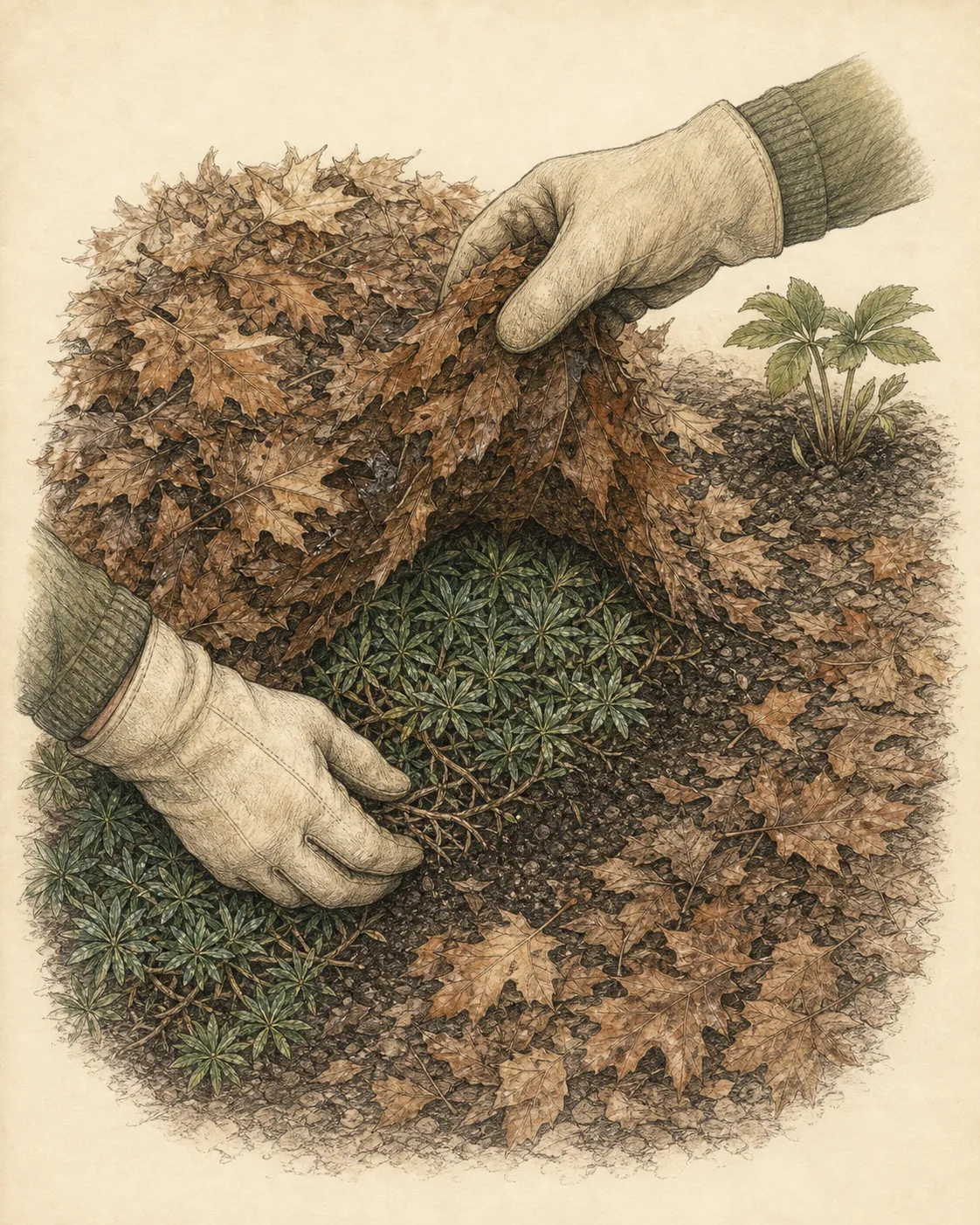
Begin at a visible edge and work inward. Pin the groundcover lightly with one hand, then lift leaves with the other so trailing stems, petioles, and shallow crowns stay in place. Follow rooted runners instead of pulling across them. Creeping phlox can present a tight web of woody stems beneath its green tips; hellebore leaves rise from a compact crown that is easy to locate once the surrounding litter is loosened. The action is closer to uncovering a drawing than raking a lawn. Each pass should reveal the plant without changing its outline. Create openings where leaves naturally collect: the uphill side of edging, the lee of a stone, the interior angle between spreading stems and a shrub base, and the low center of a mature clump. Pull material away from the crown and from direct contact with woody bark. Leave a thinner, irregular layer across open soil. A perfectly bare ring is unnecessary and may expose soil to splash and weeds. The useful boundary is visible living tissue beside leaf-covered soil, not a decorative circle cut around every plant.
Retain sound evergreen foliage. New Hampshire notes that evergreen perennials such as hellebores and Christmas fern do not need autumn clipping and can be tidied as new growth begins in spring. Old but healthy leaves still cover the crown and contribute winter presence. Remove a leaf only when it is clearly diseased, broken into decay, or physically trapping a wet mass against the plant. Fall cleanup should reduce a specific risk while leaving the plant's working foliage and the border's winter structure intact.
Remove disease evidence as a separate stream
Disease changes the destination of debris. New Hampshire recommends prioritizing diseased top growth for removal, and Iowa State's broader fall-cleanup guidance makes the same distinction between healthy material and debris carrying a known problem. Look for the symptoms that were already present during the growing season: recurring leaf spots, blighted shoots, decayed crowns, or foliage known to have supported an infestation. A few naturally senescing leaves are not proof of disease. When the pattern is uncertain, photograph it and seek a local diagnosis before labeling the whole bed contaminated.
Lift suspect material gently and keep it separate from clean leaves. Bag or dispose of it according to local guidance rather than spreading it as mulch across another ornamental bed. Clean hand tools after working through confirmed disease, particularly before moving to a healthy patch of the same plant. This is targeted sanitation, not a reason to remove every leaf that touched the groundcover. Broad removal sacrifices habitat and soil cover without improving control when the diagnosis or life cycle does not support it.
Inspect the plant after the debris is gone. A crown that remains soft, waterlogged, or detached needs more than cosmetic cleanup. Mark its location and check drainage after rain or thaw. An entire patch with similar decline points toward a shared site problem; one collapsed pocket may reflect a local low spot, buried crown, or damaged stem. Record the distribution before winter so that spring growth can be compared with evidence instead of memory.
Move surplus leaves to a better winter job
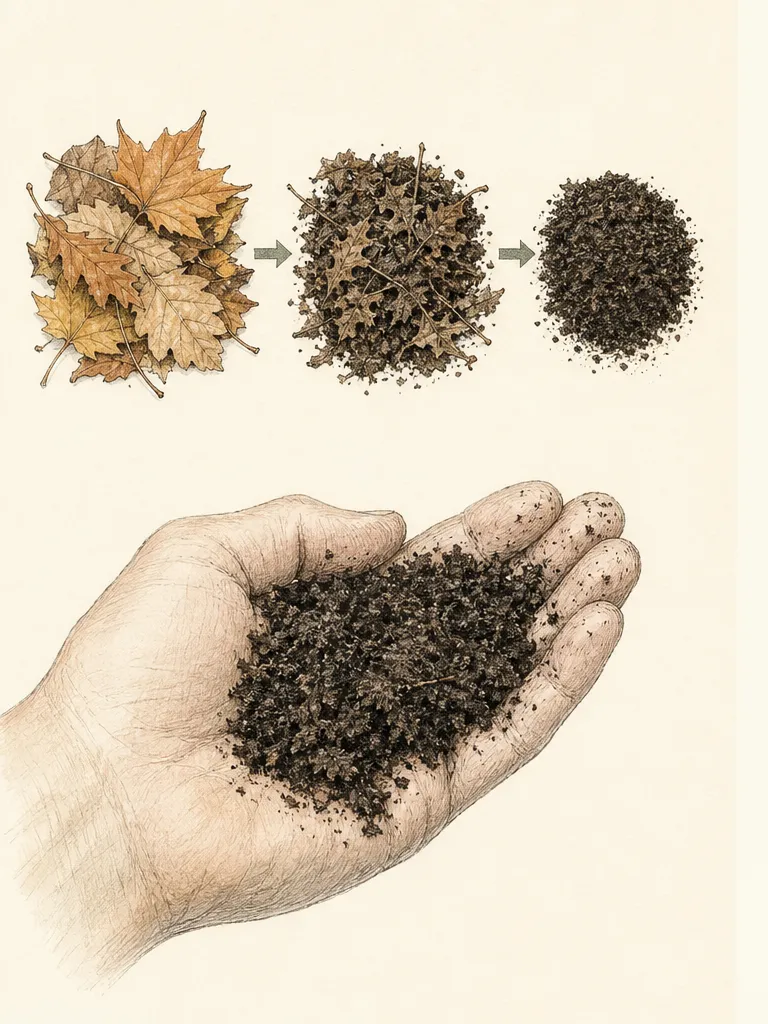
Clean leaves removed from evergreen foliage still have value. Spread them loosely beneath deciduous shrubs, across open perennial soil, or in a dedicated leaf pile, keeping trunks, woody stems, and vulnerable crowns visible. Iowa State describes their benefits as mulch and eventual organic matter; Maryland emphasizes the soil organisms and wildlife that use intact leaf litter. A good relocation preserves those functions without rebuilding the same dense layer in a new place. Fluff compressed sheets apart and distribute them over a broader area.
Respect different garden zones. The woodland edge may accept an intact layer because its plants evolved with annual leaf fall. A dry rock-garden mat, a fine conifer, or a low evergreen at the foot of a wall may need much more open foliage. Paths and stepping stones should stay clear enough for safe winter access, and drainage inlets must remain visible. The cleanup map is therefore a mosaic: exposed crowns and walking surfaces, loose leaves on compatible soil, and standing stems wherever they provide healthy structure. Do not bury the newly opened groundcover under a replacement mulch. If additional winter protection is appropriate for a marginal plant in your region, apply the locally recommended material at the proper time and keep the evergreen growing point readable. A blanket applied for reassurance can reproduce the moisture and smothering problem you just corrected. The most useful winter preparation is often an open crown, a stable root zone, and nearby leaf cover that does not sit on the foliage.
Recheck collection points before lasting cover
One cleanup pass does not control the wind. Return after the next strong leaf fall or storm and inspect the pockets that filled first. The goal is not continuous tidiness; it is to catch renewed mats before snow or prolonged wet weather makes them harder to see. A handful of mapped collection points makes this quick. Check behind edging, beneath overhanging shrubs, around downspout discharge, and on the sheltered side of stones. If the open channels remain visible, leave the rest of the bed alone.
Watch the response during thaw. Evergreen foliage exposed by cleanup may lie flat under snow and rise again when it melts. That temporary posture is different from tissue that stays dark, soft, or foul-smelling. Keep foot traffic off saturated ground and let the planting drain before handling it. Where repeated pooling presses debris into the same groundcover, the spring task is to correct the water path or relocate the sensitive plant, not to schedule endless raking.
End the season with a simple record: which plants needed opening, where leaves could remain, what material was removed for disease, and which low spots require a spring decision. That record turns next autumn's cleanup into a faster, more accurate pass. It also protects the garden from a universal rule. Some beds will retain almost all their leaves; others will need several carefully opened evergreen patches. The plant and the leaf distribution decide.
Hand the unfinished work to spring
Spring is the proper time for the cosmetic finish. As new growth begins, remove winter-damaged evergreen leaves selectively and cut back the standing perennial material that has completed its structural or habitat role. New Hampshire specifically places hellebore and Christmas fern tidying in this window. Work before emerging shoots become tangled with old foliage, and keep the crown visible while you cut. The fall pass should make this easier by preserving labels, access, and the true outline of the plants.
Compare the newly exposed planting with the autumn notes. Healthy shoots emerging from the opened areas confirm that the leaf load was managed without stripping the bed. Repeated bare patches, crown loss, or infection beneath the same accumulation zone indicate that species placement, drainage, or canopy litter needs a design response. Move a plant only after identifying that persistent mismatch. A single hard winter is evidence, but the pattern across seasons is more reliable.
The best result may look less manicured than a conventional fall cleanup. Evergreen foliage remains, healthy stems and seed heads stand, and leaf litter continues to occupy compatible soil. What has changed is legibility: living crowns are open, diseased material is gone, and deep mats no longer hide vulnerable foliage. That is enough preparation for snow. The bed retains its biological material and winter character while the plants most likely to be smothered keep the space they need.
Steps
- Level
- easy
- Time
- 30–75 minutes for a small mixed border, plus one brief recheck after wind
- Tools
- Sturdy gloves, Hand fork or narrow hand rake, Optional spring-tine rake or low-power blower for robust patches, Two containers for clean and suspect debris
- Materials
- Plant labels or weatherproof markers, Garden notebook or phone camera, Local disposal container for confirmed diseased debris
- 1Map the evergreen layer
Walk the bed after the main leaf fall while creeping phlox, hellebores, low ferns, and woody groundcovers are still visible. Mark crowns, rooted runners, shrub bases, drainage inlets, and the pockets where wind has collected a deep layer. Lift the edge of several accumulations with a gloved hand. Record whether each is loose and airy or bound into a damp sheet, and photograph any decline whose cause is uncertain before disturbing it.
- 2Choose what stays
Leave loose healthy leaves on compatible open soil and within woodland-style plantings where foliage and crowns remain visible. Preserve sound seed heads, stems, and evergreen leaves that provide winter structure. Define the cleanup area by risk: a cohesive mat over living foliage, a buried crown, debris banked against woody stems, or material associated with a confirmed disease. This boundary keeps the operation selective enough to retain habitat and soil cover.
- 3Lift mats from living foliage
Work from a visible edge with fingers or a small hand tool. Hold trailing stems in place and lift leaves upward instead of dragging a rake through the plant. Open the crown, the base of woody stems, and the channels where leaves have been pressed against evergreen foliage. Keep a thin irregular layer on adjacent soil. Stop when the plant can be traced and air can move through it; a bare decorative ring is not required.
- 4Separate diseased material
Place debris with known leaf spot, blight, decay, or infestation in a separate container and follow local disposal advice. Keep clean surplus leaves out of that stream. If symptoms were not diagnosed during the growing season, save photographs and a sample as local diagnostic guidance allows rather than declaring every discolored autumn leaf diseased. Clean tools after confirmed disease and before entering a healthy patch of the same groundcover.
- 5Redistribute clean leaves
Break apart compacted sheets and move the clean leaves to open perennial soil, beneath deciduous shrubs without touching bark, or to a dedicated leaf pile. Keep paths, inlets, crowns, and evergreen foliage visible. Spread the material broadly enough that it cannot reform as another smothering slab. Do not replace the removed mat with a deep blanket of mulch unless plant-specific regional guidance calls for winter protection and explains how to keep the crown open.
- 6Check the same pockets again
Return after the next strong wind, major leaf drop, or thaw and inspect only the mapped collection points. Reopen a pocket if a cohesive mat has returned; otherwise leave the bed undisturbed. Note persistent pooling, odor, or soft foliage for a spring drainage or placement decision. In spring, tidy winter-damaged evergreen leaves as new growth begins and compare survival with the autumn map before changing the design.
Plants in this guide
Related reading
Sources
- What Do I Do with Fallen Leaves in My Flower Beds?. Iowa State University Extension and Outreach. Source record · Accessed 2026-08-20.
- Groundcovers. University of Maryland Extension. Source record · Accessed 2026-08-20.
- Should Perennials Be Cut Back in Fall?. University of New Hampshire Extension. Source record · Accessed 2026-08-20.