Grow · foxglove two year border sequence
Grow Foxgloves in a Safe Two-Year Border Sequence
Maintain first-year rosettes and second-year flowering foxgloves as two visible cohorts, while controlling seed and applying strict safeguards for a highly toxic ornamental.
Published Last updated
In this guide
- Make the safety decision before the planting plan
- Identify the cohort before handling it
- Run two cohorts instead of trusting chance
- Choose a sheltered ornamental position
- Sow a deliberate first-year cohort
- Carry rosettes through the first winter
- Manage flowering stems without losing the next year
- Edit seedlings into a border, not a thicket
- Close each season with a safety and continuity audit
- Steps
Make the safety decision before the planting plan
Common foxglove, Digitalis purpurea, is a highly toxic ornamental. Poison Control states that all parts can be poisonous, potentially fatally, if swallowed, and NC State lists high-severity poison characteristics. The ASPCA identifies it as toxic to dogs, cats, and horses. This is not a plant to place first and safeguard later.
Do not grow foxglove where children or pets play, browse, dig, or pass unsupervised. Poison Control specifically advises against planting it in gardens used by children or pets. A low fence, a label, or an adult's intention to supervise does not change an exposure pattern that is predictably unsafe. Choose a non-toxic vertical ornamental for that site instead.
Keep foxglove out of edible beds, herb gardens, cutting areas used for food styling, and any border where leaves could be confused with harvestable greens. Never prepare tea, food, or homemade medicine from it. Store seed in a clearly labeled closed container away from children, pets, food seed, and household medicine.
Plan handling and cleanup before sowing. Use gloves as recommended by the RHS, keep dedicated labels with the plants, collect cut stems and seed debris promptly, and wash hands and tools after work. If the household, school, or public garden cannot maintain those controls throughout the two-year cycle, do not establish the sequence.
Identify the cohort before handling it
In its classic biennial pattern, common foxglove forms a low basal rosette during the first year, overwinters, and sends a flowering stem from the center in the second. NC State describes coarse, prominently veined, hairy rosette leaves and a later upright stem with smaller leaves. The flowers are tubular and grouped along a tall, usually one-sided raceme.
Do not rely on a generic green rosette identification where safety matters. Keep the sowing map and label, compare the whole plant with an authoritative botanical description, and retain a nursery tag for purchased cultivars. If identity is uncertain, handle the plant as potentially toxic, keep people and animals away, and seek local expert identification rather than tasting, crushing, or using an image guess as proof.
Life cycle is not perfectly uniform. RHS and NC State both describe foxgloves as biennial or short-lived perennial, and some selections are bred to flower in their first season. Climate, sowing time, cultivar, and plant condition can alter behavior. The two-year system is a management framework for typical D. purpurea, not a promise that every plant will follow the same calendar.
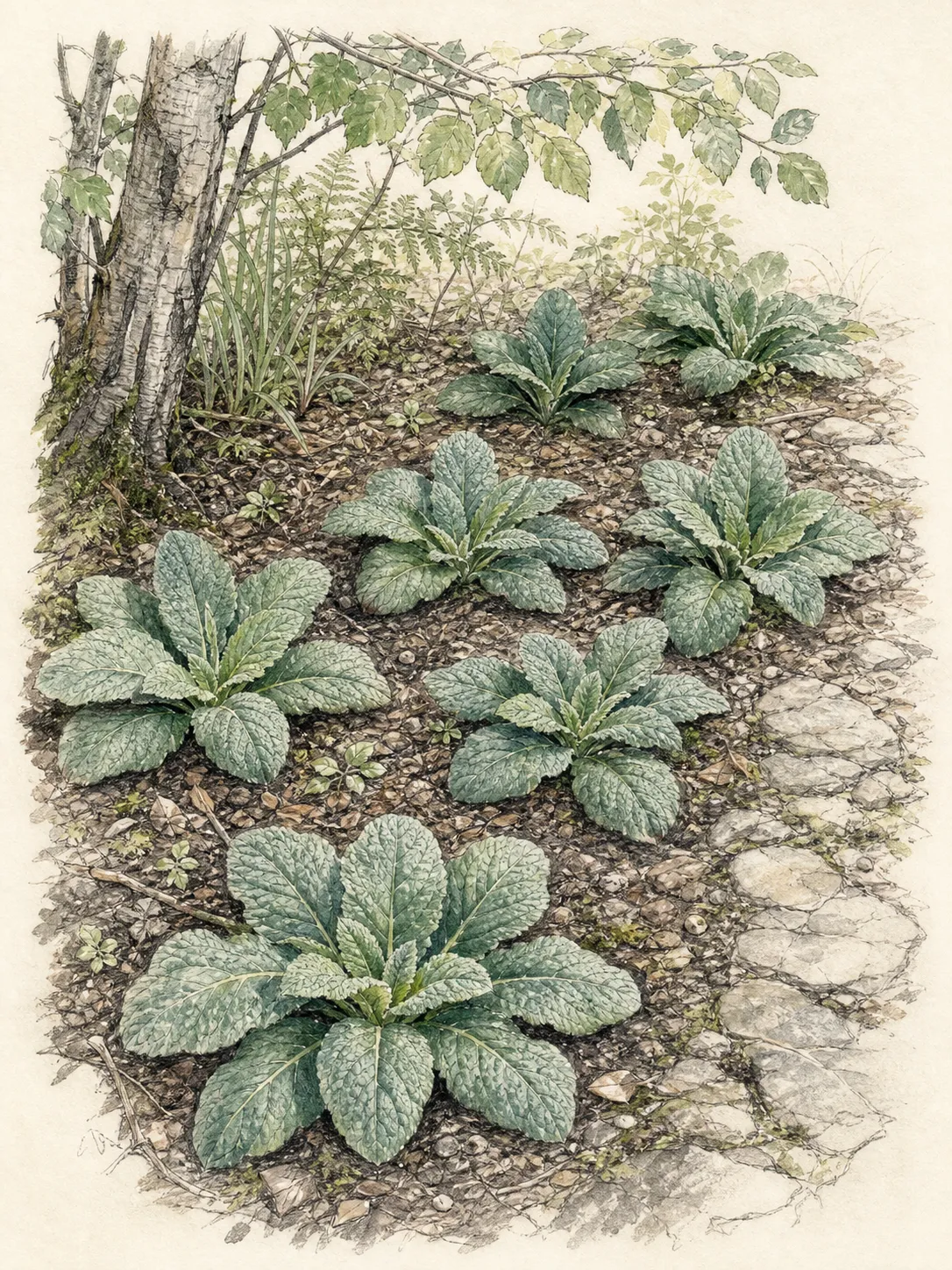
Record any first-year flowering plant separately. Do not let it disappear into the following year's count, because a plant that has flowered and set seed may not serve as a dependable future rosette. Keep cultivar claims attached to the named selection and rebuild the cohort from observed plants, not from an assumed label category.
Run two cohorts instead of trusting chance
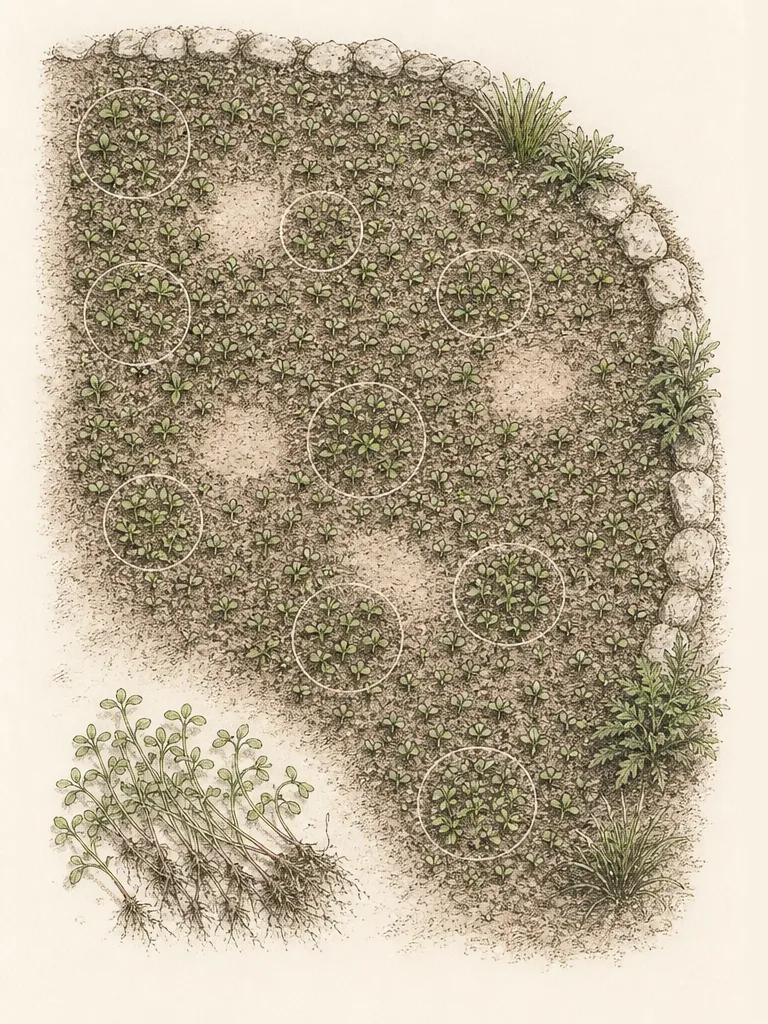
A continuous foxglove display requires two visible groups: flowering-age plants for the current season and vegetative rosettes intended for the next. Draw both on the border plan using different symbols. Count positions rather than hoping that scattered self-seedlings will appear in useful places after the flowering generation declines.
Start a replacement cohort every year that the display is wanted. It may come from deliberately sown seed or a limited number of retained self-sown seedlings, depending on cultivar, garden policy, and local invasive guidance. Keep enough rosettes for the planned group plus a modest margin for ordinary loss, but do not raise a carpet that must be handled and discarded later.
Separate the cohorts physically enough to see and service them. Rosettes can occupy gaps between clumping companions, while flowering plants rise slightly behind or through the group. Keep mature spread, air movement, and access around each crown. Do not tuck rosettes beneath dense groundcover where labels disappear and moisture remains persistently trapped.
Use a simple annual ledger: source or parent group, cultivar, sowing date, transplant positions, plants that flowered, spikes allowed to seed, and rosettes reserved for next year. The record protects both design and safety. It reduces unidentified volunteers and prevents a flowering gap from being blamed on weather when no replacement cohort was actually retained.
Choose a sheltered ornamental position
Common foxglove suits a border role where its vertical flowers can rise in front of shrubs or a dark background. RHS describes foxgloves as woodland plants that favor shade and organic-rich soil, while NC State specifies moist, well-drained conditions and notes benefit from afternoon shade. Translate that guidance through local summer heat, winter wet, and the chosen cultivar.
Avoid both persistently saturated ground and a position that repeatedly dries hard. A label that says shade does not mean a roof rain shadow will stay moist, and a moisture-retentive soil should still drain. Observe the proposed pocket after rain and during a dry period. Improve the site or choose another plant rather than compensating for a fundamental mismatch with erratic watering.
Shelter tall spikes from the strongest ordinary wind and from routes where people brush them. The exact finished height varies by species, cultivar, climate, and care, so use the named plant's credible dimensions. Place support early only if local exposure and the selection require it; do not bind several stems into a congested bundle.
Keep the foxglove zone visibly separate from food and play areas. A shrub backdrop or ornamental-only border can make the group legible without hiding it. Preserve a stable maintenance position from which flowers, labels, and seed capsules can be reached with gloves and without stepping through neighboring crowns.
Sow a deliberate first-year cohort
RHS guidance places seed sowing in late spring or early summer and notes that the tiny seed needs light for germination, so it is pressed onto the surface rather than deeply covered. Treat that timing as a UK-based seasonal reference and adapt it with local Extension or nursery guidance where heat, frost, or rainfall produces a different safe establishment window.
Use a labeled tray or a clearly bounded nursery patch away from edible seedlings. Sow thinly so later handling is reduced. Keep the medium evenly appropriate for germination without saturating it, and protect the container from access by children and pets. Do not reuse an unlabeled food container or place the tray among herbs.
Move sturdy young plants with their roots intact and retain the cultivar label. RHS advises spacing overcrowded seedlings rather than leaving them in a dense cluster; final distances should follow the named selection's mature spread and local conditions. Water the root ball during establishment and keep the crown at its previous level.
Mark each rosette on the border plan immediately. Use a discreet durable label beyond the leaf spread, not a tag hidden in the crown. Check that the final position still meets the safety plan once adjacent perennials expand. If the label is lost or identity becomes doubtful, isolate and verify the plant rather than folding it into the cohort by assumption.
Carry rosettes through the first winter
The first year's success is a healthy, identifiable rosette, not premature height. Keep neighboring foliage from smothering its center and avoid piling mulch over the crown. Continue to distinguish newly sown plants from older flowering remains and unrelated volunteer rosettes. The map is particularly important after surrounding perennials are cut back.
Manage moisture according to actual soil and weather. A rosette entering winter in saturated, poorly drained ground is not made safer by a generic layer of mulch, while an exposed container may need protection different from an in-ground plant. Use local hardiness and overwintering guidance for the cultivar rather than transferring the RHS climate description universally.
Inspect labels and access after storms, leaf fall, or routine cleanup. Remove fallen debris that completely buries the crown without stripping all protective garden litter from the bed. Do not invite untrained helpers to weed the cohort area; a rosette mistaken for a common weed creates unnecessary handling and can erase the following year's display.
In late winter or early spring, count surviving rosettes before buying flowering plants. Record heaving, rot, desiccation, and crowding as site evidence. Replace only where the safety and site plan still work. A missing plant does not justify moving foxglove closer to a path, vegetable bed, or play area for visual balance.
Manage flowering stems without losing the next year
As second-year stems rise, keep them distinct from the younger rosettes. Install any discreet support before flowers open and from the maintenance side of the group. Maintain a clear route for inspection and do not tie several mature stems to a single stake so tightly that leaves and labels become inaccessible.
During bloom, watch the composition from normal views. Remove a dangerously leaning or broken stem with gloves and collect every piece promptly. Do not place foxglove flowers in an unlabeled mixed bouquet where children, pets, or food preparation may encounter them. The plant's ornamental value does not reduce the ingestion hazard after cutting.
Decide in advance which few spikes, if any, may set seed. NC State notes that deadheading limits excessive seedlings but that some flowers must seed if the population is to persist by self-sowing. A deliberate seed parent should be clearly marked, reachable, and located where falling seed will not enter food or public-use areas.
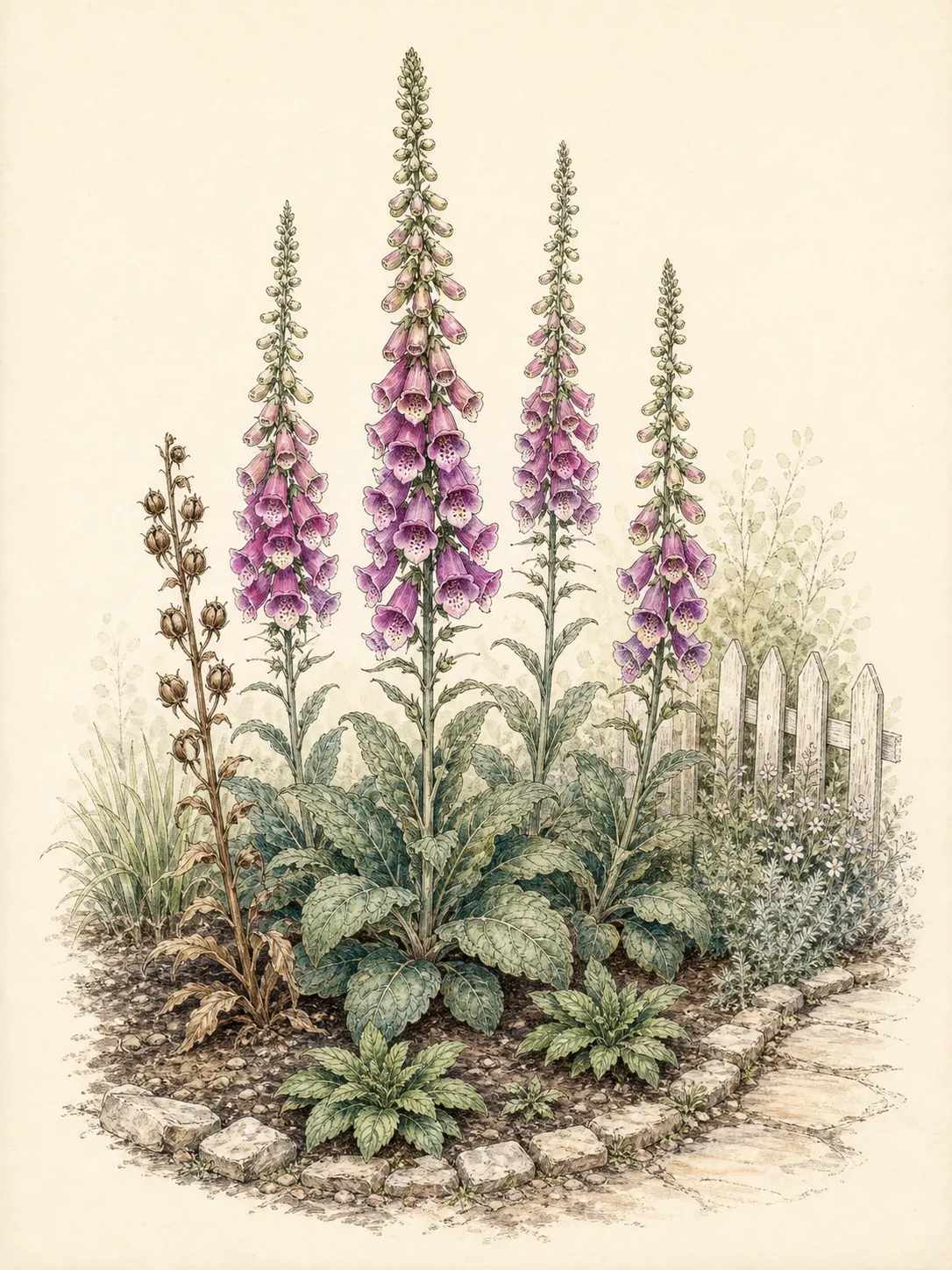
Deadhead the remaining spikes before capsules disperse, using gloves and controlled collection. Seed-raised offspring may differ from a named parent, especially where cultivars cross, so do not promise true color or height. If cultivar uniformity matters, buy verified seed or plants and treat spontaneous seedlings as variable until they flower.
Edit seedlings into a border, not a thicket
Self-sowing can produce many seedlings close to the parent. Keep only plants that fit the next cohort count, safe boundary, and mature spacing. Work while they are small enough to move with a trowel and visible roots, wearing gloves. Do not allow convenience to turn every seedling into a permanent plant.
Compare each candidate with the identification record before transplanting. Preserve a few well-placed rosettes in repeated groups rather than a diffuse scatter. Thin plants from paths, edible areas, property edges, drainage structures, and places where pets or children can reach them. Follow local invasive-plant guidance if common foxglove spreads beyond cultivation in the region.
Use companions that make the cohort legible. Clumping ferns, hostas, or other locally appropriate ornamental foliage may frame rosettes and support the tall flowering phase, but they must share the site's soil and moisture conditions without swallowing the foxglove crowns. Avoid edible look-alike foliage or self-sowers that make safe identification harder.
After editing, update the map and recount the following year's positions. Remove old flowering plants only after the planned seed decision is complete and collect all material. Do not infer that a stem will reliably flower again because it remains green; the replacement rosettes, not the exhausted generation, are the dependable basis of the next sequence.
Close each season with a safety and continuity audit
At the end of flowering, confirm that selected seed was either collected into a closed label or dispersed only in the approved ornamental pocket. Check paths, mulch, neighboring crowns, and tools for cut capsules or stem pieces. Keep disposal handling controlled according to local waste guidance and prevent access by children and animals until cleanup is complete.
Count the first-year rosettes, note their cultivar or source, and photograph each group from a fixed point. Compare the number and positions with next year's design. If there is no sound replacement cohort, choose a different vertical plant for the gap rather than moving unverified foxgloves from an unsafe location.
Reassess household use. A new pet, visiting child, school use, property change, or lost barrier can make a formerly controlled site unsuitable. Safety outranks continuity. Remove the foxglove sequence with appropriate handling if exposure can no longer be prevented, and choose a locally suitable non-toxic ornamental replacement.
For any suspected human ingestion in the United States, follow Poison Control guidance: do not induce vomiting; obtain expert help immediately through Poison Control or emergency care. For suspected animal ingestion, contact a veterinarian or animal poison-control service promptly. Do not wait for symptoms or apply a garden remedy. The two-year sequence is successful only when its beauty, records, and safeguards persist together.
Steps
- Level
- moderate
- Time
- A full growing season for each cohort and two years to establish the repeating sequence
- Tools
- Nitrile or washable garden gloves, Seed tray or bounded nursery patch, Trowel, Secateurs, Durable plant labels, Garden plan or cohort ledger, Plant support where the cultivar and exposure require it
- Materials
- Verified Digitalis purpurea seed or labeled young plants, Seed-sowing medium, Locally appropriate mulch kept clear of crowns, Closed labeled seed-storage envelope or container, Compatible non-edible ornamental companions
- 1Approve or reject the site for safety
Exclude play areas, pet routes, edible beds, public picking zones, and any position where leaves could be mistaken for food. Confirm that adults can maintain labels, gloves, controlled cleanup, and restricted access for two full years. If exposure cannot be reliably prevented, choose a non-toxic vertical ornamental and stop the foxglove plan before seed enters the garden.
- 2Map flowering plants and replacement rosettes
Draw separate symbols for the cohort expected to flower and the cohort intended for the following year. Give both mature space, a safe ornamental-only boundary, and a reachable maintenance position. Record cultivar or seed source. Do not count an unverified volunteer or a plant that has already flowered as a dependable future rosette.
- 3Sow one bounded replacement cohort
In the locally appropriate late-spring or early-summer window, surface-sow verified seed in a labeled tray or controlled nursery patch, following the seed supplier and regional guidance. Keep it away from food seed, children, and pets. Raise only enough plants for the planned group plus a modest replacement margin, avoiding a dense surplus that creates extra toxic material to handle.
- 4Transplant and label first-year rosettes
Move sturdy seedlings with roots intact into the mapped positions, using the named cultivar's credible mature spread. Keep crowns at their prior level, water the root balls through establishment, and set durable labels just beyond the leaves. Update the plan immediately so the rosettes remain identifiable through companion growth and winter cleanup.
- 5Overwinter the crowns visibly
Keep mulch and fallen debris from burying rosette centers, preserve drainage, and prevent neighboring perennials from closing over the cohort. Adapt cold or wet protection to local guidance instead of using a universal treatment. Recount surviving rosettes before spring growth and retain the safe boundary even when the plants are low and unobtrusive.
- 6Support and inspect second-year stems
As flower stems extend, install support from the service side only where exposure and cultivar require it. Keep flowering plants distinct from younger rosettes. Remove broken or route-obstructing stems with gloves and collect every part. Do not use foxglove in casual mixed bouquets, food displays, or any arrangement accessible to children or animals.
- 7Choose seed parents before capsules form
Mark only the few well-placed spikes needed for controlled renewal, if self-sowing is appropriate locally. Deadhead all others before dispersal and collect the cut material. Keep or direct seed only inside the approved ornamental pocket. Record that seedlings may vary from the parent and do not promise named-cultivar traits from open seed.
- 8Reconcile the next cohort and clean the site
Thin self-sown seedlings to the planned count, remove plants from unsafe or crowded positions, and update the cohort ledger. After the seed decision, collect old flowering stems and inspect paths, mulch, tools, and neighboring crowns for debris. Reassess household access every year; discontinue the sequence if the safety controls no longer fit actual use.
Plants in this guide
Related reading
Sources
- How to Grow Foxgloves. Royal Horticultural Society. Source record · Accessed 2026-08-19.
- Digitalis purpurea. NC State Extension Gardener Plant Toolbox. Source record · Accessed 2026-08-19.
- Foxglove: Toxic to the Heart. Poison Control, National Capital Poison Center. Source record · Accessed 2026-08-19.
- Toxic and Non-toxic Plants: Foxglove. ASPCA Animal Poison Control Center. Source record · Accessed 2026-08-19.