Plant problems · stored tender bulb rot desiccation diagnosis
Inspect Stored Tender Bulbs Before Rot or Desiccation Spreads
Separate dahlia tubers, canna rhizomes, gladiolus corms, caladiums, and tuberous begonias by storage organ, then diagnose firmness, moisture, decay, and sprouting.
Published Last updated
In this guide
- Open the store as an inspection space
- Check the storage organ's growth point as well as firmness
- Identify the organ before judging its condition
- Separate active decay from harmless surface change
- Distinguish water loss from loss of viability
- Treat early shoots as a temperature signal
- Repack sound stock with traceable spacing
- Use the diagnosis to change next autumn
- Run a controlled recheck instead of repeated handling
- Diagnosis
Open the store as an inspection space
A midwinter check is meant to find a changing storage environment before one damaged piece affects the rest. Work in a cool, dry, well-lit place with a washable surface. Bring out one labeled crate or cultivar at a time. Photograph the container as opened so packing density, condensation, and contact points remain documented. Keep healthy material away from the discard area and clean tools before moving between lots.
Read the room before the plants. Record air temperature and relative humidity at storage height, not at a thermostat in another space. Check the coldest wall, warmest shelf, floor, and area near a door or appliance. Condensation, frozen tissue, or widespread shriveling usually reflects a spatial pattern. Moving one tuber cannot solve a crate placed against a wet foundation wall or beside a cycling heater.
Inspect the packing medium. Peat, vermiculite, wood shavings, paper, or an open crate may have been selected for a particular organ and climate. Feel several points and look for wet clumps, bone-dry edges, mold, and stale odor. Do not moisten the entire container from a single shriveled specimen. First determine whether damage is local, cultivar-wide, container-wide, or room-wide.
Wear gloves and avoid inhaling moldy dust. People with respiratory sensitivity should not handle heavily molded material indoors. Keep pets and children away from stored ornamentals, many of which are not edible. Dispose of unsound tissue according to local rules, and do not place diseased material in a compost system that cannot manage it safely.
Check the storage organ's growth point as well as firmness
Identify the stored organ before deciding whether it can grow again. Sound-feeling tissue without the required crown, bud or node may still be nonviable. Separate dry shrinkage, active decay, premature growth and superficial mold using the matching checks below. Keep suspect pieces apart from sound stock while assessing the storage conditions that may affect the rest of the lot.
Identify the organ before judging its condition
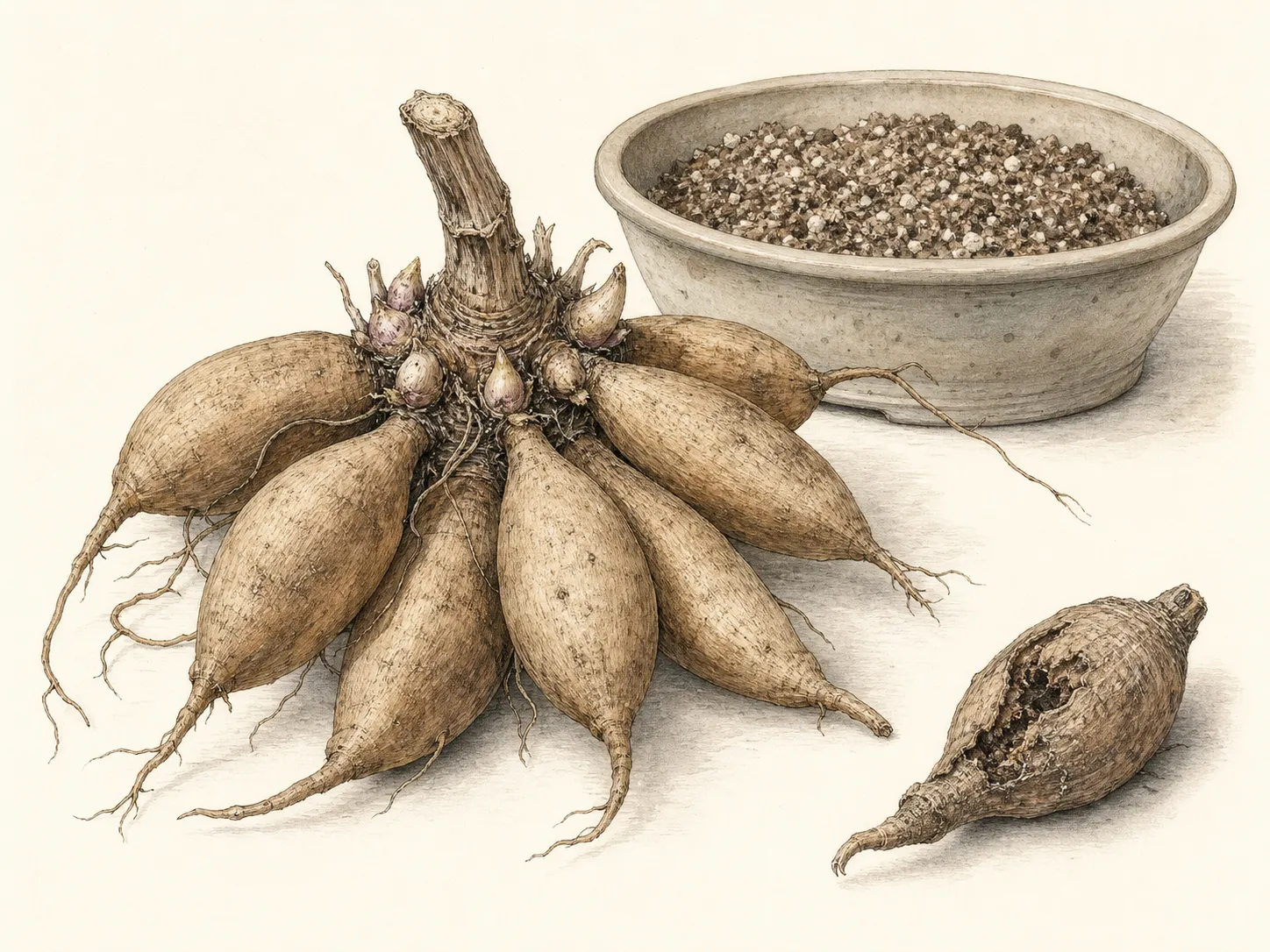
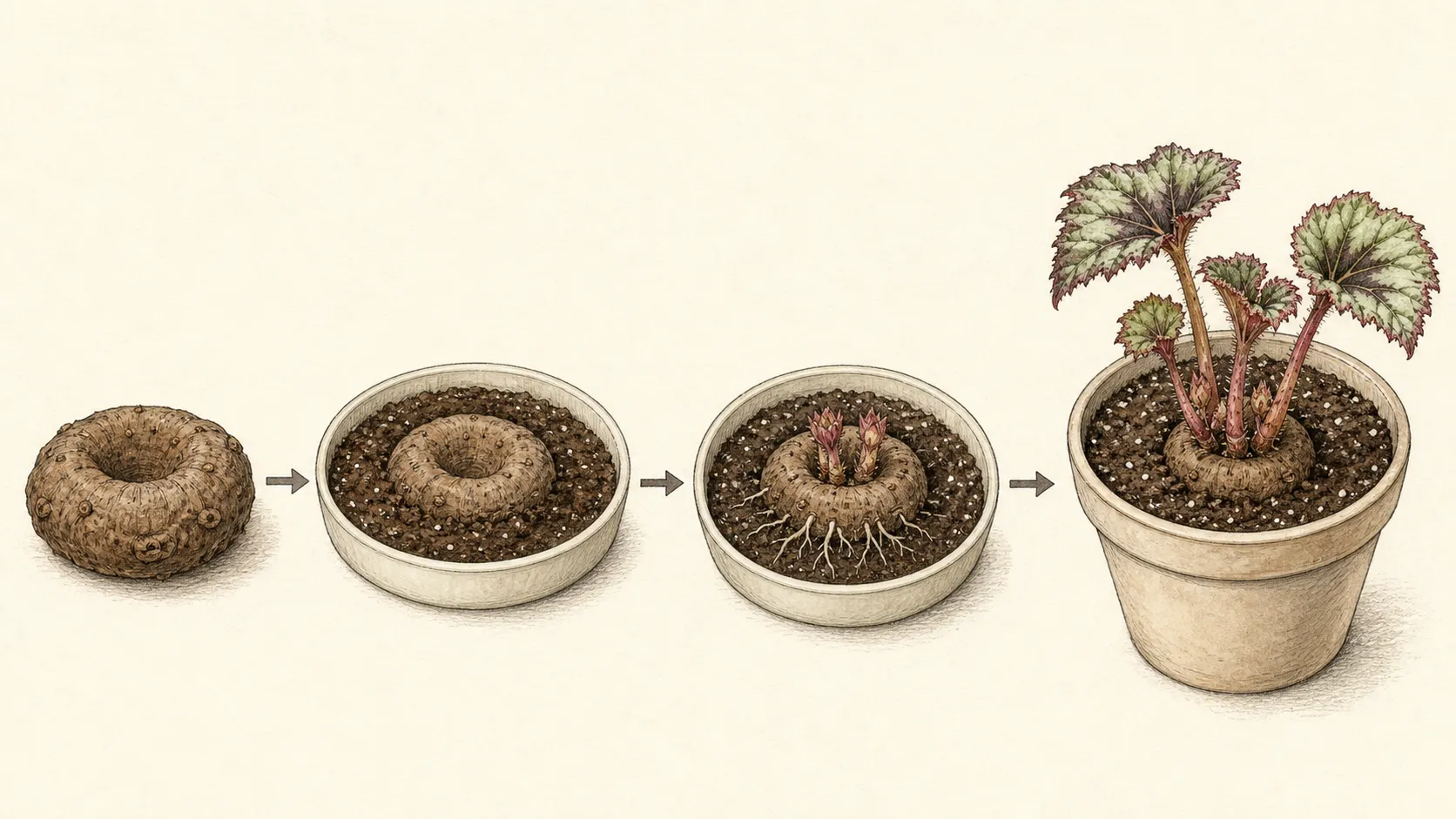
The convenient phrase “tender bulb” covers different structures. A dahlia is stored as a cluster of tuberous roots attached to crown tissue; eyes arise near the crown, not from an isolated root tuber. Canna grows from a rhizome with visible nodes. Gladiolus forms a corm. Caladium and tuberous begonia have their own tuber forms. The correct live points and acceptable surface texture differ.
Match every lot to the label and a reference photograph taken at lifting. A dahlia clump that looks irregular may be completely normal, while a smooth detached tuber lacking crown tissue cannot produce a shoot. A canna rhizome may carry old stem bases and dry roots. Remove only material confirmed dead or decayed; aggressive cleaning can erase buds and create wounds during the inspection itself.
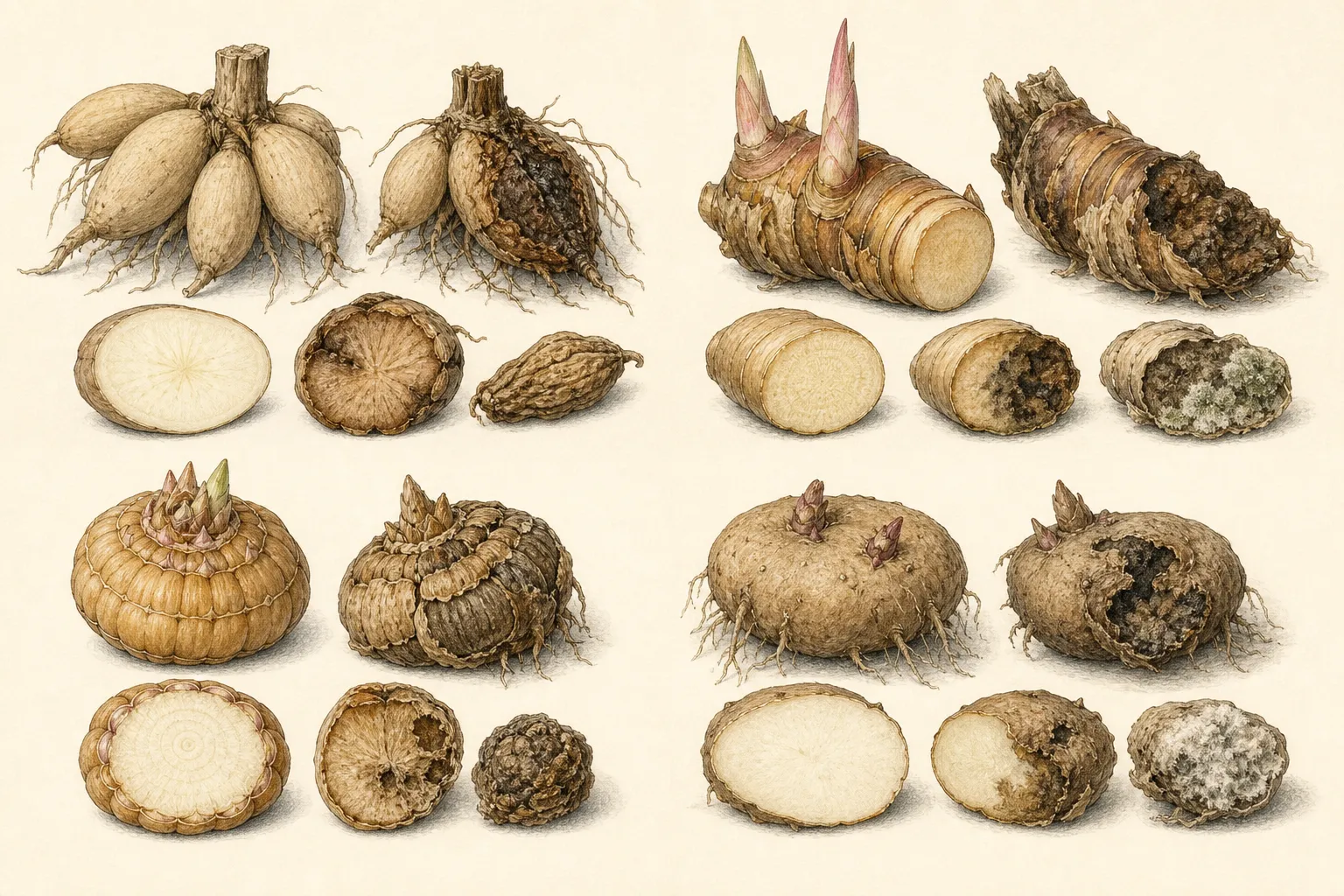
Handle each piece gently and compare like with like. Firmness should be judged against sound pieces of the same genus and cultivar where possible. Some storage organs naturally wrinkle modestly as they lose moisture, while others remain plump. Color changes where a cut dried can be protective corking, yet dark tissue that expands, softens, or smells sour suggests active breakdown.
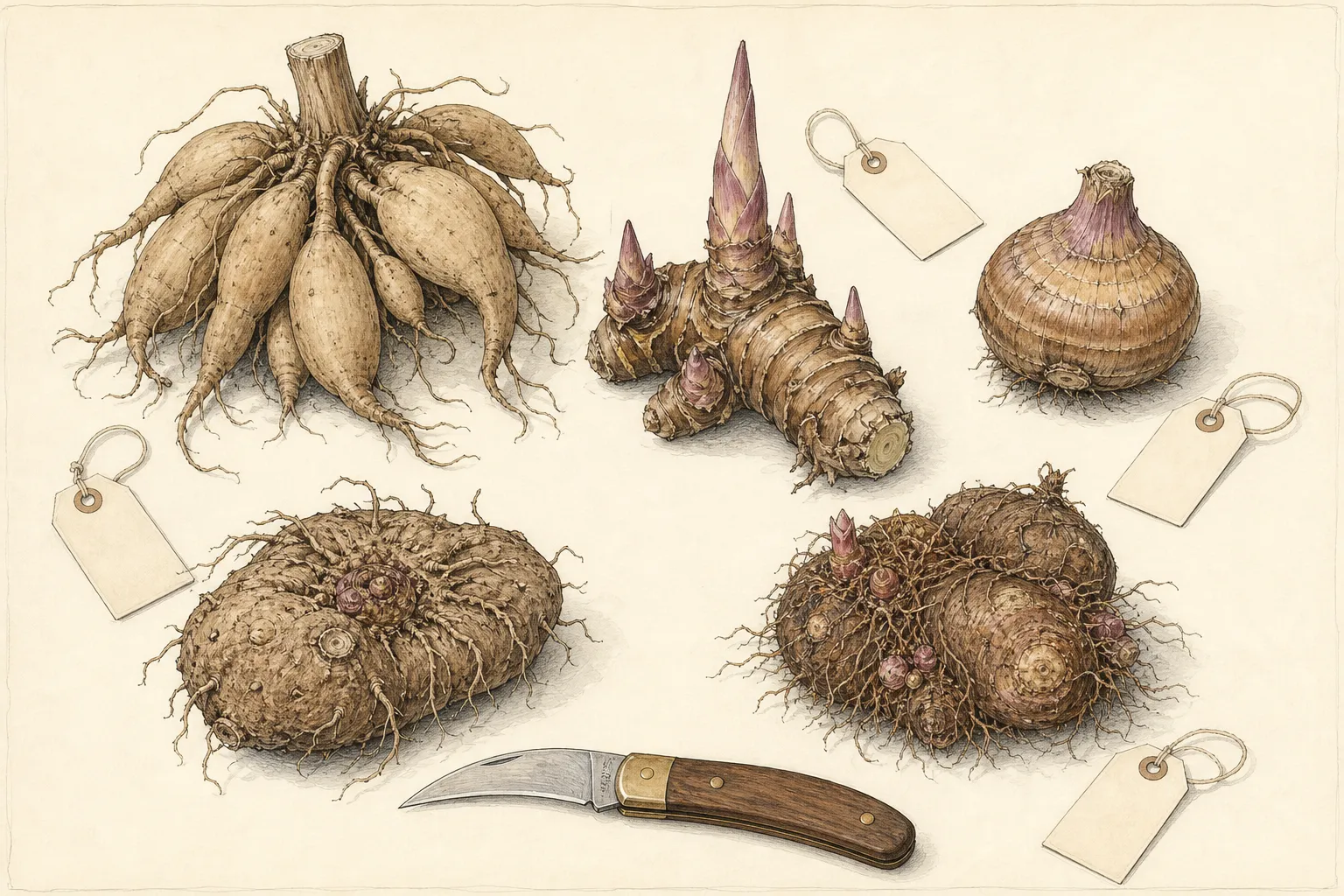
Keep divisions connected if the correct eye or crown tissue is uncertain. Winter inspection is not automatically division day. Large cuts create fresh surfaces that need appropriate drying and can spread hidden decay through shared tools. Separate pieces only when a diseased boundary must be removed or when the plant-specific storage method explicitly supports division at this stage.
Separate active decay from harmless surface change
Begin with smell and texture before color. Active bacterial or fungal decay commonly produces soft, wet, sunken, spreading, or foul tissue. Superficial soil stain, dried cut surfaces, and papery old layers may look dark without advancing. Press gently around the margin with a gloved finger. A firm boundary that remains unchanged deserves observation; a widening soft zone requires isolation and a clean assessment.
Mold on packing material does not prove that the organ beneath is dead, but it indicates a moisture and sanitation problem. Move the affected piece away from sound stock. In a ventilated place, brush loose dry material only if plant-specific guidance allows it. Do not wash a winter store by reflex, because wetting can spread spores and create new moisture in tissues intended to remain dry.
When decay is small and the organ has enough sound tissue and viable buds, a clean cut back to firm healthy material may preserve it. Use a disinfected sharp blade, make the fewest cuts, and allow the surface to dry as the plant-specific method requires before repacking. Extensive crown rot, repeated soft spots, foul odor, or decay at every viable eye makes rescue unlikely and risks the remaining collection. Quarantine borderline pieces in a separate labeled container under the corrected environment. Recheck them sooner than the healthy lot. Do not hide them in the center of a shared crate. A quarantine box is evidence, not punishment: it shows whether a dry lesion remains stable, a trimmed surface firms, or discoloration continues toward the crown.
Distinguish water loss from loss of viability
Desiccation appears as wrinkling, reduced weight, leathery tissue, and sometimes hollow or collapsed tubers. Assess the crown or bud-bearing region first. A modestly shriveled dahlia tuber attached to a firm viable crown may recover, while a brittle empty shell will not. Compare weight and flexibility with sound specimens from the same lot rather than treating one wrinkle as failure.
Check where the driest damage occurs. Edge pieces near airflow, crates above a warm pipe, and unwrapped small tubers can dry faster. If the entire room is warm and dry, correct storage conditions within the published range for that plant. If one corner alone is affected, adjust packing and shelf position. Broadly wetting material can trade desiccation for rot.
Add moisture only through the method appropriate to the storage organ and packing system. A small amount of barely moist packing around a dry-sensitive lot may help, but free water and sealed condensation are dangerous. Never spray the plant surfaces indiscriminately and close the lid. Measure the change, label the intervention, and inspect again before applying more.
Severe shriveling can also follow damage at lifting, curing, or freezing. A split tuber loses water faster; a frozen organ may soften after thawing; an immature small root may never have stored enough reserves. Storage humidity is only one point in the chain. Record lifting date, frost exposure, curing duration, and initial condition before rewriting next year’s method.
Treat early shoots as a temperature signal
Premature sprouting means the organ has received enough warmth and internal cues to begin growth; it does not mean every lot should be potted immediately. Identify the plant and check the local schedule. A pale shoot in darkness uses stored reserves and becomes fragile. Correct an overly warm store where the plant-specific safe range allows, but avoid a sudden freeze or temperature shock.
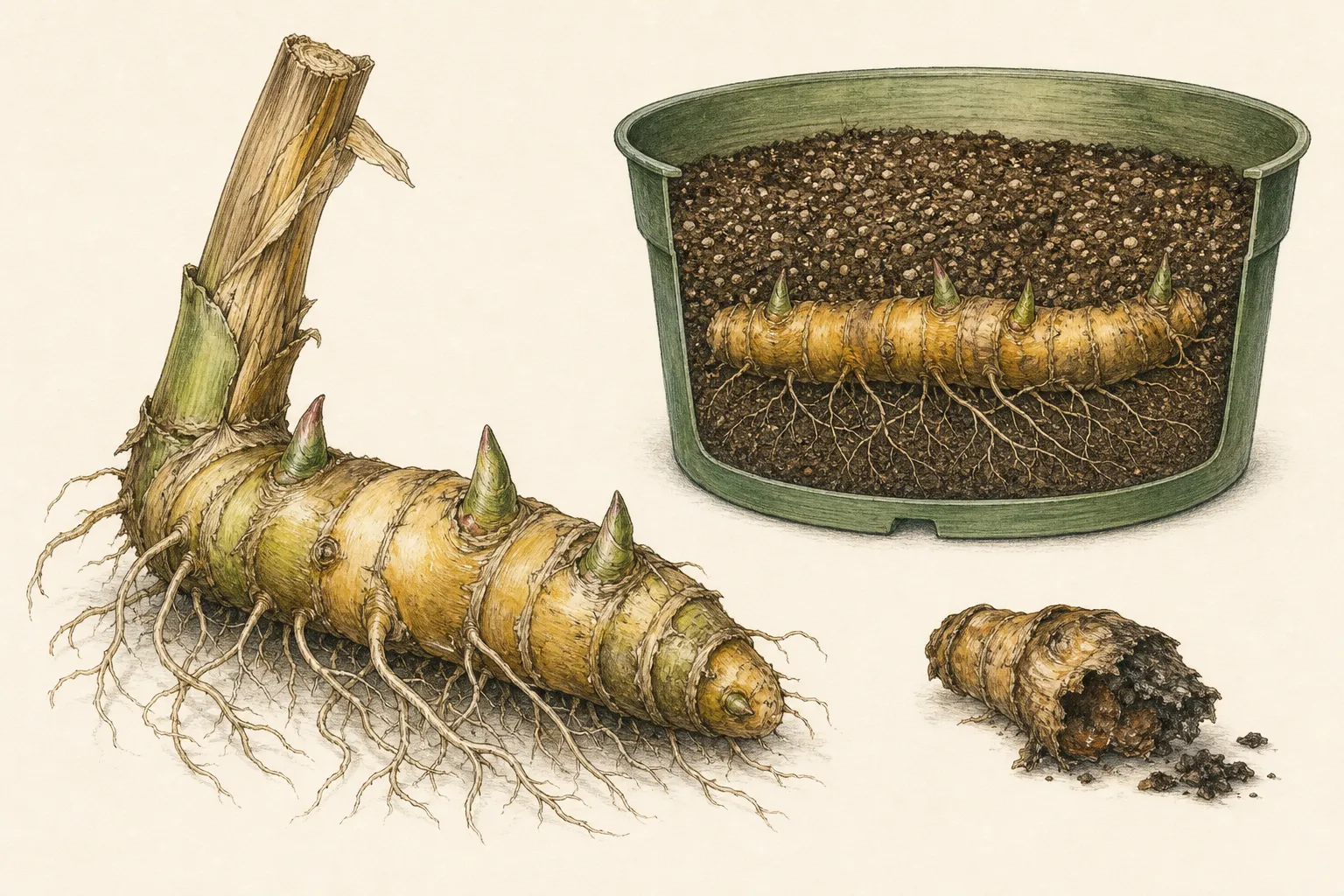
Small firm buds may remain intact in storage. Long pale shoots are easily broken and may exhaust a weak organ. Do not cut them all away without knowing where replacement buds arise. For dahlias, viable eyes are associated with crown tissue; for cannas, multiple rhizome nodes may offer alternatives. Use authoritative guidance for the exact organ before deciding to preserve, shorten, or pot a shoot.
If planting time is still distant, increase light only when the plant is intentionally moved into growth under a complete indoor system. A bright windowsill beside a cold pane and warm radiator creates unstable conditions. Starting growth requires clean medium, drainage, useful light, pot space, and a hardening plan. The existence of one shoot does not create those resources.
Compare sprouting across the crate. Uniform growth suggests the room warmed; one isolated sprout may reflect cultivar behavior, a local warm pocket, or injury. Move thermometers through the store and inspect the shelf behind the container. Correct the environment before blaming the plant or applying growth suppressants that are not labeled for home ornamental storage.
Repack sound stock with traceable spacing
Remove contaminated packing and replace it only when the storage method calls for packing. Use clean material with the intended moisture level. Arrange pieces so labels remain attached and air or packing reaches surfaces consistently. Avoid compressing heavy clumps onto small tubers. Separate cultivars and species because their viability, disease risk, and spring-start dates differ.
Do not seal a box that contains fresh cuts, obvious condensation, or wet packing. Allow corrected material to reach the storage condition appropriate to its organ. Close the container as designed and return it to a measured shelf away from temperature extremes. Leave quarantine material separate and mark the date for an earlier inspection.
Update the inventory. Record sound pieces, discarded pieces, cut-away lesions, desiccation, sprouting, and the environmental reading. Photograph one representative condition. A simple count shows whether losses cluster by cultivar, location, or handling method. It also prevents spring plans from relying on plants that were discarded months earlier.
Schedule the next check based on risk. A stable healthy collection may need only periodic observation; a recently corrected humidity problem deserves a sooner return. Avoid constant opening that warms and dries the store. The interval should be long enough to preserve conditions and short enough to catch progression before contact spreads it.
Use the diagnosis to change next autumn
Rot concentrated at unhealed cuts points back to lifting injury, division timing, sanitation, or insufficient curing. Widespread shriveling points toward warm dry storage, small immature organs, or inadequate packing. Premature shoots point toward warmth and cultivar timing. Write the likely stage beside each loss so next season’s change occurs where the problem began.
Avoid applying one storage recipe to the entire tender collection. Illinois Extension distinguishes among the structures grouped as summer-blooming bulbs and advises inspection before storage. Organ-specific guidance should govern cleaning, curing, temperature, packing, and division. A shared room can still use separate ventilated containers and shelf zones for plants with different needs.
Review the garden lifting process. Label before digging, keep cultivars separate, protect tender organs from frost, avoid wounds, remove only instructed soil or roots, and cure in the appropriate conditions. A clean winter room cannot reverse a tuber cut by a fork or a crown left outdoors after lethal cold. Better records at lifting make the February diagnosis more precise.
Discarding unsound stock is part of preserving a collection. A rare cultivar does not become safer because it is valuable. Propagate replacement material from healthy plants next season, purchase clean stock, and improve the store. The aim is a smaller sound inventory with known conditions, not the maximum number of questionable pieces carried toward spring.
Run a controlled recheck instead of repeated handling
After corrections, divide the collection conceptually into sound stock, quarantined stock, and discarded stock. Sound material returns to the stable measured environment. Quarantined material receives a separate clean container, its own label, and a specific recheck date. Discarded material leaves the room before tools and surfaces are cleaned. This sequence prevents a February inspection from becoming a second round of contamination and keeps uncertain pieces from disappearing into the center of a healthy crate.
At the recheck, compare the same lesion boundary, weight, firmness, sprout length, and packing condition documented earlier. A pencil line on a dry outer layer or a photograph with a scale can reveal whether discoloration has advanced. Do not keep cutting a stable scar to prove that it remains stable. Conversely, a lesion that crosses the marked boundary, develops odor, or softens toward viable crown tissue should be removed from the collection rather than granted another unmeasured trial.
Change only one environmental factor at a time when practical. Lowering temperature, replacing wet packing, increasing ventilation, and opening every container simultaneously can stop damage, but it obscures the original cause and may overdry sound stock. Address immediate hazards first, then document the adjustment. Separate container groups allow a cautious correction to be evaluated without risking the entire collection. The goal is preservation with evidence, not an experiment that sacrifices rare or irreplaceable plants.
Before spring potting begins, reconcile the surviving inventory with the available clean pots, medium, light, and frost-free space. Weak or marginal organs demand more observation and should not displace sound stock under the best light. Keep cultivar labels through sprouting because growth can confirm or challenge winter identification. If losses remain high despite controlled storage, consult a local diagnostic service and revise the lifting and curing procedure before purchasing replacements in quantity.
Diagnosis
A storage organ feels soft, wet, sunken, or foul-smelling, often with a lesion that crosses from a cut or contact point into formerly firm tissue. Packing may be clumped or moldy nearby, and adjacent pieces may show new spots where surfaces touched.
- Check
- Isolate the piece, compare smell and firmness with sound material of the same kind, and examine the lesion margin in bright light. Record temperature, humidity, packing moisture, and contact with other organs before making one clean exploratory cut through material already judged unsound.
- Cause
- Active bacterial or fungal decay favored by wounds, diseased stock, inadequate curing, wet packing, poor ventilation, excessive warmth, or contact between compromised and healthy pieces. A freeze-damaged organ can also soften after it returns to storage temperature.
- Action
- Quarantine immediately. Cut a small localized lesion back to firm sound tissue only when enough viable crown or buds remain, disinfecting the blade between lots and drying the wound as guidance requires. Discard extensive, foul, crown-centered, or repeatedly advancing decay and replace contaminated packing.
Tissue is wrinkled, leathery, unusually light, hollow, or brittle. The driest pieces may sit at crate edges, near airflow, above a heat source, or outside the packing, while larger organs in the center remain firmer.
- Check
- Weigh or compare the suspect piece with a sound counterpart, then map its position in the crate. Inspect for lifting wounds, freeze injury, cracked skin, dried crown tissue, and a room-wide warm dry pattern. Confirm that the plant’s storage method actually uses moisture-retentive packing.
- Cause
- Excessive moisture loss from warm air, low humidity, strong airflow, insufficient packing, small immature organs, or damaged skins. Some wrinkling is a normal storage change, so viability depends on the bud-bearing tissue and degree of collapse.
- Action
- Correct the measured warm or dry location and adjust packing through the plant-specific method. Add no free water. Quarantine severely shriveled pieces, preserve any firm viable crown, and recheck after a limited correction. Discard hollow brittle material that lacks living bud-bearing tissue.
Pale shoots lengthen in darkness well before the planned potting date. Several lots may sprout together after a warm spell, or one cultivar may break dormancy while neighboring containers remain still.
- Check
- Measure storage temperature at the container and through a full heating cycle. Identify the organ and viable bud location, compare sprouting across cultivars, and calculate the remaining weeks to the locally appropriate indoor-start or outdoor-planting window before moving anything into growth.
- Cause
- Storage temperature rose into a growth-promoting range, chilling requirements were satisfied, or the cultivar naturally breaks dormancy early. Light was absent, so shoots elongated using reserves. Injury can also stimulate irregular growth from surviving buds.
- Action
- Return the store to the safe documented temperature without freezing the material. Protect fragile shoots. If growth cannot be slowed and the calendar is suitable, pot into clean free-draining medium under strong light with enough space; otherwise follow genus-specific guidance on managing premature shoots.
Dry gray, white, or dark surface growth appears on packing or an organ, yet the underlying tissue may remain firm. Condensation, stale air, or a wet corner is visible, and the pattern may be confined to one container.
- Check
- Move the material to ventilation, inspect whether growth is superficial or enters soft tissue, and check packing for free moisture. Review sanitation and curing records. Avoid washing or spraying until plant-specific guidance confirms that water will not worsen storage disease.
- Cause
- Moist packing, condensation, contaminated debris, crowded contact, or poor air exchange allowed superficial fungi to develop. The mold may be a symptom of the environment rather than the primary killer, but it can accompany active tissue decay.
- Action
- Separate affected material, discard wet contaminated packing, clean the container, and restore ventilation and correct moisture. Brush dry superficial growth only where appropriate. Treat any soft advancing lesion as decay, and avoid routine fungicides unless a diagnosis and current label support their use.
A dahlia tuber or divided piece looks intact but has no identifiable crown tissue or viable eye, or a canna section has been cut between useful nodes. The piece remains firm yet produces no growth when the season begins.
- Check
- Trace each storage structure to its propagation point: crown and neck for dahlia tuberous roots, nodes for canna rhizomes, sound basal plate or bud region for bulbs and corms. Compare with an authoritative botanical diagram before discarding or occupying pot space.
- Cause
- The piece was divided at the wrong anatomical point, an eye or node dried or rotted, the label does not match the organ, or a detached storage root was mistaken for a complete propagule. Firmness alone does not establish reproductive viability.
- Action
- Do not pot a structure that lacks the organ’s viable growth point. Keep uncertain divisions attached when possible, make future divisions at the correct crown or node, and label anatomy at lifting. Replace nonviable pieces with clean stock rather than occupying spring bench space. When the pattern does not fit moisture, temperature, injury, or anatomy, preserve photographs, labels, and one safely contained representative sample for a local plant diagnostic service. Do not circulate suspect tissue among gardening groups or trial unregistered treatments. A confirmed diagnosis can protect the remaining stock and identify whether replacement material, sanitation, or next autumn’s curing sequence must change.
Related reading
Sources
- Store Summer-Blooming Bulbs Over Winter. University of Illinois Extension. Source record · Accessed 2026-08-19.
- Planting Bulbs. University of Illinois Extension. Source record · Accessed 2026-08-19.
- Dahlias. University of Minnesota Extension. Source record · Accessed 2026-08-19.
- Overwintering Tender Plants: Lifting or Mulching. Royal Horticultural Society. Source record · Accessed 2026-08-19.