Grow · tender calla rhizome winter storage
Lift and Store Tender Calla Lily Rhizomes for Cold Winters
Identify tender callas, protect them before frost, lift intact rhizomes, and manage drying, packing and cool winter storage before spring growth resumes.
Published Last updated
In this guide
- Protect tender callas before the garden freezes
- Read the label before choosing a winter method
- Use shelter to finish the leaf transition
- Lift around the clump and preserve the growing points
- Dry the surface and sort before packing
- Pack dry rhizomes with air and separation
- Measure the calla storage temperature at the box
- Inspect changes and make a small correction
- Recognize when storage has ended
- Steps
Protect tender callas before the garden freezes
Move tender calla lilies out of the cold before autumn frost, then store sound, dried rhizomes in a cool, frost-free place. For the dry-storage method here, use a measured 50–55°F (10–13°C) location and ventilated packing. This is a method for tender Zantedeschia grown for summer flowers in cold-winter gardens. A leafy plant needs a transition into dormancy before its underground parts are boxed.
Mid-October is a useful time to arrange the work, but your local forecast sets the deadline. Some northern gardens will already have needed shelter; a milder site may still have green callas. Prepare both a drying space and a storage space before lifting. They serve different purposes, and a rhizome freshly removed from moist garden soil is not ready for a closed winter box.
The sequence is identity, protection, lifting, drying, packing and inspection. Each stage has a different failure to prevent: mistaking a hardy arum for a tender calla, freezing exposed tissue, cutting the storage organ, trapping moisture, or missing deterioration after packing. Follow the plant's actual condition through that sequence, even when neighboring dahlias or cannas are already ready for storage.
Read the label before choosing a winter method
Calla lily is a shared common name. RHS separates the often hardy arum lily, Zantedeschia aethiopica, from tender callas, mainly cultivars associated with Z. elliottiana and Z. rehmannii. Its advice for leaving established arum lilies outdoors in much of the UK belongs to that plant and climate. It cannot establish that a tender colored calla will survive a continental winter in the same bed.
Find the botanical or cultivar name on the label, order history or nursery record. Flower color and spotted leaves can provide clues, but the purchase identity is more useful than a faded flower photograph. Keep unknown plants labelled as unknown while arranging frost-free shelter. A generic hardiness number attached to the genus is weaker guidance than a named plant's winter requirements and your actual site exposure.
Callas and cannas also need to remain distinct at the storage bench. Minnesota describes both as tender rhizomatous plants in its climate, yet the large banana-like canna leaves and clustered blossoms differ from a calla's spathe surrounding a finger-like spadix. A canna storage temperature or an instruction for dividing canna nodes should stay with the canna tray. Label the clumps while enough aboveground growth remains to recognize them.
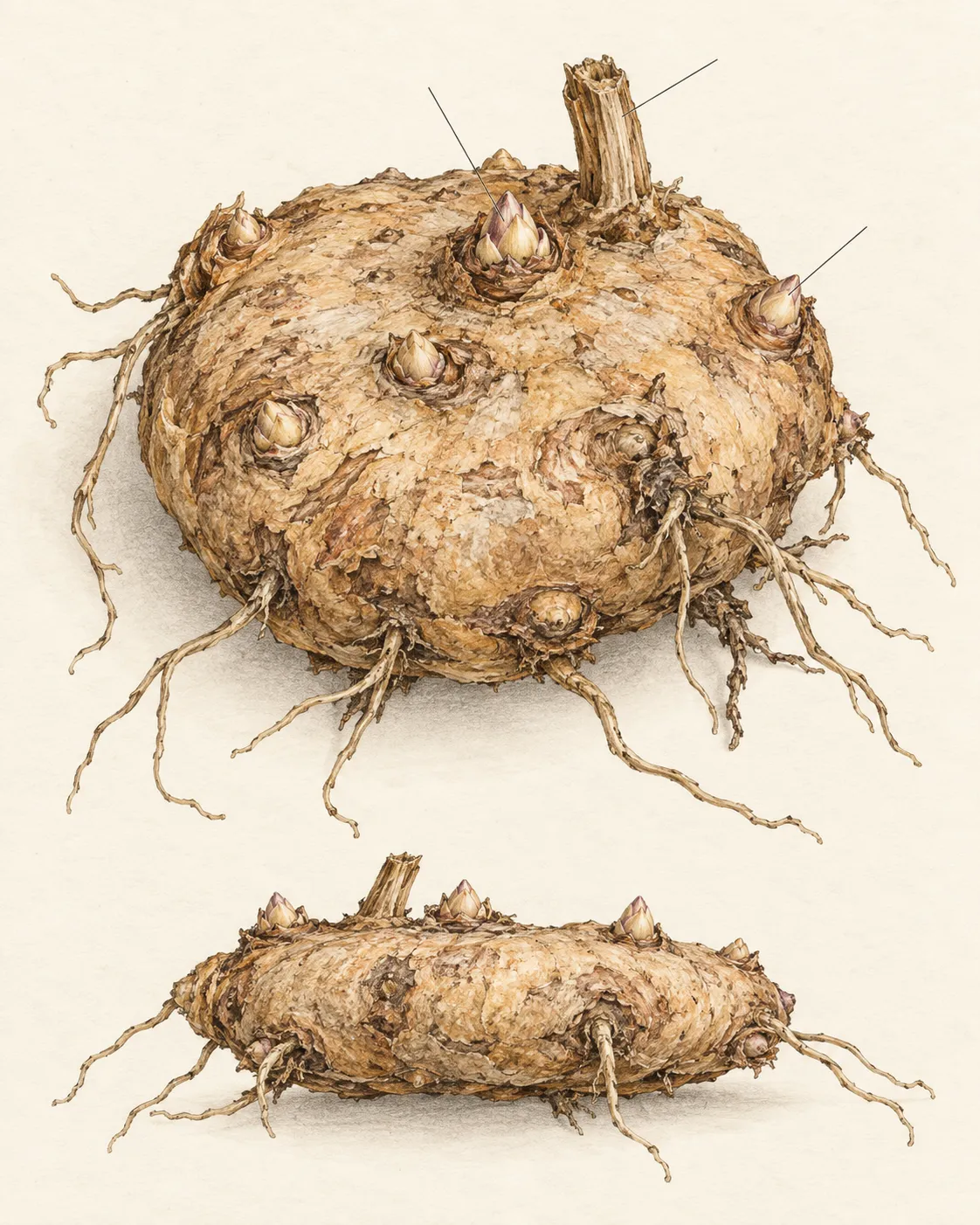
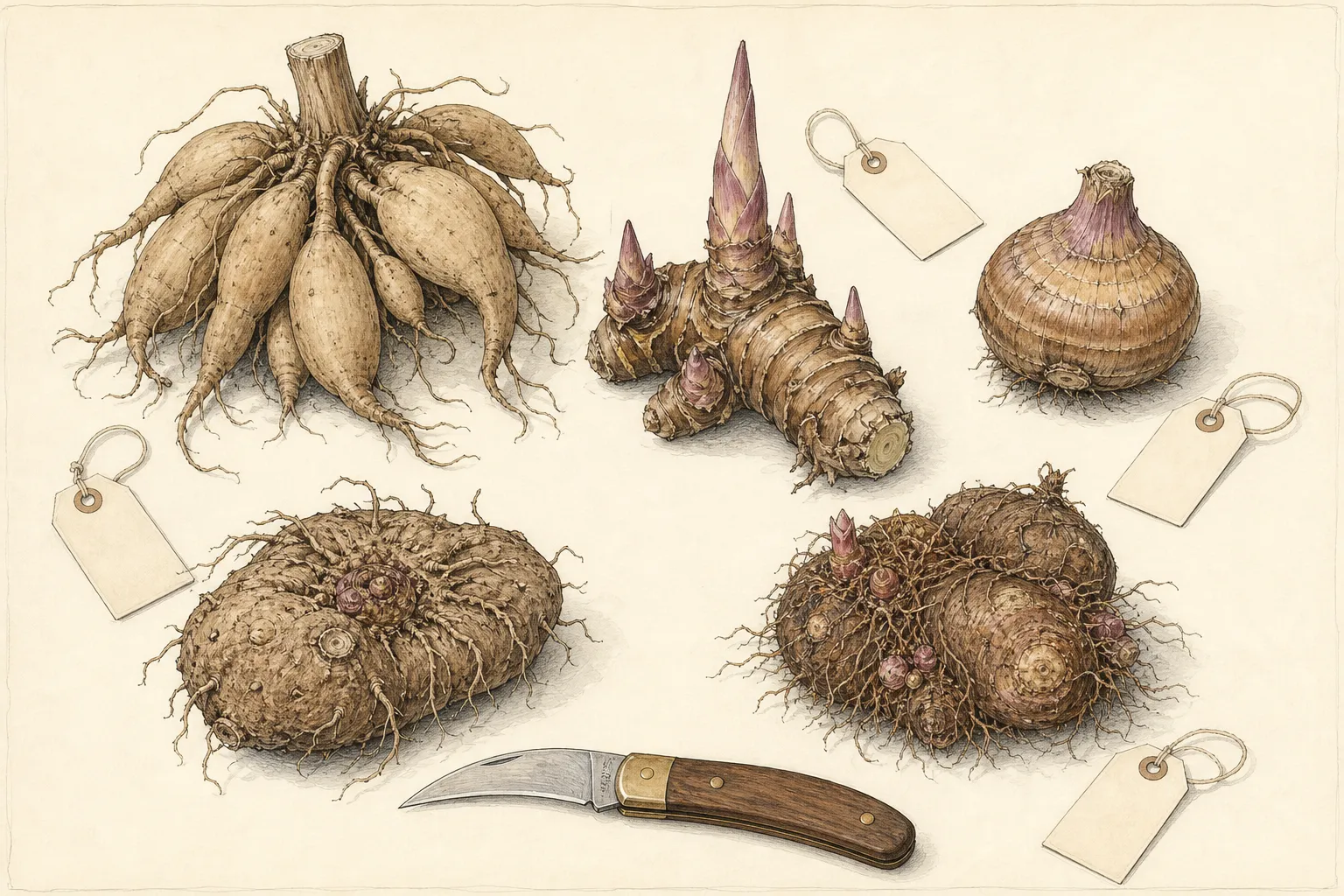
The calla storage organ is often sold as a bulb or tuber. Extension sources commonly call it a bulb-like rhizome. For this task, the important distinction is physical: retain the firm swollen organ and its growing points. A pile of detached fibrous roots cannot replace it. Use the anatomy plate to locate the parts you intend to lift intact before clearing away dried growth.
Use shelter to finish the leaf transition
Published lifting dates differ. Iowa State describes lifting after a killing frost, whereas RHS tells gardeners to bring tender callas indoors before the first frost. Use the earlier protection route for this tender-calla method. Frost damage is an event a gardener may encounter, not a treatment the plant needs before it can be stored. If frost has already blackened the tops, lift promptly while the soil remains workable and inspect the underground tissue carefully.
For a container plant, move the pot into frost-free shelter and keep rain out as growth fades. For a still-leafy plant in the ground, RHS offers lifting and replanting into a container above 10°C (50°F), then letting the leaves die down with little or no water. That provides a temporary holding stage when cold arrives before the plant has finished its seasonal decline. It also keeps a live clump together while you wait.
A flowering gift calla may be at a different growth stage from summer bedding. The RHS pink-calla profile ties its dry resting period to leaves dying down after flowering. Observe that sequence and the plant's label. Packing a green, actively growing plant in a dark box simply to meet an October date skips the transition you are trying to manage.
As foliage fades, remove it carefully, keeping blades above the swollen organ. Iowa's post-frost method leaves 1–2 inches of foliage above the soil surface before digging. For already dry material, remove only what releases readily. Treat a suddenly collapsing, wet crown differently from gradual seasonal yellowing: set that plant aside and inspect it for damage or decay.
Lift around the clump and preserve the growing points
Work from outside the visible stems. Insert a garden fork several inches back, loosen from more than one side, and widen the circle if you meet resistance. Wisconsin recommends this approach to reduce injury to underground storage structures. Support the loosened clump from underneath as it comes free. Pulling on the remaining petioles can detach them before the rhizome has been released from the soil.
Place the clump on a tray and work off loose soil gently. Look for small raised growing points and stem scars on the swollen body. Those details are easier to preserve while the organ remains supported on a flat surface. The illustration shows a complete dormant rhizome from two directions; keep its small buds attached during cleaning.
Keep offsets with their parent when they remain firmly attached. Routine division can wait until spring; Wisconsin notes that wounds increase storage-rot risk. Autumn cleanup should separate obvious debris and unsound material while preserving sound storage tissue. If a fork has accidentally cut a rhizome, label and isolate it with the fresh injury visible for inspection.
A container-grown clump may be easier to release by sliding out its root ball and easing dry mix away over the tray. If the mix is saturated, let the lifted clump drain in shelter before handling it repeatedly. Leave the empty pot separate from the drying tray. A decorative outer pot can still hold water even after the inner nursery container has been brought inside.
Dry the surface and sort before packing
Drying recommendations are ranges. Iowa State gives one to two weeks in a warm, dry place; Wisconsin's calla-specific guidance gives two to three weeks. Begin checking during the earlier interval and allow more time when the surface or stem remnants remain damp. The period is preparation for storage, so packing on an arbitrary day while moisture remains would defeat the purpose of waiting.
Use a shallow tray with space around the lifted organs and good air movement. Keep them sheltered from rain and direct sun. Wisconsin's general curing guidance uses approximately 60–70°F (16–21°C); that warmer drying environment is separate from the cooler storage range chosen below. A household heater blowing directly onto one side is a poor substitute for an evenly ventilated place.
Handle each rhizome lightly as you inspect. The useful endpoint is a dry exterior with firm storage tissue and dry or readily detachable spent stem material. Dryness of the skin and dryness of the entire organ are different observations. Markedly collapsed or increasingly wrinkled tissue calls for a check of heat and exposure; it is not evidence that longer drying is always better.
Sort before the sound batch is covered. Illinois Extension recommends keeping diseased or damaged material out of the healthy store because problems can spread. Reject organs with extensive soft, wet decay, and isolate uncertain pieces. Color alone is a weak test: examine firmness and whether an affected area is changing. A dark mark alone cannot identify a particular pathogen. Seek a local diagnosis when a recurring lesion affects otherwise sound stock.
Pack dry rhizomes with air and separation
Choose a clean cardboard box or another ventilated container that you can open easily. Use a dry packing material listed for callas, such as vermiculite, and separate the organs within it. The cutaway shows a single layer so the relationship is visible. Each rhizome has its own space; the packing buffers the surroundings and prevents the stored pieces from pressing together.
Cover the rhizomes loosely and retain a clear label for each cultivar or batch. Wisconsin describes layers of packing material and warns against airtight containers. In a small collection, a shallow box makes later inspection easier than a deep mixed pile. If several boxes are required, give each one its own identity and leave enough access to check the actual contents during winter.
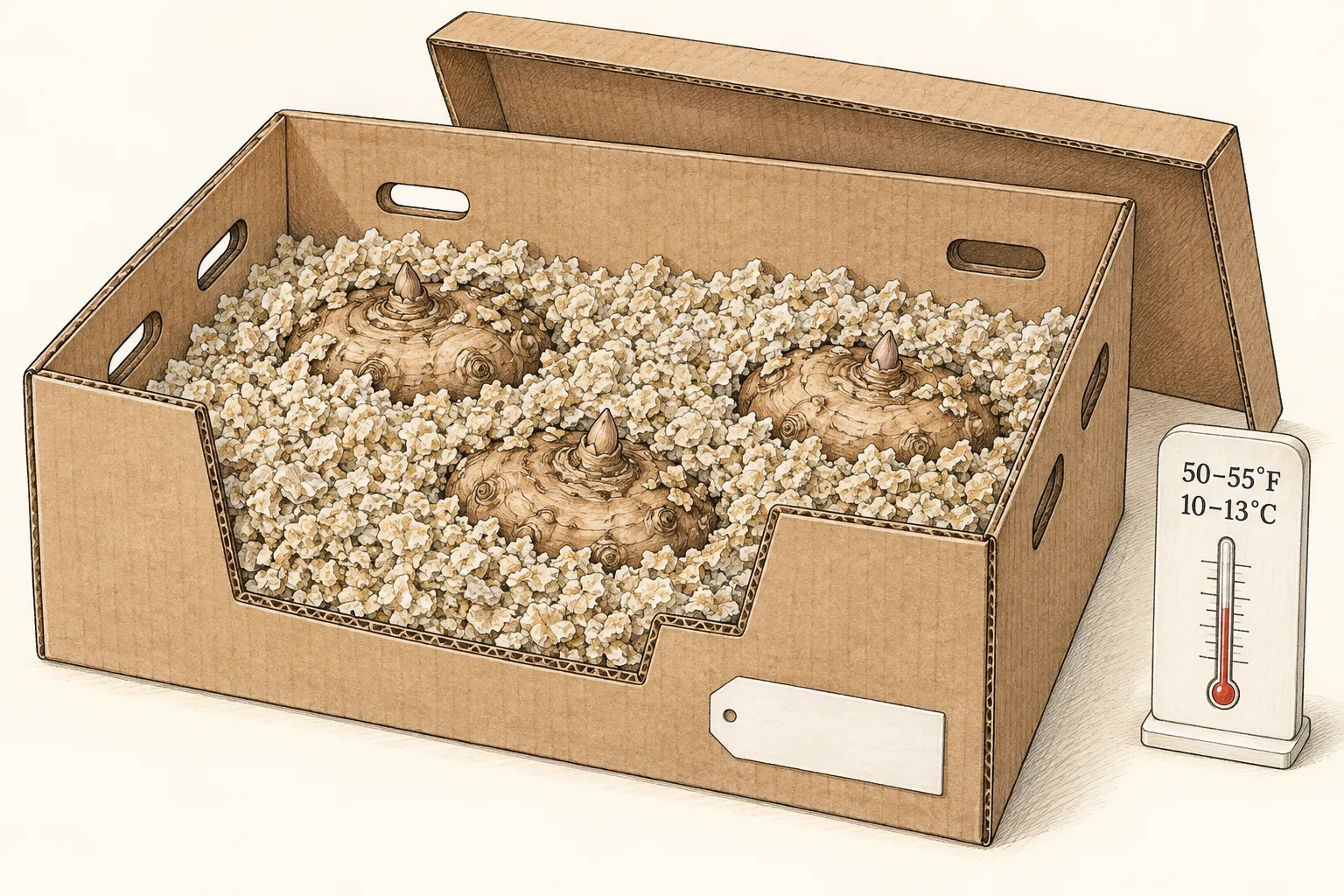
The clean dry box belongs in a dry room, with air able to move around it. A plastic bag sealed around freshly packed organs can trap residual moisture. Likewise, setting cardboard directly on a damp floor can change the packing conditions after an apparently successful start. Put the box on a stable shelf and inspect the first arrangement after a few days to see whether the medium remains dry.
Retain a simple baseline photograph of the rhizomes before they are covered. Include a count and the drying date on the label or notebook page. Those details make a later change in firmness or an isolated loss easier to interpret. A photo of a plump organ at packing is more useful than trying to remember its original shape after several months among other stored bulbs.
Measure the calla storage temperature at the box
Use 50–55°F (10–13°C) as the working range for this dry-rhizome method. NC State's Extension Gardener Handbook gives that range for calla storage. It also sits within Iowa State's 50–60°F and Wisconsin's calla-specific 45–55°F recommendations. The agreement supports a practical choice for a home store; it does not establish one experimentally optimal temperature for every cultivar or storage duration.
Read the calla entry in any mixed-bulb table. The same publication may give colder conditions for gladiolus or warmer conditions for caladium. NC State's genus profile separately lists dry storage at 50–60°F, reinforcing that callas should not automatically inherit another bulb's shelf. Keep the temperature choice with the label so the box is not moved into a colder corner during a later tidy-up.
Place a minimum–maximum thermometer alongside the stored rhizomes and check both ends of its range. A garage can swing from a warm afternoon to a freezing night; a basement shelf beside a boiler can stay too warm. Test the intended position during colder weather and keep an alternative available. The fact that the building is described as unheated gives no measurement of the conditions around the box.
Dormant stored rhizomes can remain in the dark. That differs from arranging a leafy houseplant at a bright window. Keep the box accessible, however, so darkness does not become neglect. If early shoots begin to extend, inspect both the temperature history and the condition of the organ. A changed growth state may require a move from storage into potting and light.
Inspect changes and make a small correction
Check periodically through winter; a monthly reminder is a practical starting schedule, with an earlier recheck after moving the box or correcting a problem. Open enough packing to see the organs themselves. Look for soft areas, damp patches, condensation, increasing shriveling or emerging shoots. The purpose is to notice change while it is localized, using the packing-day record as a comparison.
If the material is damp, remove sound rhizomes from that packing, let surface moisture dry in a ventilated place, and replace the damp medium. Recheck the shelf and container for the source of moisture. Extensive decay belongs outside the sound batch. For a questionable isolated lesion, seek a local diagnosis before attempting surgery; cutting every discolored spot creates new wounds while leaving the original problem unidentified.
If firm organs are becoming markedly shrunken, first check whether the store is too warm or unusually drying. Wisconsin permits a little moisture added to the packing medium for dehydrating tender bulbs. Apply that advice cautiously to a small affected portion and recheck; dry calla storage does not call for soaking the organs or routine winter watering of every box. Simultaneous softness and wet packing require the opposite response.
Recognize when storage has ended
In spring, inspect the retained rhizomes before potting. Sound growing points and firm tissue are useful observations, although they cannot guarantee flowering. Keep records of any storage losses with the batch. When several organs fail in the same damp corner, correct that arrangement before repeating it the following autumn.
Minnesota notes that callas can be potted in late winter and grown indoors until outdoor conditions are suitable. Reserve a warm, bright growing position before starting that route. Once a rhizome produces shoots, it is moving into active care; a dark storage shelf is no longer an appropriate place for extending green growth. Follow the named plant's potting instructions and increase watering as growth develops.
Delay outdoor return until frost risk has passed, and acclimatize indoor growth gradually. Keep the first spring watering decisions tied to the plant and potting medium as shoots and roots become active. Successful storage supplies viable material for the next season; flowering also depends on the growing conditions that follow.
Steps
- Level
- moderate
- Time
- About 45 minutes to lift and sort a small clump, plus drying time and winter checks
- Tools
- Garden fork and hand trowel, Clean secateurs, Shallow drying trays, Minimum–maximum thermometer, Labels and pencil
- Materials
- Identified tender calla lily clumps, Dry vermiculite for packing, Clean ventilated cardboard box
- 1Identify and shelter the batch
Match the clump to its nursery label and mark it as tender Zantedeschia. Arrange protection before frost. Move pots into shelter; hold still-leafy lifted plants in a container when they need time to die back. Keep this batch distinct from hardy arum lilies and from cannas. Check the planned storage shelf with a thermometer before filling it.
- 2Lift intact storage organs
Loosen soil outside the stems with a fork, working around the clump until it can be supported from below. Place it on a tray, remove loose soil gently and locate the raised growing points. Retain attached sound offsets for spring assessment. Separate any accidentally cut or suspicious organ immediately so its condition can be watched individually.
- 3Dry and assess readiness
Set rhizomes apart in a sheltered, airy drying place. Check during the first one to two weeks and allow longer when the exterior or stem remnants are still damp; Wisconsin allows two to three weeks for callas. Keep firm tissue and intact buds as the objective. Remove extensive soft decay from the batch before preparing the storage box.
- 4Pack and verify the actual temperature
Arrange the sound dry organs in dry vermiculite inside a ventilated box, with space between them. Label the cultivar, count and packing date, and take a baseline photograph. Place the box in the measured 50–55°F (10–13°C) location. Read the nearby thermometer after a cold night as well as a warm day to confirm the shelf is suitable.
- 5Inspect and hand over to spring care
Open the box periodically and compare firmness, moisture and growing points with the original record. Replace damp packing around sound stock and isolate decay; investigate excessive shriveling before adding a little moisture to affected packing. When shoots begin to grow or spring potting is planned, provide appropriate light and active care. Keep outdoor planting dependent on the end of frost risk.
Related reading
Sources
- How to grow zantedeschia. Royal Horticultural Society. Source record · Accessed 2026-10-07.
- How do I over-winter calla lilies indoors?. Iowa State University Extension and Outreach. Source record · Accessed 2026-10-07.
- Storing Tender “Bulbs” for Winter. University of Wisconsin–Madison Extension. Source record · Accessed 2026-10-07.
- Zantedeschia. NC State Extension. Source record · Accessed 2026-10-07.
- 10. Herbaceous Ornamentals. NC State Extension. Source record · Accessed 2026-10-07.
- Zantedeschia rehmannii | pink calla. Royal Horticultural Society. Source record · Accessed 2026-10-07.
- Calla and canna lilies. University of Minnesota Extension. Source record · Accessed 2026-10-07.
- Give summer-blooming bulbs a second chance, store them over winter. University of Illinois Extension. Source record · Accessed 2026-10-07.