Grow · butterfly weed fall direct sowing
Sow Butterfly Weed Seeds Outdoors in Fall on a Well-Drained Site
Direct-sow Asclepias tuberosa after autumn frost in a sunny, drained bed, choosing shallow seed cover and planning for spring emergence and first-summer watering.
Published Last updated
In this guide
- Prepare the patch now and sow after autumn frost
- Confirm the species and the seed lot
- Choose the summer position by its winter drainage
- Wait for the local autumn sowing window
- Handle ripe seed while keeping its identity intact
- Choose one shallow sowing method and preserve soil contact
- Keep the winter surface recognizable
- Give spring emergence time and thin with the roots in mind
- Water the first season and judge establishment before flowers
- Steps
Prepare the patch now and sow after autumn frost
Sow butterfly weed seed directly into a sunny, well-drained permanent position after autumn frost, then let winter provide cold and moisture before spring growth. This method suits untreated Asclepias tuberosa seed in northern-temperate gardens with a dependable cold season. Prepare the soil before it becomes frozen or waterlogged. In mid-October, preparation may be the useful job even where the actual sowing date is still several weeks away.
The choice of a permanent position matters because butterfly weed develops a substantial taproot and becomes difficult to move. Direct sowing removes a later transplanting operation, but it leaves seed exposed to weather, weeds and disturbance. Choose a small patch you can recognize and maintain through spring. Scattering a packet across an established flower bed makes it much harder to distinguish successful seedlings from weeds or to find out where a failed batch went.
Expect establishment to take time. Wisconsin and NC State describe flowering from seed after roughly two to three years. Some plants may develop faster, but a first-season display is an unsuitable promise for this autumn method. The immediate objective is a stand of healthy young plants in a place where they can remain.
Confirm the species and the seed lot
Look for Asclepias tuberosa on the packet. A mixture labelled simply milkweed or butterfly flowers may contain plants with different moisture needs, growth habits and cold-treatment requirements. Swamp milkweed, common milkweed and tropical milkweed are separate species; orange flower color on packaging is insufficient identification. Keep the original label with the planting record so that a later question about germination can be taken back to the supplier.
For a native planting, establish that this species belongs in your region and ask where the seed was collected or produced. The Xerces Milkweed Finder warns that a company's address does not establish the origin of its seed. A local shop may carry distant stock, while a distant specialist may offer a suitable regional collection. Ask about provenance explicitly when that matters to the garden's habitat purpose.
Check whether the seed is untreated, already cold-moist treated, or sold with a special germination protocol. The autumn sequence here begins with untreated seed. Record the lot and harvest year when available. If the packet's instructions differ, identify whether the difference concerns this lot, a cultivar or another species before combining methods. A general fall-sowing recommendation cannot explain an unnamed treatment already applied by the supplier.
Choose the summer position by its winter drainage
Give the mature plant sun and a root zone that releases excess water. Maryland describes butterfly weed in coarse, dry, well-drained sites and emphasizes the importance of drainage. NC State identifies wet ground as a crown-rot risk. The species can tolerate more than one soil texture, so a clay label alone is less informative than what the actual planting area does after rain. Water lingering at the surface is a reason to reconsider the position.
Visit the proposed patch during autumn rain before sowing. Trace water arriving from a downpipe, a paved path or the uphill edge of the lawn. A dry-looking bed in summer may receive concentrated runoff once seasonal rain returns. Select a position beyond that flow. A thin scattering of grit over a persistently wet hollow will leave the underlying water problem in place, and shallow seed cannot compensate for a poor permanent site.
Remove existing weeds and their competing growth while the soil is workable. For a small flower-border pocket, hand preparation lets you see the roots and crowns of neighboring plants. Keep the sowing area distinct from a dense groundcover or lawn edge. Monarch Watch recommends a fine, weed-free seedbed and cautions against working wet soil. A surface that smears under the rake is better left until it crumbles; prepare another task while it dries.
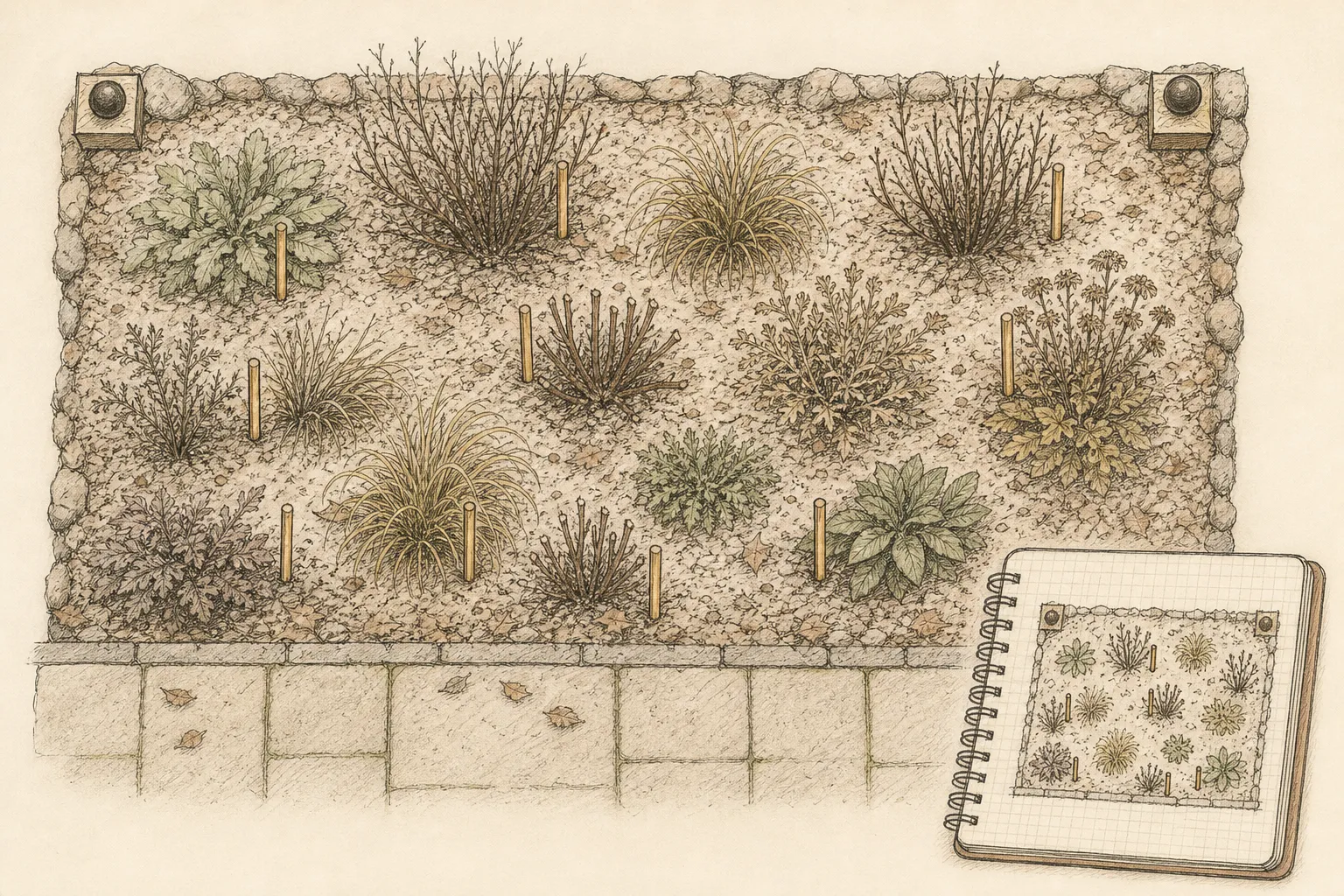
Plan the footprint using the mature clump, not the tiny seed. Wisconsin gives roughly 1½–3 feet of height and spread. A practical garden layout is a few marked sowing stations with room to select one plant at each; the eventual spacing should reflect the named selection and neighboring crowns. Sketch those stations before scattering seed. This is a manageable border arrangement, not a seeding rate for a meadow or a rule about how many plants will support a monarch.
Wait for the local autumn sowing window
Wisconsin's species guidance places outdoor sowing after frost in autumn. Iowa State's milkweed collection advice describes November as a typical Midwest window, when soil is cold but still unfrozen. Those recommendations can fit together: prepare during October, then sow as the local season settles into cold conditions. A calendar date is especially unreliable across coastal, mountain and continental gardens.
The aim is to place seed before winter exposure, with spring as the intended emergence season. If warm weather continues after a brief frost, keep the prepared area marked and reassess before sowing. Choose the local cold-season window using regional advice; a single afternoon air reading cannot describe the conditions that follow sowing. A sheltered south-facing strip may behave differently from the open ground nearby, so use the condition of the actual seedbed as well as the forecast.
Cold treatment can improve germination, although individual seed lots respond differently. Iowa State's species entry reports improved germination after three to four weeks at about 40°F (4°C), while noting that some untreated seed also germinates. Its listed 70–75°F (21–24°C) germination conditions describe a controlled warm stage, not a promise that an outdoor bed will sprout on a scheduled date. Winter exposure also fluctuates; count neither every winter day nor every freezing night as an identical treatment dose.
If the garden has a mild winter with uncertain chilling, use the separate refrigerator-stratification method with species and supplier guidance. If the bed is still weedy or unsuitable, postpone direct sowing and retain the seed properly. The change of method should solve an observed constraint, such as missing cold or poor drainage.
Handle ripe seed while keeping its identity intact
Purchased cleaned seed is the simplest starting point. For seed from your own correctly identified plants, examine the pod and seeds together. Iowa State's collection guidance uses a pod seam that opens readily and brown seed as maturity cues. Butterfly weed has narrow, spindle-shaped pods; the general milkweed article's description of a bumpy pod is not a diagnostic description of this species. A label or earlier flowering record remains essential.
Separate the silky floss so individual seeds can be distributed accurately. Work over a tray in a sheltered place and keep each collection separate. The floss carries seed on the wind, which is useful for natural dispersal and awkward beside an open packet. A tray also makes it possible to see whether you have enough seed for the marked stations before going outdoors. Discard visibly damaged material, while recognizing that appearance cannot certify the viability of every remaining seed.
Keep seed cool and dry until the sowing window, following the storage guidance from Monarch Watch. Dry storage is different from cold-moist pretreatment. Write the collection or packet identity on both the storage envelope and the garden marker. If you retain a small reserve for later sowing, note which portion stayed dry; distinguish that dry reserve from the batch exposed to the winter seedbed.
Choose one shallow sowing method and preserve soil contact
The sources describe two shallow approaches. Xerces recommends scattering onto prepared ground and pressing seed into the surface. Monarch Joint Venture describes covering milkweed seed with about ¼ inch (6 mm) of soil. Iowa State's butterfly weed entry allows either covered or exposed seed. Both approaches keep seed shallow; select the one that fits the packet instructions and prepared surface.
For the worked method here, use a light cover of approximately ¼ inch of fine soil, followed by gentle firming. Set a ruler beside a trial patch before sowing the batch: six millimeters is a thin layer. The cutaway illustrates that geometry with the seeds enlarged for visibility. Adding bark mulch on top would create an additional, uncontrolled burial layer, so keep the small sowing patches distinguishable from mulched areas around established perennials.
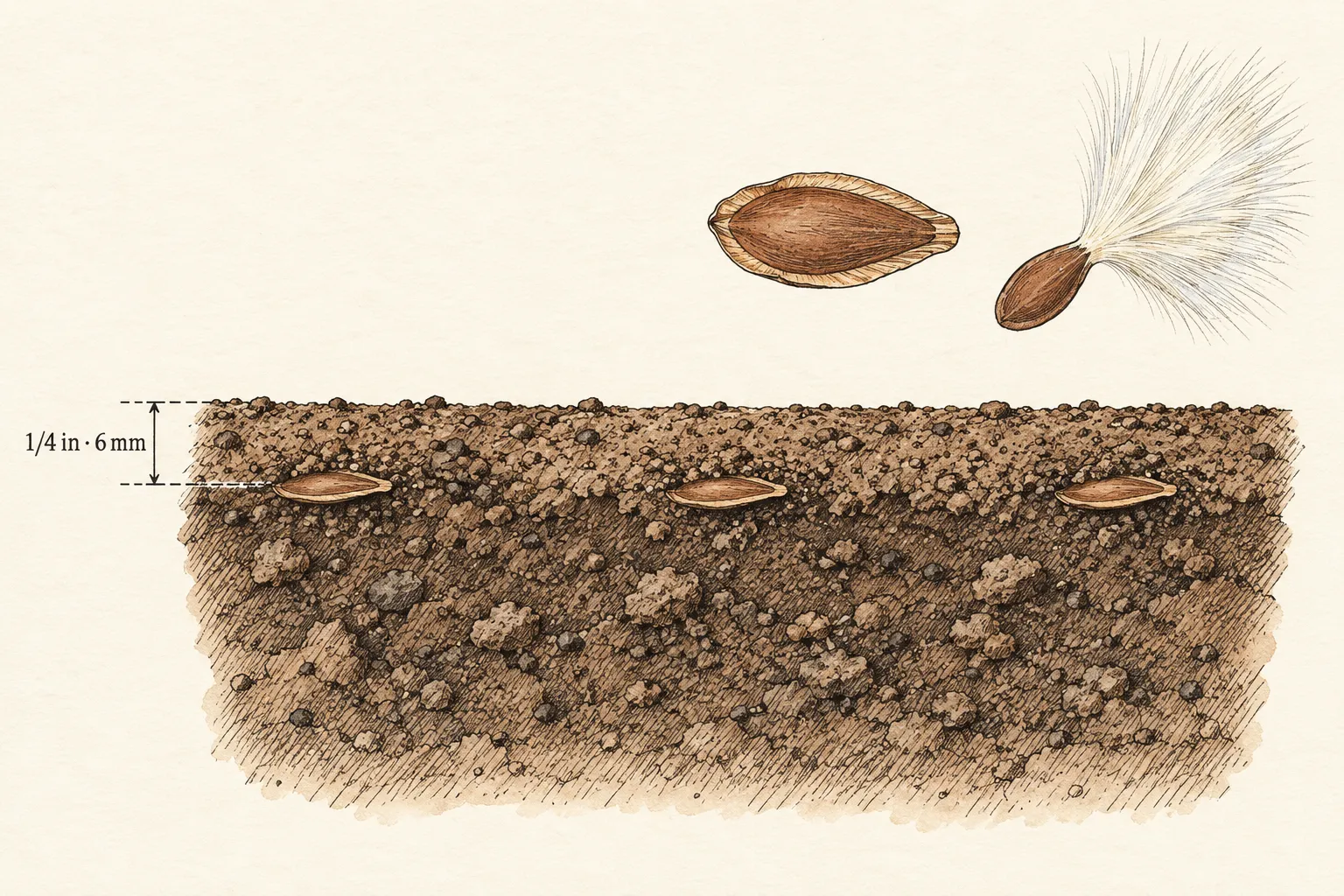
A packet directing surface sowing can instead be followed by pressing the seed firmly onto the prepared surface and recording that choice. Keep that patch stable, checking for runoff and leaf accumulation that could alter the treatment. Consistency within a small batch makes later observations useful. Covering some stations deeply and leaving others on loose clods would change several conditions at once and make poor emergence difficult to interpret.
Water gently to settle a dry prepared surface and leave the seed in contact with the soil. Stop if the water begins moving seed or fine soil into a low point. For a home border, distribute a few seeds at each marked station and plan to thin later; packet counts and seed quality determine how far the batch can reasonably stretch. The close seed spacing in propagation instructions is not the eventual spacing of mature butterfly weed clumps.
Keep the winter surface recognizable
Place durable markers at the patch boundary and photograph their position in relation to a fixed path or stone. A label directly beside one seed is easy to lose during maintenance. A boundary photograph records the area that needs careful handling when the rest of the border is cleaned. Mark this as a seedbed so spring helpers know why an apparently empty patch is being retained.
After heavy rain or wind, inspect the surface from the edge. Look for erosion, animal digging and a mat of fallen leaves. Correct displaced markers and remove a heavy leaf mat gently, keeping the shallow seed layer intact. Where repeated digging makes open-ground sowing impractical, a protected container method may be more manageable for a later batch. Leave the original seed layer intact while observing its surface.
Cold-season checks concern stability and drainage. Once spring germination begins, moisture becomes a more active job. A dormant seedbed need not be managed as an indoor tray with a plastic lid: it must experience outdoor conditions, and a sealed cover would introduce a different growing environment. Keep the record simple enough that you can tell whether the original surface remained intact.
Give spring emergence time and thin with the roots in mind
Begin watching the marked patch as spring warms the soil. Butterfly weed is a late-emerging perennial, and an established clump's return is different from the germination schedule of newly sown seed. Neither should be declared dead merely because neighboring plants are already leafy. Record the first seedlings you see and photograph their developing leaves before deciding which unfamiliar growth to remove.
Check that identification agrees with the seed label and the later narrow leaves of butterfly weed. Early seed leaves alone may be inconclusive. Clear identifiable competing weeds carefully at the edge of the young plants, and leave uncertain seedlings until there is enough information. Keeping the species in a small marked group makes that patience practical; a mixed broadcast bed demands much better seedling identification.
Once seedlings can be distinguished, select well-positioned plants and reduce crowding gradually. Monarch Watch explains that thinning improves available light, space and air movement. In this permanent-site method, a useful option is to snip unwanted close neighbors at soil level with small scissors, taking care to miss the retained stem. This limits pulling around developing roots. More widely separated surplus seedlings can be considered individually for moving.
If moving a spare plant is important, do it while small and carry its root system in an intact soil plug. Treat moving a mature, deeply rooted clump as a different task. Sowing at permanent stations lets the retained seedlings develop their roots where they will grow. Keep the best-sited young plant at each station and use the growth habit and available space to decide the final number.
Water the first season and judge establishment before flowers
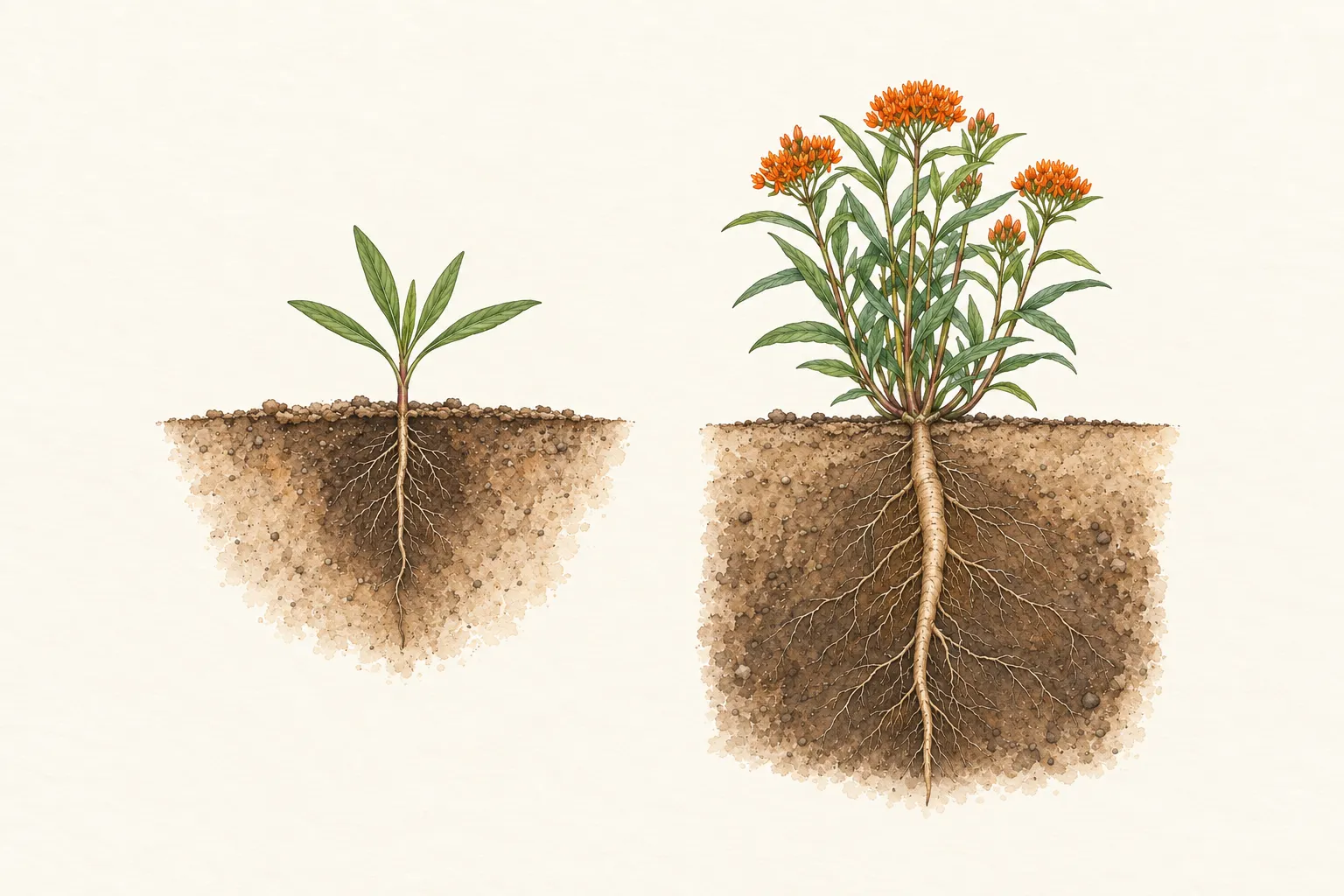
A mature butterfly weed's drought tolerance does not describe a new seedling. Xerces recommends supplemental water for milkweed seedlings during their first year, especially through summer. Check the soil around young roots during dry weather and water gently enough to infiltrate the root zone. A brief wetting of leaves or a damp crust at the surface does not show that the developing roots have usable moisture.
The root comparison illustrates why plant age changes the watering decision: the young plant has a developing root system, while an established plant can explore more soil. It is schematic, not a measured root-depth chart or an instruction to keep the adult dry. Balance water with the drained-site requirement. Persistently wet soil and a collapsing plant deserve examination of the site, not an automatic increase in irrigation.
Evaluate the first summer by survival, new growth and a maintained position in the border. A leafy plant with no flowers can still be progressing toward maturity. Record losses by station: concentration in the wettest corner suggests a different follow-up from uniform absence across the entire sowing. Neither pattern alone diagnoses a pathogen or proves that chilling failed. Compare seed identity, surface disturbance, competing vegetation and moisture before repeating the same method.
Keep surviving plants marked through their first autumn. Maryland notes that butterfly weed can disappear from view during winter, making its location easy to forget. The labels that protected spring seedlings now protect a developing perennial crown. Once established, decide whether to retain future pods for seed or remove them before dispersal; that later decision belongs to maintaining the patch you have successfully raised.
Steps
- Level
- moderate
- Time
- About 45–60 minutes for a small prepared patch, followed by winter exposure and first-season care
- Tools
- Hand fork and small rake for the prepared patch, Ruler marked in millimeters or quarter inches, Fine-rose watering can, Durable plant markers and pencil, Small scissors for later thinning
- Materials
- Labelled untreated Asclepias tuberosa seed suitable for the region, Fine soil from the prepared bed for the shallow-cover option, Paper envelope for any dry reserve seed
- 1Record the seed and permanent stations
Write the full botanical name, lot or collection identity, treatment history and planned location before opening the packet outdoors. Mark a few stations where mature clumps will fit. Keep an envelope label with the garden record. If native provenance matters, confirm the origin of the seed with its supplier before committing the whole batch. Photograph both sides of the packet, including any supplier instructions, so an empty envelope does not erase the pretreatment information.
- 2Prepare during workable autumn conditions
Clear the small sowing patches of competing plants and break down surface clods while the soil crumbles. Check where rain drains before calling the bed ready. Retain the prepared area if conditions are still warm; in the Midwest, the post-frost sowing window may arrive in November. Frozen ground or persistent saturation calls for a revised plan.
- 3Place and cover the seed shallowly
Distribute a few seeds at each marked station. For the illustrated method, apply approximately ¼ inch (6 mm) of fine soil and firm gently. If following a surface-sowing packet, press onto the surface and record that method instead. Keep heavy mulch away from the seed patches, and settle a dry surface with a gentle watering. Make the first covered station a depth check before repeating it elsewhere. Keep the covered patch level so a later watering does not collect over one station.
- 4Check the patch after winter disturbance
Photograph the boundaries after sowing and inspect them following storms. Restore a displaced marker, note erosion or digging, and carefully remove a dense leaf mat. Keep those observations with the sowing date. Leave an intact seedbed undisturbed while the season supplies its cold exposure; repeated digging prevents a useful spring assessment.
- 5Select seedlings and maintain first-year moisture
In spring, confirm developing seedlings before weeding closely around them. Thin crowded stations while protecting the roots of retained plants, then monitor their root-zone moisture through the first summer. Log the outcome by station. Continue marking surviving crowns into autumn, allowing time for establishment before expecting a mature flowering display. Check beneath the surface beside a seedling before deciding that recent rain supplied enough water.
Related reading
Sources
- Butterfly Weed, Asclepias tuberosa. University of Wisconsin–Madison Extension. Source record · Accessed 2026-10-06.
- How to Grow Perennials from Seed. Iowa State University Extension and Outreach. Source record · Accessed 2026-10-06.
- Milkweed FAQs. Xerces Society. Source record · Accessed 2026-10-06.
- How can I grow milkweed from seed?. Monarch Joint Venture. Source record · Accessed 2026-10-06.
- Asclepias tuberosa. NC State Extension. Source record · Accessed 2026-10-06.
- Butterfly Weed. University of Maryland Extension. Source record · Accessed 2026-10-06.
- Milkweed Finder. Xerces Society. Source record · Accessed 2026-10-06.
- Collecting Seed and Planting Milkweed for Monarchs. Iowa State University Extension and Outreach. Source record · Accessed 2026-10-06.
- Milkweed. Monarch Watch, University of Kansas. Source record · Accessed 2026-10-06.