Grow · selective perennial deadheading
Deadhead a Perennial Border Selectively, Not All at Once
Choose which spent flowers should rebloom, hold structure, feed birds, or self-sow, then make plant-specific cuts that preserve foliage and seasonal character.
Published Last updated
In this guide
- Map four different outcomes before picking up pruners
- Choose the next role of each plant before removing flowers
- Separate rebloom claims from ordinary tidiness
- Match the cut to the plant’s rebuilding point
- Keep seed heads with a stated purpose
- Work through the border in layers
- Preserve pollinator continuity during the edit
- Support recovery without forcing soft growth
- Stop cutting when the season changes
- Use the annual record to simplify future work
- Mark plants whose seed must be contained
- Coordinate deadheading with division and relocation plans
- Steps
Map four different outcomes before picking up pruners
Walk the border and assign each flowering plant one primary next job: produce another flush, mature seed, hold structure, or finish cleanly without rebloom. Mark groups with discreet ties or a sketch. The same faded appearance can lead to different actions. Salvia may respond to a cutback, coneflower heads may feed birds, ornamental grasses may carry winter form, and a weak transplant may simply need to keep its leaves.
Add a fifth category for uncertainty. When the plant is unidentified or its flowering response is unknown, remove only loose petals or one trial stem and observe. Do not shear an entire group based on a neighboring species. Accurate labels and photographs at peak bloom make this map faster each year and prevent a mixed border from being treated as one generic herbaceous mass.
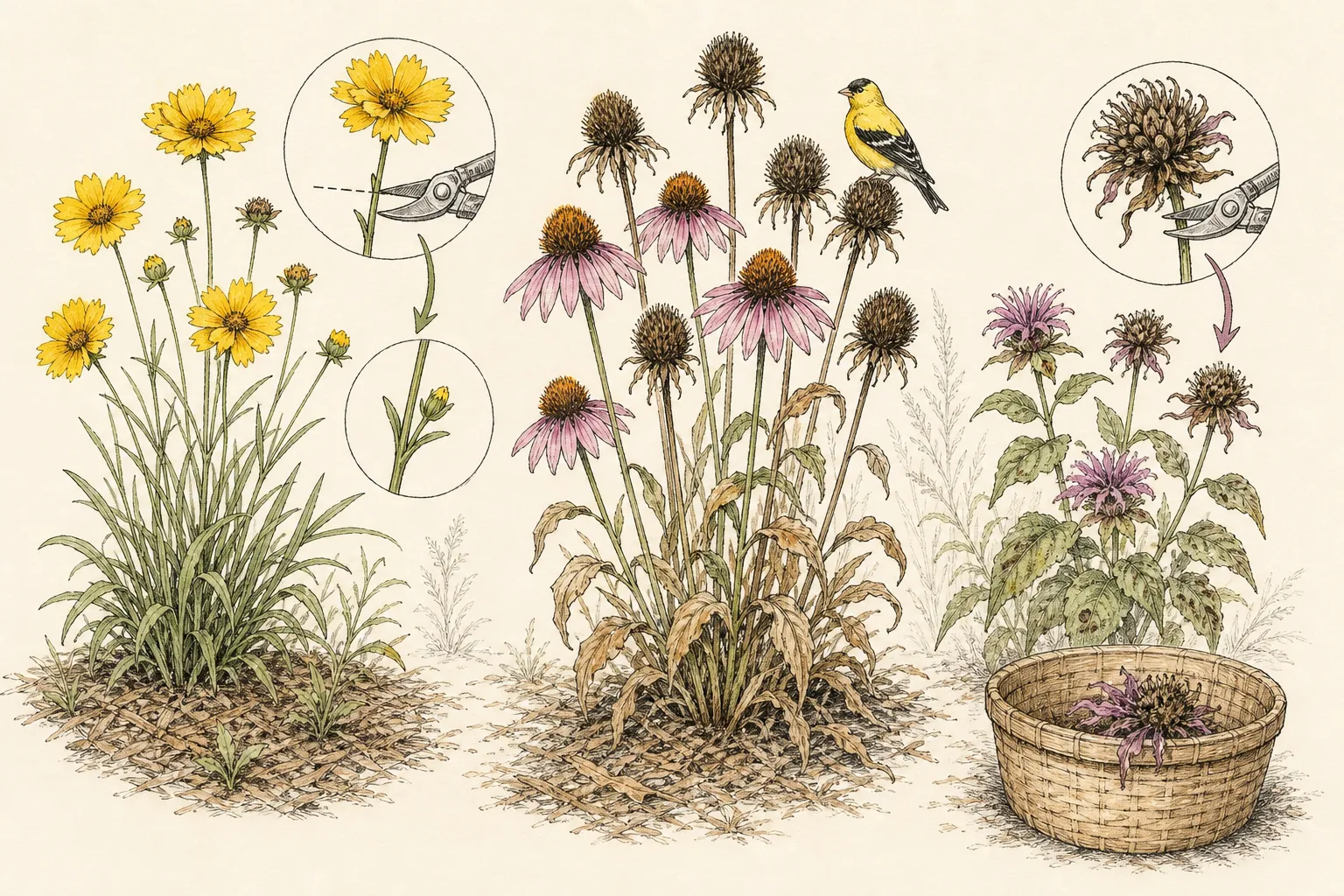
Use the whole seasonal composition as the boundary. Removing every brown head can create a green void and erase the transition toward late summer. Keeping everything can bury repeat bloom under collapsing stems. Preserve the strongest seed structures and reduce tired foreground growth where it opens light and space for the next layer.
Choose the next role of each plant before removing flowers
Assign each group to rebloom, seed, retained structure or final cleanup before making cuts. Preserve the appropriate rebuilding point and the stems selected for another role. Revisit seeders and seasonal stopping decisions with the map in hand. A uniformly tidy border is not the same outcome as a deliberately selective one.
Separate rebloom claims from ordinary tidiness
Deadheading can extend flowering in species that keep producing buds when seed development is interrupted, but it does not guarantee a second show from every perennial. Some plants bloom once, some need a broader cutback, and some offer only scattered flowers afterward. Use species and cultivar guidance. Promise only the outcome the plant’s growth habit and remaining season can support.
Tidiness may still justify a cut when a spent stalk leans across a path or hides fresh foliage. Make that claim honestly: the operation improves form and access, not necessarily flower count. A plant can be worth deadheading for garden readability even when no rebloom follows. This distinction helps the gardener judge success without fertilizing or recutting in pursuit of a flush the species does not make.
Consider the plant’s vigor. A droughted, newly divided, diseased, or heavily defoliated perennial may need leaf area more than another round of flowers. Remove only decaying heads and preserve green stems. Restore root-zone care and diagnose decline first. Seed production also costs resources, so a weak plant kept for recovery may benefit from preventing seed even when rebloom is not expected.
Match the cut to the plant’s rebuilding point
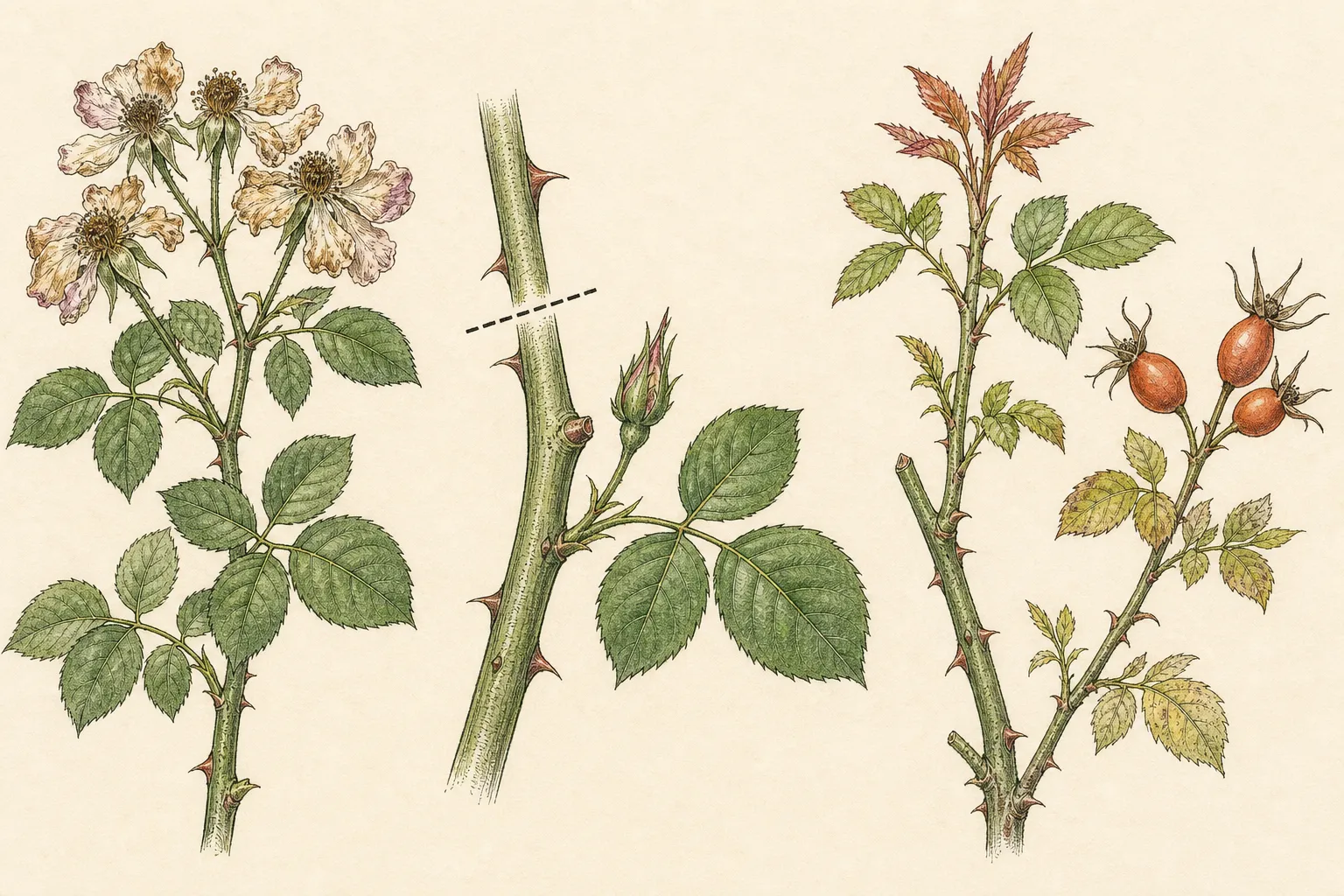
On branching stems, follow the spent flower to the first strong side shoot or leafy node with a visible bud. Cut just above it and retain the leaves that will support the next branch. Removing only petals leaves a bare stalk; cutting too far down sacrifices useful foliage. On daisy-like plants with several buds, isolate the finished stem without clipping neighboring unopened flowers.
On plants that send flower stalks from a basal rosette, remove the entire spent stalk near its origin while leaving the crown and basal leaves untouched. Iris, heuchera, and similar architectures should not be left with a tall empty wand simply because a leafy node cannot be found. Confirm the species and use a clean narrow tool where stalks emerge tightly.
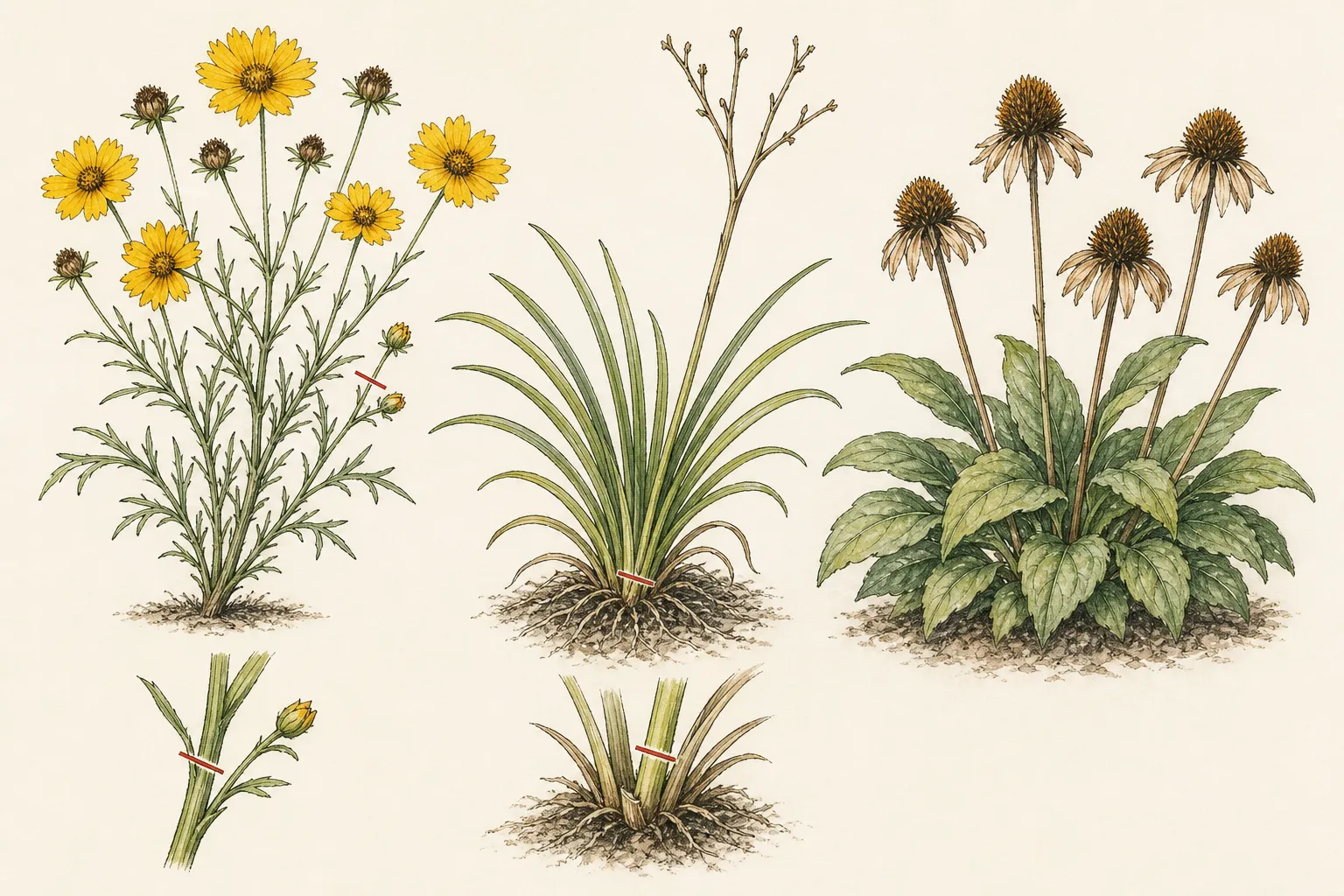
On a broadly spent mound, a staged shear may be suitable when the species tolerates it and green basal growth remains. Part the stems first, mark the crown, and cut above living foliage. Test one section. A shearing response belongs to that plant, not to every neighbor woven through it. Hand-remove intermingled stems before bringing broad blades into a mixed planting.
Keep seed heads with a stated purpose
Retain sturdy heads for birds, winter texture, or seed collection. Choose the best positioned stems and remove weak duplicates around them so retention reads as deliberate. Confirm that the plant is not invasive locally and that unwanted self-sowing will remain manageable. A beautiful seed head does not justify dispersing a prohibited or aggressive plant.
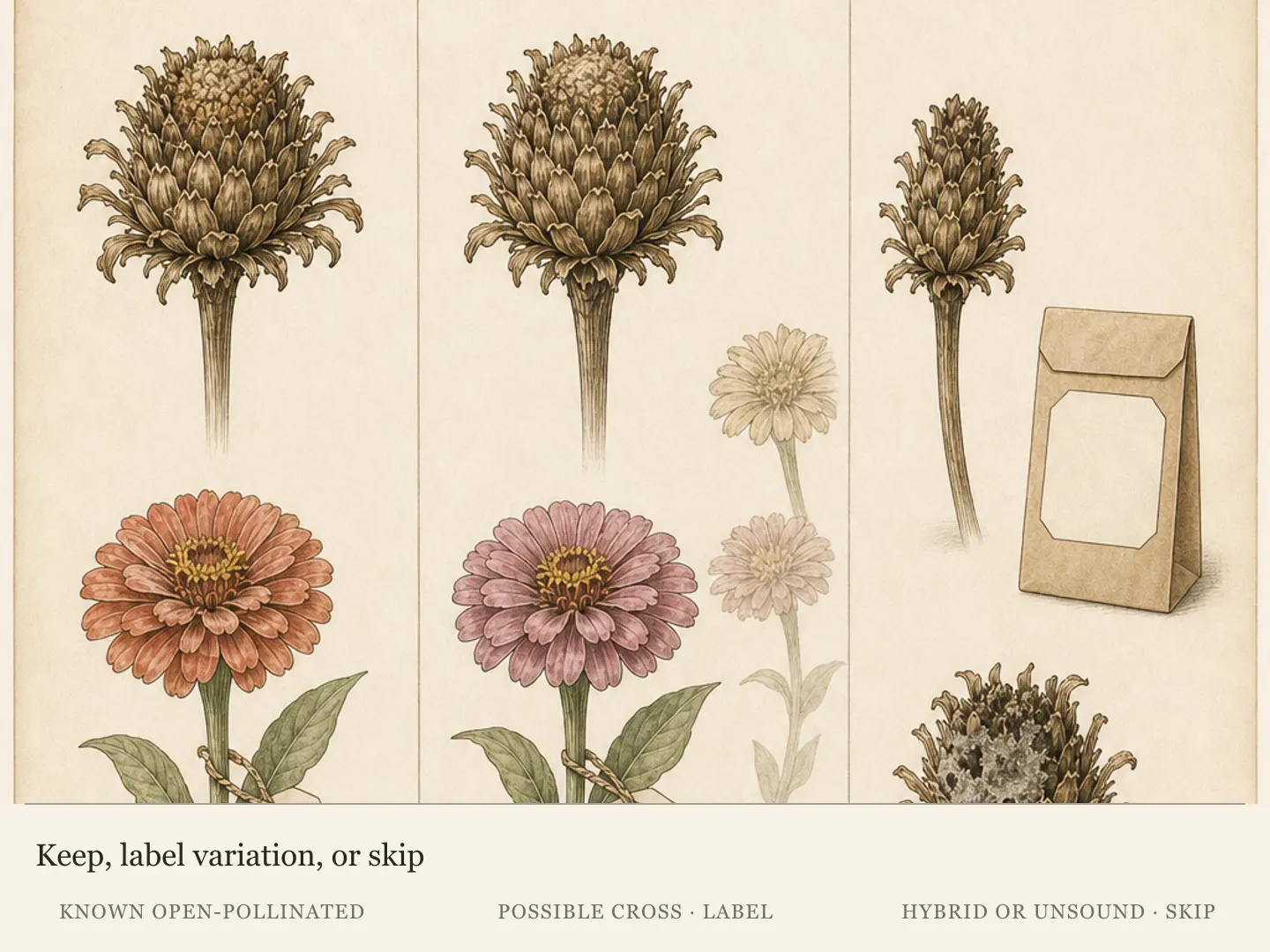
For seed saving, identify whether the cultivar is open-pollinated, hybrid, or likely to cross with related plants. Label the selected head before it browns into anonymity. Keep it on the plant until seed reaches appropriate maturity, then collect in dry conditions. The retained stem is part of a propagation process and should not be confused with seed guaranteed to reproduce the parent exactly.
For wildlife, leave heads in positions birds can use and the garden can tolerate. Avoid pesticide treatments that conflict with that purpose. Observe whether seeds are actually taken and whether seedlings become burdensome. The next year’s map can retain more, fewer, or different heads based on evidence rather than a blanket instruction to leave every perennial standing.
Work through the border in layers
Begin at paths and entrances where collapsed stems affect movement, then work toward the center. Remove obvious disease and breakage separately from spent flowers. Next, deadhead repeat bloomers and cut broad spent mounds. Finish by selecting seed and structure stems. This order protects the intended keepers from being lost in a pile of identical brown growth.
Carry separate containers for healthy compostable material and suspect tissue or mature seed. Do not drag clippings through fresh flowers. Pause every few feet and view the border from its main sight line. Selective work should preserve rhythm and height; a gardener focused at stem level can accidentally create a flat strip along the path.
Keep stepping routes visible and avoid standing on crowns. Use a kneeling board only where it does not compact roots. In dense borders, reach from both sides or leave an access gap instead of leaning across fragile plants with open pruners. A section that cannot be maintained safely may need a design change in the appropriate season.
Preserve pollinator continuity during the edit
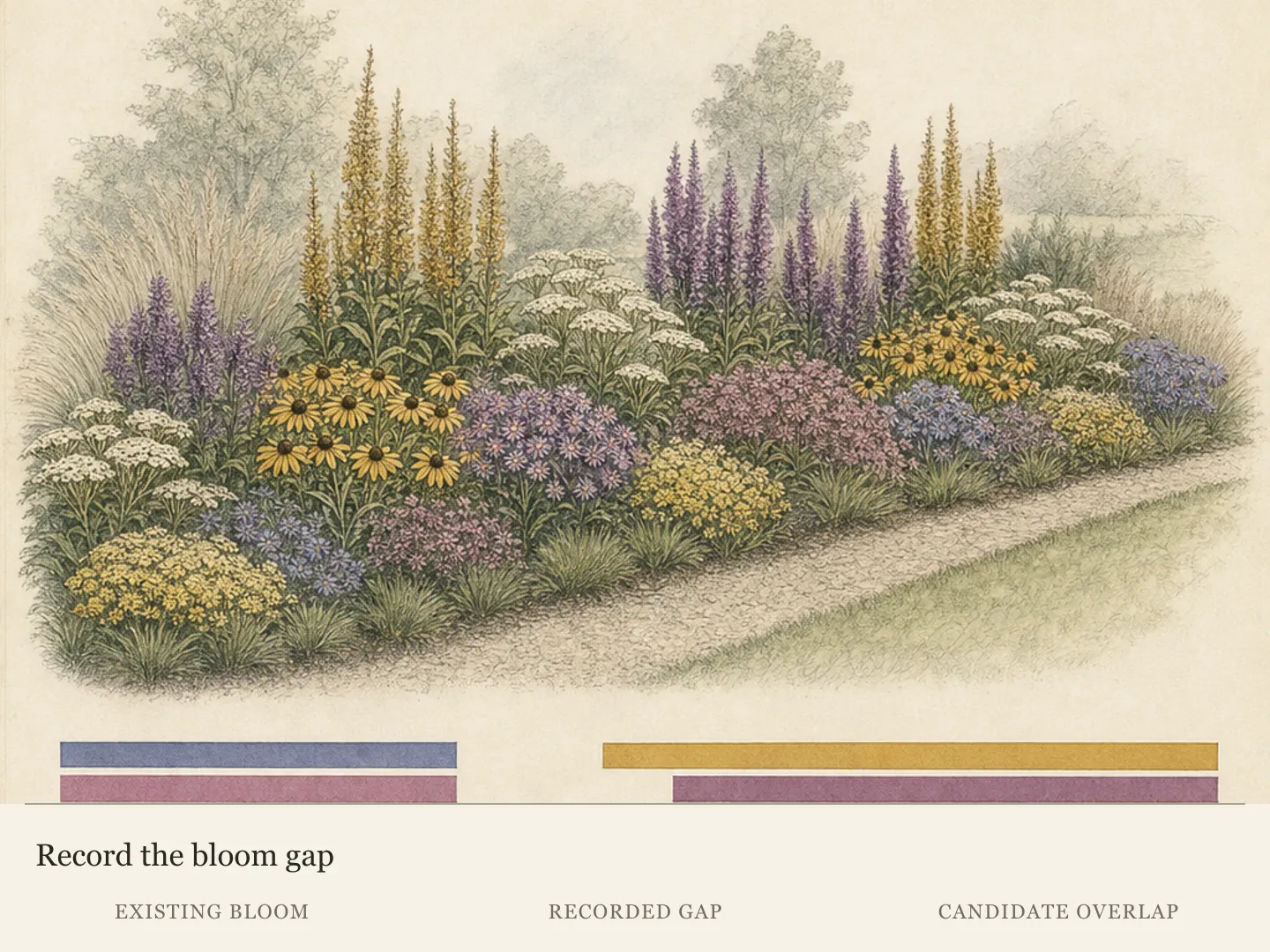
Inspect flowers for bees and other visitors before cutting. Work in cooler periods and leave occupied stems until activity shifts. Stagger the operation across groups so some flowers remain open while others rebuild. This is especially useful in borders where one dominant plant carries most nectar during a seasonal gap.
Do not assume every later flower provides equal forage, but maintaining a sequence of flowering species is generally more useful than removing the entire layer on one day. Map which neighbors will continue. If the next flush takes weeks, retain selected current stems or rely on another plant whose bloom overlaps.
Avoid spraying open flowers during a deadheading session. Pest or disease management needs its own identification, label, timing, and non-target review. Cutting while observing insects can improve diagnosis, but the presence of a chewed petal does not authorize a border-wide treatment.
Support recovery without forcing soft growth
Probe the root zone after cutting and water only when needed. A reduced canopy can use less water temporarily, while newly exposed soil may dry faster. Keep mulch at a conservative depth away from crowns. Do not soak every plant because one species wilted after handling; mixed borders contain different root zones and drought tolerances.
Hold fertilizer unless a test or established program supports it. Excess nitrogen can produce floppy late growth and delay hardening. Repeat bloom depends on plant habit, light, moisture, and remaining season as well as nutrition. Fresh buds that form on sturdy green stems are a better signal than rapid leaf expansion after a soluble feed.
Mark trial cuts and compare them with retained stems. If a plant produces useful side shoots, complete a second selective pass. If it remains bare or weak, stop and preserve foliage. The trial creates local knowledge without risking the entire group and can reveal differences among cultivars sold under the same broad common name.
Stop cutting when the season changes
Late in the season, allow selected seed heads and stable stems to mature. Repeated cuts can stimulate tender growth where winters require hardening. The local stop date depends on climate, species, and the purpose of the planting. Record the last productive cut and the interval to rebloom so next year’s decision is based on the actual border.
Leave diseased foliage only when local guidance says it poses no carryover concern. Seed-head retention is not a reason to keep blackened or collapsing tissue that threatens neighboring plants. Preserve the sound upper head if possible and remove affected lower material, or collect the seed separately. Keep sanitation and wildlife structure as compatible but distinct goals.
Winter cleanup timing also varies. Hollow stems can shelter insects, persistent heads can hold snow, and some crowns benefit from standing foliage. Other plants collapse into wet mats. Build a species-level plan rather than cutting everything on one autumn date. The selective approach continues after flowers are gone.
Use the annual record to simplify future work
Photograph the border before, immediately after, and several weeks after deadheading. Label plant groups and note which cuts produced rebloom, stronger foliage, seed use, or winter structure. The sequence reveals whether the chosen outcome occurred. A later photo also exposes gaps hidden by the urgency of midsummer cleanup.
Reduce maintenance where the return is low. Stop deadheading a once-blooming plant that never improves, move a high-maintenance repeater closer to a path, and group plants with similar cut timing. Replace aggressive self-seeders if their seed heads cannot be retained responsibly. Design can make selective care faster without turning it back into one indiscriminate pass.
Keep the border’s seasonal identity. A polished garden does not need every flower to look new. Fresh bloom, green rebuilding foliage, brown seed, and quiet structure can coexist when each has a visible role. Selective deadheading succeeds when the next stage of the garden remains legible and the cuts support actual plant biology.
Mark plants whose seed must be contained
Some desirable perennials self-sow beyond the space the design can support. Mark those groups before heads mature and deadhead them even if neighboring species are retained for birds. Confirm regional invasive status and never allow a regulated plant to seed. Selectivity depends on identity, not one visual rule for all brown heads.
Bag mature heads before cutting and avoid carrying open stems through the border. Keep seed-bearing debris separate from ordinary compost until local disposal and compost conditions are considered. A single overlooked head can undo hours of seedling control next spring.
Record which retained heads produced useful wildlife visits and which created unwanted seedlings. Next year, keep the highest-value species and remove the burdens earlier. This turns seed retention into an observed garden role rather than a blanket virtue.
Coordinate deadheading with division and relocation plans
A perennial scheduled for autumn or spring division may need a lighter finish so its crown and label remain visible. Mark it before cutting and preserve enough foliage to locate the clump. Do not shear neighboring plants over the marker or bury it under clippings.
Where a group repeatedly leans into the path, deadhead for immediate access but record mature spread and support needs. Move or divide only in the species’ suitable season. Repeated summer cutting can control symptoms of poor placement while postponing the structural correction.
Photograph the cleared view and the later regrowth. Use both in the relocation plan. A plant may look oversized only during a short flowering peak, or it may close the route all season. The duration determines whether a seasonal tie, selective cut, or permanent move is proportionate.
Steps
- Level
- moderate
- Time
- 45 to 90 minutes for a mixed border
- Tools
- Bypass pruners, Fine snips, Gloves, Plant labels
- Materials
- Separate debris containers, Discreet marker ties
- 1Assign each plant a next job
Map repeat bloom, seed, wildlife, structure, cleanup, and uncertainty. Confirm identities and seasonal goals before cutting. Give stressed or newly planted perennials a recovery role that preserves foliage instead of demanding another flower flush.
- 2Locate the rebuilding point
Trace branching stems to a strong side bud, basal-stalk plants to the rosette, and mound-formers to visible basal growth. Use a trial section where response is uncertain. Do not apply one cut height to interwoven species.
- 3Select seed and structure stems
Keep sturdy well-positioned heads for birds, winter form, or labeled seed collection. Confirm invasive status and crossing uncertainty. Remove weak duplicates so retention reads deliberately and remains manageable.
- 4Work from access edges inward
Clear path hazards, separate disease and breakage, then deadhead repeaters and choose keepers. Use separate containers, preserve stepping routes, and pause at normal viewing distance so stem-level work does not flatten the composition.
- 5Stagger cuts around pollinators
Inspect occupied flowers and work when activity is lower. Leave some groups open while others rebuild and map the next available bloom layer. Keep pest treatments outside the deadheading decision unless a separate diagnosis and label support them.
- 6Check moisture and trial response
Probe locally, water only where needed, hold unmeasured fertilizer, and keep crowns visible. Compare marked trial cuts with retained stems. Continue only where strong side shoots or buds confirm the expected response.
- 7Stop and record by season
End repeat cuts when hips, seed, hardening, or winter structure becomes the goal. Photograph before, after, and regrowth; record the productive cut and rebloom interval. Use the record to group care, improve access, and drop low-value maintenance next year.
- 8Contain selected seeders
Mark plants whose seed is unwanted, bag mature heads before cutting, and keep them separate from ordinary clippings. Confirm invasive status and use next spring’s seedling record to decide which species deserve retained heads.
- 9Protect future division markers
Leave enough identifiable foliage and visible labels on plants scheduled for division or relocation. Keep neighboring cut material off the crown and record the proper seasonal work instead of attempting it during a midsummer cleanup.
- 10Measure obstruction through the season
Photograph path and neighbor conflicts at peak bloom and after regrowth. Use duration to choose temporary support, selective deadheading, division, or relocation. Do not make repeated emergency cutting the permanent design system.
- 11End with a keeper count
Count retained seed heads, wildlife stems, and trial sections by plant group. Photograph them from the path and record why each remains. The count prevents later cleanup from erasing intended structure and keeps next year’s retention proportionate.
- 12Name the next action
For every retained group, record the next planned date for seed collection, winter review, division, or final cleanup so selective stems do not become forgotten debris.
Related reading
Sources
- Perennials: Selection, Planting, and Care. University of Maryland Extension. Source record · Accessed 2026-08-19.
- To Deadhead or Not? Your Final Answer Is.... Penn State Extension. Source record · Accessed 2026-08-19.
- Deadheading for More Blooms. University of Illinois Extension. Source record · Accessed 2026-08-19.