Grow · deadhead repeat blooming roses
Deadhead Repeat-Blooming Roses Without Cutting Away the Next Flush
Identify the rose’s flowering habit, remove spent blooms above useful outward growth, and stop cutting when hips, dormancy, or plant stress matter more than another flush.
Published Last updated
In this guide
- Decide what the rose should do next
- Choose another flush or retained hips before cutting
- Separate a spent bloom from a damaged shoot
- Find the node that can carry the next shoot
- Make a clean cut and protect the framework
- Balance the canopy across the whole plant
- Support regrowth without forcing it
- Stop deadheading at the right point
- Handle rain-damaged flowers before they affect buds
- Deadhead climbers without losing their framework
- Leave a readable record on trial stems
- Steps
Decide what the rose should do next
Deadheading removes spent flowers before seed and hips fully develop, which can encourage many repeat-blooming roses to redirect growth toward another flush. It is not a universal rule for every rose. Once-blooming species and old garden roses may offer decorative hips, wildlife value, or their only seasonal fruit after flowering. Confirm the cultivar or at least its observed flowering habit before converting every fading bloom into the same cut.
Choose between three goals: another round of flowers, a tidy plant with minimal stem loss, or retained hips. A repeat-blooming shrub in active growth can usually support selective deadheading. A newly planted, drought-stressed, diseased, or heat-damaged rose may benefit from removing only petals or flower heads while retaining maximum leaf area. A rose grown for hips should keep selected spent flowers intact and be allowed to complete that cycle.
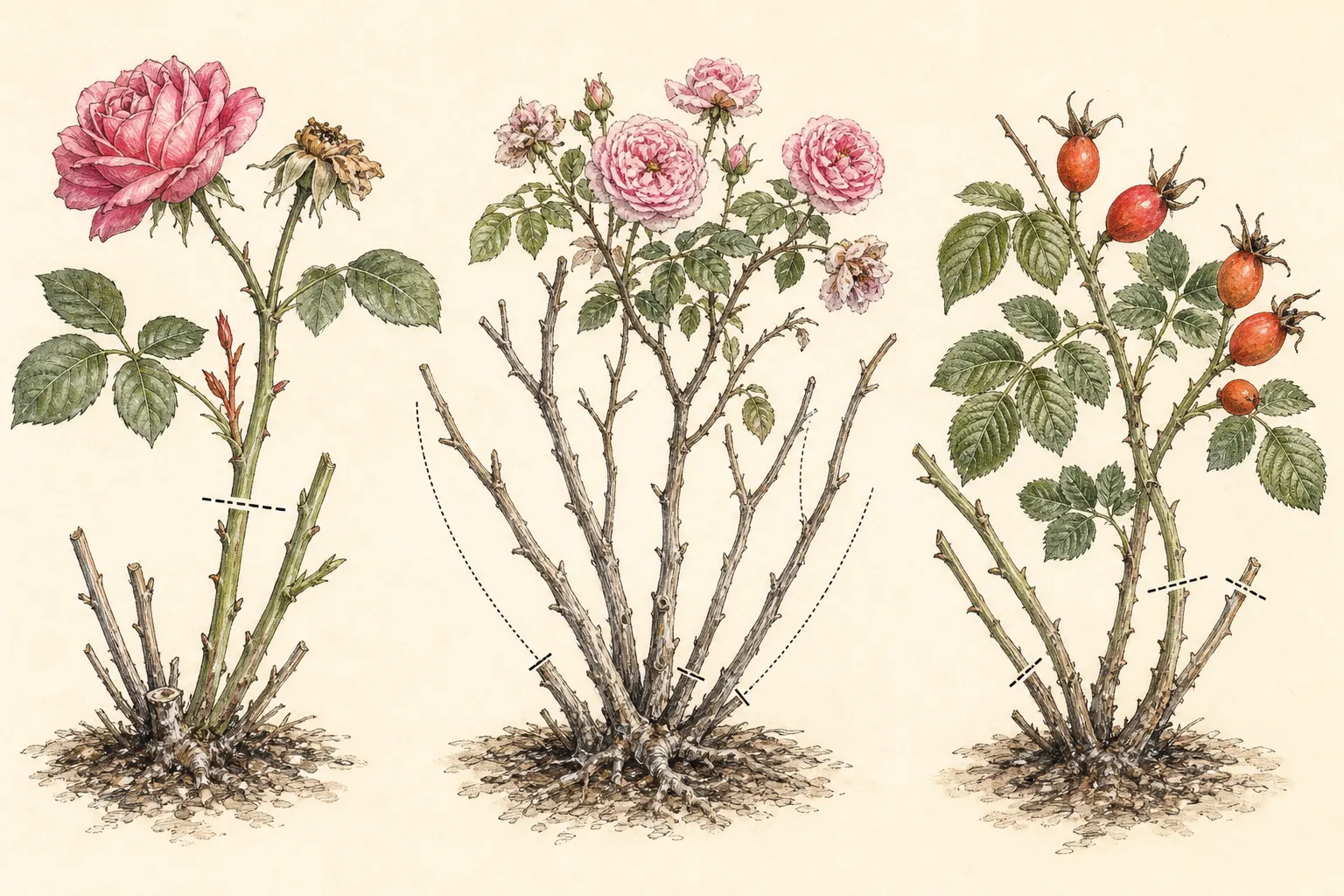
Use the season as a boundary. A cut made early enough can produce useful new growth and flowers. Late cuts may stimulate tender shoots that do not harden before cold in climates with winter dormancy. Local Extension timing should govern the stop date. The aim is not to keep the rose perpetually in bloom; it is to match the next growth response to the remaining season and the plant’s condition.
Choose another flush or retained hips before cutting
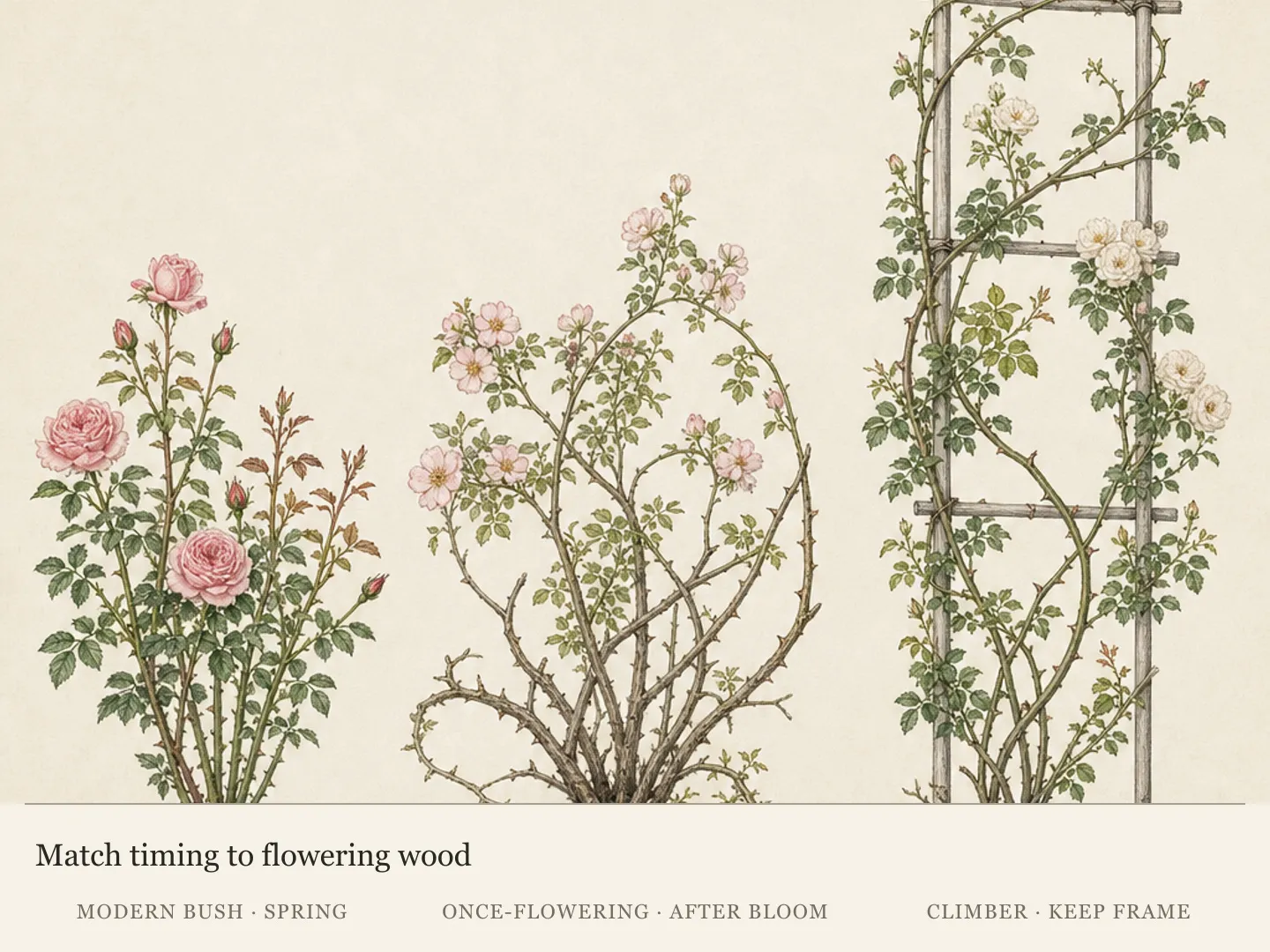
Confirm a repeat-blooming rose and the desired next role of its flowers. For another flush, choose a useful strong node on a sound stem; for hips or retained seasonal structure, leave the appropriate flowers. Stress and the local seasonal stopping point can also suspend cutting. Keep climbing framework outside routine removal of spent flower tips.
Separate a spent bloom from a damaged shoot
A flower is ready when petals fade, loosen, brown, or fall and the display is no longer useful. Inspect the receptacle, flower stem, and leaves beneath it. Normal fading does not require removing a long cane. If the stem is blackened, split, cankered, bored, or wilted below the flower, deadheading is no longer the complete job. Preserve a sample and follow an appropriate disease or injury diagnosis before cutting into apparently healthy tissue.
On clusters, remove individual spent flowers as they finish while keeping unopened buds and fresh blooms. After the whole cluster is spent, trace its common stem to a useful node. Cutting the entire cluster after only one flower fades sacrifices the rest of the display. Leaving decaying petals packed among buds can also hold moisture, so lift loose petals gently during inspections without bruising developing flowers.
Look for rose rosette symptoms, unusual proliferation, distorted red shoots, or widespread dieback separately. Deadheading cannot correct systemic or crown-level problems. Clean tools and avoid moving suspect debris across the garden. When the plant’s identity or symptom pattern is uncertain, make the smallest reversible cosmetic cut and obtain local diagnostic help before reshaping major canes.
Find the node that can carry the next shoot
Trace the flower stem downward to a healthy leaf with a visible bud in its axil. Traditional advice often points to the first five-leaflet leaf, but leaflet count is a guide to mature growth, not an inflexible law. The useful node is strong, leafy, outward oriented, and positioned to build the desired canopy. A tiny leaf immediately below the flower may produce a weak crowded shoot; a much lower cut may remove unnecessary foliage.
Choose an outward-facing bud when the rose’s architecture and space allow it. This directs new growth away from a congested center and crossing canes. On a climber or trained rose, the desired direction may be sideways along the support, so read the framework before applying shrub-rose geometry. Preserve permanent canes and flowering laterals according to the rose type; deadheading should not become accidental structural pruning.
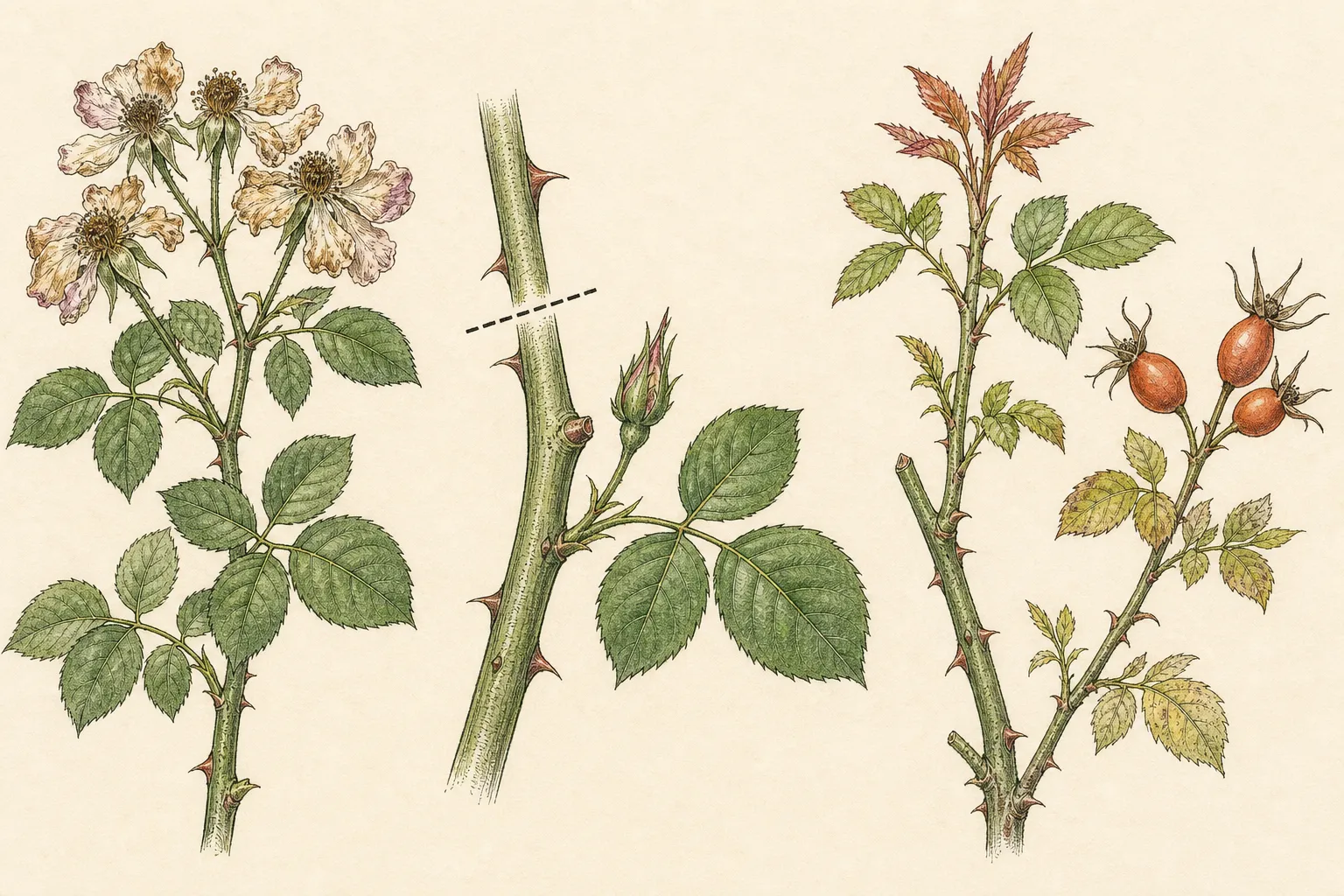
Keep enough leaf area beneath the cut to fuel regrowth. Long-stem cutting for a vase and routine deadheading have different costs. If flowers are being harvested, distribute cuts around the plant and avoid stripping the same cane repeatedly. A strong rose can replace more tissue than a small container plant, but no rose benefits from a neat series of deep cuts that leaves bare stems and exposed fruiting wood.
Make a clean cut and protect the framework
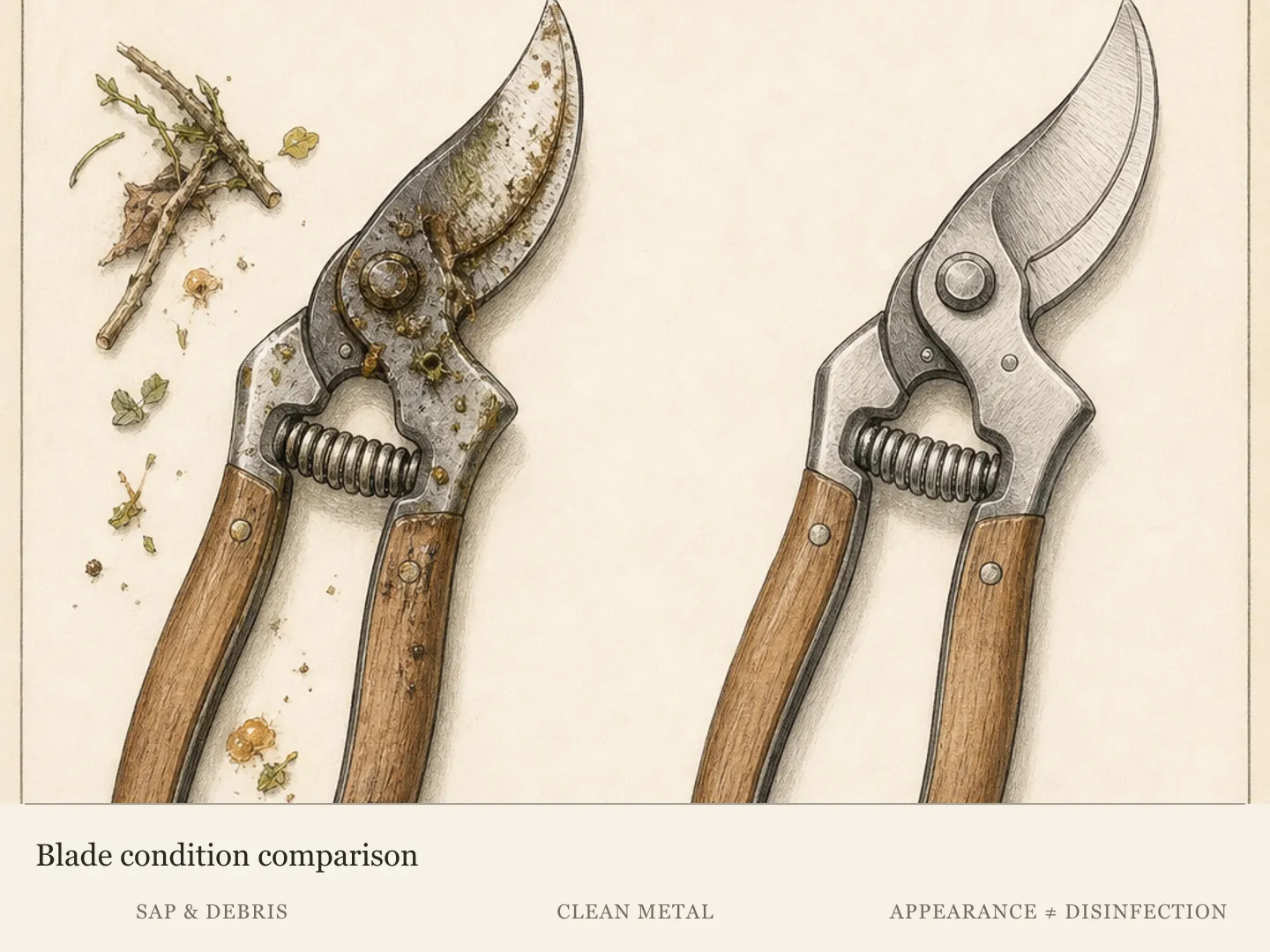
Use sharp bypass pruners cleaned before the session. Cut just above the selected bud or leaf junction, leaving a small stub that protects the bud without creating a long dead snag. An angled cut can help shed water, but extreme angles enlarge the wound. Avoid cutting flush into the node. If the cane crushes, recut with a sharper tool below the damaged edge while preserving the intended bud.
Support the flower stem with one hand so the cut does not tear bark. Work from the outside of the plant and keep hands aware of thorns and hidden canes. On a cluster, make individual fine cuts first, then a single final cut after the cluster is finished. Collect clippings as you go so diseased petals or leaves are not rubbed through healthy foliage.
Do not seal ordinary small pruning cuts unless local guidance identifies a specific pest situation. The plant closes sound tissue naturally. More useful protection comes from correct placement, a sharp blade, and avoiding cuts during saturated conditions when foliage will remain wet. If a large cane needs removal, stop and use the structural pruning guidance for that rose rather than stretching a deadheading session beyond its scope.
Balance the canopy across the whole plant
Rotate around the rose after every few cuts. A gardener who works only from the path side can shorten the visible face while leaving a heavy hidden back. Distribute deadheading so light, foliage, and future buds remain balanced. The final outline need not be a formal sphere; each retained node should belong to a coherent framework with space for its new shoot.
Remove crossing or dead twigs only when their identity is clear and the cut is appropriate for the season. Do not chase every interior stem during active bloom. The aim is to remove spent flowers and obvious minor damage while preserving the plant’s established structure. Major thinning can expose previously shaded tissue to heat and sun and may remove flowering wood needed by the cultivar.
In a container, check whether the pot is stable before leaning into the canopy. Keep the base visible, confirm drainage, and consider the smaller root volume when deciding how much to remove. A compact patio rose may need frequent light deadheading, not the deeper cuts used to produce exhibition-length stems. Let the plant’s scale and vigor set the harvest cost.
Support regrowth without forcing it
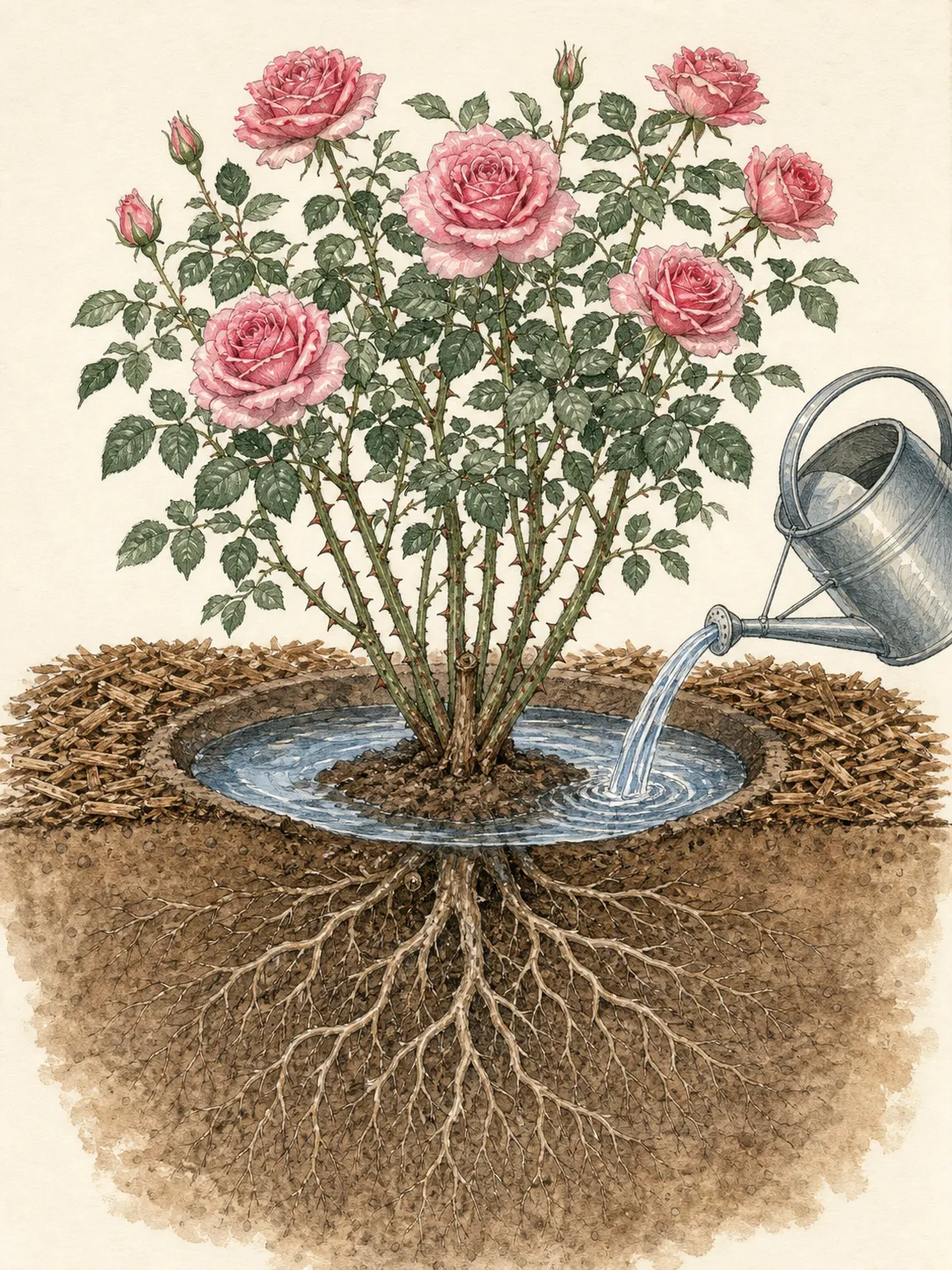
Check root-zone moisture after cutting, but do not water merely because pruners were used. Apply slow deep water when the soil is dry enough to need it and keep foliage dry where practical. Maintain a suitable mulch layer away from the canes. Stable water supports new shoots; repeated saturation reduces root oxygen and cannot compensate for a hot, compacted, or undersized site.
Continue the existing test-based fertility program. Do not add a high-nitrogen feed after every flush. Excess soft growth can be more vulnerable to pests, disease, and winter injury, while a rose short of light or root space will not be repaired by fertilizer. Judge recovery by firm new shoots, healthy leaves, and proportionate buds, not by the fastest possible stem extension.
Inspect the selected nodes after one to two weeks, allowing for weather and cultivar. Look for buds swelling in the intended direction. Blind shoots, weak growth, or dieback below several cuts may signal plant stress or poor tissue choice. Correct the underlying condition before making another round of deep cuts. The response to the first pass should inform the depth of the second.
Stop deadheading at the right point
Stop when the gardener wants hips, when the rose is not rebuilding foliage, or when another flush would extend tender growth too late for local conditions. Leave selected spent flowers intact and mark them if seed or wildlife value matters. Do not resume cutting because the developing hip looks untidy; that structure is the chosen seasonal result.
A rose can also pause during extreme heat or drought. Remove loose petals and diseased material, but delay broad cutting until water relations and vigor stabilize. Flowers may be smaller in heat and new shoots slower. A temporary reduction in display is not evidence that the plant needs stronger pruning. Preserve foliage and evaluate the root zone and canopy health.
Near season end, shift attention from flower production to sanitation, support, and winter preparation appropriate to the region and rose type. Record the final deadheading date and the time required for a new flush. That interval provides a local stop-date clue next year, more useful than copying a national calendar without accounting for cultivar and climate.
Handle rain-damaged flowers before they affect buds
After prolonged rain, petals can ball together and decay around a flower that never opens. Remove the damaged head and trapped petals without cutting unopened neighboring buds. Trace the flower stem only when the bloom is finished and the tissue below remains sound. Do not treat every brown wet petal as a cane disease.
Open dense clusters gently and improve external airflow. Keep needed irrigation at the root zone and avoid adding overhead water to saturated flowers. If gray mold, stem lesions, or repeated bud failure spreads, preserve a fresh sample and follow a local disease diagnosis before performing a deeper pruning response.
Collect wet petals from the rose interior and mulch surface. A tidy cluster and clean base reduce decaying material while preserving foliage. Judge the next flush on buds and leaves that form after weather improves; damaged petals will not recover and should not become the standard for plant vigor.
Deadhead climbers without losing their framework
On repeat-flowering climbers, identify permanent canes and the laterals that carry flowers. Remove spent clusters back to a useful lateral node while retaining the trained framework. Do not shorten a main cane to the first convenient leaf because its flower ended. The support plan and rose class define the cut.
Work from a stable ladder or ground-based tool only within safe reach, and never pull a long cane toward the body to access a flower. Untie and retie one section at a time with broad loose ties. Preserve the fan or horizontal training that distributes flowering laterals across the support.
Record which laterals repeat and where crowding traps flowers. Structural renewal belongs to the appropriate pruning season. Midsummer deadheading can reveal the need, but it should not become an unplanned removal of old canes whose replacements have not yet been trained.
Leave a readable record on trial stems
On an unfamiliar rose, deadhead three comparable stems at different useful nodes and mark them loosely. Preserve the rest of the plant under normal care. Compare shoot strength, direction, and time to buds. The trial reveals how deeply that rose can be cut without removing more foliage than the next flush needs.
Remove markers before they tighten and keep the result with the cultivar label. Use the strongest rebuilding point for later passes, while adjusting for season and vigor. A small trial is more informative than repeating a leaflet-count rule across every rose in the garden.
Steps
- Level
- easy
- Time
- 15 to 30 minutes for an established shrub rose
- Tools
- Sharp bypass pruners, Thorn-resistant gloves, Small debris container
- Materials
- Tool sanitizer appropriate to the task, Plant label or cultivar record
- 1Confirm flowering habit and goal
Identify whether the rose repeats, flowers once, or is being kept for hips. Choose another flush, minimal tidying, or fruit as the next result. Delay deeper cuts on a newly planted, heat-stressed, droughted, or declining plant and follow the local seasonal stop date.
- 2Inspect bloom, stem, and leaves
Confirm normal petal decline and trace the flower stem past any blackening, split, canker, boring, or wilt. Remove individual spent flowers from a cluster while preserving buds. Treat unusual shoot distortion or broad dieback as a diagnostic problem, not routine deadheading.
- 3Choose a strong useful node
Follow the stem to a healthy leaf and axillary bud that can carry new growth in the desired direction. Prefer an outward or support-aligned node and retain enough mature foliage. Use leaflet count as a clue, not a rule that forces the cut too high or too low.
- 4Cut above the bud cleanly
Support the stem and use sharp bypass pruners. Leave a short protective stub above the node without cutting flush or leaving a long snag. Recut crushed tissue with a sharp blade. Collect petals and clippings as work progresses and keep suspect material separate.
- 5Balance cuts around the rose
Rotate around the plant and distribute cuts among canes. Preserve permanent framework and flowering laterals, especially on climbers and old garden roses. Do not convert deadheading into major thinning or long-stem harvesting that removes most of the leafy canopy.
- 6Check water and regrowth
Probe the root zone and water only when needed. Continue measured fertility rather than feeding after every cut. Revisit the selected nodes for firm outward shoots and healthy leaves; repeated dieback or weak response calls for diagnosis before another deep pass.
- 7Stop for hips, stress, or season
Leave selected flowers when hips are intended, pause broad cutting during severe heat or drought, and stop early enough for new growth to mature locally. Record the final cut date and days to the next flush so next year’s schedule reflects the actual rose and garden.
- 8Clear rain-balled flowers selectively
Remove wet failed heads and trapped petals while protecting neighboring buds. Keep water at the root zone and collect decaying material. Escalate spreading gray mold or stem lesions through a disease diagnosis instead of cutting healthy canes more deeply.
- 9Preserve climber main canes
Identify the permanent framework and deadhead only the flowering lateral to a useful node. Untie and retie one reachable section safely, retaining broad loose support. Leave structural renewal for the rose’s proper pruning window.
- 10Compare the next flush with the cut map
Mark representative nodes on shrub and climbing roses, then record days to shoot and bud formation. Use the response to refine cut depth and seasonal stop timing. A failed node is evidence to inspect vigor and tissue, not permission to lower every later cut.
- 11Run a three-stem node trial
Mark comparable cuts at different strong nodes on an unfamiliar repeat bloomer. Compare shoot direction, strength, and days to buds, then remove the ties before they constrict. Use the result to refine later cuts without sacrificing the whole canopy.
Related reading
Sources
- Pruning Roses. University of Illinois Extension. Source record · Accessed 2026-08-19.
- Basic Rose Culture. University of Georgia Cooperative Extension. Source record · Accessed 2026-08-19.
- To Deadhead or Not? Your Final Answer Is.... Penn State Extension. Source record · Accessed 2026-08-19.