Grow · established amaryllis autumn rest
Rest Potted Amaryllis in Autumn to Plan the Next Bloom
Choose and manage an autumn rest for established potted amaryllis, with leaf-stage decisions, a realistic rebloom calendar and an early-growth exit.
Published Last updated
In this guide
- Choose a rest only when you want to influence bloom timing
- Assess the summer plant before putting it away
- Build a calendar with two separate intervals
- Measure the resting place before moving the collection
- Move the whole pot before frost
- Let the leaves finish before cutting
- Inspect the resting bulb without turning each check into watering
- End darkness when new growth appears
- Use the result to improve the next growing season
- Steps
Choose a rest only when you want to influence bloom timing
An established potted amaryllis can spend autumn in a cool, dry rest if you want to influence its next flowering season. Bring the pot inside before frost, keep the bulb and roots together, withhold water for the chosen resting method, and remove leaves only after they have dried. Check the pot during storage: a fresh shoot means it should return to light, even when the planned rest has not ended.
This concerns the large-flowered Hippeastrum hybrids commonly sold as holiday amaryllis, saved after flowering and grown through summer. It is not a storage recipe for South African Amaryllis belladonna, a newly purchased prepared bulb, or an unrooted waxed gift. The starting plant here already occupies a draining pot. Its autumn task is to move from leafy growth into a managed pause, not to be stripped and treated like a freshly dug dahlia tuber.
Rest is optional. Illinois Extension explains that these bulbs can flower again while kept growing; a dormant interval helps manage the timing. That distinction gives you two reasonable destinations when a summer pot comes indoors: a bright growing position, or a suitable resting shelf. Decide which you can actually provide before changing the watering. A dark cupboard is a poor substitute for a growing window if you never intended to start a rest.
Assess the summer plant before putting it away
Look back at the months since the last flowers. Did the bulb retain healthy leaves, receive useful light and grow steadily, or did it spend the summer nearly leafless in a dim corner? New Hampshire Extension emphasizes leafy growth as the source of energy for future flowers. An autumn rest cannot replace that growing season. Where the history is poor, keeping a sound plant growing is a more sensible objective than promising it for a winter table.
Photograph the plant beside its label before the leaves change. Record the last flowering month, whether it grew indoors or outdoors, and whether it is the original flowering-sized bulb or a small separated offset. These notes answer different questions. A cultivar name preserves identity; a flowering record tells you what that particular bulb did. Neither a large pot nor many leaves proves that a flower stalk is already waiting inside.
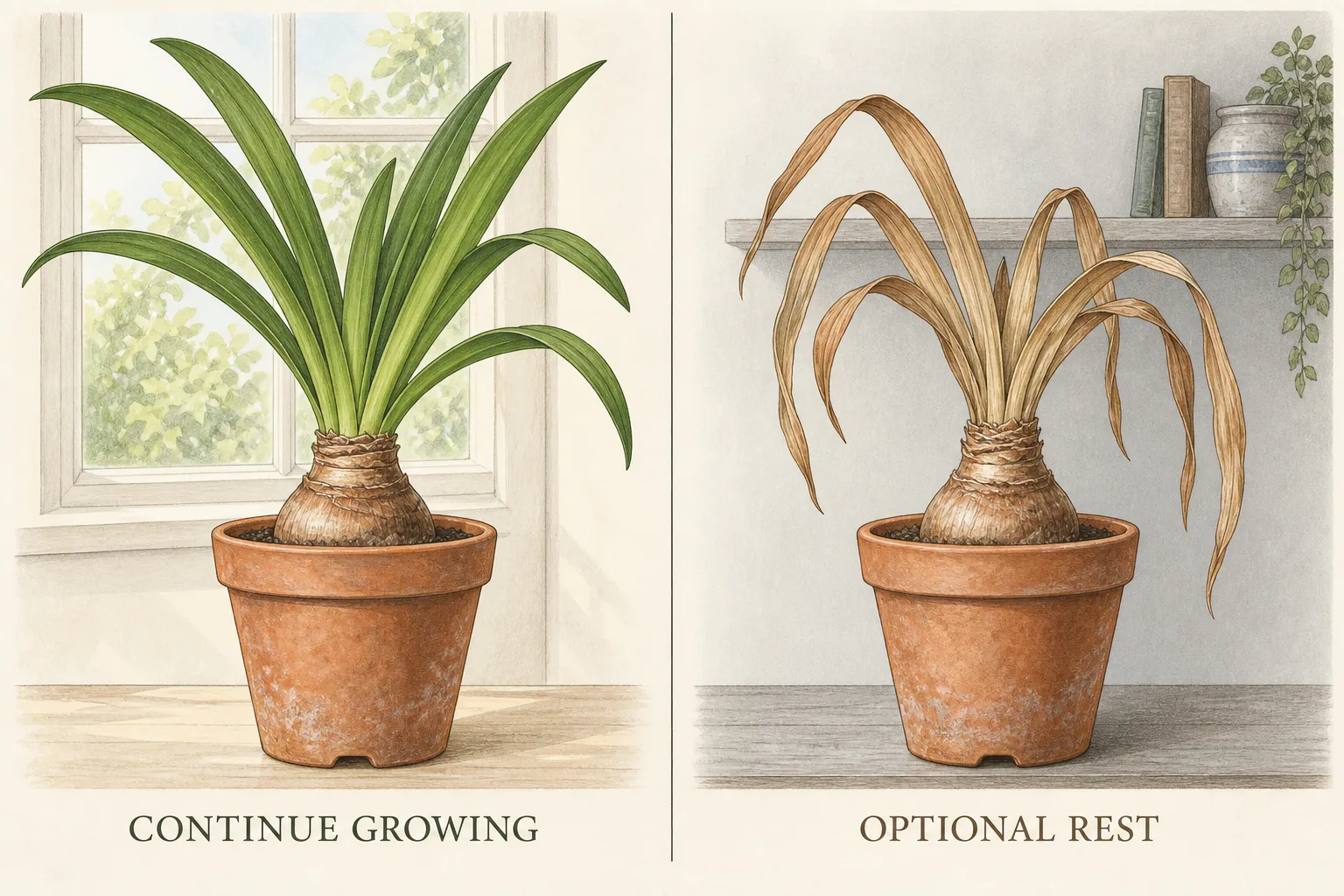
Keep seedlings and small plants on a growing schedule appropriate to their age. RHS specifically advises active growth without induced dormancy for young seed-raised hippeastrums. An established adult and a tiny seedling should not be assigned the same autumn treatment simply because their leaves look similar. If several pots contain a mixture of ages, separate them physically before labeling the resting group so routine watering reaches the intended plants.
Check the exposed bulb and the leaf bases while they are easy to see. A firm bulb with an ordinary dry outer skin is a different starting point from a soft, collapsing specimen. Put questionable material aside for assessment before it joins a shelf of saved bulbs. This is a selection step, not a diagnosis by color: photographs of a blemish alone cannot establish why a bulb is failing.
Build a calendar with two separate intervals
Allow time for both rest and subsequent growth. For its dark-rest method, Minnesota Extension specifies 8–12 weeks around 50–60°F, approximately 10–16°C, followed by a usual 4–6 weeks to flower after restart. Those are planning ranges for a bulb with sufficient reserves, not a guarantee that any saved bulb will flower. The rest interval ends before the visible flowering interval begins; adding only one of them gives an unrealistically late autumn start.
For a worked example, a pot entering that rest on September 29 reaches eight weeks on November 24 and twelve weeks on December 22. Adding the respective four-to-six-week growth allowances gives a broad possible flowering window from late December into early February. This arithmetic explains why starting at the end of September cannot reliably deliver flowers for a particular December celebration. It is a calendar illustration, not a forecast for your cultivar.
Write the rest start, the earliest planned reassessment and the later reassessment separately on the pot tag. Add a fourth space for the actual restart date. That last date will matter more than the original plan if a shoot appears ahead of schedule. In a collection, keep individual tags even when every pot enters the room together; their subsequent behavior may separate them into several batches.
If the event date is inflexible, plan another display alongside the saved bulb. You can still enjoy a successful rebloom when it arrives without forcing every care decision to serve a deadline. A named cultivar's own previous records may help refine later attempts, but a single good year does not turn this broad range into an exact timetable.
Measure the resting place before moving the collection
Place a minimum–maximum thermometer where the pots will stand and check the readings across daytime and overnight conditions. The room name is not a temperature measurement. A basement shelf beside a boiler, a cupboard within a heated room and an unheated garage can offer very different conditions. Set the thermometer beside the bulb area, not in another room whose convenient wall display gives a misleading impression of the shelf.
Use the Minnesota 50–60°F range if following the route above. Illinois and Wisconsin describe a cooler 45–55°F range for their dark-rest routines. These overlapping recommendations support a cool location; they should remain recognizable source-specific methods instead of becoming a newly invented extreme range. An autumn shelf near 55°F fits their overlap. A garage that may freeze needs another location, regardless of how convenient it is for storing empty pots.
Provide space to lift each pot and inspect the neck without unloading a stack of containers. Keep the collection clear of overhead irrigation and dripping greenhouse benches. Label the shelf as resting amaryllis if someone else waters your houseplants. A visible note explaining that this group is currently dry is more useful than assuming that a helpful person will recognize dormancy from a few brown leaves.
Move the whole pot before frost
Carry outdoor pots indoors before the local first frost, as New Hampshire Extension advises. September is a useful planning month for this Northern Hemisphere routine, but the forecast can make the move earlier. Bringing the plant inside and beginning dormancy are separate decisions. A green plant that is staying in active growth still needs its bright destination even if it arrived on the same day as the resting collection.
If the pot was sunk into a border for summer, uncover its rim and lift the container itself. Wisconsin recommends keeping amaryllis in pots partly because their brittle roots make direct planting followed by autumn digging undesirable. Support the base, free the pot from surrounding soil carefully, and resist pulling the plant out by its leaves. Preserve the established root ball while removing loose exterior soil that would otherwise spill across the indoor shelf.
Remove standing water from any outer container and check that the planted pot can drain. A rain-soaked root ball does not become dry as soon as you write a rest date on the label. Note its starting condition and withhold additional irrigation for the selected dry-rest method. Keep the pot accessible while it transitions so an unexpectedly wet or deteriorating specimen is noticed before it disappears behind the rest of the collection.
Let the leaves finish before cutting
Leave the foliage attached as it changes from green to yellow and then brown. Wisconsin describes waiting until the leaves are dry and shriveled before removal. That provides a clear handling cue for this routine: wait for the leaf itself, not for a chosen weekend. A neat row of bare-necked pots is not worth cutting every green leaf on arrival simply to make the collection fit a shelf.
Allow enough headroom for the existing leaves during the transition. Turn or reposition the pot if a long leaf catches on a shelf edge; forcing it beneath another tray can obscure the neck where you need to watch for new growth. When old foliage is dry, remove it carefully without cutting into the fleshy bulb or damaging a fresh central shoot. Keep the cultivar label in the pot after clearing the dry material.
Sources also describe other legitimate routines. RHS offers a well-lit, approximately 55°F semi-dormant period with reduced watering, as well as a dry method in which light is unnecessary. The well-lit method includes different end-of-rest leaf handling. It is an alternative complete pathway, not a reason to keep watering a pot already assigned to the dark, dry Minnesota method. Choose one routine whose conditions you can supply and keep its leaf and moisture instructions together.
Inspect the resting bulb without turning each check into watering
Set a recurring reminder to look at the resting group. A check can be brief: read the thermometer, examine the neck, look for a developing shoot and compare visible condition with the arrival photograph. There is no need to unpot a sound bulb at every visit. The record should tell you whether the plant has changed, not merely that another week has passed since you last opened the cupboard.
For the selected dark-rest routine, leave the watering can behind. Illinois specifies no watering during that interval. Separate pots that have resumed growth from pots that remain at rest so they cannot accidentally receive one shared watering schedule. If another household member finds a dry pot alarming, show them the tag and its planned reassessment date; a documented resting bulb is easier to distinguish from an overlooked houseplant.
Visible deterioration interrupts the timetable. Move a soft or decaying specimen out of the group and seek a diagnosis if you intend to save it. Drying leaves alone are expected here, but a collapsing bulb deserves separate attention. This guide does not prescribe a fungicide or identify a pathogen from a mark. The useful immediate record is the bulb's firmness, where the change appeared, the shelf temperatures and whether the mix stayed wet after arrival.
End darkness when new growth appears
A new green shoot overrides the calendar. Minnesota directs gardeners to move a sprouting resting bulb to a sunny window. Do that when growth appears; keeping it in darkness until the tag reaches twelve weeks does not preserve the original schedule. Note the actual exit date, clear away dead leaves that hide the shoot and move the pot out of the resting group.
A narrow emerging leaf and a developing flower stalk may not be equally easy to recognize at first glance. Let the structure develop in light instead of repeatedly handling the tip to find out what it is. Leaves can precede the stalk, so foliage appearing first does not establish that the bulb has failed. Equally, a leaf is not proof that flowers are certain. The immediate care decision is the same: active growth needs its growing conditions.
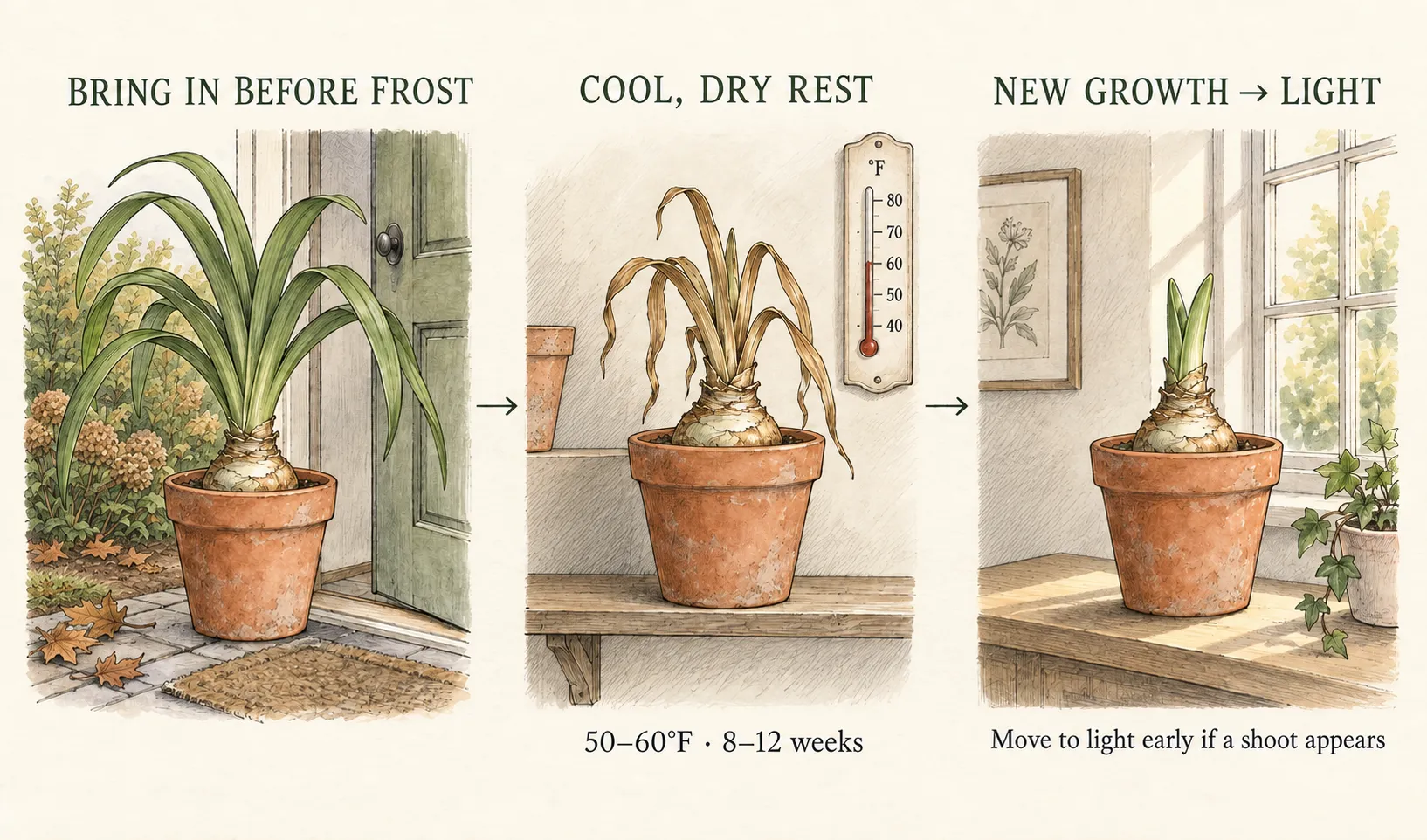
If no growth appears by the end of the planned rest, return the pot to a bright, warmer position and restart according to the established-bulb guidance. Illinois describes an initial thorough watering with free drainage, followed by regular care as growth develops. Check the mix before subsequent watering; the dormant-pot rule has ended, but the plant still needs drainage. Keep the exposed neck visible, with decorative material clear of the bulb.
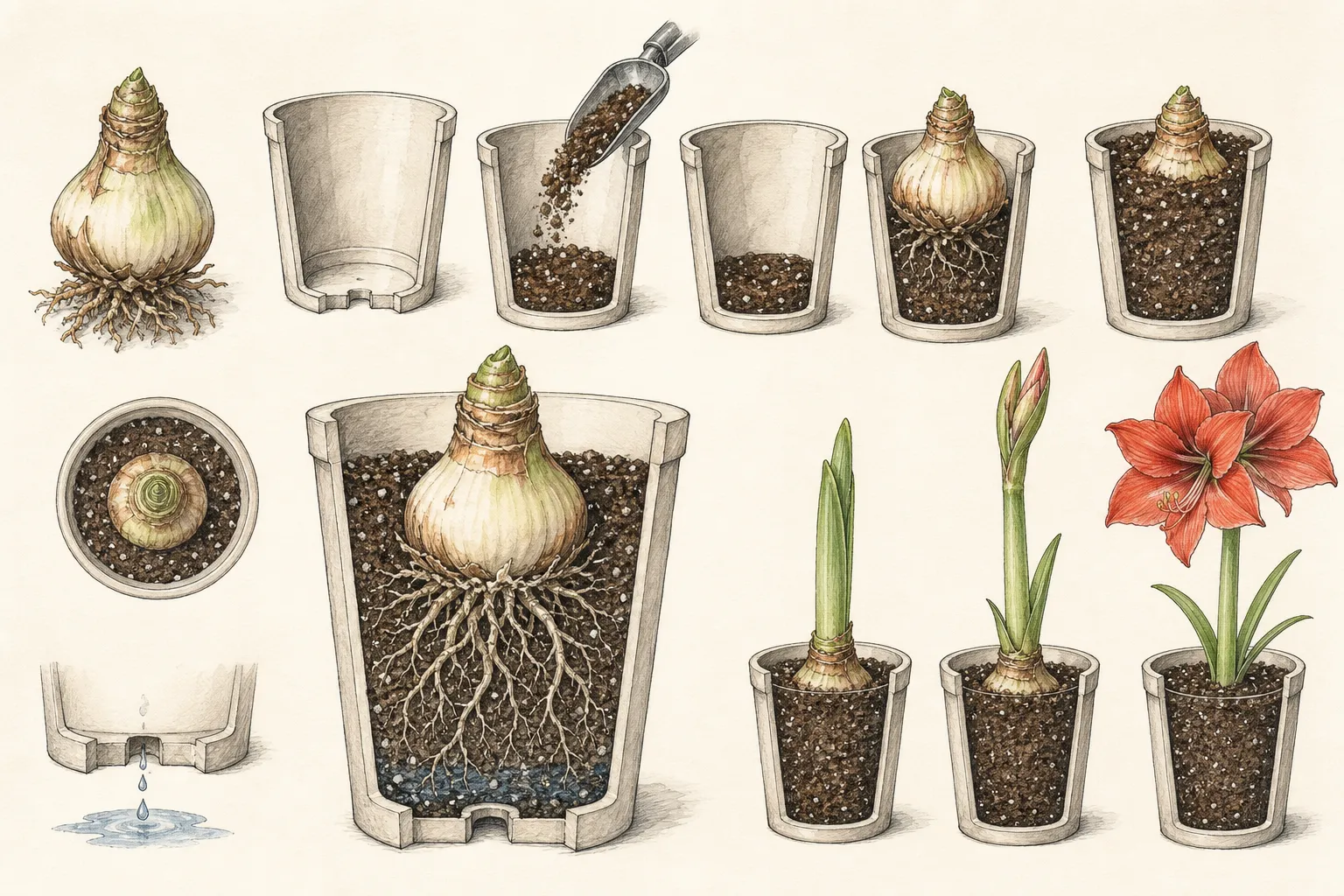
This is the handoff to the separate amaryllis potting and starting guide, which covers container fit, exposed bulb placement, stalk support and bloom display. An already serviceable pot can continue into growth. Routine autumn stripping and repotting would add another disturbance without helping you observe whether the chosen rest worked.
Use the result to improve the next growing season
Record the first leaf, first flower stalk and first open flower as separate events. If several pots share a cultivar, identify which individual produced each record. This makes next autumn's planning more useful than a note saying only that the amaryllis bloomed sometime in winter. Include a photo of the plant at the end of its summer growth, when its condition is still visible.
A foliage-only restart calls for patience and better growing-season care before another attempt. Repeatedly drying the bulb down will not supply the reserves it lacked. New Hampshire's rebloom guidance begins with a healthy, actively growing plant after flowering; keep that part of the cycle in view when judging this winter's result. Rest organizes a prepared bulb's season. The months of leaf growth remain the foundation for the next display.
Steps
- Level
- moderate
- Time
- About 20 minutes to prepare a small collection, plus 8–12 weeks of rest and brief checks
- Tools
- Minimum–maximum thermometer, Scissors for dried leaves
- Materials
- Established potted Hippeastrum hybrids, Durable pot labels, Cool frost-free resting space
- 1Assign each pot a destination
Place the established adult bulbs you intend to rest together, keeping young seedlings and plants continuing leafy growth in a separate group. Recover labels and photograph the foliage before moving anything. Record the last flowering date and any weak summer growth, then reserve a bright indoor position for the plants that will remain active.
- 2Prepare the shelf and calendar
Measure the resting shelf with a minimum–maximum thermometer. For the Minnesota method, choose a dry, dark, frost-free place around 50–60°F. Write the proposed rest start and the eight- and twelve-week reassessment dates on each tag. Add a blank line for the actual restart, which may change if a shoot appears early.
- 3Bring in intact containers
Lift pots from the patio or their sunk positions in the border before frost. Support each container underneath, remove loose exterior soil and empty any collected water. Keep the bulb and root ball in the existing draining pot. Place resting pots where their leaves fit and their necks remain accessible for inspection.
- 4Allow the dry transition
Withhold watering in the chosen dark-rest routine and keep the foliage attached while it changes. Remove old leaves when dry and shriveled, taking care around the bulb neck. Leave enough separation between pots to see emerging growth, and make the watering exception visible to anyone helping with the indoor plants.
- 5Move sprouting pots to light
During checks, examine the neck and shelf temperature. Transfer any pot showing new growth to a sunny growing position and record its exit date immediately. Remove it from the dry-rest group so it can receive appropriate active-growth care. Keep unsound bulbs separate for assessment instead of returning them behind the healthy collection.
- 6Restart and record the response
At the end of the selected rest, move any remaining sound bulbs to bright, warmer conditions. Water with free drainage and adjust subsequent care to growth and mix moisture. Record leaves, flower stalks and open flowers separately; use those observations alongside the next summer growing record when planning another autumn cycle.
Related reading
Sources
- Growing and caring for amaryllis. University of Minnesota Extension. Source record · Accessed 2026-09-15.
- How to take care of amaryllis and get them to rebloom. University of Illinois Extension. Source record · Accessed 2026-09-15.
- Can I Get My Amaryllis to Bloom Again?. University of New Hampshire Extension. Source record · Accessed 2026-09-15.
- Hippeastrum. Royal Horticultural Society. Source record · Accessed 2026-09-15.
- Amaryllis, Hippeastrum. University of Wisconsin–Madison Division of Extension. Source record · Accessed 2026-09-15.