Grow · fall houseplant indoor transition
Bring Summered Houseplants Indoors Before Cool Nights
Move potted tropical houseplants indoors before chilling weather, inspect hidden pest sites, isolate the arrivals, and reset light, water, and fertilizer.
Published Last updated
In this guide
- Move by the forecast, not the first frost date
- Choose indoor candidates before cleaning them
- Prepare a separate indoor landing place
- Inspect the whole plant outdoors in daylight
- Step the plant down from outdoor light
- Reset water and fertilizer to indoor growth
- Separate transition stress from an active problem
- Steps
Move by the forecast, not the first frost date
Bring potted tropical houseplants indoors before nights become chilling, not after a forecast frost forces an emergency move. For the broad foliage-plant group covered here, begin the transition when nighttime temperatures are repeatedly approaching 50°F (10°C). Species differ, but Iowa State and Minnesota Extension both note that some houseplants can be damaged below roughly 45–50°F (7–10°C). The local forecast and the plant's known tolerance therefore matter more than a fixed calendar date.
This procedure is for tropical or subtropical foliage and flowering plants that spent summer outdoors in containers and will continue as houseplants. It is not a storage method for dormant dahlia tubers, canna rhizomes, hardy container perennials, or plants meant to remain outside. Make the keep-or-release decision while weather is still mild enough to inspect, clean, and move each container deliberately.
Choose indoor candidates before cleaning them
Reserve indoor space for plants that are healthy enough to justify it and whose mature size fits a real window or grow-light position. Measure the doorway, tray, and winter location before wrestling with a large pot. A vigorous plant that cannot receive adequate light indoors may be better reduced through a sound cutting, given to someone with a suitable space, or composted where local rules allow than forced into a dark corner.
Do not combine repotting, severe pruning, pest treatment, and the environmental move by default. Remove dead leaves, broken stems, spent flowers, and only the live growth needed for safe clearance. Iowa State cautions that a hard cut adds stress while the plant is already adjusting to lower light, temperature, and humidity. Repot only for a clear reason such as failed drainage, an unstable container, or a root system that cannot be managed in the existing pot.
Prepare a separate indoor landing place
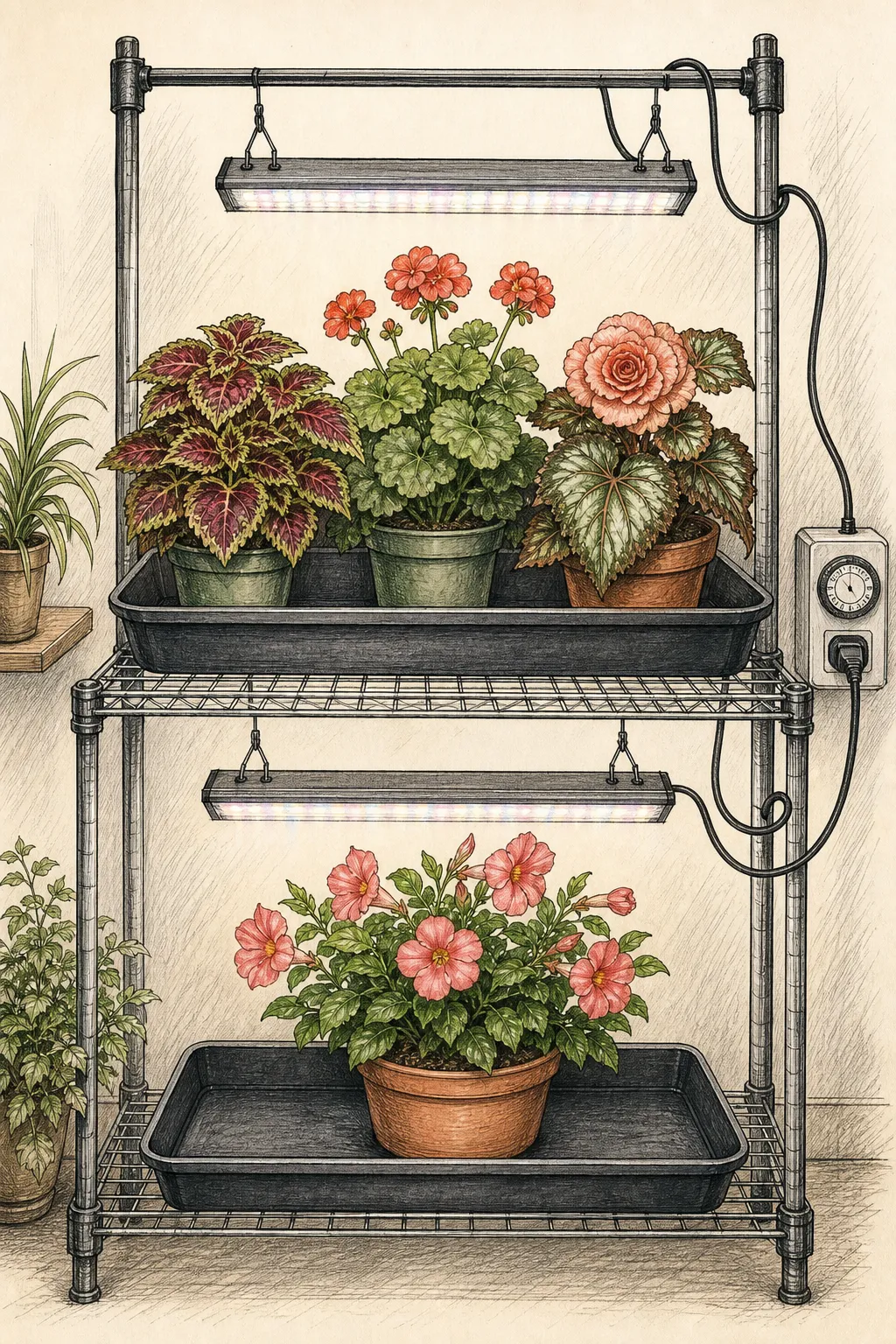
Set up the destination before the plant crosses the door. Use the brightest appropriate indirect light available, a washable tray that does not hold the pot in drainage water, and enough space to inspect every side. Keep foliage away from heating vents, cold drafts, and cold window glass. If the winter location is too dim for the species, solve that with a suitable grow light rather than expecting a few bright autumn days to carry the plant through winter.
Treat the landing place as a holding area, not as part of the established display. Iowa State recommends isolating returning plants for three to four weeks, while Illinois Extension gives a two-to-three-week quarantine. Using the longer interval is practical when pest status is uncertain. Separate pots far enough that leaves do not touch, use dedicated saucers, and inspect the arrivals during routine care before they join the collection.
Inspect the whole plant outdoors in daylight
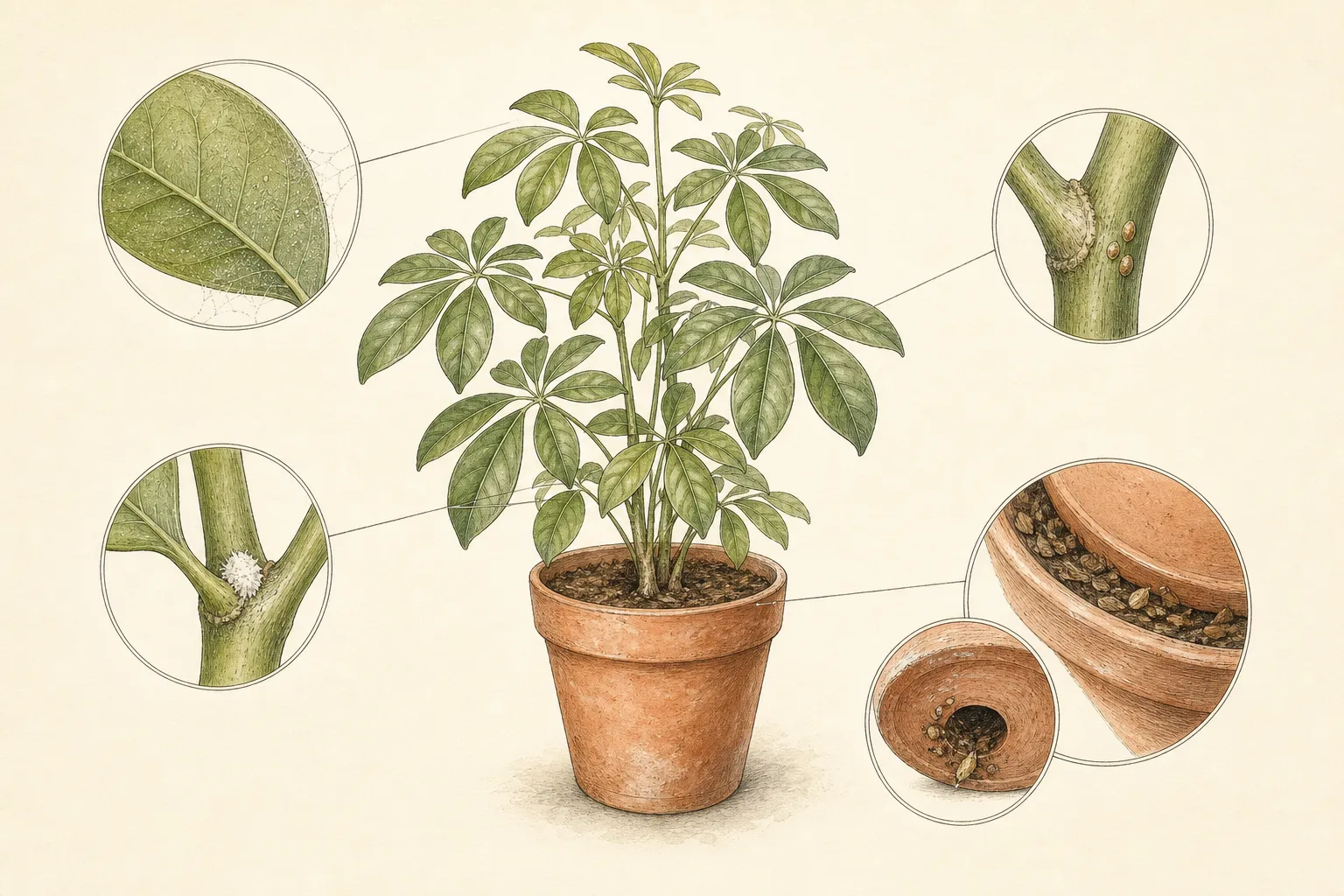
Work in good light while the plant is still outside. Look across upper and lower leaf surfaces, new growth, buds, stem joints, bark crevices, the soil surface, pot rim, saucer, and drainage holes. Webbing, stippling, fixed bumps, cottony deposits, clusters of small insects, shed skins, or sticky honeydew call for identification. A yellow or damaged leaf can be evidence, but it is not a diagnosis by itself.
Remove loose debris and spent tissue, wipe the container, and rinse sturdy smooth foliage with water where the plant tolerates it; let leaves drain and dry before the move. Pubescent leaves need species-appropriate cleaning rather than a blanket hose treatment. Do not improvise a household-soap drench or apply an unlabeled pesticide indoors. If an infestation is extensive or the diagnosis is unclear, keep the plant outside the collection and resolve it first; discarding one badly affected plant can protect many clean ones.
Step the plant down from outdoor light
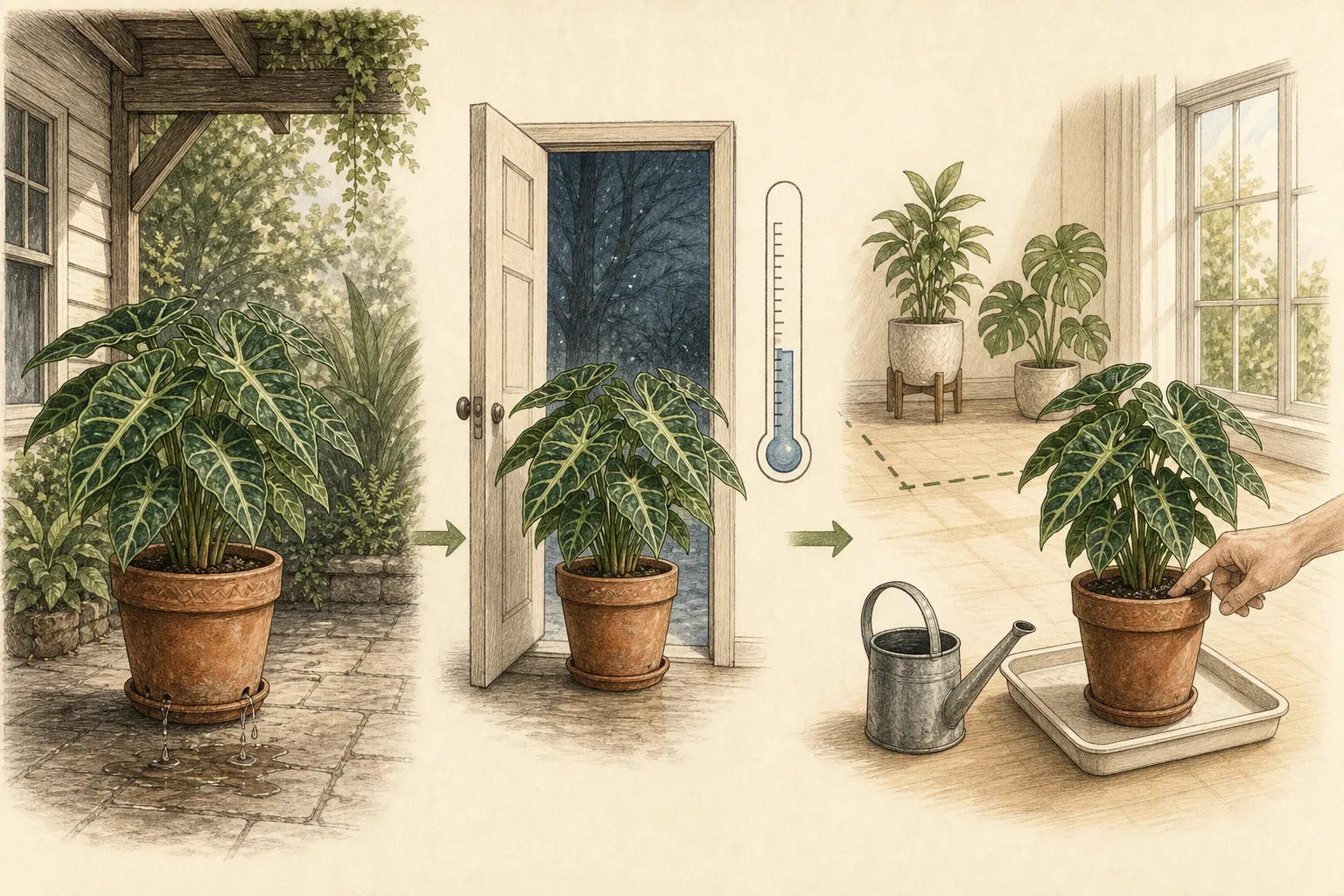
Outdoor shade is usually brighter than an indoor window, so the move is a substantial light reduction. While nights remain safely warm, shift the plant to a more sheltered, deeply shaded outdoor position and then give it the brightest suitable indoor position at arrival. Illinois Extension advises repeating the gradual acclimation used for the spring move; University of Minnesota Extension likewise recommends a gradual reintroduction rather than an abrupt change.
Once temperatures cross the plant's safe limit, keep it indoors instead of shuttling it back outside to complete an ideal schedule. Stability matters more than a perfect number of transition days. Expect light-sensitive plants such as weeping fig or tropical hibiscus to shed some leaves even after a careful move. Do not chase that response by moving the pot from window to window every day; hold the chosen conditions steady and watch what the next growth does.
Reset water and fertilizer to indoor growth
Retire the outdoor watering schedule as soon as the plant comes in. Cooler air, lower light, and reduced airflow usually slow water use, but pot size, species, and the indoor site still control the interval. Check the potting mix at an appropriate depth for that plant, water thoroughly when it needs water, let the excess drain, and empty the tray. A daily surface sip can leave part of the root ball dry; automatic calendar watering can keep a slow-drying pot saturated.
Reduce or stop fertilizer when growth slows. Iowa State notes that abundant fertilizer under weaker winter light can promote pale, stretched growth, and Illinois Extension advises fertilizing only actively growing plants. This is not a command to starve every houseplant until spring: a plant under effective grow lights may remain active. Let new growth, light supply, species needs, and the product label determine whether feeding resumes.
Separate transition stress from an active problem
Some older leaves may yellow or fall as the plant adjusts, and Iowa State reports that acclimation-related leaf drop can continue for one to two months. A limited, stabilizing loss after a large light change is different from expanding webbing, fresh sticky residue, spreading stippling, soft stems, sour wet mix, or repeated wilting in saturated soil. Mark the date of the move and photograph the plant from the same angle so direction of change is easier to judge.
During quarantine, inspect when you check moisture: scan the newest leaves and leaf undersides, rotate the pot, and look at the tray and window area. Keep a suspect plant separate until its identity and treatment are resolved. At the end of three to four quiet weeks, with no fresh pest evidence and stable care, move it into the collection without changing its light again. The successful transition is a clean, correctly placed plant settling into a slower indoor rhythm—not foliage that looks unchanged on the first day.
Steps
- Level
- easy
- Time
- Thirty to sixty minutes per plant, plus three to four weeks of isolation
- Tools
- Weather forecast, Hand lens, Soft cloth or gentle water spray, Plant dolly for heavy containers
- Materials
- Washable drainage tray, Plant label, Clean indoor holding area
- 1Set the temperature trigger
Check the species and local forecast, then start before nights repeatedly approach 50°F (10°C). Move sooner when the plant is known to be chill-sensitive; do not wait for frost to make every decision urgent.
- 2Choose what will come inside
Keep sound plants that fit a real indoor light position. Measure doors and trays, remove only dead or obstructive growth, and avoid combining severe pruning or unnecessary repotting with the move.
- 3Build the landing place
Prepare bright appropriate light, a draining washable tray, and separation from established plants. Keep the position away from vents, cold drafts, and cold glass, and add a grow light if the site cannot support the species.
- 4Inspect leaves, stems, and pot
Use daylight and a hand lens to check leaf undersides, new growth, joints, soil, rim, saucer, and drainage holes for insects, eggs, webbing, scales, cottony deposits, sticky residue, or damage.
- 5Clean without improvising a treatment
Remove debris, wipe the pot, and rinse sturdy foliage where appropriate. Let it drain and dry. Keep an infested or unidentified plant out of the collection and use only a correctly identified, label-directed control when one is needed.
- 6Reduce the light change while nights are safe
Move the plant into deeper outdoor shade before the final transfer, then place it in the brightest suitable indoor position. Once temperatures are unsafe, keep it in rather than shuttling it through cold nights.
- 7Replace the outdoor care schedule
Check potting mix instead of watering by the old calendar, drain every watering, and reduce fertilizer when growth slows. Let the actual indoor light and new growth determine future frequency.
- 8Isolate and read the trend
Keep the arrival separate for three to four weeks, inspecting it during moisture checks. Record the move date and distinguish stabilizing leaf loss from fresh pest evidence, spreading damage, rot, or persistent wilt.
Related reading
Sources
- Moving Indoor Plants Outside for the Summer. Iowa State University Extension and Outreach. Source record · Accessed 2026-08-22.
- When to Bring Houseplants Inside for the Winter. University of Minnesota Extension. Source record · Accessed 2026-08-22.
- Managing Insects on Indoor Plants. University of Minnesota Extension. Source record · Accessed 2026-08-22.
- Care: Houseplants. Illinois Extension. Source record · Accessed 2026-08-22.
- Several Houseplants Brought Indoors in Fall Are Dropping Leaves. Why?. Iowa State University Extension and Outreach. Source record · Accessed 2026-08-22.