Grow · tropical foliage outdoor transition
Move Overwintered Tropical Foliage Plants Outdoors Safely
Move tropical foliage plants from indoor winter conditions to sheltered outdoor summer positions without treating one warm day or one sunny exposure as readiness.
Published Last updated
In this guide
- Decide which plants should make the move
- Wait for the plant's nighttime boundary
- Map a sheltered outdoor destination
- Separate cold, light, wind and rain
- Prepare the pot without stacking stresses
- Begin in shade and increase only what is needed
- Rebuild the watering decision outdoors
- Advance, hold or retreat from plant cues
- Settle into a summer position that can be reversed
- Steps
Decide which plants should make the move
Begin with identity, not a warm afternoon. Tropical foliage plants sold for homes include forest-floor aroids, prayer plants, begonias, ficus, ferns and many other groups with different temperature, light, moisture and movement tolerances. Confirm the botanical name or the best reliable identification available, then check current species guidance. A plant that benefits from sheltered outdoor humidity is not evidence that the entire collection belongs outside.
Some plants are better left in a stable indoor position. Iowa State notes that even with the gentlest transition, weeping fig and tropical hibiscus may drop leaves after relocation. A taxon documented to need warmer nights should remain indoors after the general starting boundary has been reached, and a delicate specimen recovering from root trouble, recent repotting or severe winter stress may gain little from another environmental change. Keep it inside when the outdoor advantage is smaller than the transition risk.
Define the goal for each accepted plant. It may receive brighter diffuse light, summer rain under controlled exposure, more air movement or a decorative role on a shaded porch. State the final position and the conditions it actually provides. A phrase such as summer vacation is not a care plan; the finish line is a stable plant in a species-appropriate outdoor microclimate, not maximum sun or permanent outdoor residence.
Record the indoor starting point. Note window direction, supplemental light, ordinary temperature, watering interval, pot size, drainage and present leaf condition. Photograph the whole plant and several representative leaves. This baseline separates old winter damage from new transition injury and prevents a naturally pale marking or torn leaf from being blamed on the first outdoor outing.
Wait for the plant's nighttime boundary
For a temperate-region spring move, use Iowa State's Iowa guidance as a starting boundary for common houseplants: wait until nighttime temperatures remain consistently and reliably above 50°F (10°C). This is not universal clearance. Compare the local forecast with the plant's verified minimum requirement, delay taxa that need warmer nights, and use the more protective boundary when they differ. One warm day cannot cancel a cold night.
Check more than the nearest city forecast when the collection sits in a distinct microclimate. A low balcony, enclosed courtyard, open roof or sheltered porch can cool, warm or dry differently. Use a reliable local forecast and, where useful, a simple max-min thermometer placed near the plants without treating one reading as a substitute for species guidance. Delay when the margin is narrow or forecast confidence is poor.
Keep the first outings reversible. On mild days, plants can visit the prepared sheltered position and return indoors before conditions fall outside their range. Do not leave them overnight merely to complete a schedule. Repeated lifting has its own handling risk, so move a manageable group and use stable carts or assistance for heavy pots. A permanent move begins only after nights are reliably suitable and the daytime site has been tested.
Cold sensitivity is not overcome by gradually chilling a tropical foliage plant. Acclimation can help a plant adjust to changed light, air movement and ordinary temperature variation within its tolerance; it does not make tender tissue frost-hardy. If local spring weather swings sharply, keep the collection inside longer or maintain a credible same-day return route.
Map a sheltered outdoor destination
Find the darkest usable outdoor starting point before carrying a pot outside. It should provide bright diffuse light or full shade, shelter from strong wind, stable footing and room for water to drain. A covered porch, deep tree shade or shaded side of a structure may work, but observe it through the day. A narrow blade of midday or reflected sun can be much stronger than the position appears in morning.
Compare the starting point with the final position. Many leafy tropicals can remain in bright shade all summer. Others may tolerate or require a limited amount of direct light after acclimation. Draw the route between positions as a series of modest changes. Do not assume that a plant grown at a bright indoor window belongs in full outdoor sun; outdoor light intensity is far greater even when indoor leaves looked robust.
Control wind and rain separately. A site sheltered from sun may still be a wind tunnel between buildings. Broad leaves can tear and vines can whip or topple. An open site may also receive repeated rain that keeps a slow-draining pot wet. UConn guidance emphasizes the risks of both excess rain and exposed wind. Choose a position where those loads can be observed and moderated rather than accepted as natural toughness tests.
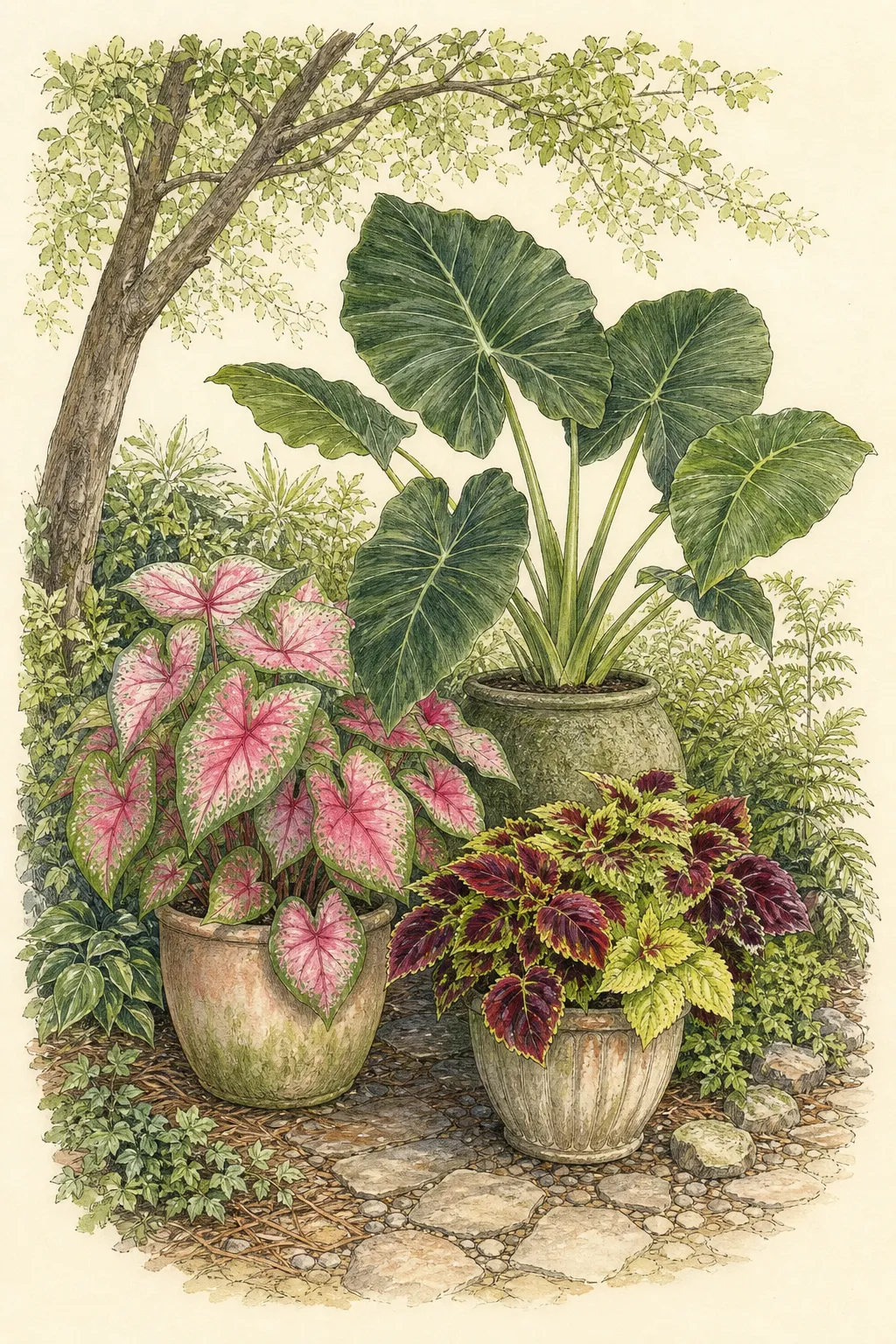
Make every pot stable and reachable. Remove or empty indoor saucers that would retain rain, confirm drainage holes are open and raise a flat-bottomed pot if the surface blocks outlets. Secure hanging hardware to an appropriate support and keep plants away from circulation where large wet leaves become a trip or visibility hazard. The placement should allow moisture checks without moving the whole display.
Separate cold, light, wind and rain
Treat the outdoor environment as several loads rather than one exposure. Temperature determines whether the outing is within the plant's basic range. Light determines the risk of bleaching and scorch. Wind changes mechanical stress and water loss. Rain changes root-zone moisture and can add weight to leaves and hanging baskets. If all four increase at once, a damaged plant gives little information about which limit was crossed.
Change duration before intensity. The first useful test is a short stay in the same sheltered shade planned as the starting position. If the plant remains stable, extend time in that familiar setting. Only plants whose verified final light requires more should receive a brighter interval, and that interval should be the identifiable new variable while wind and temperature remain ordinary.
Keep rain optional during the transition. A gentle shower may clean sturdy foliage, but an exposed storm is not an acclimation step. Covered bright shade gives the gardener control over root-zone water while a plant adjusts to light and air. If pots do receive rain, check the mix below the surface and empty retained water rather than applying the indoor watering routine automatically.
Use ordinary air movement as the target, not damaging gusts. A protected plant can gradually experience the mild movement of its final site after it tolerates sheltered outdoor time. Move it back when wind bends stems, snaps petioles, overturns pots or drives rapid wilt. Mechanical damage cannot be trained away after it occurs, and a sheltered summer site is often the correct permanent destination for broad tropical foliage.
Prepare the pot without stacking stresses
Inspect the root zone several weeks before the planned move. Roots densely circling the pot, mix that dries unusually fast or blocked drainage may justify repotting, but do not combine an unnecessary root disturbance with the first outdoor exposure. University of Minnesota recommends repotting only when needed and moving up conservatively. Let a freshly repotted plant regain stable water use indoors before adding outdoor loads.
Clean dust from sturdy leaves gently so the baseline is visible, supporting large blades rather than bending petioles. Remove only fully failed tissue. Do not coat leaves with shine products or prune a healthy canopy merely to reduce transpiration. Large-scale pruning changes light interception and water demand, making the plant's response harder to interpret during the transition.
Confirm that the existing mix and container can drain under outdoor rain. A decorative inner pot should lift free so it can drain completely; a cachepot must not become a reservoir. Avoid a sudden change to an extremely different mix solely because the plant is moving outside. Repot from documented need, not from an assumption that every tropical wants added moisture or every outdoor pot needs extra grit.
Group plants for movement only when their needs agree. A cluster can buffer wind and look abundant, but dense leaves may shade smaller plants, hide wet mix and make heavy containers difficult to retrieve. Keep labels and access visible. Arrange the first group loosely enough that each pot can be advanced, held or returned independently after its own response.
Begin in shade and increase only what is needed
Use Iowa State's temperate-region sequence as the starting frame: once nights are safely above the chosen boundary, move a small group from indoors to full or partial shade, then introduce only plant-appropriate brighter light over 10 to 14 days. Choose mild weather, check posture, leaf color and mix moisture, and bring the plants inside before nighttime conditions become unsuitable. The range is not a countdown; repeat, hold or retreat according to each plant and local weather. The first success is uneventful shade, not a visible flush of growth.
Extend time in the tolerated shade before adding direct light. University of Minnesota and UConn both warn that sudden brighter exposure can produce pale patches, crispy edges or dead tissue. Those leaves do not become unburned after shelter returns. A slower sequence protects the existing canopy while new growth develops under the final outdoor conditions.
For a plant documented to prefer shade, stop there. More sun is not the advanced version of every tropical foliage plan. Observe whether light is sufficient through stable color, compact new growth and normal leaf orientation. If a plant leans strongly or new growth stretches, reassess identification and site light; do not jump directly from deep shade to hot afternoon exposure.
For a plant requiring some direct light, introduce a brief, gentler interval while keeping total outdoor time and other loads familiar. Morning light is often easier to control than reflected midday or afternoon sun, but site geometry matters. Increase only after several stable observations. A fixed daily number is less useful than a repeatable exposure whose outcome can be read.
Rebuild the watering decision outdoors
Retire the indoor calendar as soon as conditions change. Outdoor light, air movement, temperature, rain, plant growth, pot material and root density all alter dry-down. Check the mix below the surface and compare pot weight only when the container is safe to lift. Water when the actual root zone and plant require it, not because the neighboring pot was watered.
Apply water slowly across the occupied mix until excess leaves open drainage holes, then let the pot drain fully. A quick stream down a gap beside a shrunken root ball is not complete watering. Conversely, wet leaves and a damp surface after rain do not prove the center needs more. Probe the middle and empty any outer vessel that retains water.
Watch exposed pots after wind and covered pots after hot weather. Wind can dry foliage and mix quickly, while a roof may exclude every useful shower. In prolonged rain, move moisture-sensitive plants under cover if their documented care permits and verify drainage rather than adding amendments during a storm. UConn's account of wet summer stress is a regional experience, so use it as a cue to inspect, not a prediction that every climate will behave the same.
Keep fertilizing separate from acclimation. More outdoor growth may eventually change nutrient use, but leaf scorch, wilt or discoloration after a move first calls for light, temperature and root-zone checks. Follow the product label and plant-specific schedule already in use. Changing exposure, water and fertilizer together makes the response unreadable and can add salt stress to damaged roots.
Advance, hold or retreat from plant cues
Advance only when the current exposure is boring. Leaves retain normal posture and color, stems remain secure, the root zone dries within its ordinary workable range and no fresh injury appears after the plant returns to shelter. Make one modest change: longer duration, a little more appropriate light or ordinary air movement. A plant does not need a new challenge every day.
Hold when change is limited and stable. One older leaf may yellow after a move, and species such as ficus can shed leaves after relocation, but those responses do not prove either success or failure alone. Keep conditions steady, compare new and old tissue, and wait for the boundary of damage to stop. Do not remove every marked leaf before documenting whether injury expands.
Retreat from pale bleached areas, crispy sun-facing margins, widespread wilt, torn new leaves or cold-darkened tissue. Move the plant to sheltered shade within its safe temperature range and inspect root-zone moisture. Do not compensate for sun injury by saturating wet mix or compensate for wilt by adding fertilizer. Each cue narrows the next check; it does not supply a universal remedy.
Stop the transition when decline continues in shelter. Persistent wilt over moist mix, a soft stem base, leaf loss extending through new growth or a pot that never drains requires a separate diagnosis. Outdoor acclimation cannot solve root damage or an unrelated health problem. Keep the plant isolated from additional environmental changes until the cause is better understood.
Settle into a summer position that can be reversed
The transition is complete when the plant tolerates its final species-appropriate light, ordinary air movement and current weather while maintaining a manageable water cycle. That may be full outdoor shade. Keep the pot visible enough for regular checks and preserve the sheltered retreat. Heat waves, storms or an unusual cold night can require a temporary move even after weeks of stability.
Rotate only if the plant and support allow it. Large leaves orient to light, and repeated turning can produce an unsettled habit or drag stems against neighbors. Provide a stake or support that matches the plant's growth form before wind reveals the need. Do not let vining stems attach to a tree, railing or structure if the pot must return indoors later.
Record the successful location, first permanent outdoor night, observed dry-down and any light injury. Regional weather changes from year to year, so the record is a starting point rather than next spring's automatic date. A plant that grew well in one shaded corner can return there only after the next season's temperature and site conditions are checked again.
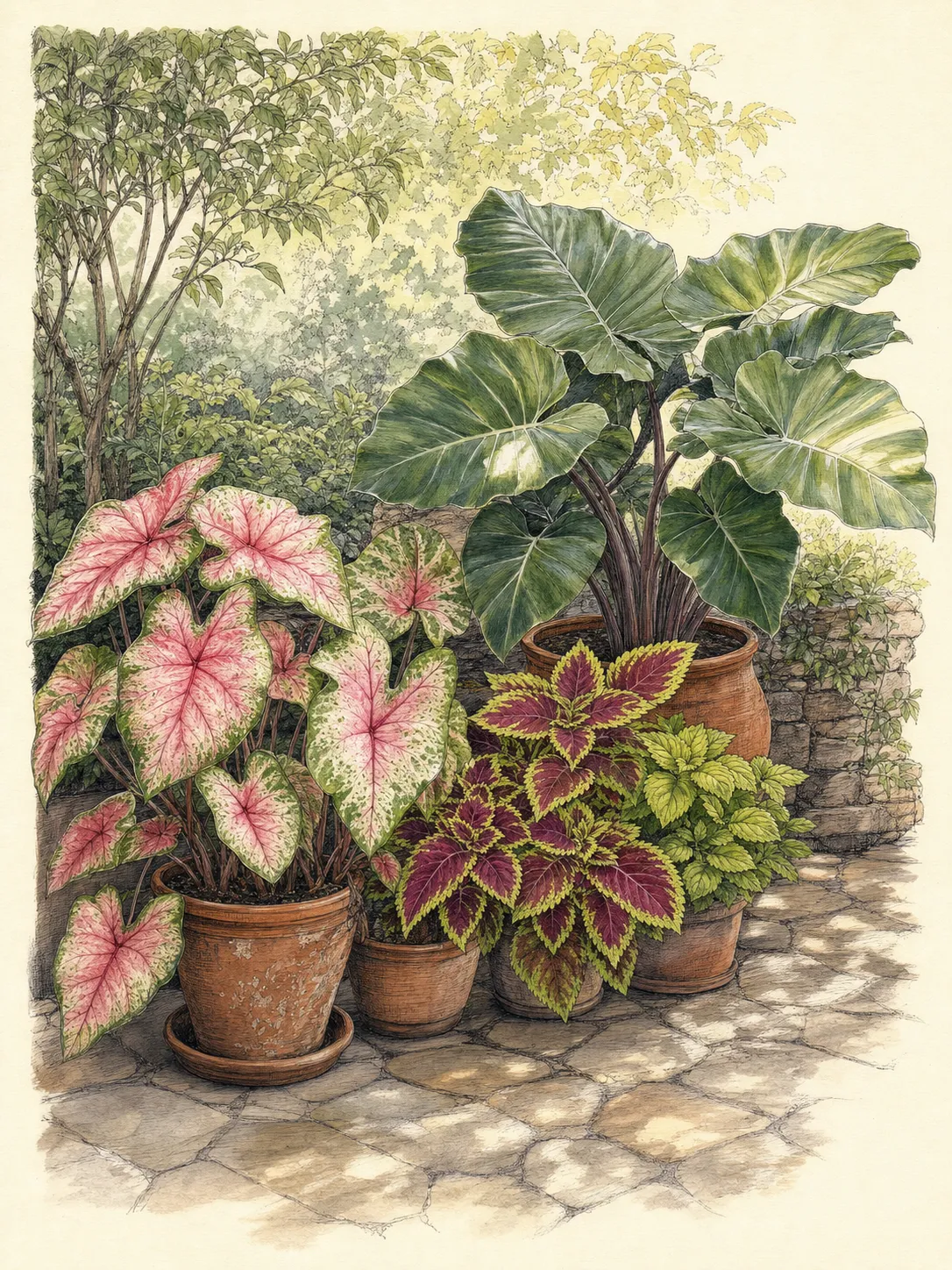
Plan the return indoors before autumn. The same principles reverse: species-safe temperature, reduced outdoor light before the move where appropriate, a prepared indoor position and watering adjusted to slower growth. This article does not prescribe a full return procedure, but the container must remain portable and unattached. A summer arrangement that cannot be dismantled safely has ignored the tender plant's regional limit.
The best outdoor transition preserves foliage rather than sacrificing it to toughness. Species identity sets the cold boundary, sheltered shade provides the first step, direct sun remains optional, and moisture decisions are rebuilt from the outdoor root zone. When each load is changed separately, a tropical plant can gain a useful summer setting without enduring avoidable chill or scorch.
Steps
- Level
- moderate
- Time
- Use 10 to 14 days as Iowa State's temperate-region starting window for brighter-light acclimation; each plant and the weather determine the actual pace
- Tools
- Reliable local forecast, Plant labels and observation notes, Narrow moisture probe, Stable cart or lifting assistance for heavy pots, Optional max-min thermometer near the outdoor position
- Materials
- Identified overwintered tropical foliage plants in draining containers, Sheltered outdoor shade, Stable pot feet where outlets would otherwise be blocked, Shade material only where natural sheltered shade is unavailable
- 1Screen the collection by species
Identify each candidate and verify its minimum nighttime temperature, final light, moisture and movement tolerance. Leave plants indoors when they need warmer nights, are actively declining or lack a suitable outdoor destination. Iowa State notes that weeping fig and tropical hibiscus may drop leaves after a move even with a gentle transition, so weigh that predictable response before relocating a valued specimen. Record current leaves, pot condition and indoor exposure so old damage is not confused with transition injury.
- 2Prepare sheltered shade and a return route
Observe a full-shade or bright-shade position through the day, checking reflected sun, wind, rain, footing and drainage. Keep every pot reachable and leave a clear same-day route indoors. Confirm outlets are open, remove water-holding saucers and stabilize heavy or hanging containers before the first outing.
- 3Wait for reliably safe nights
For common houseplants in a temperate-region spring, start with Iowa State's boundary: wait until nighttime temperatures remain consistently and reliably above 50°F (10°C). Then compare the local forecast with each species' verified minimum and use the more protective requirement; delay taxa that need warmer nights. Do not use a warm daytime high or one mild night as readiness, and do not assume acclimation makes tropical tissue frost-hardy.
- 4Run the first shaded outing
Iowa State's starting sequence moves houseplants first to full or partial shade and introduces only appropriate brighter light over 10 to 14 days. Choose mild, still weather, keep rain controlled, check leaf posture and root-zone moisture, and return plants before unsafe conditions. Treat the range as a temperate-region starting frame rather than a deadline: repeat, hold or retreat according to the plant and local weather.
- 5Add only the light the plant requires
Keep shade-loving tropical foliage in its successful shaded position. For a plant documented to need direct light, add a brief gentler interval while other loads remain familiar, then inspect for bleaching, crisp margins or continuing wilt. Advance modestly only after stable observations; retreat immediately from fresh scorch or mechanical damage.
- 6Relearn the pot's water cycle
Check below the surface and water each pot by its own dry-down, accounting for wind, heat, shelter and rain. Wet the occupied root zone slowly, allow complete drainage and empty retained water. Do not preserve the indoor schedule, treat wet foliage as proof of root moisture or saturate a wet pot in response to sun-injured leaves.
- 7Hold a stable reversible summer position
Complete the transition when foliage remains stable in the final species-appropriate light and ordinary air movement, with a manageable moisture cycle. Keep a sheltered retreat available for unusual cold, heat or storms, prevent vines from attaching to permanent structures, and record the successful microclimate. Plan eventual indoor return before growth or placement makes the pot immovable.
Related reading
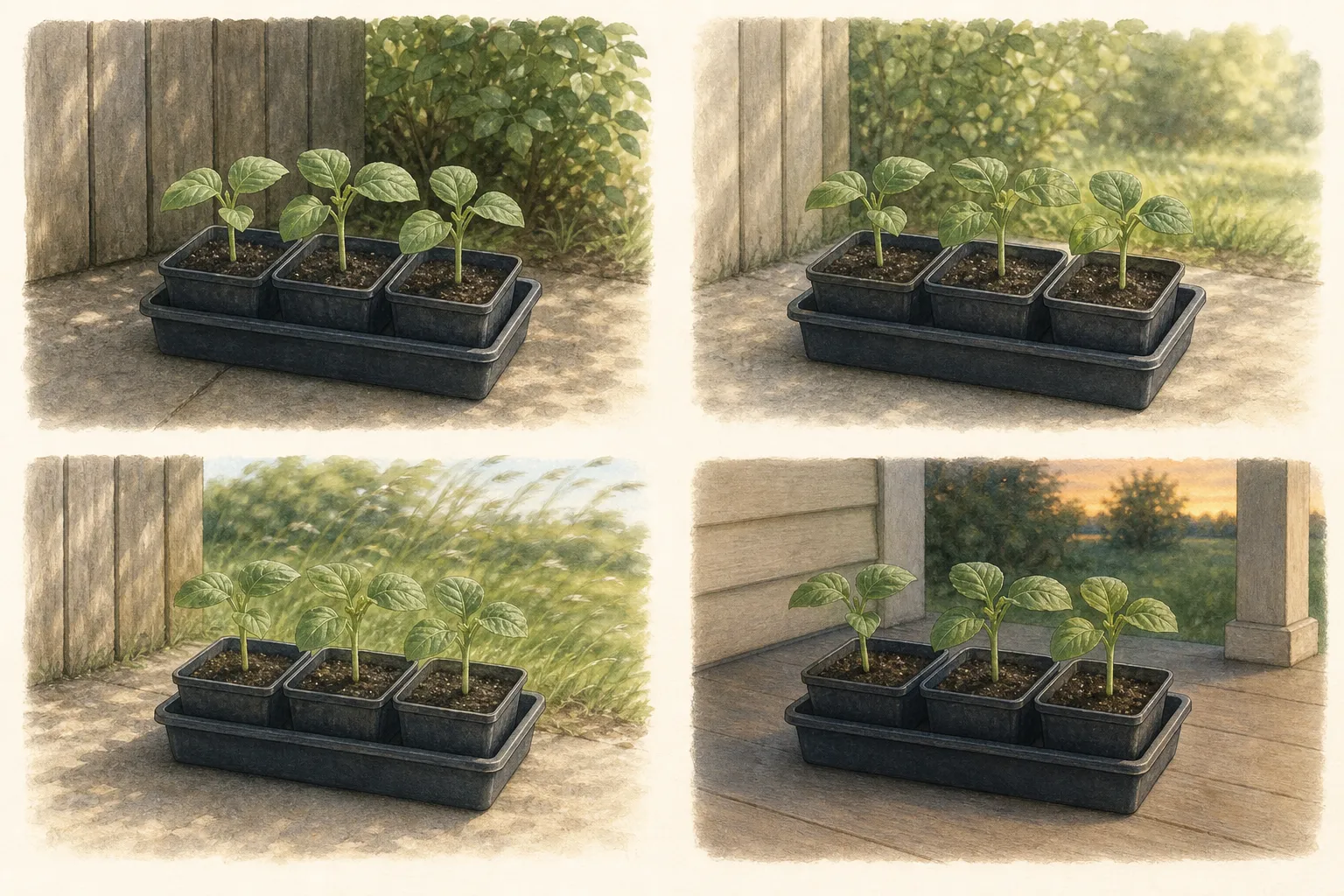
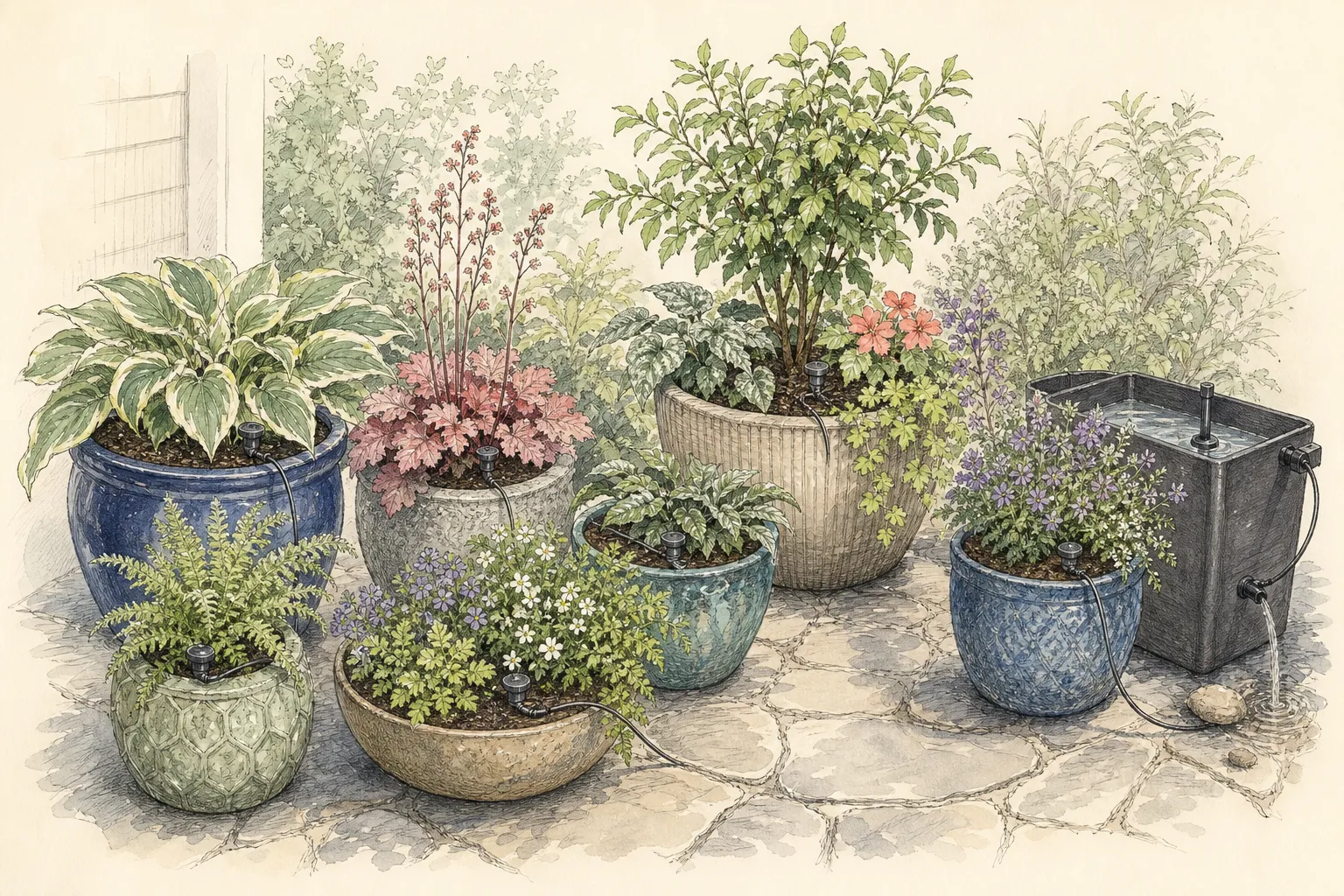
Sources
- Moving Indoor Plants Outside for the Summer. Iowa State University Extension and Outreach. Source record · Accessed 2026-08-19.
- Spring Houseplant Care. University of Minnesota Extension. Source record · Accessed 2026-08-19.
- Plants Enjoy Summer Too!. University of Connecticut Home Garden Education Center. Source record · Accessed 2026-08-19.