Grow · give mature clivia cool winter rest
Give Mature Clivia a Cool Winter Rest Indoors
Give an established Clivia miniata a cool indoor winter period while preserving its evergreen fan, managing root moisture and recognising the return to flowering growth.
Published Last updated
In this guide
- Keep the green fan through a cooler winter
- Confirm that the plant is ready for a rest
- Choose cool conditions that remain frost free
- Reduce water while preserving the living roots
- Leave a serviceable pot and leaf fan intact
- Read winter changes before altering the routine
- Change care when flower growth resumes
- Use the flowering result to plan the next cycle
- Steps
Keep the green fan through a cooler winter
Move a mature, established potted clivia into bright indirect light at about 10°C, or 50°F, and reduce watering for winter. Keep the evergreen leaves attached and check the compost before adding water. The RHS method used here keeps the mix from drying out completely while also preventing sogginess. It is a cool, drier interval for a living leafy plant, followed by a return to warmer growing conditions as the next flowering cycle develops.
Late November is a useful time to assess that winter position. The RHS describes November to February as the cool period in its UK routine, followed by a warmer March position. Those months give a seasonal framework; they cannot establish the condition of an individual plant. A clivia already showing a developing flower stalk needs attention to that growth. A small seedling or a plant with deteriorating roots has a different immediate priority from inducing flowers.
Use this routine for the familiar Clivia miniata and comparable cultivated plants whose established growth and supplier guidance fit it. The orange-flowered form is common, and yellow forms and hybrids are also sold. Flowering is encouraged by appropriate rest, maturity and good growing-season care together. A cool room alone cannot turn a young plant into a flowering adult or guarantee a bloom for a chosen holiday. Keep the hoped-for display date flexible.
Confirm that the plant is ready for a rest
Previous flowering is useful evidence that a clivia has reached flowering size. Keep the plant label and note whether this is the same established fan that bloomed before, a recently separated offset or a seed-raised youngster. Wisconsin notes that seedlings can take three to five years to flower for the first time. A small plant received as a division may also need time to rebuild. The size of its decorative outer pot says little about that stage.
For seed-grown plants, Wisconsin suggests waiting until there are at least 12 mature leaves before trying to induce flowering. Treat that as its practical readiness benchmark, not a guarantee that the twelfth leaf produces a stalk. A clivia with a known flowering history is easier to assess than an unlabelled young fan. Keep seedlings and small offsets on an appropriate growing routine while reserving the deliberate rest for suitable established plants. Forced dryness is a poor substitute for time and growth.
Look back at the growing season too. Did the plant retain healthy leaves, receive filtered light and have enough water while active? RHS lists insufficient active-season water, immaturity and unsuitable pot size among causes of poor flowering. A plant that spent summer severely stressed needs its condition assessed before another environmental change. Inspect the firm leaf bases and accessible mix, clear loose debris and photograph the fan. Keep suspect rot or persistent wetness separate from the ordinary winter plan.
Choose cool conditions that remain frost free
Use about 10°C as the working target for the RHS route. An enclosed porch, cool room or conservatory may suit, provided the actual position remains suitable through the night. Place a minimum–maximum thermometer near the plant and check it after cold weather as well as during a mild afternoon. A greenhouse that freezes or a shelf beside a radiator has failed a different part of the arrangement. Correct the location before trying to adjust the plant with water.
The RHS notes that clivias can usually cope down to about 5°C, or 41°F, during seasonal outdoor use. That is a lower tolerance reference, not the target for this rest. Wisconsin describes a colder rest protocol, and Iowa recommends around 50°F for six to eight weeks. These sources agree that cooler conditions can encourage flowering, but their durations and moisture instructions differ. Keep the selected RHS temperature and watering approach together, with a margin against frost.
Give the leaf fan bright, filtered or indirect light. RHS, Iowa and Wisconsin all support that placement. Clivia is a woodland plant, and strong direct sun can scorch its leaves, especially behind glass. A position receiving gentler light through much of the day is more suitable than a hot, unshaded window. Keep the entire fan clear of cold panes and provide enough width that the arching leaves rest naturally with their full arch clear of the shelf edges.
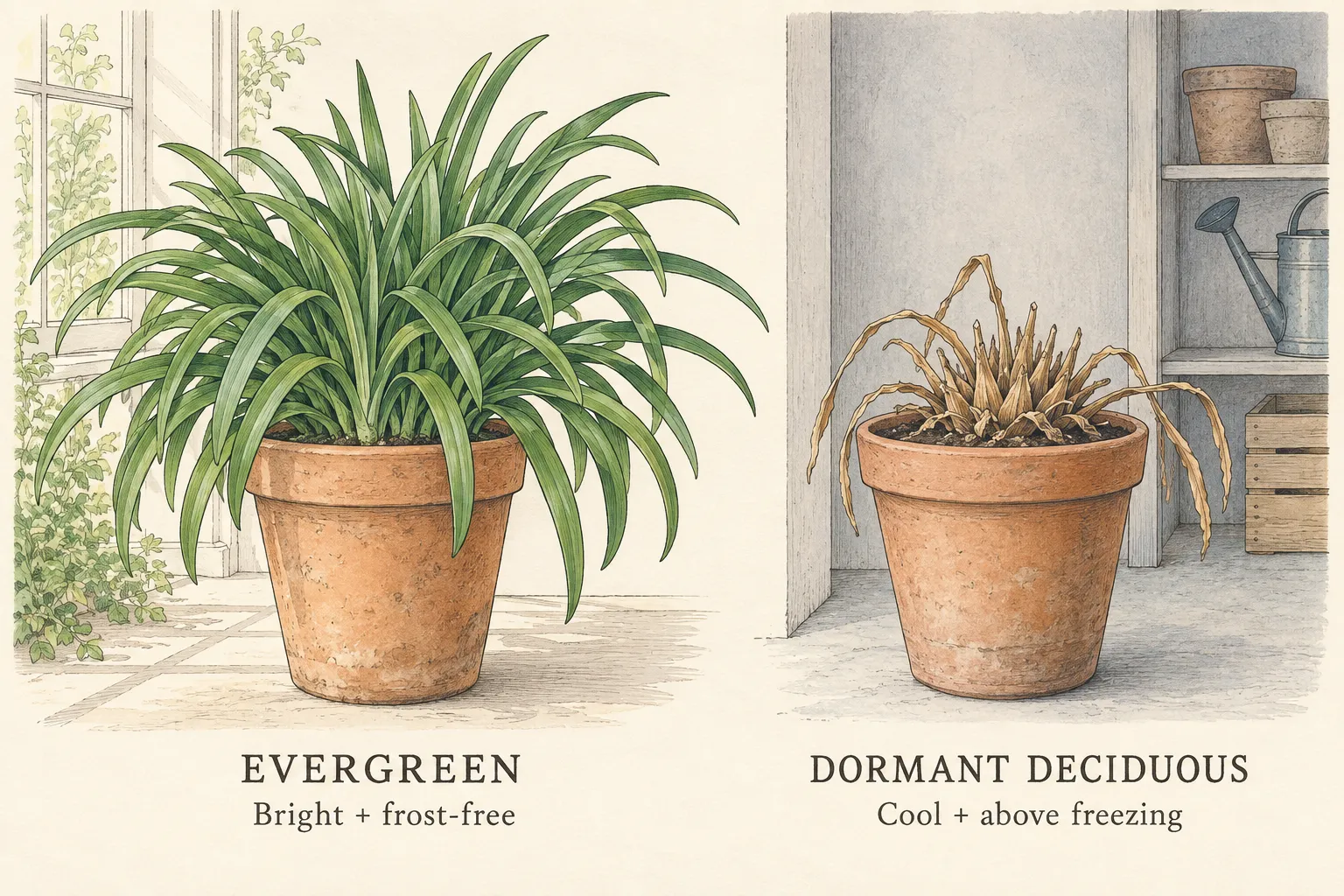
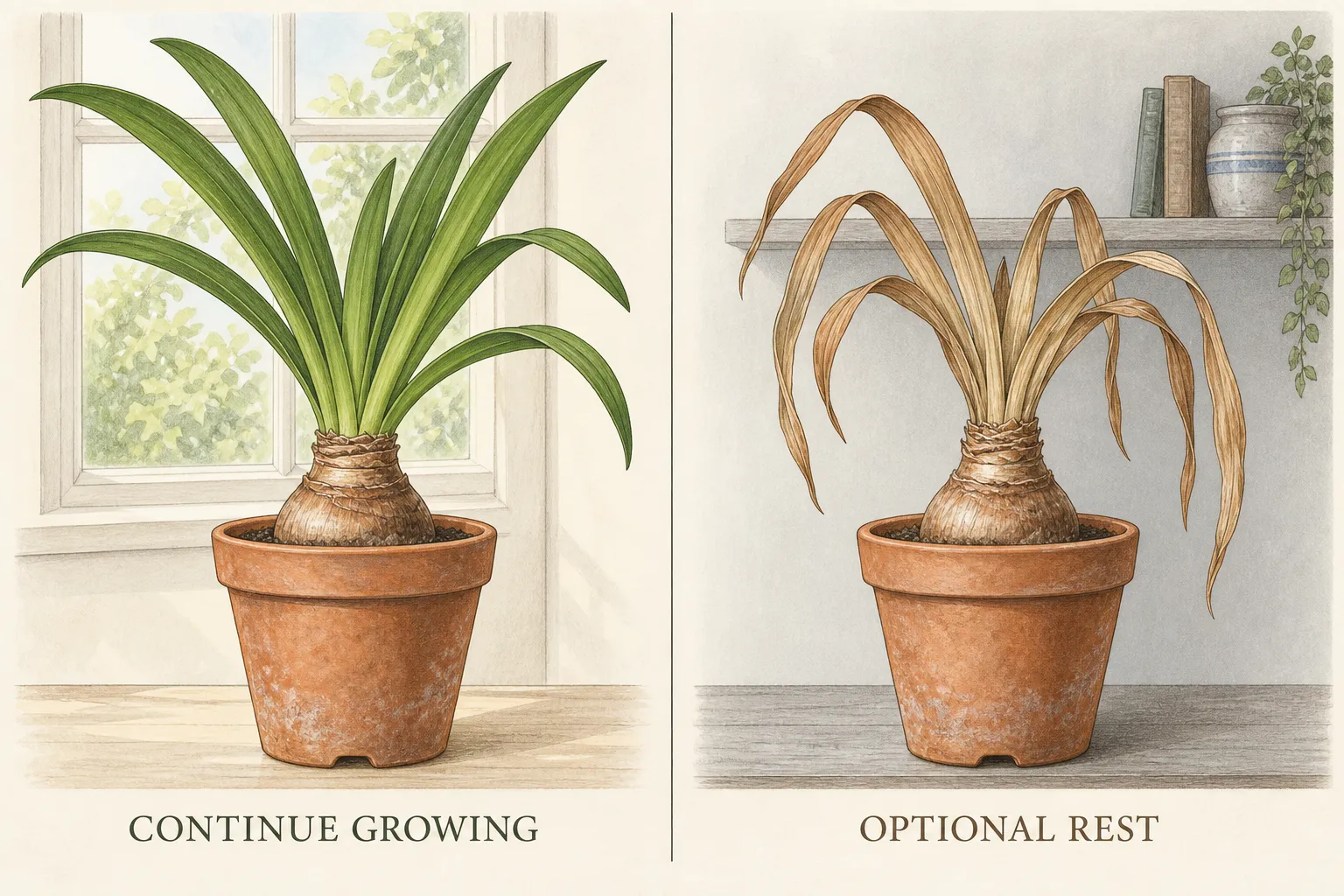
Keep this evergreen rest distinct from dry storage of a leafless amaryllis bulb. Clivia retains a symmetrical fan of long, leathery leaves above a bulb-like base and fleshy roots. The plant can remain attractive while its growth slows. Preserve those green leaves in the light, leave the centre accessible for observation, and reserve enough space for a later flower stalk. A dark cupboard and a row of cut-down leaf stumps belong to neither the chosen method nor the desired plant.
Reduce water while preserving the living roots
Water sparingly during the cooler period, following the RHS instruction to prevent complete drying of the compost. The plant should spend less time wet than during active summer growth, with free drainage after each needed application. Feel accessible mix below the surface and, for a manageable container, compare its weight as moisture is used. A dry surface alone may conceal damp material lower in the pot. Leave a still-wet root ball alone and check why it is drying slowly.
Clivia’s thick, fleshy roots store water, as Wisconsin explains. This helps account for its ability to tolerate a drier rest, but stored water is not permission to ignore the plant for the whole winter. The leafy fan and the mix still need inspection. Keep the established root system seated during ordinary checks. Repeatedly tipping it out to look for a flower bud adds disturbance while giving little useful information about the developing stalk inside the crown.
Some published routines are drier. Iowa describes allowing the plant to dry and watering lightly only when leaves begin to wilt during its six-to-eight-week rest. Wisconsin likewise uses very little water in its own sequence. The RHS routine here is more conservative about complete compost drying: retain slight moisture and check the fan before stress becomes pronounced. Follow a specialist’s complete method if you have one for a particular cultivar; combining the coldest temperature with the driest instruction creates a new treatment.
When water is needed, apply it to the compost and let the surplus drain, then empty any catch tray or outer pot. Keep water from collecting around the crowded leaf bases. Iowa describes thorough watering with drainage in its general container care, and both Iowa and RHS warn about overwatering and root rot. The action follows the mix and plant condition; a fixed weekly quantity cannot account for different pot sizes, heating patterns and winter light levels.
Leave a serviceable pot and leaf fan intact
Clivias often flower well with their roots a little crowded, and RHS says they can stay in the original container for several years. Its flowering guidance mentions a well-established plant in a container at least 20 cm, or 8 in, across. That is not a reason to move a young plant immediately into a large pot. Keep maturity and establishment ahead of a pot-diameter target. A settled adult in a serviceable draining container can usually begin winter care with its root ball intact.
Check whether the pot is actually failing. Roots that displace the mix, force the plant upward or split a container need a considered response; slight crowding alone is different. RHS usually schedules repotting every three to five years in early spring, using a pot only a few centimetres larger. For an ordinary autumn move, note any concern for review. Deal promptly with a broken vessel or deteriorating roots, but keep rescue work distinct from repotting merely to encourage flowers.
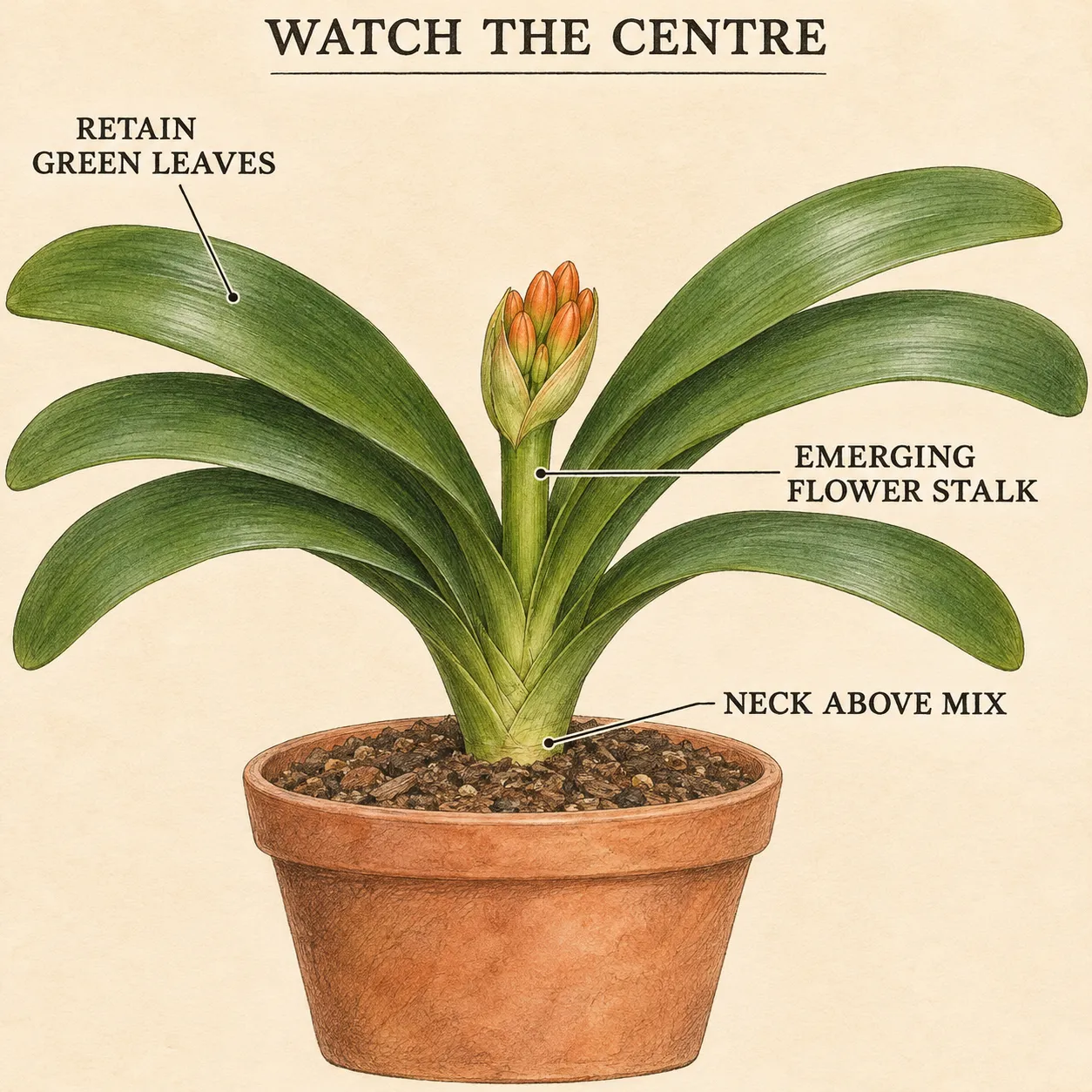
Retain the growing neck above the compost if any necessary handling exposes the planting level. RHS specifies the same previous depth, with the point from which leaves emerge protruding above the mix. Added decorative compost or a deep topdressing can hide that relationship. Keep the green fan attached and remove only clearly fading or detached material as needed. Wear gloves for cutting or repotting. Keep the plant and removed parts out of reach of children and pets; Iowa State warns of potential toxicity, and ASPCA lists clivia as toxic to dogs and cats.
Read winter changes before altering the routine
A healthy resting fan may make little obvious new growth. That alone is insufficient reason to feed, repot or move it into heat. Iowa advises stopping fertilizer in late summer or early autumn; Wisconsin also omits it during rest. Keep the winter work focused on measured temperature, suitable light and the root-zone moisture. If a leaf changes colour, examine its position and the condition of the whole fan before assigning the same explanation to every leaf.
Yellowing accompanied by sour, persistently wet mix or soft roots warrants a closer assessment. RHS lists overwatering among the causes of yellow foliage and describes removing rotten roots and sour medium during recovery. A winter rest should not conceal an active root problem. Separate a declining plant for careful inspection or obtain experienced help, then correct the drainage and watering. Yellowing alone can have other causes, so it is not proof of a particular pathogen or a need for fertilizer.
Check the spaces between leaf bases for mealybugs. Wisconsin and Iowa both note that these insects can remain hidden in the tight fan; RHS describes white waxy tufts as a useful clue. Look at the base as well as the broad upper blades. Keep a suspect plant apart from other houseplants while identifying the problem. A very tight fan needs patient observation, not forceful pulling apart. Treat a confirmed problem according to current appropriate advice and retain sound leaves where possible.
Change care when flower growth resumes
Watch the centre and sides of the fan for an emerging flower stalk. A clivia flower head develops on a sturdy stem rising from between the leaves; a new leaf emerges as a folded strap. Early growth can be partly hidden, so let it become clear in good light. Leave the crown intact and give the developing structure room. Pulling leaves apart or tugging at a short stalk cannot establish whether the winter rest has been successful.
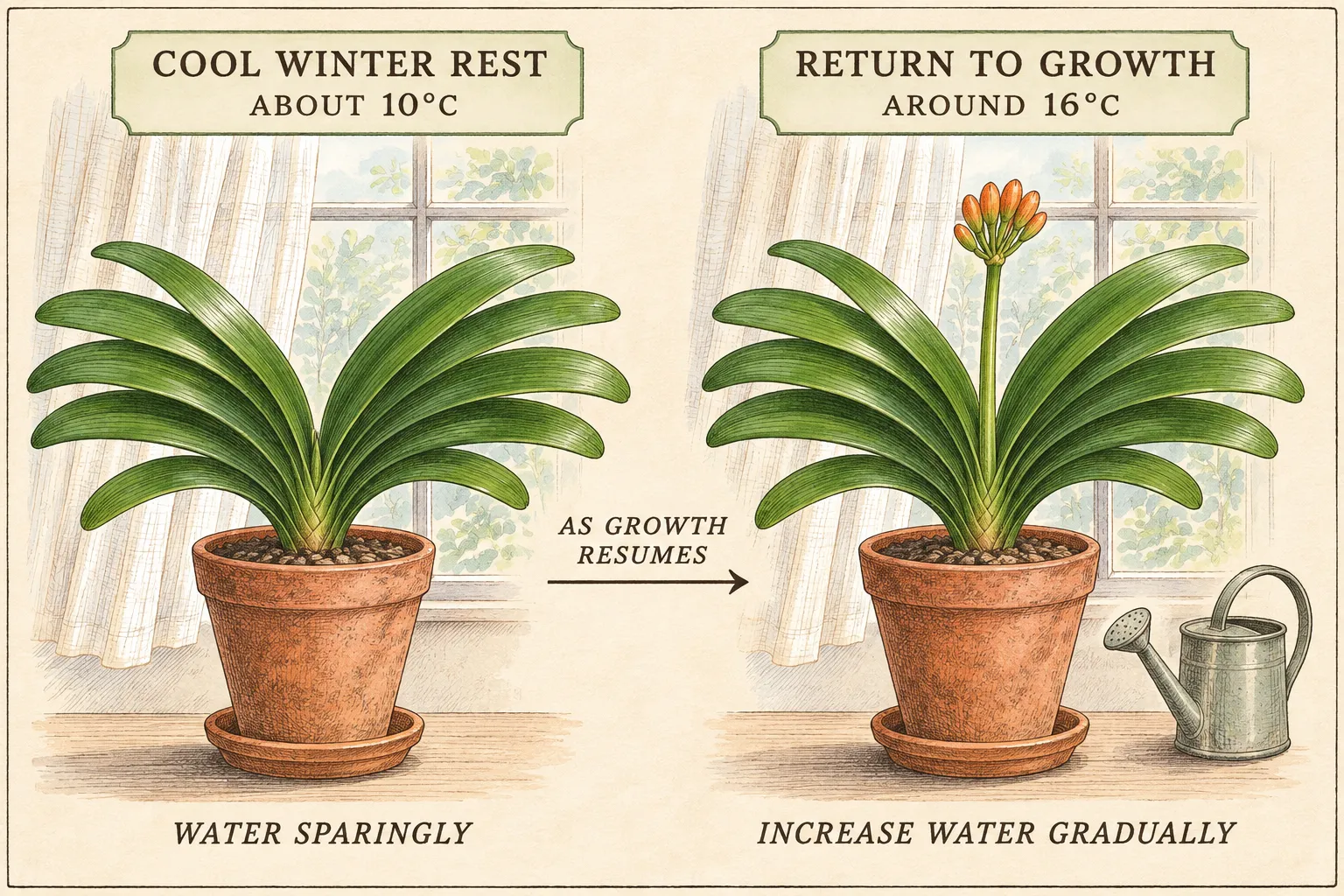
The RHS routine moves plants in March to a well-lit position around 16°C, approximately 61°F, and increases watering. Wisconsin uses the appearance of the flower stalk as its cue to increase water and return the plant to room temperature. Use those observations together: March is a seasonal checkpoint for the RHS plan, while a stalk already developing needs its growing-stage care sooner. Increase moisture gradually as activity resumes, keeping the mix just moist with an open drainage route.
Resume growing-season feeding according to the chosen method and the product label. RHS gives a balanced liquid houseplant feed weekly in its spring flowering routine; Iowa uses a lighter monthly growing-season programme. These are alternatives, not doses to combine. Keep a record of the rest conditions and the first visible stalk, then allow the flowers to develop at their own pace. A delayed stalk is a reason to review the plant and conditions, not to impose repeated cycles of harsher cold and dryness.
Use the flowering result to plan the next cycle
Short flower stalks that leave the blooms hidden among the leaves can be associated with excessive warmth during winter, according to the RHS. Check the recorded temperatures before blaming the pot or attempting to lift the crown. An otherwise healthy plant may still open flowers on that short stem. Leave the developing stalk free of mechanical pressure and use the observation to improve the next rest period. It cannot be corrected retrospectively by forcing a flower into a taller position.
If there are no flowers, assess maturity, pot fit, growing-season care and the measured winter conditions together. A successful cold period cannot supply the years of development that a seedling still needs. Likewise, shade tolerated for survival may be too deep for useful flowering: Wisconsin notes that plants in low light rarely bloom. Keep a sound foliage-only plant in appropriate growing conditions and build its next season’s health before deciding that another rest will solve the problem.
After the flower cluster finishes, remove its stem at the base if seed is not wanted, while retaining the green leaves. Continue normal growing-season care. A clivia can spend summer outdoors in sheltered shade after gradual acclimation, returning inside before cold weather. Divide only when there is a reason and suitable timing; RHS places division of a thriving clump after flowering. The long-lived leaf fan and fleshy root system are assets to carry forward, not material to clear away once the flowers fade.
Steps
- Level
- moderate
- Time
- About 20 minutes to prepare one established plant, followed by checks through winter
- Tools
- Minimum–maximum thermometer, Gloves for necessary handling, Watering can with a controlled spout, Plant label and notebook
- Materials
- Cool, frost-free indoor space with bright indirect light, Accessible empty drainage tray
- 1Choose an established plant and check its condition
Confirm Clivia miniata or a suitable labelled hybrid and note previous flowering, seedling status or recent division. Inspect the fan, visible leaf bases and drainage. Keep immature plants and those needing root recovery on care suited to their condition. Record the current leaf fan and last flowering date before changing the winter environment.
- 2Prepare the cool, bright position
Test the proposed space with a thermometer beside the pot. For the RHS route, aim for about 10°C in bright indirect light, with the fan clear of cold glazing and heat sources. Keep the green leaves attached and leave room for their natural arch. Use a location that remains frost free throughout cold nights. Check daytime and overnight readings before relying on an unheated porch or greenhouse.
- 3Reduce watering and suspend feeding
Check accessible mix and the fan before each application. Water sparingly while keeping the compost from drying out completely in this method. Allow surplus to leave and empty the tray. Keep routine fertilizer out of the rest period. A still-wet pot needs a drainage and moisture assessment, not another scheduled dose of water.
- 4Inspect the crown and keep ordinary root work separate
Watch for a developing stalk, persistent yellowing, soft tissue or white waxy deposits at leaf bases. Identify a problem before treating it. Preserve a sound established root ball and its existing planting level through routine winter care. Schedule necessary repotting thoughtfully, with immediate attention reserved for a failing container or deteriorating root system.
- 5Return to growth when the plant is ready
As a flower stalk develops, or at the spring review for the chosen routine, move toward brighter growing conditions around 16°C and increase watering gradually. Maintain drainage and resume an appropriate spring feed. Let the stalk elongate naturally. Record the result, remove spent flower stems after bloom and retain healthy foliage for the next growing season.
Related reading
Sources
- How to grow clivias. Royal Horticultural Society. Source record · Accessed 2026-11-11.
- Clivia. University of Wisconsin–Madison Extension. Source record · Accessed 2026-11-11.
- Growing Clivia Indoors. Iowa State University Extension and Outreach. Source record · Accessed 2026-11-11.
- Clivia Lily. ASPCA. Source record · Accessed 2026-11-11.