Grow · agapanthus container winter leaf habit
Overwinter Agapanthus in Pots: Evergreen and Deciduous Care
Choose winter light, frost protection and watering for potted agapanthus by leaf habit, with separate care for evergreen plants and dormant deciduous clumps.
Published Last updated
In this guide
- Keep a leafy agapanthus in the light
- Confirm leaf habit before assigning a dark corner
- Test the shelter during cold nights
- Remove spent growth and leave sound leaves attached
- Exclude winter rain and keep the base draining
- Reduce watering according to leaves and pot moisture
- Use changing growth to revise the winter arrangement
- Plan the spring return around growth and frost
- Steps
Keep a leafy agapanthus in the light
Move potted agapanthus into suitable shelter before frost, and choose that shelter by the plant’s winter leaf habit. An evergreen plant needs a bright, frost-free place where it can keep its leaves. A confirmed deciduous plant that has naturally become dormant can spend winter in cool, dark, above-freezing storage. A garage therefore works for some agapanthus pots and is unsuitable for others. Identify the plant before giving away its window space.
For Northern Hemisphere gardens, mid-October is a useful time to prepare the move, but the local forecast sets the deadline. Some gardens will already have needed protection; mild coastal gardens may still have several weeks. Established agapanthus in containers needs its own protection plan where winter frost is a concern. A border hardiness description alone gives insufficient assurance for an exposed patio pot.
The first practical decision is whether you have a bright, protected position large enough for the entire leafy plant. Measure the leaf spread as well as the pot. Agapanthus foliage arches well beyond its base, so a narrow shelf that holds the container may still press leaves against cold glass or a door. Reserve that space while the plant is outdoors, with an accessible route for carrying or wheeling the pot inside.
Confirm leaf habit before assigning a dark corner
Look for the cultivar name and the words evergreen or deciduous on the nursery label, original receipt or supplier record. NC State distinguishes both groups within Agapanthus and specifically allows cool, dark, above-freezing storage for deciduous plants in colder regions. Its evergreen plants remain in growth as houseplants through winter. The same common name, African lily or lily of the Nile, can appear on either group and cannot settle the storage question.
Green leaves in October do not by themselves prove that an agapanthus is evergreen. A deciduous plant may still be completing its seasonal decline. Equally, yellow leaves on an evergreen plant do not automatically establish healthy dormancy. Match the label with the plant’s previous winter behavior if you know it. Until the habit is confirmed, keep remaining healthy leaves in the light and investigate an unexpected change instead of using darkness to make the plant fit a storage plan.
Separate pots by actual state as the season advances. A known deciduous clump with naturally yellowing leaves can remain in bright shelter while those leaves finish dying back. Transfer it to the dormant position only after the foliage has gone over. The illustration shows the two completed arrangements; it is not a prescription to cut a still-green deciduous plant down to match the right-hand pot. A photograph of one autumn stage also cannot establish the identity of an unlabelled cultivar.
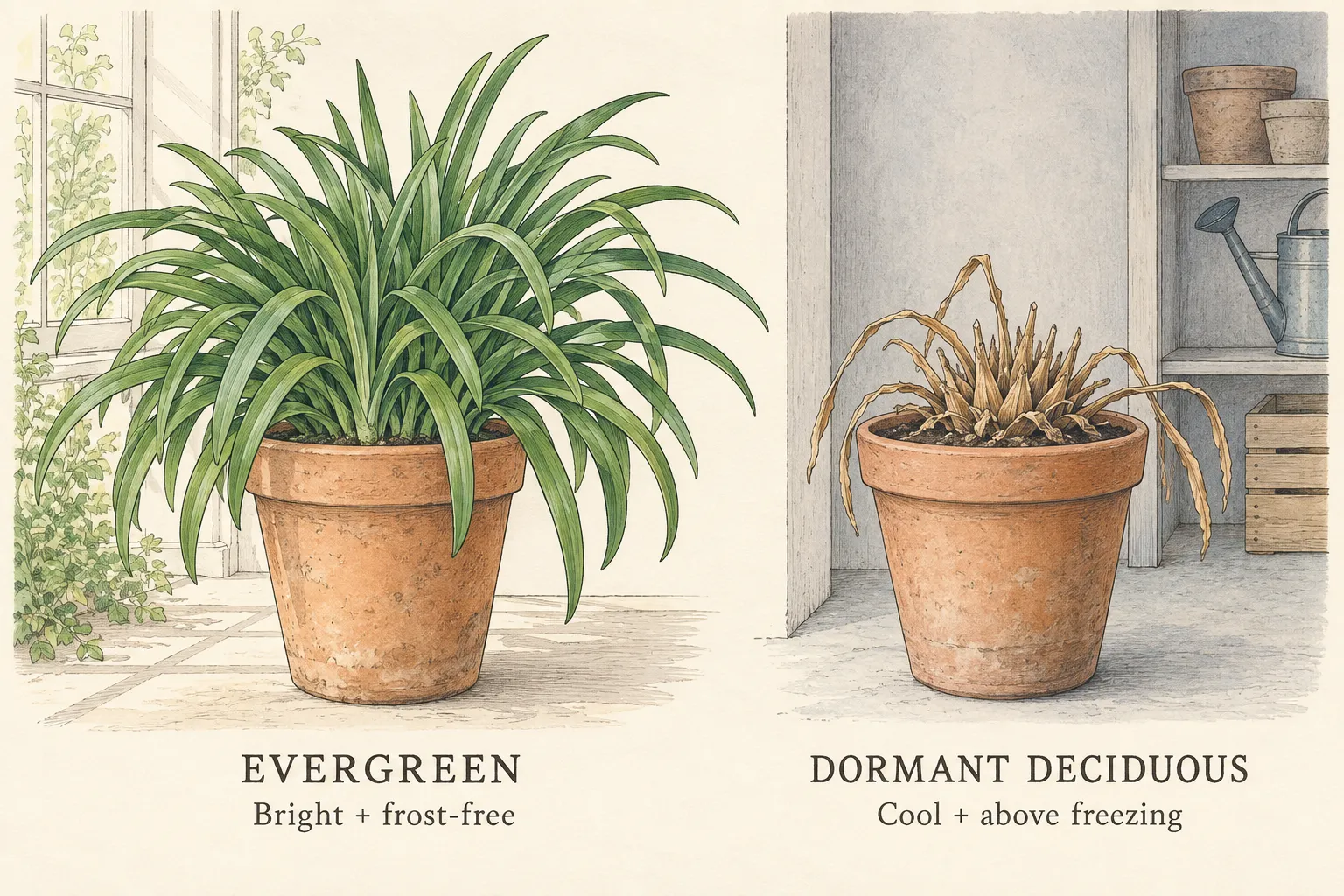
If the only surviving information is a flower photograph, ask the seller to identify the original purchase. Blue and white flowers both occur across the cultivated group. Choosing a storage method from flower color or leaf width would give more certainty than those features justify. Write any unresolved identity on the label and use the bright, frost-free option for that winter, provided you can maintain it. That keeps the leaves available while you recover better information.
Test the shelter during cold nights
RHS recommends a light, frost-free position for potted plants in autumn, sheltered from the worst winter rain. A cool greenhouse or conservatory can provide that combination. NC State’s darker alternative applies to dormant deciduous plants and still requires temperatures above freezing. In both cases, a building name is only a starting point: an unheated greenhouse or detached shed may freeze when the air outside becomes cold enough.
Put a minimum–maximum thermometer beside the intended pot position and read it after cold nights. Above freezing means above 0°C or 32°F, but that boundary is not an ideal target or a guarantee for every cultivar. Leave room for colder weather than the first test night and follow any more protective requirements supplied for the named plant. If the space cannot remain frost-free, arrange a different location before a freeze is forecast. A warm afternoon reading alone cannot establish overnight suitability.
In milder UK conditions, RHS includes shelter at the base of a south- or west-facing wall among its options, with fleece around plants and insulation around containers. It describes two to three fleece layers and a broad November-to-early-April protection season. Those dates belong to that climate. An exposed continental patio cannot be made equivalent simply by applying the same wrap. Where hard or prolonged freezes are expected, choose dependable frost-free shelter for this container method.
Keep a bright evergreen plant away from a radiator or hot-air outlet. RHS notes that excessive winter warmth can advance flowering while reducing its quality. The useful aim is a cool protected plant with usable light, not rapid winter growth. If the room is warmer than the intended greenhouse position, expect to reassess moisture more often. Treat the thermometer, the available light and the condition of the leaves as parts of the same decision.
Remove spent growth and leave sound leaves attached
Prepare the pot while you can see the leaf bases clearly. Remove finished flower stems and leaves that have naturally yellowed and died back on a deciduous plant. RHS also permits removal of tatty evergreen leaves, but that is selective cleanup. Retain healthy green straps on evergreen plants. The winter preparation is different from cutting a herbaceous border to ground level, and a neat row of short stubs is not the desired result for a leafy agapanthus.
Use clean secateurs where a spent stem needs cutting, keeping the blades clear of adjacent living leaves and the crown. Gather loose dead material from the pot surface so that the base remains visible during later inspections. Wear gloves during handling and keep cut material away from children and pets. NC State identifies ingestion and sap-irritation concerns; University of California guidance also notes irritating sap and recommends caution around animals that chew plants.
Leave routine division for spring. Both RHS and the Arkansas extension account place clump division then, when growth is beginning. A crowded pot may need attention, but splitting it in autumn simply to make it easier to carry creates another task at the point when you are arranging winter care. Instead, label that pot for a spring assessment. If the container is broken or the plant already has a serious root problem, address that specific problem separately from normal seasonal cleanup.
Exclude winter rain and keep the base draining
A sheltered position must control incoming water as well as cold. NC State associates excessively wet soil with root rot in agapanthus. Before moving the plant, check that drainage holes are open and that an outer decorative container is not holding runoff around the nursery pot. After moving it, check again: a hole that drained freely on the patio can become blocked when the pot sits flat on a new surface or on bunched wrapping.
Under glass or a roof, place the container where runoff from the roof edge misses the foliage and potting mix. Use a stable draining surface or suitable pot feet when necessary to keep the outlets clear. Indoors, a tray can protect the floor, but empty collected water after watering. The illustration shows the relationship between shelter, the root ball and the open base. It does not call for adding a gravel layer inside an established pot.
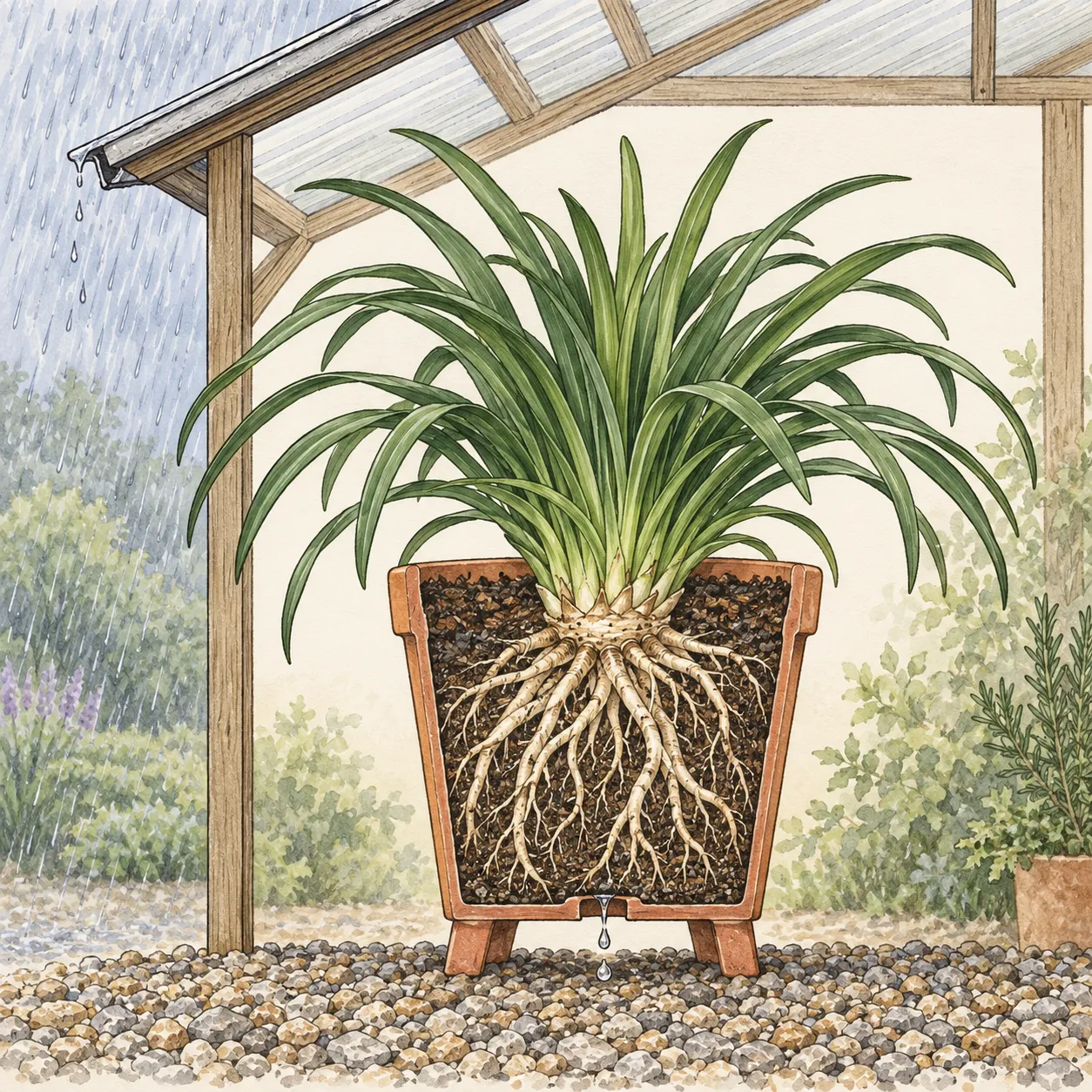
Keep any insulation around the container accessible for inspection. You need to see where water leaves, reach the potting mix and notice a change at the crown. A large wrapped pot placed behind several smaller ones can become the plant that nobody checks because reaching it is awkward. Arrange the winter group with the leafy agapanthus facing its light source and the drainage tray within reach. Test that you can remove the tray before filling the space around it.
Reduce watering according to leaves and pot moisture
Autumn shelter changes how water reaches the pot. Outdoor rain may have been supplying much of it, while a protected pot depends on you. At the same time, winter care calls for much less water than the summer display. The Arkansas guidance for evergreen A. praecox keeps winter plants on the dry side, with enough moisture to preserve their foliage. That qualification matters: keeping an evergreen dry enough to lose its leaves is a poor way to imitate a naturally deciduous plant.
Check the mix before watering and assess more than its surface appearance. Feel an accessible area below the top layer, observe whether the container is becoming lighter if it can be safely lifted, and note how it behaved after the previous watering. A dense canopy can hide wet mix; a dry-looking crust can also sit above moisture deeper in the pot. There is no single winter interval that fits a large plastic tub, a smaller terracotta container and two different storage rooms.
For a leafless dormant clump, keep watering very restrained and continue checking the root ball. For an evergreen plant, respond to drying while preserving its healthy foliage. Apply needed water to the mix, let excess escape and empty the tray. A calendar reminder is useful for inspection, but it should not automatically trigger watering. In particular, leaf yellowing in an already wet pot is a reason to investigate the conditions before adding more water.
Pause feeding as the plant enters its winter rest. Maryland Extension’s response about autumn agapanthus advises moving before frost, providing strong light and barely watering during winter, with no fertilizer at that stage. That advice addresses plants heading into rest; it is not a summer feeding schedule. Keep the fertilizer with the spring supplies so that a routine watering visit does not become an accidental feeding session for a plant being held cool.
Use changing growth to revise the winter arrangement
During each check, compare the plant with its state when it entered shelter. On a known deciduous agapanthus, gradual loss of the remaining seasonal leaves fits the intended transition. On an evergreen plant, widespread decline deserves a closer look at moisture, cold exposure and light. A single yellow leaf cannot identify the cause. Read the overnight minimum and inspect the potting mix before treating the symptom as thirst or cutting away the entire canopy.
A soft, deteriorating crown or persistently saturated pot needs prompt investigation. Separate that pot from the routine watering group and seek local diagnostic advice if the cause remains uncertain. The association between wet conditions and root rot does not identify a particular organism from appearance alone. Keep observations specific: whether the mix is wet, which leaves changed first, whether cold reached the shelter and whether the crown remains firm. Those details are more useful than describing every winter problem as dormancy.
If a stored deciduous plant begins producing new shoots, reassess its dark position. Darkness was chosen for the dormant stage. Give emerging growth an appropriate bright, protected space and increase attention to moisture as leaves develop. This may happen before outdoor conditions are safe, so keep a place available for the pot indoors. Moving it directly from a dark shed onto a cold sunny patio would combine several changes at once.
Plan the spring return around growth and frost
When active growth resumes, review the crowded pots marked in autumn and plan any needed repotting or division. RHS favors spring division and cautions that excessive crowding can also reduce flowering. NC State’s general page presents a stronger rootbound-flowering claim; this winter routine does not rely on deliberately squeezing the roots. Assess the actual container and growth in spring, and keep autumn protection focused on preserving a sound established clump.
Return the plant outdoors gradually when local frost risk and the cultivar’s requirements allow. Begin with a protected position and retain the ability to move it back if cold weather returns. Increase watering as active foliage, outdoor light and weather require, then resume growing-season feeding according to the product directions. A successful winter plant may still need time to rebuild or settle after division. Winter protection supports the next growing season; it cannot promise a particular flower count or flowering date.
Steps
- Level
- moderate
- Time
- One autumn preparation session, then checks throughout winter
- Tools
- Minimum–maximum thermometer, Watering can, Clean secateurs, Gloves, Plant labels and pencil
- Materials
- Established potted agapanthus, Bright frost-free shelter, Free-draining trays or stable pot supports, Optional fleece and pot insulation for a suitable sheltered site
- 1Assign each pot before the forecast turns cold
Bring labels, nursery records and the pots together. Mark confirmed evergreen, confirmed deciduous or unresolved. Reserve a bright winter position for evergreen and unresolved plants; identify a cool above-freezing alternative for deciduous clumps once dormant. Record which plants still have living leaves so that a later move into darkness depends on their actual state. Keep the named cultivar attached to its own container.
- 2Check the destination with the pot in place
Set the thermometer at the intended position, test the route through doors and check that the full leaf spread fits. Read overnight minima and arrange a backup if frost-free conditions cannot be maintained. Inspect the floor or shelf for runoff, then place the empty drainage tray where it can be removed. If using a sheltered outdoor option in a mild climate, decide in advance when the forecast will trigger a move under stronger protection.
- 3Clean selectively and move the established container
Remove spent stems and naturally dead foliage, gathering the debris as you work. Keep healthy evergreen leaves attached and leave the root ball intact for routine winter storage. Clear drainage outlets and move the container with support appropriate to its weight. Place a short note beside the pot recording its leaf habit, entry date and starting moisture, then check that leaves and trays remain accessible after neighboring plants are arranged.
- 4Make each inspection a watering decision
Read the temperature record, inspect leaves or dormant crown, and feel the mix before reaching for the watering can. Water only pots that need it for their current state; let them drain and empty their trays. Note unexpected leaf loss or persistent wetness for separate investigation. After colder nights or a change of room, reassess the conditions even if the usual inspection date has not arrived.
- 5Move growing plants back into the light
Watch dormant pots for emerging shoots and make bright protected space available when growth restarts. Revisit the spring repotting labels, then plan the outdoor transition around local frost risk. Keep the return gradual and the pot movable through unsettled weather. Record the shelter that actually remained suitable and any changes needed for next winter, especially if an evergreen pot lost more foliage than expected.
Related reading
Sources
- How to grow agapanthus. Royal Horticultural Society. Source record · Accessed 2026-10-04.
- Agapanthus. North Carolina Extension Gardener Plant Toolbox. Source record · Accessed 2026-10-04.
- Plant of the Week: Lily of the Nile. University of Arkansas System Division of Agriculture. Source record · Accessed 2026-10-04.
- African Lilly #771392. University of Maryland Extension via Ask Extension. Source record · Accessed 2026-10-04.
- Agapanthus spp.. University of California Agriculture and Natural Resources. Source record · Accessed 2026-10-04.