Grow · autumn wildlife pond leaf removal
Remove Excess Autumn Leaves from a Small Wildlife Pond
Skim heavy fresh leaf fall from a small planted wildlife pond, check each batch for animals, and retain the living margins and bottom habitat.
Published Last updated
In this guide
- Start with the leaf load you can actually see
- Separate floating leaves from plants and bottom habitat
- Set up a stable working edge and an inspection station
- Skim small batches along the surface
- Check the lifted leaves and return recovered pondlife
- Retain the plant fringe and the pond’s exit routes
- Keep checked leaves and unwanted fragments out of the water
- Recheck after leaf fall and recognize a larger job
- Steps
Start with the leaf load you can actually see
Remove some of the fresh autumn leaves when they accumulate heavily on a small wildlife pond, working gently from a stable bank before the material sinks. Keep modest scattered litter, living pond plants and the underlying habitat in place. Inspect each lifted batch for aquatic animals before composting the leaves. The useful result is a pond relieved of an excessive new leaf load, with its established plant structure still recognizable.
A handful of floating leaves is not an emergency. RHS wildlife-pond guidance says there is little evidence that a few leaves harm pondlife, while recommending removal of some leaves when large amounts fall. Watch how your pond changes after a windy day: a few individual leaves drifting between plants are different from repeated rafts collecting against one margin. No universal number of leaves or percentage of brown surface can replace that observation.
This method is for a small planted wildlife pond in a temperate garden, using UK seasonal guidance. It covers the accessible fresh material that can be collected from land. A managed koi pond, a failed pump system and a pond already filled with years of sediment need their own assessment. Keep the existing water level and plant positions while doing this routine job; a seasonal leaf-cleaning session gives little reason to drain the pond.
Separate floating leaves from plants and bottom habitat
Before putting a net in, distinguish three things: newly fallen tree leaves at the surface, attached pond foliage, and the soft layer already lying on the bottom. A floating oak or maple leaf is usually easy to recognize. A waterlily leaf may still be connected to a long stalk, and submerged plants can rise into the same net. Work where the loose leaves are visible and stop pulling if a batch is tethered to living growth.
The dark bottom layer can include old leaf fragments, sediment and animals using it as shelter. Freshwater Habitats Trust's pond guide treats some leaf litter as habitat and food. Clearing every brown fragment would remove part of the system you are trying to maintain. For this job, keep the net near the surface. If the task starts producing heavy black mud, rooted plants or a persistent cloud from the bottom, lift the tool out and reassess the scope.
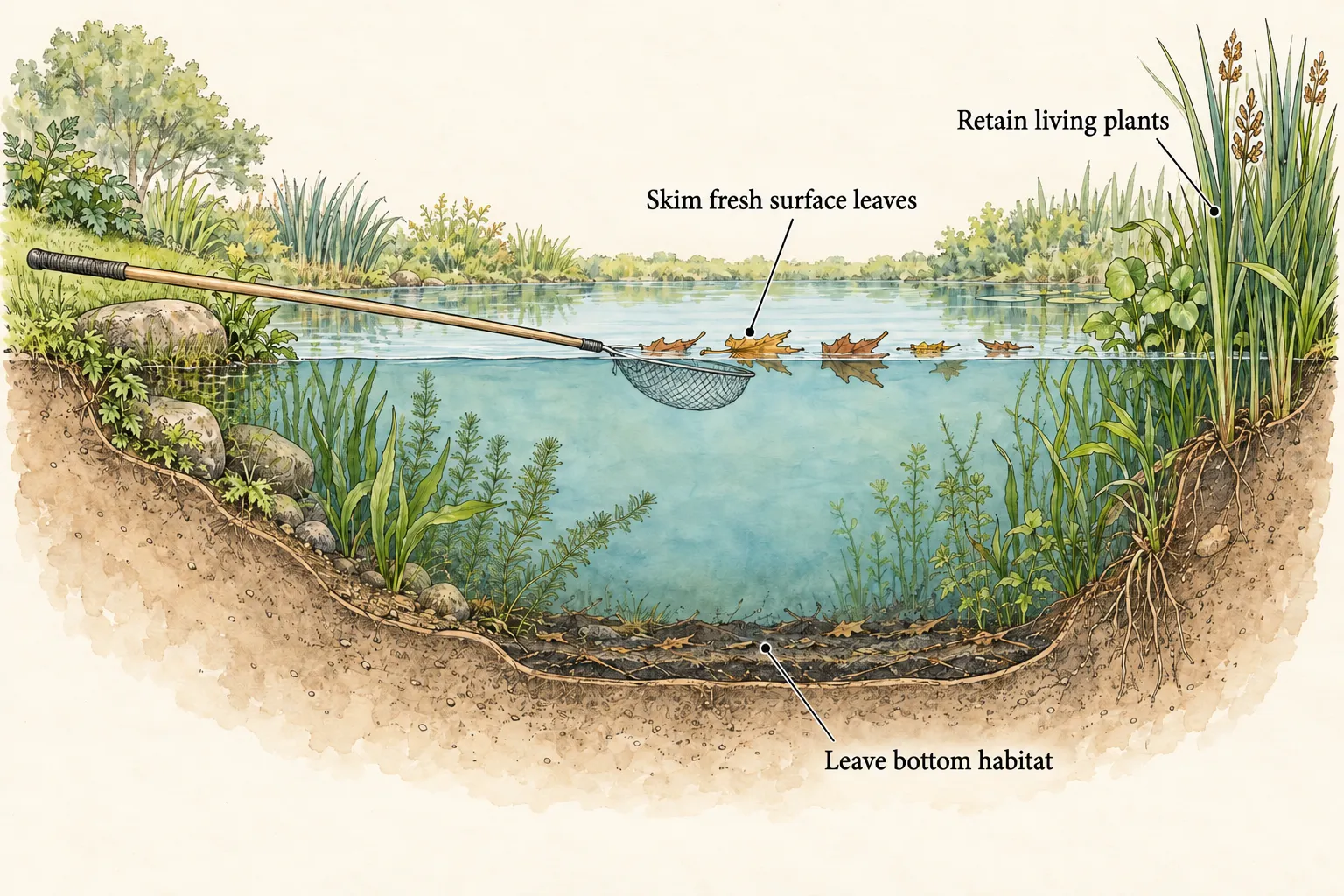
Autumn is generally a useful maintenance season, but animals still live in the pond. Froglife places substantial work in September or October where possible, after much summer development and before winter dormancy. Its separate tadpole guidance confirms that some larvae remain through autumn and winter. A late-October date therefore provides context, not proof of an empty pond. Visible larvae or resting animals are a reason to work less and leave their part of the pond quiet.
Set up a stable working edge and an inspection station
Choose a position on firm ground from which the long-handled net can reach the accumulation comfortably. Wet paving, loose edging stones and a bank hidden under slippery leaves deserve attention before the water does. Keep both feet securely on land and bring the work within comfortable reach. If an area requires leaning far over the water or entering the pond, leave that patch for a better-equipped maintenance plan.
Keep children away from the working area and maintain the pond's existing access protections. RoSPA and the Pond Conservation guide hosted by Freshwater Habitats Trust both identify particular risks for young children and stress close supervision. A person concentrating on the net contents cannot simultaneously give reliable attention to a child moving around the edge. Arrange a separate responsible adult or choose another time for the task. Leaf-catching mesh is not a substitute for a properly designed pond-safety arrangement.
Place a clean, light-colored tray or shallow tub on level ground within easy reach, with a little water taken from this pond. The pale base is a practical aid for seeing small moving animals among the leaves. Keep a second container for material already checked. Prepare both before the first scoop so wet contents have somewhere to go immediately, and leave a clear route for carrying the checked leaves away.
Use equipment clean enough for this pond and reserve it for the job while you work. A tray recently used for fertilizer or detergent is unsuitable for examining pondlife. A net full of debris from another pond also creates an unnecessary transfer. The RHS and Froglife both caution against moving pond water, plants or animals between ponds because unwanted organisms and disease can travel with them.
Skim small batches along the surface
Begin at the accessible edge of a visible leaf raft. Slide the net just under the floating material and bring it toward you slowly. Keep the load small enough that you can see what it contains and control it as it leaves the water. A heavy, tightly packed scoop hides animals and can pull attached plants with it. Let surplus water drain briefly over the pond, then put the batch into the inspection tray.
Work around stems and floating leaves that belong to the planting. If the net catches, back it out and change the approach. Pulling harder can uproot a basket plant or snag a liner edge hidden by the margin. A second reachable position is often more useful than a longer sweep. Once you have cleared the main accessible raft, pause and look at the whole pond before deciding whether another batch would materially help.
For example, a gust may push leaves toward a single reed-covered corner while the rest of a small pond has only scattered litter. Collect the loose material along the open face of that corner, keeping the stems intact. Leaves deep within the rooted fringe can remain for now. This is a practical way to focus effort where fresh input is accumulating, while preserving the planted edge that gives the pond shelter and structure.
A few leaves sinking during the work are a reason to keep the next pass smaller and shallower. Chasing each one down through the water turns skimming into bottom disturbance. Continue only while the contents remain predominantly the loose leaves you intended to collect. The amount in the disposal container is a record of the work, not a target that has to be reached before you stop.
Check the lifted leaves and return recovered pondlife
Treat every netful as mixed material until you have looked through it. Spread a small batch through the tray water, gently separating overlapping leaves and checking the undersides and any plant fragments. Pond Conservation recommends washing removed leaves and plants in a tub of water to help recover animals. A shallow, manageable batch makes that advice usable at garden scale; a large heap is difficult to inspect thoroughly.
Return recovered aquatic animals promptly to the same pond, using a small clean container with pond water where appropriate. Lower them gently into a quiet accessible area. Keep the inspection focused on the animals accidentally lifted with the leaves. Frogs or toads already resting on the surrounding bank can stay in their suitable cover; terrestrial amphibians need that habitat too. If an animal's identity or handling needs are uncertain, stop disturbing its area and seek advice from a local wildlife organization.
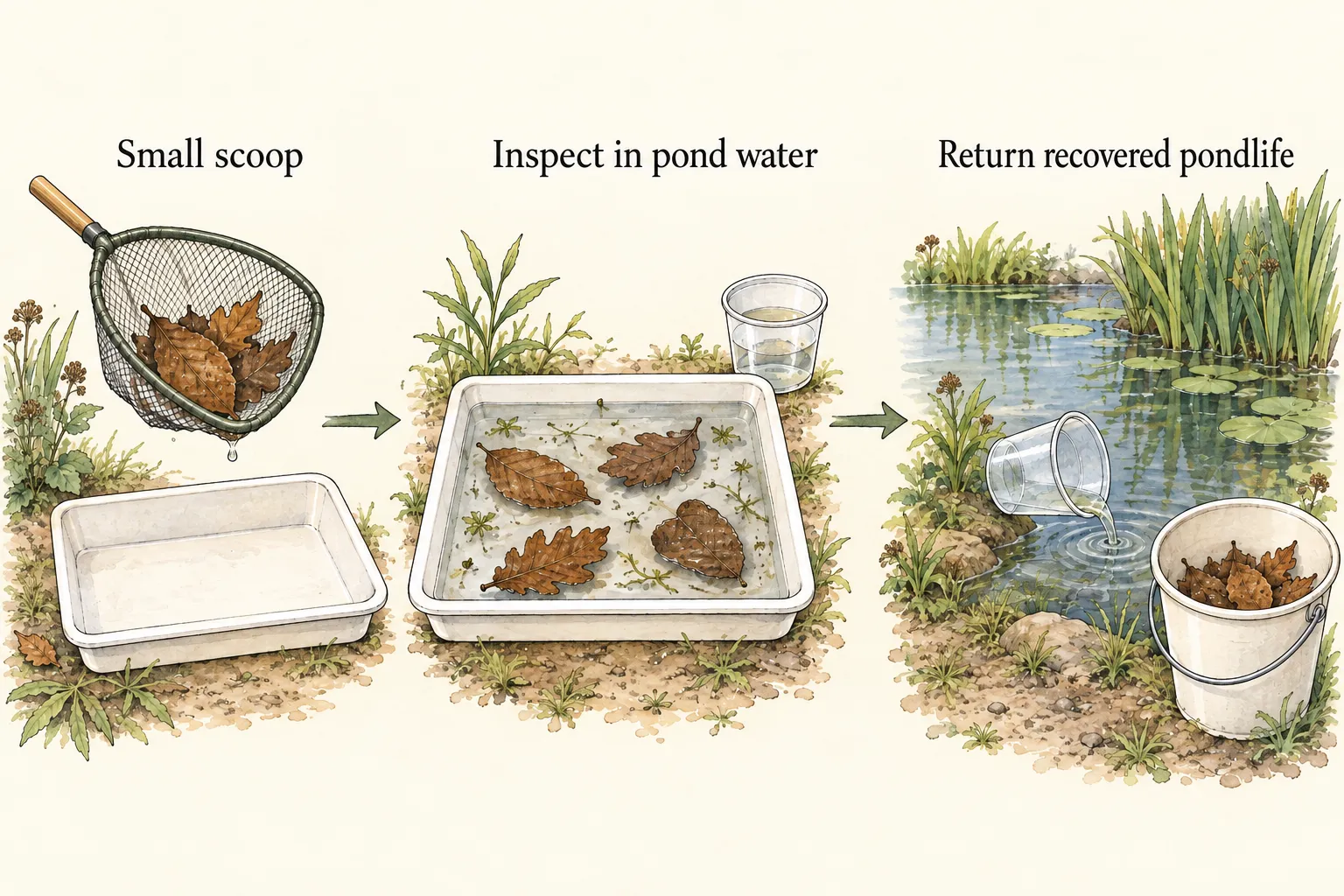
Advice about leaving removed material beside a pond differs. The RHS October calendar gives 48 hours before composting so animals have time to escape. Its wildlife-pond guide also notes that many animals remain trapped despite this practice. The Pond Conservation booklet recommends tub washing and warns that nutrients can drain back from vegetation left on the bank. For small leaf batches, active inspection and rinsing provide a more controllable process than relying on a waiting period alone.
Move checked leaves into the separate container and finish each batch before taking another. Look again for movement as you transfer them. Keep the tray shaded and attend it throughout the session; it is a temporary inspection station, not a place to leave pondlife until the next day. Return recovered animals and finish handling the water from this pond before cleaning and putting the equipment away. Some small organisms are difficult to see, so restrained removal remains important even with careful checking.
Retain the plant fringe and the pond’s exit routes
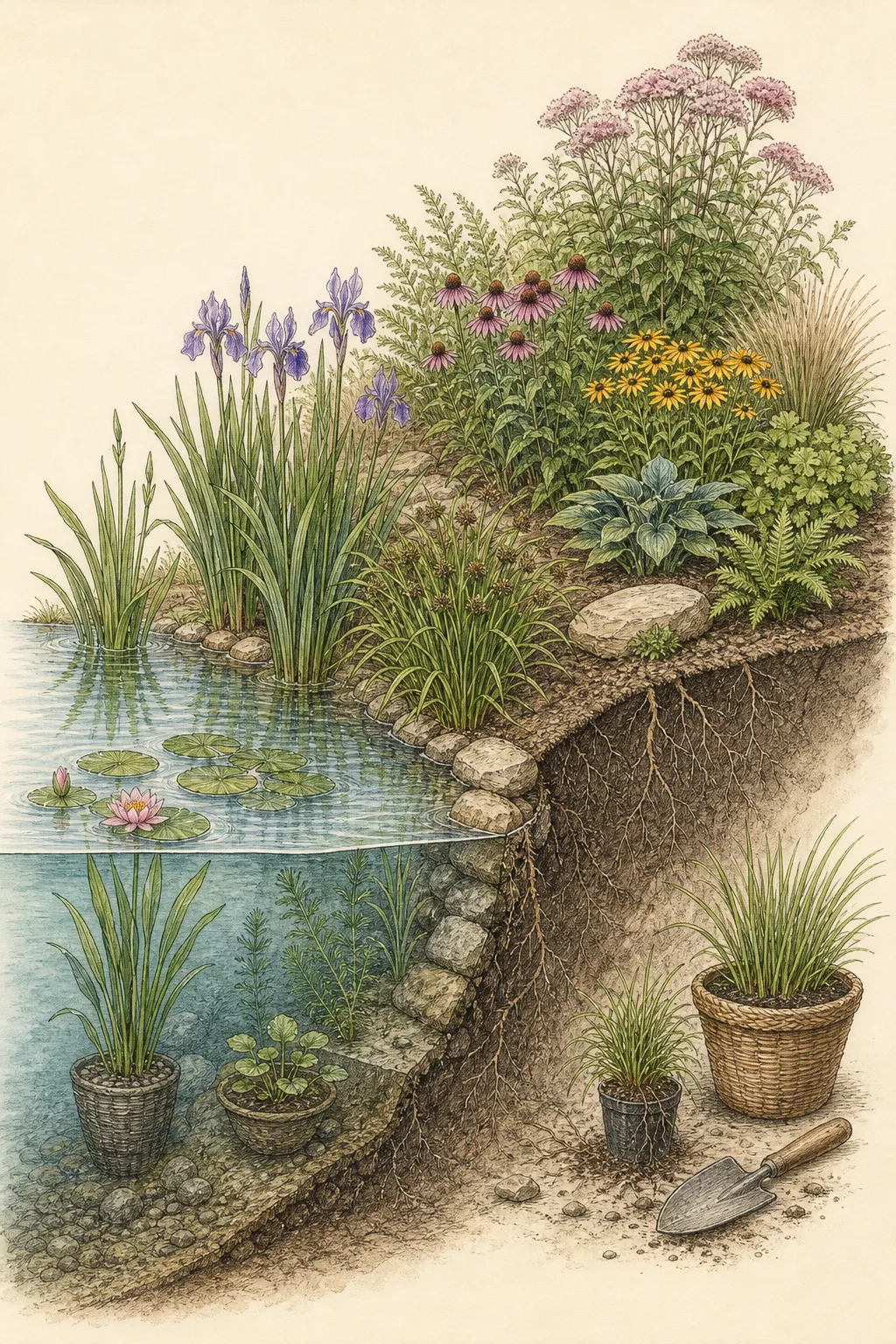
Keep the living marginal plants, submerged foliage and accessible shallow edge in place while collecting leaves. RHS wildlife-pond guidance emphasizes shallow access, planted margins and nearby land cover as valuable habitat. An orderly bare rim is a different outcome from a functioning wildlife edge. Leave a clear route through any existing shallow slope, ramp or stepping stones used by animals to enter and leave the water.
A leaf-removal session should not automatically become a full cutback of the border. The RHS October advice allows standing marginal growth to remain until late winter where it has not collapsed, providing protection for invertebrates. A brown stem can still be useful structure. Deal selectively with loose, collapsing material that is adding to the accumulation, and give firm standing stems their own seasonal review.
Keep living floating foliage distinct from detached tree leaves. General ornamental-pond guidance sometimes aims for about half the water surface open, but the RHS wildlife guide says a large open expanse is not essential and recognizes the value of underwater vegetation. That difference reflects purpose. For this small wildlife pond, remove excess incoming leaf litter while retaining the established plants; a summer surface-coverage figure is not an autumn leaf-clearing quota.
Take one photograph from the usual viewing point before and after the session for your own record. Check that the planted outline and shallow access still remain, and that a temporary tray, bucket or leaf pile has not blocked a route. The useful comparison is where excessive new litter was reduced and what habitat was retained. Clear water by itself gives an incomplete picture of whether the work improved the pond.
Keep checked leaves and unwanted fragments out of the water
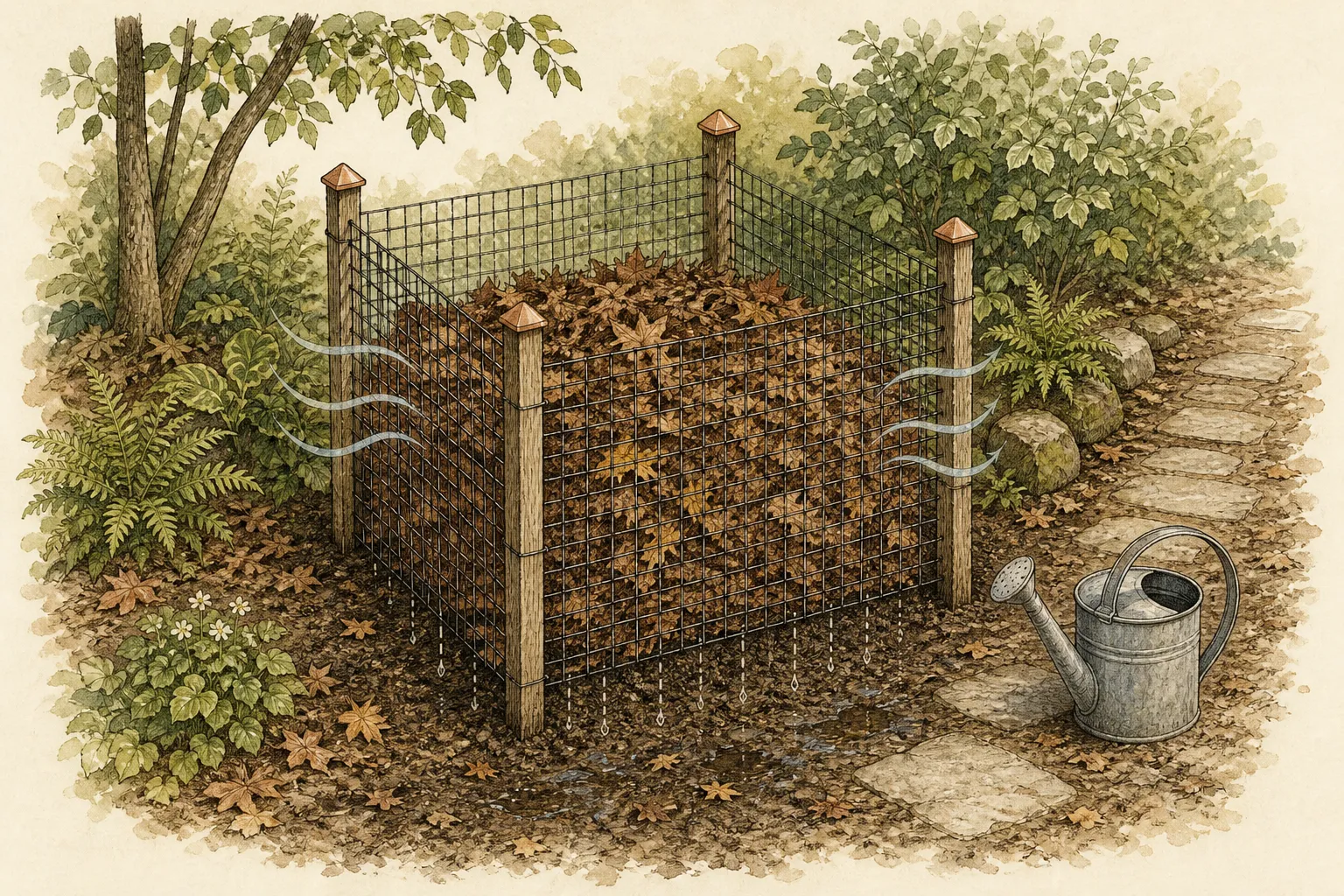
Carry inspected ordinary fallen leaves to an appropriate composting or leaf-mold area away from the pond edge. Keep that destination where runoff from the pile will stay out of the water. The Pond Conservation warning about nutrients washing back from discarded vegetation explains why a permanent heap immediately beside the pond is a poor finishing point. Leaving the material in the same place all winter would simply relocate the source of decay.
If the scoop includes an unfamiliar aquatic plant, separate it from the ordinary tree leaves and identify it before deciding how to dispose of it. Plant fragments can be a different management problem from a clean handful of autumn litter. The RHS warns that moving pond material can introduce unwanted species to another water body. Keep all such material contained; a stream, roadside ditch or another pond is not a disposal destination.
Store the hand net and any temporary leaf-catching equipment securely after the work. RHS March guidance specifically warns about discarded pond netting left around the edge posing a hazard to wildlife. Keep the inspection area clear as you pack up. If you already use a leaf cover, maintain the separate requirements for wildlife access and human safety, and arrange regular checks; fitting a new cover is a distinct decision from today's light skimming.
Recheck after leaf fall and recognize a larger job
Revisit the surface after windy weather and during the heaviest period of leaf drop. Let the visible accumulation set the next session. A pond under an overhanging tree may need several brief visits; another may need only occasional attention. Record which side repeatedly catches leaves and whether you can reach it safely. That evidence can guide a future access or planting adjustment, while preserving the rest of the shoreline during this work.
Stop when the main accessible fresh accumulation has been reduced and another pass would mainly collect plants or bottom material. A few remaining leaves are compatible with the wildlife purpose. If water becomes cloudy from your tool, allow the disturbance to settle and reconsider the technique. Persistent unusual odor, extensive plant decline or injured wildlife requires a separate assessment; surface skimming alone cannot diagnose or correct every pond problem.
A pond that has genuinely lost much of its water space to accumulated sediment needs a planned restoration decision. RHS wildlife guidance reserves essential sediment removal for early autumn and limits it to part of the excess at one time. That is a different task from catching fresh leaves in late October. Seek site-specific help when the bottom layer, liner, large rooted plants or wintering animals would be disturbed. Leave the functioning pond in place while planning the least disruptive next step.
Steps
- Level
- moderate
- Time
- Short bank-side sessions during leaf fall, with time to inspect each batch; substantial sediment removal is a separate job
- Tools
- Long-handled pond hand net, Clean light-colored tray or shallow tub, Small clean container for returning recovered aquatic animals, Gloves and footwear with secure grip
- Materials
- Water taken from the same pond for inspection, A separate container for checked leaves, A reachable stable bank-side working position
- 1Identify the fresh accumulation
Walk around the reachable bank and distinguish loose tree leaves from attached pond foliage and settled bottom material. Choose the main accessible raft for attention. If the pond contains only scattered leaves, record its condition and return after the next period of heavy leaf fall.
- 2Prepare the bank and containers
Check footing, keep the work within comfortable reach and arrange child supervision separately from the task. Set a clean pale tray with water from this pond on stable ground and place a second container beside it for checked leaves. Keep the wildlife access route open.
- 3Take one small surface scoop
Slide the hand net just below the leaves and draw it slowly toward the bank. Back away from anything attached to a plant or liner. Briefly drain the manageable load over the pond, then transfer it directly to the inspection tray before collecting more.
- 4Inspect and rinse the batch
Gently separate the leaves in the tray water, checking overlapping surfaces and stray plant fragments. Return accidentally collected aquatic animals promptly to the same pond with suitable gentle handling. Complete the batch before repeating; an unattended pile cannot guarantee that hidden animals will find their way back.
- 5Finish with the habitat intact
Remove only the excess accessible fresh litter, retaining living plants, standing margins and bottom habitat. Put checked ordinary leaves in the composting destination away from pond runoff. Contain any unidentified aquatic fragments for identification and an appropriate disposal decision, keeping them away from other water bodies.
- 6Close and review the session
Check that shallow exits and existing safety arrangements are clear and secure. Empty and put away the inspection equipment, store netting safely, and photograph the retained planting. Recheck after wind or more leaf fall. Escalate substantial sediment, liner or animal-health problems as separate work with its own plan.
Related reading
Sources
- Wildlife ponds. Royal Horticultural Society. Source record · Accessed 2026-10-14.
- Jobs for October: Ponds. Royal Horticultural Society. Source record · Accessed 2026-10-14.
- Pond care. Royal Horticultural Society. Source record · Accessed 2026-10-14.
- Creating Garden Ponds for Wildlife. Pond Conservation, hosted by Freshwater Habitats Trust. Source record · Accessed 2026-10-14.
- Frogs & toads: in my garden. Froglife. Source record · Accessed 2026-10-14.
- Spawn & tadpoles: behaviour. Froglife. Source record · Accessed 2026-10-14.
- Pond safety. Royal Society for the Prevention of Accidents. Source record · Accessed 2026-10-14.
- Ponds in March. Royal Horticultural Society. Source record · Accessed 2026-10-14.