Grow · tender aquatic overwintering
Overwinter Tender Aquatic Plants from a Garden Pond
Sort pond plants by verified hardiness, move tender specimens into workable indoor holding systems, and keep them contained until spring.
Published Last updated
In this guide
- Inventory the pond before cold weather makes every plant look alike
- Choose the winter route before lifting a pond plant
- Sort each plant into one winter route
- Lift and prepare the chosen plants without exporting pond debris
- Build an indoor station the plant can actually use
- Maintain a small clean collection rather than a summer display
- Return survivors to the pond as a staged spring transition
- Steps
Inventory the pond before cold weather makes every plant look alike
Overwintering starts with names, not containers. A pond may hold a hardy water lily, a tropical water lily, taro, water lettuce, submerged oxygenating plants, and marginal perennials whose winter needs are not interchangeable. Label each pot or population while leaves and flowers still support identification, then record whether it is rooted in a pot, floating freely, or growing at the edge. An unknown plant should not receive a guessed warm or cold route.
Verify hardiness to the exact plant and local winter, including cultivar when available. Virginia Cooperative Extension separates hardy and tender aquatic plants and assigns different winter treatment. NC State Extension likewise distinguishes hardy water lilies that can remain below the freezing line from tropical water lilies treated as annuals in temperate climates. A common name such as 'water lily' is therefore too broad for a winter decision.
Decide what is worth carrying indoors. A tender plant must justify months of water, light, floor space, and monitoring. Keep the healthiest, correctly identified specimen or division rather than every pot and floater. Dense summer populations that were attractive outdoors can become an unmanageable indoor biomass. Reducing the collection before setup improves visibility, water care, and the chance that one declining plant will not be overlooked. Assign every keeper to a specific vessel now. If the arithmetic requires an unplanned second tub, reduce the list before lifting rather than inventing unsafe indoor storage later.
Set a move trigger before a cold night forces rushed lifting. Use verified temperature guidance for the plant and pay attention to declining water temperature, not only the first forecast frost. Virginia Tech advises moving taro and tropical water lilies into a pond or tub kept above 50 degrees Fahrenheit. Treat that as a specific sourced threshold for those examples, not a universal number for every tender aquatic.
Choose the winter route before lifting a pond plant
Match every identified aquatic plant to a verified winter method and a prepared holding station. Keep depth, light and temperature requirements separate for plants that merely shared the summer pond. If the correct route or station is missing, resolve it before lifting. Spring return depends on suitable pond and air conditions, not simply the end of indoor storage.
Sort each plant into one winter route
Route one is hardy submerged storage. This is for a verified hardy plant that can remain in the pond below the freeze zone. The Virginia Tech winterizing guidance moves hardy potted plants to the bottom of a pond at least 20 inches deep, while Illinois Extension says hardy lilies and lotus can be lowered below the freeze line. Confirm that the actual pond depth and local ice conditions provide the protection the plant requires.
Route two is a tender rooted plant held in a warm water-filled container. Virginia Tech specifically places tropical water lilies and taro in a pond or tub maintained above 50 degrees Fahrenheit. The plant remains contained and its roots or pot stay in water appropriate to its growth form. This route needs enough indoor warmth, water depth, light, floor protection, and access for maintenance; a dark cold corner is not automatically a winter home.
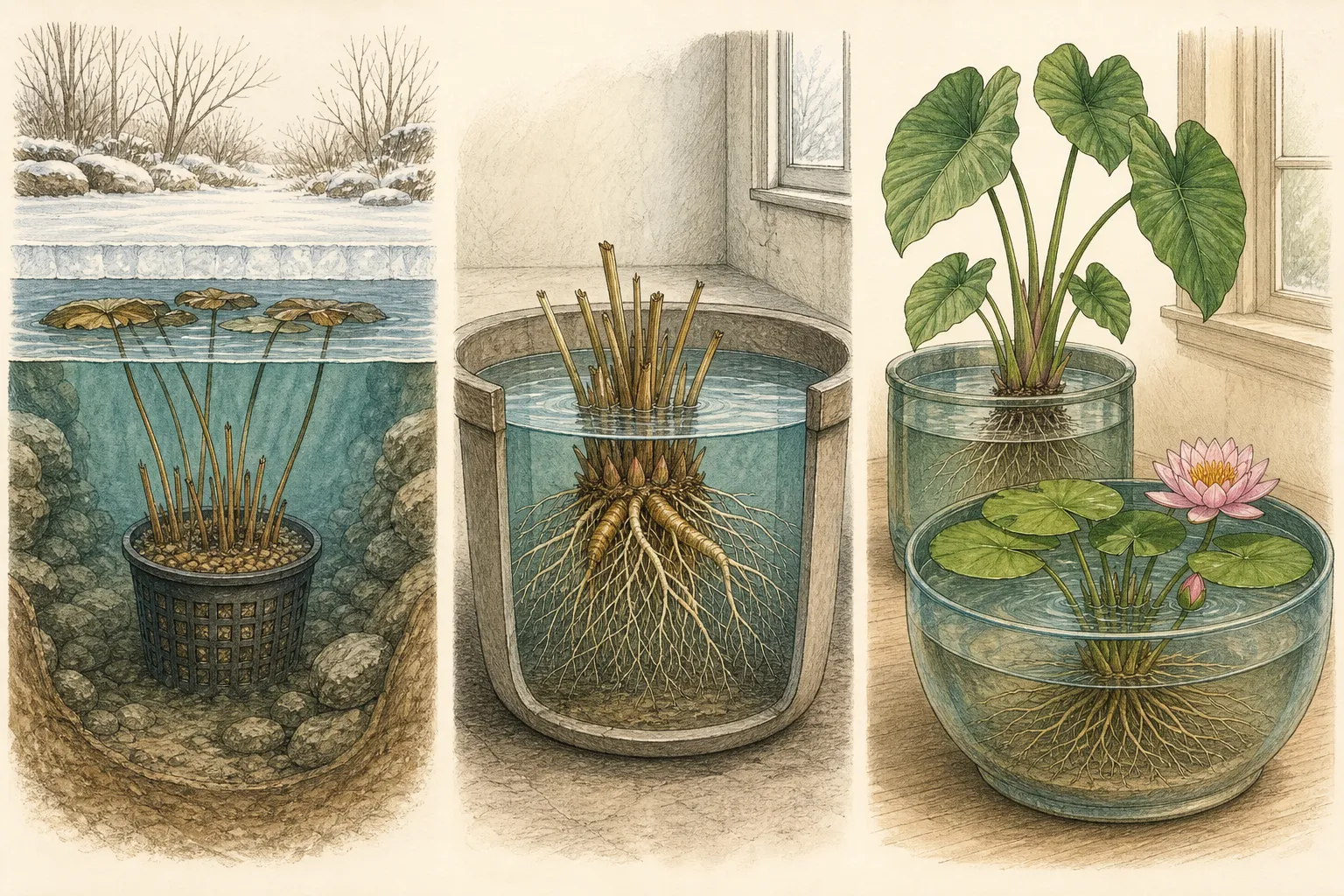
Route three is a floating or submerged tender plant maintained in an aquarium-like system. Virginia Tech suggests bringing floating and submerged plants indoors to an aquarium and providing adequate light, with periodic water changes. Illinois Extension also distinguishes tropical plants that need warm indoor conditions from cold-tolerant plants that merely need protection from freezing. Match the station to the plant instead of grouping all pond material in one bucket.
A fourth outcome is deliberate non-storage. Some tropical water lilies are commonly treated as annuals in temperate regions, as NC State records, and some abundant floaters may cost more space and attention than they merit. If a plant will not be overwintered, contain and dispose of it lawfully. Never solve the decision by moving it to a creek, lake, drainage ditch, or storm drain, where fragments or propagules may escape cultivation.
Lift and prepare the chosen plants without exporting pond debris
Stage the indoor container before lifting. Confirm that it holds water, fits through doors, rests on a level load-bearing surface, and can be filled, siphoned, and inspected without crossing a living space with full buckets. Label the station and every pot. A tender plant that spends hours drying while its tub is assembled has been given a stressful start that planning could have prevented.
Remove plants from stable footing with a long-handled tool or by lifting an accessible pot—never by entering cold, slippery water. Wet pots can hold dense soil and water, so use a rigid carrier and a second person for awkward loads. Keep the carrier below the pot to catch fragments. Move one labeled taxon at a time if identification could be confused during trimming or division.
Remove yellow, collapsed, or decaying foliage with clean tools and net loose plant matter from the pond. Virginia Tech recommends removing decaying vegetation because decomposition affects pond conditions. Indoors, reducing obvious decay also makes the holding system easier to observe. Do not strip sound growth simply to make the plant compact, and do not improvise a severe division unless reliable guidance for that exact plant calls for it.
Inspect the pot, crown, leaves, and water surface before the plant joins the station. The goal is not a chemical sterilization protocol; it is to avoid carrying preventable masses of algae, dead tissue, fallen leaves, or unidentified hitchhiking organisms into a small indoor volume. Keep suspect plants separate until they can be identified and managed. Do not pour inspection water or debris outdoors where it can reach natural water. Make an arrival photograph of the crown, leaf load, and water line. It supplies a baseline for deciding whether later change is normal reduction or continuing decline.
Build an indoor station the plant can actually use
Choose a watertight vessel that accommodates the pot and required water level with a safe margin below the rim. Set it on a waterproof tray or surface before filling. A transparent aquarium makes floating and submerged material easy to observe; an opaque tub may suit a large potted tropical better. In either case, leave access for leaf removal, water changes, temperature checks, and eventual lifting.
Support potted plants so their crowns and leaves sit at a depth appropriate to the species and current growth, rather than dropping every pot onto the deepest point. Stable blocks or shelves must not shift, crumble, or concentrate weight unsafely. For floaters, preserve open water surface and avoid packing so densely that damaged leaves cannot be seen. Label even a one-species tub because winter reduction can erase obvious visual clues.
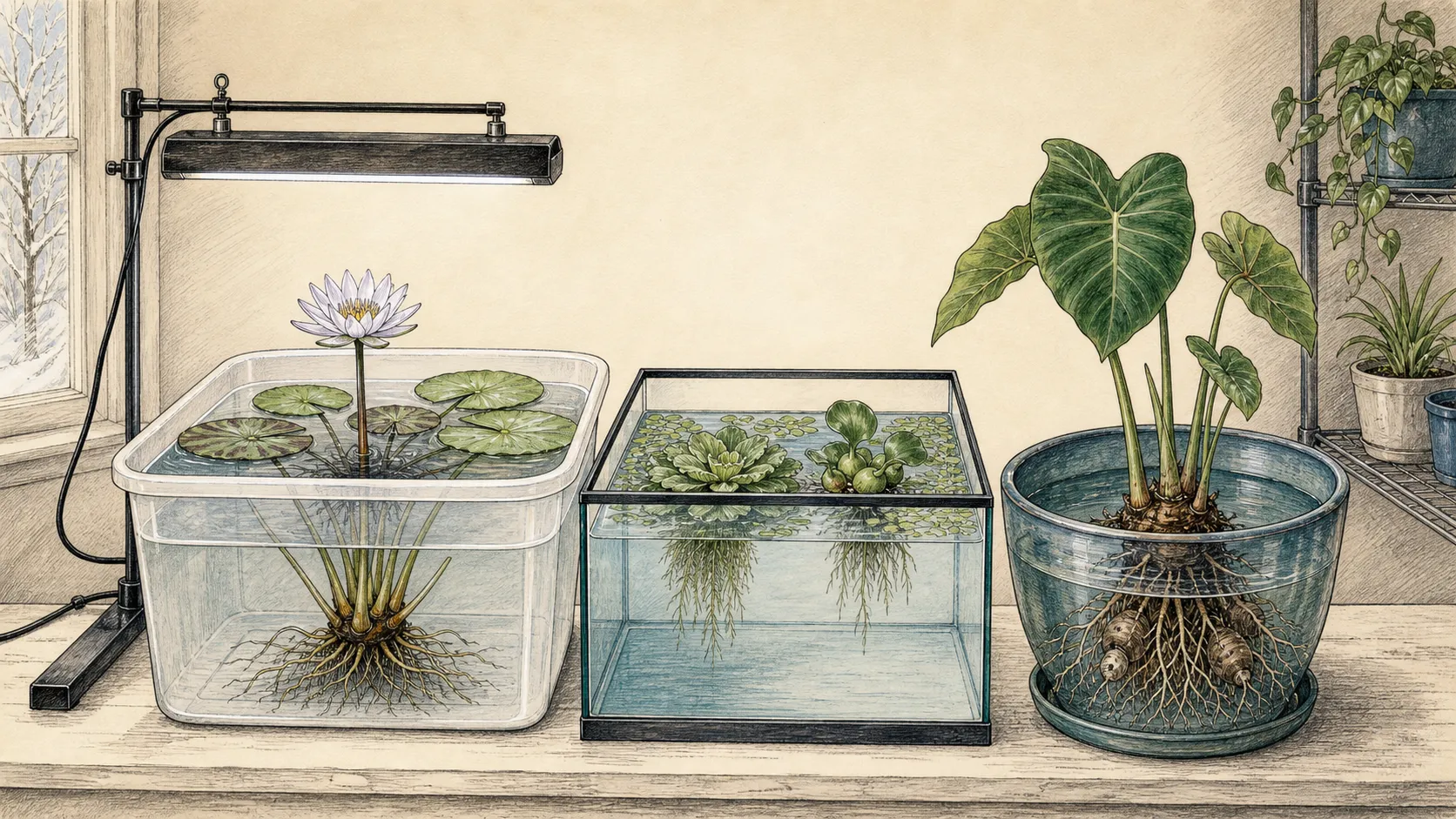
Provide enough light for plants kept in active growth. Virginia Tech explicitly calls for adequate light for floating and submerged aquatics held in an aquarium, and Illinois warns that tropical plants may need sufficient light indoors. Observe actual growth: stretching, paling, repeated leaf loss, and algae-dominated water signal that the station is not simply 'dormant.' Use equipment suitable for wet areas and keep electrical connections protected from splashes.
Monitor water temperature with a thermometer instead of relying on room comfort. A floor-level tub by an exterior wall can be colder than the thermostat suggests, while a bright window can produce sharp daytime swings. Apply plant-specific guidance; for the Virginia Tech tropical lily and taro examples, keep the water above 50 degrees Fahrenheit. Do not generalize that threshold to every marginal, floater, or submerged species without verification.
Maintain a small clean collection rather than a summer display
Set a weekly observation day. Check temperature, water level, odor, clarity, leaf condition, crown firmness where visible, and the stability of pots and supports. Top up or change water according to the needs of the system, and record meaningful changes. That guidance also calls for periodic aquarium water changes; the exact interval should respond to plant load, container volume, and observed water condition rather than an invented universal schedule.
Remove dead foliage and escaped fragments promptly with a dedicated net. A small indoor vessel has less capacity to absorb decomposing biomass than a garden pond. Virginia Tech's winter pond guidance emphasizes removing decaying vegetation, and the same observation principle matters in contained holding. If decline accelerates, separate the affected plant so the cause and remaining collection can be evaluated clearly.
Do not fertilize automatically to correct every pale leaf or slow period. Winter light, temperature, plant identity, and the intended storage state all matter. Adding nutrients without a plant-specific plan can worsen algae and water-quality problems. Compare the setup with reliable care guidance for the exact species, correct obvious light or temperature mismatches, and accept reduced growth when the overwintering method is designed for survival rather than display.
Keep the population below the station's capacity. Thin only under plant-specific guidance and contain every removed fragment. If roots crowd the vessel, water quality repeatedly fails, or safe maintenance requires lifting beyond your ability, reduce the collection rather than adding improvised containers throughout the house. A smaller healthy reserve is a better spring resource than a large unstable system. Mark a maximum fill line and keep the access side clear. Those two simple references make evaporation, overfilling, and a shifted support visible before water reaches the floor.
Return survivors to the pond as a staged spring transition
Do not use one warm afternoon as the return signal. Verify the plant's temperature needs, observe pond water as well as air forecasts, and wait until damaging cold is no longer likely for that tender species. A tropical plant held above 50 degrees Fahrenheit cannot be assumed ready for suddenly cold pond water merely because ice has disappeared. Keep the indoor station operating until conditions are consistently suitable.
Inspect and clean up plants while they remain contained. Remove dead material, confirm labels, assess the pot, and decide whether division or repotting is actually needed according to species guidance. Do not transfer indoor fragments, snails, algae masses, or holding water casually into the pond. The garden pond is still a managed ecosystem, and containment remains important even though the plant is returning to its intended site.
Reintroduce temperature, light, and exposure gradually. Indoor foliage can be tender, while a pond surface may deliver bright sun, wind, and cool nights. Use a sheltered transition and adjust depth in stages where the plant's growth habit calls for it. Watch for leaf scorch, collapse, floating pots, or a crown held at the wrong level, and reverse the move if a cold event threatens before establishment.
Close the record after two to three weeks of stable outdoor growth. Note which station, temperature range, light arrangement, maintenance load, and plant quantity succeeded. Record losses honestly and remove methods that were unsafe or impractical. Next autumn's inventory should begin with this evidence: fewer guesses, earlier preparation, known container capacity, and a clear decision about which tender aquatics genuinely earn indoor space.
Save one photograph of the empty station as well. It records actual usable volume, supports, water lines, and maintenance access more reliably than a container name or purchase size.
Steps
- Level
- moderate
- Time
- About 2 to 4 hours for inventory and setup, followed by weekly winter checks
- Tools
- waterproof labels and pencil, long-handled pond net, clean pruners or aquatic scissors, bucket or rigid carrying tub, thermometer, siphon or small container for water changes
- Materials
- watertight indoor tubs or aquarium, stable supports for aquatic pots, appropriate grow light where daylight is insufficient, protected floor tray or waterproof mat, plant inventory and weekly observation log
- 1Identify and label every candidate
Record the exact plant, cultivar when relevant, growth form, pot or floating location, and verified hardiness while summer features remain visible. Separate hardy water lilies from tropical ones and identify marginals, floaters, and submerged plants individually. Treat an unknown plant as unresolved rather than assigning it a guessed winter route.
- 2Choose one verified winter route
Assign hardy submerged storage only when pond depth and local freezing conditions fit the plant. Assign warm water-filled holding to suitable tender rooted plants, and a lighted aquarium-style system to appropriate floating or submerged material. If storage is impractical, choose contained lawful disposal—never release the plant or fragments outdoors.
- 3Build and test the station first
Place the watertight tub or aquarium on a protected, level surface that can bear the filled load. Test access, drainage, temperature monitoring, safe lighting, supports, and splash control before a plant leaves the pond. Label the vessel and leave enough free space for inspection and maintenance.
- 4Lift from stable footing
Use long-handled tools or retrieve only accessible pots without entering cold or slippery water. Carry each wet pot in a rigid tub, get help for heavy loads, and keep labels with the specimen. Remove decaying tissue and loose debris with clean tools while containing every fragment and all transport water.
- 5Set depth, warmth, and light by plant
Position pots and floaters according to growth form, provide adequate light to plants held in active growth, and measure actual water temperature. Apply the sourced above-50-degree guidance specifically to tropical water lilies and taro in the Virginia Tech method; verify other plants instead of extending that threshold universally.
- 6Inspect and maintain weekly
Track temperature, water level and condition, foliage, crown condition, supports, and electrical safety. Remove dead material, make periodic water changes appropriate to the station, and isolate unexplained decline. Reduce the collection if biomass, lifting demands, or recurring water problems exceed the container's safe capacity.
- 7Stage the spring return
Wait for consistently suitable pond and air temperatures, then inspect, relabel, and transition plants gradually to outdoor light, wind, water depth, and nighttime conditions. Keep holding water and unwanted organisms contained. Record survival and workload after stable pond growth so next autumn's decisions reflect what actually worked.
Related reading
Sources
- Winterizing the Water Garden. Virginia Cooperative Extension. Source record · Accessed 2026-08-20.
- Seasonal Maintenance for Container Water Gardens. Illinois Extension. Source record · Accessed 2026-08-20.
- Nymphaea. NC State Extension. Source record · Accessed 2026-08-20.