Grow · overwinter hardy water lilies shallow ponds
Overwinter Hardy Water Lilies from Shallow Ponds
Keep dormant hardy water lilies below the ice zone or move their planted baskets to cool, moist, frost-free storage when a shallow pond may freeze solid.
Published Last updated
In this guide
- Keep the dormant rhizome moist and clear of freezing
- Check the identity and the depth at the crown
- Let late-autumn growth slow while preparing the storage place
- Trim old foliage and move the whole basket
- Choose deeper water only when it remains a suitable refuge
- Pack the planted basket to retain moisture
- Check the stored plant through winter
- Return after thaw and match depth to new growth
- Steps
Keep the dormant rhizome moist and clear of freezing
A hardy water lily can stay outdoors when its rhizome remains below the part of the pond that freezes. If a shallow pond or raised tub may freeze solid, lift the planted basket after the lily begins its autumn rest and keep it in cool, moist, frost-free storage. Preserve the rhizome and its growing points inside the existing planting medium. Dormancy reduces the foliage; it does not make the plant suitable for dry bulb storage.
Chicago Botanic Garden makes the important qualification explicit: hardy water lilies suited to its climate survive provided their rhizomes remain unfrozen. The RHS's general statement that hardy lilies need no winter protection assumes a suitable outdoor setting. A thin layer of surface ice is different from ice reaching the basket's crown. The decision depends on the water around the plant, not simply on the word hardy attached to its name.
Early November is a useful inspection and preparation period in many temperate gardens. Watch the lily's fading foliage and local cold forecasts, then finish any lifting before ice makes the basket inaccessible. This method concerns an established, labelled hardy Nymphaea in a manageable basket. A plant rooted directly into pond-bottom mud, an unknown lily or a very heavy inaccessible pot needs its own handling plan before work begins.
Check the identity and the depth at the crown
Recover the cultivar label while there are still leaves or flowers to compare with the record. Hardy and tropical water lilies share the genus Nymphaea, so the genus alone is insufficient. Confirm the cultivar's hardiness with its supplier or a reliable plant record. Flower color, the size of the pond and a summer of good growth cannot establish its winter needs. Keep the label attached to the basket through storage and spring return.
Measure from the water surface to the lily's crown, where new leaves emerge near the top of the planting medium. Total pond depth includes the height occupied by the basket and any supporting blocks. Lowering a pot from a shelf helps only if the crown finishes below the likely ice zone. Record the position of the crown and the deepest stable place available, using the actual winter water level for the measurement.
For example, an 80 cm-deep pond with a 30 cm-tall planted basket on its floor leaves the crown about 50 cm below the surface, assuming the crown sits at the basket top. Those figures are a measurement exercise, not a safe-depth rule. If local ice could reach that level, the rhizome is still at risk. A support block beneath the basket reduces the protective water depth further, even though the pond itself has not changed.
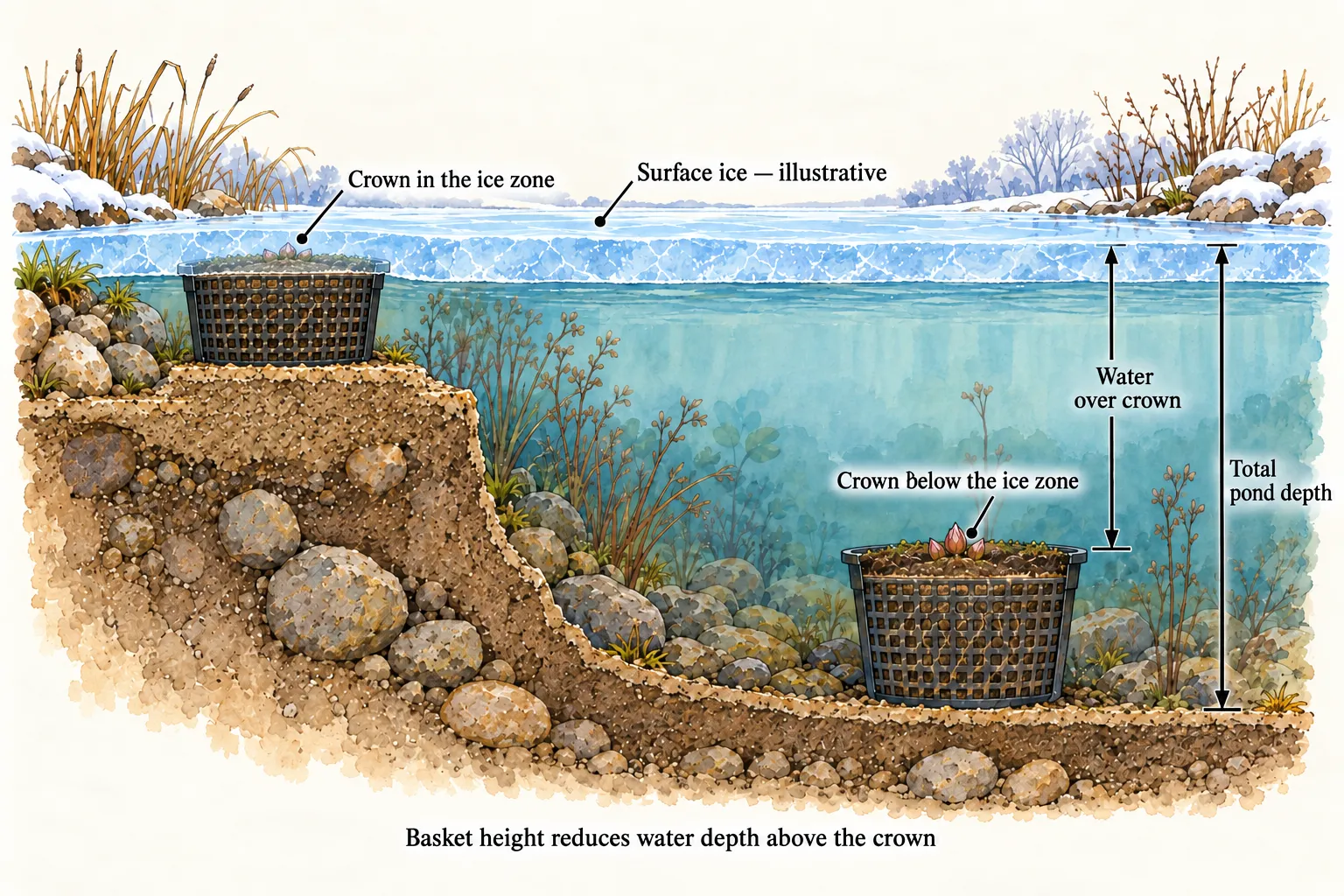
Moore Water Gardens recommends a deep area of about 2½–3 feet, roughly 75–90 cm, for its outdoor method, with greater depth in colder Canadian zones. Treat that as regional guidance combined with the actual crown position and local freezing experience. It is not a promise for every pond of that depth. Where past freezing, exposed sides or uncertain depth leave little margin, prepare indoor cold storage before deciding to leave the lily outside.
Let late-autumn growth slow while preparing the storage place
Moore's hardy-lily guidance waits until late autumn, when foliage dies back and dormancy begins. A still vigorous lily moved early into a dark warm room is being given conflicting conditions. Prepare the space first, then use the plant's seasonal change and the approach of freezing to choose the move. The practical window ends when lifting becomes difficult or the rhizome may freeze; a calendar date should not delay necessary action.
Choose a place that stays cool and reliably above freezing. Moore gives approximately 40°F, or about 5°C, for dormant hardy lilies and keeps the planted containers moist and dark. This is a cold-storage reference for hardy stock, not the warmer sand-storage or heated-water routine used for tropical lilies. Put a minimum–maximum thermometer at the actual basket position and check it during colder nights before relying on the space.
A garage, cellar or outbuilding is suitable only if its measured conditions suit that role. A garage wall exposed to outdoor cold can freeze while the house remains comfortable. A warm basement may encourage early growth. Keep the basket away from direct heaters and choose a position you can inspect easily. If no appropriate space exists, arrange another verified overwintering location with a specialist nursery before lifting the plant.
Set up a waterproof tray or robust outer container and a moisture-retaining bag large enough for the intact basket. The holder should catch drips and support the basket base. Keep a label and a small supply of newspaper for damp covering nearby. This is compact dormant storage, so it does not require a display aquarium or a summer-sized tub of water. Reserve enough access to check the crown, planting medium and temperature.
Trim old foliage and move the whole basket
Work from firm, safe footing while the pond is open and the basket can be reached. Support its base or use its sound handles, with help for a heavy load. A water-lily basket may contain dense soil as well as water. Lift it as a unit and set it in the prepared carrier; the leaf stalks and growing points are unsuitable lifting handles. Keep the planting medium around the rhizome during the transfer.
Remove yellow, collapsed or frost-killed leaves and spent flower stalks near their bases, keeping cuts clear of the living crown. The RHS recommends removing fading foliage before it decays in the water. Iowa State's hardy-plant guidance makes a useful distinction: the short, small leaves formed late in the season should remain attached. Identify those compact new leaves and buds before bringing the cutting tool into the centre of the basket.
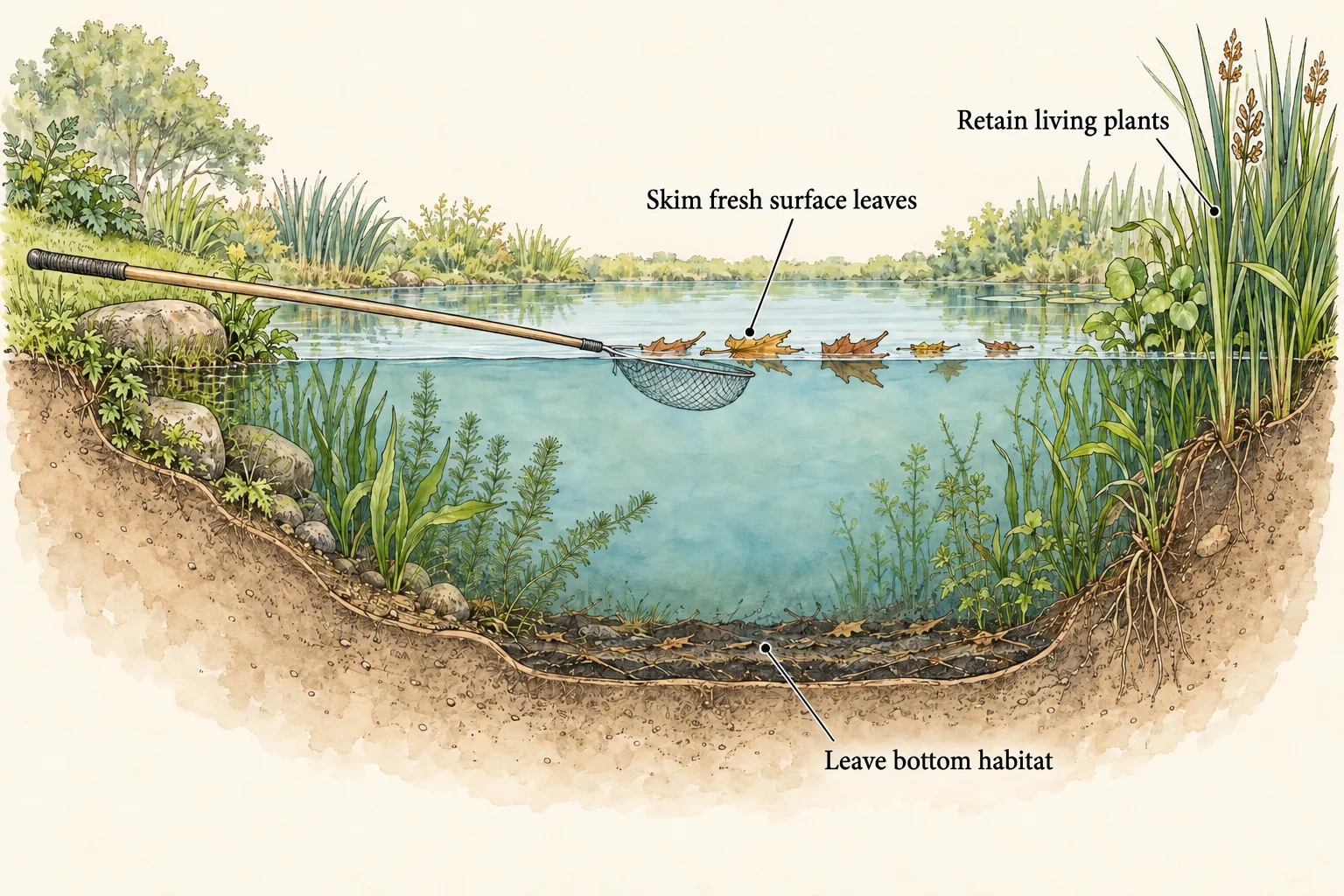
Collect loose trimmings as you work so they are not left floating in the pond or packed into storage. Keep the cleanup focused on the lily and its basket. The separate [autumn pond-leaf guide](/grow/remove-autumn-leaves-small-wildlife-pond/) covers wider debris management. A routine lily move is not a reason to drain the whole pond, disturb its bottom or combine unrelated fish and equipment maintenance with plant storage.
Leave division and substantial repotting for the appropriate growing-season window. RHS guidance divides hardy water lilies in late spring or early summer, and a congested basket can be marked for that job. Lifting for winter is not the same as washing a tropical tuber bare for a different storage method. Inspect obvious damage, retain sound roots and rhizome, and seek advice for a failing basket or extensive decay that makes intact storage impractical.
Choose deeper water only when it remains a suitable refuge
If the pond has a dependable unfrozen zone, a hardy lily may simply be moved off a shallow shelf to a stable lower position. Iowa State describes lowering hardy plants to the bottom for winter, while Chicago's condition remains that the rhizome stays unfrozen. Set the basket upright and check that it cannot slide into a deeper hole, tip onto another pot or rest on a fragile liner fold.
Recheck the crown depth after moving it. A basket that appears low from the bank can still sit on an unnoticed ledge or support. Keep a simple plan of its winter location and a way to find it again in spring. Reach and weight matter as much as depth: choose a placement that can be recovered with the available equipment and help. A deep position that makes the plant effectively inaccessible is an incomplete plan.
Keep the pond's water level under observation during the season. The measured protection changes if the level falls, and the basket should remain submerged in its intended position. A leak or planned winter drawdown can invalidate an otherwise suitable depth. Deal with the cause or transfer the plant to the prepared cold-storage route while access is still practical. Treat surface ice and the depth of freezing as separate observations.
Where the pond can freeze to the basket, use the lifted-container route. The advice to leave hardy lilies outdoors is conditional; it does not require testing a valued plant in a shallow exposed tub. Equally, a genuinely suitable deeper pond needs no automatic indoor move. The useful choice is the one that keeps this identified rhizome moist and unfrozen through the local winter.
Pack the planted basket to retain moisture
For the lifted route, Iowa State describes placing hardy plants in their containers inside a plastic bag and adding moist material such as newspaper to retain moisture in a non-freezing place. Keep the lily planted and the medium damp as it enters storage. Lay damp paper gently around the exposed surface, taking care with short new leaves and growing points. Fit the bag so the pot and covering remain accessible for inspection.
The bag's purpose is to slow drying. It is not a replacement for a suitable temperature, and it should not be confused with dry paper packaging for tender bulbs. Moore stresses that hardy lilies in storage must remain moist and dark. A basket that dries completely can lose living tissue even when the room stays above freezing. Check the planting medium itself; condensation on plastic alone is an unreliable account of moisture throughout the pot.
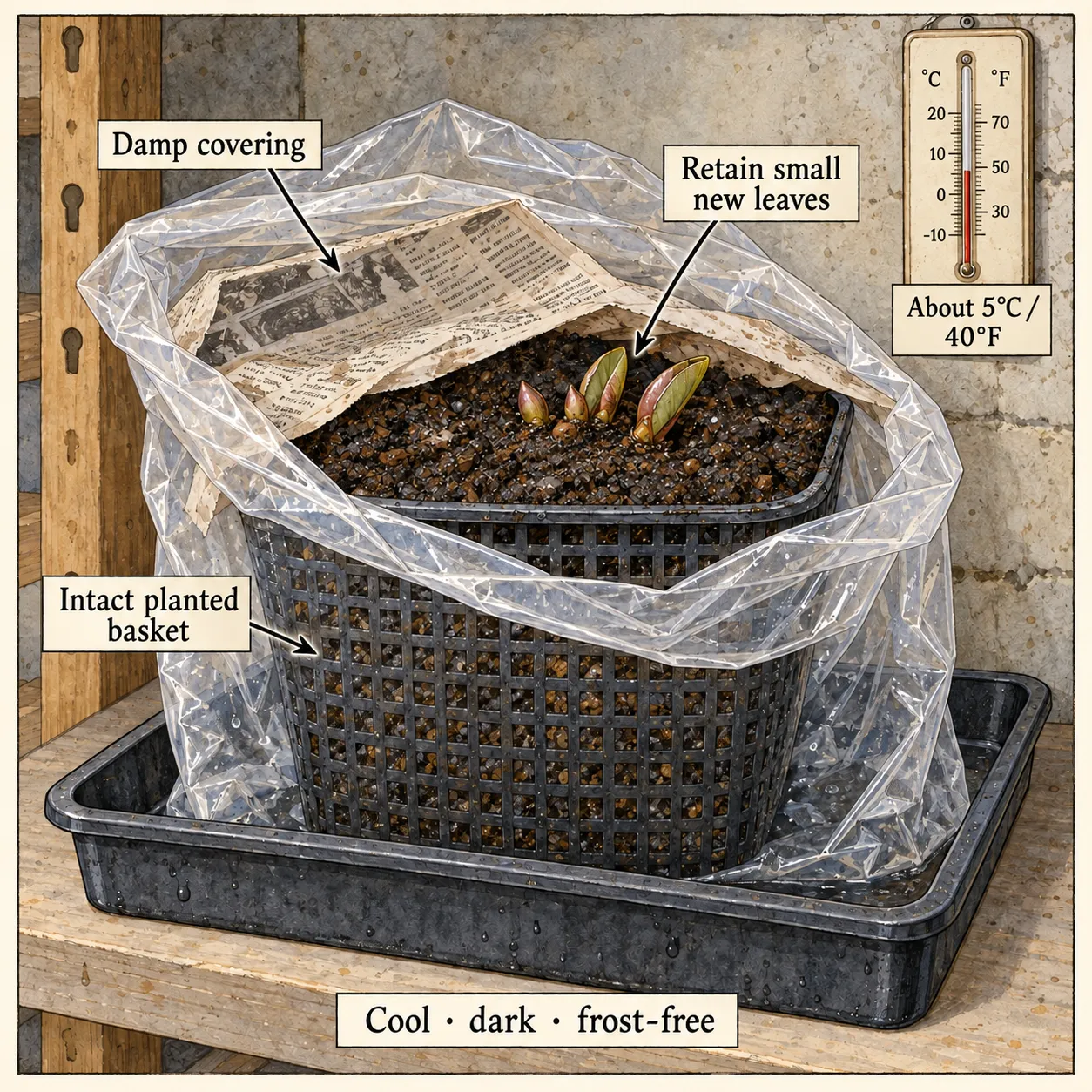
Keep each cultivar labelled separately, and support the baskets on the prepared tray or container. Set them upright so heavy wet medium stays in place. If several lilies share the storage area, leave room to lift each basket for inspection while supporting its base. Record the condition at arrival, including any questionable tissue, so a later check can distinguish an old mark from continuing deterioration.
Store only the plant and necessary moisture-retaining materials in this arrangement. Clear away decaying leaves, loose algae masses and other debris caught around the basket. Ordinary cleaning improves access to the crown and reduces material breaking down in the package. A chemical sterilization treatment is outside this routine; unexplained softness or decay calls for diagnosis before a treatment is chosen.
Check the stored plant through winter
Inspect temperature, the damp covering and the planting medium periodically, with an extra check after a marked change in room conditions. Re-moisten drying paper and add water when the medium needs it. Keep the basket damp while preventing it from being forgotten in a puddle of decaying debris. The correct interval depends on the room and packaging, so a dated observation is more useful than applying an identical measured dose on a fixed schedule.
Look for progressive softening, an unusual odor or new decay at an accessible part of the crown. Separate a deteriorating basket from healthy stored plants and obtain help with the cause. Disturb the rhizome as little as possible while checking. A quiet crown with little visible growth is consistent with winter rest; lack of large leaves is not by itself a reason to start feeding or to pull the plant apart.
Unexpectedly lengthening shoots mean the holding conditions or growth stage need review. Check the thermometer and the time of year. If the pond is still frozen, keep the plant frost free and consult the supplier about holding active growth until return is possible. The dark dormant method should not be continued uncritically once the plant is trying to make a leafy canopy. Extra fertilizer cannot correct an unsuitable holding temperature.
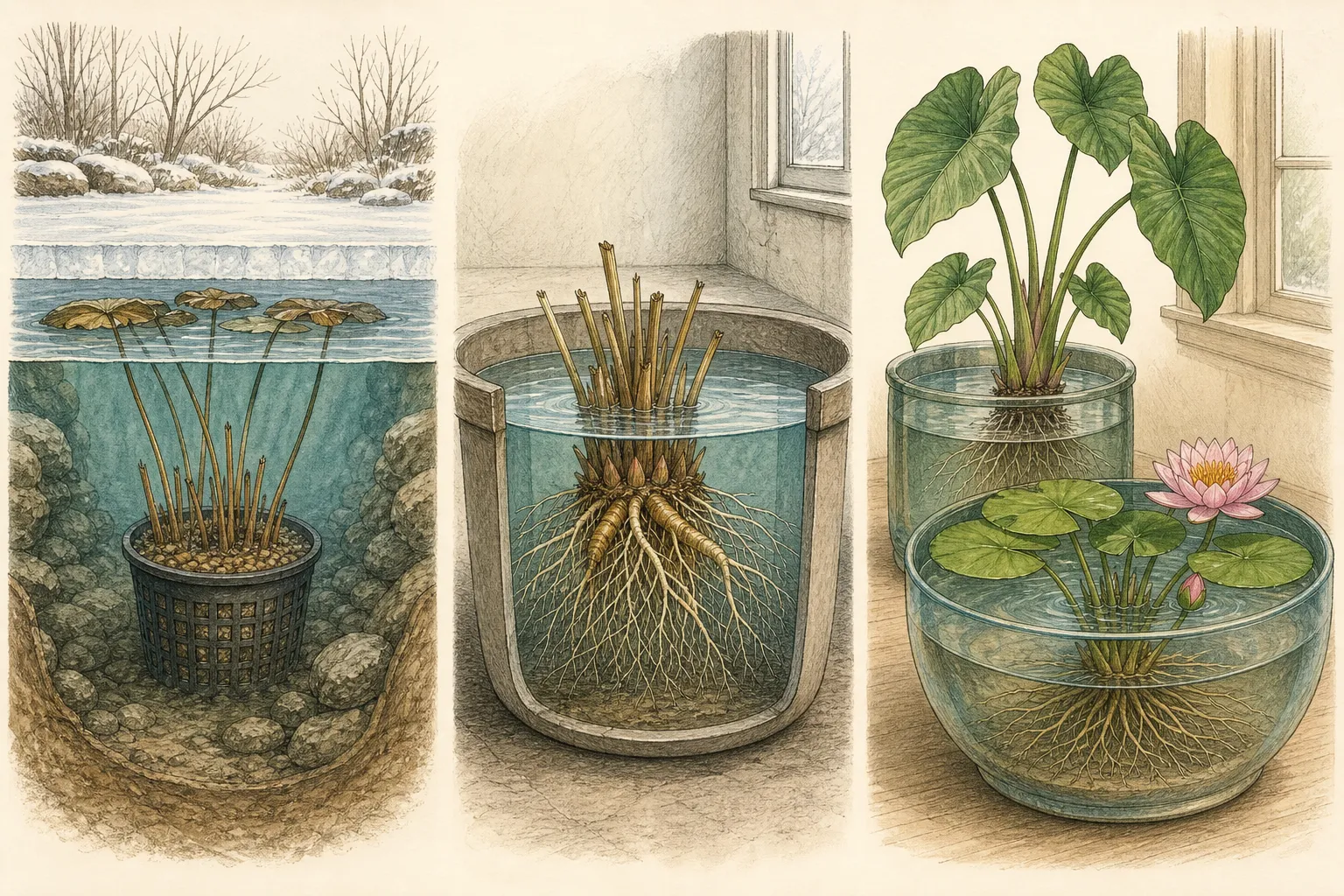
Retain the distinction from tropical water lilies throughout winter. Their instructions may call for warmer storage or active growth in heated water, and their spring return can wait for much warmer pond conditions. Those warmer temperatures apply to tropical lilies. The [tender aquatic overwintering guide](/grow/overwinter-tender-aquatic-plants-from-garden-pond/) covers that separate route for correctly identified tender stock.
Return after thaw and match depth to new growth
Moore returns stored hardy lilies after pond ice has melted in spring. Check that the intended position is accessible, the water level is stable and renewed freezing is unlikely to reach the crown. A hardy lily's return is not governed by the tropical-lily threshold of 70°F. Use local conditions, the cultivar and the plant's current stage, keeping a cold-storage fallback available if the shallow pond remains unsuitable.
Unpack the basket, remove the damp paper gently and inspect the label, crown and container. Clear dead material and restore any displaced surface gravel while keeping the growing point exposed. If the basket is badly congested, plan division for late spring or early summer according to RHS guidance. Routine autumn storage has not changed the crown's correct position at the planting-medium surface.
Reintroduce a newly divided or weakly starting lily at a depth its young leaves can manage. The RHS uses 15–25 cm, or 6–10 inches, of water over the crown when establishing a newly planted water lily, then lowers it in stages as growth develops. That is an establishment example, not a new permanent depth for every stored mature lily. Restore an established basket to its cultivar-appropriate growing position and adjust as growth warrants.
Resume growing-season feeding with a suitable aquatic product and its directions when the plant is ready. The RHS places aquatic feed tablets in the planting medium so nutrients reach the plant. Record whether the winter location stayed cold and moist, whether the pond's measured depth was adequate and how the lily resumes growth. That evidence makes the next autumn's storage decision more reliable than repeating a depth or date from a different garden.
Steps
- Level
- moderate
- Time
- About 30–45 minutes for an accessible basket, plus winter checks
- Tools
- Cultivar label and waterproof pencil, Measuring stick or tape, Sharp scissors or secateurs, Minimum–maximum thermometer, Suitable basket carrier and lifting help where needed
- Materials
- Accessible planted basket of a confirmed hardy water lily, Large moisture-retaining plastic bag, Newspaper for a damp covering, Waterproof tray or robust outer holder, Cool, dark, reliably frost-free storage position
- 1Identify the lily and assess its real winter depth
Confirm the cultivar is a hardy Nymphaea and retain its label. Measure the water over the crown, subtracting basket and support height from total pond depth. Compare that position with local freezing experience and expected winter water level. Prepare cold storage if the pond may freeze to the rhizome or its margin is uncertain.
- 2Prepare storage before seasonal lifting
Choose a cool, dark position that stays above freezing and check it with a thermometer. Moore's hardy-lily reference is approximately 40°F, or about 5°C. Arrange a waterproof holder, a large bag and damp covering material before lifting. Wait for late-autumn slowing and fading foliage, while finishing the move before ice prevents safe access.
- 3Lift and clean the intact basket
Support the basket from beneath or by sound handles and move it into a carrier. Remove old yellowed or frost-killed foliage near its base, preserving the crown's compact new leaves and buds. Collect loose trimmings and retain the planting medium around the rhizome. Leave a crowded basket's routine division for late spring or early summer.
- 4Set the chosen winter position
For a suitable deeper pond, lower the basket upright into a stable position and recheck water depth above the crown. For indoor storage, place the planted basket in its bag and add damp newspaper around the exposed surface gently. Keep the medium moist, the label readable and the package accessible in the prepared cool holding area.
- 5Inspect moisture and condition
Check the stored basket periodically and after temperature changes. Re-moisten drying covering and medium as needed, and investigate progressive softness, odor or decay. Keep a declining plant separate while obtaining advice. For a lily remaining in the pond, monitor water level and displacement. Reassess unexpectedly active growth before continuing a dark dormant routine.
- 6Return and restart after thaw
When ice has melted and the shallow pond is suitable again, unpack the basket and inspect its crown. Restore it to an appropriate growing position, using staged depth changes for young or newly divided growth. Keep the growing point at the medium surface. Resume aquatic feeding with active care and record the outcome for next winter.
Related reading
Sources
- Overwintering Waterlilies. Chicago Botanic Garden. Source record · Accessed 2026-10-29.
- How to grow waterlilies. Royal Horticultural Society. Source record · Accessed 2026-10-29.
- Fall and Winter Care of Watergardens. Iowa State University Extension. Source record · Accessed 2026-10-29.
- Over Wintering Your Plants. Moore Water Gardens. Source record · Accessed 2026-10-29.