Grow · protect tree fern crown winter uk
Protect Tree Fern Crowns Through a UK Winter
Protect Dicksonia antarctica with gentle crown packing, adjustable wrapping and winter watering that keeps the trunk damp while the crown stays protected.
Published Last updated
In this guide
- Protect the growing point before frost reaches it
- Confirm the species and separate young stock from established plants
- Leave useful fronds and make room to work at the crown
- Lay dry insulation gently over the crown
- Extend the cover for colder exposure
- Keep the trunk damp while avoiding winter crown irrigation
- Open the protection during mild spells and inspect what changes
- Release the crown carefully as spring growth begins
- Steps
Protect the growing point before frost reaches it
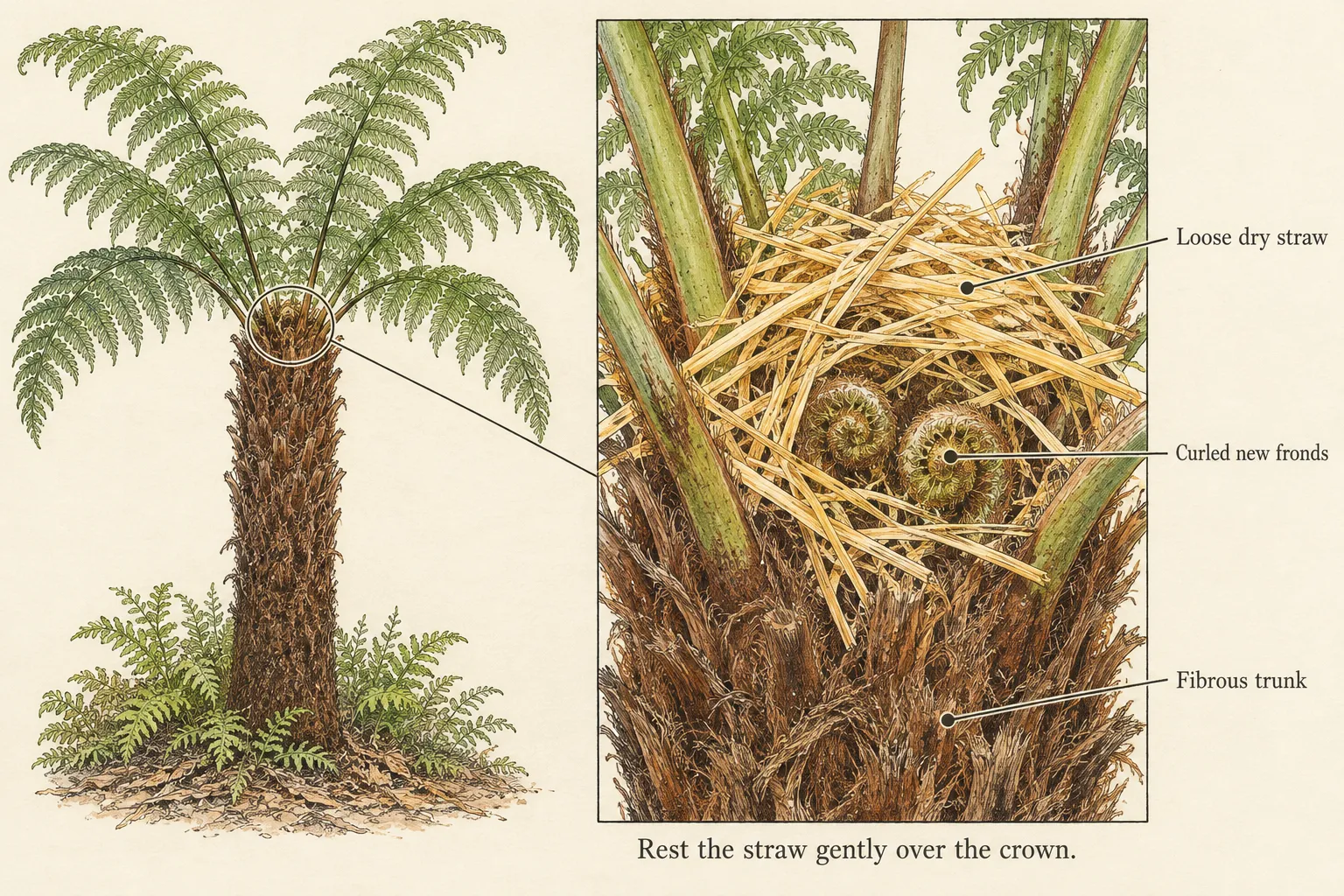
Put a loose handful of dry straw into the crown of an established Dicksonia antarctica when frost is forecast, taking care around the curled new fronds. In a mild, sheltered UK garden, crown protection may be the main job. In colder exposure, gather the existing fronds gently, wrap the trunk and leafy bundle with horticultural fleece, and keep the covering accessible for checks. Young trunkless plants and newly bought frondless trunks need frost-free shelter.
The crown is the top of the fibrous trunk, where the fronds emerge. Protection has to reach that growing region; wrapping only the lower trunk leaves the central task unfinished. Equally, forceful packing can injure the growth you are trying to save. Big Plant Nursery's tree-fern instructions specifically warn that pressure from straw can damage the delicate new croziers inside the crown. Prepare a light, removable layer, with enough access to see what your hands are doing.
Early November is a useful preparation point in many UK gardens, but use the first warning of frost to decide when to fit the protection. The RHS places winter wrapping broadly between September and November. A cold inland garden may already need it, while a sheltered coastal plant can still be carrying sound green fronds. Have dry materials ready before the forecast turns, then match the coverage to the plant and exposure.
Confirm the species and separate young stock from established plants
Check that the plant is Dicksonia antarctica, commonly sold as the soft or Tasmanian tree fern. The RHS describes a stout, reddish-brown trunk-like rhizome clothed in fibrous roots, with a rosette of deeply divided fronds at its top. This care applies to that species. A label saying only tree fern leaves too much unresolved, because other tree ferns can need different winter conditions. Confirm the name with the supplier before copying an outdoor wrapping routine.
The RHS rates D. antarctica H3 for UK conditions, associated with coastal and relatively mild districts, and its growing guide warns that it will not tolerate temperatures below about −5°C, or 23°F. Treat that as a limit on planning, not a temperature to wait for before acting. Neither the height of the trunk nor a thick bundle of fleece proves that a plant can withstand a prolonged spell below that range. Use local experience and an alternative shelter plan where exposure is severe.
Stock type changes the decision before any straw is added. The RHS calls for frost-free overwintering of a newly purchased frondless trunk and of a young trunkless plant. Those are not equivalent to an established garden specimen whose older fronds have browned in winter. A bare nursery log still needs its establishment conditions; a mature fern may naturally lose fronds in colder weather. Keep the original label and purchase history with the plant so those two situations are not confused.
A manageable potted fern offers a relocation option. The RHS recommends a sheltered position and bringing container plants into a greenhouse or conservatory; suitable growing space is shaded or brightly filtered, humid and ventilated. Check that the actual winter station stays frost free where required. A cramped, dry heated room is a poor match for the canopy, while an unheated greenhouse cannot be assumed frost free simply because it has a roof.
Leave useful fronds and make room to work at the crown
Inspect the crown from a position where you can see its centre clearly. Move loose fallen tree leaves and other debris that conceal the work area, lifting them gently. The fibrous brown covering of the trunk and the bases of old fronds belong to the plant's structure; they are not a rough surface that needs scraping smooth. Keep tools and fingers away from the tightly curled new growth. If the crown is too high to reach safely, arrange appropriate help before frost makes the work urgent.
Retain sound green fronds where they can be accommodated. The RHS species profile permits removal of dead or damaged fronds, while its winter method uses existing fronds as part of the protection. Cutting every frond off for a tidier bundle removes that option. Identify what is actually broken or dead, then keep any necessary trimming clear of the crown. A fern with a broad, healthy head should not be reduced to a stump merely to simplify wrapping.
Before lifting fronds together, check where their stems arise and how freely they move. Bring them upward gently in groups, supporting their length. If a stiff stem resists, stop forcing it and adjust the arrangement. Cambridge University Botanic Garden suggests a supporting framework of canes or stakes for additional protection of exotics in harsher winters. A framework can carry a loose covering where the existing head cannot be bundled neatly; the fronds need space inside it.
Leave a practical route back to the plant. You will need to open the cover, check the crown packing and reach the trunk during dry weather. Mark ties or use accessible bows so you can release the material from outside the bundle. A tightly wound spiral with its end buried behind a trunk is awkward to undo in a wet January spell. Prepare the covering as a piece of seasonal care that will be adjusted several times.
Lay dry insulation gently over the crown
Use clean, dry straw or dry bracken for the insulating layer. The RHS tree-fern guide describes a handful of straw in the crown, and Cambridge also lists fleece or hessian among crown-protection materials. Straw gives a useful loose structure that is easy to lift again. Set it into the spaces at the top with light fingers, stopping as soon as it rests over the vulnerable centre. The amount follows the size of the crown; there is no benefit in compressing a large bale into a small opening.
Keep the curled croziers intact. Place the material around and over them with minimal pressure, leaving it easy to tease away during a check. Big Plant Nursery's warning concerns physical damage from pushing, so a snug-looking photograph is not a reason to ram straw deeper. The finished layer should cover the central growth while remaining loose. If the opening is already packed with wet fallen debris, lift that loose debris before adding fresh insulation.
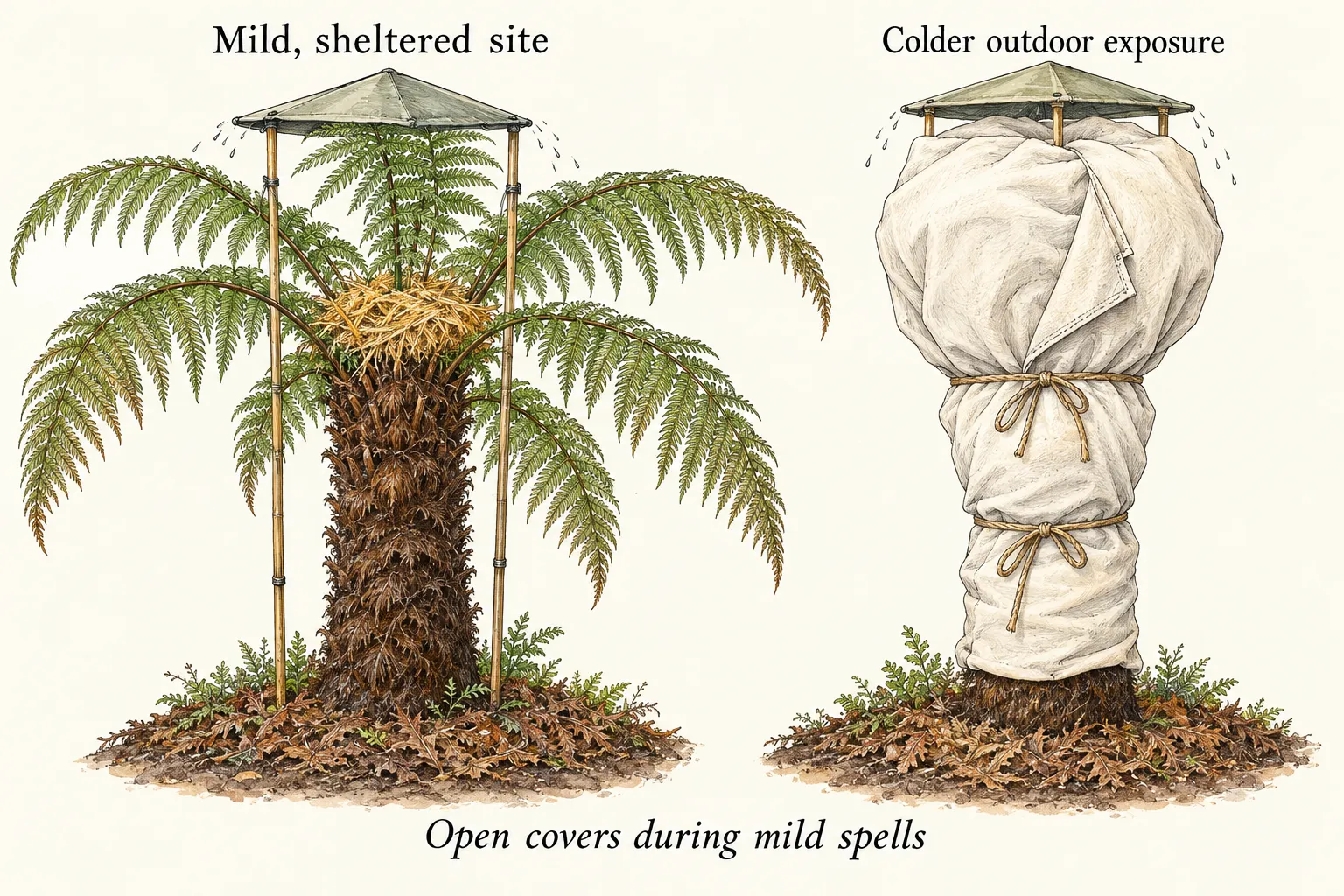
In a mild, sheltered position, the RHS wrapping advice allows straw over the crown with a waterproof cap to shed rain. Keep that cap distinct from a sealed plastic sleeve around the whole fern. Secure it so wind cannot drop it into the crown, and leave the sides of the arrangement able to breathe. A small supported rain cover can protect the dry packing while preserving access. Its role is to shed water; the straw beneath supplies insulation.
Look at where the water will go after fitting the cap. A sagging cover that holds a puddle or directs roof drips into the centre defeats that purpose. Keep the support and fastening clear of the croziers and retained frond bases. After rain, lift an accessible edge and check the packing itself. Replace material that has become sodden, and correct the route that wetted it, before the next cold spell closes the crown again.
Extend the cover for colder exposure
For a plant remaining outside in a colder UK position, protect more than the crown opening. The RHS recommends wrapping the trunk in fleece, tying the fronds upright around straw or bracken at the centre, and enclosing the bundle in a double layer of horticultural fleece. Big Plant Nursery describes the same progression for penetrating cold or heavy snow. Gather and secure the fronds gently; the ties hold the arrangement together, not squeeze the stems into a hard column.
Use breathable fleece or hessian around the living structure and keep the rain-shedding cap accessible. Where a frame is needed, support the covering from that frame so it is not pulled tightly across the growing point. Leave the base and soil available for inspection. The RHS also recommends organic mulch over the root area for frost protection. Spread it over the surrounding soil while keeping access to the trunk base and preserving existing drainage.
Fleece gives limited protection. RHS guidance describes heavier grades as offering around 2°C of frost protection, but also explains that covered temperatures can fall toward the surrounding air temperature as warmth is lost. Two layers provide no guaranteed 4°C allowance, and a cover cannot make an exposed garden equivalent to a frost-free greenhouse. Treat the wrapping as weather protection within the plant's realistic range. Where prolonged severe cold is expected, move a manageable pot to suitable shelter.
Cambridge's advice distinguishes mild winters from harsher ones and calls for removing covers during milder spells to prevent sweating and rot. That makes the fastening as important as the thickness. Keep the top protection and trunk covering separable enough to open when conditions allow. Refit them before renewed cold. For a large planted specimen that cannot be moved, obtain local specialist advice if the expected conditions exceed the protection available; additional layers alone cannot guarantee survival.
Keep the trunk damp while avoiding winter crown irrigation
Tree ferns are not dry-stored winter ornaments. The RHS growing guide says to keep the trunk damp and spray it during dry conditions in winter. Its D. antarctica profile separately advises avoiding watering the crown in winter. These instructions refer to different parts of the plant. Check the fibrous trunk and root-zone moisture, then direct any needed water to those areas during suitable mild conditions. Keep the insulated crown and its dry packing out of the watering stream.
Rainfall in the garden does not tell you how much water reaches a wrapped fern. A cap, fleece layers or a greenhouse roof can keep parts of it dry while nearby soil is soaked. Open the covering enough to inspect and reach the trunk, then assess the soil or potting mix separately. Water where it is needed and allow excess to drain. A damp trunk and moist, well-drained root zone are the aim; standing water at the base is a different condition.
For a potted fern under cover, check the container after watering and empty collected runoff. Cambridge recommends pot feet or suitable bricks for outdoor containers to help drainage, but supports must be stable under the fern's weight. Keep drainage openings clear of wrapping. Our [container freeze-thaw guide](/grow/protect-container-perennials-freeze-thaw/) covers the general root-zone arrangements; the elevated fern crown still needs its own species-specific treatment.
Leave routine feeding for the growing season. RHS tree-fern guidance places liquid feeding from mid-spring to mid-summer after the first year, or controlled-release fertilizer around the base in spring. Browned winter fronds are not evidence that the fern needs an autumn feed. Concentrate on moisture, exposure and the condition of the protected growing point. Major potting work also belongs to the spring maintenance period described by the RHS, except where a failing container requires immediate attention.
Open the protection during mild spells and inspect what changes
Check the arrangement after strong wind, persistent rain or snow, then again when a mild spell allows you to open it. Inspect the fastenings before pulling at the cover: a loose end may have wrapped around a frond, and a shifted cap may be resting on the crown. Lift material away carefully. Replace wet packing and restore a loose, dry layer when cold protection is still needed. Reusing the same soaked bundle simply repeats the problem.
Use the appearance of the whole fern to interpret winter change. The RHS describes D. antarctica as evergreen but deciduous in colder areas, so loss of old fronds alone does not establish that the crown has died. A protected centre with firm curled growth deserves a different response from visibly decaying tissue. Keep observation at the surface, leaving the growing point intact. Photograph a concern and seek specialist assessment when the crown itself appears damaged or deteriorating.
Keep indoor plants under observation too. The RHS notes red spider mite as a possible problem for tree ferns kept in glasshouses and conservatories. Unusual deterioration of retained fronds warrants close inspection and identification, especially if the shelter is warm and dry. Distinguish the cause of brown fronds: cold exposure, a dry trunk and an indoor pest call for different actions. Preserve the label and note the conditions alongside the symptoms.
Maintain the ability to put protection back promptly. Cambridge and the RHS both advise opening coverings in mild weather and replacing them when cold returns. Lay reusable fleece out to dry when it is off the plant, and keep clean straw in a dry place. The aim is an inspectable fern with a working winter cover, not a package that remains sealed until a fixed date.
Release the crown carefully as spring growth begins
Remove winter wrapping in stages once the danger of severe frost has passed and new growth is beginning, following the RHS wrapping guidance. A dull day helps the transition. Loosen the outer ties and lift the fleece away before removing crown packing, so you can see the emerging croziers. Tease straw away in small pieces where it catches between frond bases. The same light touch used in autumn matters when new fronds start to unfurl.
Give the head room to open and keep protection ready for a renewed cold forecast. A warm afternoon is not evidence that the whole spring risk has ended. Plants brought under glass should return to a sheltered, shaded position when outdoor conditions suit them, with moisture checked through the change. Keep bright filtered light and shelter from drying exposure in mind; a fern emerging from protection does not need an abrupt move into strong sun.
Assess old foliage separately from new growth. Remove confirmed dead or damaged fronds as necessary, keeping cuts away from the central growing point and sound emerging fronds. Resume growing-season water and feeding according to the fern's condition and the RHS seasonal guidance. Record whether the crown packing stayed dry, how often the trunk needed attention and which shelter worked. Use those observations to choose next winter's protection, while remembering that one mild season proves little about long-term hardiness.
Steps
- Level
- moderate
- Time
- About 30–45 minutes for a reachable tree fern, followed by weather checks
- Tools
- Gardening gloves, Soft garden twine or reusable ties, Scissors for cutting covering material, Minimum–maximum thermometer, Watering can with a gentle rose
- Materials
- Dry straw or dry bracken, Horticultural fleece or hessian, Secure, removable waterproof crown cap, Canes or stakes where a supporting frame is needed, Organic mulch for the surrounding root area, Suitable frost-free shelter for young plants or movable vulnerable stock
- 1Identify the fern and choose its winter location
Confirm Dicksonia antarctica and distinguish an established specimen from a young trunkless plant or newly bought frondless log. Reserve frost-free shelter for stock that needs it. Check the forecast and the actual holding position with a thermometer. Prepare reachable crown access, dry materials and a practical route for moving a manageable pot.
- 2Expose the work area gently
Lift loose fallen leaves from the crown so you can see the curled croziers and existing frond bases. Retain the fibrous trunk covering and sound green fronds. Remove only clearly dead or damaged foliage where necessary, keeping cuts away from the centre. Arrange help if the growing point is beyond a safe working reach.
- 3Place a loose crown layer and rain cap
At the first warning of frost, set a handful of dry straw lightly around and over the central growth. Keep pressure off the croziers and leave the material easy to lift. Secure a rain-shedding cap over the packing, with supports clear of the growing point and sides open enough for ventilation and later inspection.
- 4Add full wrapping where exposure requires it
Gently gather suitable fronds upright and fasten them loosely enough to preserve their stems. Wrap the trunk and enclose the protected head in fleece, using the RHS double-layer method for colder outdoor exposure. Support the covering on a frame if needed. Mulch the surrounding root area while retaining drainage and access to the base and ties.
- 5Adjust cover and moisture through winter
Check after storms and open protection during milder spells. Replace sodden packing and correct leaks or displaced covers. Inspect the trunk and soil separately; provide water where needed in dry conditions while keeping winter crown irrigation out of the routine. Empty container runoff, then refit dry protection before another forecast cold spell reaches the plant.
- 6Uncover new growth in spring
When severe frost risk has passed and growth begins, remove wrapping in stages or on a dull day. Release ties first, then tease insulation away from emerging croziers. Keep fallback protection available and return sheltered pots to suitable outdoor conditions gradually. Remove confirmed damaged fronds carefully and resume seasonal care as the fern develops.
Related reading
Sources
- How to grow tree ferns. Royal Horticultural Society. Source record · Accessed 2026-10-24.
- Dicksonia antarctica. Royal Horticultural Society. Source record · Accessed 2026-10-24.
- The garden in frost and snow. Cambridge University Botanic Garden. Source record · Accessed 2026-10-24.
- Overwintering tender plants: wrapping. Royal Horticultural Society. Source record · Accessed 2026-10-24.
- Winter Protection for Tree Ferns. Big Plant Nursery. Source record · Accessed 2026-10-24.
- Fleece and crop covers. Royal Horticultural Society. Source record · Accessed 2026-10-24.