Grow · tender fuchsia dormant pot overwintering
Overwinter Tender Fuchsias in Pots Before the First Frost
Keep tender fuchsias through winter in cool, frost-free storage: choose the space, prepare the plant, check moisture, and restart growth in spring.
Published Last updated
In this guide
- Bring the pot under cover before frost arrives
- Identify the fuchsia and the shape you are saving
- Measure the storage space and choose the winter regime
- Prepare an established basket for its winter rest
- Prune for available space without losing the framework
- Check moisture through winter without reviving the summer schedule
- Restart in spring with light, then growth
- Return the fuchsia to its outdoor place gradually
- Steps
Bring the pot under cover before frost arrives
A tender fuchsia can spend winter in its pot with a small woody framework and very little watering. Bring it inside before the first frost, keep it somewhere reliably cool and frost free, and give enough water to prevent the root ball from drying completely. Once you want growth to resume in spring, light and more regular watering become part of the job again. Saving the plant does not require keeping its autumn flowers going through winter.
For an established bush or trailing hybrid, a storage target of 45–50°F, approximately 7–10°C, is a useful starting point. This falls within Iowa State University Extension's 40–50°F recommendation and matches Clemson Cooperative Extension's narrower range. The roots stay in their potting mix. A basket of fuchsia roots is not stored dry like a box of dormant bulbs, and a closed shed is suitable only if its temperature actually stays within the plant's needs.
Late September is a good time to make this arrangement in many temperate Northern Hemisphere gardens, but first frost can arrive much earlier or later. Use the forecast for your locality and the conditions at the basket itself. An exposed hanging plant needs a place ready before a cold night catches you moving heavy containers in the dark. Keep the current display outdoors while conditions suit it; advance preparation simply makes the eventual move manageable.
Identify the fuchsia and the shape you are saving
Read the cultivar label before borrowing advice from a neighbor's outdoor shrub. The Royal Horticultural Society notes that tender and hardy fuchsias can look very similar. Neither flower color nor a large summer canopy establishes winter hardiness. If the label has disappeared, ask the original nursery for the cultivar and its winter requirements. Until that is resolved, give a cherished container plant frost-free protection instead of testing it in the border.
This method concerns established tender hybrid fuchsias grown as bushes or trailing plants in pots and hanging baskets. A locally hardy fuchsia planted permanently in the ground has a different winter situation. Young rooted cuttings also need separate attention: Clemson keeps fall-rooted cuttings in cool conditions with bright light, while an established resting plant can occupy a much dimmer space. Check specialist instructions for unusual species and Triphylla Group plants before applying the basket routine.
A standard fuchsia, with a bare main stem and a leafy head like a small tree, changes the pruning decision. Its trunk is the structure you have spent time growing. RHS advises winter protection for standards even when the cultivar itself is hardy, because that stem is vulnerable to frost. Mark the trunk clearly in your mind before taking up the shears: any reduction belongs to the head, not to the bottom of the trunk.
Also decide whether this is a plant worth giving scarce storage space. A healthy specimen of a favorite cultivar is a reasonable candidate. A badly declining plant with unresolved damage needs assessment before it joins other plants indoors. Photograph the whole plant and its label while identifying details remain visible. That record helps distinguish a deliberately shortened winter framework from a plant that has lost branches unexpectedly.
Measure the storage space and choose the winter regime
Put a minimum–maximum thermometer where the pot will stand, then read it through changing weather. A room name is not a temperature measurement. A garage attached to a house, a basement corner, and a glazed porch can behave very differently; even two shelves in the same space may offer different conditions. The useful question is whether the particular spot remains cool and above freezing through cold spells, including nights when the main room is not heated.
Dim light is compatible with the cool-rest method described by Iowa State. Washington State University's guidance likewise separates dormant storage from the well-lit conditions required when shoots begin growing. A plant retaining an active leafy canopy needs a suitable light source. If the only available space is warm and dark, resolve that mismatch before choosing it: it supplies neither the cool resting conditions nor the light needed for sustained growth.
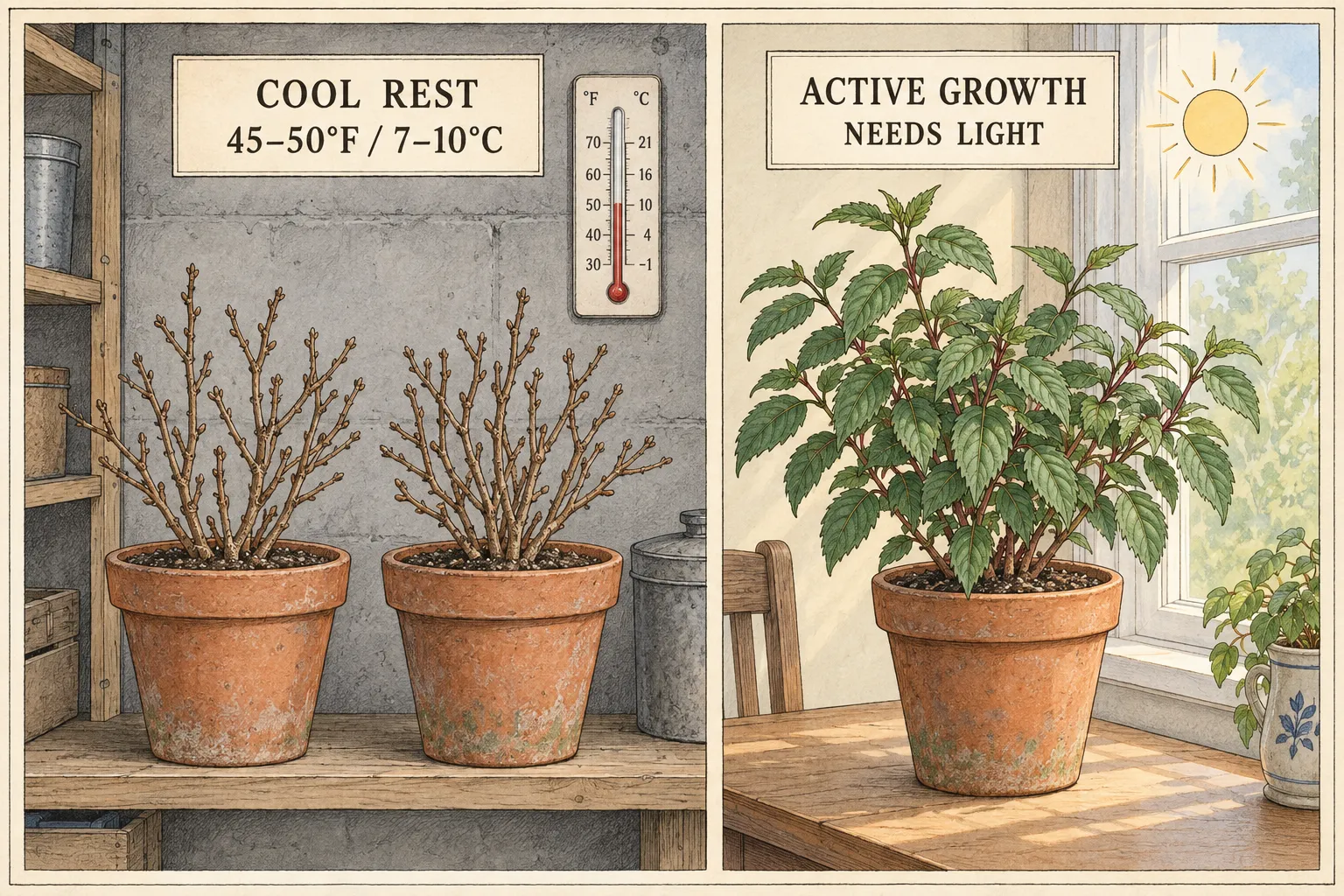
Choose a position you can reach with a watering can and inspect without moving a stack of possessions. Leave room to see each pot surface and reach branches for checking. Set baskets securely on a support that fits their rounded bases, or retain a sound hanging arrangement with enough access underneath. A drip tray can protect the floor, but it needs emptying after watering. Mark the storage temperature target beside the thermometer so another household member can help when you are away.
Prepare an established basket for its winter rest
Begin easing the plant out of its summer routine while it is still accessible. Clemson recommends stopping fertilizer at least two weeks before the anticipated indoor move and gradually extending the interval between watering. This is a reduction based on the pot's moisture and the plant's slowing growth, not a deliberate drying treatment. A basket still carrying plenty of leaves on a warm, breezy day may need water even though a winter storage space has been prepared.
Before bringing it into a collection, inspect the leaf axils, undersides, and remaining branches. Both Clemson and RHS identify insects and other problems that can accompany fuchsias under cover. Keep a suspicious plant separate while obtaining an identification; a winter-care recipe cannot determine a treatment from the fact that a leaf is yellow. Remove accumulated fallen leaves and flower debris from the pot surface, and keep checking for new litter during the transition.
Retain the intact potted root system for this method. There is no need to dismantle a healthy hanging basket and bare-root it simply to give it a winter rest. Decide where it will drain before carrying it indoors, remove loose decorative items that obstruct inspection, and attach a label to the container. Save substantial repotting for the spring restart, when the plant is returning to growth and its next container can be selected deliberately.
Prune for available space without losing the framework
There are two workable schedules in the source guidance. RHS and Clemson describe cutting plants back as part of winter preparation; Iowa State describes a severe cutback when the stored plants are brought into light in March. Choose according to the space and shape you are preserving. An established bush that must fit a shelf can be shortened in autumn. A plant that fits comfortably can keep more structure until spring. Repeating both hard cuts automatically gains nothing.
For ordinary bush or trailing tender fuchsias, RHS describes a framework about 3–6 inches, or 7.5–15 cm, above the potting mix, with taller stems retained when a larger plant is wanted. Clemson also allows roughly 6-inch stubs on large plants. These are framework options, not a requirement to make every branch identical. Inspect the branching first, take out weak or damaged portions, and make controlled cuts above a node or branch junction as described in the Washington State guidance.
On a standard, measure the retained branches from the top of the main stem. RHS places the same 3–6-inch framework within the head of the standard. Leave the clear trunk intact and allow enough storage height for it. If the head cannot fit without cutting away the trunk, change the storage arrangement or choose another plant to keep. The height of a shelf is a poor reason to erase the form of a mature standard.
Remove loose leaves as the plant settles into rest and keep the pot surface clear. A shortened fuchsia can look stark without being a failed plant; the intended result is a viable woody framework over living potted roots. Take a second photograph after preparation. It gives you a starting reference for winter checks and records how much pruning has already been done, especially when several similar leafless pots share one shelf.
Check moisture through winter without reviving the summer schedule
The winter watering target is barely moist potting mix. Clemson's instruction is to water just enough to prevent complete drying; Washington State cautions against soggy soil. These describe the condition to maintain, not an identical dose for every container. A large plastic hanging pot and a small porous pot will not necessarily reach that condition together. Check individual pots, including below a dry-looking surface, before deciding which actually need water.
Iowa State gives about once every three or four weeks as an example of sparse winter watering. Use that to understand the reduced scale, not as permission to ignore the plant between dates. Washington State recommends checking every few weeks. Inspect sooner after a change in room temperature or an unexpected warm spell. Keep a brief date-and-moisture note for each pot; it is more informative than watering all of them whenever you happen to enter the room.
When a pot needs water, apply it to the mix and let excess drain away. Empty its tray. If the mix is already damp, another application is not the answer to a bare canopy. Conversely, a resting plant still has living roots, so a dusty, fully dried root ball needs attention even when there are no leaves left to wilt. Keep fertilizer out of the resting routine and resume it with active growth, following the product instructions.
Unexpected new shoots mean the plant's state has changed. Look at the thermometer and the available light together. A warm spell may leave shoots trying to grow in a dim storage corner. Arrange good light as growth develops, as Washington State advises; do not keep treating a leafy, growing plant as though it were an inert winter object. Moisture checks then become more frequent as the canopy expands. This is also the time to decide whether an earlier spring restart is practical.
Restart in spring with light, then growth
Iowa State brings stored fuchsias out in March, waters them well, and places them at an east or west window or under artificial light. That month belongs to its regional schedule. Plan your own restart around the weeks of protected growing space available before outdoor conditions become suitable. A plant can begin growth indoors before the last frost, provided it has the light and care to remain there until it can safely move out.
Complete any pruning deferred from autumn, inspect the framework, and move the pot into its growing position. Clemson recommends repotting when new growth appears, using the same container or one slightly larger with fresh potting mix. RHS supports peat-free multipurpose compost for container fuchsias. Use a container with drainage, keep the stem base at its established level, and water with attention to how the fresh mix drains. A dramatically larger pot is not needed to announce the new season.
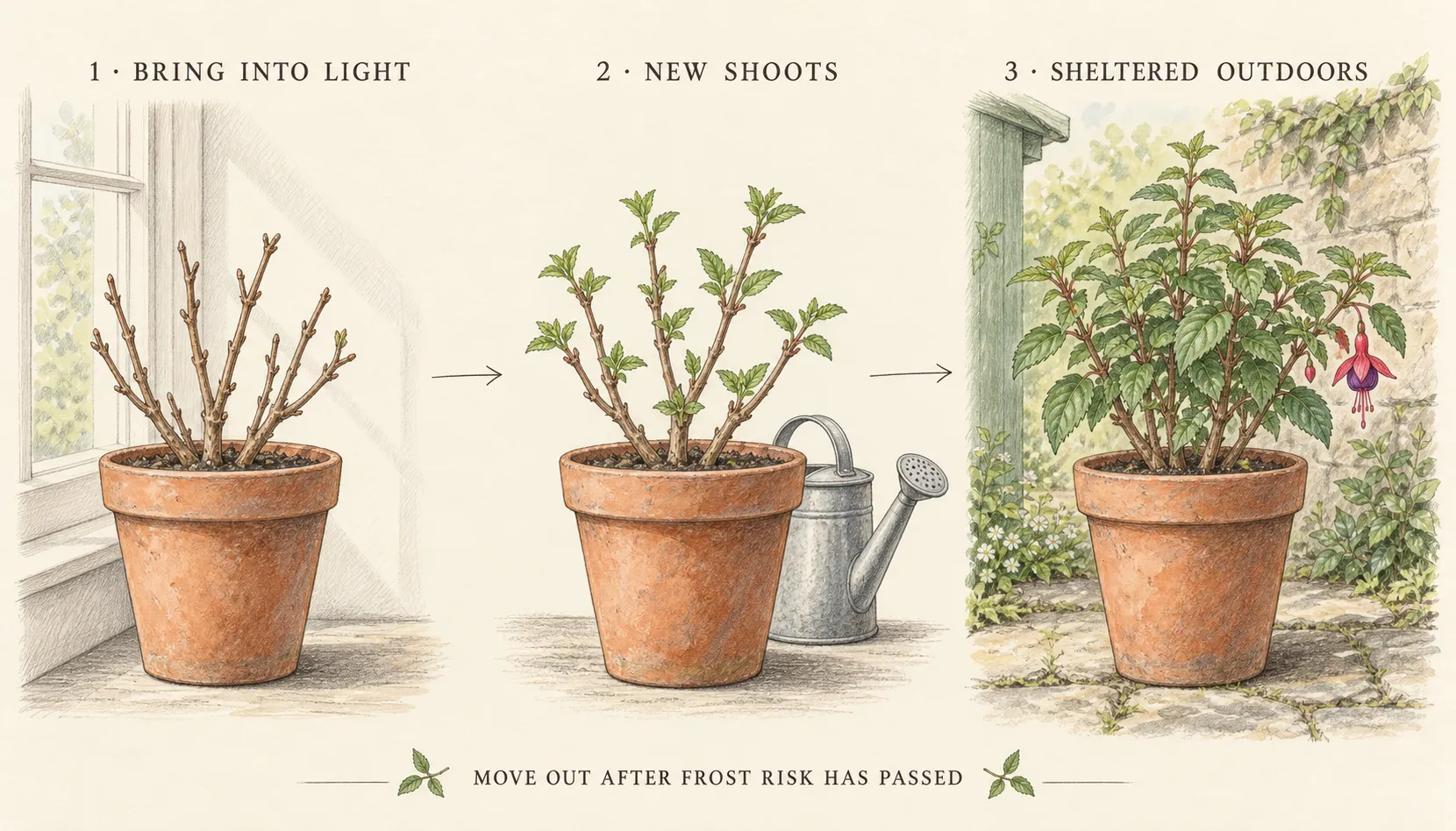
As shoots develop, resume regular moisture checks and begin feeding in line with the fertilizer label and the growing conditions. Clemson recommends pinching after a shoot has formed two full sets of leaves to encourage branching. Plan the final pinch with the flowering display in mind: RHS notes that pinching delays bloom and flowers may take up to eight weeks after the last pinch. For a basket wanted for an early-summer event, repeated late pinching can work against the desired date.
Return the fuchsia to its outdoor place gradually
The final move is governed by local frost risk, not by how ready the basket looks. Iowa State's May outdoor date is regional; its transferable instruction is to wait until frost danger has passed and start in a shaded, protected position. A porch that catches hard afternoon sun is not the same as a sheltered acclimation spot. Let the plant adjust before putting it back on the exposed hook where it flowered last summer.
Keep checking water as wind, sunlight, and the growing canopy change demand. Reattach the label, inspect the basket and hanger, and choose the summer position for the fuchsia's light and heat tolerance. If cold weather returns during the transition, keep the container mobile enough to bring back under cover. The useful measure of success is a sound plant making balanced new growth; a stored fuchsia need not be flowering on the first day it goes outside.
Steps
- Level
- moderate
- Time
- 30–45 minutes to prepare one established plant, plus brief winter checks
- Tools
- Clean sharp pruning shears, Minimum–maximum thermometer, Small watering can, Stable support for a hanging basket
- Materials
- Established tender hybrid fuchsia in its container, Weatherproof cultivar label, Drip tray that can be emptied, Fresh container potting mix for the spring restart
- 1Confirm the plant and the forecast
Locate the cultivar name and check whether you are saving a bush, trailing basket, or standard. Keep young cuttings and specialist species on their own care plan. Select a move date before expected frost, allowing time to prepare the container while it is still easy to inspect outdoors.
- 2Test the actual shelf temperature
Place a minimum–maximum thermometer at pot level in the proposed storage position. For this cool-rest method, aim for 45–50°F (about 7–10°C), the overlap of the Clemson and Iowa recommendations. Check cold-night readings; an unheated building that freezes does not qualify. Reserve a brighter growing position for spring.
- 3Wind down and clean the basket
Stop feeding at least two weeks before the planned move, as Clemson advises, and reduce watering progressively as demand falls. Keep the root ball from drying completely. Inspect branches and foliage before moving the pot near other indoor plants, and remove fallen material from the mix.
- 4Fit the framework to the space
Shorten an ordinary bush or trailing plant if required for storage, leaving the viable branching framework described in the article. Preserve a standard’s trunk and work only within its head. If you leave the main cutback until spring, note that decision on the pot label so it is not repeated blindly.
- 5Store and inspect individual pots
Keep the potted roots intact in the cool space. Check every few weeks and after temperature changes; water only enough to maintain barely moist mix, then empty drainage trays. Record which pot needed water. Increase attention if fresh shoots appear, because active growth needs suitable light.
- 6Arrange the spring restart
Move into good light when you can support several weeks of indoor growth. Finish deferred pruning and resume watering as the plant develops. Repot around the appearance of new growth, using the same pot or a slightly larger drained container. Begin feeding with growth and pinch young shoots to build the desired shape.
- 7Acclimate after local frost risk
Start outdoors in a sheltered, shaded position once frost danger has passed. Keep the pot movable during the transition and monitor its changing moisture needs. Recheck the basket support before hanging it in its summer position, and stop pinching early enough to allow the intended flowering display.
Related reading
Sources
- Overwintering Fuchsias. Iowa State University Extension and Outreach. Source record · Accessed 2026-09-10.
- Fuchsia. Clemson Cooperative Extension. Source record · Accessed 2026-09-10.
- How to grow tender fuchsias. Royal Horticultural Society. Source record · Accessed 2026-09-10.
- Ask the Master Gardener: Wintering Fuchsias. Washington State University Skagit County Extension. Source record · Accessed 2026-09-10.