Grow · spring crocus lawn mowing
Plant Spring Crocus Corms in a Lawn You Can Mow Later
Choose a mow-later lawn patch, plant spring crocus corms in autumn, and let their leaves finish before the first cut across the drift.
Published Last updated
In this guide
Reserve the spring no-mow patch now
Plant spring-flowering crocus corms in autumn in a well-drained part of the lawn that you can leave unmown until their leaves die back naturally. The site decision comes before the planting depth. If the chosen strip must be cut as soon as grass starts growing, put the crocuses in a bed or beneath a deciduous shrub instead. The Royal Horticultural Society makes this distinction explicit for crocuses in grass: mowing waits for the foliage, not merely for the flowers to finish. In a cool temperate garden, early October is a practical time to prepare this spring arrangement while dormant corms are on sale and the ground remains workable.
Mark a patch that does not carry the shortest route to a door, clothesline, play space, or gate. A lawn edge beside a border is often easier to manage than an island in the middle of heavily used turf. You can mow the rest of the grass on its usual schedule while letting one irregular drift grow. The RHS October lawn guidance recommends planting spring bulbs in defined areas that can be left uncut before and after flowering. A narrow but deliberate mowing boundary is a real maintenance plan; a promise to dodge scattered flowers throughout the whole lawn is less reliable.
Look at the site after ordinary autumn rain. Crocus grows in well-drained soil, with full sun or partial shade according to Illinois Extension. A turf depression that remains wet is therefore a poor place to bury corms. Under a deciduous tree, early light may be available before leaf-out, but a dense root mat or dry shade still changes the planting conditions. Check the actual soil with a trowel and watch how long surface water remains. Choose a workable patch because drainage and early light vary across the lawn.
Decide what the spring grass may look like while you wait. After flowering, crocus leaves extend beyond the tidy little flower and can read as tufts in otherwise short turf. Illinois Extension describes narrow, silver-striped foliage that can lengthen after bloom. If that look would be unacceptable in a formal front lawn, put the planting at a rear edge, under a deciduous canopy with suitable soil, or in a nearby bed. Moving the position is easier than trying to force a crocus planting into a mowing standard it cannot meet.
Choose a spring crocus, not an autumn look-alike
Read the botanical name on the packet. Plant dormant spring-flowering Crocus corms in fall. Crocus chrysanthus and Crocus tommasinianus are among the early kinds often considered for grass; the RHS lists several suitable named spring crocuses for naturalising, including C. tommasinianus and its cultivars. A named packet lets you match flowering season, color, and spacing to the actual plant. Mixed bags can make a pleasing drift, but they may contain kinds with different bloom times or flower sizes; keep their labels until you have seen the first spring.
Autumn-flowering crocuses are a different timing decision. Some flower in fall and produce leaves later, so a bag simply marked “crocus” deserves a closer look. Colchicum, often called autumn crocus in commerce, is a different genus altogether. The RHS distinguishes autumn-flowering Crocus from Colchicum and also lists spring Crocus separately in its grass-naturalising advice. If the aim is a small flower that appears before the regular spring mowing season, choose a verified early spring Crocus. Use the botanical name to identify the actual plant; flower color and shape alone can mislead.
A crocus is planted from a corm, a solid swollen storage stem, although catalogues often group corms with bulbs. This matters mainly when you inspect stock: choose corms that are firm, intact, and labelled, and a crocus corm is solid beneath its papery covering. A papery outer covering can be normal. Discard corms that feel soft or show extensive damage. Keep each cultivar in its own bag during layout so the intended drift does not turn into an untraceable mix. If a supplier supplies a species-specific planting instruction, keep it with the packet and use it alongside regional extension advice.
Lay out a drift that a mower can bypass
Choose early flowering for the mowing problem, not because any early cultivar guarantees repeat bloom. Missouri Botanical Garden specifically recommends the earliest spring bulbs, including early crocuses, for lawns so foliage has time to mature before mowing. Illinois Extension also names crocus as a lawn naturaliser when leaves are allowed to ripen. The actual first mow varies with weather and turf species, so this is a compatibility judgment and the first mowing date still depends on the plants. An early cultivar gives the leaves a longer window; the gardener still has to protect that window.
Stand where the planting will be seen in late winter: the kitchen window, front path, or main garden entrance. Crocus flowers are small and low, so a broad, loose drift reads more clearly than a few isolated corms spread across a large lawn. Arrange corms on the turf before lifting any sod. Let the outside edge rise and fall gently to create an irregular edge. Illinois Extension describes naturalising as irregular clumps with varied spacing and contours. This is a visual choice, not an excuse to ignore the space each corm needs underground.
Keep the group close enough to register as one spring event while using the packet spacing for the named corm. Illinois Extension gives a useful general reference for Crocus species: about three inches deep and four inches apart in fall. That is a regional general guide, not a dimension that overrides a named cultivar's instructions. The four-inch interval helps a new planting look coherent and leaves each corm growing room. If the packet advises another depth or spacing, follow that specific guidance and record it on your garden map.
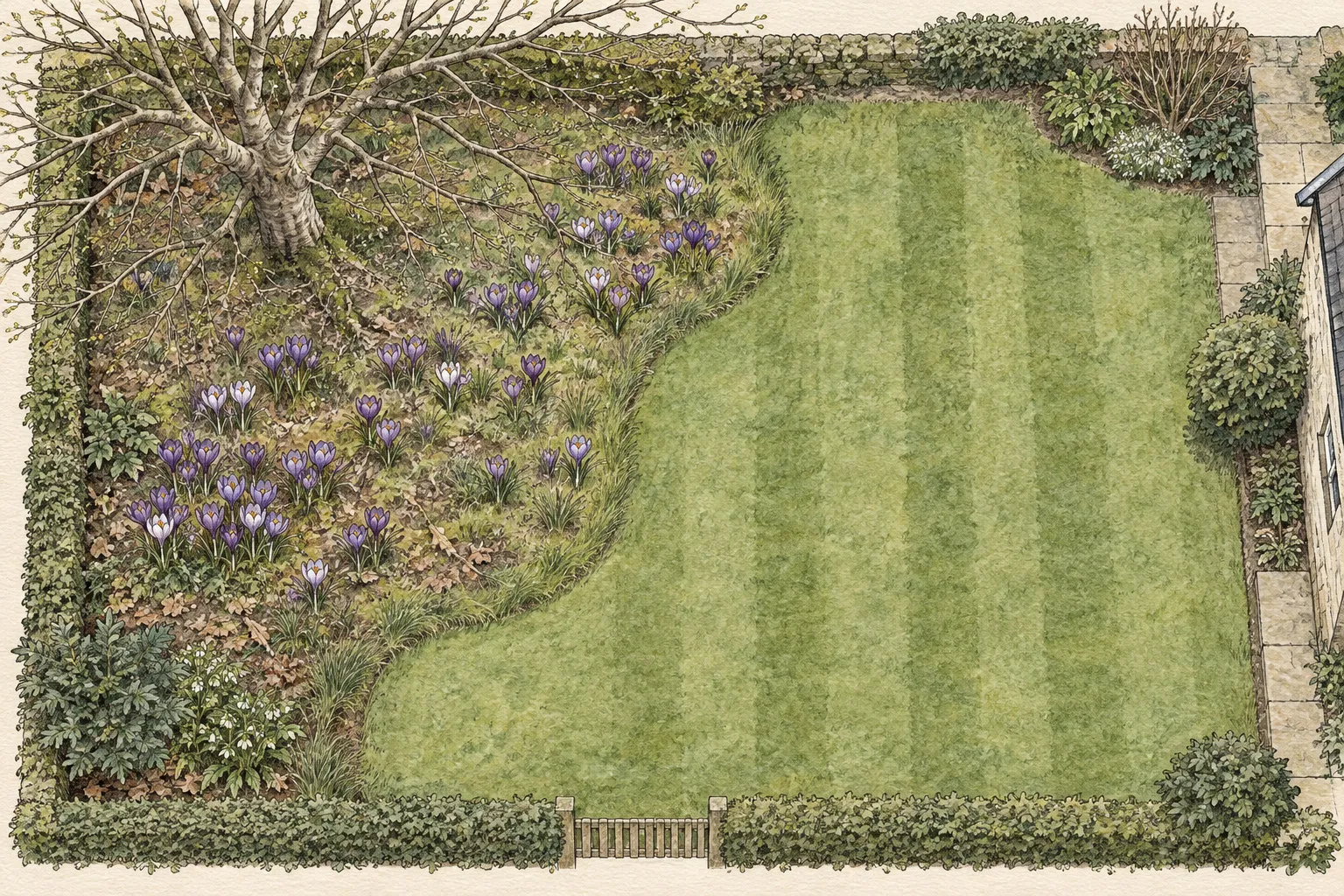
Trace a mowing line around the planting before you begin. A clean curve can run along an existing bed, then return to the edge, leaving a small peninsula of uncut turf. Keep enough room for the mower's wheels to pass while keeping the drift intact. A path through the lawn should remain usable even when spring leaves are standing. The plan illustration shows a quiet crocus edge and a maintained central grass route; its exact proportions are illustrative. Adapt that relationship to the tools and traffic in your own garden.
A continuous band under a hedge can fail where roots are so dense that every hole becomes a contest. A handful of exploratory cuts will reveal whether there is real soil between roots. Likewise, a spot where dogs repeatedly run or where winter salt accumulates may not be the calm flowering area shown on a plan. Move the drift to the closest comparable view with workable ground. The aim is to give small flowers enough visibility and protected foliage time, not to make the planting fit a fixed shape at any cost.
Plant through established turf in autumn
Cut a small flap or plug of sod where each corm will go and keep the grass side intact. Loosen the soil beneath enough to place the corm at the packet depth, then return soil around it and close the soil around it. Work when the lawn is moist enough to cut cleanly but not so wet that every cut smears into a compacted wall. A narrow hand trowel or bulb planter is useful for small numbers. For a larger drift, lifting a modest shared section of turf may be faster and lets you check the soil profile before setting the whole group.
Place the pointed growing end upward and the flatter basal area down where the shape is clear. If an individual corm is hard to orient, examine it gently and keep it intact. Set the corms at the specified depth from the final soil surface, not from the top of a temporarily lifted grass plug. Illinois Extension's three-inch general guide supplies a useful cross-check, but different corm sizes and named instructions can alter the exact placement. A row of corms exposed just under the sod dries or is disturbed more readily than one placed at the intended depth.
Replace each plug neatly, press it back into contact with soil, and water enough to settle dry soil if rain is not imminent. Keep the grass surface free of thick loose compost; the turf needs light and the corm needs sound soil contact. If the plug is too thick to sit flat over a correctly placed corm, remove excess soil from below and reset it. A raised bump is a nuisance for mowing and can expose the planting site to disturbance. Once finished, the lawn should look almost intact apart from small seams and a discreet marker.
Map the drift before autumn leaves obscure it. Photograph the outline from the same window or path that will frame the spring flowers, then draw its boundary relative to a permanent feature. Keep the packet name and planting date with that record. This matters when a new lawn task arises: aeration, topdressing, edging, or a proposed path can cut through a dormant corm planting that has no visible shoot. A small marker at one end is enough if the map shows the full area. The marker also tells whoever mows that the spring no-mow boundary is intentional.
Let the leaves set the first mowing date
Flowers are not the end of the crocus season. The leaves continue growing after bloom, and the Illinois Extension description notes that they can extend well beyond the short flowering display. Leave them attached while they are green. The RHS advises allowing crocus foliage to die back naturally and withholding the mower from planted grass until then. Missouri Botanical Garden gives the reason for naturalised spring bulbs: foliage must mature so the underground storage organ can support a future season. A cut made the day petals collapse can therefore remove the very growth that the planting still needs.
Judge the plants themselves by observing the leaves. Watch the narrow leaves change from firm green to yellowing, then to dry, collapsed strands. When the foliage has died back, the drift can rejoin normal mowing. If some clumps remain green while others have finished, wait for the lagging part or mow around it. Weather, species mix, tree shade, and the condition of the corms can change the pace. The often repeated six-week rule belongs chiefly to daffodil discussions and is not a reliable crocus deadline for every site.
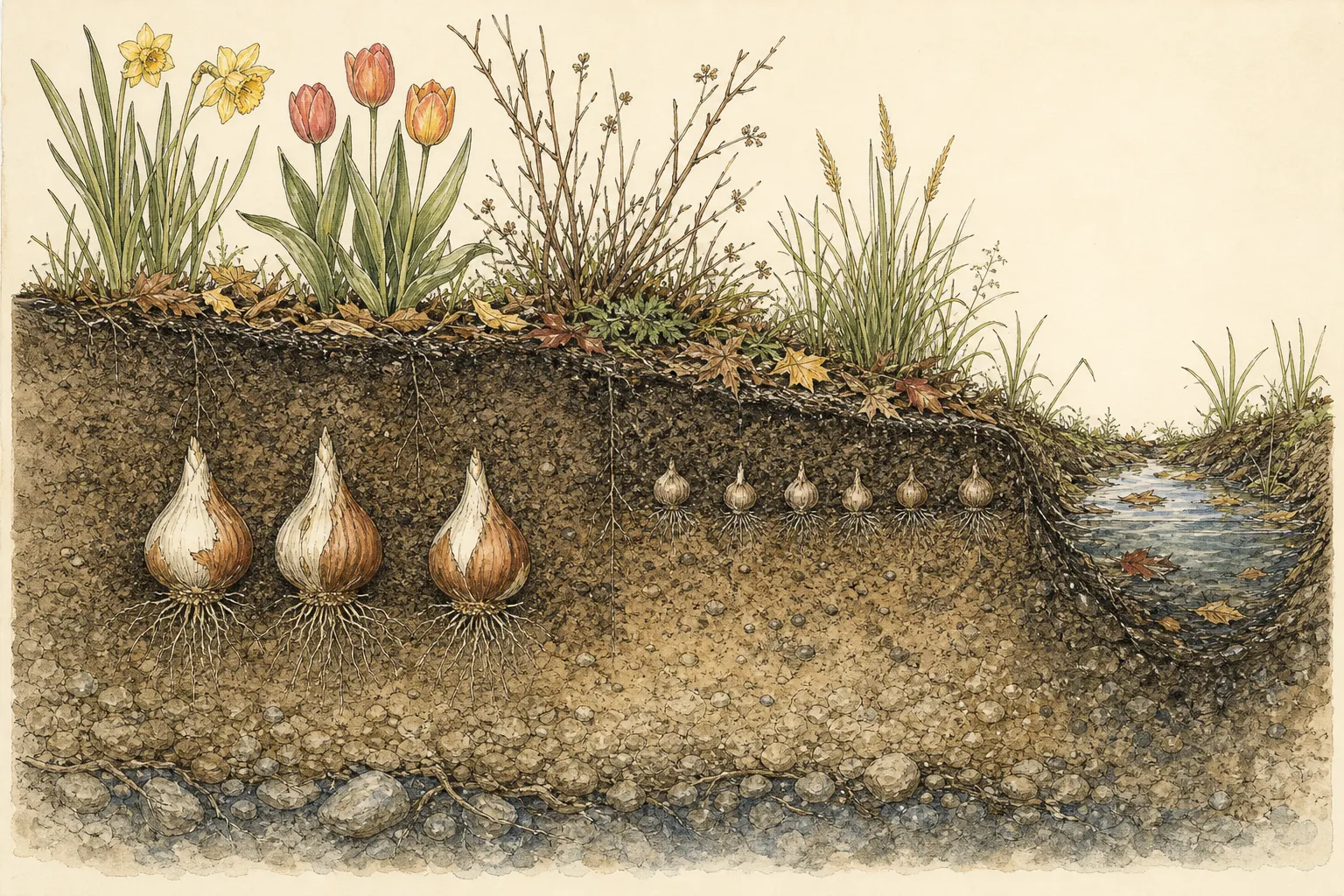
During the wait, cut the surrounding lawn as needed and guide the mower around the marked edge. This preserves a useful lawn while protecting crocus growth. A hand-trimmed margin can make the uncut patch look deliberate, but keep blades away from the crocus leaves. Pick up heavy fallen tree leaves that blanket the drift, doing so carefully while the crocus growth is visible. Rake gently around emerging leaves. The spring section drawing places flowers and later leaves in one continuous profile so the reason for the pause remains clear.
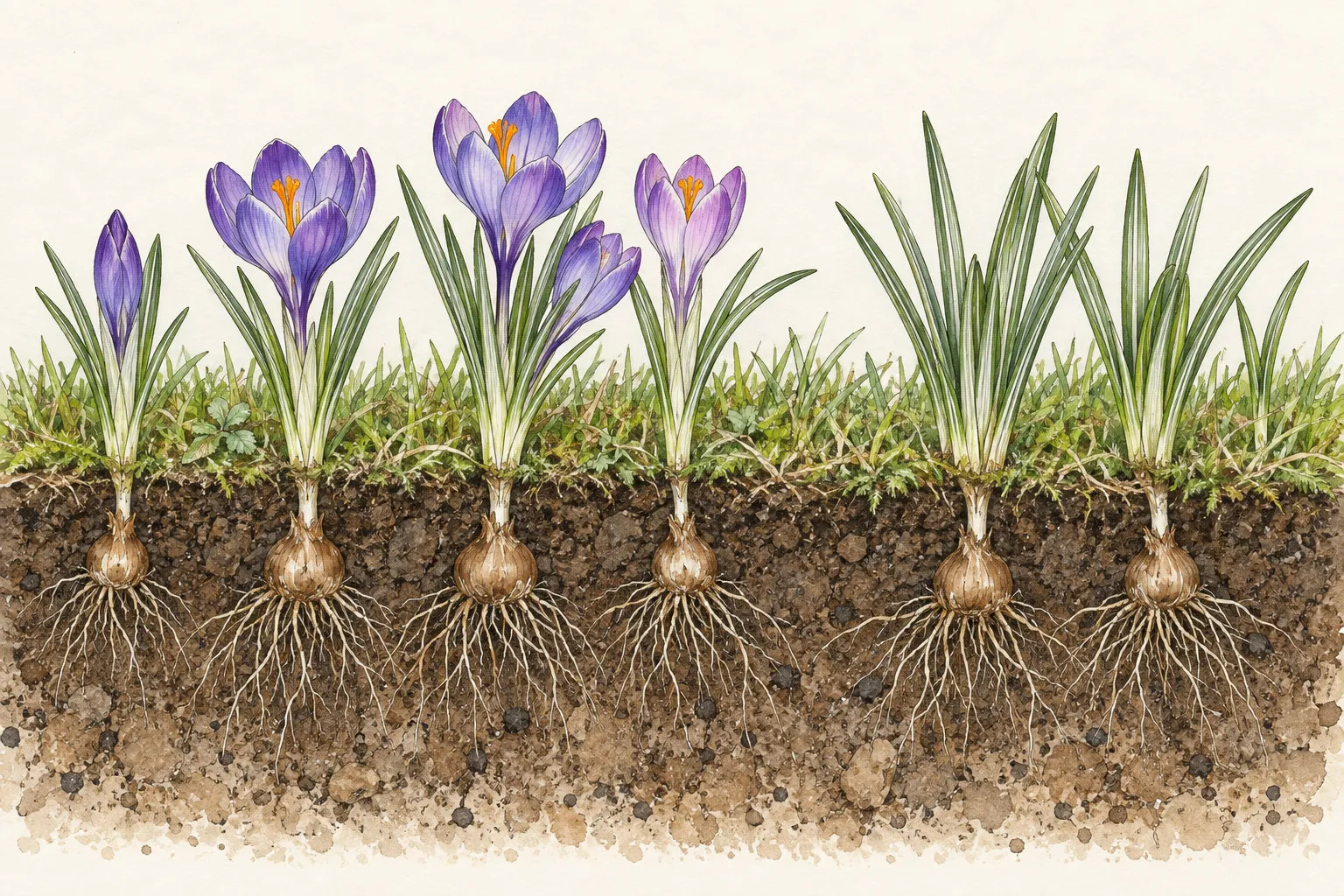
The first year is also a test of your layout. Photograph flowering and again when the foliage finally dries. If the grass becomes unmanageably long before that second image, the original site was a poor match for your mowing routine. Keep the corms for now, then consider shifting or expanding the planting in a more forgiving strip when the appropriate dormant season returns. Repeatedly shearing green leaves and adding replacement corms each autumn is a costly way that postpones the necessary site decision.
Read spring results from patterns in the patch
A sparse first display does not prove that mowing damaged the corms. Check whether the packet held an early spring species, whether the soil remained drained, and whether the spot received light during the crocus growth window. Look for leaves even where flowers are missing. A new group may be uneven, or a few corms may have been placed where the soil profile differs. Record patterns across the drift: all missing in a low wet corner suggests a different question from scattered gaps across otherwise healthy plants. Keep a map of the drift so any necessary inspection can wait for dormancy.
If flowers appear but fail to return well in later years, start with the mowing record. Was the green foliage cut each season, or did it yellow and collapse first? This is the strongest management distinction in the RHS, Illinois Extension, and Missouri Botanical Garden guidance for lawn naturalising. Also reconsider drainage and shade. A crowded or highly competitive lawn may not behave like the open, well-drained example from a guide. Use the evidence from the actual patch before adding fertilizer; the RHS notes that crocuses growing in the ground generally usually need no added feed.
If the drift succeeds, allow the corms time to increase. The RHS notes that naturalised crocuses can multiply by seed or small corms; it also cautions that some, including C. tommasinianus, flower best when congested. This makes routine lifting an unnecessary maintenance habit. Keep the no-mow boundary on your lawn plan and adjust only after observing several seasons. If you want a broader spring sweep, plant additional named corms in autumn in a neighboring suitable section while leaving established clumps in place.
In a lawn whose spring mowing schedule cannot change, place the next crocus purchase in a border or rock garden. That is still a useful early-flower display and avoids turning the plant's leaf cycle into a recurring conflict. A naturalised lawn succeeds when the corm, turf, light, drainage, traffic, and mower fit the same seasonal plan. The most useful autumn work is choosing that fit before you make the first hole.
Steps
- Level
- easy
- Time
- One autumn planting session and a foliage check before the first spring mow
- Tools
- Hand trowel or bulb planter, Measuring ruler, Garden marker, Camera or garden map
- Materials
- Firm named spring-flowering Crocus corms, Water if autumn soil is dry
- 1Mark a low-traffic, mow-later patch
Choose a lawn edge or quiet turf area with enough early light and soil that drains. Trace the line the mower will follow after crocuses bloom. If normal spring mowing cannot wait in that area, use a border instead. Photograph the boundary before planting.
- 2Confirm the packet
Choose named spring-flowering Crocus corms, preferably an early kind for a lawn. Keep autumn-flowering Crocus and Colchicum separate. Reject soft or badly damaged stock, and retain the species label with the garden map.
- 3Set an irregular drift
Place firm corms on the grass in loose groups viewed from the main window or path. Use packet spacing; Illinois Extension gives about four inches apart as a general Crocus reference. Preserve a practical route for mower wheels and foot traffic.
- 4Lift turf and set corms
Cut small sod plugs or a manageable flap, inspect drainage and root competition, and set corms at packet depth with their growing tips upward. Illinois Extension gives about three inches deep as a general fall reference. Return soil and grass and leave a level turf surface.
- 5Settle and record the planting
Water to settle dry soil if needed, keeping the lawn free of standing water. Mark the no-mow outline discreetly and record cultivar, planting date, depth guidance, and a fixed-view photograph. Keep later aeration and edging outside the hidden drift.
- 6Delay mowing until foliage finishes
In spring, mow around the patch while crocus flowers and then leaves are present. Flowering ends before the mowing signal arrives. Wait until the narrow leaves yellow, dry and collapse naturally; then return the patch to routine cutting and note how the timing worked. Photograph the leaves when they are fully green and again when they have yellowed so the household can recognize the difference next year. If the patch is still green when surrounding grass needs cutting, keep mowing only the grass outside its marked boundary. When the leaves have fully collapsed, take a final photo of the patch and record the date of its first mow; use the observation to adjust next autumn’s planting area.
Related reading
Sources
- How to grow crocuses. Royal Horticultural Society. Source record · Accessed 2026-09-26.
- Bulbs: Naturalising in Grass. Royal Horticultural Society. Source record · Accessed 2026-09-26.
- Jobs for October: Lawns. Royal Horticultural Society. Source record · Accessed 2026-09-26.
- Spring Flowering Bulbs. University of Illinois Extension. Source record · Accessed 2026-09-26.
- What spring flowering bulbs will come back year after year?. Missouri Botanical Garden. Source record · Accessed 2026-09-26.