Grow · grape hyacinth outdoor pots
Plant Grape Hyacinths in Outdoor Pots for a Spring Display
Plant Muscari bulbs in a draining outdoor pot in autumn, protect the container through local winter weather, and keep leaves growing after bloom.
Published Last updated
In this guide
Choose an outdoor spring pot, not an indoor forcing schedule
Plant grape hyacinth (Muscari) bulbs in an outdoor container in autumn for their normal spring display. Give them a freely draining pot and a place where winter rain can leave the compost, then let the seasonal cold pass outdoors. The Royal Horticultural Society grew Muscari trial pots outside through winter and protected them with fleece during very low forecasts at its exposed trial site. That example is useful for a temperate UK garden, while a small exposed pot in a colder continental winter needs a locally appropriate sheltered or insulated position. The decision is about the container and its climate, not a fixed date on the calendar.
This is a different task from forcing bulbs indoors for a scheduled winter flower. Forcing uses a controlled cold period followed by a deliberate move to warmth. An ordinary outdoor pot stays in its seasonal place and flowers when local spring conditions allow. University of New Hampshire Extension describes a cool storage process for late, unplanted bulbs, but that is a rescue or forcing route; it does not establish that a spring patio display needs a refrigerator. Label the pot “outdoor spring” so it does not accidentally join indoor forcing stock or get moved into a heated room in midwinter.
Muscari flowers are low, narrow spikes made of many small urn-shaped blooms. The RHS describes blue, blue-purple, white, and occasionally pink selections, with foliage that may be narrow and floppy or more upright according to the kind. That small scale suits a pot viewed near a path, doorstep or window. Choose the location from which you will actually see the flowers; a deep border viewed from across the lawn gives the same bulbs less visual presence. Their close view makes flower form and emerging leaves part of the display.
Before buying, decide whether the pot is a one-season arrangement or a planting you hope to keep. RHS general bulb guidance permits closer spacing and shallower placement in containers for immediate impact but warns that closely packed displays may flower less well in a second year. Its Muscari trial likewise expected crowded, offset-producing pots to need unpotting and fresh spacing. A dense pot can be an intentional first-spring display.
A more durable plan leaves the bulbs room and includes a place where their leaves can mature after flowering.
Match the bulb, pot and growing place
Buy a named Muscari selection or a packet clearly labelled grape hyacinth and keep the name with the pot. The RHS container trial compared cultivars with different flowering periods, flower shapes and leaf habits; those differences are visible in a small vessel. A colour photograph on a mixed-bulb bag tells less about timing than a cultivar label. If several pots will line an entrance, use one selection per pot when you want a coherent group, or mark mixed plantings so you can learn which kind performed best in your conditions.
Check every bulb before planting. Choose firm, intact bulbs with their papery covering largely in place. Set aside soft or obviously damaged bulbs; a pot concentrates bulbs in one small volume of mix, so weak stock is poor starting material. The growing point normally faces upward and the basal plate with roots faces down. Handle the bulb gently on the compost. A bulb already sending out a leaf in autumn is not automatically a failure: the RHS trial notes that some Muscari leaf growth appears well before the flowers, and its later planting experiment was intended to delay that early foliage.
The container must have an open drainage hole and enough depth for the bulb, covering mix and watering space. A deep decorative cachepot that lacks a hole is a sleeve, not the growing pot. Place a holed inner pot inside it only if you can remove it for watering and keep water from pooling at the base. University of New Hampshire Extension notes that freezing can crack ceramic containers in its forcing discussion; in a cold garden, choose a frost-resistant vessel or move a vulnerable decorative pot to a protected position. Test the exact pot, because terracotta varies in winter durability.
Use a free-draining potting mix. The RHS container trial used peat-free compost with grit and a grit top dressing; it is a documented trial method, not a universal recipe or a reason to fill the bottom of a pot with a thick layer of stones. Drainage comes from the mix, the hole and a clear path for water to exit. Stand the pot on feet or another stable support when a flat patio would block the drain. If rain repeatedly leaves water on the surface, change the position or the mix before blaming winter cold for poor bulbs.
Set the planting depth and spacing deliberately
Plant in autumn while the bulbs are fresh and there is time for roots to establish before the hardest weather. Iowa State Extension gives three to four inches deep and three to four inches apart for grape hyacinths in garden soil. The RHS explains that container bulbs may be set somewhat closer and less deeply for a strong one-season display. Use the packet recommendation as the species or cultivar-specific starting point, then keep enough compost under and above the bulbs to support roots and protect the planting. A very shallow decorative bowl can fail this basic space test.
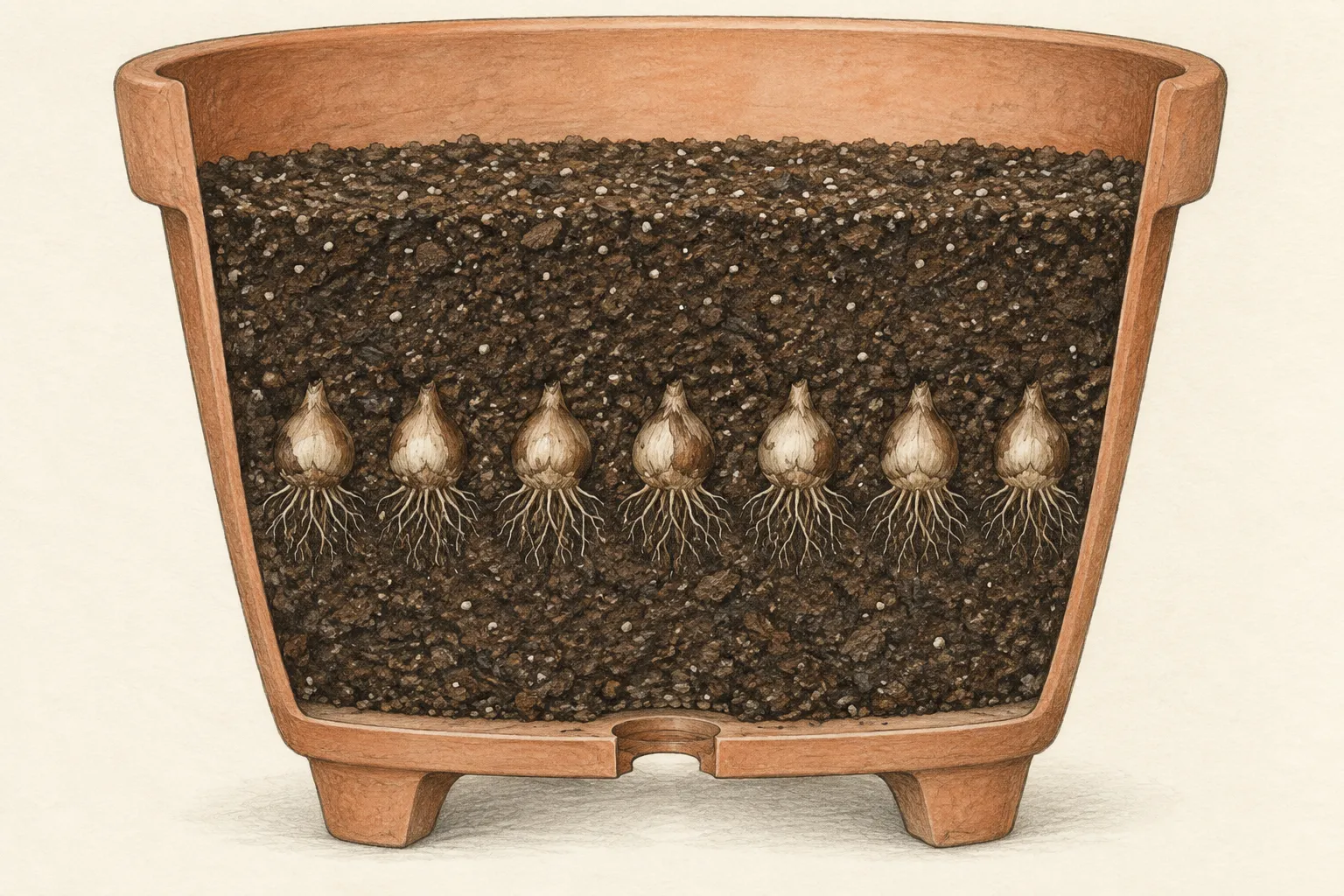
Fill the pot partway and set the bulbs on a level surface of mix, with their points upward. Check that each basal plate rests on compost on a firm bed of mix. Give a lasting arrangement the packet spacing or a modest reduction that still leaves visible mix between bulbs. A temporary show pot may place bulbs closer with their coverings intact. The RHS trial set its bulbs touching in a controlled single-year comparison; that is evidence for a dense display, not evidence that a permanently crowded pot will renew itself indefinitely.
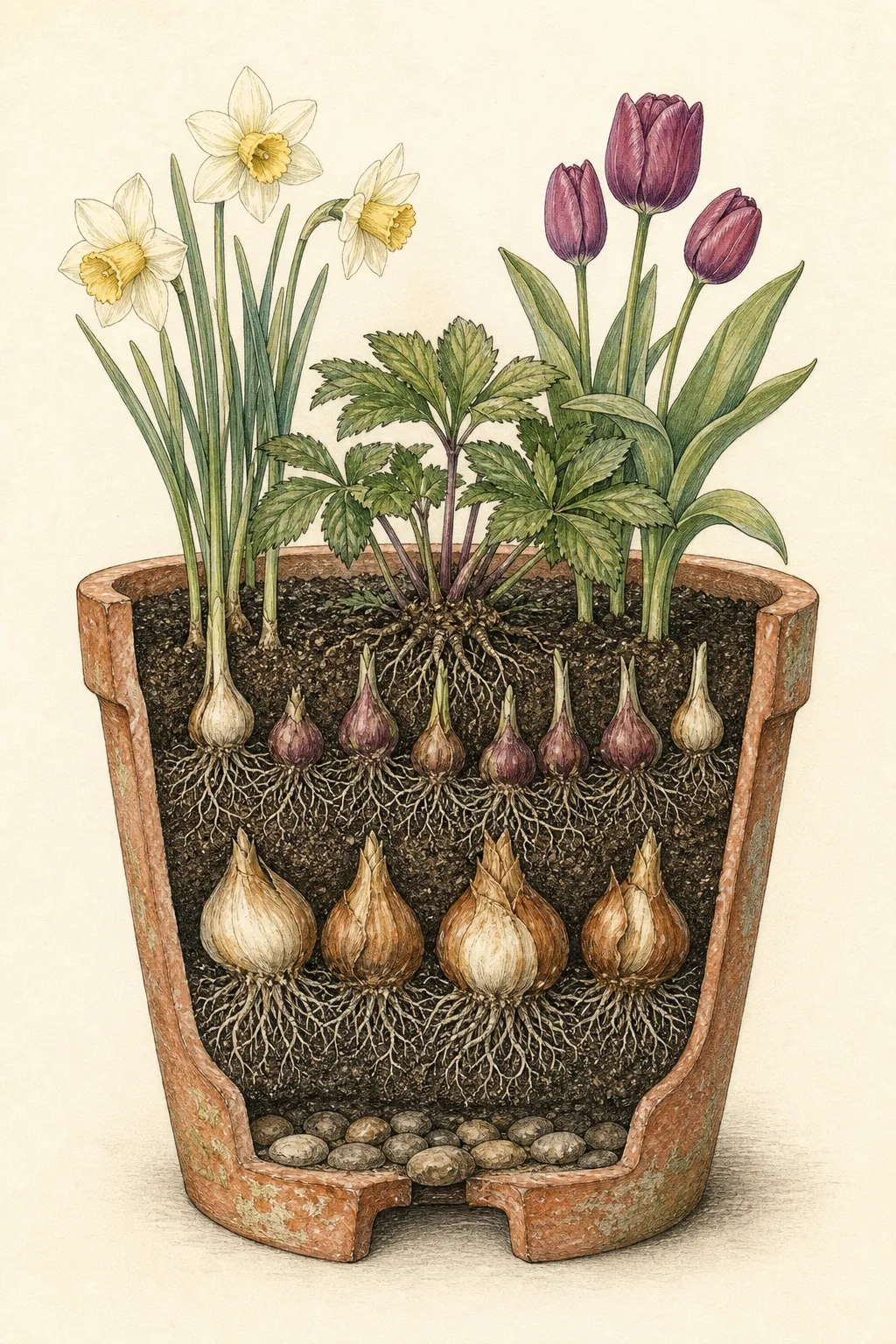
Cover the bulbs to the chosen depth, keeping the mix below the rim so water can soak in and stay in the pot. Measure depth from the finished surface to the relevant bulb position according to the packet, not from the empty pot rim. Settle the mix gently with a watering can; heavy tamping removes the air spaces that a container medium needs. If the first watering exposes bulb tips, add mix to restore the chosen cover. The cutaway shows the intended order: an open drain, rooted bulb layer and an uninterrupted layer of mix above it.
Write the cultivar, number planted and date on a weatherproof label. Sketch the intended display position if several similar pots are stored together. This small record helps when different leaf habits appear in autumn. It also prevents a spring pot from being mistaken for a failed summer container and emptied during winter cleanup. Keep the packet if it names flowering time or a different planting depth, since a general Muscari range cannot account for every species and supplied bulb size.
Give the pot a workable winter place
After the planting is watered and has drained, put it where it receives useful light when growth resumes. The RHS says Muscari thrives in sun and can grow under deciduous plants, while deep shade during active growth reduces flowering. A patio edge beside a deciduous shrub may work in spring, but a permanently dark porch can leave the flowers weak. Choose a position with a simple route for water to leave both the pot and the ground beneath it. Waterlogged mix during cold weather is a different problem from the seasonal cold that spring bulbs normally encounter.
A covered porch, sheltered wall or cold frame can reduce the extremes faced by a small pot. It must remain cool and receive light when leaves and shoots are growing. A roof can keep the pot dry for months, so check it regularly. Check the mix with a finger and water when it is becoming dry during active root or leaf growth, allowing excess to run out. In an exposed site, repeated rain may supply enough moisture; an overhead shelter changes that balance. The RHS trial reported that dense foliage sometimes prevented rain from reaching the compost even in a wet spring.
Cold exposure differs among climates and containers. At the RHS trial site the pots stayed outdoors, with fleece used during forecasts of very low temperature. In a region with deeper or prolonged freezing, the soil around in-ground bulbs buffers temperature in a way a pot cannot. Place the pot against a sheltered wall, sink a suitable nursery pot into a bed, or seek regional extension advice on insulating outdoor containers. The RHS trial does not establish hardiness for a thin pot on a windy, elevated balcony.
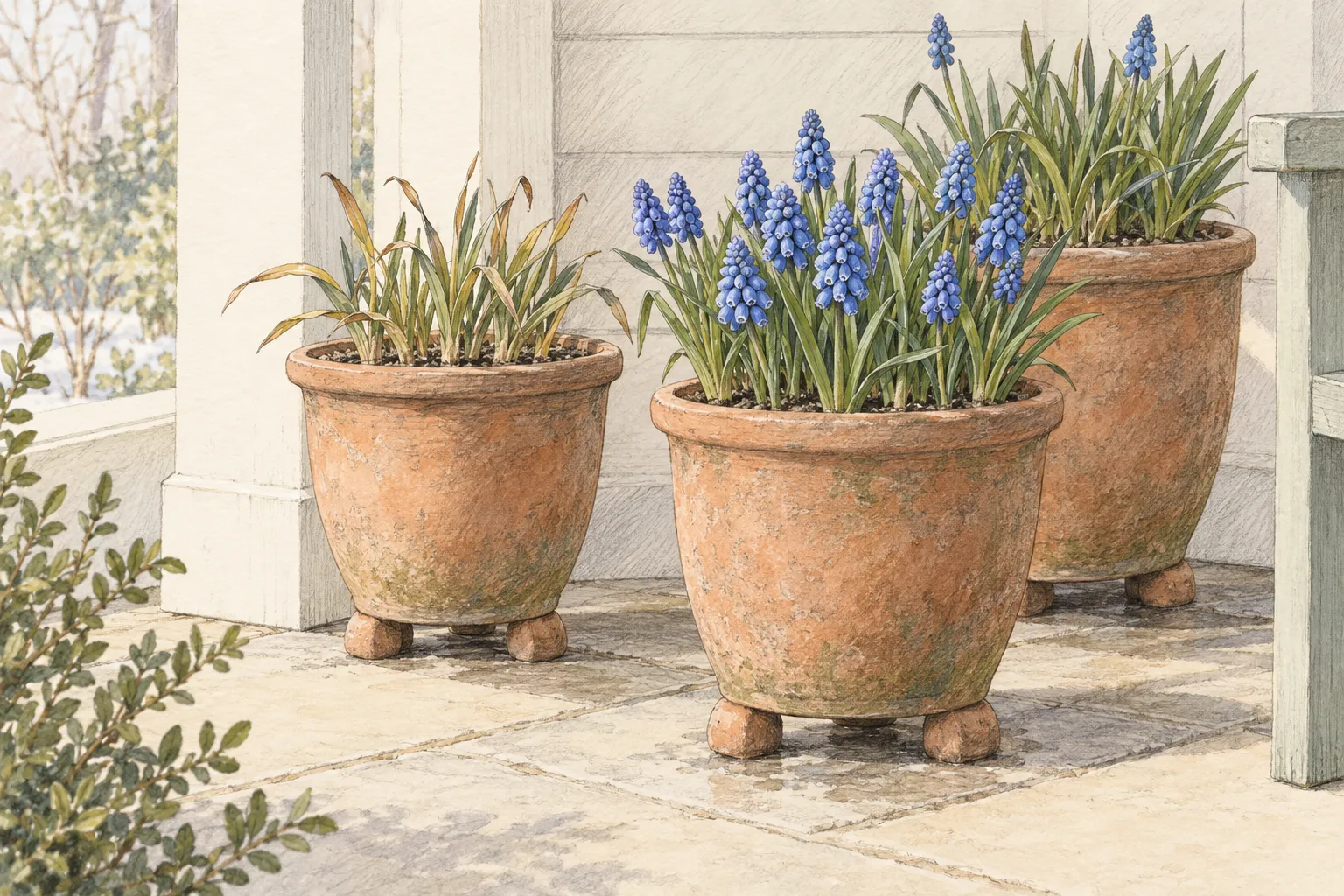
Look at leaves before deciding something has gone wrong. The RHS trial observed early leaf emergence in some entries, and its later November planting aimed to delay that growth for a cleaner spring container. Earlier leaves can be part of the Muscari cycle and do not call for warming the pot. Keep visible growth in light and protect the whole container from extreme conditions appropriate to the site. Pulling healthy foliage to “reset” the pot removes functioning leaf tissue; leave it attached and watch for spring flower spikes.
Read the spring display and keep the bulbs growing
As growth begins, move any protected pot gradually into its display position if that position has the right light and weather protection. Keep drainage clear after winter debris collects under the base. Water when the mix is drying during active growth; test below the surface because a gritty top dressing can look dry while the root zone is still moist. The RHS trial noted the opposite problem too: leaves can intercept rainfall, leaving compost unexpectedly dry. A hand check resolves both possibilities better than a fixed weekly watering schedule.
Place the pot at eye level from a regular route or gather several low pots where the small spikes can be seen. Muscari blooms rise only a short distance above their leaves; Missouri Botanical Garden lists M. armeniacum as a low spring bulb, and the RHS describes the compact spikes. Let one pot provide a strong close view where large container plants will not cover the flowers. If combining with pansies or primulas, as the RHS suggests, give each plant root space and keep the Muscari shoots unobstructed.
After bloom, remove a spent flower spike if you want a tidy pot, then leave the leaves until they yellow and die back. The RHS genus guide identifies this natural return below ground after flowering. Leaves are the plant’s active spring growth, so a balcony display cannot be treated like cut flowers immediately after the blue fades if you hope to keep the bulbs. Shift the pot to a less prominent bright place while the foliage finishes, maintaining appropriate moisture. Once the leaves have died back, reduce watering during dormancy and keep the label with the pot.
Decide the second year from what the first year taught you. If bulbs were planted touching for a dense show, expect crowding and offsets to alter the result. The RHS trial recommends unpotting, repotting to the original spacing and feeding when maintaining such pots for another display. If the pot performed poorly, inspect whether its position stayed dark, the mix remained wet, or the container froze much harder than nearby ground. Those observations are more useful than immediately buying a different blue cultivar for the same unsuitable pot.
Use the first season to refine the arrangement
Flowering time is a local result, not a deadline promised by an October planting date. The RHS trial recorded cultivar differences and deliberately shifted planting time to manage leaf emergence. Record when foliage first appeared, when spikes coloured and when the leaves finished. A spring photograph from the usual viewing point shows whether the pot stood high enough to see its flowers and whether companion plants hid them. If the group disappeared from view, change the staging next season before increasing bulb numbers.
Watch the surface after a period of rain. A pot that stays sodden, smells stagnant or produces soft bulbs needs a better drainage route, a different medium, or a more sheltered spot. Conversely, a pot tucked under an eave can dry while the nearby border is wet. Check actual compost before each watering decision. Muscari does not benefit from a calendar that treats covered and fully exposed containers identically. The illustrated sheltered group shows clear space beneath the pots, while the exact winter protection will depend on your climate.
If an autumn-planted pot produces leaves but few flowers, first confirm that the bulbs were a spring-flowering Muscari, then review light, planting depth, crowding and winter exposure. The RHS notes that deep shade during growth can prevent good flowering. A closely packed trial-style pot is expected to need renewal sooner than a spaced planting. One thin spring display does not identify a single cause; compare it with a pot in another position or a few bulbs in the ground before changing every variable at once.
An outdoor spring pot is most successful when its whole year is planned: autumn planting, winter drainage and protection, a close-view spring display, and time for leaves to finish. Keep the labelled bulbs if they remain firm and healthy; divide or repot a congested group during dormancy according to the plant and local season. Next autumn, repeat the position and cultivar that worked, or alter one clear weakness recorded this year. That turns a small patio experiment into a reliable seasonal planting through observations from your own garden.
Steps
- Level
- easy
- Time
- One autumn planting session, winter checks and spring foliage care
- Tools
- Hand trowel, Watering can, Weatherproof plant label
- Materials
- Firm named Muscari bulbs, Free-draining potting mix, Outdoor pot with drainage hole
- 1Choose the display position
Pick a sunny or lightly shaded outdoor place where compact Muscari flowers will be visible in spring. Check whether rain can drain away and whether the pot will be exposed to severe winter freezing. Put a marker at the chosen location and check it after rainfall; a persistent puddle beneath the future pot calls for another site or raised supports.
- 2Check bulbs and container
Use firm named Muscari bulbs and a pot with an open drainage hole. Choose a frost-resistant vessel or plan protection for vulnerable ceramics in a cold site. Keep the plant label. Check the drainage hole with a finger or small stick before adding mix. Set aside bulbs that feel soft or show extensive damage.
- 3Fill and position bulbs
Add free-draining potting mix, then set bulbs upright on a level layer. For a lasting planting use the packet spacing; Iowa State gives three to four inches apart in ground, while a one-season pot may be planted closer. Let each basal plate rest on mix, keep the bulbs upright and leave enough room between them to prevent damage so hard that their outer coverings are damaged.
- 4Cover, water and label
Cover to packet depth; Iowa State gives three to four inches for garden planting and the RHS allows less depth in containers. Leave a watering rim, water once to settle the mix, let it drain and label the cultivar and date. If watering settles the mix and exposes the bulbs, top it up to the chosen finished level before the pot goes outside.
- 5Monitor through winter
Keep the pot cool and protected as local conditions require. Check that the drainage hole stays clear. Test compost under a roof for dryness, and move or protect an exposed pot during extreme forecasts. Leaves that appear in autumn may be normal for some Muscari; keep them in light and let sound foliage remain even when it arrives early.
- 6Display and retain
In spring, check moisture during growth and set the low flowers where they can be seen. After bloom, let leaves finish naturally. Repot dense bulbs during dormancy if a second-year display is planned. Record the bloom and leaf-yellowing dates. This makes next autumn’s cultivar and position choice specific to your garden based on a record of your own garden.
Related reading
Sources
- Muscari. Royal Horticultural Society. Source record · Accessed 2026-09-27.
- Muscari (grape hyacinth), in containers trial results 2024. Royal Horticultural Society. Source record · Accessed 2026-09-27.
- How to grow bulbs. Royal Horticultural Society. Source record · Accessed 2026-09-27.
- What are grape hyacinths?. Iowa State University Extension and Outreach. Source record · Accessed 2026-09-27.
- What Should I Do With Bulbs That Didn’t Get Planted Before the Snow?. University of New Hampshire Extension. Source record · Accessed 2026-09-27.