Grow · fritillaria autumn site planting
Plant Fritillaria Bulbs on a Freely Drained Autumn Site
Match each fritillary species to the right autumn moisture pattern, inspect fragile bulbs, and plant at a depth and orientation that let winter water escape.
Published Last updated
In this guide
- Start with a species label, not a generic fritillary
- Separate the meadow bulb from the dry-site bulb
- Read the whole site after autumn rain
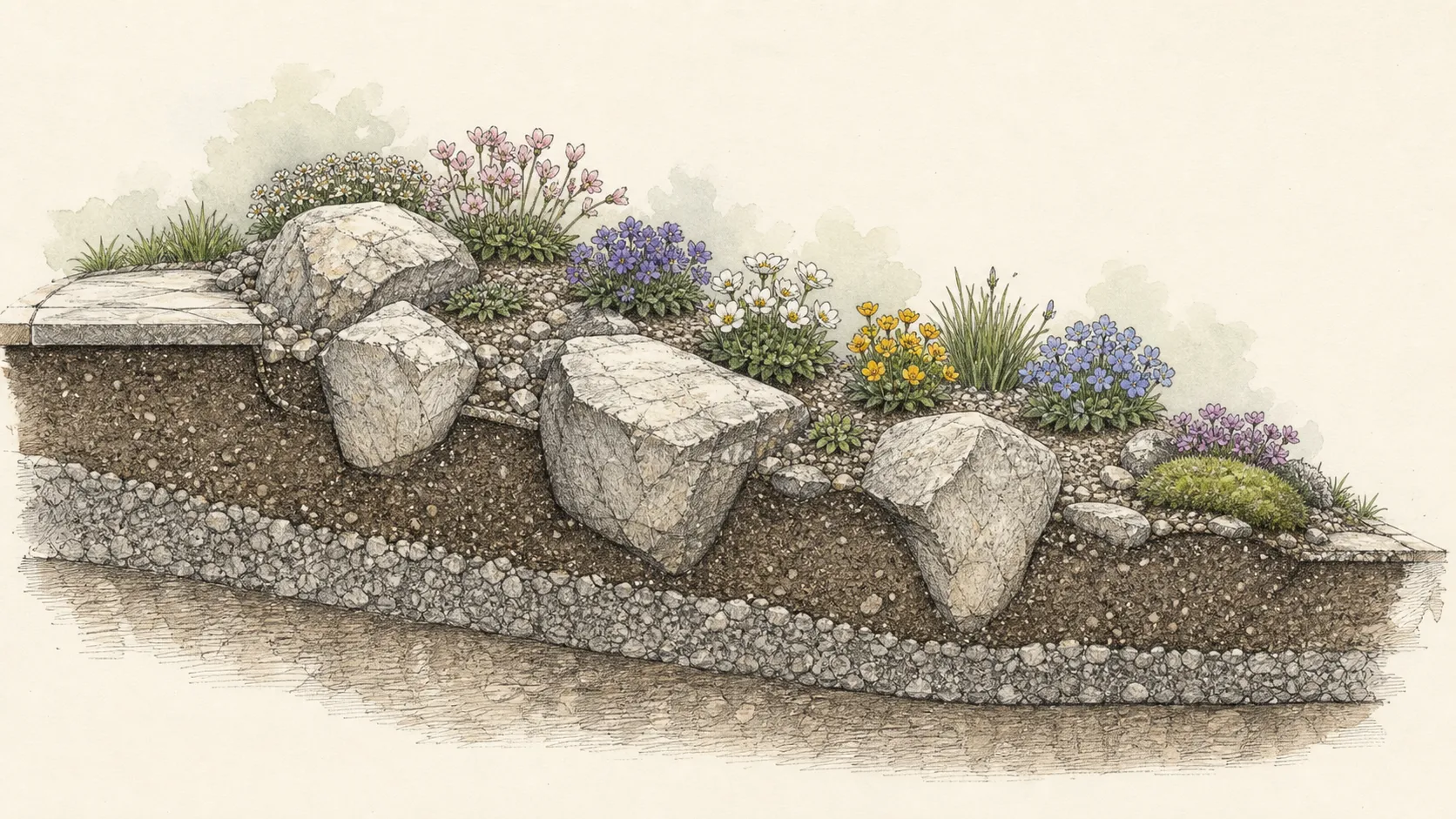
- Use microtopography instead of one amended pocket
- Open and inspect the bulbs immediately
- Lay out a group at its mature scale
- Set depth and orientation by species
- Settle, label, and protect the surface
- Let spring growth test the autumn decision
- Steps
Start with a species label, not a generic fritillary
Fritillaria is a varied genus, so the name on the packet controls the planting decision. Crown imperial, Fritillaria imperialis, is a tall border plant with a large, hollow-centered bulb and a strong preference for a sunny, exceptionally free-draining position. Snake's-head fritillary, F. meleagris, is a much smaller meadow and woodland-edge plant. Kew describes it in sun or partial shade where soil retains a little summer moisture but never becomes waterlogged. A dry rock-garden species and a meadow fritillary cannot be assigned the same corner simply because both arrived as autumn bulbs.
Keep the botanical name attached from unpacking through labeling. It determines mature height, moisture tolerance, planting depth, and the scale of the group. The Chicago Botanic Garden contrasts shade-tolerant, moisture-loving F. meleagris with F. imperialis, which needs what its horticulturist calls impeccable drainage. That comparison is the central site rule: freely drained does not always mean parched. It means that surplus water moves through or away from the rooting zone while the selected species receives the seasonal moisture it actually uses.
Confirm regional hardiness and the supplier's depth before opening the bed. This guide concentrates on hardy, spring-flowering garden fritillaries sold as dormant bulbs for autumn planting. It does not cover greenhouse-only alpine species, seed propagation, or lifting wild plants. If the packet lacks a species or cultivar name, pause and obtain an identification from the seller; guessing at an anonymous bulb can place a moisture-sensitive crown imperial in a low pocket or a meadow species on a slope that bakes dry.
Separate the meadow bulb from the dry-site bulb
Choose the receiving site from the exact Fritillaria identity before opening a hole. A crown imperial and a snake's-head fritillary have different scale and seasonal moisture requirements. Keep depth, orientation and spacing tied to the named bulb's directions. A packet arriving in autumn does not make one shared bed appropriate for every species in the genus.
Read the whole site after autumn rain
Inspect the proposed bed during or soon after sustained rain, not only on a pleasant planting afternoon. Note where roof water lands, which path edges discharge runoff, and whether a shallow depression remains glossy after the surrounding soil has begun to drain. Push a trowel to the intended planting depth and compare the soil there with an undisturbed point uphill. A surface that looks crumbly can conceal a compacted layer or a dense subsoil shelf that holds water around a bulb through winter.
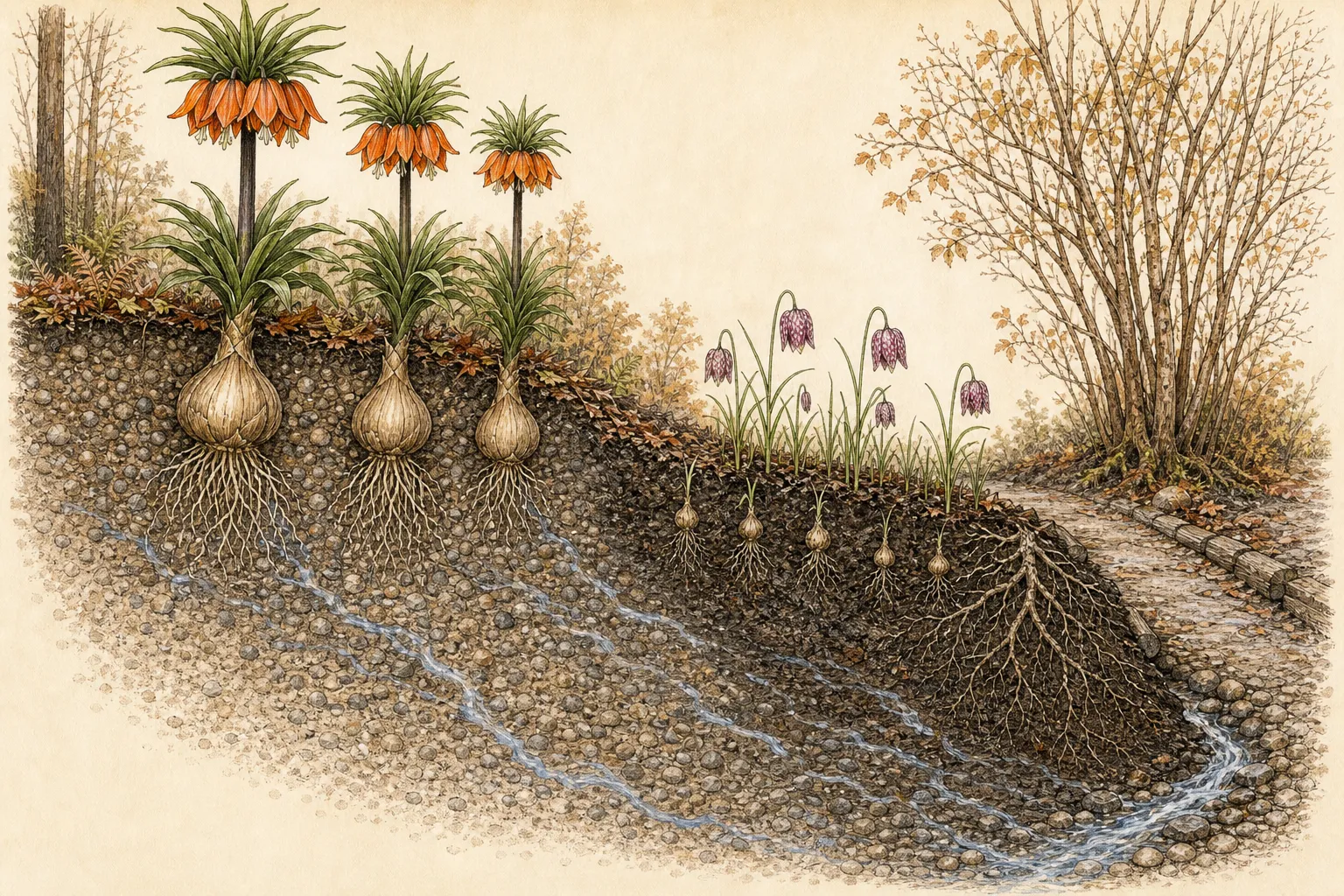
Drainage is a property of the route beyond the hole. Filling one deep pocket with grit cannot provide an outlet if the surrounding ground behaves like a basin. In a heavy bed, improve structure across a broad area, establish a modest raised grade, or choose another location. Preserve natural soil continuity instead of making a sharply different pot of loose material underground. A fritillary bulb needs both close soil contact and oxygen; a narrow cavity of coarse amendment can collect water at its boundary even when the material itself drains quickly.
Include spring light in the autumn assessment. Deciduous canopy can provide bright conditions before leaf-out and cooler shade later, which may suit F. meleagris. Crown imperial belongs on the brighter, more open part of the bed, with room for a three- to four-foot stem under Missouri Botanical Garden conditions. Check the future path of irrigation as well. A well-sited autumn bulb can still fail if summer watering for a lawn or thirsty perennial repeatedly saturates its dormant position.
Use microtopography instead of one amended pocket
A gentle change in grade can create useful planting niches without dividing the bed into artificial soil recipes. Place crown imperials on the upper shoulder of a sunny border, where rainfall can move laterally and downward. Keep the bulb position away from downspouts, compacted paving edges, and the foot of retaining walls. The upper position is not permission to let an actively growing plant desiccate; it is a way to prevent water from lodging around the large bulb during the cold, slow-draining part of the year.
Set F. meleagris on a cooler lower shoulder or at a deciduous edge where the soil remains evenly moist in spring and retains some moisture through summer. Kew's account is explicit that the species benefits from a little summer soil moisture and should not be kept completely dry, while standing water remains unsuitable. A low shoulder with an exit for excess water is different from the bottom of a sealed hollow. Observe the gradient after a second rain before committing a large drift.
Treat these positions as a continuous landscape, not a split display. The visible grade should guide water past the bulbs and still allow mowing, edging, or perennial care without compressing the planting zone. Where no usable gradient exists, a broad raised bed or a deep container with an appropriate free-draining mix is safer for drainage-demanding species. Keep F. meleagris in the ground only where its cooler, moisture-retentive preference can be met; a terracotta pot that dries hard all summer is not an equivalent substitute.
Open and inspect the bulbs immediately
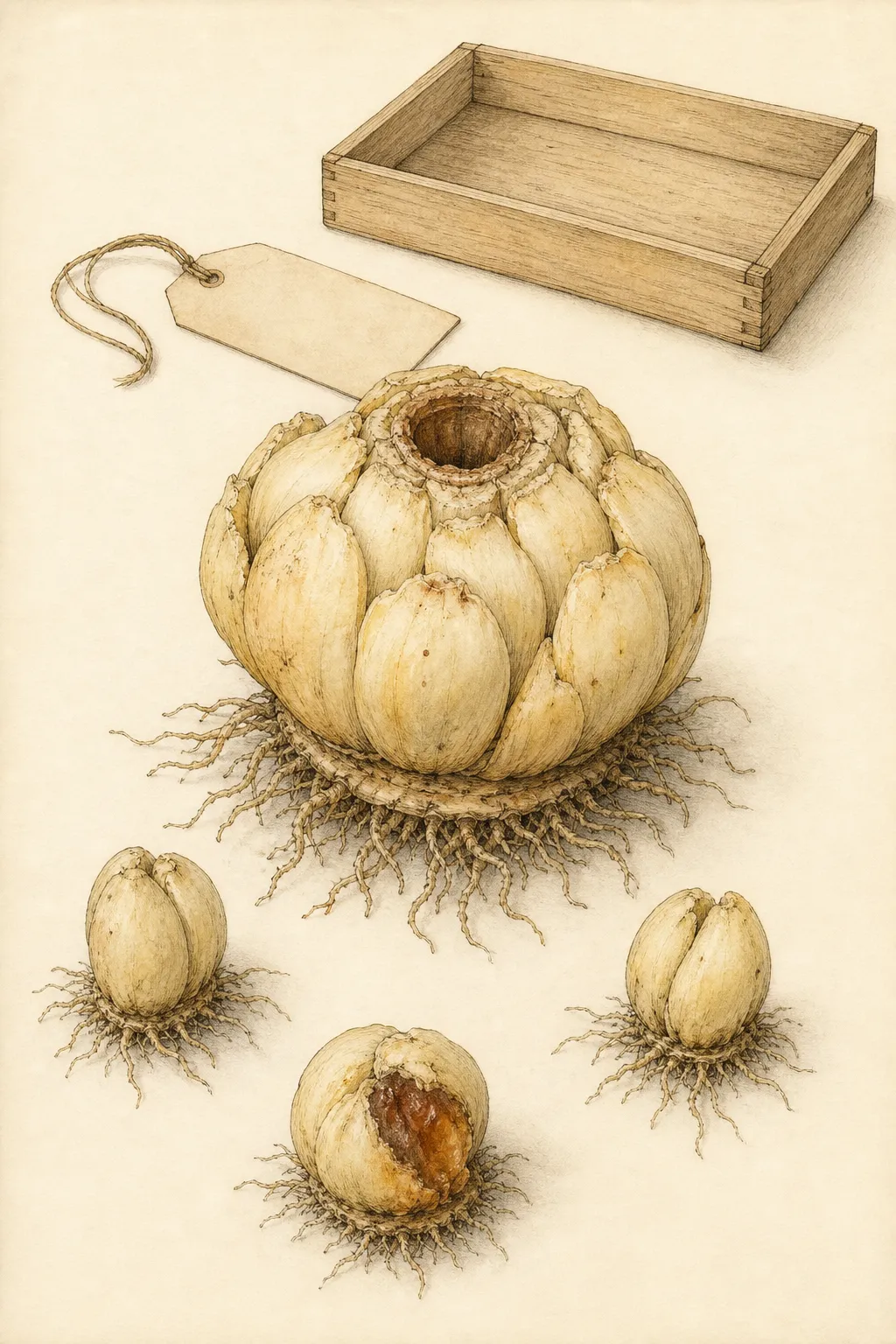
Unpack fritillaria bulbs as soon as they arrive and compare each one with the seller's description. A plantable bulb should feel coherent and firm for its type, with an intact basal area and no spreading soft collapse. Surface staining, papery remnants, or the natural opening in a crown imperial bulb should not be mistaken automatically for decay. More serious warnings are wet softness moving through the scales, a sour odor, or a base that separates when handled gently. Photograph questionable bulbs before changing them and contact the supplier while the evidence is intact.
Handle the bulbs over a tray or soft surface. Crown imperial bulbs are large yet fragile, and a fall onto paving can bruise tissue that looked sound on arrival. Keep named lots separate. If planting must wait briefly, follow the seller's storage directions in a cool, ventilated place and protect the bulbs from drying, frost, and condensation. The general RHS bulb guidance favors timely autumn planting for spring-flowering bulbs; extended storage consumes the advantage of receiving fresh material and can make top, base, and damage harder to read.
Find the basal plate, existing roots, and growing side before going outside. The crown imperial's old stem opening is a normal anatomical feature but can catch water when the bulb is held like a cup. In its St. Louis guidance, Missouri Botanical Garden therefore advises setting F. imperialis sideways. That is a species-specific measure, not a command to lay every fritillary on its side. For smaller species, retain the natural upright orientation shown by the base, shoot point, roots, and packet diagram.
Lay out a group at its mature scale
Arrange all bulbs on the soil before digging. Crown imperials carry enough height and visual weight to work as a deliberate group toward the middle or rear of a border. The Missouri Botanical Garden profile gives nine to twelve inches between F. imperialis bulbs and describes groups of six to twelve as effective in its region. Use those figures only where the named selection and local guidance agree; the important design move is to reserve air, light, and staking access for the mature stems instead of crowding a small bag of bulbs into one hole.
Smaller fritillaries read best where their pendant flowers can be seen at close range. Thread F. meleagris in a loose drift beside a path, across a meadow edge, or beneath open deciduous shrubs, leaving irregular intervals that can accept seedlings later. Keep the planting clear of aggressive groundcovers and dense perennial crowns. A low flower that emerges through a mat of vigorous roots may receive adequate moisture yet remain invisible and difficult to inspect.
Repeat one species through the chosen niche rather than scattering unrelated fritillaries across every moisture condition. Mark the intended centers with canes, then step back from the normal viewing route. The group should form a legible spring rhythm without becoming a straight horticultural row. Retain enough unplanted ground between groups to show whether a site performs differently; that comparison will be valuable after a wet winter or an unusually dry spring.
Set depth and orientation by species
Use the named species instructions first and a general bulb ratio only as a cross-check. For St. Louis, Missouri Botanical Garden specifies six inches deep for F. imperialis. RHS general bulb guidance places many bulbs at roughly two to three times their own height, but its advice also tells gardeners to check the packet for specific depths. These measurements are not interchangeable definitions: one may describe the depth of the hole, another the soil above the bulb. Read the diagram and measure from finished mineral soil, excluding loose mulch.
Make a hole wide enough to lower the bulb without scraping or compressing it. Loosen the soil just below the base while leaving a stable seat that will not sink after watering. For crown imperial, lay the bulb gently on its side when following the Missouri guidance, preserving roots and preventing the stem hollow from facing upward like a cup. For other fritillaries, use visible roots, basal plate, and shoot point to keep the natural axis. When none of those cues is clear, ask the supplier instead of cutting the bulb open.
Backfill with the prepared site soil, working fine crumbs around the bulb so large air voids do not remain. Avoid a concentrated handful of fertilizer or fresh manure against the scales. Firm with the hands and restore the continuous grade that was planned after rain. The finish should shed surplus surface water without exposing the bulb or creating a crater over it. Replace the depth marker only after the final surface has been checked from several sides.
Settle, label, and protect the surface
If the soil is dry enough to plant, water once to settle it around the bulb. Autumn rain may make additional irrigation unnecessary; the aim is close soil contact, not a saturated test basin. Watch the surface while water enters. Ponding over one group, sudden sinking, or flow from an adjacent path indicates that the grade still needs correction. Lift and reset a bulb promptly if settlement has moved it well below the intended depth.
Place a durable label just outside the bulb cluster, where future shoots and a trowel can miss it. Record species, cultivar, bulb count, depth convention, and the date. A simple overhead photograph with path edges in frame will prevent accidental digging during winter. Fritillaries disappear completely above ground during dormancy, so a label at the exact center is easy to spear and a label far away is easy to misread. A small plan preserves the real footprint.
Use only a light, locally appropriate surface mulch and keep the final grade visible. Heavy wet material can erase the drainage work and may keep a crown imperial opening damp. In frost-prone regions, follow local advice for winter protection without converting temporary insulation into permanent burial. Keep foot traffic and snow piles off saturated soil. The planting needs a stable porous surface more than it needs a decorative finish on the day of work.
Let spring growth test the autumn decision
Inspect after the first prolonged winter rain and again as shoots emerge. Look for erosion, exposed bulbs, standing water, animal digging, or a marker that has shifted. Correct the surface gently without probing for a bulb that has not appeared on a calendar date. Soil temperature, species, bulb condition, and local weather all affect emergence. An intact, draining site deserves time unless a specific sign such as collapse, odor, or persistent saturation points to failure.
When growth begins, keep the root zone reasonably moist for the species while preserving drainage. Stake tall crown imperials early only if exposure requires support, placing the stake outside the mapped bulb. Allow foliage to remain until it yellows and completes its work. The spring record should include stem strength, flowering, the distribution of moisture after rain, and whether companion growth hid or crowded the plants.
Use that evidence for the next autumn edit. A crown imperial that repeatedly leans or fails in a wet pocket needs a better position, not another layer of grit inside the same hole. F. meleagris that flowers but dwindles on a baking shoulder may need a cooler, more moisture-retentive edge. Expand a successful group with the same species only after its seasonal moisture pattern is understood. A freely drained site is proven across winter, spring growth, and summer dormancy, not by the texture of one planting handful.
Steps
- Level
- moderate
- Time
- 60–90 minutes per group, plus a rain observation
- Tools
- Trowel or bulb spade, Ruler or marked planting stick, Tray for unpacking bulbs, Durable labels and pencil, Watering can
- Materials
- Fresh, named fritillaria bulbs, Site soil improved broadly only where needed, Light regional mulch if appropriate
- 1Confirm the species
Keep every botanical name and cultivar label with its bulbs. Separate crown imperial, snake's-head fritillary, and rock-garden species before choosing sites, because their mature scale and seasonal moisture needs differ enough to reverse an otherwise careful planting decision.
- 2Observe drainage after rain
Compare the proposed depth at an upper shoulder, lower edge, and any visible hollow after sustained rain. Trace runoff beyond the planting hole, reject sites that remain saturated, and reserve the brighter, fastest-draining position for species such as crown imperial.
- 3Map the moisture niches
Use a continuous gentle grade: a raised sunny shoulder that releases winter water and a cooler edge that stays evenly moist without ponding. Change the whole bed grade or location when the surrounding subsoil offers no outlet.
- 4Inspect on arrival
Open bulbs promptly on a padded tray, retain firm coherent tissue and an intact base, document spreading softness or odor, and follow seller storage directions for any brief delay. Identify the crown imperial stem hollow without confusing it with active rot.
- 5Arrange the group
Lay bulbs on the soil at mature scale before digging. Keep tall crown imperials in a deliberate rear or middle-border group, place small fritillaries near a path or open edge, and leave access for labels, support, and future observation.
- 6Measure depth and orientation
Follow the named species and regional instructions, clarify whether depth means soil cover or hole depth, and measure from finished mineral grade. Set F. imperialis sideways where the retained Missouri guidance applies; orient other bulbs from roots, base, and shoot cues.
- 7Backfill and settle
Return continuous site soil around the bulb, firm by hand, and water once when soil is dry enough to need settling. Repair sinking or ponding immediately, keeping the surface graded to move surplus water beyond the group.
- 8Record and review
Label outside the cluster, photograph the footprint, protect it from winter digging, and inspect after heavy rain and spring emergence. Use performance across active growth and summer dormancy to decide whether to expand, move, or leave the group undisturbed.
Related reading
Sources
- Fritillaria imperialis - Plant Finder. Missouri Botanical Garden. Source record · Accessed 2026-08-20.
- Fritillaria meleagris L. | Plants of the World Online. Royal Botanic Gardens, Kew. Source record · Accessed 2026-08-20.
- Fritillaria. Chicago Botanic Garden. Source record · Accessed 2026-08-20.
- Bulbs: Planting. Royal Horticultural Society. Source record · Accessed 2026-08-20.