Grow · mandevilla trellis indoor winter care
Bring a Trellised Mandevilla Indoors for Winter
Move a potted mandevilla and its climbing framework into bright winter shelter, trimming only for access and adjusting light, temperature and root-zone moisture.
Published Last updated
In this guide
- Move the supported vine before nights turn cold
- Find what is attached to the pot and what is attached to the garden
- Keep autumn trimming proportionate to the move
- Give the whole trellis usable winter light
- Inspect before the vine joins the indoor collection
- Water the root zone according to its slower use
- Use leaf loss to check conditions before changing the method
- Renew the framework as growth returns
- Steps
Move the supported vine before nights turn cold
Release a potted mandevilla from any fixed outdoor support, trim only the growth that prevents moving it, and bring the supported plant into bright indoor shelter before autumn chill. Keep this leafy winter plant warm enough and its potting mix slightly damp. The main pruning can follow in late winter or early spring, when you can work toward the next season's flowering shoots.
RHS advises bringing mandevillas indoors before nights fall below 10–15°C (50–60°F). For the leafy indoor method here, choose the more protective winter conditions in its detailed growing guide: ideally above 15°C (60°F) at night. Mid-October is a planning point, not a deadline shared by every garden. If your nights are already approaching that range, the immediate task is shelter.
This approach suits tropical mandevillas already growing in pots, including many plants sold as Dipladenia. The aim is to retain a living vine through the low-light months. Winter flowers are a possible bonus, not the test of success. A dark, cool storage method is a separate choice with a different leaf and watering regime; select the bright-room route only when you have room for the support and access to the plant.
Find what is attached to the pot and what is attached to the garden
Trace the stems from the pot upward before lifting anything. Mandevilla climbs by twining its stems around supports. It can look as though it belongs entirely to a small nursery trellis while one long shoot has wrapped around a fence, pergola post or neighboring plant. Follow those connections in daylight. Mark the shoots that cross from the movable unit onto a fixed structure so that moving the pot will not pull them suddenly taut.
Test whether the current trellis can travel with the container. Check the top knot or frame joints, the lower supports and any ties connecting it to a wall. Measure the total height and width against the doorway and the intended indoor position. A pot that fits through a door may still carry a broad leafy crown that catches on the frame. Move furniture and open the route before the vine is in your hands.
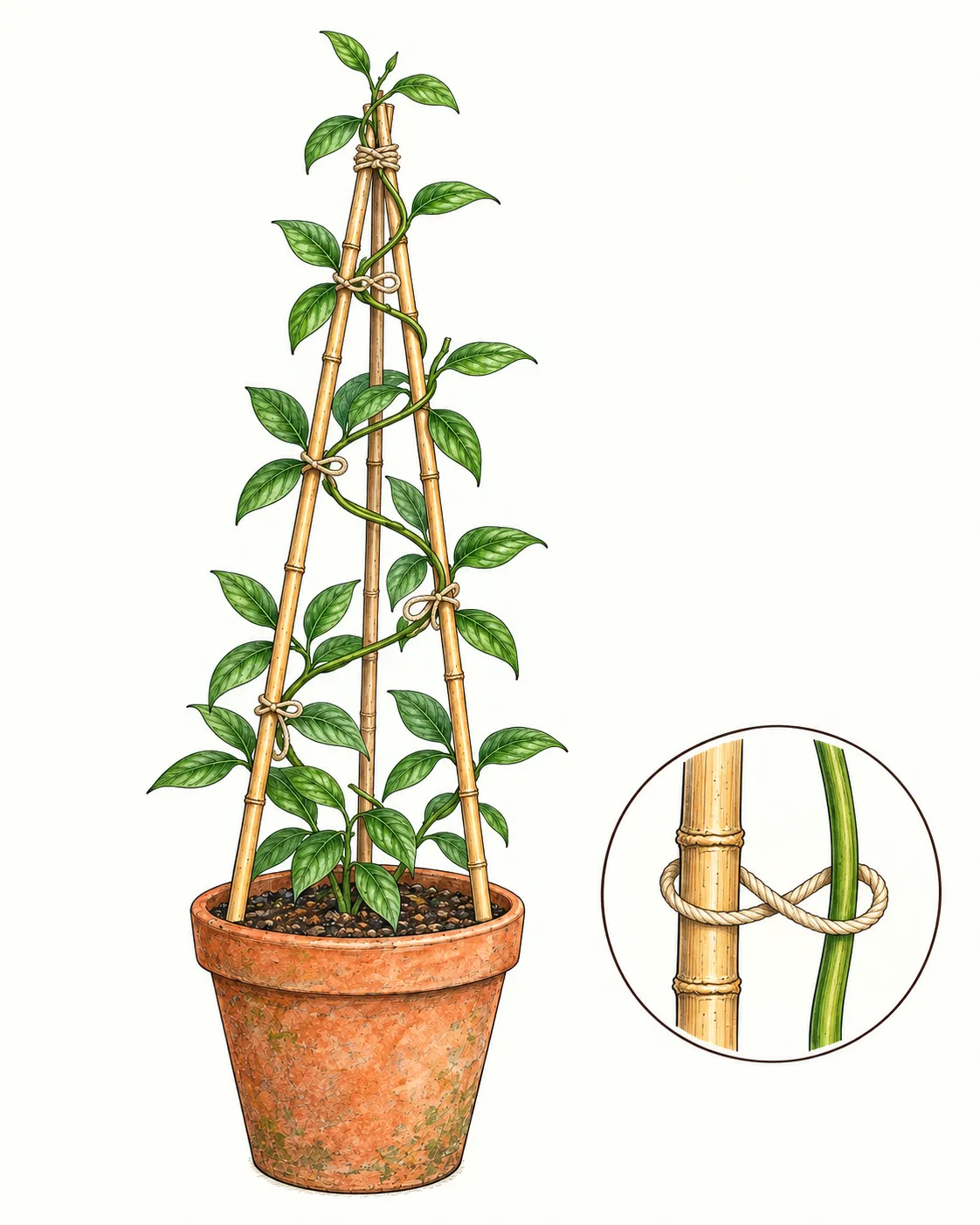
A sturdy tripod set within the container is one arrangement recommended by RHS because it can move with the plant. An existing secure pot trellis may work equally well. Preserve a sound structure when possible. Rebuilding the support during the autumn move adds root disturbance and more stem handling; if replacement is necessary, work carefully at the pot edge and check that the new frame stands firmly before transferring the vine.
Untie removable garden ties first. Gently release young flexible shoots where they unwind readily, supporting their length as you work. Older, tightly wrapped stems may be safer to shorten than to force free. Arkansas Extension recommends cutting as little as possible to detach mandevilla for the winter move, with larger pruning left for spring. Work one connection at a time so that the supported framework remains clear.
Once the vine is free of the fixed structure, secure loose retained stems to the portable support with soft, loose ties. The illustrated figure-eight arrangement is a suggested way to keep a tie from pulling the stem tightly against a cane. Keep the shoots spaced so their leaves and stem junctions remain visible. Carry the plant by its container or a suitable moving aid, with help for a heavy or awkward pot. The trellis is a support, not a lifting handle.
Keep autumn trimming proportionate to the move
Start with an indoor footprint you can actually provide. Shorten a shoot that crosses the doorway or cannot be supported in that footprint, and remove broken growth. Then reassess. A vine can become much smaller simply by releasing and repositioning its long shoots. Cutting every stem back to the same height makes it harder to retain a useful framework and healthy leaf area for the bright-room method.
Identify the plant's growth habit before imposing a climbing shape. NC State describes many nursery mandevillas as hybrids, with newer breeding favoring more compact, shrubby plants. UF/IFAS likewise distinguishes bushier forms with little twining from vigorous climbers. A compact plant sold as Dipladenia may need only a small support or none at all. The winter conditions still matter, but the amount of stem management changes.
Wear gloves when cutting or training. RHS and UF/IFAS warn that the milky sap can irritate skin. Keep cut material contained and place the plant where children and pets cannot chew it. Clean the secateurs after use and clear clipped shoots from the pot surface so they are not mistaken for later dieback during inspection.
Mark major structural work for late winter or early spring. RHS puts annual thinning and side-shoot shortening in that period, and Arkansas also places substantial pruning in spring. Autumn space reduction and spring renewal therefore have different purposes. If extensive cutting is the only way to fit the plant indoors, reconsider whether this room can support the leafy method before cutting off most of the vine.
Give the whole trellis usable winter light
Set the leafy framework beside a bright window where most of its height receives light. Maryland recommends a bright, sunny location for indoor mandevilla, while NC State and RHS describe bright indirect or filtered light. A practical starting position is close to a bright window, with filtering available if direct sun causes leaf stress. A warm corner across the room may be pleasant for people and still be too dim for this vine.
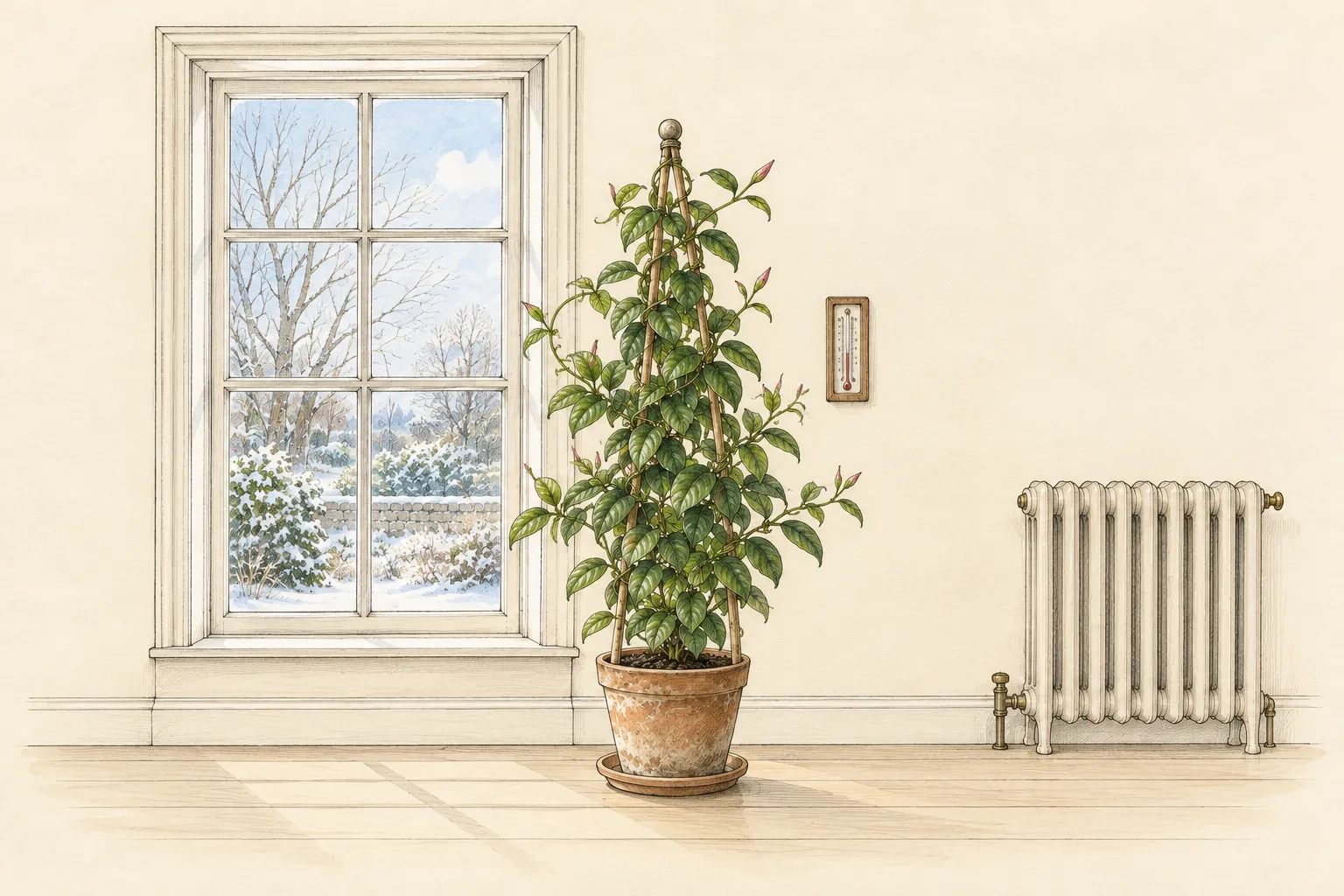
Evaluate the leaves at the top, middle and bottom of the support. A pot tucked below a deep windowsill can leave its lower framework shaded even when the upper shoots reach the glass. Keep foliage clear of cold panes and provide room to turn and inspect the container. The room illustration shows one possible arrangement with an accessible saucer, a gap at the window and space around the support; adapt that spatial example to your actual window and plant.
Use a minimum–maximum thermometer near the foliage, especially beside a drafty window or glazed door. A thermostat elsewhere in the room cannot tell you the overnight temperature at the vine. Keep the plant away from a radiator or hot-air stream that repeatedly dries its immediate surroundings. If the chosen spot cools sharply overnight, move it to a brighter suitable alternative or improve the shelter before relying on its daytime reading.
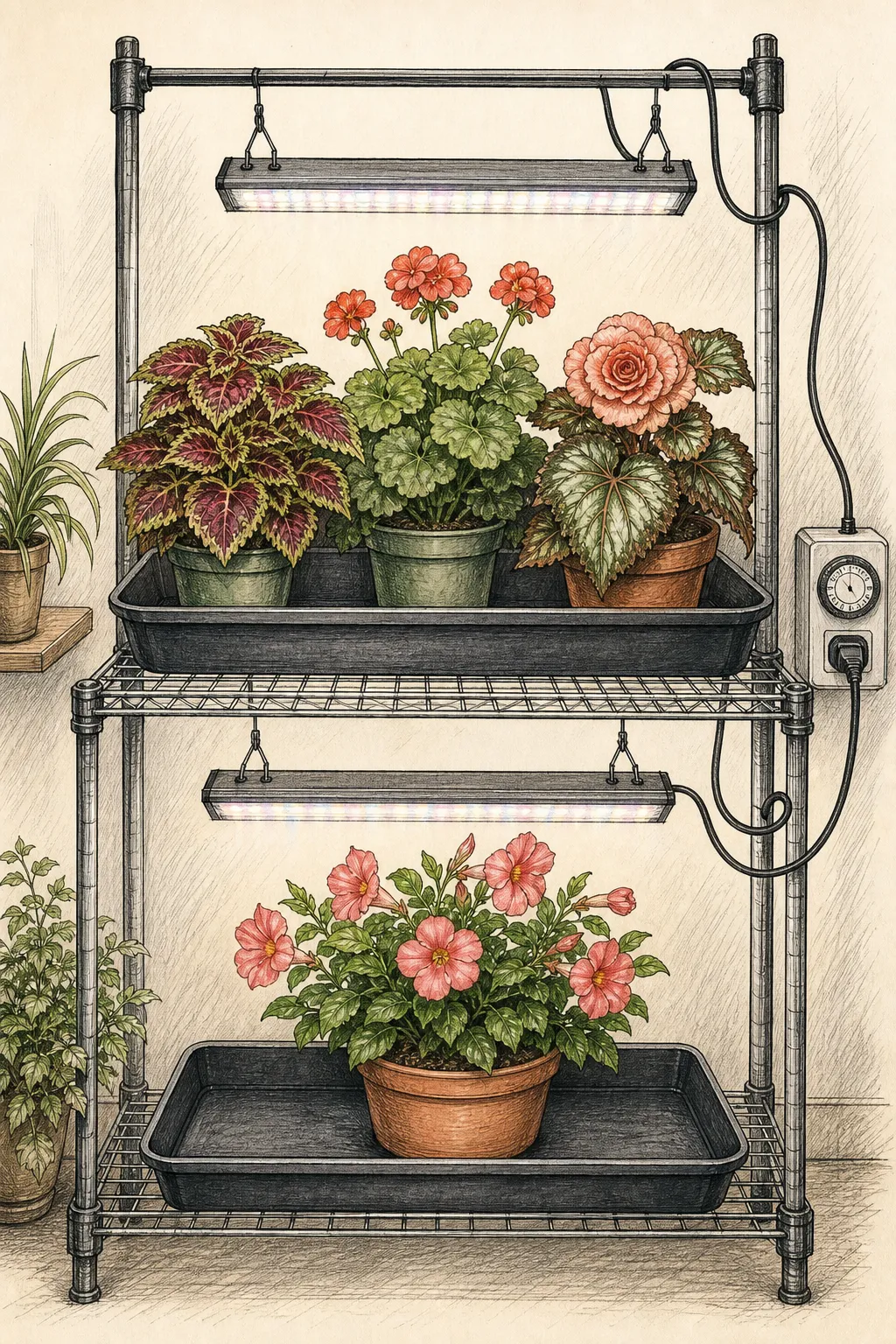
When natural light is inadequate, use a grow light capable of covering the retained foliage. Minnesota's indoor-lighting guidance emphasizes that light level changes with lamp distance and that a plant's needs must match the available light. Follow the fixture's placement instructions and examine the whole canopy. A small bulb lighting only the top tuft leaves the rest of a tall trellis unresolved. Shortening or reshaping the framework later may be more practical than building a very tall winter light station.
Inspect before the vine joins the indoor collection
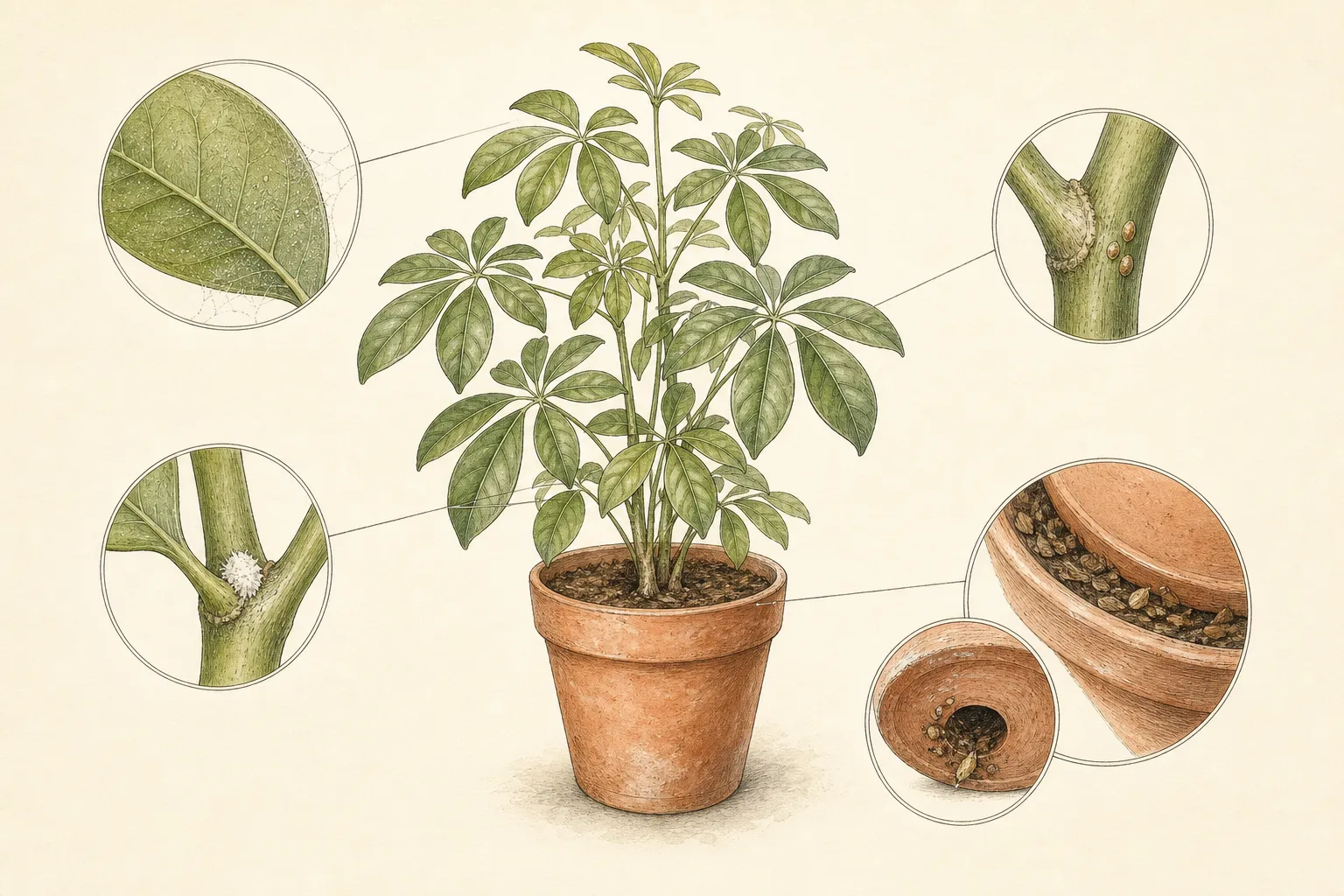
Look closely at leaf undersides, leaf-to-stem junctions, young tips and the sheltered side of the trellis. Maryland identifies mealybugs and spider mites as problems on mandevilla; UF/IFAS also notes scale and mealybugs. Dense twining growth creates many places that are difficult to see from the front. Turn the pot outdoors and inspect the rear before setting it beside other houseplants.
Fine webbing, pale stippling, sticky deposits or white waxy material justify a closer check. These are inspection clues, not interchangeable diagnoses. Keep a suspicious plant separate while identifying the problem and choosing a suitable response. Photograph both the affected part and the whole vine for an extension service if identification is uncertain. A routine whole-plant spray is a poor substitute for knowing what is present.
Remove fallen debris and wipe the pot exterior and accessible support. Keep the arriving mandevilla apart from the main collection initially and continue inspecting it at water checks. The purpose of separation is to make new activity visible before plants touch. If the only bright space is already crowded, rearrange that space before the vine comes inside; setting it temporarily among several plants defeats the intended observation period.
Water the root zone according to its slower use
A mandevilla that needed frequent summer watering usually uses water differently after the move. Lower light and slower growth change the balance even when the room is warm. RHS specifically advises reduced winter watering with the mix slightly damp throughout the root ball. NC State also describes moist but nonsoggy indoor conditions. Interpret the broad advice to let soil dry in winter as a reduction from summer wetness, not a direction to desiccate a leafy plant's entire root ball.
Check the medium beneath the surface before reaching for the watering can. Maryland's houseplant guidance combines touch with changes in pot weight. For a heavy trellised vine, use the accessible medium and a cautious sense of weight only when the pot can be handled safely. A decorative topdressing can conceal moist soil, and a dry-looking surface can sit above a much wetter root zone. Let the actual moisture and plant condition determine the next watering.
When water is needed, apply it slowly to the medium and allow free drainage. Empty water collected in the saucer or outer pot. The move indoors sometimes changes drainage even though the nursery pot is unchanged: an outlet can sit against the bottom of a cachepot, or the saucer may become inaccessible behind furniture. Resolve that arrangement while the support is still easy to move. A fixed weekly dose cannot compensate for standing water around the base.
Keep air humidity separate from soil moisture. Iowa State explains that occasional misting has little lasting effect on room humidity and recommends a humidifier as a more effective option. Extra water poured into the pot cannot correct dry air. If a humidity tray is used, keep the pot base above its water level. Leave enough separation from neighboring foliage to inspect all sides of the mandevilla.
Hold routine feeding while growth is slow. The indoor plant needs suitable light, temperature and root conditions before fertilizer can support useful new growth. Resume a growing-season feed only as active growth and improved conditions return, following the product and plant guidance. Pale, stretched winter shoots call for a light assessment; feeding them more heavily does not provide the missing light.
Use leaf loss to check conditions before changing the method
Some leaf loss can accompany the transition, but the pattern deserves attention. Check when it began, which leaves are affected and what changed at the window or pot. RHS notes that chilling can cause mandevilla to drop leaves. A night-temperature record can therefore be more useful than assuming the plant has decided to become dormant. Retain sound leaves in the light while you investigate.
Yellowing or wilting can also accompany an overly wet root zone. Maryland's winter indoor-plant guidance explains that damaged roots may leave foliage wilted even while the pot remains wet. Feel the medium and look for drainage problems before adding water to a limp vine. Dark, soft tissue near the crown, progressive dieback or a persistent unpleasant smell calls for closer assessment and separation from sound plants; those signs alone cannot name the causal organism.
Long gaps between new leaves, leaning shoots and a bare lower framework suggest checking light coverage as well as temperature and pests. Compare the current vine with a photograph taken on arrival. When several symptoms occur together, change the condition you can verify first and watch the response. Moving the plant, drenching it, feeding it and pruning it heavily on the same day makes the next observation much harder to interpret.
A fully leafless plant may require reassessment of the winter strategy. Maryland recognizes dormant storage as an alternative, but the bright-room instructions here should not be blended with an assumed dark-garage routine. Confirm the plant identity, tissue condition and actual storage conditions before changing methods. Continuing a summer watering schedule after substantial leaf loss is especially poorly matched to reduced water use.
Renew the framework as growth returns
In late winter or early spring, distinguish the permanent woody framework from its side shoots. RHS recommends removing weak or overcrowded growth and shortening side shoots to three or four buds from that framework. Count actual buds on the shoot before cutting. This advice concerns side-shoot renewal on an established climber, not a command to cut every main stem to a few inches above the pot.
Mandevillas flower on new growth, which is why spring conditions and a workable framework matter. Tie developing stems into the support while they are manageable, leaving space for leaves and future flowers. Check old ties at the same time. A tie that was loose in October may need adjusting as the stem grows, and a damaged support should be repaired before another season of vigorous twining.
Reassess the pot when growth resumes. RHS places routine repotting in February or early March and recommends only a modest size increase when roots become crowded. The calendar belongs to its growing conditions; use renewed growth and local timing to plan the job. Keeping a sound plant in its existing container for the winter avoids adding unnecessary root work to the autumn move.
Return the plant outdoors gradually after cold risk has passed and suitable warmth has returned. RHS advises acclimatization and ties strong flowering growth to warm conditions. Start in a sheltered position, then increase exposure as the vine adjusts. Keep the support portable and separate from permanent garden structures where possible. Next autumn's move becomes simpler when the summer arrangement has allowed the plant and trellis to travel together.
Steps
- Level
- moderate
- Time
- About one hour for a manageable potted vine, followed by winter checks
- Tools
- Clean secateurs, Soft plant ties, Minimum–maximum thermometer, Hand lens for inspecting leaves, Watering can and accessible drainage saucer
- Materials
- Healthy potted mandevilla with its label, Sound portable trellis or cane tripod if needed, Gloves, Grow light only where window light is insufficient
- 1Reserve a bright, warm indoor footprint
Measure the pot, support and leafy spread against the intended room and access route. Check overnight temperature near the plant position. For this leafy method, aim for the RHS preference above 15°C (60°F) at night. Make room to reach the medium, empty the saucer and examine the rear of the vine. Arrange lighting before carrying the plant inside.
- 2Release fixed connections one at a time
Trace stems from the pot to any fence, wall or neighboring plant. Remove external ties, release flexible growth gently and shorten only the stems that prevent the move. Keep the retained framework supported throughout. Secure loose shoots with soft ties, then check that the pot and trellis form a stable movable unit before lifting the container.
- 3Inspect and move before autumn chill
Examine leaf undersides, junctions and tips outdoors in good light. Set suspicious plants aside for identification and follow-up. Clear debris from the pot and support, then move the vine into its prepared space before nights enter the 10–15°C (50–60°F) range. Keep it apart from other houseplants initially so newly visible pests or decline can be noticed.
- 4Recheck moisture and leaf condition
At each inspection, assess the medium beneath its surface and note the condition of the foliage. Water when needed, allow drainage and empty collected water. Keep a brief record of night minima and any leaf loss. Correct verified drainage, temperature or light problems before changing several treatments together. Treat dry room air separately from the plant’s root-zone moisture.
- 5Schedule spring framework renewal
Save substantial structural pruning for late winter or early spring. On an established climbing framework, assess weak shoots and count three or four buds on retained side shoots before shortening them. Check ties and pot condition as growth returns. Plan a gradual outdoor transition after cold risk has passed, keeping the support portable for the following winter.
Related reading
Sources
- How to grow mandevillas. Royal Horticultural Society. Source record · Accessed 2026-10-08.
- Mandevilla. University of Arkansas System Division of Agriculture. Source record · Accessed 2026-10-08.
- Overwintering Tropical Plants. University of Maryland Extension. Source record · Accessed 2026-10-08.
- Mandevilla. NC State Extension. Source record · Accessed 2026-10-08.
- Mandevilla. University of Florida IFAS Extension. Source record · Accessed 2026-10-08.
- Watering Indoor Plants. University of Maryland Extension. Source record · Accessed 2026-10-08.
- The air in our home is extremely dry in winter. Should I mist the houseplants?. Iowa State University Extension and Outreach. Source record · Accessed 2026-10-08.
- Lighting for indoor plants and starting seeds. University of Minnesota Extension. Source record · Accessed 2026-10-08.
- Winter Indoor Plant Problems. University of Maryland Extension. Source record · Accessed 2026-10-08.