Grow · overwinter shrubby salvias uk gardens
Overwinter Shrubby Salvias in UK Gardens: Autumn Care
Prepare semi-evergreen shrubby salvias for a UK winter: retain stems, assess drainage and exposure, protect vulnerable pots, and judge spring regrowth before pruning.
Published Last updated
In this guide
- Keep the woody framework through autumn
- Confirm the shrubby group and keep the cultivar name
- Choose between an established border and protected pots
- Deal with winter wet before adding a cover
- Use fleece as limited weather protection
- Water protected plants by their condition
- Keep rooted backups separate from late cutting experiments
- Let spring growth determine the pruning boundary
- Steps
Keep the woody framework through autumn
Leave the main stems of shrubby salvias standing as a UK garden enters winter. For Salvia microphylla, S. greggii and their S. × jamensis hybrids, autumn preparation means choosing suitable protection, keeping the root zone draining and preserving the framework for a spring assessment. A plant still carrying late flowers can remain attractive while you make those arrangements. Cutting the whole shrub low because nearby herbaceous perennials have finished would apply a different plant's routine to this woody group.
Late October is a useful time to have that decision completed, with earlier action wherever damaging cold arrives sooner. Work from the forecast and the actual growing position. A mature salvia in a sheltered, freely draining border presents a different winter risk from a newly bought specimen in a small exposed pot. Separate those cases before allocating greenhouse space or putting fleece around every plant in the bed.
Keep ordinary tidying modest: collect fallen debris, clear access to the pot and deal with a broken branch individually. Leave sound stems and remaining healthy leaves attached. An intact framework makes it easier to locate living shoots before spring pruning. Bedding salvias, tender tropical species and Russian sage need their own seasonal care.
Confirm the shrubby group and keep the cultivar name
Look for microphylla, greggii or × jamensis on the purchase record. These plants form branching woody bases, usually with small paired green leaves and tubular, two-lipped flowers. NC State Extension notes that the three taxa can be difficult to separate and that many modern cultivars resist neat assignment to one of them. A photograph of a red flower is therefore a poor substitute for the original cultivar name. Keep the nursery label with the plant through winter.
A salvia with tall purple flower spikes may belong to a quite different group. Herbaceous S. nemorosa dies back differently, while S. yangii, formerly Perovskia, has its own deciduous framework. Tender cultivars such as ‘Amistad’ also need their own protection assessment. When the identity remains uncertain, retain the stems and seek the supplier's care details before treating an unfamiliar plant as hardy enough for the open border. Flower color alone cannot settle the winter location.
Hardiness also varies within a familiar name. The RHS species profile gives S. microphylla an H4 rating, corresponding to roughly −10 to −5°C in UK growing conditions, and specifies shelter and drainage. That range describes a horticultural rating, not a promise that every related cultivar or exposed root ball survives a particular night. NC State's note that ‘Wild Thing’ has reportedly greater winter hardiness than ordinary S. greggii reinforces the value of retaining selection-specific information.
Choose between an established border and protected pots
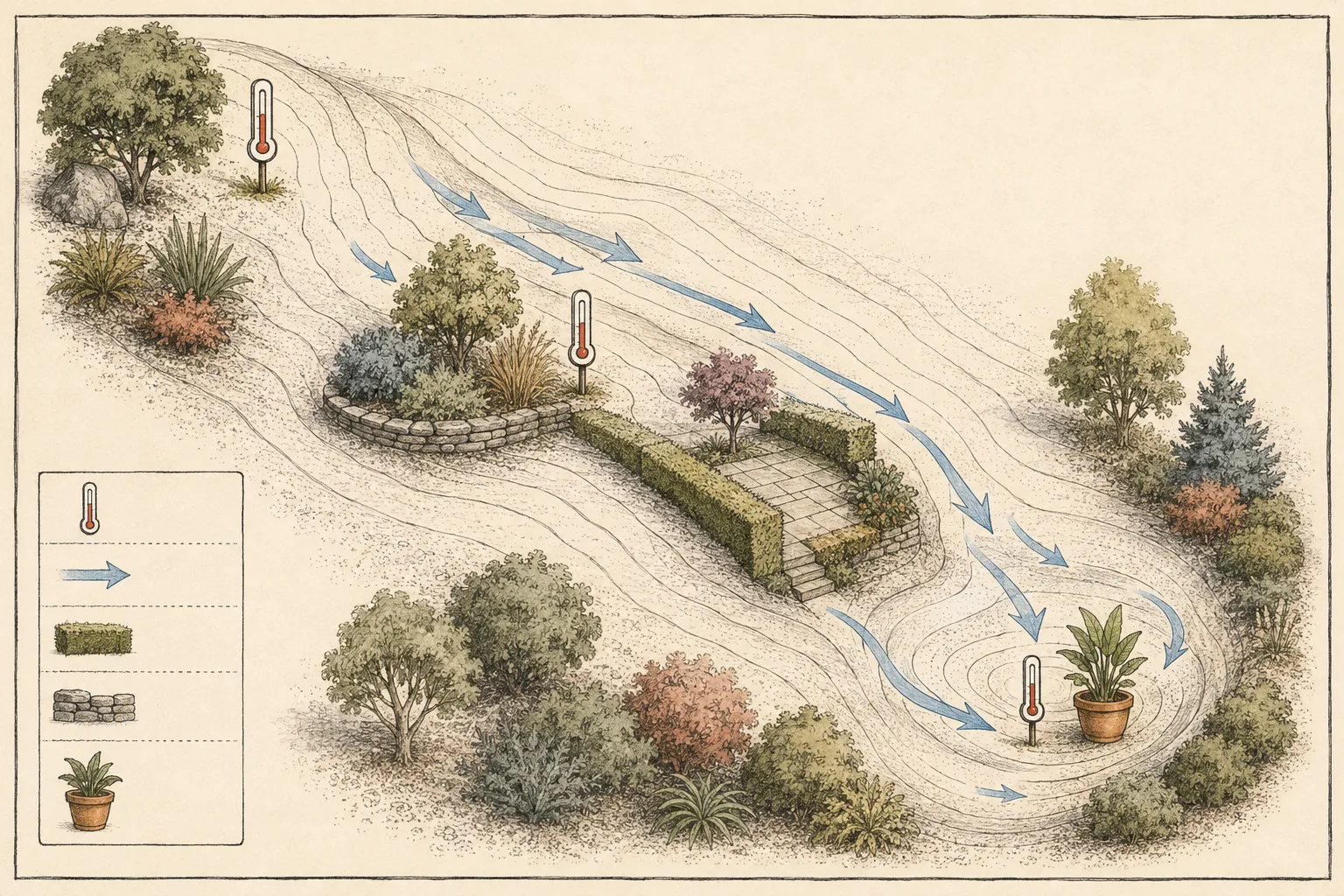
An established shrubby salvia can remain in a suitably sheltered, well-drained UK border when its known hardiness and local experience support that choice. Inspect where winter water goes and how cold wind reaches it. A plant against a warm wall may occupy a useful pocket, but a wall beside a leaking downpipe creates another problem. Evaluate the whole position: exposure, runoff and the plant's history all matter alongside the regional winter forecast.
Give late purchases and small movable pots priority for protected space. Ashwood Nurseries advises holding salvias bought late in the season frost-free and planting the following spring. That is especially useful for an October purchase whose roots still occupy its nursery container. Keep it labeled and in its pot for now. The fact that a large neighboring salvia survived several winters supplies little evidence about a small plant being introduced just before cold weather.
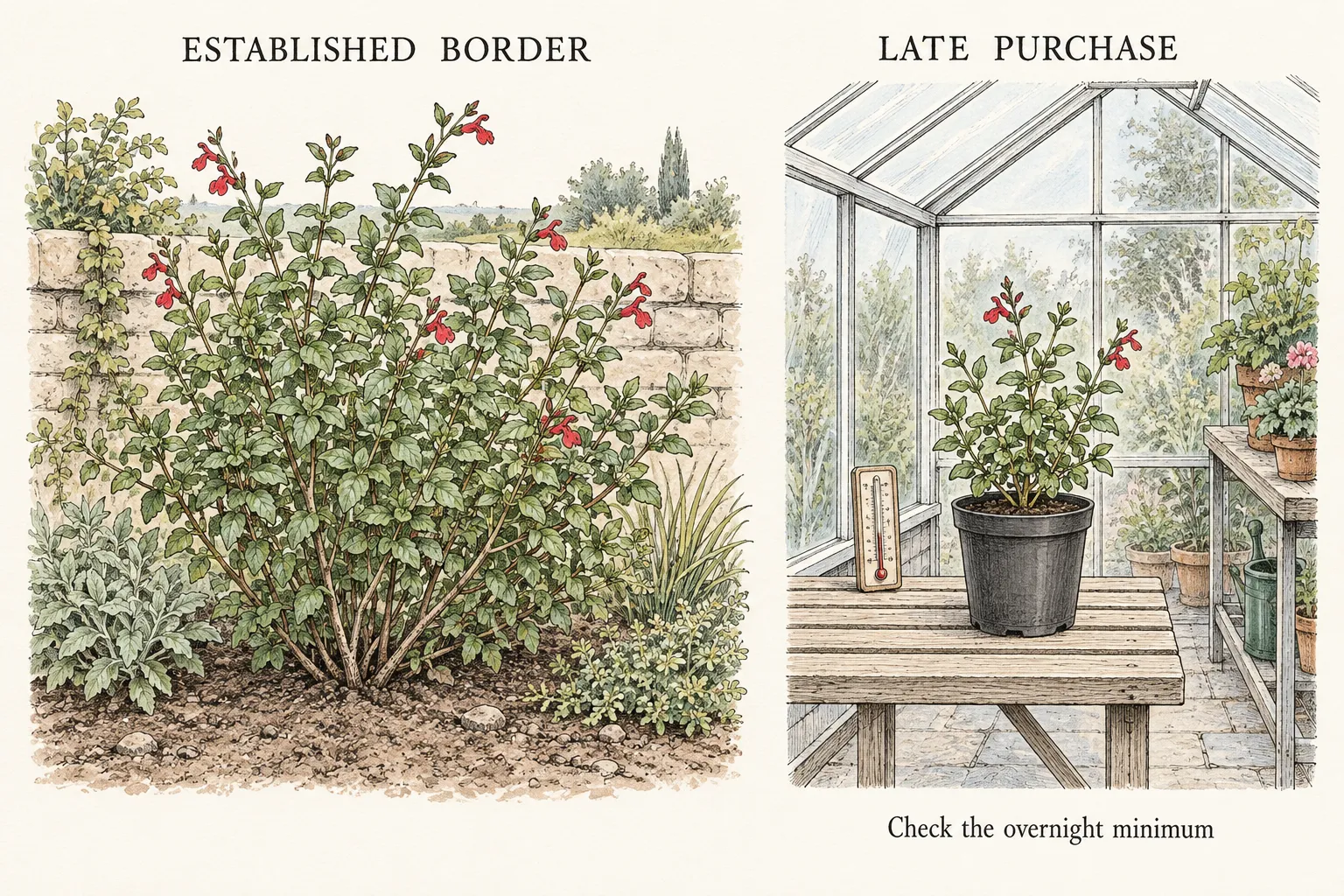
UK sources differ in how broadly they allow autumn planting. The RHS permits autumn planting of hardy border salvias, while Dyson's nursery favors May–August establishment unless protection is available. Those recommendations describe different levels of risk and stock. For this late-October preparation, retaining a new pot under protection is a cautious option; it leaves spring available for planting into a suitable permanent bed. There is no need to disturb an established, healthy border specimen solely to make all plants follow that option.
For vulnerable pots, use bright, cool, frost-free shelter that you can monitor. The RHS gives a greenhouse minimum of 5°C for its tender-salvia overwintering method; this is a useful conservative protected-space reference, not a newly established lethal threshold for the shrubby group. Check a minimum–maximum thermometer beside the plants. An unheated greenhouse or cold frame can still freeze, so its name alone cannot confirm that a late nursery purchase is receiving frost-free care.
Deal with winter wet before adding a cover
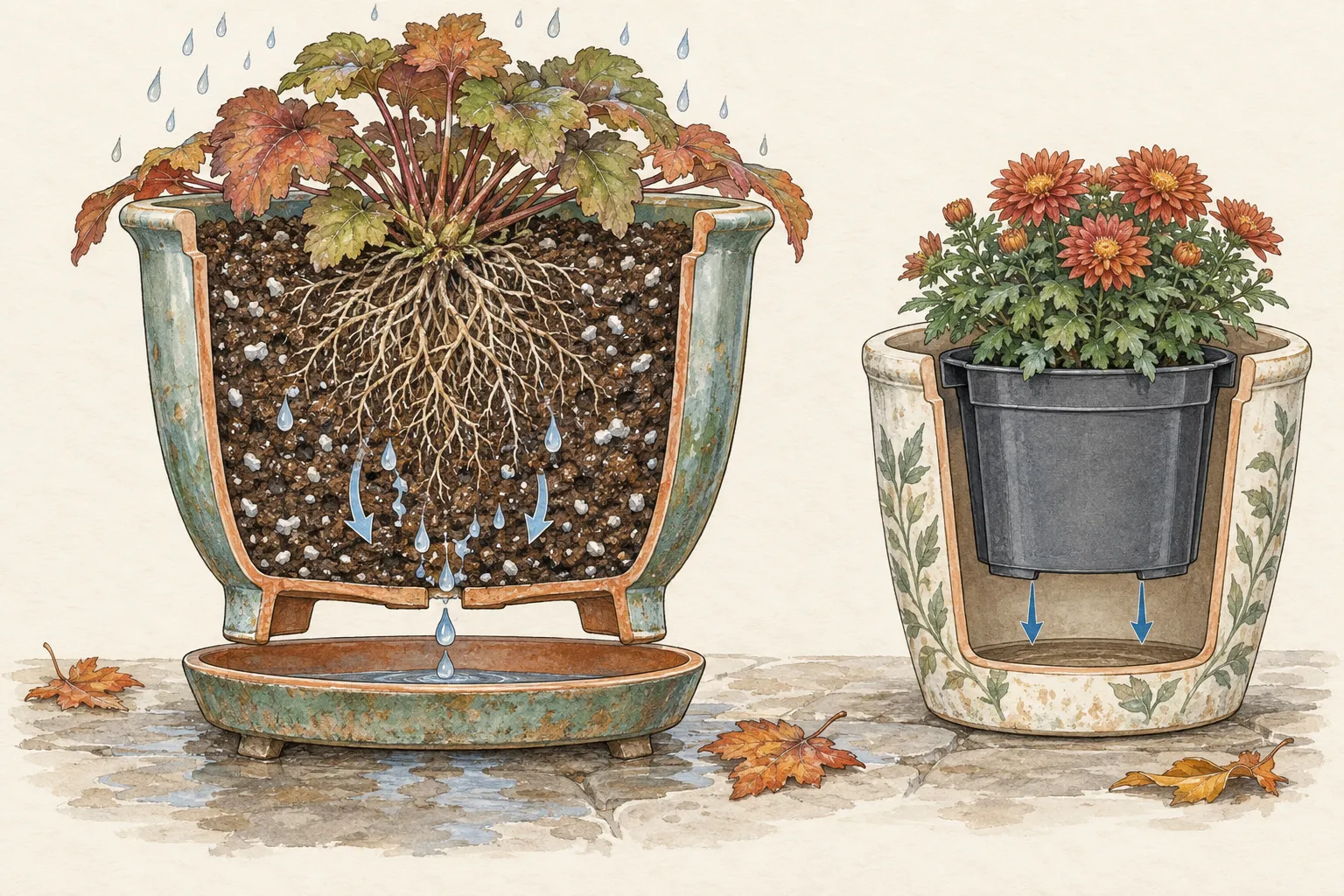
Read the soil after rain while the plant is still easy to locate. The RHS microphylla profile specifically warns that protection from excessive winter wet may be necessary. Water standing around the woody base, runoff repeatedly crossing the planting position or a pot sitting in trapped water calls for a drainage decision. A foliage cover leaves that root-zone problem unresolved. Clear a simple obstructed outlet first; larger ground-drainage failures need their own assessment.
For pots, remove standing water from saucers or watertight decorative covers and check that the base can discharge freely. Place a container on stable feet where this opens the drainage holes, keeping it upright and accessible. A sheltered position under a roof also reduces repeated rain entering the mix. After moving it, check for a new drip line from the roof and for runoff from pots above. Shelter succeeds only if the new arrangement actually changes the exposure.
For an established border plant, lift loose debris that has accumulated tightly against the lower stems so that you can see the base. Keep the root system undisturbed during this inspection. A deep autumn excavation around a healthy shrub is a substantial transplanting operation, not a quick drainage repair. If the bed repeatedly floods, record the unsuitable position and plan a better-drained site or container; a decorative surface layer cannot correct water trapped underneath.
Retain the distinction between this shrubby group and tender herbaceous salvias. The RHS's deep winter-mulch example concerns tender ‘Amistad’ in mild or sheltered gardens. It is not a universal instruction to bury every microphylla or greggii woody base beneath the same depth. Choose protection for the identified plant and soil. This is particularly important where winter wet already limits success and a thick covering would conceal the condition you need to inspect.
Use fleece as limited weather protection
In cold or exposed districts, the RHS recommends fleece or cover for shrubby semi-evergreen salvias. Arrange the material so that you can secure it against wind and reach the plant for inspection. Keep the branches in their natural outline as far as practical; a brittle woody salvia is awkward to compress into a tight bundle. Place protection before the forecast cold spell, checking the fastening and any contact with vulnerable shoots after windy weather.
Fleece provides a limited margin. The RHS describes about 2°C of frost protection from heavier grades and explains that temperatures beneath covers can approach the surrounding air temperature as stored warmth is lost. That makes fleece useful against a modest frost or harsh exposure, but it gives no basis for guaranteeing survival through prolonged severe freezing. A valuable movable pot can be transferred to more reliable shelter when the forecast exceeds the protection available outdoors.
Use breathable horticultural fleece around foliage; wrapping a pot wall for root insulation is a separate job. Keep pot outlets open and preserve access for watering. A transparent sealed plastic bag around the entire shrub changes humidity and can overheat in sunshine. Reuse sound covers where possible, inspect for tears and remove loose fragments. During milder conditions, open the arrangement enough to inspect leaves, stems and moisture before the next cold period.
Water protected plants by their condition
A leafy shrubby salvia is not a dry-stored bulb. Under cover, keep the compost from drying out completely while reducing water to match slow winter growth. Feel the accessible mix below its surface and compare the weight of a small pot before watering. If it is still damp and heavy, leave it to drain and check again later. The move under a roof removes rain, so even a plant needing little water still requires observation.
Water the mix when needed, let excess drain and empty any collected runoff. Keep separate notes for a leafy parent plant and small rooted cuttings: their pot sizes and root systems differ, so they can dry at different rates on the same bench. A fixed weekly dose obscures those differences. Likewise, wilt in wet compost needs investigation before more water is added; it does not establish a specific disease or prove that the plant is thirsty.
Keep the protected group bright and ventilate on mild days, closing the space again before temperatures fall. Remove dead leaves that collect between pots. These small actions make it easier to notice a change and reduce the stale, crowded conditions associated with winter mould. Pause routine growing-season feeding during this slow period. The RHS cautions against late nitrogen-rich feeding that encourages soft growth; fertilizer cannot compensate for inadequate winter light or excessive moisture.
Keep rooted backups separate from late cutting experiments
If you already have rooted summer cuttings, reserve protected space for them and keep their labels tied to the parent cultivar. Small plants offer a practical backup where a mature shrub must remain outside, but they still need a functioning root system and appropriate winter care. Check each little pot individually. The smallest containers can dry quite differently from the large parent, even when both are the same named salvia.
Taking fresh cuttings in late October is a separate propagation attempt. RHS microphylla guidance allows late-summer or autumn semi-ripe cuttings with bottom heat; that condition matters. A cold windowsill and a few cut stems are not equivalent to an established young plant ready for winter. If suitable propagation facilities and healthy material are available, use the species-specific method. Otherwise prioritize protecting the plant you have and plan spring or summer propagation, when suitable new growth is available.
Keep a doubtful parent out of the backup collection until its symptoms are understood. Spreading discolored leaves, soft tissue at the base or continuing dieback in wet mix calls for closer examination and local diagnostic advice. Remove detached dead material and correct obvious trapped water, but preserve useful photographs and the cultivar history. Raising cuttings from visibly failing tissue can carry the uncertainty into every new pot; a backup is most useful when it began with a sound parent.
Let spring growth determine the pruning boundary
In spring, inspect the retained framework before choosing a height. Dyson's Kent practice is to remove dead stems back to emerging growth in mid- to late April. That approach suits a winter-survival assessment: find a healthy pair of shoots or a clearly living branch, then remove the dead extension above it. Work branch by branch. Strong green shoots low on one stem can coexist with higher live growth on another, so an even line across the shrub may discard useful evidence.
Published pruning heights require context. The RHS offers a roughly 10cm spring cut for compact shrubby salvias, with selective removal of damaged shoots as an alternative. UC Davis recommends reducing leafy growth by half to two-thirds in its California setting and warns that old leafless wood typically fails to resprout. These are not interchangeable instructions for an unknown UK cultivar after a hard winter. Here, choose the selective option and retain confirmed living growth; seek cultivar-specific advice before a harder renovation.
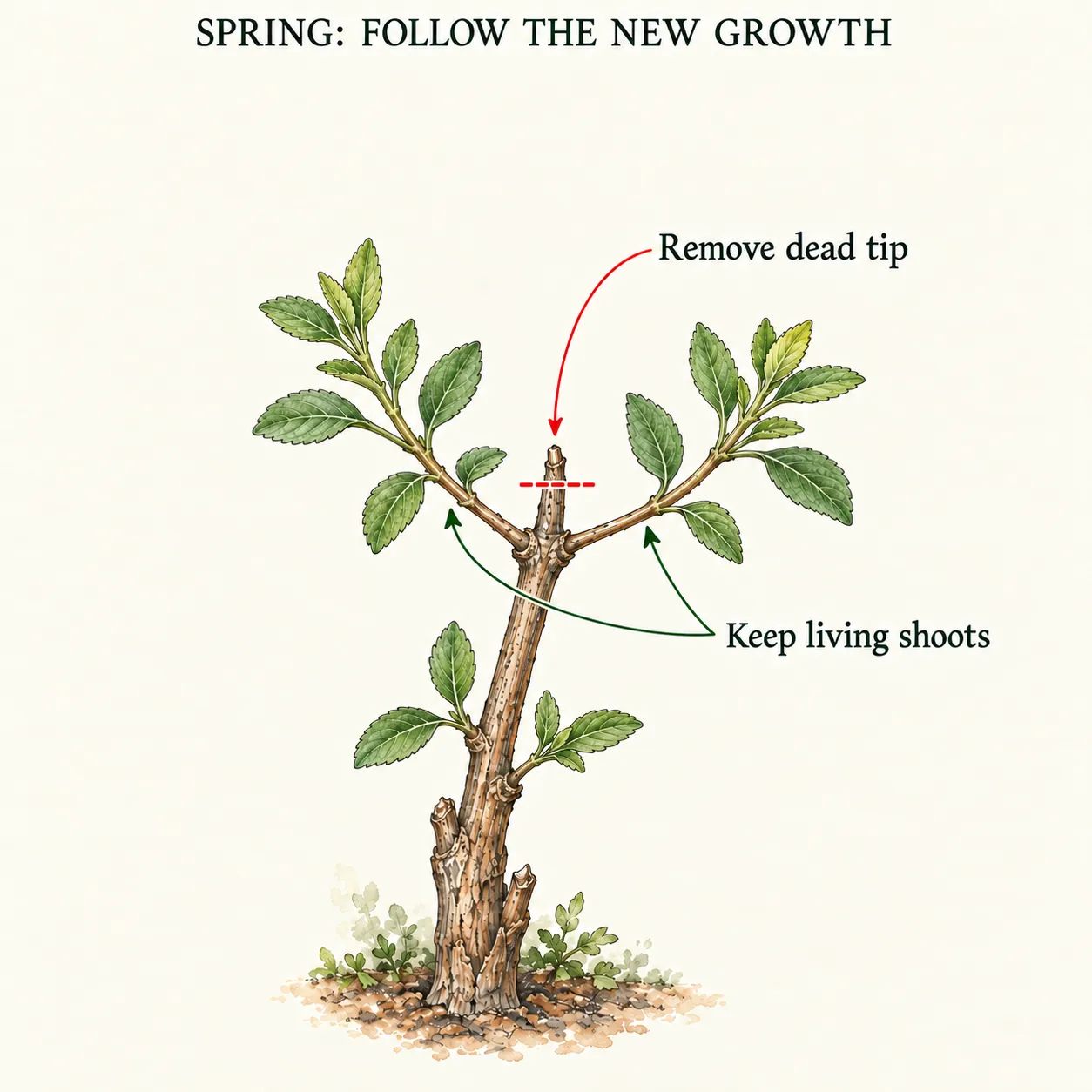
Give an apparently bare plant time to show what survived. Dyson reports that some shrubs regenerate from below ground after severe or wet winters, with lack of regrowth by mid-June a useful warning in its Kent conditions. That observation offers a reason for patience, not a universal deadline or a recovery promise. Check the base for emerging shoots and distinguish firm quiet wood from actively decaying tissue. Persistent uncertainty belongs with a local nursery or diagnostic service before replacement.
Return protected pots gradually to outdoor exposure after local frost risk has passed, increasing watering as active leaves develop. Plant late-purchased stock into its chosen sunny, draining position during the suitable spring window, keeping the cultivar label. Review which winter arrangement actually worked: whether the pot stayed frost-free, where water collected and which stems resumed growth. Those observations make the following autumn's protection more precise than repeating a generic instruction for every plant called salvia.
Steps
- Level
- moderate
- Time
- About 45 minutes to assess and shelter a small collection, with winter checks
- Tools
- Minimum–maximum thermometer, Clean secateurs for individual damaged stems, Plant labels and pencil, Watering can
- Materials
- Bright frost-free space for vulnerable pots, Horticultural fleece where needed, Stable pot feet where drainage requires them
- 1Sort the plants before moving them
Read each label and group microphylla, greggii and jamensis cultivars separately from herbaceous and tender salvias. Mark late nursery purchases and small exposed pots for priority shelter. Note the existing border plants whose cultivar, drainage and previous winter performance support leaving them in place. Keep the main woody stems intact while making this inventory.
- 2Prepare the actual winter positions
Clear the route and reserve enough bright protected space for the selected pots. Place a minimum–maximum thermometer at plant level and confirm the frost-free plan, including what happens during a colder forecast. For border plants, locate the wind exposure and runoff route so that any covering addresses the problem actually present.
- 3Move pots and open their drainage
Lift containers by the pot, supporting the base and using help for heavy specimens. Empty saucers or sealed outer covers, clear accessible outlets and set each pot firmly. Check that the new position receives neither roof drips nor runoff from another container. Keep labels visible and leave room to inspect the mix.
- 4Fit protection and check moisture
Secure suitable fleece ahead of cold where the outdoor plan requires it. Keep the foliage cover distinct from any pot-wall insulation, with drainage openings clear. In protected pots, inspect the mix before watering, then let excess water escape. Remove detached dead leaves and ventilate the growing space during mild weather.
- 5Give rooted backups their own checks
Place already rooted cuttings together by cultivar, with space to see each pot and its label. Check their small root balls separately from the parent container when assessing water. Keep fresh, unrooted cuttings in the propagation setup appropriate to their stage; mark them clearly so they are never counted as established winter backups.
- 6Reassess after cold and in spring
Read the overnight minimum after cold spells and inspect for damage or persistent wetness. Retain uncertain sound stems until spring shoots reveal the living framework. Cut dead extensions back to confirmed growth at the appropriate local spring stage. Harden protected plants gradually for their return outdoors, and keep a brief record of which locations and cultivars performed well.
Related reading
Sources
- How to grow salvias. Royal Horticultural Society. Source record · Accessed 2026-10-15.
- Salvia microphylla | baby sage. Royal Horticultural Society. Source record · Accessed 2026-10-15.
- Salvia greggii. NC State Extension Gardener Plant Toolbox. Source record · Accessed 2026-10-15.
- Autumn sage. UC Davis Arboretum and Public Garden. Source record · Accessed 2026-10-15.
- About Salvias. Dyson’s Nurseries. Source record · Accessed 2026-10-15.
- Salvia Joy (Dyson’s Joy). Ashwood Nurseries. Source record · Accessed 2026-10-15.
- Preventing winter damage. Royal Horticultural Society. Source record · Accessed 2026-10-15.
- Fleece and crop covers. Royal Horticultural Society. Source record · Accessed 2026-10-15.