Grow · overwinter potted bay trees cold wet weather
Overwinter Potted Bay Trees in Cold, Wet Weather
Protect ornamental Laurus nobilis in pots from winter cold and excess water, choose shelter by climate, and match indoor light and watering to temperature.
Published Last updated
In this guide
- Protect the pot as well as the leafy crown
- Choose an outdoor or indoor route before the first hard spell
- Insulate exposed roots while leaving water an exit
- Correct winter wet before changing the watering schedule
- Match indoor light and water to the temperature
- Keep the autumn move gentle on a topiary bay
- Read leaf changes before watering or pruning again
- Let spring growth guide the return and any repairs
- Steps
Protect the pot as well as the leafy crown
Move a potted bay tree out of cold wind, keep its drainage open and decide whether the coming winter requires indoor shelter. Laurus nobilis keeps its leaves, but its container roots have less protection than roots in the ground. A covered crown above a frozen or waterlogged pot is still a vulnerable plant. Begin with the root ball, the actual winter position and a way to move the container before severe weather makes handling difficult.
Early November is a planning point in mild temperate gardens, not a universal deadline. In colder regions the move may already be necessary. The RHS describes bay as generally hardy to around −5°C (23°F), with shelter affecting performance, and specifically warns that roots can freeze through the sides of a pot. That figure is not a guaranteed minimum for every topiary, pot size or duration of cold. Use the forecast, local experience and the plant's condition to choose protection before damage appears.
Keep the nursery label and confirm Laurus nobilis. Several different trees are called bay, including California laurel and bay rum tree, and their names do not establish the same winter requirements. This care applies to an established bay already growing in a container. A newly rooted cutting, a recently disturbed root system or a garden tree dug up hurriedly in autumn needs a separate establishment plan. Preserve healthy foliage while preparing the winter arrangement.
Choose an outdoor or indoor route before the first hard spell
In a mild UK garden, an established bay may remain outside in a genuinely sheltered position with provision for colder spells. Look for a place away from funneling winds and persistent roof runoff, with a stable surface and access to the pot. A paired doorway display need not remain symmetrical all winter if one side is much more exposed. Moving the vulnerable pot temporarily is a more useful response than treating the appearance of the entrance as a fixed requirement.
In a cold continental climate, plan indoor overwintering. Iowa State says bay cannot survive an Iowa winter outdoors and recommends moving it inside before nights fall below about 40°F (4°C). That is a conservative transfer cue for its container routine, not a claim that bay foliage dies at 40°F. Illinois similarly advises bringing pots in before frost. Keep those regional instructions distinct from the RHS discussion of established plants in milder gardens; wrapping cannot turn an exposed Iowa pot into a mild coastal planting.
Inspect the whole route into shelter while the bay is still easy to move. Measure the pot, crown and doorway and provide help or suitable equipment for a heavy specimen. Lift by the container with the base supported, keeping the trunk and clipped crown out of the lifting job. A standard bay has a leafy head carried above a clear stem, so its shape can be awkward in a narrow doorway. Reserve a position where the crown fits and the pot remains accessible for water and inspection.
A greenhouse, porch or garage is useful only if its actual conditions suit the plant. Read a minimum–maximum thermometer at pot level, including after cold nights and sunny afternoons. A structure described as unheated can still freeze. If the intended shelter cannot maintain the chosen winter conditions, arrange a more dependable location before the severe forecast. A warm room is another possible environment, but it changes the light and watering requirements discussed below.
Insulate exposed roots while leaving water an exit
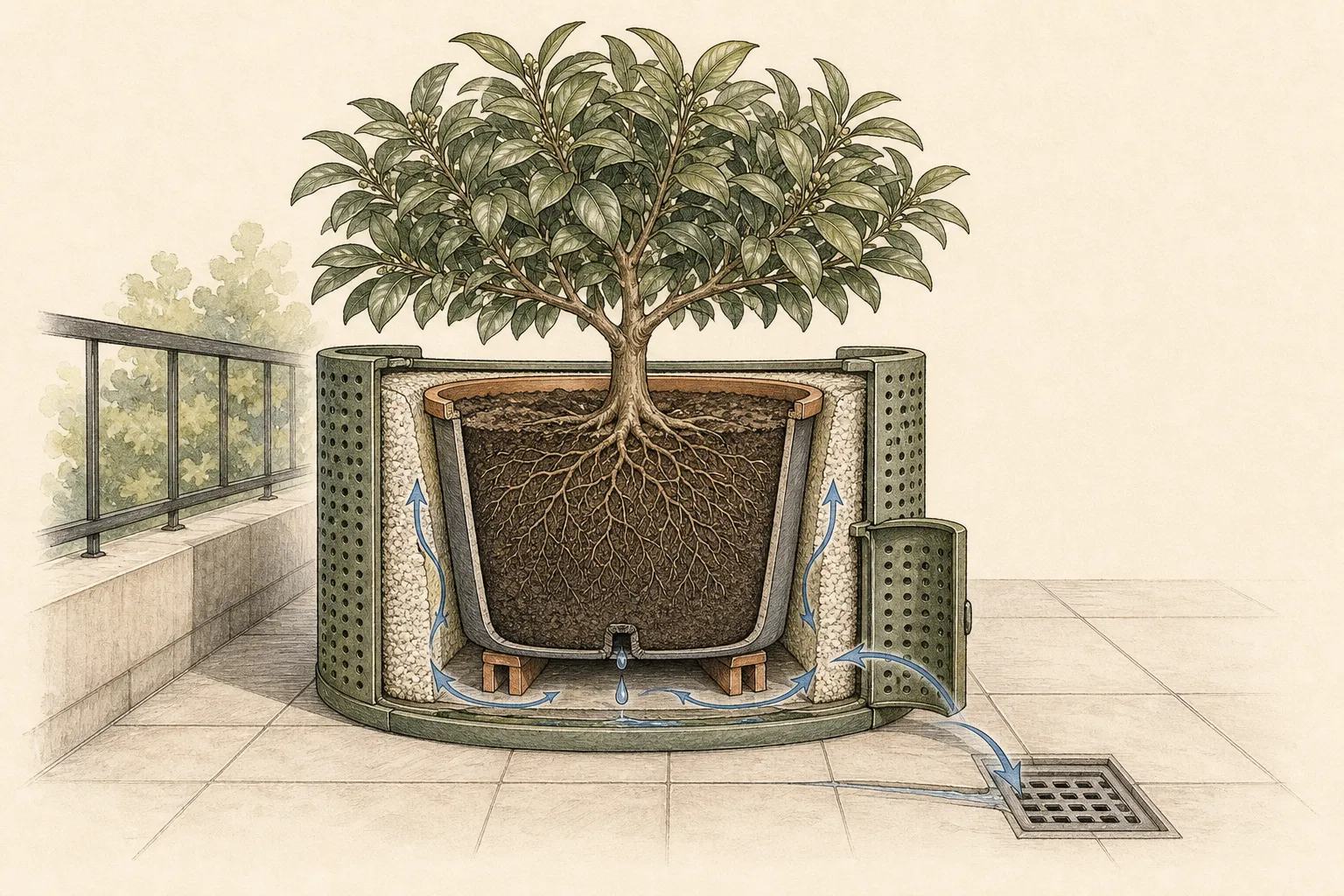
For a bay staying outside in a suitable climate, protect the container sides. The RHS recommends hessian or reused bubble wrap around the pot because container roots are susceptible to freezing. Treat this as root-zone protection, keeping the wrapping around the vessel and the living crown separate. Leave the pot surface available for checking moisture and preserve access to the base. Insulation slows exposure changes; it is not a substitute for relocation when cold exceeds the protection available.
Raise the pot on stable feet or suitable bricks so its drainage openings can discharge. Keep the supports secure under the weight of the planted container, especially with a tall standard. Finish the side wrapping clear of the outlet and remove a water-holding outer cover or empty its collected runoff. A waterproof sleeve folded beneath the pot can trap water even when the original drainage holes are sound. Confirm the route again after wrapping, because the covering changes access to the pot base.
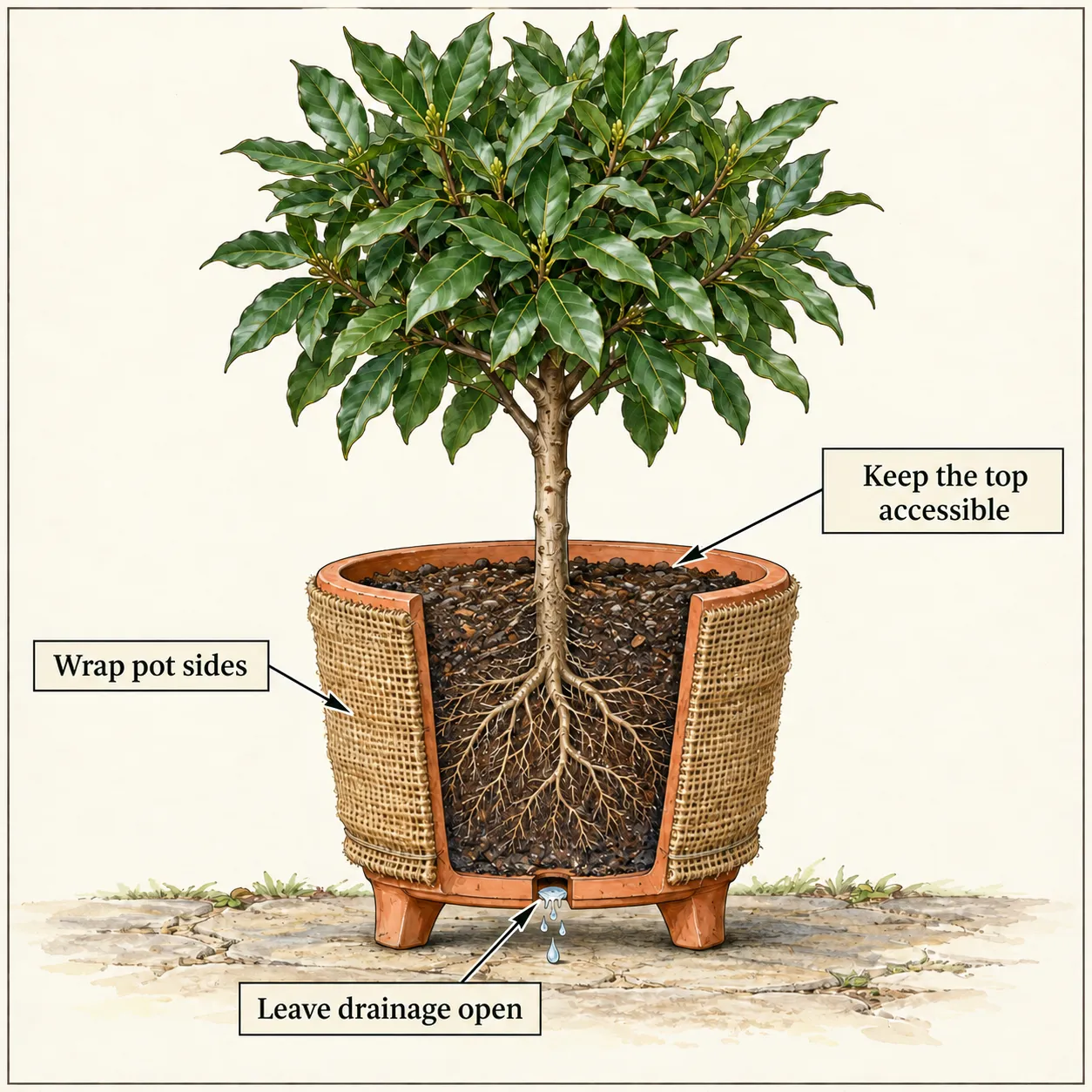
Protect foliage separately during a forecast harsh frost where outdoor holding remains appropriate. The RHS allows horticultural fleece for bay; its general fleece advice gives heavier material only a limited margin, about 2°C, and explains that covered temperatures can approach surrounding air conditions as stored warmth is lost. Use a cover that can be secured and inspected, with enough room for the crown. This small margin gives no assurance through prolonged severe freezing, so retain the indoor fallback for a movable specimen.
Check the arrangement after wind and rain. A shifted wrap can conceal an outlet, loose material can flap against the stem, and an unstable support can tilt the pot. Open the cover during suitable milder conditions to inspect the bay and restore access to its leaves. Keep the glossy crown visible for ordinary observation whenever protection is unnecessary. The leaf cover, pot insulation and drainage each have a different job; one should not obstruct the others.
Correct winter wet before changing the watering schedule
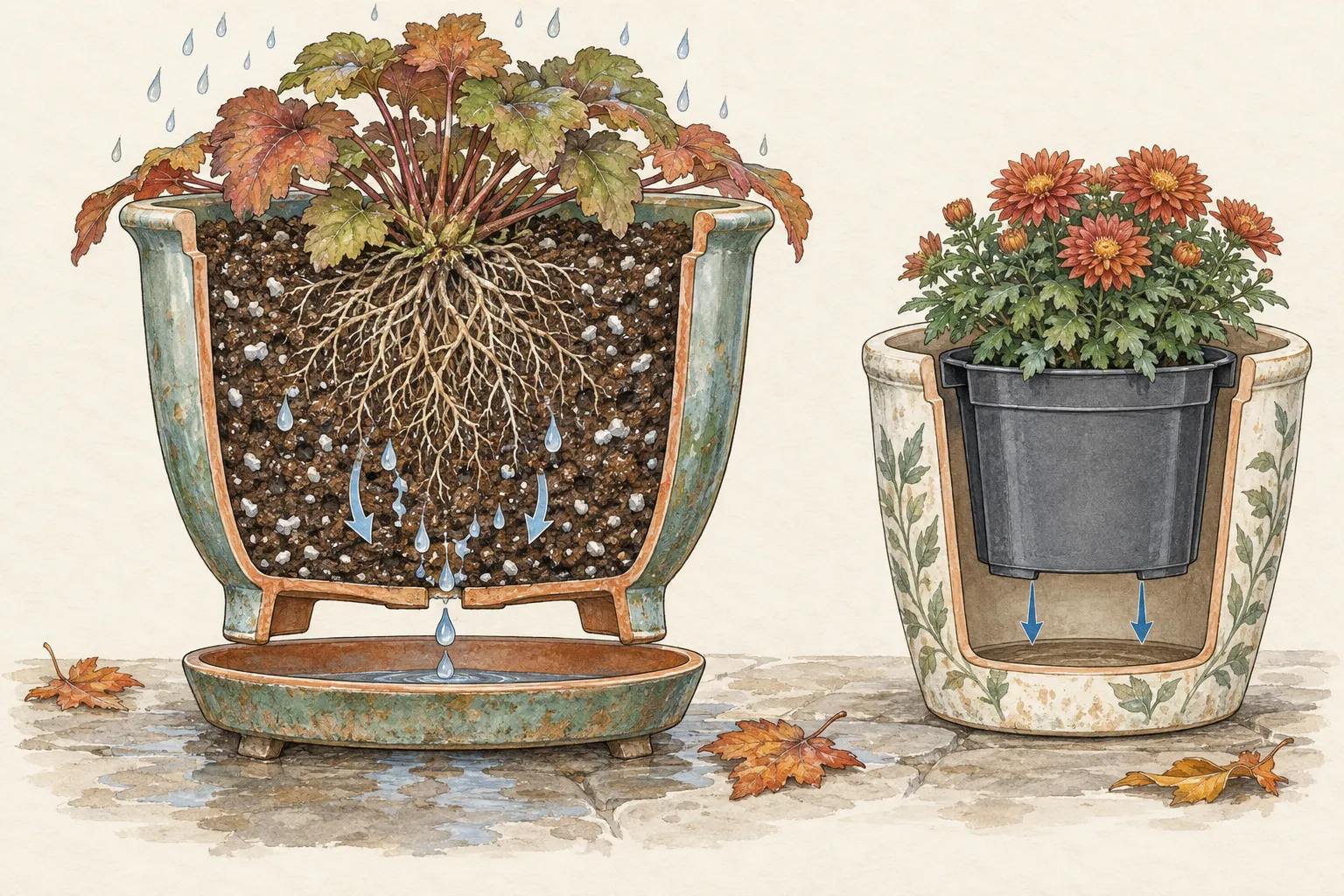
Observe how water reaches this particular bay. Rain can enter directly, run off nearby roofing or collect inside a decorative outer pot. The RHS bay guidance warns that winter waterlogging can rot roots and that overwatering can cause root damage. Clear accessible drainage openings and remove standing runoff before deciding that the plant needs more water. Where repeated rain keeps the mix saturated, move the container to a suitable sheltered position with less rain exposure while preserving its temperature and light needs.
Check the root zone as well as the appearance of the leaves. When the mix is thawed and can be assessed, feel below the surface and, for a manageable pot, compare its weight as it drains and dries. A dry-looking top layer can sit above wet material lower down. Equally, a container under an overhang may receive little of the rain falling beside it. Use the observations to decide whether to wait or water. A weekly instruction copied from the summer patio cannot account for those two very different positions.
Keep bay from drying out completely. Wisconsin's bay account explicitly retains some root moisture even in a cool resting plant, while Illinois cautions against keeping the mix too wet. The workable combination is an aerated root ball that is allowed to lose moisture between waterings, followed by watering when needed and free drainage. It is neither a permanently soaked pot nor dry storage for a leafless bulb. Record a change after moving indoors or under a roof, because that move also changes rainfall and evaporation.
Match indoor light and water to the temperature
The RHS offers a cool room up to 10°C (50°F) as one protection option when temperatures fall below its outdoor bay guidance. Wisconsin describes cool holding at 35–60°F, approximately 2–16°C, during which growth slows markedly and the tree needs little light and very little water, just enough for barely moist soil. Those are source-specific descriptions of cool conditions. Confirm that the location remains frost-free and inspect the plant; the lower end leaves little margin if a room cools further overnight.
A warmer indoor bay needs a brighter position and more attentive watering. Wisconsin calls for as much sun as possible and regular water in a warmer room. Iowa's indoor routine favors the brightest available location, such as a south-facing window, with cooler room temperatures of 50–65°F (10–18°C) if possible. Illinois also stresses bright indoor placement. Choose a coherent arrangement from the conditions you can provide: the low-water, low-light allowance for a cool resting bay should not be carried into a warm, dim room.
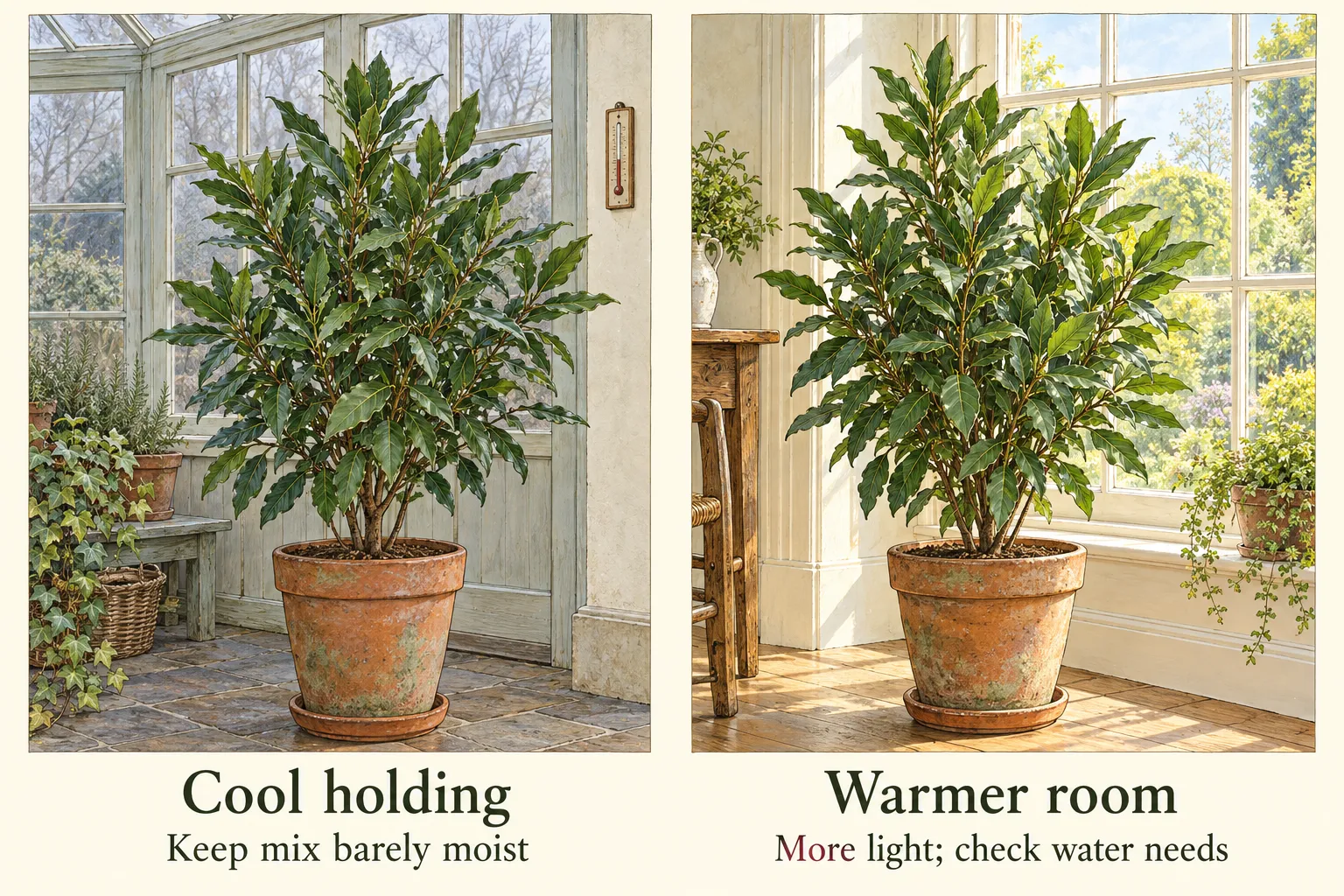
Set the pot where the entire clipped head receives useful light and remains clear of cold glazing and direct heating outlets. A small standard fits differently from a broad bush: the crown may be above the bright part of a low window while its pot occupies the sunny sill. Check at leaf height, then adjust the position. Keep enough space to inspect stems within the crown. A decorative corner that looks balanced from the room can still be a poor winter station for the bay.
Expect the watering interval to change with the room. In cool shelter, check that the mix retains slight moisture and water sparingly as needed. In a warmer bright position, watch how quickly the root ball dries and water accordingly, letting excess escape. Iowa advises less frequent winter watering and a drying interval; Wisconsin's complete-drying warning limits how far that interval should go. Reassess after a heating change or a spell of weak daylight. The actual plant and mix decide the next application.
Keep the autumn move gentle on a topiary bay
Leave major reshaping and routine root work for their appropriate growing-season windows. The RHS recommends spring repotting and summer trimming for trained bay topiary, with hard renovation in late spring. A bay that must squeeze into winter shelter is a reason to reconsider its location or handling plan, not to remove a large part of its healthy crown on arrival. Retaining its established root ball also avoids adding root disturbance to the change of light and temperature.
If drainage remains poor after obvious blockages and trapped runoff are corrected, assess the container and mix. Old compacted compost, crowding or a damaged pot may need attention, but a routine autumn reduction of roots is not the first response to every wet surface. Keep a record for spring repotting and obtain help promptly when the root system is deteriorating or the vessel is failing. A necessary rescue and scheduled maintenance are different reasons for handling the roots.
Reduce feeding as growth slows. Illinois notes that bay makes little winter growth and needs much less fertilizer; the RHS feeding period runs from mid-spring to late summer. A quiet evergreen crown in cool shelter does not need fertilizer simply because it has stopped extending shoots. Yellowing also has other possible causes. Concentrate on the chosen light, temperature and root moisture before trying to restore a summer growth rate during winter.
Read leaf changes before watering or pruning again
A few older yellow leaves can shed naturally, while widespread yellowing or spots deserves a closer look. RHS bay guidance identifies waterlogged compost and cold damage as common explanations, with nutrient shortage another possibility in long-grown containers. Keep the cultivar in mind: golden ‘Aurea’ normally has yellow foliage. Compare new change with the plant's usual color, check moisture and exposure, and examine more than one side of a clipped crown before treating the whole bay as one uniform symptom.
Inspect stems and leaf undersides when moving the plant indoors and during later checks. Wisconsin highlights scale insects on leaves and woody parts; Iowa also lists scale and spider mites among indoor problems. Bumps, sticky deposits or unusual leaf damage justify closer identification and separation from nearby plants when needed. These observations call for identification before treatment; brown leaves can also reflect environmental stress. Keep treatment decisions tied to a confirmed problem and current local guidance.
Some leaf drop can follow the indoor–outdoor change, as Iowa notes. Watch whether the bay stabilizes in its new position and whether remaining foliage and buds stay sound. Continued decline in persistently wet mix is a different pattern from a few leaves lost during adjustment. Correct a clear drainage or placement problem and keep observations comparable. Repeatedly moving the pot between a hot room and freezing patio makes both temperature control and interpretation more difficult.
Cold damage can also affect stems. The RHS records cracking or peeling lower bark after harsh winters, with cold and fluctuating moisture among possible factors; it does not identify one certain cause or say that every such bay is doomed. Photograph a concerning area and assess the growth above it. A severe crack, unstable stem or progressing decay needs local assessment. For ordinary weather-damaged foliage, preserve the framework until spring growth makes the surviving parts clearer.
Let spring growth guide the return and any repairs
As local frost danger recedes, give an indoor bay a gradual return to outdoor exposure. Wisconsin advises acclimating plants from darker indoor conditions, and Iowa moves bay outside after frost risk has passed. Use sheltered daytime outings when appropriate and retain the option to bring the pot back in. A single warm day does not establish that the winter shelter is no longer needed. Recheck moisture as light and moving air increase around the evergreen leaves.
Assess winter-damaged tips in late spring, following the RHS bay-specific timing. Cut out confirmed dead or damaged growth while retaining sound branches and the desired topiary outline. Larger renovation is a separate decision, particularly for an older bay that may recover slowly. RHS observations suggest looking for recovery by midsummer after winter injury, but this is not a guaranteed recovery date. Give uncertain firm stems time to show growth and seek advice where damage remains extensive.
Review the pot while growth resumes. Spring is the useful moment to decide whether the bay needs repotting, refreshed mix or a change to its container arrangement. Keep drainage open and resume growing-season care as the plant becomes active. Retain the winter notes that explain what happened: minimum temperatures, time under cover, moisture behavior and the exposed side of the crown. They help you choose a better position next autumn while preserving the bay's long-term ornamental form.
Steps
- Level
- moderate
- Time
- About 45 minutes to prepare a manageable pot, with checks through winter
- Tools
- Minimum–maximum thermometer, Plant label or care record, Watering can, Suitable handling aid or help for heavy containers
- Materials
- Cool indoor shelter appropriate to the local winter, Hessian or reused bubble wrap for outdoor pot sides where suitable, Horticultural fleece for temporary foliage protection, Stable pot feet or suitable bricks that leave drainage open
- 1Identify the bay and choose the winter route
Confirm Laurus nobilis and note whether it is a standard or bush. Compare the local forecast and past exposure with the actual container. In severe climates arrange indoor holding before frost; in a mild sheltered garden retain a relocation option for colder spells. Keep the existing root ball intact during routine preparation.
- 2Prepare a workable shelter position
Measure the pot, crown and access route and arrange lifting help where required. Place a thermometer at the intended position and check overnight minima. Match leaf-level light to the chosen temperature regime. Keep the bay clear of cold glazing and heating outlets, with space to reach both its inner branches and pot surface.
- 3Protect outdoor roots and preserve drainage
Wrap suitable material around the pot sides if the bay will remain outdoors. Set it securely on feet or bricks and leave the outlet unobstructed. Empty collected runoff and check for roof drips. Use temporary foliage fleece as a separate limited protection measure, keeping the crown accessible for inspection in milder weather.
- 4Adjust water to the changed conditions
Check accessible mix and the weight of a manageable pot after the move. Wait while it remains wet, and water when needed with an open route for excess to leave. Keep a cool resting bay barely moist; provide more attentive water and light in a warmer room. Prevent complete root-ball drying in either arrangement.
- 5Inspect the crown and maintain its framework
Record significant yellowing, spots, leaf drop or stem changes together with temperature and moisture observations. Examine woody stems and leaf undersides for possible pests and obtain identification when needed. Keep major reshaping, routine repotting and root pruning for their suitable seasonal windows. Reduce feeding while winter growth is limited.
- 6Make the spring transition gradually
Return indoor plants to outdoor exposure in stages after local frost risk passes, checking moisture as demand rises. Assess damaged tips in late spring and retain confirmed living growth. Review drainage and repotting needs as growth resumes, then update the winter plan using the bay’s actual response and recorded shelter conditions.
Related reading
Sources
- Bay tree (Laurus nobilis). Royal Horticultural Society. Source record · Accessed 2026-10-22.
- How to grow Bay. Royal Horticultural Society. Source record · Accessed 2026-10-22.
- Sweet Bay, Laurus nobilis. University of Wisconsin–Madison Extension. Source record · Accessed 2026-10-22.
- How do I grow bay laurel?. Iowa State University Extension. Source record · Accessed 2026-10-22.
- Bay Laurel. University of Illinois Extension. Source record · Accessed 2026-10-22.
- Fleece and crop covers. Royal Horticultural Society. Source record · Accessed 2026-10-22.