Grow · colocasia autumn lifting dormant storage
Lift and Store Colocasia Elephant Ears in Autumn for Cold Winters
Lift named Colocasia elephant ears for cold winters, dry the corms before packing, and compare regional temperature advice before choosing a storage method.
Published Last updated
In this guide
- Save formed Colocasia corms before winter freezes the ground
- Check the name and the storage organ together
- Use the forecast to organize the lifting day
- Lift beneath the corm and keep its crown intact
- Dry the lifted material before it enters packing
- Choose a temperature method before choosing a room
- Pack each corm so it remains accessible
- Inspect the corms through winter and plan their return
- Steps
Save formed Colocasia corms before winter freezes the ground
In a cold-winter garden, save Colocasia esculenta by lifting its formed corms in autumn, removing the foliage, drying the lifted material and packing it for indoor storage. Iowa State University Extension describes lifting after the first fall frost, drying for one or two weeks and storing the packed corms at 70–75°F (about 21–24°C). That is the named-species method followed here. It is warmer than some other Extension storage advice, so choose the method before assigning these plants a shelf among other tender bulbs.
Mid-October is a useful preparation window in many temperate Northern Hemisphere gardens; your local frost pattern decides the actual lifting day. Have the drying area and storage box ready while the leaves are still recognizable. A first frost that damages foliage and a freeze that reaches the underground corm are different events. Once frost has ended the display, organize lifting promptly, clearing the collapsed foliage as part of the job.
This procedure is for ornamental Colocasia that has produced a substantial storage organ. The trade name elephant ear also covers Alocasia, Xanthosoma and plants sold young before a useful corm has formed. A small rooted plant cannot be converted into a durable dry-storage corm by cutting away its leaves. Check its botanical label and underground growth before choosing this route.
Check the name and the storage organ together
Find the original label, receipt or nursery listing while each plant is still in its summer position. Record Colocasia esculenta and any cultivar name on a durable tag. A photograph can preserve leaf color and the place it occupied, but leaf color alone cannot recover a missing cultivar name. Label an uncertain plant as uncertain and attach a reference photograph for later identification.
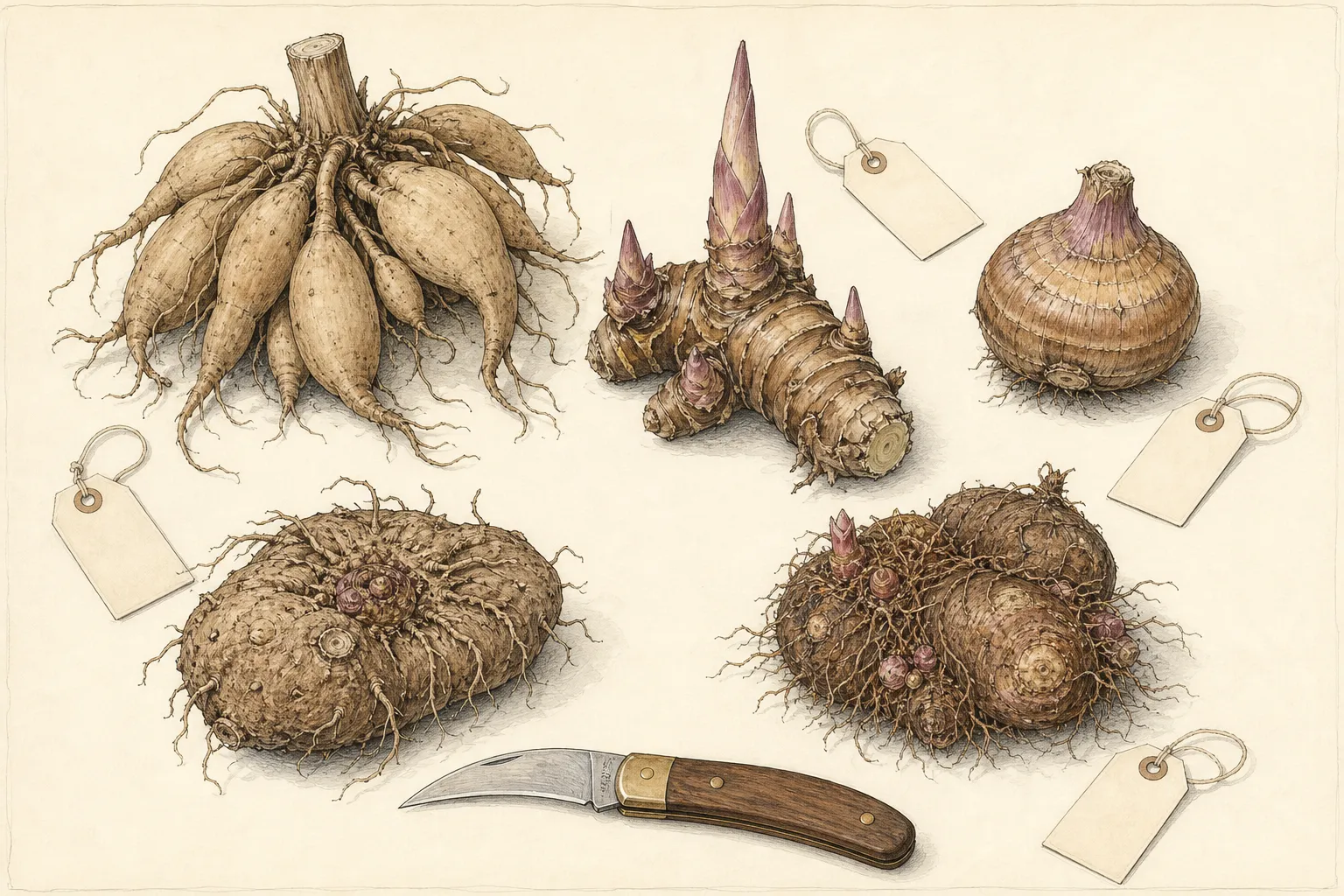
NC State describes Colocasia esculenta as growing from a corm. Wisconsin’s elephant-ear guide explains that the group includes rough, brown-skinned storage organs, smaller side offsets and forms lacking corms. Inspect the base as you lift: a formed, firm central organ gives you something to dry and pack. Fine roots around a thin crown, with no substantial swollen base, call for a different plan.
For a plant lacking a formed corm, preserving it as a growing plant may be possible in warm, bright indoor conditions. Arrange that space before frost and use the supplier’s guidance for the named plant. This is a separate commitment to light, pot space and watering. Keep a leafy rootball in its growing container with care suited to that plant; loose wood shavings are packing for the dried organs described below.
Keep a mixed collection divided by botanical name. Caladium tubers, canna rhizomes and Colocasia corms can all arrive at the same autumn workbench, yet their specific storage instructions differ. Give each group its own labeled tray. Only groups with compatible care requirements belong in a shared storage location.
Use the forecast to organize the lifting day
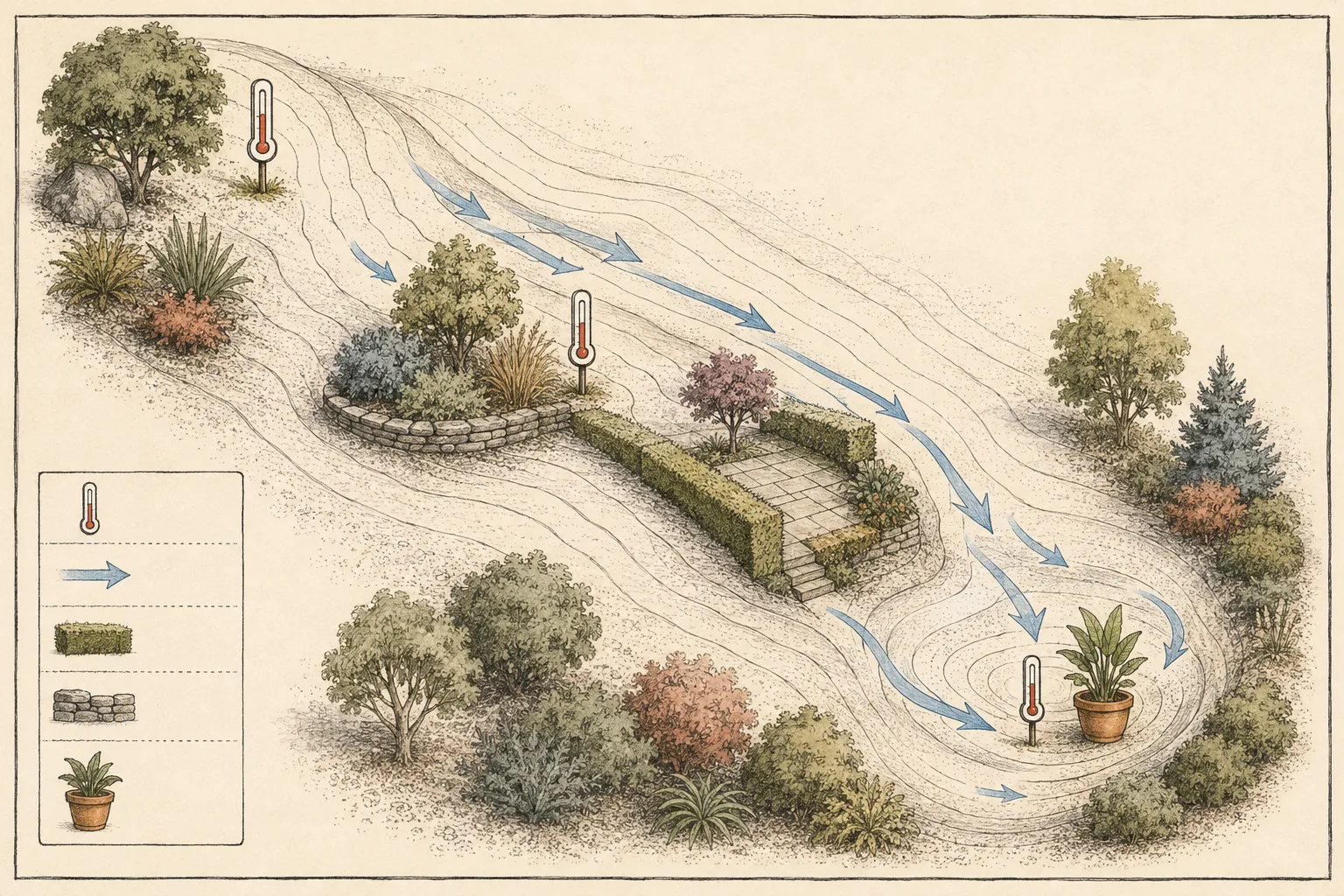
Watch the forecast for the garden’s actual location, including any low pocket that frosts before the terrace. Decide which plants will be lifted and which portable pots can move under cover if the weather changes faster than your schedule. A roofed but freezing shed is only a temporary staging place, so reserve genuinely frost-free space before lifting begins.
The Iowa State method starts after the first fall frost. Maryland also allows lifting when leaves begin yellowing or after frost dieback. Neither instruction makes deliberately exposing a portable plant to frost necessary. If a hard freeze is approaching, use the remaining workable weather to get the plant and its underground material protected. Waiting for every leaf to turn the same color offers little practical advantage in that situation.
Photograph the clump and attach its label before cutting. Once several green or dark-leaved cultivars have become bare brown storage organs, their former position is no longer a reliable identifier. For a bed containing more than one plant, finish the transfer of one labeled clump to its tray before beginning another. Keep loose offsets beside the parent until their identity is recorded.
Lift beneath the corm and keep its crown intact
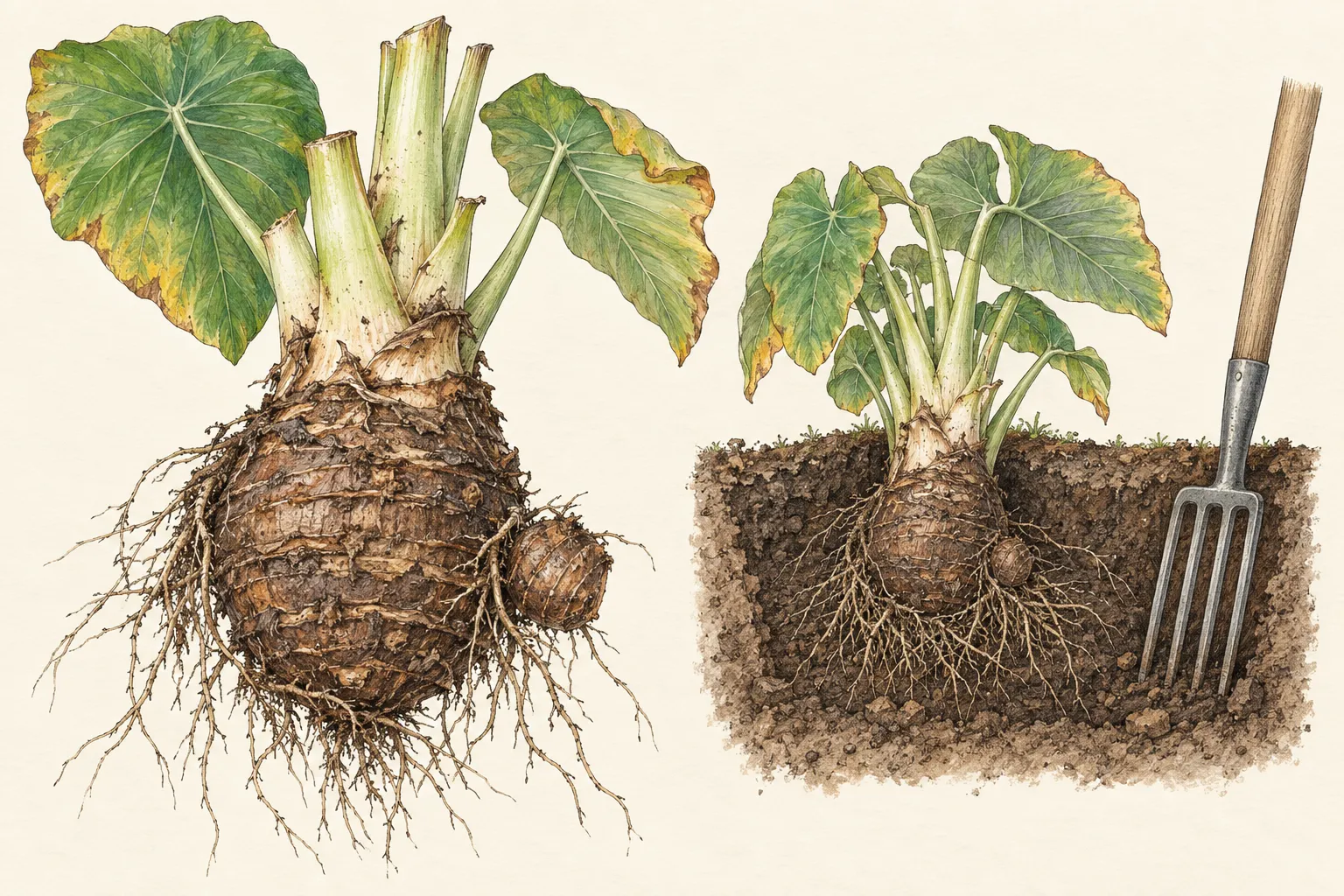
Work around a bed-grown clump with a fork, starting several inches away from the base as Wisconsin recommends for tender bulbs. Loosen the surrounding soil on all sides, then work below the underground mass. The first shallow look tells you whether the clump extends farther than expected. Move the fork outward when necessary; forcing a narrow opening can drive the tines into the very organ you intend to save.
Support the loosened clump from below as it comes free. Long leaf stalks make convenient handles, but a buried offset or root may still be attached out of sight. Set the mass on a tray or sheet before removing loose soil. In a container, lay the pot securely on its side and release the rootball; if the container grips it, free the sides before pulling on the crown.
Cut away the foliage with clean shears while keeping the firm crown itself intact. There is no need to carve a neat flat surface into the corm or peel away sound brown skin. Leave attached offsets in place when separation would create a fresh wound. This storage operation does not require autumn division, and Wisconsin’s tender-bulb guidance favors postponing division until spring.
Sort damage now, while the origin of each cut or bruise is obvious. Put accidentally injured material on its own labeled tray for observation. Discard extensively soft or rotting organs; a box of packing material cannot repair them. Firm corms with intact crowns are the candidates for the normal drying sequence. The illustration shows where the bulky storage tissue lies in relation to the finer roots.
Dry the lifted material before it enters packing
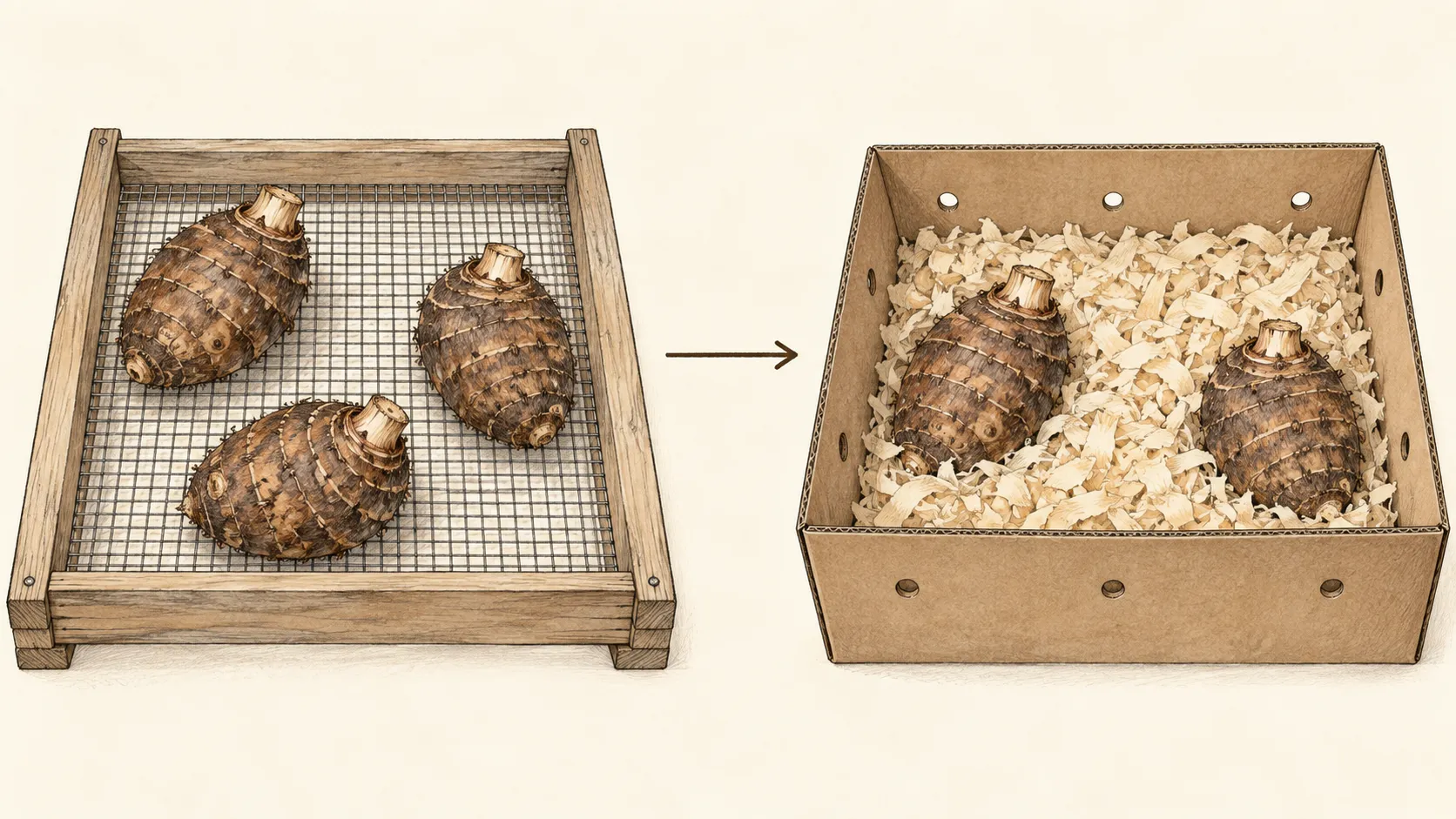
Use an open tray where air can reach the corms, with shelter from rain and frost. Brush away loose soil gently. Maryland’s Colocasia advice specifically avoids washing, then uses a single layer on a screen, cardboard or newspaper for about seven to ten days, turning the material so all sides dry. A dry-cleaning approach is useful when a wet rootball would otherwise add more water to the indoor work area.
Iowa’s named-species method allows one to two weeks in a warm, dry location. Treat that interval as time for drying under suitable conditions, with direct inspection before packing. A corm that still carries wet soil in a crevice needs attention even when a date on the tray says the interval has finished. Remove loose debris as it releases, preserving the living tissue beneath.
Spread each batch so you can see and turn individual pieces. A deep heap hides the underside of the lower corms and makes it difficult to notice wet patches. Keep trays from different lifting dates separate until each batch is ready. Write the lifting date on the tag; add the packing date later so the two stages remain distinguishable in your records.
Drying should leave the surface suitable for storage while retaining a firm organ. Severe collapse is a reason to reassess the material and its environment, not to keep extending the drying period automatically. Before transferring a batch, look at the underside and crown again. Set aside material with new softness, leakage or spreading decay for separate assessment before the sound batch enters packing.
Choose a temperature method before choosing a room
The published recommendations are not uniform. Iowa State’s specific Colocasia esculenta FAQ gives 70–75°F. Maryland describes a cool, dry, frost-free store in its combined caladium-and-Colocasia section, leaving the temperature unspecified. Wisconsin’s general tender-bulb article gives 35–45°F for its broad storage group, but its elephant-ear paragraph does not specify a separate numerical temperature. The sources leave the optimum for each elephant-ear cultivar uncertain.
For the Iowa method in this guide, reserve a position that actually remains around 70–75°F and mark that range on the box. This is a choice to follow a named institutional procedure, not a claim that it has been experimentally proven superior to all cooler methods. If a specialist supplier has supplied a different protocol for your cultivar, keep that protocol intact and record it. Averaging these ranges would produce an unsupported recommendation.
Measure beside the box with a minimum–maximum thermometer. A room name is an unreliable temperature description: a spare bedroom, garage and basement can each have warm and cold corners. Check the range through normal heating cycles and again during cold weather. Keep the box accessible so moving it after an unexpected temperature change is straightforward.
Choose another position if the proposed shelf freezes, gets wet or sits directly in hot airflow. If no suitable space exists for the method you intend to use, solve that limitation while the plant is still available for another overwintering approach. Valuable or unfamiliar cultivars warrant advice from their supplier or local Extension office before being committed to a temperature regime.
Pack each corm so it remains accessible
Use a cardboard box or another ventilated container large enough to keep the corms apart. For the Iowa procedure, surround the dried corms with peat moss or wood shavings. Label the material clearly as ornamental plant storage. Choose a box with clear space above its lid; winter checks become much easier when the contents are within reach.
Arrange a first layer of loose packing, set the corms apart, and fill around them, leaving the packing loose. Keep the cultivar tags with the correct pieces. A simple sketch of positions on the lid can help when several specimens share a box, but individual labels should remain the primary identification. Use a separate container for doubtful material.
Take a photograph of the packed batch before covering it. That picture records the number saved and the initial appearance, useful when deciding whether later wrinkles represent a change. Add the selected temperature range and the next inspection to the outside label. Storage begins with a known condition that you can compare with subsequent checks.
Inspect the corms through winter and plan their return
Check the batch monthly, as Wisconsin recommends for stored elephant ears, and sooner if the store becomes unexpectedly wet or cold. Open the packing far enough to inspect individual crowns and undersides. Remove rotting pieces and any affected packing. A dry-looking box surface does not tell you what is happening where two organs have accidentally come into contact.
Assess moisture alongside firmness. Maryland cautions that dormant material should stay on the dry side while retaining some internal moisture. Increasing shriveling calls for a small, monitored moisture correction according to the chosen method; wet packing calls for removal and reassessment. Neither situation justifies returning a dormant corm to the summer watering routine used for a leafy container.
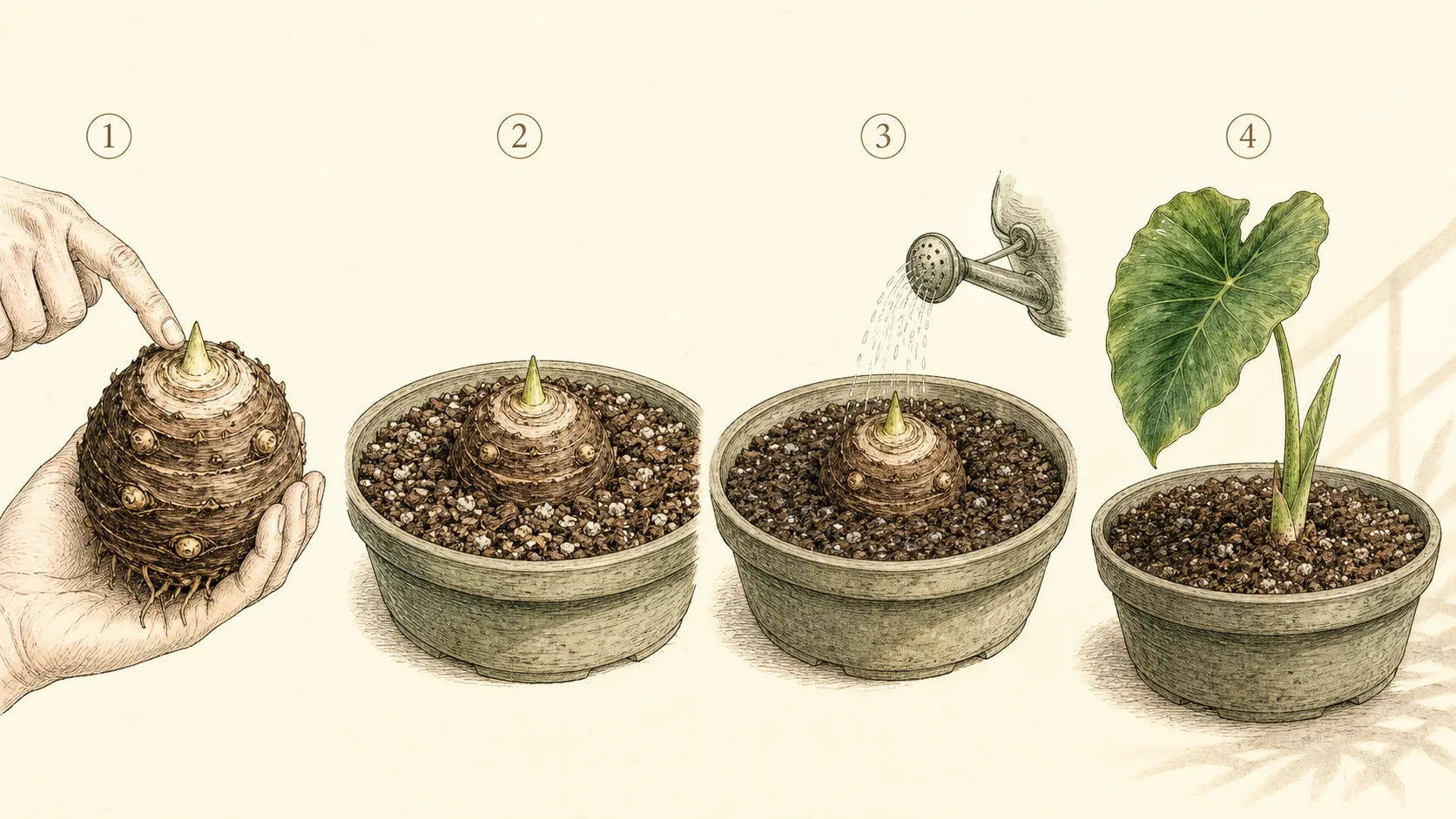
Record losses and any changes to temperature or packing so the remaining batch has a useful history. If shoots begin developing, note their condition and consult the spring-starting guide before putting the corm into growth. A warm growing position will need light and pot space; the storage box cannot provide those things. Handle emerging shoots gently during inspection.
Time the eventual outdoor return to local frost risk and warm growing conditions. Maryland’s late-February indoor start and mid-May outdoor examples belong to its regional calendar. For other regions, use the separate guide to starting elephant ears indoors and work backward from the local outdoor window. Keep the autumn label with the plant through potting so the cultivar and storage history survive the change of season.
Steps
- Level
- moderate
- Time
- One lifting session, one to two weeks of drying, then monthly inspections
- Tools
- Garden fork, Clean pruning shears, Gloves, Soft brush, Minimum–maximum thermometer, Plant labels
- Materials
- Identified Colocasia esculenta with formed corms, Open drying tray, Ventilated cardboard box, Dry wood shavings or peat moss
- 1Assign a method to each labeled plant
Confirm Colocasia esculenta and inspect for a formed corm. Put plants lacking a substantial storage organ on a separate indoor-growing plan before frost. For the Iowa method used here, write 70–75°F on the storage label and reserve a measured position in that range. Keep different genera and any cultivar-specific supplier protocols separate.
- 2Prepare two work areas
Set out an open drying tray and a ventilated storage box before the first frost ends the display. The tray needs a warm, dry, protected location for one to two weeks; the box needs the chosen longer-term position. Put labels, clean shears, gloves and a soft brush beside the tray so identification moves with every lifted clump.
- 3Lift the complete underground mass
After first-frost foliage damage under the Iowa procedure, loosen around the clump with the fork several inches away from its base. Work beneath the corm before raising it, widening the excavation if offsets extend outward. Release a potted rootball from its container. Support the mass, cut away foliage and preserve the firm crown and attached sound storage tissue.
- 4Clean and spread for drying
Brush off loose earth and separate injured or decaying material from the sound batch. Place corms in a single accessible layer and turn them during drying. Keep the lifting date visible. At the end of the one-to-two-week Iowa drying interval, inspect for residual wet debris and new softness before any piece is packed.
- 5Fill a ventilated box
Place dried, firm corms apart in loose peat moss or wood shavings, keeping tags with their specimens. Photograph the arrangement and note the packing date. Move the box to the measured storage position with its temperature instruction visible. Leave enough access to lift out individual corms gently at the next inspection, protecting their crowns.
- 6Check and carry the record into spring
Inspect monthly and after a problem with the storage environment. Remove rotten material, review packing moisture and compare firmness with the initial condition. Record any correction and reassess it at the next check. When spring starting becomes appropriate, transfer each label to its growing pot and use local warmth and frost conditions to schedule outdoor planting.
Related reading
Sources
- How do I over-winter elephant's ear?. Iowa State University Extension and Outreach. Source record · Accessed 2026-09-29.
- Overwintering Tropical Plants. University of Maryland Extension. Source record · Accessed 2026-09-29.
- Storing Tender “Bulbs” for Winter. University of Wisconsin–Madison Division of Extension. Source record · Accessed 2026-09-29.
- Elephant Ears (Colocasia, Alocasia, and Xanthosoma). University of Wisconsin–Madison Division of Extension. Source record · Accessed 2026-09-29.
- Colocasia esculenta. North Carolina Extension Gardener Plant Toolbox. Source record · Accessed 2026-09-29.