Grow · bounded mountain mint drift
Design a Mountain Mint Drift With a Boundary You Can Maintain
Choose a locally suitable Pycnanthemum, give the pollinator-rich planting a visible edge and access, and control spread through division and editing rather than deep root disturbance.
Published Last updated
In this guide
- Choose the species before designing the drift
- Match the site to the plant’s actual ecology
- Draw the maintainable edge before placing plants
- Build a repeated pollinator composition
- Plant small groups and leave room for knitting
- Observe pollinators without turning the plant into a claim
- Edit expansion while the boundary remains readable
- Cut back with pollinator and winter roles in mind
- Review the drift as a designed system
- Design the edge for winter visibility
- Keep visitor access outside the busiest flowers
- Steps
Choose the species before designing the drift
Mountain mint is a common name for several Pycnanthemum species with different heights, leaf forms, moisture preferences, ranges, and spreading behavior. Confirm the botanical name and regional nativity before buying. A plant suited to a moist meadow may not perform like one adapted to drier open soil. Local Extension, native plant societies, and reputable nurseries can narrow the choice.
Check mature height and rhizomatous spread. Slender mountain mint can form colonies and carries narrow leaves; other species create broader foliage and different visual mass. Decide whether the planting should be a low luminous matrix, a mid-height pollinator block, or a rear-border cloud. The species determines the role and the amount of editing required.
Confirm invasive and conservation context. A native plant can still spread vigorously within a small garden, while a species native to one region may be inappropriate elsewhere. Do not collect plants from the wild without permission. Buy propagated stock and preserve labels so future divisions are not distributed under an uncertain name.
Match the site to the plant’s actual ecology
Map sun, soil moisture, drainage, and winter conditions across the proposed area. Many mountain mints flower best with substantial sun, though tolerance varies. A dense shade site may produce weak lean growth and fewer flowers. A dry-adapted species can still need establishment water, while a moisture-loving species should not be forced into a hot rain shadow.
Check neighboring root systems and irrigation. Mountain mint planted beside a rose that receives frequent overhead watering may spread into rich moist soil faster than expected. A dry gravel edge can slow growth but may stress the chosen species. Select the boundary and companions from measured conditions rather than relying on the mint name as proof of toughness.
Prepare from a soil test when fertility or pH is uncertain, but avoid enriching a whole pocket by habit. Excess fertility can create tall loose growth and more maintenance. Remove perennial weeds before planting. It is difficult to distinguish and extract bindweed or aggressive grass once both are threaded through a rhizomatous drift.
Draw the maintainable edge before placing plants
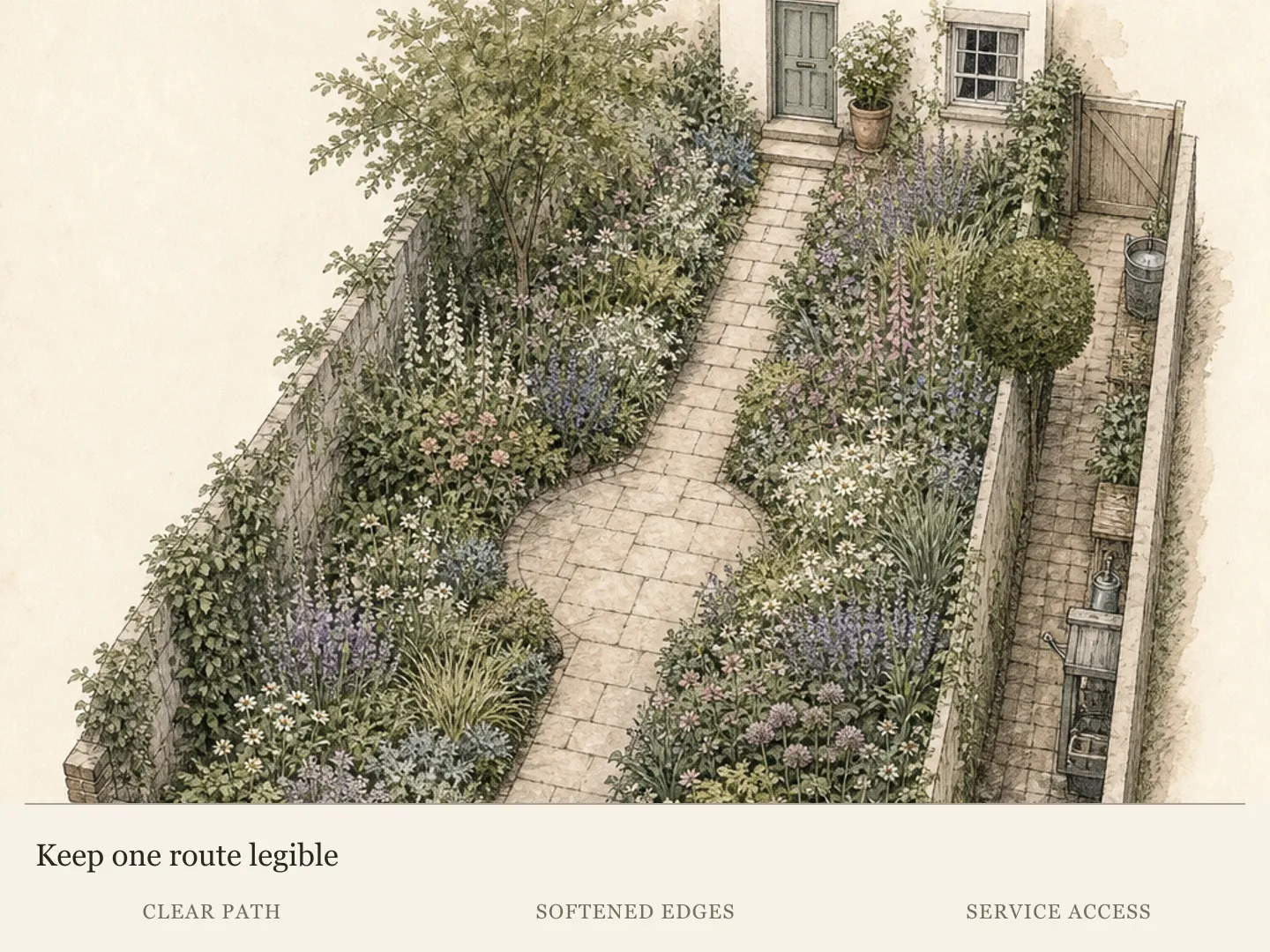
Use a mown strip, path, paving edge, or clearly marked bed line that can be inspected from outside. The boundary should be wide enough for the chosen maintenance method and visible after plants lean. A hidden plastic edge alone does not provide access or reveal runners beyond it. The gardener needs a place to stand while tracing the colony.
Shape the drift as one or several repeated masses rather than a thin irregular ribbon that contacts every neighbor. Broad simple shapes are easier to mow, edge, divide, and read. Keep the rear or center reachable with a stepping route. A pollinator planting still needs access for identification, selective cutting, and removal of invasive weeds.
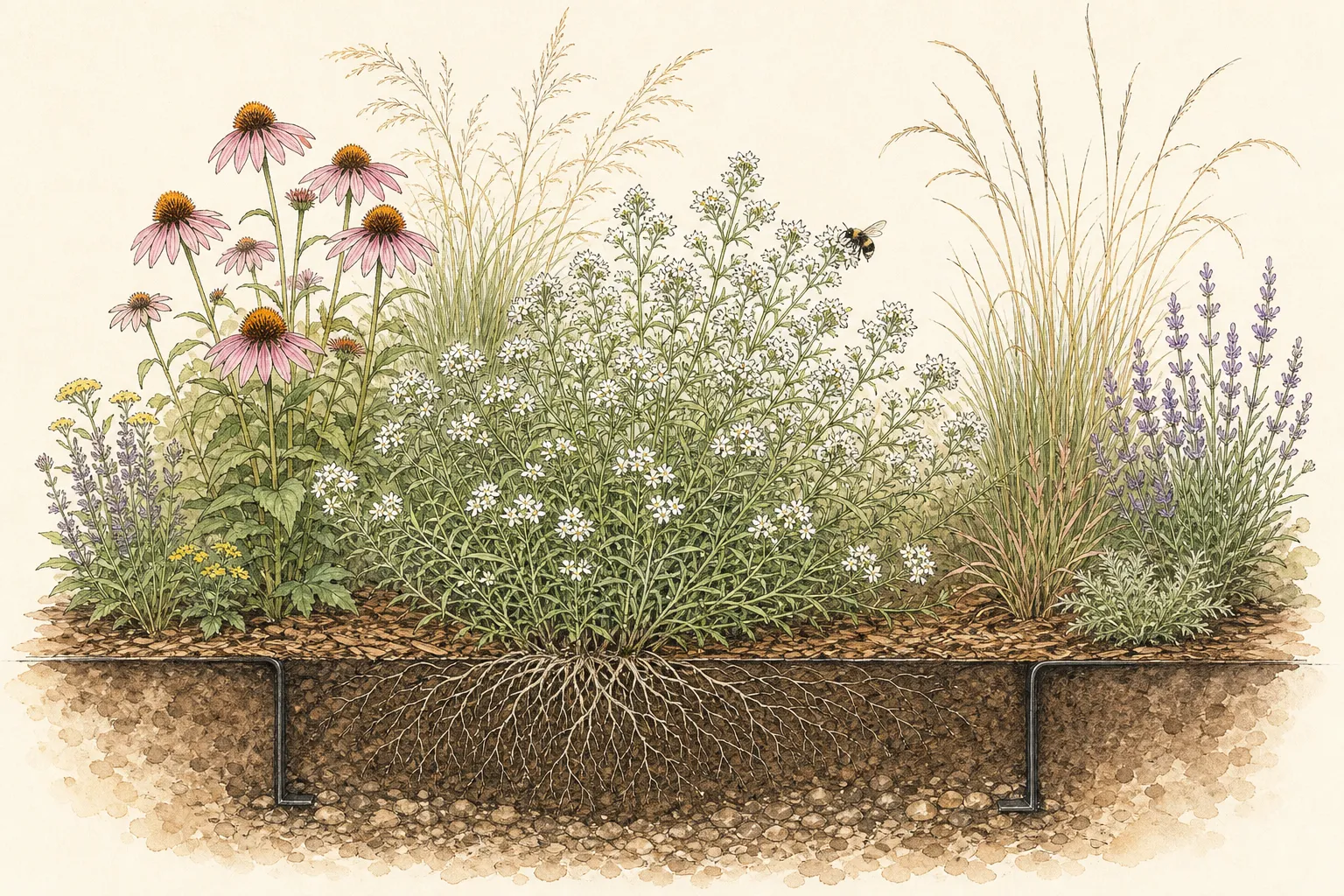
Draw mature spread and leave open buffer near delicate crowns, property boundaries, and small shrubs. Do not expect a root barrier to substitute for seasonal observation. Deep barriers can damage nearby roots and create drainage problems. Surface boundaries plus regular editing are often more transparent and reversible in a home garden.
Build a repeated pollinator composition
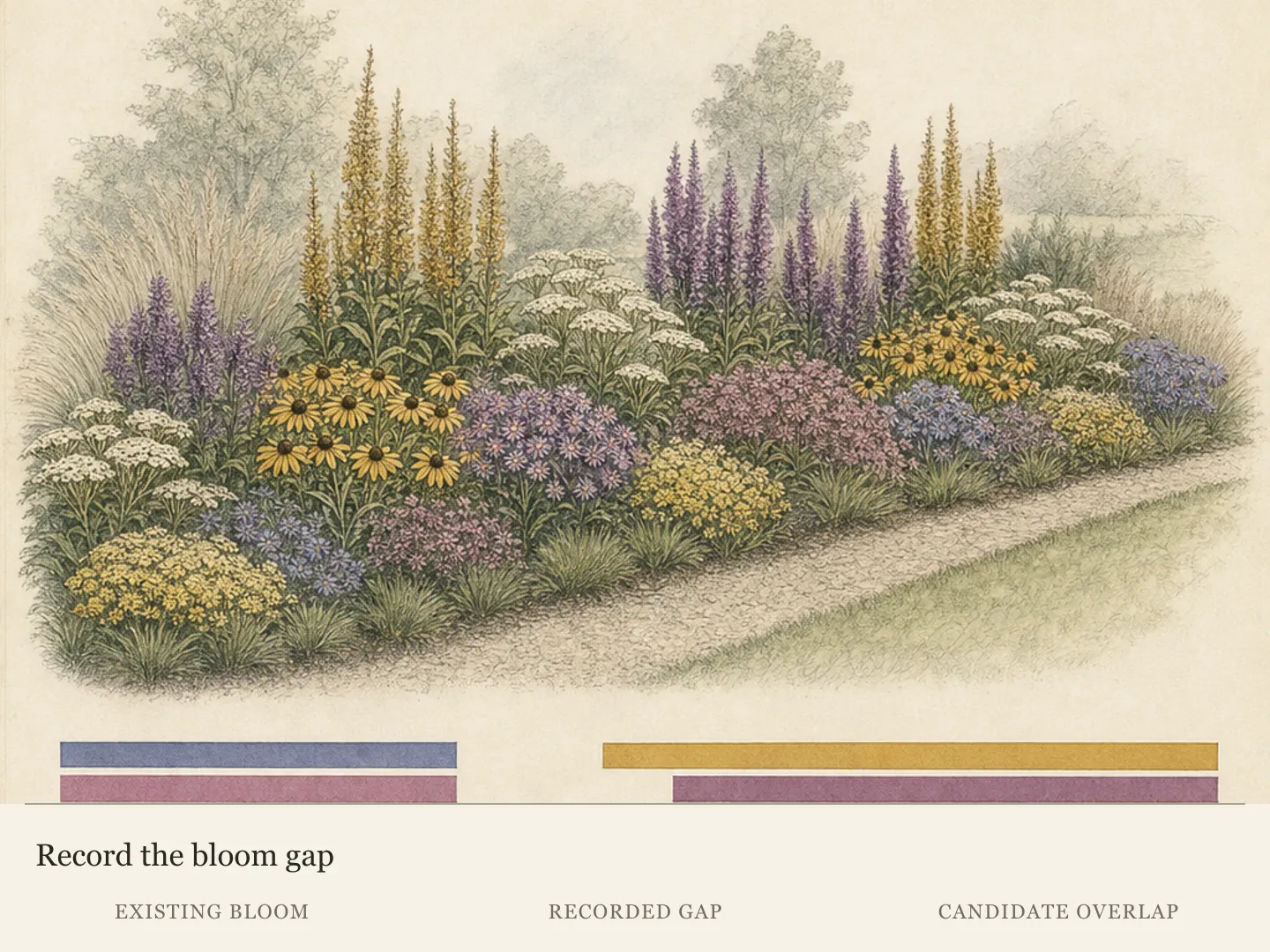
Use mountain mint as a repeated summer matrix and add a limited number of complementary flower forms before and after it. Early perennials can lead into the mint’s bloom, while asters or goldenrods may carry later forage. Match every companion to the same site and mature spacing. The sequence should remain readable when mountain mint is not flowering.
Preserve a clear foreground and occasional foliage contrast. A low edge can reveal the pale bracts and active insects without blocking the path. Place taller companions in separated accents so the drift remains the dominant repeated form. Avoid mixing many equally vigorous spreaders whose boundaries become impossible to attribute.
Include water and nesting context without adding hazards. Pollinators need more than flowers, but open water must be safe and maintained, and bare ground or stems should be retained only where appropriate. Avoid pesticide use that conflicts with the pollinator goal. A plant marketed for bees does not make every garden practice around it pollinator-friendly.
Plant small groups and leave room for knitting
Set plants at documented spacing and mature size, not shoulder to shoulder for an instant carpet. Small groups or plugs can establish and expand into the drawn mass. Leave markers at the boundary and photograph the first layout. The open soil is temporary growing room, not a failure that must be filled with another species.
Plant at the nursery grade, spread roots, backfill with site soil, and water thoroughly. Keep mulch moderate and away from crowns. A coarse surface can suppress annual weeds while the drift establishes, but deep mulch may impede small shoots or keep crowns wet. Count old plus new material before adding more.
Provide establishment water according to soil and weather, then reduce toward the species’ adapted condition. Group emitters so the whole future drift is not permanently dependent on tiny wet points that encourage uneven spread. Mark roots and crowns before any later irrigation installation.
Observe pollinators without turning the plant into a claim
Mountain mint flowers can attract a striking diversity of bees, wasps, flies, and other insects. Observe from a respectful distance and photograph representative visits. Do not identify every insect from memory or describe all wasps as dangerous. Use regional resources when identification matters and keep paths wide enough that visitors can pass without brushing occupied flowers.
Leave most flowers through their useful period and avoid broad cutting during peak activity. If a path edge needs control, shorten that strip early or in small sections while preserving the main bloom. Work in cool lower-activity periods and inspect before handling. The drift’s design should protect people and pollinators through spacing, not require constant removal of insects.
Do not infer that one highly visited plant supports every life stage or replaces host plants and seasonal diversity. Keep the wider border varied in bloom time and plant families. Mountain mint can be a strong summer resource within that system, not a complete pollinator habitat by itself.
Edit expansion while the boundary remains readable
Inspect beyond the edge in spring and again after summer growth. Pull or dig small outer shoots while their connection and identity are clear, taking an appropriate rooted section. Avoid tearing broadly through the center. Use a narrow spade only where it will not cut tree or shrub roots. Restore the edge and monitor fragments that remain.
Divide a congested drift during a locally suitable season, retaining healthy labeled sections. Replant only the amount needed for the designed shape. Share divisions with accurate species and spread information; do not pass along unknown volunteers or material from a bed with unresolved disease or invasive weeds.
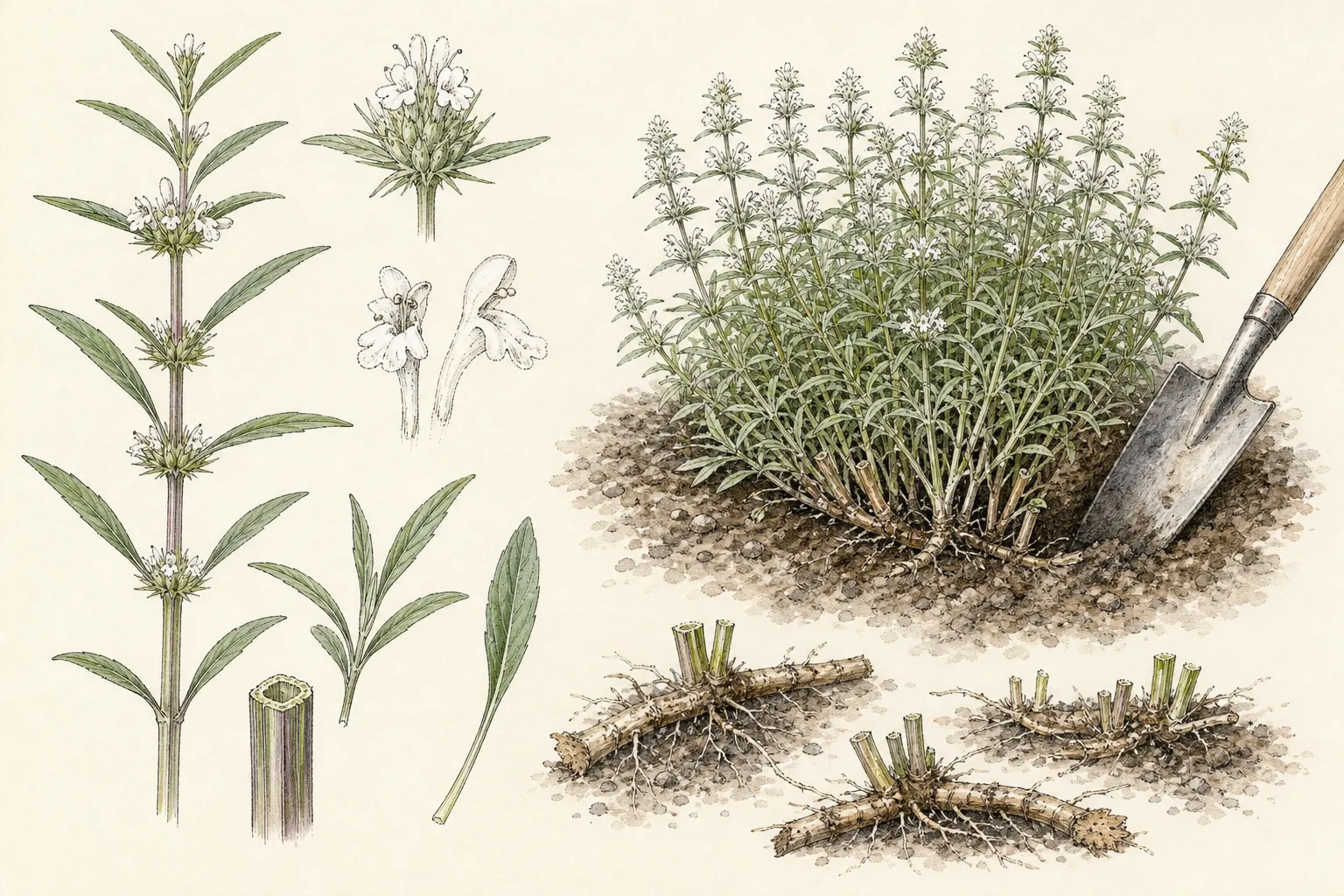
Remove unwanted seedlings before they flower or seed. Rhizome spread and seed spread require different observation. A mown strip may stop many seedlings but not every underground shoot. The seasonal record should state which route crossed the boundary so the next edit uses the correct method.
Cut back with pollinator and winter roles in mind
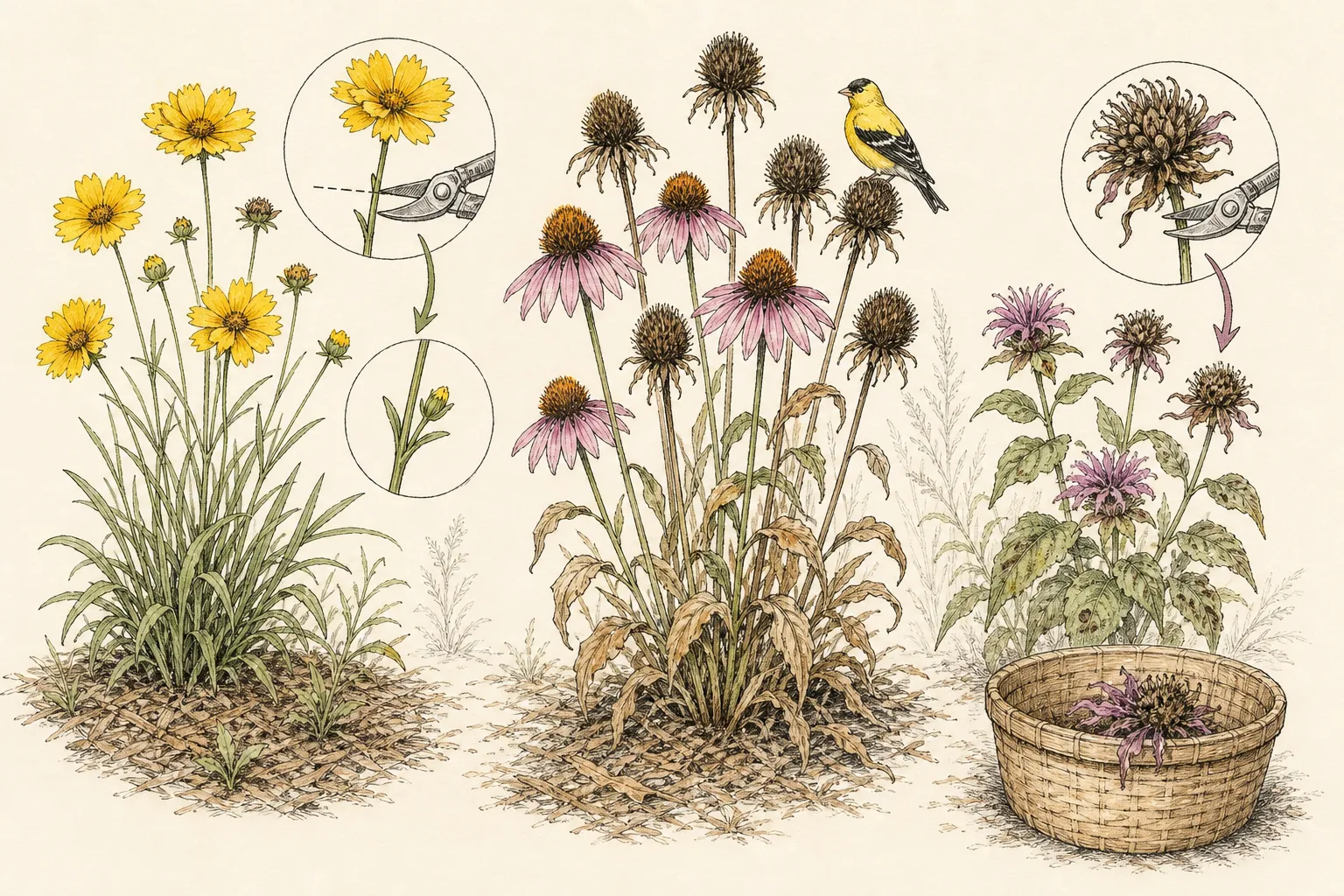
After flowering, choose whether seed heads and stems will remain for structure and insects or be reduced for a tidy edge. Keep sound stems where winter habitat is part of the plan, while cutting those that collapse across paths. Do not remove the entire drift on one date without checking local insect and plant-care guidance.
In spring, delay cleanup only within a practical safe plan and remove old stems carefully as new shoots appear. Cut above the crown and collect material that would smother growth. Use the exposed moment to map expansion and weeds. Avoid shredding stems in place when that defeats the intended habitat or spreads mature seed.
Clean tools and keep any diseased tissue separate. Mountain mint aroma and insect activity do not prove plant health. Spotting, crown rot, or widespread dieback deserves diagnosis. Preserve a fresh sample before broad sanitation if the pattern is unfamiliar.
Review the drift as a designed system
Photograph fixed views at emergence, peak bloom, late season, and winter. Record boundary crossings, maintenance time, visitor activity, lodging, and companion performance. A successful drift holds its shape with planned editing and contributes a strong seasonal layer. Maximum area is not the goal.
If the colony requires constant removal, reduce the footprint, strengthen the surface access, move it to a larger naturalistic area, or choose a less assertive species. Do not escalate to deeper barriers before understanding the spread route and neighboring roots. A smaller maintainable drift provides more lasting value than a large resented patch.
Keep the name and provenance with every retained group. The border becomes a reliable reference only when the plant identity, site response, and boundary behavior remain known. That record also makes future recommendations honest: a pollinator powerhouse with a clear description of the space and editing it needs.
Design the edge for winter visibility
The boundary must remain legible after foliage collapses. Use a path, mown strip, or durable surface marker that survives leaf litter and snow without becoming a trip hazard. Photograph stakes and bed lines before stems fall. A clear dormant-season outline lets early runners and seedlings be identified before neighboring perennials emerge.
Keep evergreen crowns and bulb markers outside the expected spring editing strip. Cutting or digging mint expansion is easier when the boundary does not weave through fragile plants. Where the drift meets meadow or lawn, define which side will be mown and how equipment turns without scalping tree roots or scattering mature seed.
Review water movement along the edge. Hard edging can channel rain, while compacted mowing strips can create a wet or dry line. Adjust the species or surface detail from observed soil, not aesthetics alone. A boundary that changes the habitat may also change the rate and direction of mint spread.
Keep visitor access outside the busiest flowers
Place the main path far enough from mature flowering stems that people do not brush insects while passing. Let one wider viewing point approach the drift, with low plants or open mulch at its edge. This creates a place to observe without turning the whole path into a narrow corridor through active bloom.
Use signs only where public or shared use warrants them. In a home garden, the shape of the edge and a clear route should communicate where to stand. Keep children and pets from grabbing occupied flower heads, and teach observation from the side. Do not respond to normal pollinator abundance by spraying the resource that attracted them.
If stinging insects nest near the route or aggression differs from ordinary foraging, close the area and seek appropriate local identification and removal guidance. Foraging wasps on mountain mint are not the same as a nest in the path. The design should make that distinction observable and keep a safe alternative route.
Steps
- Level
- moderate
- Time
- Half a day to plan and plant, then two short edge audits each year
- Tools
- Measuring tape, Spade, Trowel, Plant labels
- Materials
- Locally suitable labeled mountain mint, Compatible companion plants, Moderate organic mulch
- 1Confirm species, range, and behavior
Retain the botanical name and source, check regional nativity and invasive status, and compare mature height, moisture, and rhizomatous spread. Reject an uncertain common-name plant when the final garden role and containment need cannot be predicted.
- 2Map site and remove perennial weeds
Measure sun, moisture, drainage, roots, irrigation, and winter conditions. Match the species to the actual site, avoid excess fertility, and clear persistent weeds before mint rhizomes make later separation difficult.
- 3Draw edge and access first
Choose a mown, paved, or clearly inspectable boundary, keep buffers from delicate crowns and property lines, and preserve a stepping route. Use broad simple drift shapes and do not depend on a hidden deep barrier as the maintenance plan.
- 4Plant for mature spread
Set small groups at documented spacing, preserve nursery grade, water through establishment, and keep mulch off crowns. Mark the original boundary and allow the selected plants to knit instead of filling open space with additional vigorous species.
- 5Build seasonal pollinator continuity
Pair the summer mint matrix with a restrained set of earlier and later site-matched flowers. Keep paths clear of occupied bloom, avoid conflicting pesticide use, and remember that one popular nectar plant does not replace host plants, nesting resources, or seasonal diversity.
- 6Edit rhizomes and seedlings separately
Inspect beyond the edge in spring and late summer. Remove small rooted outer shoots and unwanted seedlings while identity is clear, divide only in a suitable season, and record whether underground spread or seed crossed the boundary.
- 7Review the drift from fixed views
Photograph emergence, bloom, late season, and winter. Record maintenance time, lodging, pollinator use, and companion performance. Reduce or relocate a drift that demands constant control, preserving accurate labels with every retained or shared division.
- 8Mark the dormant-season boundary
Use a durable visible edge or mapped surface markers before foliage collapses. Keep bulbs and fragile crowns outside the spring editing strip, define the mowing direction, and inspect how the boundary changes water movement and spread.
- 9Set a pollinator viewing point
Keep the through-path beyond mature stem reach and widen one low-edged location for observation. Preserve an alternate route and avoid spraying normal foraging insects. Close access and seek local help only when a nest or unusual aggressive behavior creates a separate hazard.
- 10Audit edge work after dormancy
Compare spring runners and seedlings with the mapped original drift. Remove expansion before neighboring crowns hide it, repair path or mown edges, and record whether soil moisture or maintenance changed the colony’s direction.
- 11Keep a boundary ledger
At each spring and late-summer inspection, note where rhizomes or seedlings crossed, how many minutes removal required, and which edge condition encouraged spread. Use the ledger to narrow the drift, strengthen access, or change species before maintenance becomes an unrecorded recurring burden.
- 12Set a maximum annual edit
Define the widest acceptable drift and the maximum spring and late-summer maintenance time. If either boundary is exceeded for two inspections, reduce the colony or move divisions to a larger suitable site. A written limit keeps generosity from becoming unmanaged expansion.
Related reading
Sources
- Mountain Mint: A Pollinator Powerhouse. Penn State Extension. Source record · Accessed 2026-08-19.
- Pycnanthemum tenuifolium. NC State Extension Plant Toolbox. Source record · Accessed 2026-08-19.
- Native Plants to Attract Bees. Missouri Botanical Garden. Source record · Accessed 2026-08-19.