Grow · care florist azaleas indoors winter
Care for Flowering Florist Azaleas Indoors in Winter
Care for a flowering florist azalea through winter indoors: cool bright placement, daily root-ball checks, careful rehydration and realistic after-flowering choices.
Published Last updated
In this guide
- Keep the flowering plant cool and its fine roots moist
- Confirm that the plant is a florist azalea
- Choose the room for flowering, not for forcing buds
- Check the root ball daily and water the medium evenly
- Rewet a dry pot briefly, then drain it completely
- Use suitable water and keep feeding restrained
- Distinguish unopened buds, spent flowers and leaf loss
- Decide what to do when the display finishes
- Steps
Keep the flowering plant cool and its fine roots moist
Place a flowering florist azalea in bright indirect light in a cool room, check its potting medium daily and let surplus water drain after each watering. Iowa State recommends 60–65°F, approximately 16–18°C, for the flowering display. Keep the root ball from drying completely, but empty water trapped inside a decorative outer pot. Both severe drying and prolonged saturation can damage the roots.
This is care for a plant already carrying buds or open flowers. Cooler treatments used later to prepare an azalea for another flowering cycle have a different purpose. A new flowering purchase needs a suitable display position and steady moisture now. Moving it into cold storage or imposing a dry rest because it is November confuses those stages.
Expect a finite display. The University of Missouri describes several weeks of indoor color with suitable care, with unopened buds extending the show as they develop. That is a possibility, not a promised number of weeks for every plant. The amount of bloom already open at purchase, the journey home and the room all influence how much of the display remains.
Confirm that the plant is a florist azalea
Florist azaleas are selected and brought into flower for indoor display. RHS describes many indoor cultivars associated with Rhododendron simsii, sometimes sold under other azalea names. A pot label saying only azalea leaves important information missing: retain the supplier's label and any cultivar name, and ask whether the plant was sold for indoor flowering or as hardy garden stock.
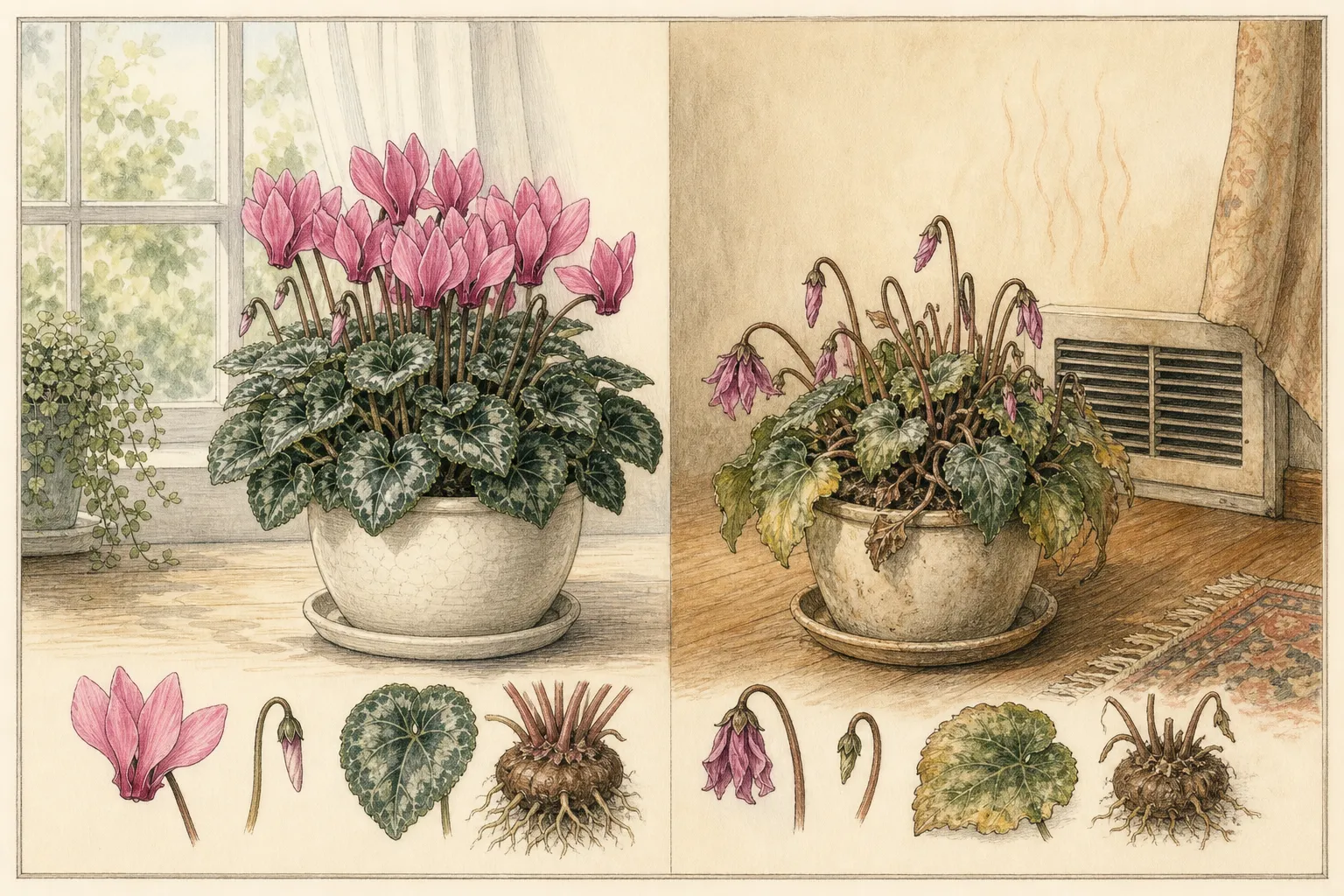
The small woody branches and leafy evergreen canopy need different care from the tuber of a florist cyclamen. An azalea that drops leaves after drying has not necessarily entered a useful dormant phase. Its fine roots still occupy the nursery pot, and the remaining leaves and buds continue to depend on them. Keep the plant in its intact container while you establish a reliable watering routine.
Choose a sound plant with some open flowers and a useful number of unopened buds if you want the display to develop at home. Missouri describes that combination as extending the period of color. Check the potting medium too: attractive flowers can conceal a root ball that is already very dry. Support the pot during transport, protect the foliage from cold and bring it into a suitable room promptly.
Ordinary outdoor rhododendron advice is not proof that this gift plant can be planted out after Christmas. Iowa State specifically warns that florist azaleas are not winter hardy in Iowa, and RHS treats its indoor group as frost tender. Some named azaleas are hardy, but that has to be established for the actual stock. Treat an unlabelled flowering gift as a protected pot plant.
Choose the room for flowering, not for forcing buds
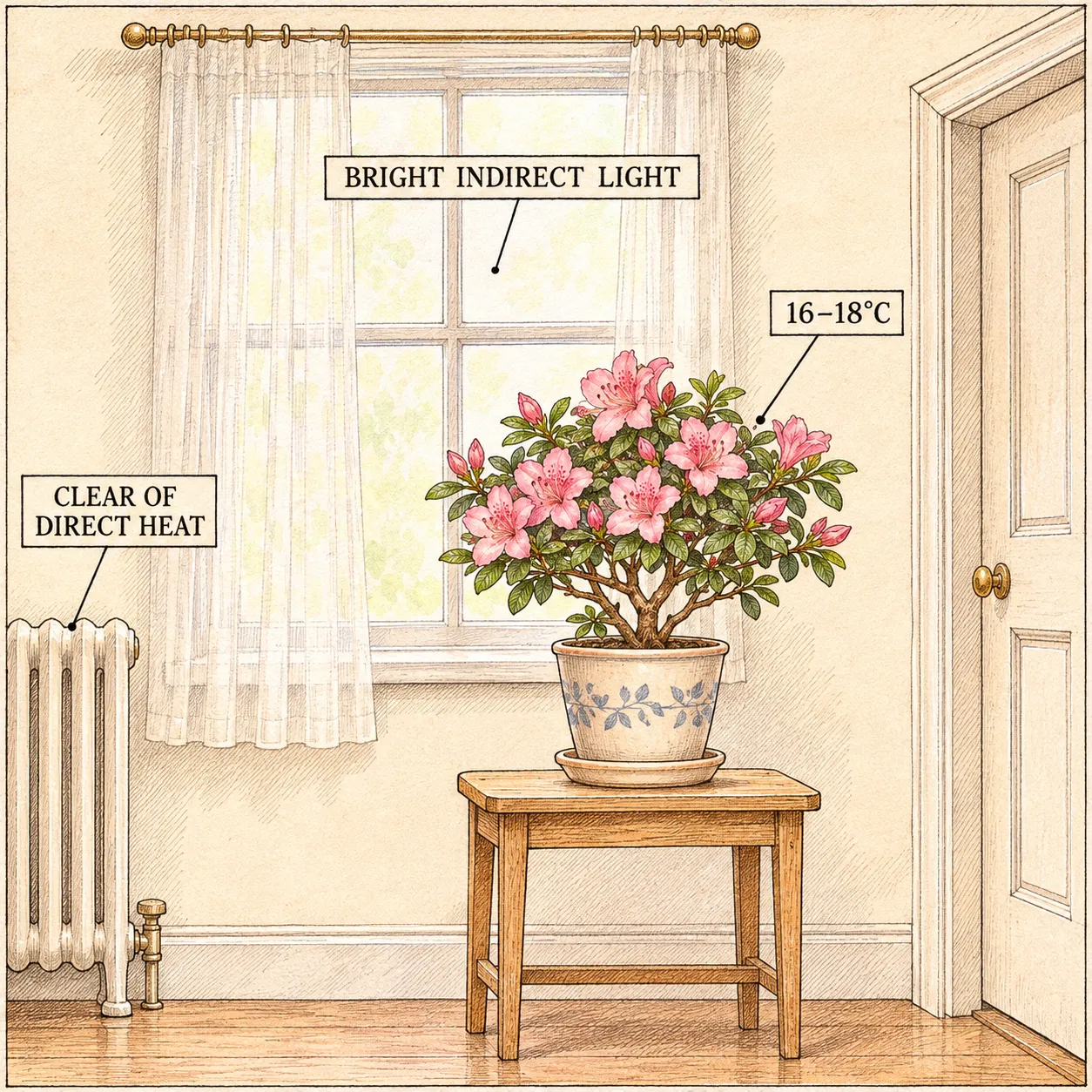
Use the 60–65°F, or approximately 16–18°C, flowering range from Iowa State to assess the place beside the pot. A cooler bright room often works better than the warm center of a house. Check whether a radiator, heater outlet or strong sun through glass raises the local temperature even when the room thermostat looks appropriate.
RHS recommends a cool, humid atmosphere with plenty of light and warns that prolonged hot, dry conditions cause deterioration. An enclosed porch can be useful if its actual temperatures suit the plant and remain safely above freezing. An unheated porch in a cold climate may be much colder than the flowering range, so the word porch alone does not establish a suitable location.
Bright indirect light is the starting point. Keep foliage clear of cold glass and place the pot where a curtain can soften strong sun if needed. A dark interior table is a poor long-term flowering position. If you move the plant briefly for a display, return it to its suitable growing position afterward and continue checking the root ball.
Keep temperature figures attached to their purpose. RHS's 7–10°C nighttime guidance concerns plants brought back under cover for a later flowering cycle, while its warmer commercial forcing conditions describe production. Neither replaces Iowa State's reference for enjoying a purchased plant in bloom. The room illustration shows the latter situation, with space away from direct heat and access for daily watering checks.
Check the root ball daily and water the medium evenly
Azalea roots are fine and delicate. Missouri notes that many lie near the outside of the pot, where the growing medium dries first. Florist plants are often grown in a highly organic medium, and excessive drying can quickly cost roots. This makes an azalea a poor candidate for the long dry intervals used with many succulents.
Feel the surface each day and lift a manageable pot to learn its weight. Iowa State advises watering when the surface becomes dry to the touch. Missouri adds a useful second cue: a pot that feels fairly light compared with its weight after watering may need water even if the surface is slightly moist. Read those cues together, especially when decorative material covers part of the medium.
For normal watering, lift the nursery pot out of its cover and take it to a sink or another place where runoff can escape. Apply water to the medium until it begins to leave the holes underneath. Let the pot drain before returning it to the display. Look inside the cover afterward so water collected beneath the pot cannot remain unnoticed.
Missouri mentions watering every two or three days as a possible pattern in an average home, but also lists temperature, humidity, light and pot size as variables. Use that observation to appreciate how frequently a small flowering azalea may need attention, not to establish a compulsory schedule. A warm small pot can dry faster; a cool wet one needs more time.
Note what a thoroughly watered, drained pot feels like. That reference makes a later light pot easier to recognize. If water runs quickly through a very light container and the medium still seems dry, ordinary top watering may not have rewetted it effectively. Confirm the condition before repeating pour after pour; a brief controlled soak is an option for dry organic medium.
Rewet a dry pot briefly, then drain it completely
A short immersion can help rewet a root ball that has become too dry. RHS describes soaking until air bubbles stop rising, and Missouri gives a five-to-ten-minute treatment followed by drainage. This is a temporary intervention for a dry pot. It is not permission to store an azalea in a bowl of water or to soak a pot whose medium is already wet.
Remove the decorative cover and place the intact nursery pot in a basin of water deep enough to wet the growing medium. Keep all foliage and flowers above the water. Watch the escaping bubbles as water enters the pot; Missouri notes that a very dry pot may initially float. Keep it stable and supervised while it wets, then lift it out and let the surplus drain freely.
Use the five-to-ten-minute guidance as a short treatment window, with the bubbling and wetting of the medium providing the visible cues. RHS warns that excessive soaking can drown the roots. If the pot still seems abnormally dry or the plant continues collapsing, investigate the medium and roots or seek advice; extending the immersion indefinitely is not the next step.
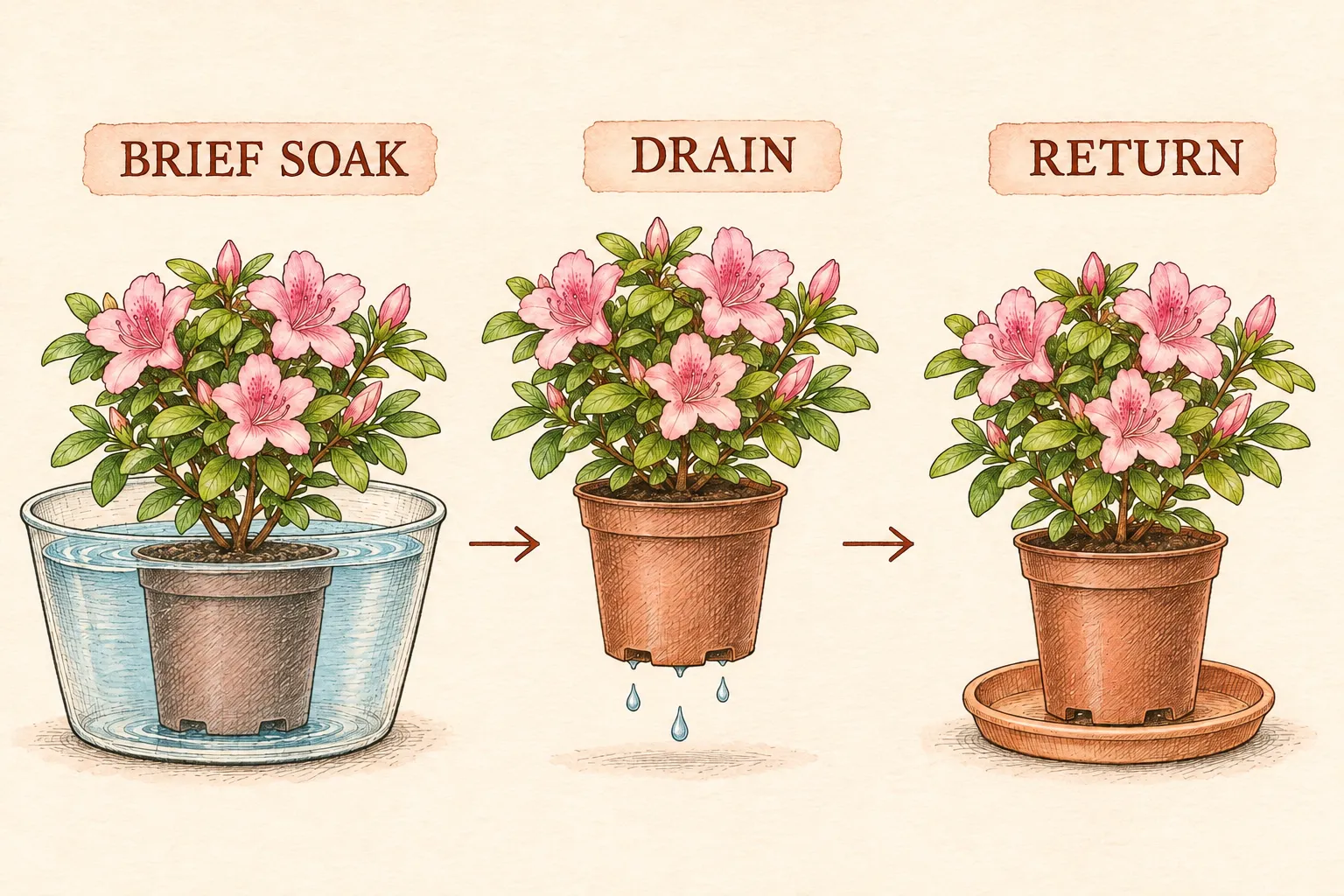
After draining, return the pot to an empty saucer or cover and compare its weight with the dry state. Some drought-wilted flowers may recover if drying has not progressed too far, as Missouri notes, but flowers already injured can have a shortened life. Judge the continuing plant as well as the old blooms. Keep daily checks in place so repeated drying does not become the normal cycle.
Use suitable water and keep feeding restrained
Azaleas need an acidic root environment. RHS recommends rainwater and warns particularly against very hard tap water and alkaline potting materials. If collected rainwater is available, it is a useful choice for this plant. Learn whether your local supply is very hard before assuming that the same water is equally suitable for every flowering houseplant.
The immediate priority is to keep the existing root ball appropriately moist. Water quality is a longer-term consideration, and letting an azalea dry completely while waiting to obtain different water creates an immediate problem. Keep improvised acid additions and fertilizer mixtures out of the routine. If the plant is being retained and the water supply is difficult, ask for advice suited to that water and growing medium.
Yellowing does not automatically mean the plant needs iron or more feed. RHS connects it with prolonged wetness, alkaline materials, very hard water and overfeeding. Missouri also notes that impaired roots from excessive or insufficient water can limit nutrient uptake. Check the root environment and the recent watering history before adding another product.
A newly bought plant in bloom needs light, cool conditions and water more urgently than an intensive feeding program. RHS says indoor azaleas generally need little feeding and ties feeding to the first signs of new growth. If you retain the plant after flowering, follow suitable product directions and the plant's growth stage. Fertilizer cannot restore a dried or waterlogged root system simply by making the next watering stronger.
Distinguish unopened buds, spent flowers and leaf loss
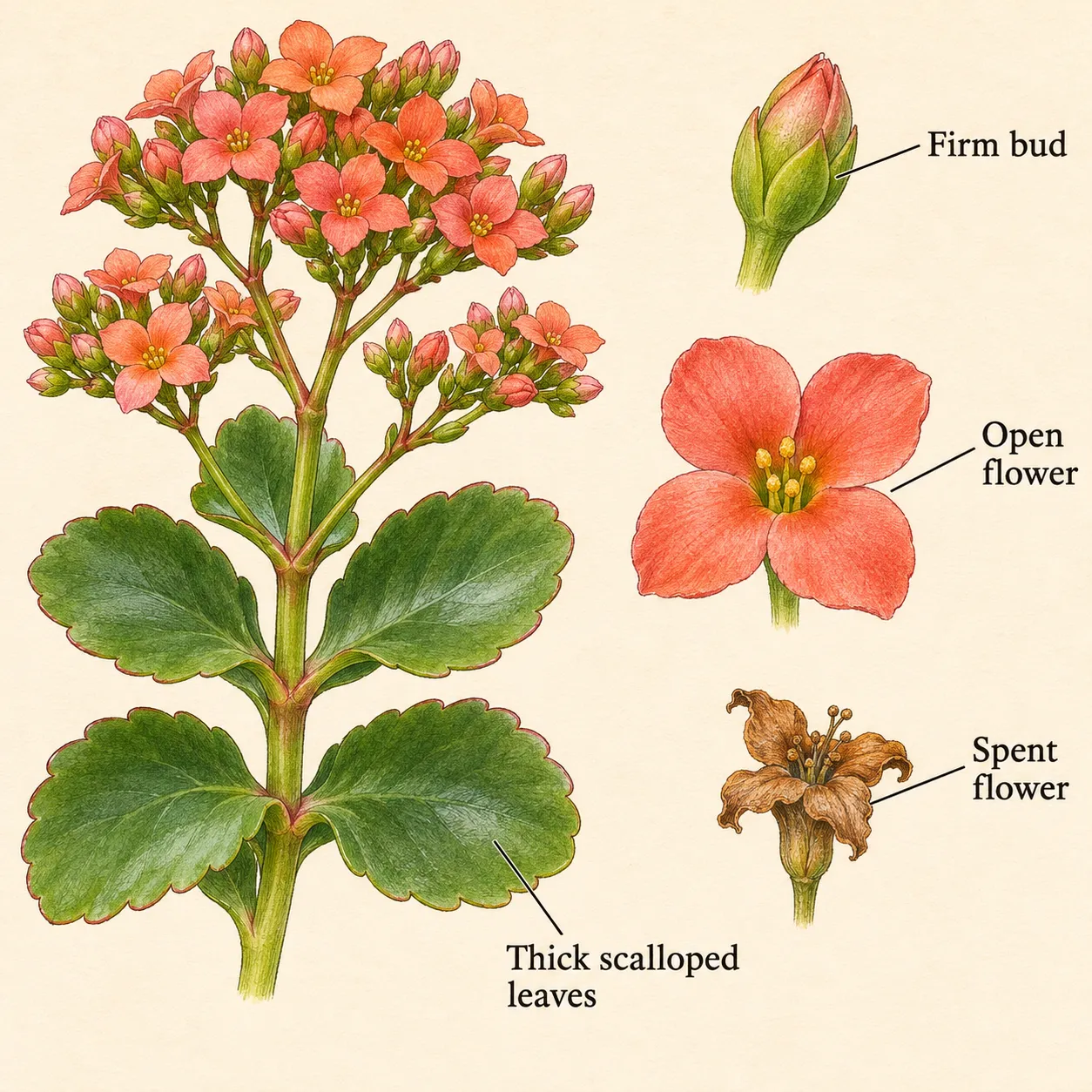
Some buds develop while earlier flowers fade. Remove dead flowers gently as they finish, keeping living buds and leafy shoots intact. The remaining unopened buds represent the display still to come; a plant already fully open has a different amount of flowering left. Grooming makes those stages easier to see but cannot guarantee another flush beyond the plant's existing capacity.
RHS notes that buds can struggle to open in a warm, dry atmosphere. Correct the room conditions before treating every closed bud as a feeding failure. Its advice also sets a clear limit on misting: stop once buds show color. A flowering plant with colored buds or open petals should therefore not be repeatedly sprayed as a substitute for watering its roots.
Leaf drop can follow drought, with older leaves often falling first and higher leaves showing brown tips or margins. RHS also records leaf loss after extended waterlogging, when damaged roots fail to replenish water lost from the leaves. The same visible symptom can therefore accompany opposite root conditions. A dry, light pot and a wet, heavy pot need different decisions.
Inspect the medium, drainage and room together if decline continues. Soft failing roots, persistent saturation or widespread collapse call for closer assessment, not another routine soak. Keep notes of whether the plant was very dry on arrival, how it was rewetted and where it has stood. That history is more useful than guessing a disease from one yellow leaf.
Azaleas are harmful if eaten. Missouri warns about all parts of azaleas, and RHS gives the same ingestion warning for R. simsii, including pets. Place the plant where children and animals cannot reach it and collect fallen leaves and flowers promptly. Its position must remain practical for both safe display and frequent moisture checks.
Decide what to do when the display finishes
Finishing the flowers is not a signal to give the azalea a dry rest. RHS describes keeping retained plants in a cool, humid room and continuing care, with repotting only if needed after flowering. Use a suitable ericaceous growing medium if repotting is justified. Its recommended increase is modest: no more than 2.5–5 cm, or 1–2 in, in pot diameter.
Handle the existing root ball gently. Missouri advises keeping it intact during repotting and filling fresh medium around it. A large plant in a very small container may need more room, but a sound pot that remains serviceable is not automatically due for replacement. The end of the display provides a chance to assess it after the immediate flowering demands have passed.
Long shoots can be shortened after flowering if the plant needs shaping. RHS warns against cutting into old wood that may not reshoot. Preserve the healthy framework and keep the task limited. A hard haircut is not a substitute for deciding whether your home has the cool, bright space needed for continued care.
Reflowering is possible but demanding. Iowa State treats florist azaleas as temporary displays under typical home conditions; RHS and Missouri describe ways to grow them on, with a greenhouse or suitable conservatory making the process more practical. Those are different expectations, not a guarantee that every finished gift plant will flower again on schedule. Keep it only if you can provide the next stage of care.
If retaining the plant, wait until local frost danger has passed before gradually introducing sheltered outdoor conditions, then protect it again before cold weather. Check the actual cultivar before any permanent garden planting. For this winter's flowering pot, completing the display with sound moisture management is already a useful result; a future rebloom attempt is a separate decision.
Steps
- Level
- moderate
- Time
- 15 minutes to set up; daily moisture checks through flowering
- Tools
- Small watering can, Basin for temporary rewetting, Room thermometer
- Materials
- Flowering florist azalea in a pot with drainage holes, Rainwater where available, Saucer or removable decorative cover
- 1Confirm the stock and choose its position
Keep the nursery label and treat an unlabelled flowering gift as an indoor florist azalea. Choose bright indirect light in a cool room, using 60–65°F, approximately 16–18°C, as a flowering reference. Check conditions beside the pot and keep it clear of direct heat, freezing drafts and access by children or pets.
- 2Expose the drainage arrangement
Lift the nursery pot out of its decorative cover while supporting the container. Find the drainage holes and empty any collected water. Make sure you can remove the pot easily for watering and return it after drainage. Leave the root ball intact during this setup; the decorative container must allow you to check and empty any water beneath the roots.
- 3Check moisture and weight each day
Feel the surface of the growing medium and compare the weight of a manageable pot with its weight after a previous watering and drainage. Water when the surface is becoming dry, also considering a clearly lighter root ball. A still-wet, heavy pot needs investigation or more drying time, not an automatic watering because another day has passed.
- 4Water normally or rewet a dry root ball
For ordinary watering, apply water to the medium until it leaves the drainage holes, then drain fully. If the root ball has become very dry, use a supervised brief pot-only soak, generally five to ten minutes, watching for air bubbles to cease. Keep foliage and flowers above water, then lift the pot out and let excess water escape.
- 5Return the pot and review the flowers
Set the drained plant back into an empty cover or saucer. Remove spent flowers gently and leave living buds intact. Review room warmth and humidity if buds stall; keep sprays off buds showing color and open flowers. Compare leaf loss with the actual root moisture before deciding whether the next action is water, drainage correction or closer assessment.
- 6Make a deliberate postbloom choice
After flowering, decide whether you can provide ongoing cool, bright care. A retained plant still needs appropriate moisture; assess repotting only if needed and use an ericaceous medium with a modest pot-size increase. Keep pruning light and out of old wood. Plan any outdoor transition after local frost danger, with hardiness checked for the exact plant.
Related reading
Sources
- Azaleas indoors. Royal Horticultural Society. Source record · Accessed 2026-11-03.
- I received a flowering azalea as a gift. How do I care for it?. Iowa State University Extension and Outreach. Source record · Accessed 2026-11-03.
- Azaleas for Early Indoor Color. University of Missouri. Source record · Accessed 2026-11-03.
- Rhododendron simsii (EA) | Indian azalea. Royal Horticultural Society. Source record · Accessed 2026-11-03.