Grow · ornamental flower seed backward schedule capacity
Build an Ornamental Flower-Seed Schedule from the Garden Date Backward
Coordinate pretreatment, germination, indoor growth, potting, hardening, and direct sowing for several ornamental flowers without overloading the propagation shelf.
Published Last updated
In this guide
- Set planting and display dates before scheduling seeds
- Build each crop backward from a real garden event
- Translate packets into comparable records
- Turn the calendar into a capacity plan
- Group work without grouping incompatible crops
- Use checkpoints instead of automatic dates
- Protect the calendar from common bottlenecks
- Close the season with measured revisions
- Steps
Set planting and display dates before scheduling seeds
A reliable flower-seed calendar begins at the destination. Mark the local last-frost range, average soil warming pattern, earliest safe installation for hardy and tender plants, target display dates, and any direct-sowing windows. These are planning ranges, not guarantees. Use current local Extension guidance and recent garden records. A single historical frost date cannot protect a tender annual during an unusual cold spring.
Define each crop’s garden role and quantity. Ten snapdragons for an entry border, six seed geraniums for containers, and a small direct-sown larkspur drift create different schedules and indoor demands. Do not begin with a goal of finishing every packet. Count mature planting positions and add a modest allowance for germination and transplant loss based on seed quality and previous records.
Separate crops by climatic behavior: hardy plants that can tolerate cool installation after acclimation, tender plants that need warm air and soil, direct-sown flowers that dislike root disturbance, and perennials with dormancy treatments. Use species-specific sources. “Annual” does not mean one sowing date, and a perennial’s eventual hardiness does not mean its soft indoor seedling tolerates every freeze.
Choose one calendar format with weeks as columns and crops as rows. Add fixed household constraints such as travel, unheated-room temperature, power access, and days when hardening cannot be supervised. A horticulturally plausible date that falls during a two-week absence is not operational. Move the crop, reduce quantity, or choose direct sowing rather than creating a schedule nobody can maintain.
Build each crop backward from a real garden event
For each plant, write the intended installation or direct-sow window. Count backward through hardening, final pot stage, earlier transplant, expected emergence, sowing, and any pretreatment. Use packet and authoritative regional durations as ranges. Add observation buffers for variable germination, not months of insurance. A seedling held indoors too long becomes crowded, root-bound, and difficult to water.
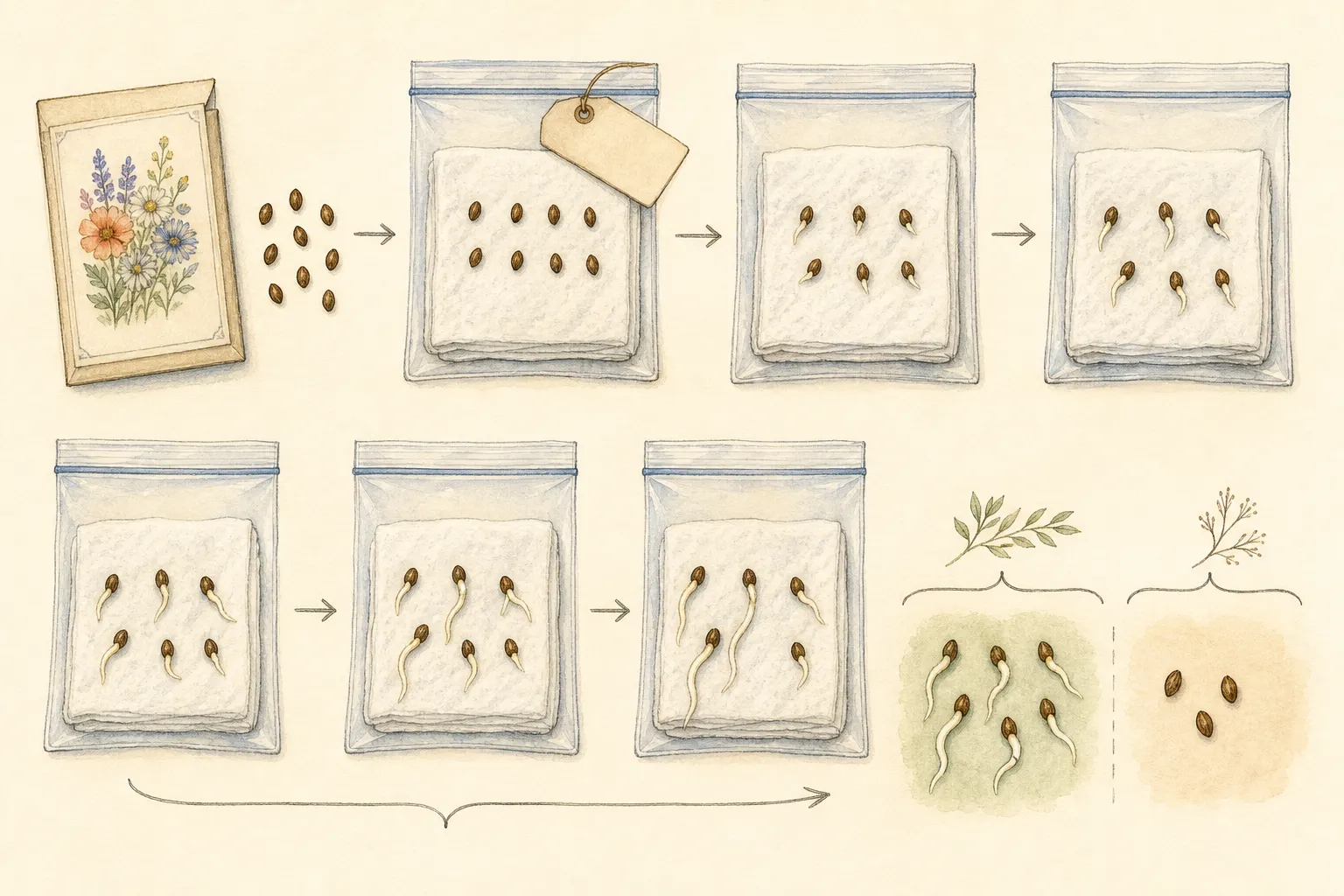
Keep pretreatment distinct from germination. Cold moist stratification can precede warm sowing, or outdoor winter sowing can combine seasonal treatment and protected germination. Dry refrigeration is not automatically stratification. Record moisture, temperature, and start and end dates. A four-week treatment occupies refrigerator or outdoor container capacity even when it uses no light-shelf space.
Map the moment a humidity cover is removed and useful light becomes essential. Germination warmth and seedling growth often need different conditions. A crop can begin on one heat mat but cannot remain beneath a dome after emergence while other seed waits. Schedule separate trays when species’ emergence intervals diverge enough that one cover or temperature would compromise the other. Write a final hardening window rather than one “put outside” date. Indoor foliage must adjust gradually to sun, wind, and temperature. Reserve sheltered outdoor space and daily handling time. A cold front can pause the process. Build enough flexibility that delaying installation does not leave large plants in tiny cells or force tender seedlings outside simply because the next crop needs the shelf.
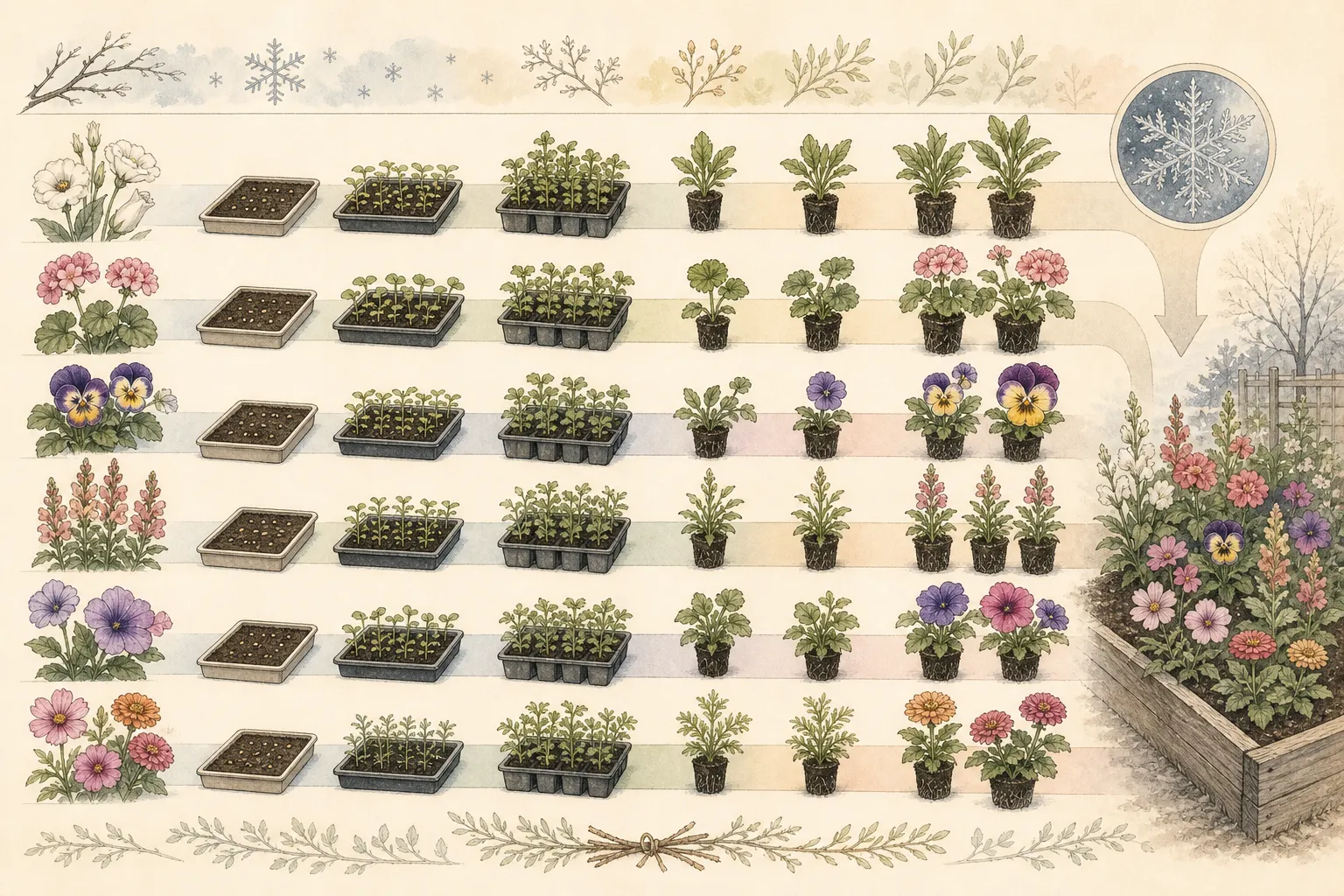
Translate packets into comparable records
Seed packets use weeks to bloom, days to maturity, weeks before frost, or sow-after-frost language. Translate each into the same milestones: treatment start, sow, expected emergence, first true leaves, potting, hardening, installation, and first useful flower. Retain the original wording and source. Do not convert a days-to-bloom claim into precision it never had by assigning one guaranteed date.
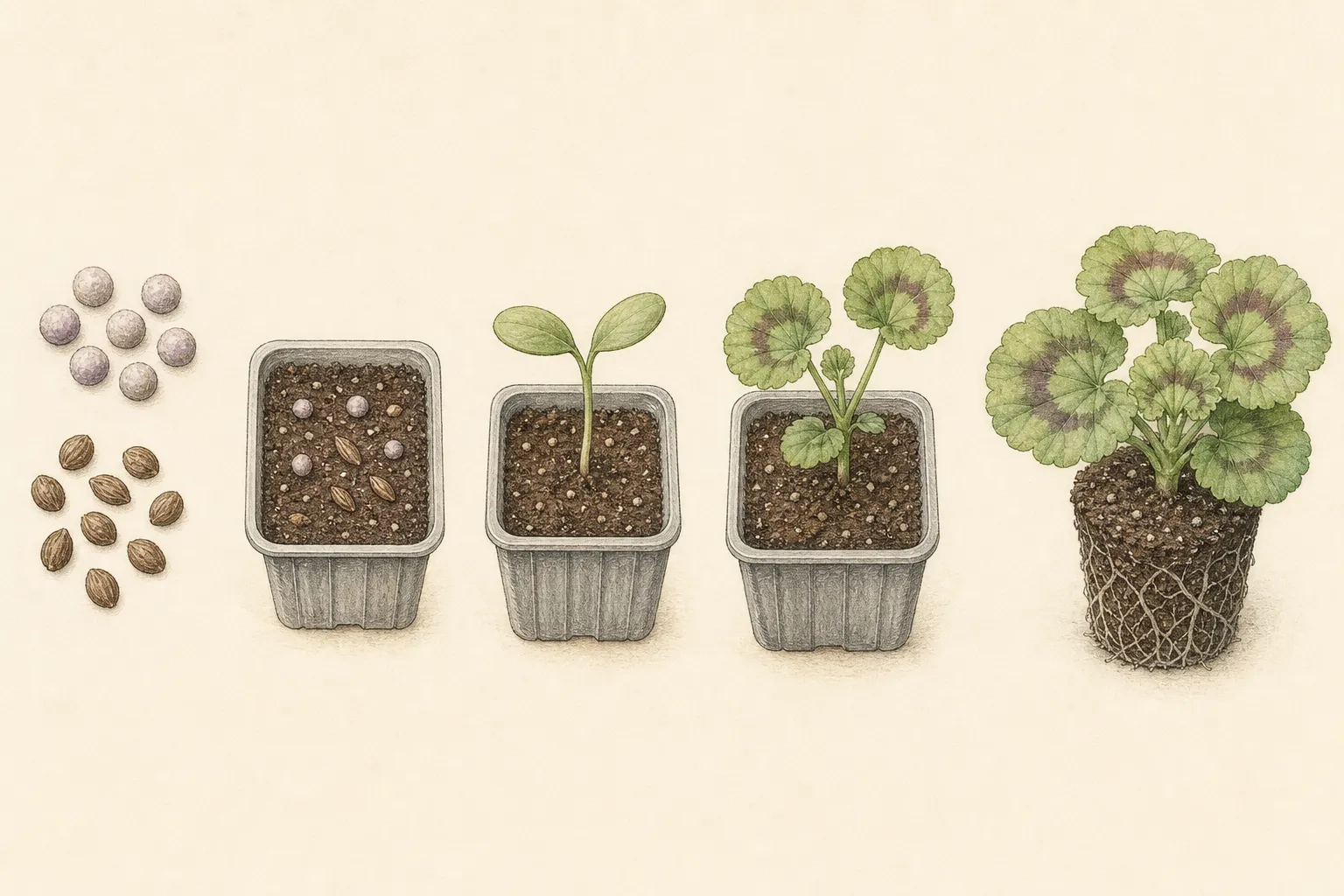
Record sowing depth, light or darkness requirement, germination temperature, root sensitivity, and expected size at transplant. These details determine container and shelf placement. Fine light-requiring seed may share a surface-sowing session but not a humidity regime with large deep-sown seed. A taprooted flower can demand a deeper cell or direct sowing even if its calendar resembles a fibrous annual.
Mark cultivar differences. Compact and tall forms, early and late series, and seed-grown versus vegetative selections can diverge. Use the exact packet and keep its lot attached to the tray. A schedule built from a generic species article can misplace a named series bred for earlier flowering. When source ranges conflict, state the region or method rather than averaging them.
Mark how dependable each date is. Fresh seed, direct local guidance, and several years of records make a schedule more predictable. A packet and one regional guide provide a useful starting range. Old seed, uncertain dormancy, or an unfamiliar species needs a small trial and backup rather than the center of the most valuable display.
Turn the calendar into a capacity plan
Count cells at sowing, then pots after each transplant. The largest stage under lights is the real constraint. Forty seedlings in one flat can become forty four-inch pots occupying several fixtures. Draw weekly shelf area, not only tray count. Include fixture coverage, plant height, watering access, drainage, electrical safety, and enough air to inspect every plant.
Reserve quarantine capacity. A tray with damping-off, mold, pests, or unexplained spotting must move away from healthy seedlings without losing all useful light. An empty quarter-shelf can also receive early germinators or plants potted ahead of schedule. Calling every open space inefficient guarantees that one unexpected batch will be crowded into a dim window.
Map potting labor and materials. List clean destination pots, fresh mix, labels, catch trays, and the week each is needed. Several crops reaching the same transplant stage can create a weekend of root-bound plants. Shift compatible sowings by a few days or reduce quantities. The calendar should smooth work, not prove how much can germinate simultaneously.
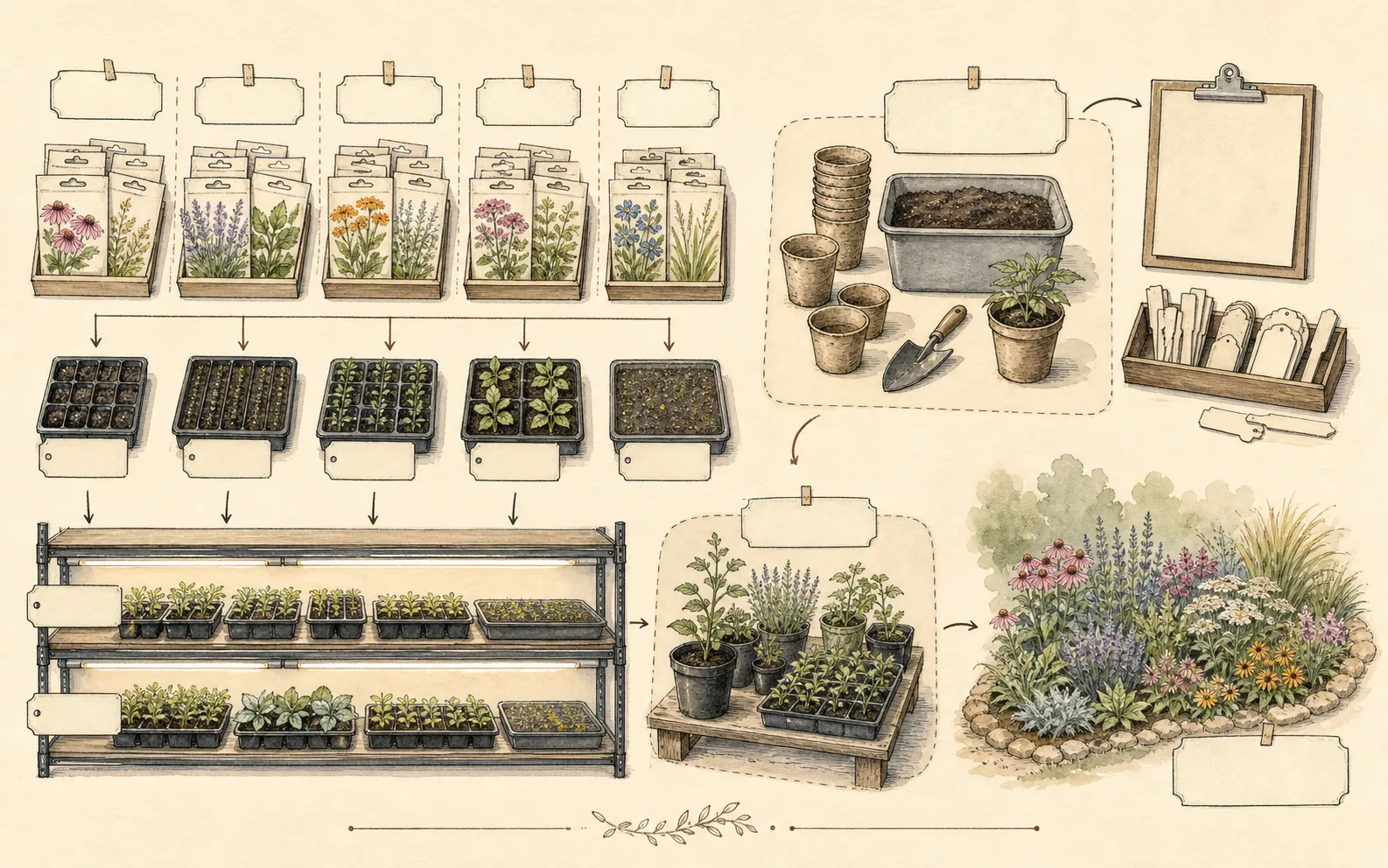
Add the hardening area as another bench. It needs shade transition, wind protection, drainage, frost response, and access for moving trays. A sheltered porch can be colder than expected at night and hotter under plastic by day. Measure conditions. Do not count an exposed driveway as unlimited free space when trays must be carried indoors for every warning.
Group work without grouping incompatible crops
Batch tasks that truly share conditions: cleaning containers, pre-moistening medium, labeling, or sowing several crops with similar depth and temperature. Keep each species in a separate labeled row or tray section. Do not combine seeds merely to save one container when they differ in cover removal, germination interval, root sensitivity, or transplant timing.
Use weekly propagation sessions rather than one marathon sowing day. A short recurring session can start the next crop, inspect prior trays, pot ready seedlings, and update records. This cadence catches drainage and light problems early. It also keeps the gardener from sowing everything during the emotional high of packet opening and discovering the capacity problem a month later.
Separate direct sowing from indoor sowing on the calendar. Prepare the outdoor seedbed, weed control, labels, protection, and watering route before the window opens. Soil temperature and workability matter. If rain delays the bed, keep seed dry rather than starting a root-sensitive species indoors as an improvised substitute. A different method needs its own evidence and container. Schedule succession only where the crop and season support it. Each later sowing needs a destination after the first crop, and the final batch needs enough growing season to flower. Record the cutoff. Repeatedly sowing after the useful window wastes seed and bench space. A gap in the border may be better filled by a container or foliage role than a late weak annual.
Use checkpoints instead of automatic dates
At the expected emergence window, inspect moisture, temperature, seed depth, and a representative sample before declaring failure. At true leaves, assess root occupancy and canopy spacing before potting. At the hardening date, check forecast and plant stability. Calendar dates trigger a decision; they do not replace plant development or weather.
Color-code tasks by evidence: fixed treatment start, expected range, observed event, and revised action. For example, sowing may be fixed, emergence a range, first potting observed, and hardening revised by forecast. This prevents a clean printed calendar from pretending that biological events occur on command. Keep the original target visible so delays can be diagnosed later.
Record exceptions immediately. If one tray emerged four days early, note measured temperature and move it into light. Do not shift every future date yet. If the pattern repeats across seasons, revise the crop profile. One unusual batch can reflect seed lot or weather. A useful schedule learns from evidence without amplifying every deviation.
Use stop rules. Discard a badly diseased batch, replace a low-viability annual lot, or reduce a crop that outgrows the shelf. The schedule is not a promise to rescue every sowing. Protect the healthiest ornamentals and the main garden plan from a failing batch that consumes light, clean space, and attention.
Protect the calendar from common bottlenecks
Insufficient light appears after germination, not at sowing, so count fixture area by canopy. Keep lights adjustable and broad enough for edge plants, provide a daily dark period, and separate tall and short crops. Warm dim overflow space is not equivalent capacity. Reduce the crop before moving half of it away from useful light.
Watering bottlenecks grow with pot count. Group containers by size and moisture behavior, not only by flower color. Keep catch trays drainable and learn representative weights. A calendar that puts porous small pots and deep plastic cells on the same rushed schedule creates dry edges and wet roots. Reserve time for inspection, not merely delivery of water.
Label failure can erase the whole plan. Use botanical name, cultivar, date, lot, and crop code on durable labels and a separate map. Keep packets filed. When a tray is divided or potted, carry the code forward immediately. Do not promise to identify ten similar annual seedlings later. The calendar and the plant must retain the same identity.
Travel and weather are predictable categories even when dates are uncertain. Avoid sowing a moisture-sensitive batch immediately before absence, and identify who can inspect rather than simply water. Keep frost protection and indoor return space available during hardening. Build one buffer week where a delay would otherwise collide with another large crop.
Close the season with measured revisions
At installation, record plant size, root condition, weather, and whether the shelf or hardening area was crowded. At first flower, record the date and garden performance. The interval from sowing to bloom is more useful than a packet claim when tied to the actual cultivar and system. Keep failures too, with the cause stated narrowly.
Compare planned and actual weekly capacity. Identify the peak number of pots, tallest canopy, busiest potting week, and crops that occupied lights after their garden window. Move one sowing, change one container stage, or reduce one quantity. Avoid redesigning the whole schedule when one old seed lot caused the delay.
Review garden need. Extra plants given away may be welcome, but repeated surplus indicates the starting quantity was inflated. Missing color may result from poor establishment rather than too few seeds. Use mature planting positions, normal-germination data, and transplant survival to set next year’s count. Production is not the goal; a healthy ornamental display is.
Archive one clean calendar with sources, packet details, actual events, and revisions. Discard duplicate sticky notes and update the seed inventory. The next winter starts from a proven sequence rather than from memory. A good schedule reduces decisions at the busiest moment while leaving room for weather, biology, and the gardener to change the plan responsibly.
Steps
- Level
- moderate
- Time
- Two hours to build, then a short weekly update
- Tools
- Local frost and weather records, Current seed packets, Weekly calendar or spreadsheet, Measured propagation-shelf plan, Durable labels
- Materials
- Seed inventory, Container and pot inventory, Light and hardening capacity map, Species-specific authoritative guidance
- 1Mark local garden windows
Record safe installation ranges, soil readiness, display goals, direct-sow windows, and travel constraints. Treat frost dates as planning evidence, not guarantees.
- 2Set crop role and quantity
Count mature garden positions and realistic vase or display demand, then add only a modest germination and transplant allowance based on seed and records.
- 3Count backward by stage
Map hardening, final pot, earlier transplant, emergence, sowing, and pretreatment from each destination date using source ranges and cultivar packets.
- 4Standardize the crop record
Write treatment, depth, light, temperature, root sensitivity, emergence range, transplant size, and confidence so unlike packet language can be compared without false precision.
- 5Draw weekly shelf capacity
Count the largest potted stage beneath useful light, plus watering, drainage, height, quarantine, potting labor, and hardening space. Reduce quantities before a collision.
- 6Batch only compatible work
Group cleaning and sowing sessions where conditions match, but separate crops with different cover, temperature, emergence, root, or transplant needs.
- 7Use stage checkpoints
Let dates trigger inspections at emergence, true leaves, root occupancy, and hardening. Revise by measured plant and weather evidence rather than moving every crop automatically.
- 8Record stop and fallback rules
Define when to replace old seed, discard disease, reduce a batch, switch a garden role, or omit a late succession. Protect healthy crops from rescue work.
- 9Compare plan with flowering
Close the season with actual emergence, potting, hardening, installation, first flower, shelf peak, surplus, and failures; change the smallest evidenced part next year.
- 10Reserve a true quarantine slot
Hold useful light, drainage, and access for one suspect or unexpectedly early tray. Do not count this as spare production capacity. Isolation protects healthy crops and gives a delayed batch a place to be diagnosed without forcing it onto a dim windowsill.
- 11Map materials to the week needed
Assign clean cells, destination pots, fresh mix, labels, catch trays, and support to the week each crop changes stage. A calendar that reserves light but not containers or potting time still produces root-bound plants during the busiest transition.
- 12Give direct sowing its own readiness gate
List soil workability, temperature, bed preparation, label, watering access, animal protection, and the final useful sowing date. When the garden is not ready, keep seed dry or use a source-supported alternative rather than improvising indoor treatment for a root-sensitive flower.
- 13Audit the peak week before sowing
Find the week with the greatest pot footprint, tallest canopy, watering demand, potting workload, and hardening traffic. Shift or reduce crops on paper until every plant can remain under useful light with access. The peak, not the average week, sets capacity.
Related reading
Sources
- Starting Seeds Indoors. University of Minnesota Extension. Source record · Accessed 2026-08-19.
- Guide to Starting Seed Indoors. Iowa State University Extension. Source record · Accessed 2026-08-19.
- Starting Seeds Indoors: Materials. Utah State University Extension. Source record · Accessed 2026-08-19.