Grow · branch forcing calendar
Build a Branch-Forcing Calendar for Flowering Shrubs
Plan flowering-shrub cut dates backward from desired indoor bloom dates, then replace published ranges with observations from your own garden.
Published Last updated
In this guide
- Use a calendar to solve timing, not to repeat the forcing method
- Use a trial cutting to revise the main cutting date
- Choose display windows and candidates before assigning cut dates
- Build the first calendar by counting backward
- Turn trial cuttings into local timing data
- Convert one result into a main cut and a succession
- Close the season with a calendar that improves next winter
- Steps
Use a calendar to solve timing, not to repeat the forcing method
A branch-forcing calendar answers a different question from a forcing tutorial. The tutorial explains how to select, cut, condition, and arrange dormant flowering wood. The calendar begins with a date when flowers are wanted indoors and decides when each shrub should be sampled and cut. Its output is not a single promise but a set of windows, because species, winter exposure, indoor temperature, and the progress of dormancy all change the response.
Keep the execution instructions in the related guide, Force Spring-Flowering Branches, and make this record about scheduling. For each candidate plant, capture its identity, outdoor location, desired display date, initial forcing range, trial date, main cut window, and actual result. That division prevents a calendar full of pruning detail from hiding the decisions it needs to support: which plant, which week, and how certain the estimate is.
Published ranges are starting assumptions rather than guarantees. Iowa State University Extension notes that forcing time varies by species and that branches collected closer to their natural bloom time generally flower sooner. Illinois Extension similarly presents approximate times and explains that forcing gets easier as spring approaches. A useful calendar therefore preserves the estimate and the observation instead of overwriting one with the other.
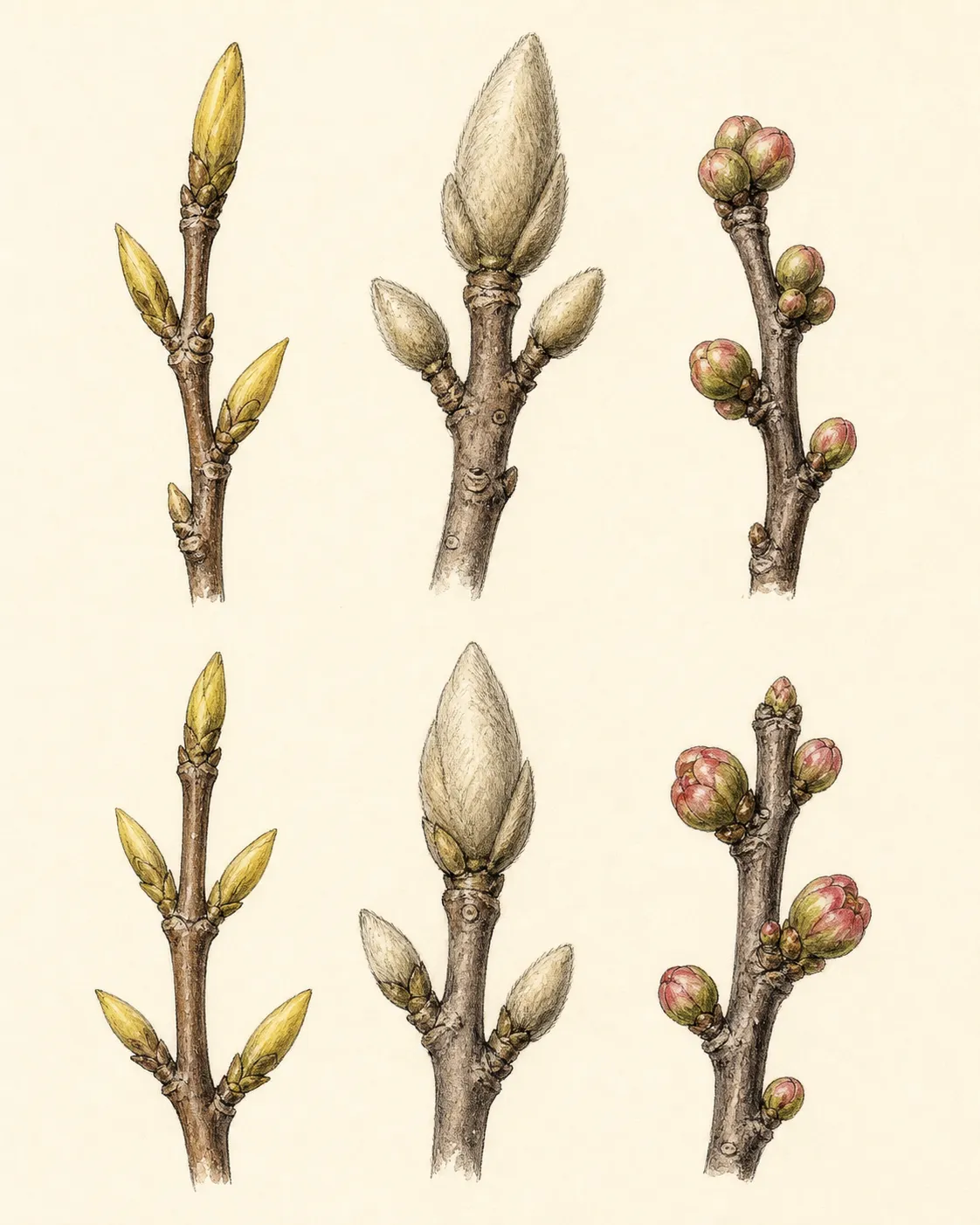
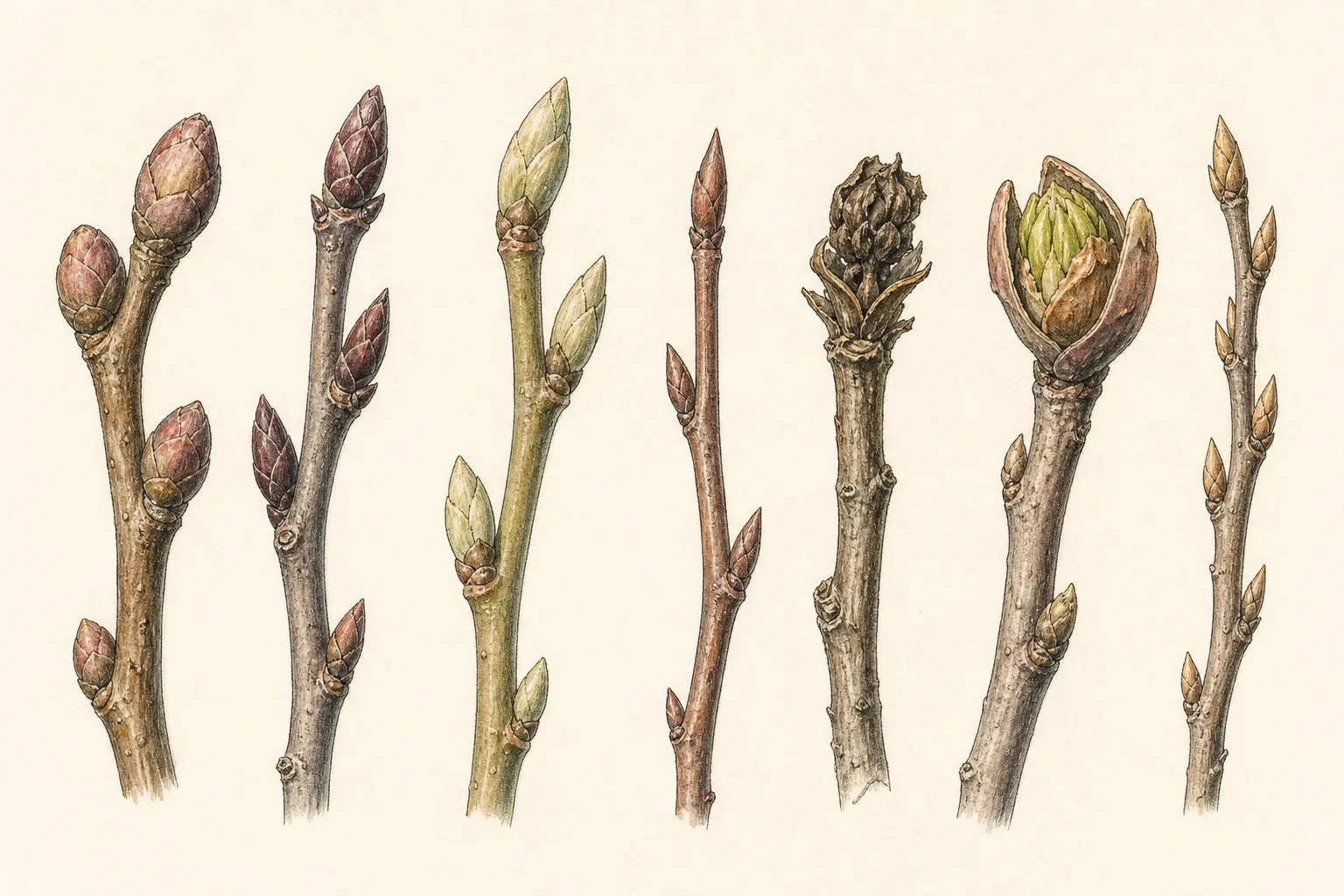
Plan only plants you can identify confidently and reach without damaging their structure. Flower buds are commonly plumper and rounder than narrow leaf buds, but bud appearance is one clue, not a substitute for plant identity. Inventory in autumn while labels, leaves, fruits, and branching habit remain available, then verify flower-bearing wood again before the winter trial. Exclude weak, newly planted, scarce, or badly shaped shrubs that cannot spare a modest cut.
Use a trial cutting to revise the main cutting date
Begin with a sourced forcing range and a desired display window, then test a small labeled batch. Record the same bloom milestones for each taxon. Use that batch to revise the main cut and any succession; keep an unexpected result as a local observation until repeated seasons support a dependable change to the calendar.
Choose display windows and candidates before assigning cut dates
Start with one to three indoor occasions rather than every winter week. A late-January lift, a February gathering, and an early-March succession create clear targets without demanding too much wood. Define a useful display window as well as a headline date. If flowers would still be welcome for five days on either side, the schedule can absorb natural variation; if they must open for one event, plan an earlier trial and a backup species.
Match candidates to the season in which they become realistically forceable. Iowa State lists forsythia and pussy willow among plants that may take roughly one to three weeks, apple and crabapple about two to four weeks, and magnolia about three to five weeks under its guidance. Those ranges overlap and shift. They organize the first attempt; they do not certify an exact indoor bloom date for every climate or cultivar.
Illinois Extension offers a second set of approximate examples: about one week for forsythia and serviceberry, two for redbud, privet, and pussy willow, three for honeysuckle, flowering almond, and deutzia, and four for lilac, spirea, and crabapple. Differences between reputable lists are useful evidence of variability. Record the source and use the wider plausible window until a trial from the actual plant narrows it.
Add a structural limit beside each plant. Note which crossing, inward-growing, crowded, or renewal stems could be removed without spoiling the specimen, and set a maximum count. This aligns the indoor harvest with sensible dormant pruning while protecting the spring shrub. A calendar entry with no acceptable branch available is not actionable; move the display to another species instead of treating the date as permission to cut the wrong wood.
Build the first calendar by counting backward
Give each display a target date and a tolerance window, then count backward by the slow end of the published range. If crabapple is initially treated as a two-to-four-week candidate, place the first main-cut estimate four weeks before the target, not two. The conservative edge gives unopened buds time to progress and can later be adjusted with experience. Keep the faster edge visible as the latest reasonable cut rather than collapsing the range into one date.
Schedule a small trial before the main cut. For a new plant, put the trial one full estimated forcing window ahead of the intended main batch when winter timing permits. The goal is to learn whether buds are ready and how quickly they move in the actual indoor conditions. If the trial remains tight, the main date can slide later or the display can shift to another candidate without consuming many branches.
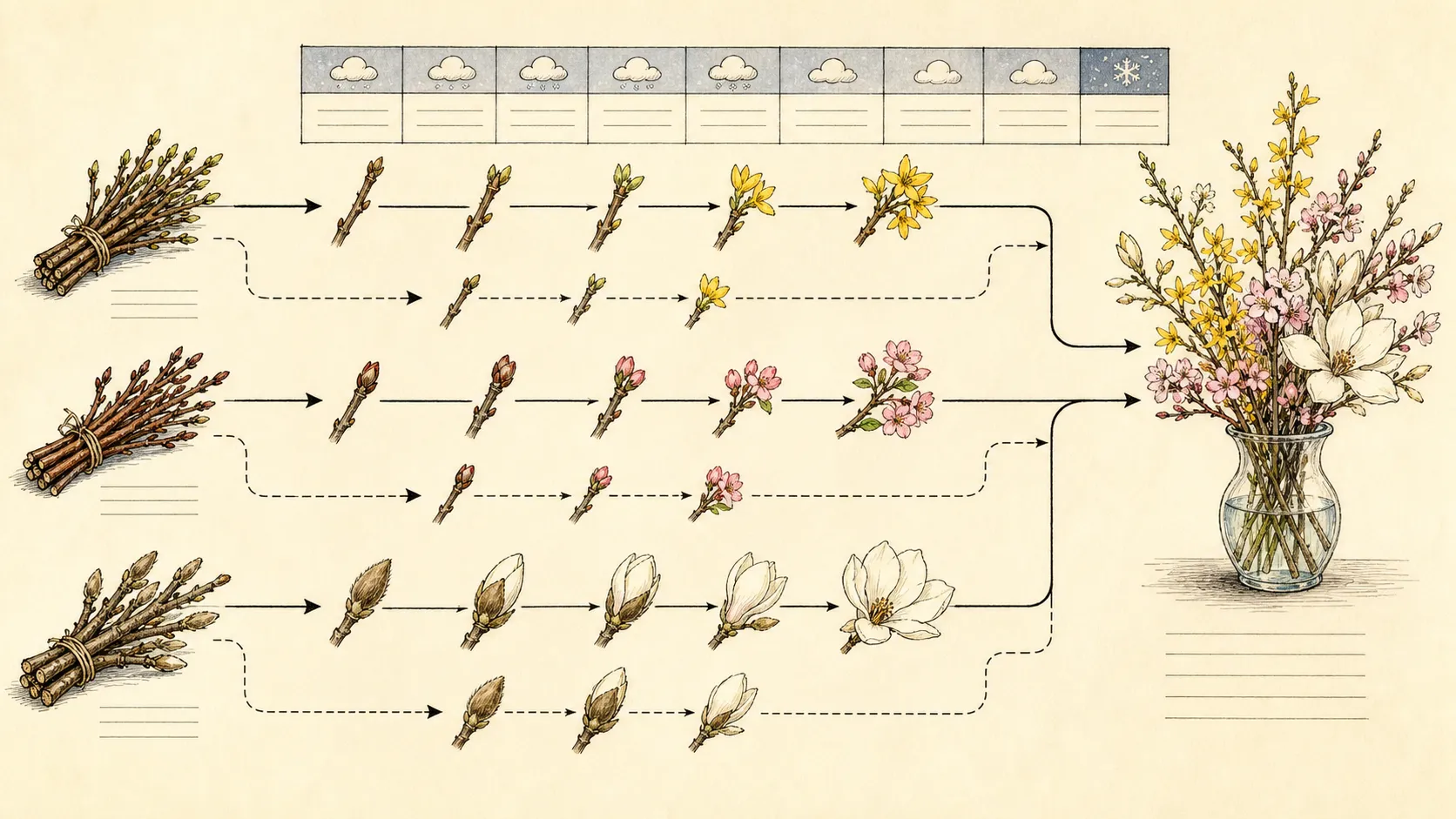
Build rows for plant, outdoor location, desired bloom, published range, trial cut, main cut window, first color, useful bloom, and end of display. Label uncertainty explicitly. A first-year row might say 'three to five weeks; high uncertainty,' while a cultivar observed for three winters can use its local median plus an early and late boundary. Weather is not controlled, so even a mature record should remain a range.
Make indoor conditions part of the calendar because a date without context will not transfer. University of New Hampshire Extension describes keeping branches in roughly 60 to 70 degrees Fahrenheit while forcing. Record the room or holding area actually used, especially if one season's branches sit in a cool workroom and another's in a warm living room. The result belongs to the plant-and-room combination, not the plant name alone. Add a small column for any mid-course move between rooms. Without it, a batch started cool and finished warm may look like evidence for a date that cannot be reproduced.
Turn trial cuttings into local timing data
Keep a trial deliberately small: enough flower-bearing twigs to reveal readiness, but not a display-sized harvest. Tie a date label to the batch and connect it to the calendar row before it enters water. Follow the separate forcing guide for cutting and conditioning details. This calendar needs only the execution variables that change timing, such as collection date, plant, indoor location, and any clearly documented change in handling.
Observe at fixed milestones rather than writing vague daily impressions. Record the cutting date, first obvious bud swelling, first visible color, first useful bloom, fullest display, and the point when the arrangement is no longer useful. A branch that shows color in ten days but needs sixteen days to look abundant should be scheduled from the useful-bloom interval, not from the earliest sign of success.
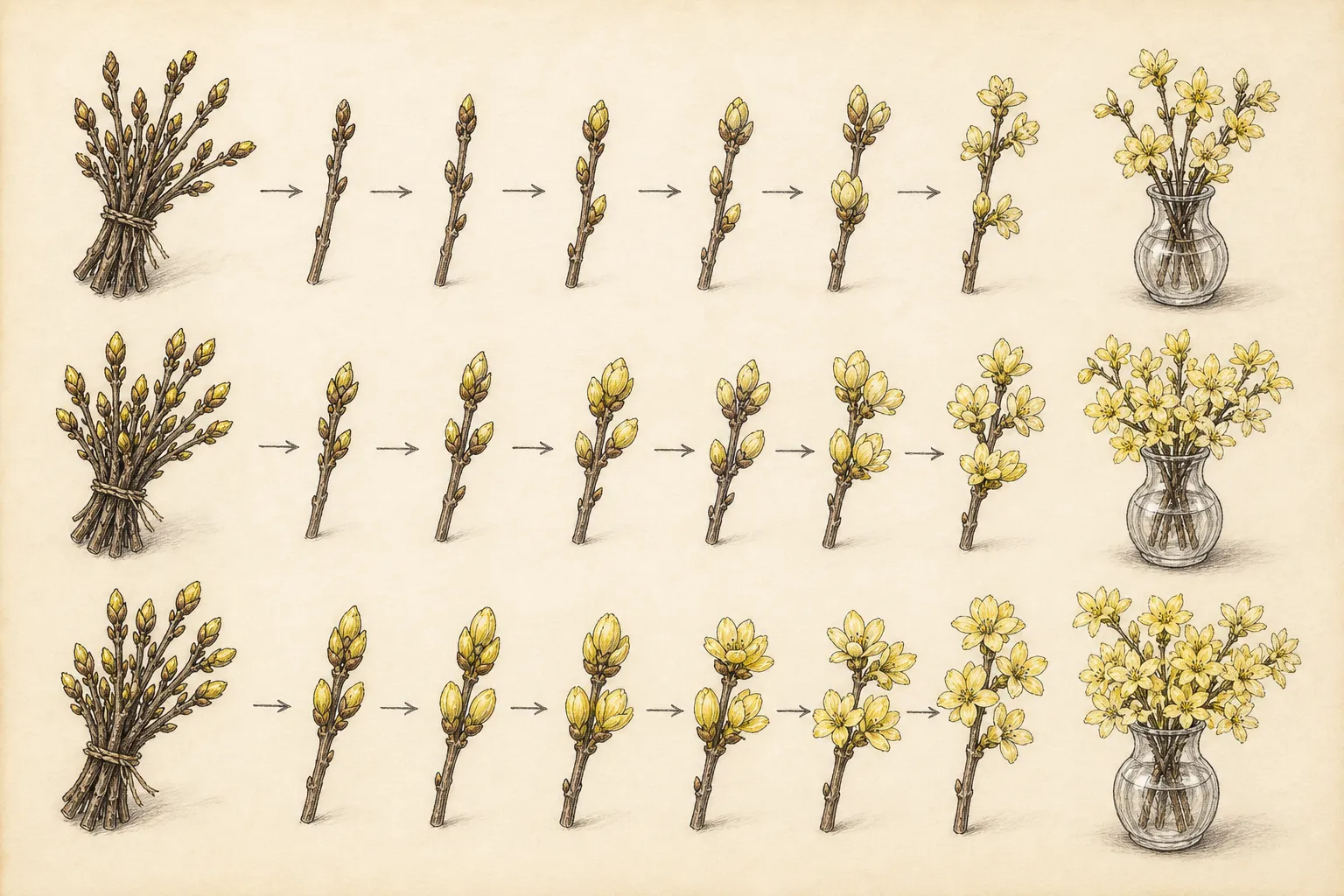
Distinguish failure modes. Buds that stay firm and unchanged may have been collected before adequate chilling or before the plant was ready. Buds that dry or drop can point to handling or indoor-condition problems. A branch that opens leaves but few flowers may have carried mostly leaf buds or may have been misidentified. Do not convert every failure into 'cut earlier next year'; record what occurred and test one change at a time.
Photograph the branch at the same milestones with the label visible. Pictures make fullness, flower quality, and leaf competition easier to compare across years. They also expose a calendar error in which the first color date was mistaken for the display date. The log should be brief enough to sustain: a few dates, one condition note, and three photographs usually produce more scheduling value than an elaborate diary abandoned after the first week. Use the same background and roughly the same distance when practical. Consistent framing reveals whether a batch truly reached useful fullness or merely produced one photogenic flower.
Convert one result into a main cut and a succession
When the trial reaches useful bloom, calculate elapsed days from cutting and compare that interval with the target. If it opened twenty-four days after collection and the display is wanted on February 20, a main batch near January 27 is the first local estimate. Preserve a few days of tolerance because a larger batch, a later collection, and changing outdoor conditions may all alter the pace.
Use staggered batches when the target matters. One modest cut at the conservative date and another several days later can widen the period of useful bloom without taking an excessive number of stems at once. Illinois Extension notes that forcing different species or making cuttings in succession can extend the indoor show. Keep each batch separately labeled until its response is clear; otherwise the log cannot tell which date produced which flowers.
Let natural bloom approach shorten the assumed interval. Both Iowa State and Illinois explain that branches tend to force more quickly later in winter. Do not copy January's elapsed time into March unchanged. A calendar can include a seasonal adjustment column or separate early-, mid-, and late-window trials. A single plant may therefore have several valid lead times rather than one permanent number.
Retain a backup plan that does not require more cutting. If the primary batch is slow, display pussy willow catkins, foliage, or a faster-tested species rather than harvesting repeatedly from the same shrub. If it races ahead, move it to a cooler suitable location if the execution guide allows, or enjoy it early. The calendar reduces uncertainty; it does not make dormant wood obey an event invitation.
Close the season with a calendar that improves next winter
At the end of each batch, score timing before judging beauty. Mark it early, on target, late, leaf-heavy, weak, or failed, and preserve the dates behind that label. Then note branch quality and how much acceptable pruning wood remained. A plant can force beautifully yet be a poor annual source if every suitable stem contributes to the shrub's framework or outdoor display.
Update the next-year window cautiously. One successful twenty-day result does not prove that the plant always needs twenty days. Use it to center a wider provisional range, then narrow only after several seasons. Keep outliers with weather and room notes rather than deleting them. A very mild winter, a changed thermostat, or a late trial can explain why the same cultivar behaved differently.
Review the outdoor plant after normal bloom and growth. If previous forcing cuts created visible gaps, watersprouts, or an unbalanced outline, reduce the future quota or remove the plant from the calendar. Scheduling cannot compensate for structurally poor harvesting. The best candidates yield appropriate thinning or renewal material at a useful time and still look whole in the garden.
Archive the finished calendar with the garden record, not with holiday decorations. In autumn, confirm plant names and candidate branches; in early winter, copy only active windows onto the working calendar. The result should become shorter and more confident over time: fewer speculative plants, clearer cut ranges, known backup choices, and dates grounded in what the shrubs and indoor rooms actually did. Preserve skipped years as blanks rather than copying the previous result forward. A blank says no observation was made; a repeated number can falsely imply a trial that never happened.
Date every revision so the working range can always be traced to the observations that changed it.
Steps
- Level
- moderate
- Time
- About 45 minutes to build the calendar, plus brief observations during each trial
- Tools
- paper calendar or spreadsheet, weatherproof plant labels, pencil or permanent marker, clean sharp pruners, measuring tape
- Materials
- inventory of spring-flowering shrubs and small trees, one or more watertight vases or buckets, trial log or notebook, date labels for each cutting batch
- 1Inventory reliable flowering wood
List established spring-flowering shrubs and small trees that can spare a few reachable stems. Confirm identity while seasonal clues remain, note where flower-bearing wood occurs, and set a maximum harvest that will not distort the plant. Exclude new, weak, scarce, inaccessible, or structurally unsuitable specimens before any date enters the calendar.
- 2Set the indoor display windows
Choose a small number of target dates and give each an acceptable early-and-late tolerance. Add a backup species for exact events. A broad winter wish becomes schedulable only when the record distinguishes the day flowers are wanted from the period in which they would still be useful.
- 3Assign a sourced starting range
Record approximate species guidance from reputable extension sources, keeping differences between lists visible. Use the slow edge as the initial early cut date and the fast edge as the latest plausible date. Mark first-year entries as uncertain; the range is a trial hypothesis, not a guarantee.
- 4Count backward and add a trial
Count from the display date to make a main-cut window, then schedule a small trial far enough ahead to reveal readiness before the main harvest. Record the intended indoor room and keep its temperature context consistent. Link every physical batch to its calendar row with a plant-and-date label.
- 5Log fixed bloom milestones
Follow the related forcing guide for branch preparation, then record cutting, bud swelling, first color, useful bloom, fullest display, and decline. Photograph the same milestones with the label visible. Describe a failure specifically—unchanged, dried, dropped, leaf-only, or weak—instead of assuming every missed date needs an earlier cut.
- 6Schedule the main and succession batches
Use the trial's elapsed time to center the main cut while retaining a tolerance window. For an important display, stagger modest batches and keep them separately labeled. Expect later-winter cuts to respond more quickly as natural bloom approaches, and switch to a tested backup rather than overharvesting a slow plant.
- 7Revise from several seasons, not one result
Score each batch for timing and quality, retain room and weather context, and check the shrub for structural effects. Use one result to improve a provisional range; narrow it only after repeated observations. Remove plants that cannot supply appropriate pruning wood and carry the tested dates into next winter's working calendar.
Related reading
Sources
- How to Force Branches from Spring-Flowering Trees and Shrubs. Iowa State University Extension and Outreach. Source record · Accessed 2026-08-20.
- Forcing Branches Indoors. University of New Hampshire Extension. Source record · Accessed 2026-08-20.
- Force Flowering Branches for an Early Spring Show. Illinois Extension. Source record · Accessed 2026-08-20.