Grow · force spring flowering branches
Force Spring-Flowering Branches Indoors from Swollen Buds
Cut a few well-placed branches after chilling, condition them gradually, and bring early spring flowers indoors without disfiguring the shrub.
Published Last updated
In this guide
- Use the biological cue for spring-flowering branches for indoor forcing
- Check flower-bud readiness before cutting the display batch
- Read the site and the whole plant together
- Set a visible finish line before beginning
- Prepare the work while every part is still identifiable
- Carry out the central operation in a controlled sequence
- Protect roots, crowns, and new growth after the work
- Diagnose a weak response before adding another treatment
- Leave a record for the next seasonal decision
- Steps
Use the biological cue for spring-flowering branches for indoor forcing
Cut spring-flowering branches once their flower buds have begun to swell and the shrub has completed enough winter dormancy to respond indoors. Iowa State notes that forsythia and pussy willow may be ready as early as February, while crabapple, magnolia, and redbud usually give better results when collection waits until March. The plant's bud stage and identity set the useful date.
Look along several young shoots for buds that are round, broad, and plump. Leaf buds are usually smaller, narrower, and more pointed. Bud form still varies by species, so compare similar positions on multiple twigs before choosing a stem. UNH Extension suggests opening one uncertain bud; miniature flower parts confirm that the branch can produce a floral display.
These flowers were initiated during the previous growing season and then held dormant through cold weather. Indoor warmth and moisture resume development, but each species carries a different chilling requirement. A branch cut too early may remain closed or produce leaves alone. A later sample, taken closer to the shrub's normal bloom, commonly opens in fewer days.
Treat the first harvest as both a display and a small timing test. Select a few bud-rich shoots from an established, correctly identified plant, then leave enough flower-bearing wood for its outdoor show. A shrub with sparse buds, winter injury, recent heavy pruning, or uncertain identity is a poor donor. Its limited flowering tissue is more valuable in the garden.
Check flower-bud readiness before cutting the display batch
Choose identified flowering wood with suitable chilling and bud development, then harvest selectively without spoiling the donor. Keep taxon, collection date and forcing conditions with each batch. If its response differs from an example calendar, record the difference before changing the main collection date. The donor's remaining structure still limits how much material can be taken.
Read the site and the whole plant together
View the donor from every public side before marking a cut. Iowa State recommends selective removal that preserves the plant's natural shape, and Illinois Extension points gardeners toward crowded areas or the less-viewed side. A branch growing inward, rubbing another shoot, or extending beyond a balanced outline can supply the vase while also making a purposeful pruning cut.
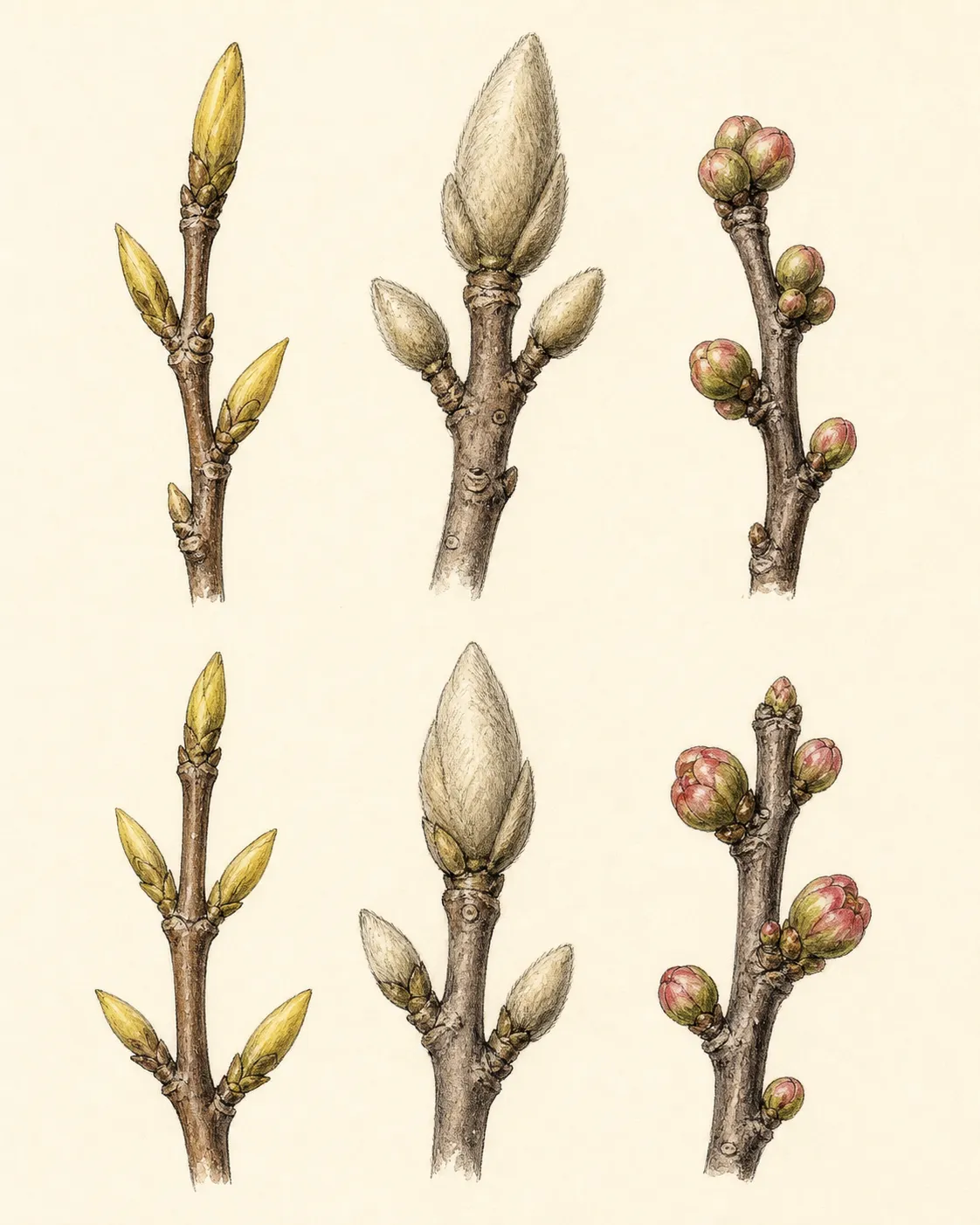
Choose branches reachable from firm ground and trace each one back to a suitable junction or outward-facing bud. Check what the cut will expose behind it. Removing several shoots from one small sector opens a conspicuous hole even when every individual stem looks expendable at arm's length. Spread a modest harvest across the crown and reassess the silhouette after each cut.
Young shoots often carry more flower buds than older wood, but vigor alone is not permission to strip the newest growth. Count usable buds and note their distribution before deciding how many stems the arrangement needs. Fruit-tree prunings already scheduled for late winter can be especially efficient material, provided the selected pieces have sound flower buds and the original pruning plan remains intact.
Set a visible finish line before beginning
Set two limits before pruning: the number of stems needed for the container and the amount the donor can lose while keeping a coherent outline. Photograph the shrub from its main viewing side, then identify the exact laterals that meet both limits. The completed harvest should look like considered thinning outdoors and provide varied usable lengths indoors.
Match branch dimensions to the species and the vessel. Iowa State describes clean slanting cuts on pieces one to two feet from their tips. UNH gives a narrower home-forcing choice of stems at least twelve inches long and less than one-half inch thick. Illinois lists six to eighteen inches for its method. These are compatible examples, not a universal cutting specification.
Wait for a mild collection period when the temperature is above 32°F if the schedule permits. Buds and twigs are then more pliable during the move indoors. Iowa State provides a remedy for material collected frozen: immerse the entire branches in a tub or pail of water for several hours and let them thaw gradually before normal conditioning.
End the outdoor harvest as soon as the planned vase quantity is reached. Also end it when the remaining choices require a stub, an indiscriminate heading cut, a ladder, or removal of the shrub's best flowering sector. Closed buds create no urgency; another sample can be taken later if the first bundle reveals that dormancy was incomplete.
Prepare the work while every part is still identifiable
Fill a clean, tall bucket before walking to the shrub and sharpen bypass pruners for smooth cuts through pencil-sized wood. Prepare a second tub if frozen material will need the full-branch soak described by Iowa State. Indoors, clear a washable work surface, choose a stable vase, and set aside labels. Freshly cut bases can then enter water promptly.
Label each bundle with the species or cultivar, harvest date, outdoor temperature, and observed bud stage. Similar bare twigs quickly become indistinguishable when forsythia, quince, cherry, or magnolia share a work area. Separate containers preserve those identities and make their different opening intervals useful. A label also prevents an unsuccessful early sample from being mistaken for a failed species.
Choose the conditioning location before cutting. The early forcing period needs moderate warmth, subdued light, accessible water, and air that will not desiccate the buds. Iowa State specifies a dim, cool place at 60 to 65°F; UNH and Illinois describe 60 to 70°F away from direct sun. A radiator, heating vent, and sunny sill all work against that requirement.
Carry out the central operation in a controlled sequence
Prune the marked shoot cleanly at its selected lateral or outward bud, then place the cut end in the waiting bucket. Keep the flower buds intact while carrying the bundle. Indoors, trim each stem to its display length and remove every bud, leaf, and side twig that would sit below the water line. Submerged plant tissue fouls the container and complicates water uptake.
Retain one complete conditioning protocol for the batch. UNH directs the gardener to remove another inch from the base while the stem is underwater, then stand it in warm water. Illinois begins with an overnight whole-branch immersion and makes a diagonal one-inch recut during that soak. Iowa uses whole-branch immersion specifically for material that was frozen at collection.
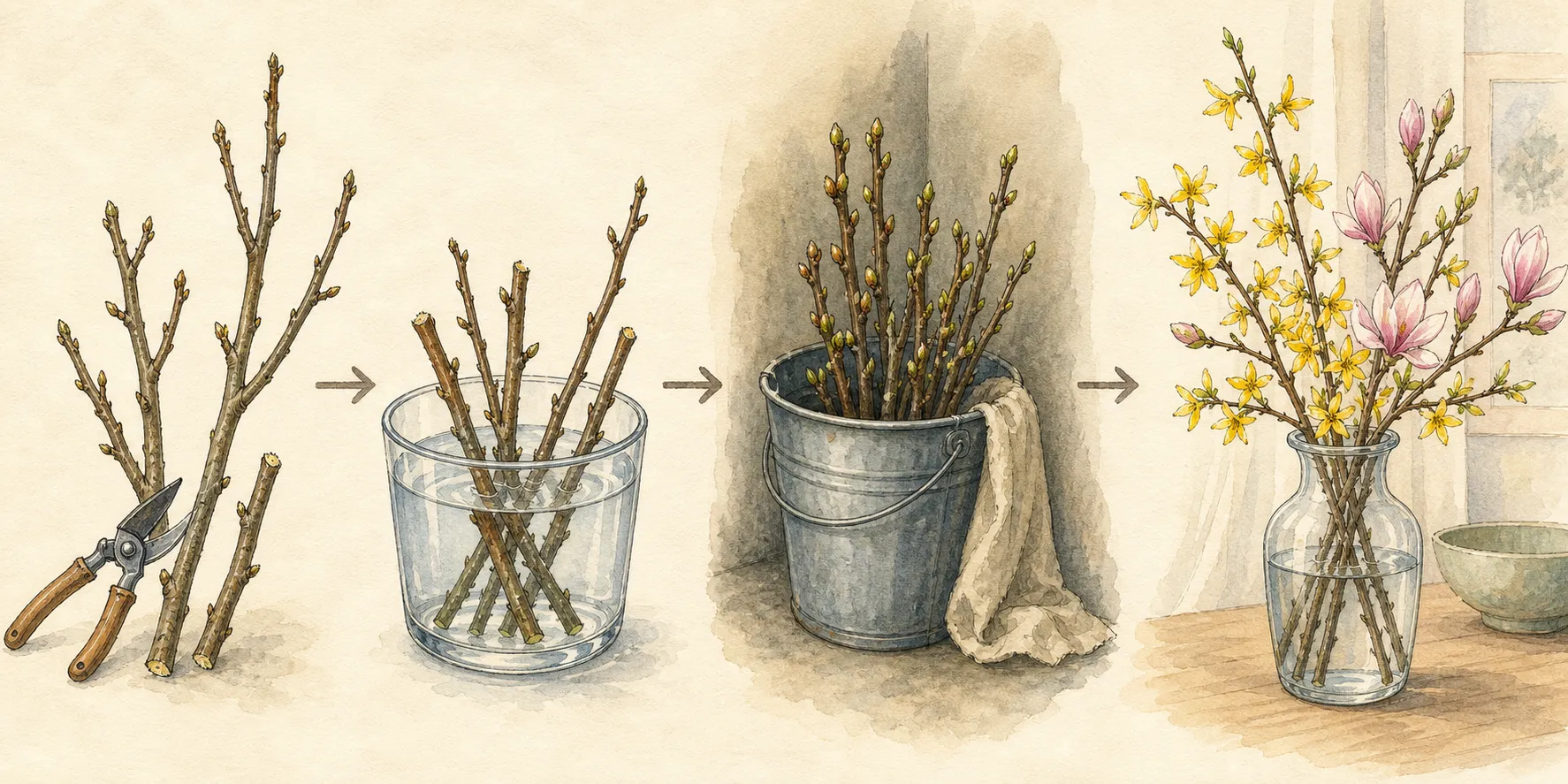
Stand the prepared branches upright with all cut ends submerged and enough space for buds to expand. Begin in the chosen cool, partly shaded or dim location. Mist the buds two or three times daily when following the Iowa method. Check the container level at the same visits, since woody stems and indoor evaporation can lower it quickly.
Keep species in separate vessels until their response is known. A forsythia batch may be ready for display while magnolia buds in the same room still need several weeks of conditioning. Separate water also makes a slimy stem base or cloudy container easier to isolate. Remove a deteriorating piece promptly and renew the water for the remaining sound branches.
Protect roots, crowns, and new growth after the work
Refresh the container on the schedule attached to the chosen method. Iowa State calls for daily water changes during forcing; UNH and Illinois use every few days. In either case, clean water limits bacterial and fungal growth that can obstruct uptake. Rinse the vessel, preserve the labels, and return the bases to water promptly at each change.
Move the branches into a bright room when the flower buds begin to open. Keep the display cool and beyond the reach of direct sunlight. Iowa State and UNH both connect cooler display conditions with a longer bloom period, while Illinois notes that warmth and sun reduce flower quality and longevity. The opening buds supply the transition cue.
Inspect the arrangement daily for a falling water line, wrinkled bud scales, cloudy water, or soft submerged tissue. Recut a blocked or dried base with a clean blade and remove decaying material from the vessel. Stable hydration should enlarge the flower buds over successive checks. Extra heat merely accelerates water loss and can shorten the finished display.
Return outdoors after the harvest and inspect every pruning point on the donor. Correct any torn bark or long stub with one clean, controlled cut at the intended junction. Record a sector that now appears sparse and reserve it from the next collection. The shrub will bloom from the buds left in place, so the outdoor result remains part of the forcing method's success.
Diagnose a weak response before adding another treatment
Leaves opening ahead of flowers usually points back to selection or timing. The stems may have carried mostly pointed leaf buds, or the plant may have received too little chilling when cut. Compare an unopened bud with reference material for that species, then leave the shrub outdoors longer before taking a small second sample. A larger harvest offers no correction for immature buds.
Shriveling buds indicate a different path. Check whether the bases remained submerged, the water turned cloudy, or the room exceeded the cool range in the retained Extension directions. Restore clean water, recut a dry stem base, and move the vessel away from hot air. A bud that has browned and collapsed will not recover, so remove that stem.
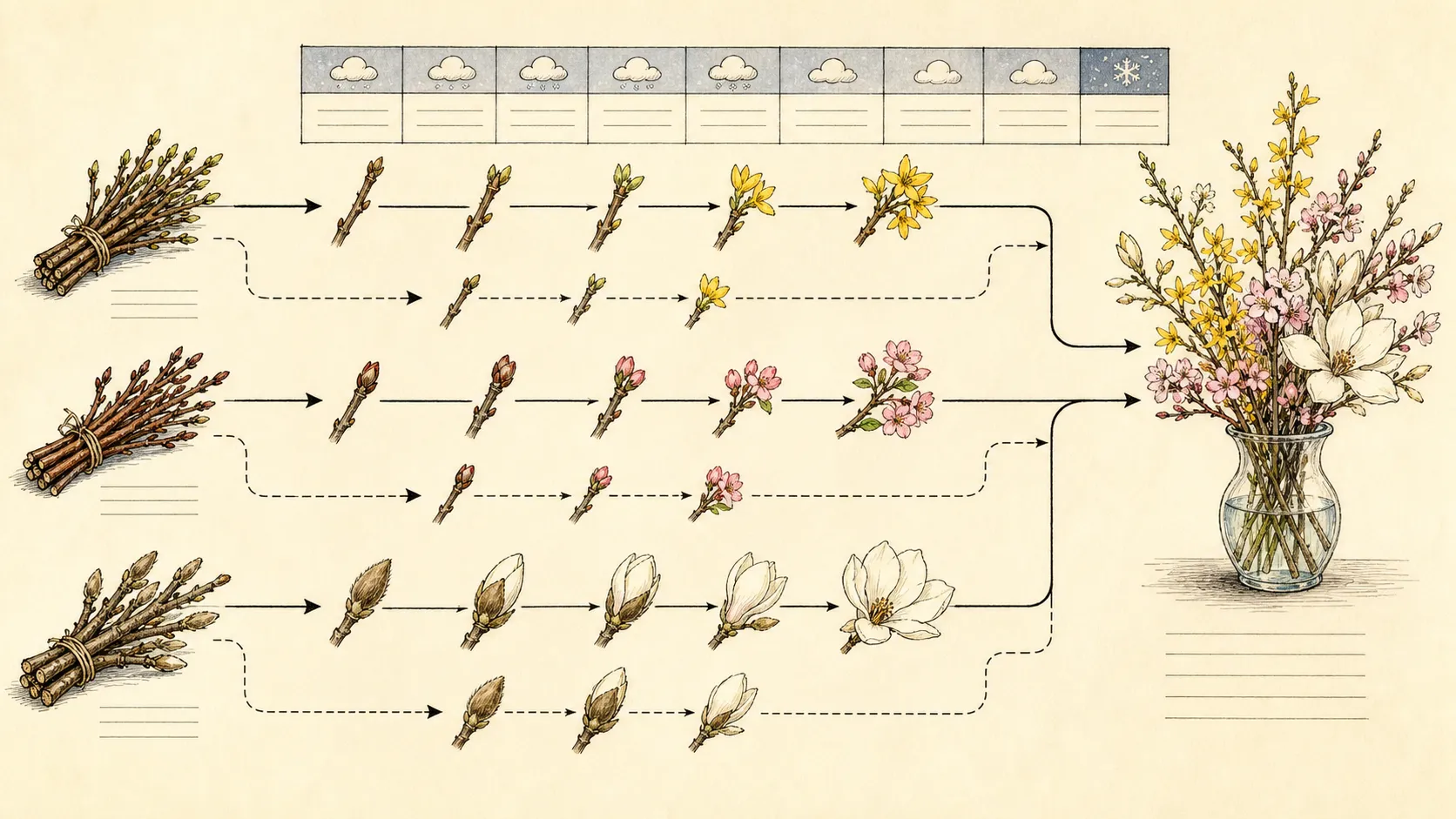
Allow the normal species interval before judging the trial. Iowa State gives one to three weeks for forsythia and pussy willow and three to five weeks for magnolia. UNH places crabapple and magnolia at four to five weeks. These ranges show why a labeled magnolia should remain under care after a nearby forsythia has already flowered.
Separate a water-quality problem from an early-harvest problem. Cloudiness, odor, or slippery stem bases point toward microbial buildup and impaired uptake. Clean water and sound recuts address that condition. Firm closed buds in a clean container may simply need more accumulated cold or more time near their natural season, which calls for patience and a later sample.
Leave a record for the next seasonal decision
For each labeled batch, record the harvest date, outdoor temperature, bud description, room temperature, first visible expansion, first open flower, and end of display. Add the water-change interval and conditioning protocol. Those observations turn next winter's calendar into a species-specific starting point and reveal whether temperature, bud choice, or harvest date explains the result.
Compare indoor opening with the same plant's natural outdoor bloom. The number of days between those events helps show how close the collection was to normal flowering. A successful late sample may support an earlier trial next year; a motionless early cutting argues for more outdoor chilling. Keep cultivar records separate when their bud break differs.
Photograph the donor immediately after cutting and again in flower. Note which side supplied the branches and how many stems were removed. If the outdoor display shows a gap, reduce or redistribute the next harvest. If the outline remains full, repeat the same selective pattern while adjusting only the indoor variable under study.
Choose one refinement for the following batch: collect a week later, select rounder buds, use the cooler end of the published range, or change water more frequently. Holding the other conditions steady makes the comparison readable. A concise record can then improve both the vase display and the long-term shape of the flowering shrub.
Steps
- Level
- moderate
- Time
- One focused session, followed by scheduled checks
- Tools
- Bypass pruners, Clean bucket, Sharp floral knife, Stable vase
- Materials
- Selected flowering branches, Clean lukewarm water
- 1Verify chilled flower buds
Identify the shrub or tree, then inspect several young shoots for round, plump flower buds. Open one doubtful bud to look for miniature flower parts. Schedule the first small harvest after bud swelling and sufficient winter cold; use a later date for slower subjects such as magnolia or crabapple. Record the outdoor temperature and bud stage on a species label.
- 2Mark a selective harvest
View the complete donor from its main display side. Select reachable, bud-rich stems whose removal improves a crowded area or preserves a balanced outline. Trace each choice to a lateral branch or outward bud and limit the marks to the vase quantity. Use source dimensions as ranges: six to eighteen inches for the Illinois method, or twelve-inch-plus pencil-thin shoots under the UNH directions.
- 3Set up water and labels
Fill a clean tall bucket, sharpen bypass pruners, and prepare a stable vase plus a washable recutting surface. Write the species, cultivar, collection date, temperature, and bud stage on each label. Choose a dim or partly shaded conditioning place between 60 and 70°F, using the narrower 60 to 65°F Iowa range when following that protocol. Keep the station clear of radiators and sunny windows.
- 4Cut and condition the bases
Make each outdoor pruning cut at the marked junction and put the base into water promptly. Remove all tissue that would be submerged. Follow one published preparation method intact: make the UNH one-inch underwater recut, use the Illinois overnight immersion with a diagonal recut, or reserve Iowa's several-hour whole-branch soak for frozen material. Stand the finished bases upright in clean water.
- 5Maintain the forcing room
Keep the labeled container cool and out of direct sun while the buds enlarge. Maintain the water level and mist two or three times daily when using the Iowa method. Renew the water daily under Iowa's directions or every few days under the UNH and Illinois protocols. Rinse cloudy vessels, recut a blocked base with a clean blade, and remove soft submerged material.
- 6Display and record the bloom
Move opening flowers to a bright, cool display beyond direct sunlight. Log the date of first bloom and continue clean-water care through the arrangement's useful life. Compare the elapsed time with published examples: one to three weeks for forsythia and pussy willow, and roughly three to five weeks for magnolia. Photograph the donor in outdoor flower and use its remaining shape to set next year's harvest limit.
Related reading
Sources
- How do you force branches of spring-flowering trees and shrubs indoors?. Iowa State University Extension. Source record · Accessed 2026-08-30.
- Forcing Branches Indoors. University of New Hampshire Extension. Source record · Accessed 2026-08-30.
- Bringing Spring Indoors - Forcing Branches. Illinois Extension. Source record · Accessed 2026-08-30.