Plant problems · diagnose deicing salt injury
Trace Deicing Salt Injury Before Replacing an Ornamental Shrub
Distinguish roadside salt exposure from winter burn, drought, root damage, and disease by mapping symptoms, spray, runoff, and soil conditions.
Published Last updated
In this guide
- Begin with the geography of the injury
- Separate exposure evidence from similar symptoms
- Keep the diagnostic boundary visible through bud break
- Build a comparison that can survive the investigation
- Test the route by which damage could have arrived
- Match recovery work to the confirmed pathway
- Reduce the next winter dose before snow arrives
- Judge recovery across a growth cycle and another winter
- Diagnosis
Begin with the geography of the injury
A road-facing shell of brown needles, scorched leaf margins, or dead shoot tips makes deicing salt plausible when the sheltered side stays healthier. Injury beside a snow pile or downhill from treated pavement points toward a second route through meltwater and soil. Begin by locating the damage in space. Color alone cannot identify chloride exposure because winter desiccation, compacted roots, cankers, planting faults, and drought can produce similar tissue.
Salt reaches ornamental plants in two materially different ways. Vehicle splash and windborne droplets settle on buds, twigs, and evergreen foliage, where concentrated salts draw moisture from exposed tissues. Dissolved deicer also travels with plowed snow and thaw water into the root zone. Sodium can degrade structure in susceptible soils, while chloride and elevated soluble salts interfere with root water relations. The recovery choice depends on which route the site actually shows.
Evergreen foliage may reveal spray injury during late winter, while a deciduous shrub can hold the evidence inside buds and twigs until growth resumes. Keep the calendar subordinate to the plant and the thaw pattern. One visit during visible browning, another at bud break, and a comparison after runoff has moved through the bed provide a more useful sequence than an immediate cosmetic cut.
Severity by itself supplies little causal certainty. A lightly exposed sensitive species may brown beside a tolerant shrub that remains presentable under a larger dose. Traffic volume, spray, product use, snow cover, drainage, previous stress, and cultivar all influence the visible result. Record those conditions separately from the symptom rating so the greenest plant is not mistakenly treated as proof of clean soil.
Separate exposure evidence from similar symptoms
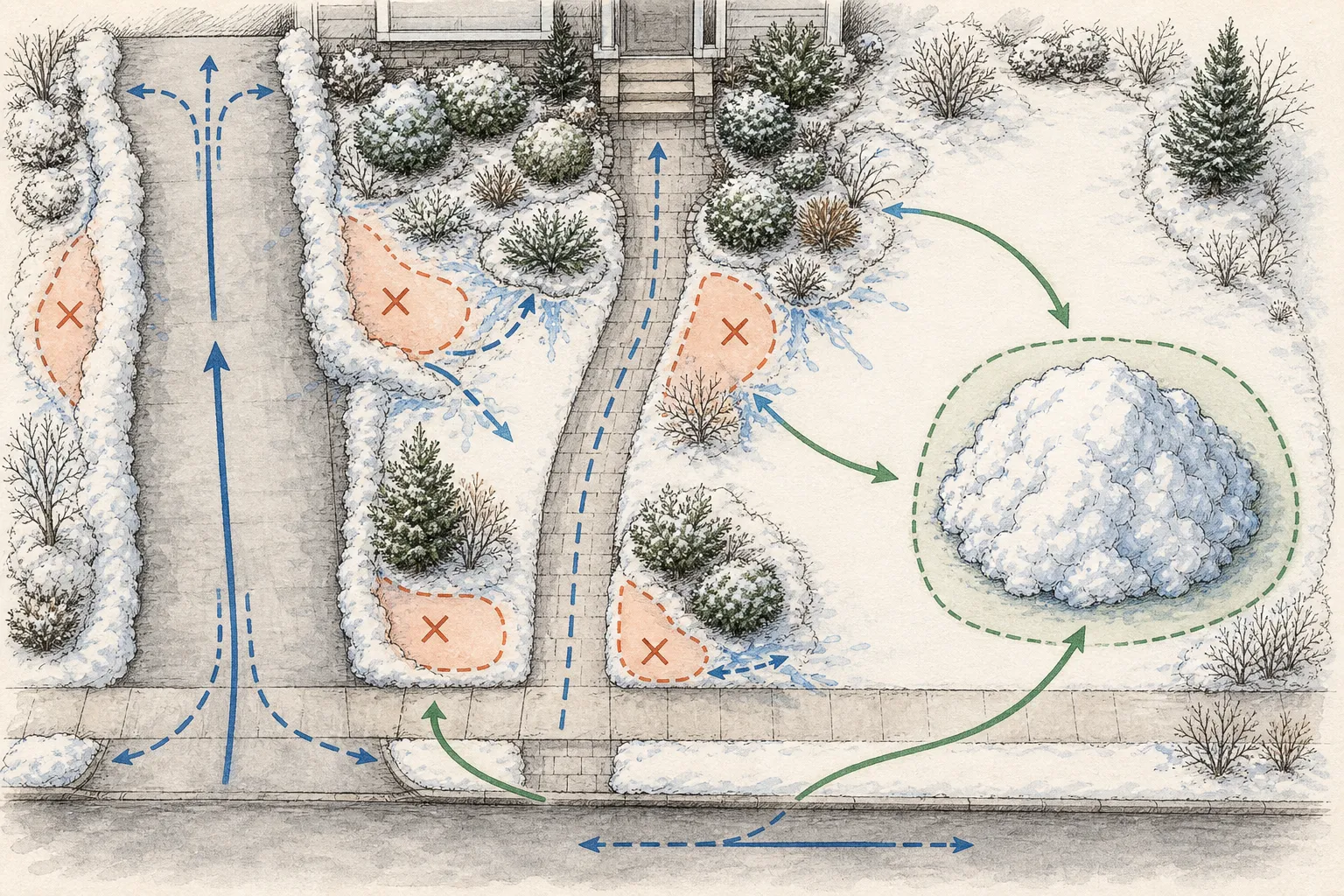
Draw the treated walk or road, curb, traffic direction, prevailing winter wind, snow-storage edge, slope, drains, and each affected plant on one simple plan. Add arrows for suspected spray and meltwater. Photograph the whole property edge before moving snow or pruning branches. The diagnostic plate belongs beside this wide view because a brown specimen gains meaning only when its exposed and protected sectors can be compared.
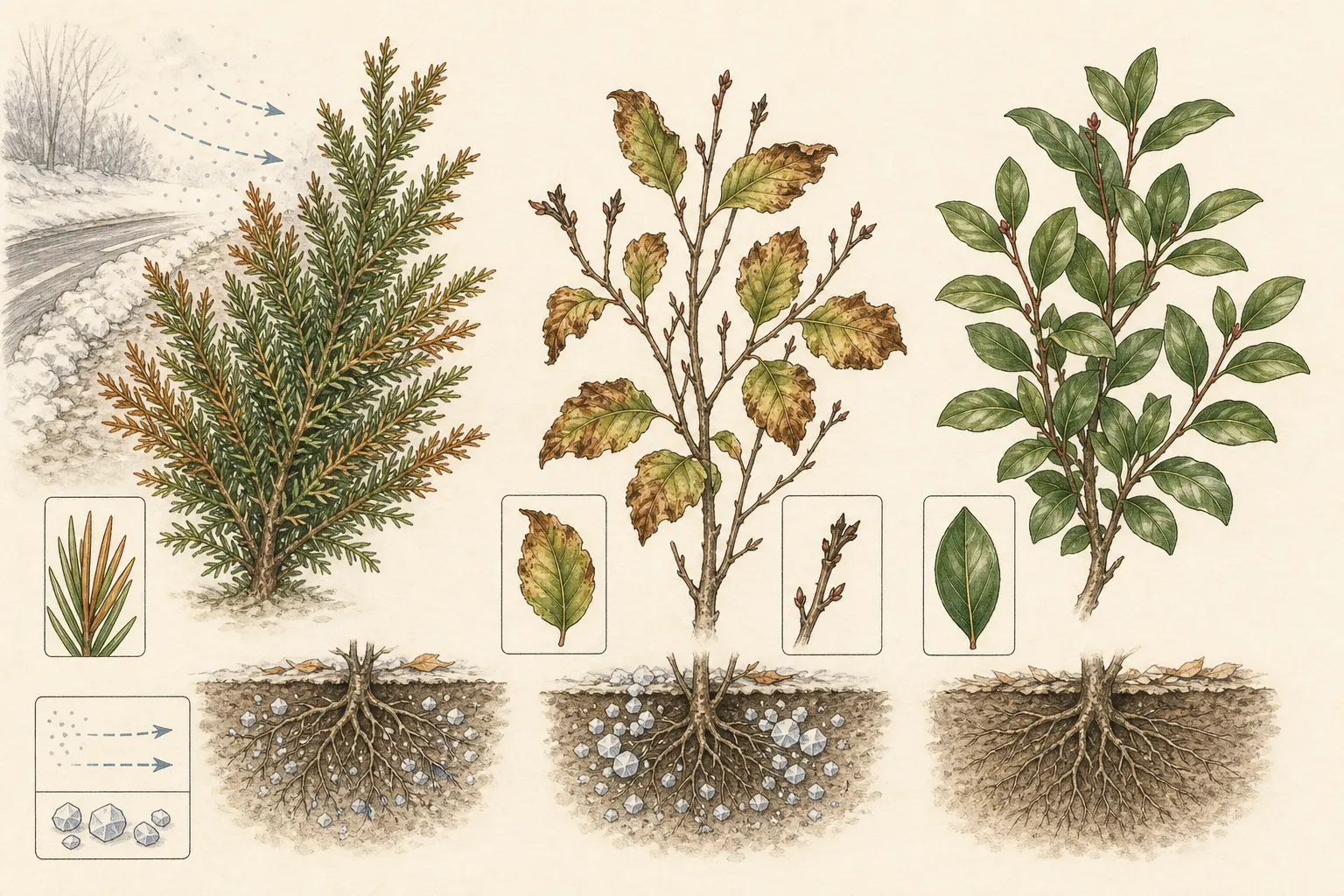
Airborne exposure usually leaves a directional gradient. Outer growth facing traffic or a treated walk bears the strongest injury, and branches protected by a wall, the plant canopy, or snow may remain greener. Check plants at increasing distances along the same exposure. A sheltered branch on the affected shrub is especially valuable because it shares the cultivar, root system, soil, and much of the winter weather.
Root-zone exposure follows topography. Look for delayed shoot growth, marginal scorch, or general decline where salty snow was stacked, a plow berm melted, or runoff pooled in a low compacted pocket. The shoot pattern can encircle the plant because roots distribute the stress beyond the entry point. Mark both the inflow and the place where water can leave; the outlet determines whether any flushing proposal is physically credible.
Test every apparent match against a competing explanation. Winter burn usually tracks drying sun and wind more closely than a mapped deicer route. A sharply bounded dead branch with sunken or discolored bark favors localized injury or disease. Uniform decline across road-facing and protected tissue raises questions about planting depth, root damage, drainage, or earlier drought. Several stresses can share one shrub, so the map may support salt as a contributor while another problem still needs attention.
Species identity controls the strength of every comparison. Salt tolerance can differ between aerial deposits and contaminated soil, and nursery cultivars may respond differently within a genus. Record the exact plant name where it is known, plus age and establishment history. When identity is uncertain, use the sector pattern inside one shrub as primary evidence and treat neighboring plants as supporting observations only.
Keep the diagnostic boundary visible through bud break
Brown foliage can remain attached above viable buds, and dormant deciduous twigs can look lifeless before bud scales expand. Select representative shoots on the exposed face, interior, and sheltered rear, then label and photograph them at matching distances from the tip. Species-appropriate bud and bark checks belong on a few sample twigs. The rest of the canopy stays intact long enough to reveal whether injury follows spray height, tissue age, or a branch-specific lesion.
Pruning becomes appropriate after live buds or new shoots define the surviving framework, provided a hazardous broken limb does not require earlier control. Clean cuts then remove confirmed dead wood while preserving healthy structure. Progressive wilt, expanding bark discoloration, or vascular staining calls for a labeled sample and local diagnostic service. That evidence protects the shrub from a large salt response applied to a canker or other localized disorder.
Build a comparison that can survive the investigation
Choose the control before treatment begins. The best option is matching tissue on the protected side of the same shrub; a nearby plant of the same species, cultivar, age, soil setting, and care history is the next choice. A different ornamental may tolerate salt very differently and gives only background context. Mark the comparison on the map so later maintenance crews leave it available.
Use fixed photographs to hold the comparison steady. Include the curb or treated walk, snow line, entire shrub, and a close view of labeled buds in the same sequence at each visit. Record weather, thaw stage, irrigation, pruning, and changes to snow storage. A green response after a milder spring has limited diagnostic value unless the exposure conditions are recorded with it.
Keep samples connected to their origin. A twig from the road face, one from the sheltered face, and soil from a runoff pocket require separate labels and clean collection methods supplied by the receiving laboratory. Soil and tissue laboratories may specify timing because spring rain can change soluble salt readings. Contact the service before sampling when the result will determine an expensive removal or a major soil intervention.
Protect the comparison from accidental mixing. Carry salty snow and sweepings to the approved destination for the property, away from the marked control and garden soil. Use clean tools for tissue samples, package each location separately, and write the branch or soil-point code on the container immediately. A sample labeled only with the shrub name loses the directional evidence that made it useful.
Test the route by which damage could have arrived
Reconstruct the winter operation while details are still available. Note the deicer product, labeled application pattern, treated surface, plowing direction, traffic spray, and every place slush or snow was deposited. The overhead exposure plan makes this route test visible. A direct line from treated pavement to damaged tissue is stronger evidence when a similar sheltered sector escaped the same pattern.
Watch a thaw or rain from pavement to outlet. Meltwater that crosses the curb, enters one bed corner, and stalls beside the root zone establishes a plausible soil pathway. Water that bypasses the affected plant weakens that explanation. Observe from firm ground because foot traffic can compact saturated soil and alter the very infiltration pattern under review.
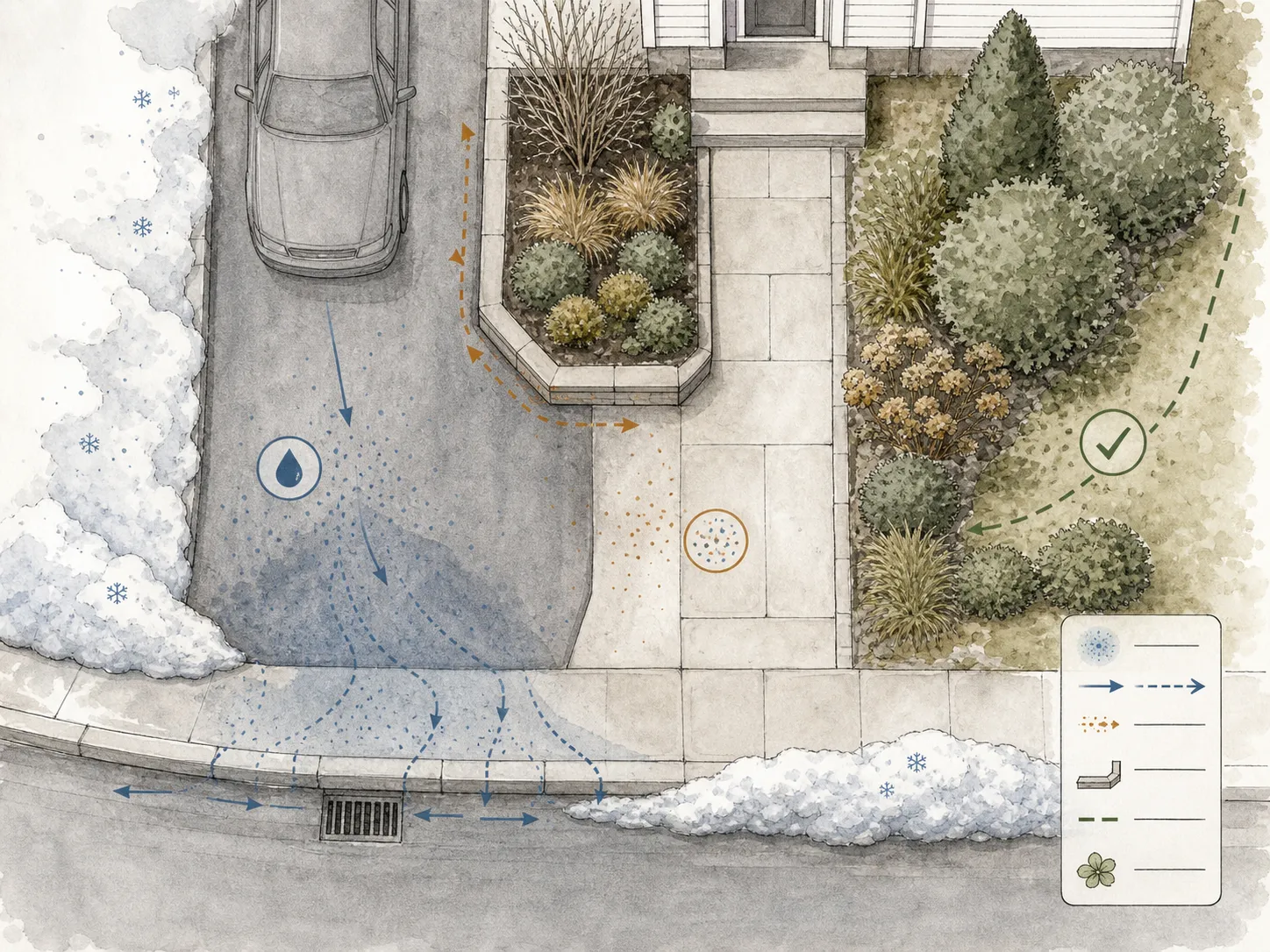
Laboratory analysis is most useful when two plausible actions would diverge. A local soil or plant laboratory can advise whether soluble salts, sodium, or tissue chloride should be measured, which material to collect, and how quickly it must arrive. A positive result still needs the map: a mixed sample from the whole bed cannot show whether exposure came from one runoff channel.
Interpret a salt result at the sampled place and date. Rain, irrigation, frozen ground, soil texture, and sample depth can change the concentration that a laboratory receives. Pair a runoff-pocket result with a comparison collected under the laboratory's directions, then ask what the reported method means for that plant and soil. A number detached from its location cannot distinguish an old residual dose from a pathway that remains active each winter. Repeat the paired locations when the laboratory recommends follow-up, keeping their depths and labels consistent.
Evaluate drainage before adding fresh water. A permeable profile with a confirmed outlet may allow locally recommended leaching after the salt source has been removed. Standing water, smeared clay, a high water table, or runoff toward another planted area changes that decision. In those settings, source control and drainage assessment come first because extra water can prolong root oxygen stress or move chloride into a new pocket.
Match recovery work to the confirmed pathway
For a spray pathway, reduce the dose reaching buds and foliage. Mechanical snow removal, careful placement of the labeled deicer, sweeping loose granules from dry pavement, greater setback, and a securely positioned winter screen can all reduce exposure. Traction and roadway safety remain controlling requirements. Select the measure that fits the treated surface and local rules, then document its location for the next comparison.
For a root-zone pathway, move future snow storage and redirect surface flow to a safe outlet. Soil moisture should remain appropriate for the species while the shrub rebuilds roots and shoots. Reserve added nutrients for a demonstrated need during active growth. Fertilizer cannot remove chloride, restore a desiccated bud, or correct the physical route that delivered salt.
Correct associated stresses that the comparison actually reveals. Expose a buried root flare carefully, restore an appropriate mulch boundary, protect wet soil from traffic, and repair an irrigation fault within the existing root system's tolerance. A deep drainage defect or major root excavation deserves specialist planning. Layered corrections make sense only when each action has its own evidence and follow-up sign.
Recovery is a woody-plant process measured in buds, roots, and new extension, not an overnight return of green color. Maintain ordinary species-appropriate care and keep the mapped sectors readable. Extra irrigation in a wet pocket and strong nitrogen growth can both obscure the response. The next flush should show whether surviving roots and buds can support balanced growth after the exposure route is reduced.
Reduce the next winter dose before snow arrives
Prevention begins with the snow plan. Assign storage areas that drain clear of susceptible roots, keep plow berms from enclosing shrubs, and preserve access to a known outlet. Mechanical removal lowers the chemical load needed for safe travel. Apply any deicer according to its label and current conditions, concentrating it on critical surfaces while collecting excess granules once the pavement is dry.
A screen can intercept splash where adequate setback is impossible. Position it between the treated route and the plant with secure supports, clearance from branches, and an open path for inspection. The barrier must not channel slush into the same root zone or create a traffic hazard. Remove or adjust it on schedule as shoots expand.
Repeated exposure may justify a longer-term planting decision. Compare aerial and soil salt tolerance separately because a species can differ between those routes. A berm or revised grade can keep runoff outside the active roots when the site has a safe outlet. Relocation or replacement becomes reasonable after the mapped pattern recurs and feasible source controls still leave the shrub in the dose path.
Judge recovery across a growth cycle and another winter
At bud break, record the proportion and position of shoots that resume growth, the length of new extension, and whether fresh injury continues beyond the original boundary. Revisit the same marked sectors after summer stress and after the next winter. Improvement on the protected or treated route supports the management change; equal decline across the control and exposed sectors reopens drought, root, and disease questions.
Keep the final decision proportional to the plant's response. A shrub with a sound framework and vigorous replacement shoots may need only deadwood pruning and lower future exposure. Progressive branch death, persistent root-zone salinity confirmed locally, or repeated failure despite source control can support replacement. Carry the map, sample results, photographs, and species identity into that choice so a new plant is not placed into the same unresolved pathway.
Immediate safety work remains separate from the slow diagnosis. Secure a broken limb, blocked sightline, unstable barrier, or icy public route with the appropriate qualified help while preserving photographs and samples from safe positions. Widespread dieback, uncertain chemical exposure, or runoff beyond the property also warrants local expertise. The diagnostic record lets that consultation begin with a defined route, a comparison, and correctly labeled brown twigs. That context also preserves the untreated reference for follow-up.
Diagnosis
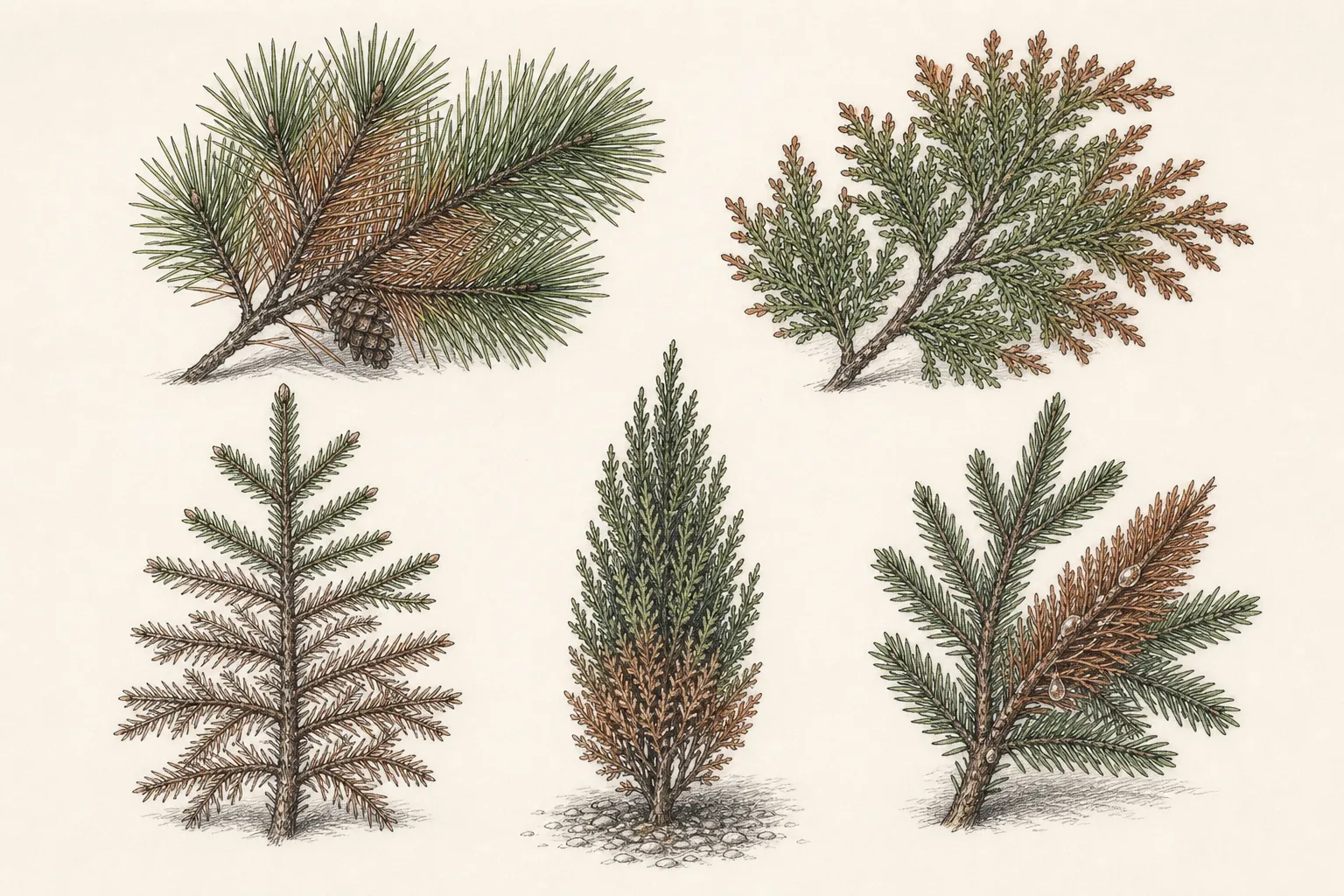
Outer needles, buds, or twig tips form a browned band on the face nearest a salted road or walk. Interior growth and branches shielded by a wall, snow, or the plant's own canopy retain better color. The boundary often corresponds to traffic spray direction or height.
- Check
- Place traffic direction, treated pavement, wind, snow shelter, and the affected outline in one wide photograph. Compare equal-aged shoots at the road face, interior, and rear. A dose-like decline toward the route supports spray; equal injury around the canopy points elsewhere.
- Cause
- Traffic, a snowblower, or wind dispersed salty droplets onto exposed foliage, buds, and young bark. Deposits drew water from tissues and introduced chloride at the aerial surface. The outer road-facing shell received a larger dose than sheltered branches.
- Action
- Lower aerial exposure through prompt mechanical snow removal, label-directed deicer placement, collection of loose granules from dry pavement, greater planting setback, or a secure splash screen. Preserve safe footing and road operation as the first constraint. Rephotograph the same canopy sectors after the next winter.
Evergreen tips or leaf margins brown across the side exposed to winter sun and wind, yet the mapped traffic and walkway route does not fit. Buds beneath the damaged foliage may remain viable. Similar injury on plants remote from deicer strengthens the weather explanation.
- Check
- Match browned foliage with winter sun, wind, and cold events, then inspect protected buds and bark for viability. Check similarly exposed ornamentals beyond the deicer corridor. Weather-aligned damage across those plants gives desiccation more weight than an isolated curbside assumption.
- Cause
- Winter desiccation depleted evergreen foliage while cold, dry, or damaged roots supplied too little replacement water. Sun and prevailing wind created a directional burn that resembles spray injury. Weather exposure, not the treated-surface map, governs the strongest boundary.
- Action
- Support normal species-appropriate moisture before winter and provide feasible wind shelter for susceptible evergreens. Let bud break identify living wood, then remove confirmed dead tissue with clean cuts. Nutrient additions follow an established need during active growth; they cannot rehydrate injured foliage.
Bud break is sparse, shoot extension is short, or leaf margins scorch around the soil where a plow pile melted. Symptoms cluster beside the runoff entry or low pocket, while the canopy lacks a clear splash-height band. Wet, dense soil may persist after surrounding ground drains.
- Check
- Observe thaw water from its paved source through the snow edge and into the bed. Mark ponding, drainage, and damaged roots on the plan. Ask a local laboratory for its soil or tissue protocol when a salt result would alter flushing, soil work, or replacement.
- Cause
- Salt-laden thaw water entered the active roots from stored snow or pavement runoff. Soluble salts restricted water uptake, while sodium may have reduced infiltration and aeration in susceptible clay. Concentration and poor drainage extended the contact period.
- Action
- Assign future snow to a drainage-safe storage area and divert meltwater clear of the roots. Consider fresh-water leaching only under current local guidance, after the salt source is controlled, with permeable soil and a confirmed outlet. Saturated clay first needs drainage assessment.
Road-facing tissue looks worse, but the sheltered sector also shows weak growth, buried stem bases, dry or saturated root balls, or a history of construction traffic. The contrast is real yet smaller than expected for a single spray event, suggesting that root stress altered the plant's tolerance.
- Check
- Compare the affected plant's protected sector with its exposed face, then inspect root flare, mulch depth, soil structure, root-ball moisture, and irrigation reach. Use a matching cultivar nearby as a second control where available. Record which weakness crosses both sectors.
- Cause
- Planting depth, compaction, drought, damaged roots, or uneven irrigation had already limited water uptake. Lower evaporative demand kept the sheltered side somewhat greener. A modest salt dose may still contribute, but the underlying root condition shapes the broad weakness.
- Action
- Relieve confirmed root-flare burial, mulch contact, accessible compaction, drainage trouble, or irrigation mismatch with root-conserving work suited to the site. Leave a marked comparison sector for one growth cycle. Use bud survival, shoot extension, and reduced new scorch as recovery measures.
A discrete limb remains dead after adjacent buds expand. Its edge follows one branch, wound, or patch of sunken and discolored bark more closely than the road face or snow line. Continued wilt or advancing discoloration marks an active localized problem.
- Check
- Follow the dead sector to its point of origin and inspect for wounds, sunken bark, discoloration, or continued wilt. Retain a labeled sample from the advancing edge. Local diagnostic review should precede pesticides, extensive pruning, or a site-wide salt treatment.
- Cause
- Canker, vascular dysfunction, sunscald, mechanical breakage, or another branch-level injury killed a localized sector. The causal boundary follows affected bark or vascular tissue and continues independently of the site's general deicer exposure.
- Action
- Send the advancing margin to a local plant diagnostic service with branch labels, exposure photographs, and the site map. Hold broad chemical treatment, replacement, and major canopy cuts until the result identifies the disorder. Salt prevention cannot arrest a canker or repair broken vascular tissue.
Related reading
Sources
- The effects of deicing salts on landscapes. University of Minnesota Extension. Source record · Accessed 2026-08-30.
- Winter Salt Injury and Salt-tolerant Landscape Plants. University of Wisconsin–Madison Division of Extension. Source record · Accessed 2026-08-30.
- Salt Damage in Landscape Plants. Purdue University Extension. Source record · Accessed 2026-08-30.