Grow · snow storage planning for ornamental shrubs
Plan Snow Storage That Spares Ornamental Shrubs
Choose a repeatable snow-pile zone and melt path that stay out of shrub branches, crowns, root zones, and salt splash so winter cleanup does not become the planting's main stress event.
Published Last updated
In this guide
- Decide where snow will go before the first storm
- Keep salted snow out of branches, crowns, and root zones
- Mark the plow edge, sightlines, and shrub crowns before snow arrives
- Separate clean storage snow from street or walkway snow
- Plan the melt path as carefully as the pile
- Use alternatives and tougher plantings where distance is impossible
- Review the zone after thaw and revise it for next winter
- Recheck the map after the first plowable storm
- Steps
Decide where snow will go before the first storm
Snow storage becomes a garden problem the moment it is treated as leftover space. The pile goes where the shovel, plow, or snow blower can reach most easily, and in many home landscapes that means the edge of an ornamental bed. After a few storms the shrubs are carrying mechanical load, the soil is receiving concentrated melt, and the same pile is often laced with road grit or deicing salts. By spring the plant looks inexplicably poor, even though the damage was designed into the winter cleanup routine. A snow-storage plan prevents that cycle by deciding in advance where the volume, the meltwater, and the dirty residue are allowed to go.
The need for planning is not theoretical. Iowa State describes how deicing salts accumulate in soil and create physiological drought because roots cannot take up water normally even when moisture is present. Nebraska adds the practical winter-maintenance warning that deicers piled around plants can damage soil and branch tissue, and it explicitly advises against piling snow in the same location each time. Wisconsin carries the argument into the residential landscape, noting that snowmelt and plowed deposits can carry salts into the root zone and that the resulting decline is often mistaken for something else. Snow storage is therefore a siting decision every bit as real as where you plant the shrub in the first place.
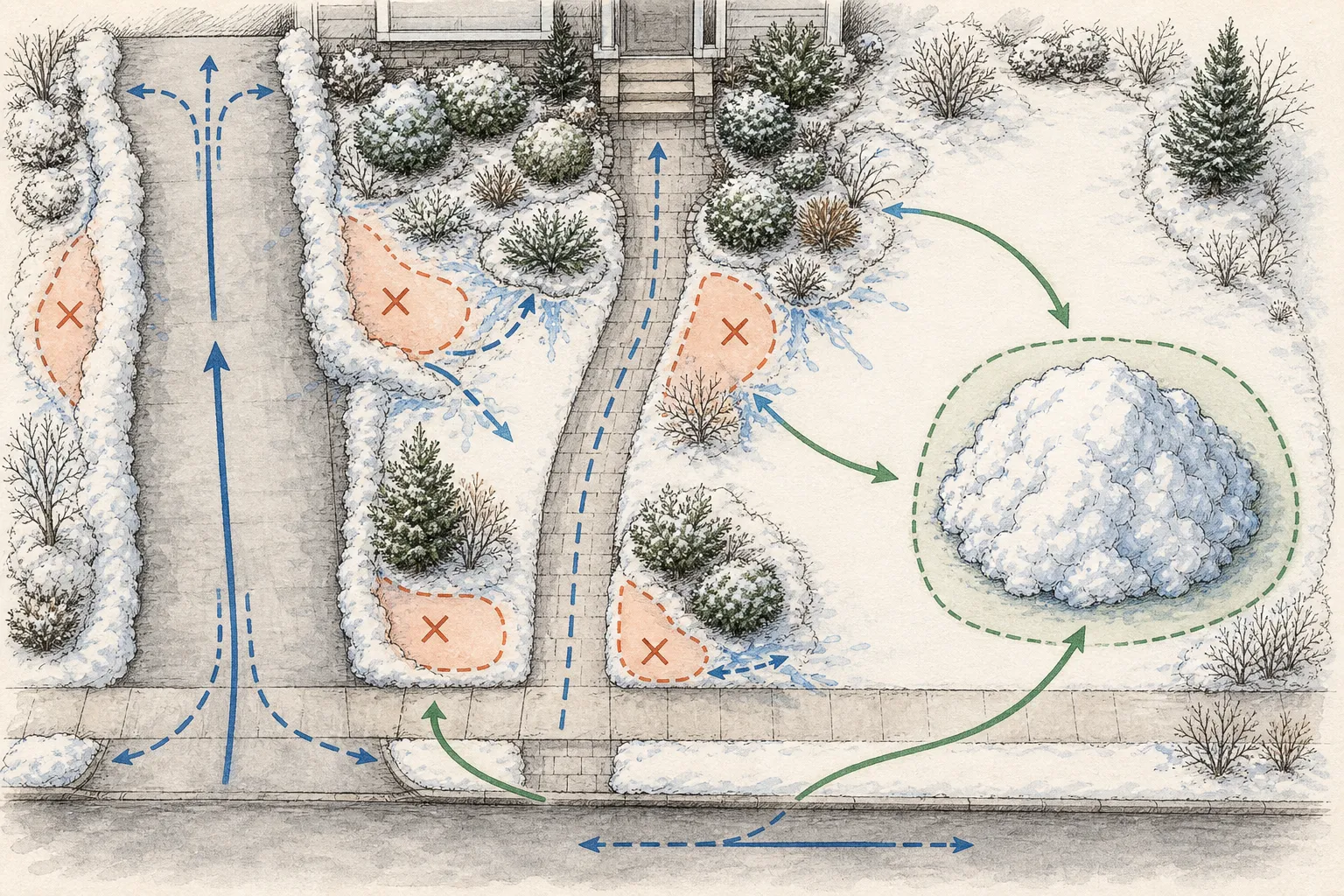
When the pile zone is chosen before winter, the rest of the garden can be arranged around it honestly. Paths can stay clear, shrubs can be kept out of the mechanical corridor, and meltwater can be sent where it is least damaging. When the pile zone is improvised, the whole garden becomes the emergency area. That is the outcome you are trying to prevent.
Keep salted snow out of branches, crowns, and root zones
Not all snow is equal. Clean snowfall lifted from a quiet part of the garden does not carry the same risk as snow scraped from sidewalks, drives, or roadside splash zones. Wisconsin explains that sodium chloride can injure plants both through root-zone accumulation and through spray or direct contact. Iowa State describes the same root-zone problem in physiological terms, while Nebraska adds the repeated-pile warning. The implication for design is clear: if a pile contains the dirty residue of winter maintenance, it does not belong in direct contact with ornamental shrubs or in the melt path feeding their roots.
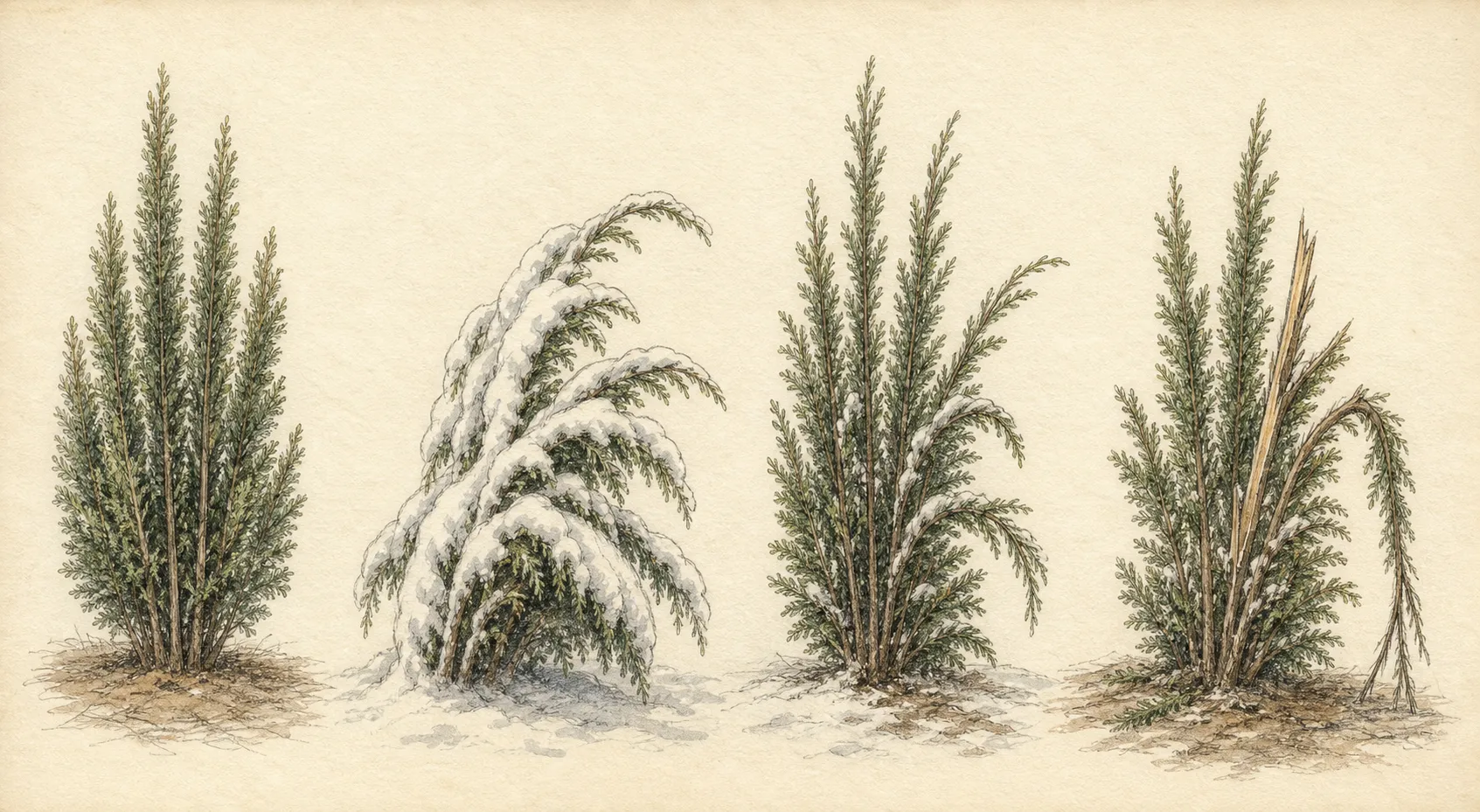
Branches suffer first from physical load and proximity. A heavy ridge leaned against the shrub bends stems, opens crowns, and traps moisture where air should move freely. The root zone suffers more slowly as the pile melts in place and carries dissolved salts or oxygen-poor saturation through the same soil pocket again and again. The damage pattern may only become obvious in spring, which is why gardeners often misattribute it. The pile and the plant were together for weeks; the visible decline simply lagged behind the cause.
Treat the boundary around shrubs as a no-storage zone, not as the last available edge once the drive is clear. Even a hardy shrub can be turned into a chronic repair job if every storm pushes the same dirty mass into its crown or dripline. Planning the winter cleanup route is far easier than diagnosing the accumulated damage afterward.
Mark the plow edge, sightlines, and shrub crowns before snow arrives
A pile zone that looks obvious in summer can disappear once the first deep snow compresses edges and bed lines. Mark the route and the no-storage zones while the ground is still readable. That may mean flags at key shrub edges, a maintenance map kept with the snow equipment, or a simple agreement in the household about which side of the drive receives the pile. The point is to keep winter convenience from erasing the planting plan. A shrub buried by accident during one storm often gets buried again because the first pile changed the route for the second.
Sightlines matter as well. Snow often ends up in the place that feels safest for movement, not the place that is safest for plants. If a corner needs clear visibility for backing out, the pile will migrate there regardless of the border design unless another legal and practical zone is reserved in advance. Plan for the volume honestly. A tiny token corner cannot hold the real winter load of a long drive. When the reserved zone is too small, the excess always spills into the plantings you meant to protect.
The same map should include the mature outline of the shrubs, not just their summer centers. Winter piles tend to expand into branch space even when the crown base seems clear at first. Broad, mounded shrubs are especially easy to overrun because snow hides their outer framework. Mark for the plant you expect in maturity, not only for the plant you can still see in the first winter after installation.
Separate clean storage snow from street or walkway snow
A practical home landscape often needs more than one snow rule. Snow moved from a deck or quiet path may be acceptable in a temporary lawn or open utility zone. Snow carrying sand, salt, or street splash should be sent somewhere else again, ideally where the melt path does not feed ornamental roots. This distinction is more useful than a vague instruction to be careful with snow. The material itself changes the horticultural risk. Wisconsin and Iowa State both make that clear by emphasizing salt accumulation in soil rather than treating all winter moisture alike.
The more traffic a snow source sees, the less suitable it is for the planting edge. Driveway piles are often the worst because they combine plow-compacted volume, road residue, and concentrated meltwater in one mass. Sidewalk piles can be almost as damaging where deicers are used heavily and runoff is forced directly into foundation beds. A shrub can survive occasional clean snow resting nearby far more readily than repeated exposure to dirty, salted slush packed against branches and roots. Design with that hierarchy in mind, and the pile zones begin to make much more sense.
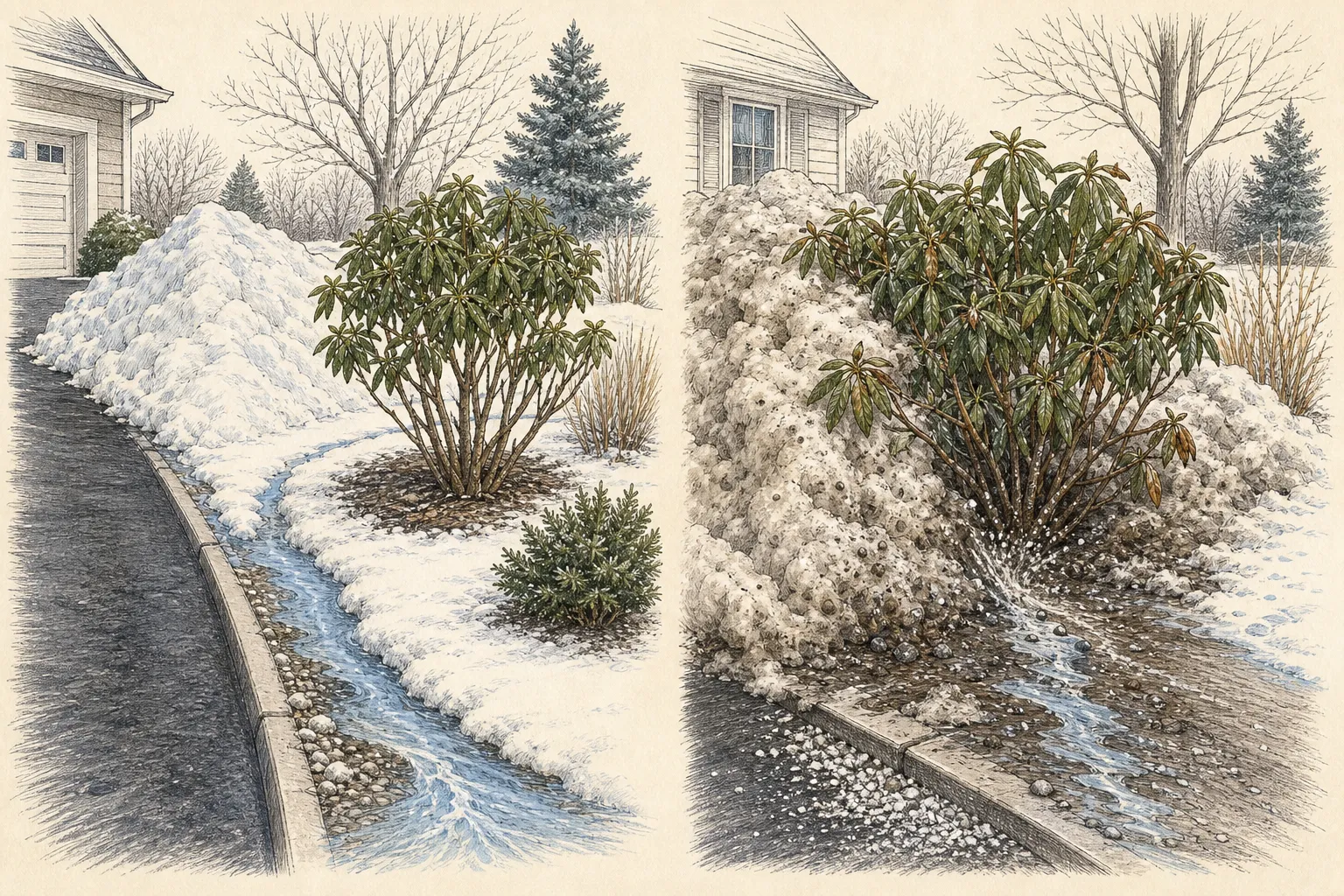
This separation also helps you choose where to use alternative traction materials or reduced salt rates. If one unavoidable route passes close to ornamental plantings, that route becomes the highest-priority place to reduce sodium chloride use or to increase pre-clearing shoveling before any deicer is scattered. Planning the pile and planning the deicer strategy are part of the same conversation.
Plan the melt path as carefully as the pile
A snow pile does not stay where it is placed; it becomes water. That melt path can be more damaging than the pile itself because it repeats through freeze-thaw cycles and can carry salts or grit deeper into the border. Wisconsin specifically tells gardeners to consider where snowmelt goes when deciding where to pile snow that contains salts. That is the critical design sentence. The question is not only where the mound looks harmless in January. It is where the resulting water will travel in February and March when soil is cold and infiltration is uneven.
Look for the outlet before you approve the storage zone. If meltwater from the pile will run directly through a shrub bed, along the root flare of a small tree, or into a low pocket that already struggles with drainage, the location is not safe no matter how tidy the pile appears. The best snow-storage zone has both space for the snow mass and a downstream route that bypasses ornamental roots or disperses harmlessly into a tolerant area. That route can be subtle on a base map and very obvious in a thaw. Watch it before the habit is established for the season.
The plan may lead you to sacrifice a bit of open lawn, a utility strip, or another non-ornamental area so the melt can spread where it does less harm. That is often a better trade than asking a shrub border to absorb the water, the salts, and the mechanical disruption every winter. Garden design sometimes means protecting the beautiful areas by giving the practical tasks an honest home elsewhere.
Use alternatives and tougher plantings where distance is impossible
Some properties simply do not offer generous distance between hardscape and planting. In those cases the plan has to reduce intensity rather than pretend the risk disappears. Wisconsin recommends considering alternative deicers such as calcium chloride, magnesium chloride, or calcium magnesium acetate when appropriate, and both Wisconsin and Nebraska stress using less salt overall by clearing as much snow as possible first. Those are practical reductions, not perfect solutions. They matter because the pile or runoff reaching the shrubs may then contain less sodium and less total dissolved load.
Plant choice also becomes part of the winter-operations strategy. If one frontage inevitably receives some splash, some narrowed snow route, or some reflected winter stress, reserve the most sensitive shrubs for quieter beds and use tougher species where the exposure cannot be eliminated. This is not lowering the design standard. It is matching the plant palette to the maintenance reality of the site. A refined border that needs annual rescue from snow storage was never truly refined in the first place.
Physical markers, low edging, or temporary winter barriers can also help where the pile line repeatedly drifts toward the plants, but these should support the route plan rather than replace it. The fundamental answer remains the same: lower the salt burden, separate dirty snow from roots when possible, and accept that some parts of the property are structurally better suited to winter service than to vulnerable ornamentals.
Review the zone after thaw and revise it for next winter
The snow-storage plan should be judged after melt, while the evidence is still visible. Walk the pile zone and the downstream route. Note where dirty residue settled, which edges stayed wet longest, whether the melt reached ornamental roots anyway, and whether branches or mulch were displaced by the pile. That review is not optional bookkeeping. It is how the next winter becomes easier. A zone that looked sensible during the first storm may prove poorly graded or too close to the shrubs once the full melt pattern is revealed.
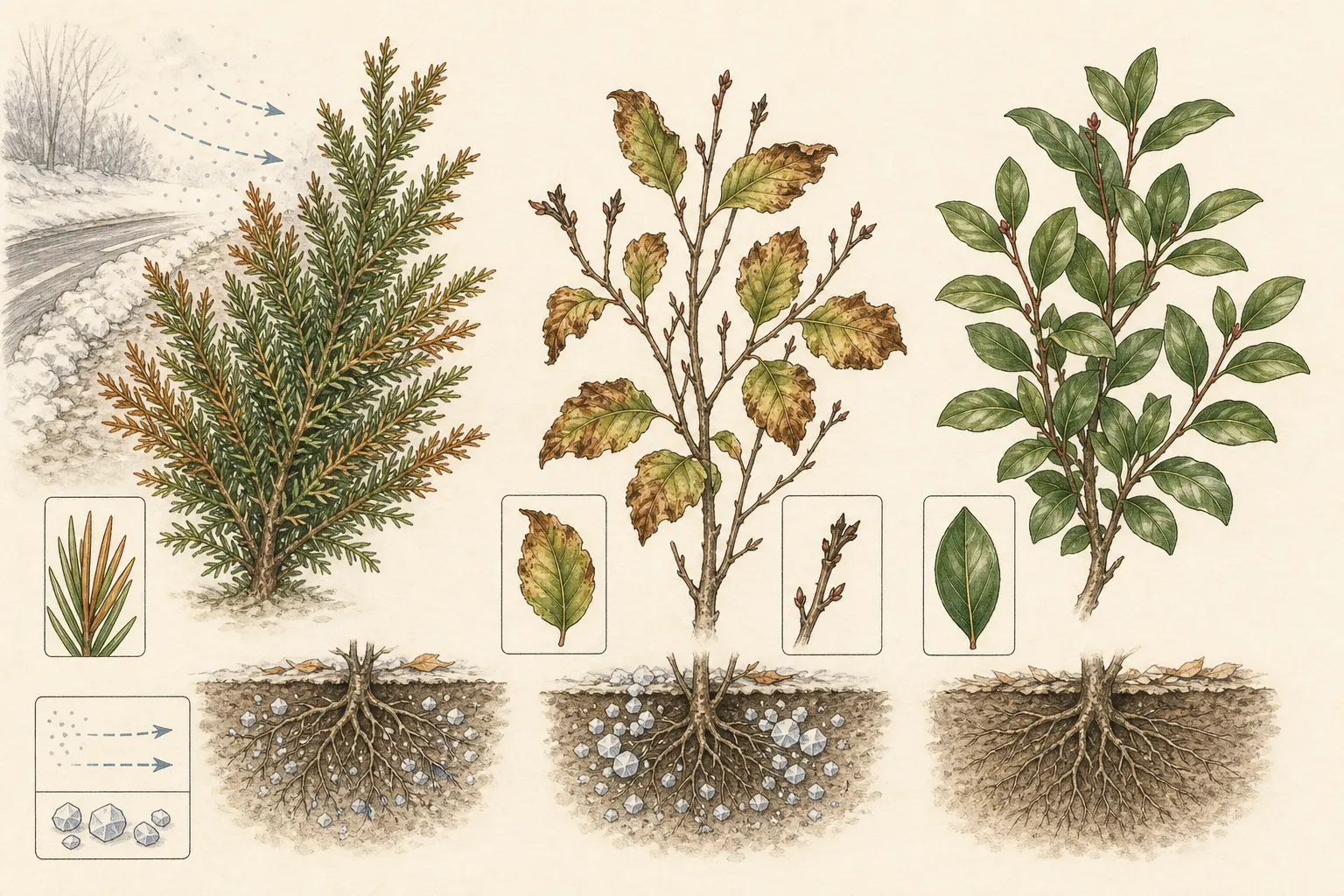
Use spring plant response cautiously but honestly. Browning concentrated on the pile side, branch dieback near a salted runoff line, or poor green-up in the same narrow strip all point back to winter handling. Because salt and melt damage often show late, the inspection needs both the thaw map and the spring foliage. Neither alone is enough. The best revisions come from matching what the water did with what the plants later revealed.
By the second winter the plan should be simpler, not more elaborate. The ideal outcome is one designated pile zone, one clear route for snow movement, one understood melt path, and fewer surprises for the shrubs. When winter operations become predictable, the ornamental planting finally has a chance to behave like a design instead of a recurring accident scene.
Recheck the map after the first plowable storm
Watch where the first substantial pile actually spreads after settling and thawing. Mark branch contact, salt splash, blocked drainage, or a narrowed walkway, then move the boundary stake before the next storm. A storage plan becomes reliable only when observed snow volume and equipment turning space replace the tidy assumptions drawn on paper.
Steps
- Level
- moderate
- Time
- One route-planning session plus one thaw review
- Tools
- Property sketch or printed plan, Snow-route markers or flags, Camera or phone for thaw review, Shovel or plow route notes
- Materials
- Designated pile-zone map, Lower-salt or alternative deicer where needed, Optional temporary markers for shrub no-pile zones
- 1Draw the winter service routes
Map how snow is normally removed from the drive, walk, and entry before a storm forces the decision. Include where the shovel or plow naturally pushes snow and how much volume each route creates. A realistic route plan is the foundation of a realistic snow-storage plan.
- 2Mark shrubs and no-pile zones
Identify the mature branch spread and root zone of nearby shrubs, not just the visible center of each plant. Treat those areas as no-storage space. If the border edge disappears under snow easily, mark it before winter so the pile line does not migrate into the shrub simply because the bed became invisible.
- 3Separate dirty snow from cleaner snow
Send roadway, driveway, or heavily deiced sidewalk snow to the least plant-sensitive zone available. Keep cleaner snow from quieter surfaces distinct when practical. The salt and grit content of the pile changes the horticultural risk, so the source of the snow belongs in the plan.
- 4Choose the melt route, not only the pile spot
Approve a snow-storage location only after checking where the water will run as the pile thaws. If the melt path crosses an ornamental shrub bed or low root pocket, move the pile. The safe winter zone is the pile plus its runoff route together.
- 5Reduce salt load where shrubs are close
Clear snow physically first, then use the least effective amount of deicer needed for safety. Where plantings are close, consider lower-impact materials and keep dirty runoff out of beds whenever possible. Reducing what enters the pile is often easier than fixing the soil after winter.
- 6Inspect after major thaw
Walk the route after melt and record where dirty residue, standing water, or branch damage actually occurred. Compare that evidence with the mapped pile zone. A spring review turns a one-winter tactic into a repeatable operating plan.
- 7Revise before next season
Shift the pile zone, the route, or the nearby planting if the first season still pushed snow or runoff into ornamental shrubs. Winter maintenance should become simpler over time. If the same bed keeps receiving the same snow burden, redesign the route or the border before the pattern hardens into habit.
Related reading
Sources
- Effects of Deicing Salts on Landscapes. University of Minnesota Extension. Source record · Accessed 2026-08-19.
- Using Deicing Salts in the Home Landscape. Iowa State University Extension and Outreach. Source record · Accessed 2026-08-19.
- Snow and Ice in the Landscape. University of Nebraska-Lincoln Extension. Source record · Accessed 2026-08-19.
- Reducing Deicing Salt Damage This Winter. University of Wisconsin-Madison Extension. Source record · Accessed 2026-08-19.