Grow · prevent garden weed seed
Stop Garden Weeds From Setting Seed Before You Dig the Roots
Separate urgent seed-head removal from later root control, identify annual and perennial weeds, and clear flower borders in small sections without scattering seed or damaging ornamental crowns.
Published Last updated
In this guide
- Make seed containment the first pass
- Contain mature seed before disturbing the weed
- Identify the weed and its life cycle
- Map crowns, roots, and access before digging
- Pull annuals when soil releases the roots
- Match root removal to the weed’s life cycle
- Use cutting as a deliberate containment tool
- Restore the opening before new weeds occupy it
- Use herbicides only from identification and label
- Follow the patch until the life cycle is broken
- Protect wanted self-sown flowers from the weed pass
- Close the loop on imported plants and materials
- Steps
Make seed containment the first pass
When weeds are flowering or forming seed, the urgent job is to stop dispersal. Carry sturdy bags or a covered container into the bed before pulling. Enclose mature heads, then cut or bend them into the bag with minimal shaking. Do not drag whole seeding plants across paths and ornamental foliage. Root removal can follow; scattered seed creates work for future seasons.
Treat unknown maturity conservatively. Seeds can continue ripening on cut plants in some species, and heads that look green may already contain viable seed. Bag them instead of placing them on an open compost pile. Local guidance should determine disposal for invasive or noxious weeds. Do not transport regulated material beyond permitted routes.
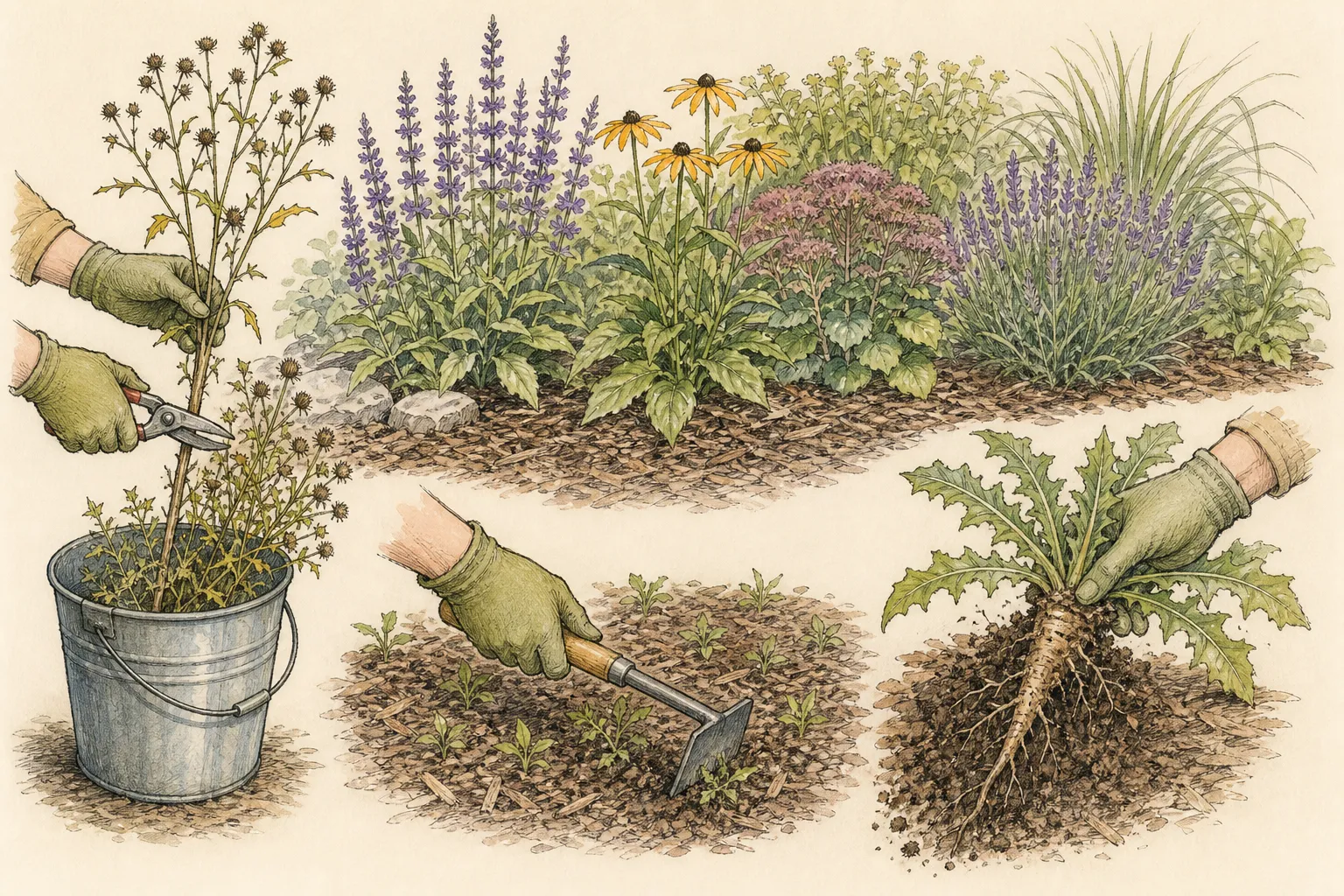
Work from the least infested area toward the densest patch so clothing, gloves, and tools do not carry seed into clean beds. Check cuffs, shoe treads, kneeling pads, and mower equipment before leaving. A five-minute equipment check often prevents the exact spread the hand-weeding session was meant to stop.
Contain mature seed before disturbing the weed
Secure seed-bearing heads before pulling or moving the plant, then identify its life cycle and other spread routes. Match pulling, cutting or root work to that identity while protecting desirable crowns. Follow the patch through the next reproductive stage. Removing visible tops once does not demonstrate that seed release or regrowth has stopped.
Identify the weed and its life cycle
Photograph the whole plant, leaf arrangement, stem, flower, seed head, and root before removal. Annual weeds rely heavily on seed and are often controlled by early pulling or cutting before maturity. Biennials form a vegetative first-year stage and flower later. Perennials can return from crowns, rhizomes, stolons, bulbs, tubers, or root fragments. The correct effort depends on which system the plant uses.
Use regional Extension weed keys and invasive species resources. Common names can refer to several plants, and seedlings are easily confused with desired self-sowers. Mark uncertain plants and observe until identity is clear enough to act, unless a mature seed head requires immediate containment. Keep one bagged specimen for identification when permitted.
Separate a volunteer ornamental from a weed by place and intent, but still consider behavior. A desirable species growing across a path or smothering a rare crown is a weed in that position. Invasive status is not subjective, however. A regulated species requires the prescribed control and disposal regardless of whether its flower is attractive.
Map crowns, roots, and access before digging
Locate desirable plant crowns, bulbs, surface roots, irrigation, and labels. Weeds often exploit the center of perennials where tools cannot enter easily. Pull foliage aside and mark the weed base. Do not plunge a fork through a daylily, tree root, or hidden dripline because the seed head made the job feel urgent.
Divide the bed into small sections and assign a working route. Begin near stepping access and finish each section through seed containment, root action, surface restoration, and labeling before opening the next. This prevents half-pulled plants and exposed roots from being forgotten when the gardener moves toward a more visible patch.
Photograph dense perennial tangles before lifting anything. If the weed cannot be removed without dividing the ornamental, schedule that work in a suitable season and keep cutting the weed before seed meanwhile. Repeated top removal can prevent reproduction and reduce vigor while a safe root-removal window is prepared.
Pull annuals when soil releases the roots
Water dry soil in advance or work after rain when the surface has drained. Hold the annual near its base and pull steadily, supporting nearby ornamental soil with the other hand. Shake soil back into the bed without scattering seed. If the stem snaps, loosen the root with a narrow fork rather than repeatedly tugging through a neighboring crown.
Large annuals may have already changed the light and soil around nearby plants. Remove them in stages if their canopy is supporting weak ornamental stems. Add a temporary stake before the weed comes out. Fill the root hole, water disturbed desirable roots if needed, and restore mulch. An empty cavity can dry the exact crown that survived the competition.
Hoeing or cutting young annual weeds at the soil surface is efficient in open areas during dry weather, but it is less suitable among closely spaced crowns and when flowers or seed are present. Keep the blade shallow. Deep cultivation brings buried seed to the surface and damages roots.
Match root removal to the weed’s life cycle
For taprooted weeds, loosen below the crown and remove as much of the root as practical without sacrificing important ornamental roots. Some species can resprout from remaining crown tissue; others are controlled when the growing point is removed. Identification determines the needed depth. Do not excavate an entire bed from a generic instruction to get every root.
For rhizomatous or creeping perennials, trace sections carefully and collect fragments. Work in manageable patches and expect follow-up. Rototilling can multiply the problem by distributing pieces. Where roots are inseparable from a valuable perennial, lifting and cleaning the ornamental during its appropriate division season may be more coherent than repeated blind digging.
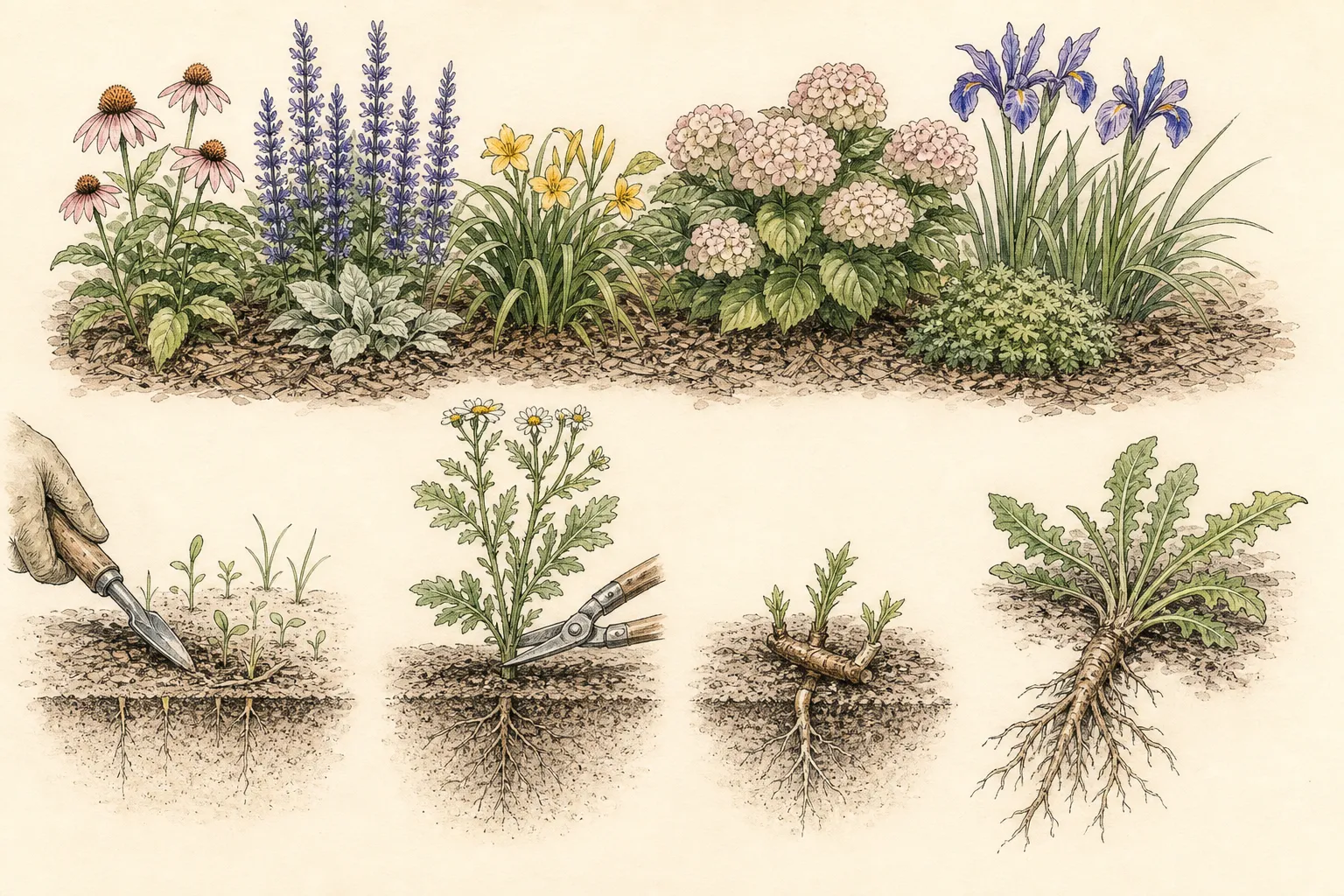
For bulbils, tubers, or brittle roots, use a screen or hand sorting where safe and avoid shaking propagules across the bed. Bag reproductive structures. Mark the patch and inspect new shoots promptly. One clean-looking session does not prove the underground system is gone.
Use cutting as a deliberate containment tool
When digging would harm tree roots, bulbs, or a dense perennial crown, cut the weed at or below the growing point before flowering and repeat as it regrows. The aim is to prevent seed and deplete reserves over time. Record dates and response. Random occasional cutting may only keep the weed short while it continues storing energy.
Use a narrow hand tool and protect desirable stems. Do not apply salt, vinegar, boiling water, or flame in a mixed border; these can injure soil organisms, roots, hardscape, and nearby plants. Household mixtures are not selective simply because their ingredients are familiar. Follow current local guidance for any chemical or heat-based method.
Covering can suppress some patches when a barrier can remain long enough and desirable plants are absent, but it changes moisture and soil temperature. Do not bury a mixed perennial bed under opaque material without a plant-specific plan. A surface mulch helps prevent new annual weeds; it is not reliable eradication for established perennial roots.
Restore the opening before new weeds occupy it
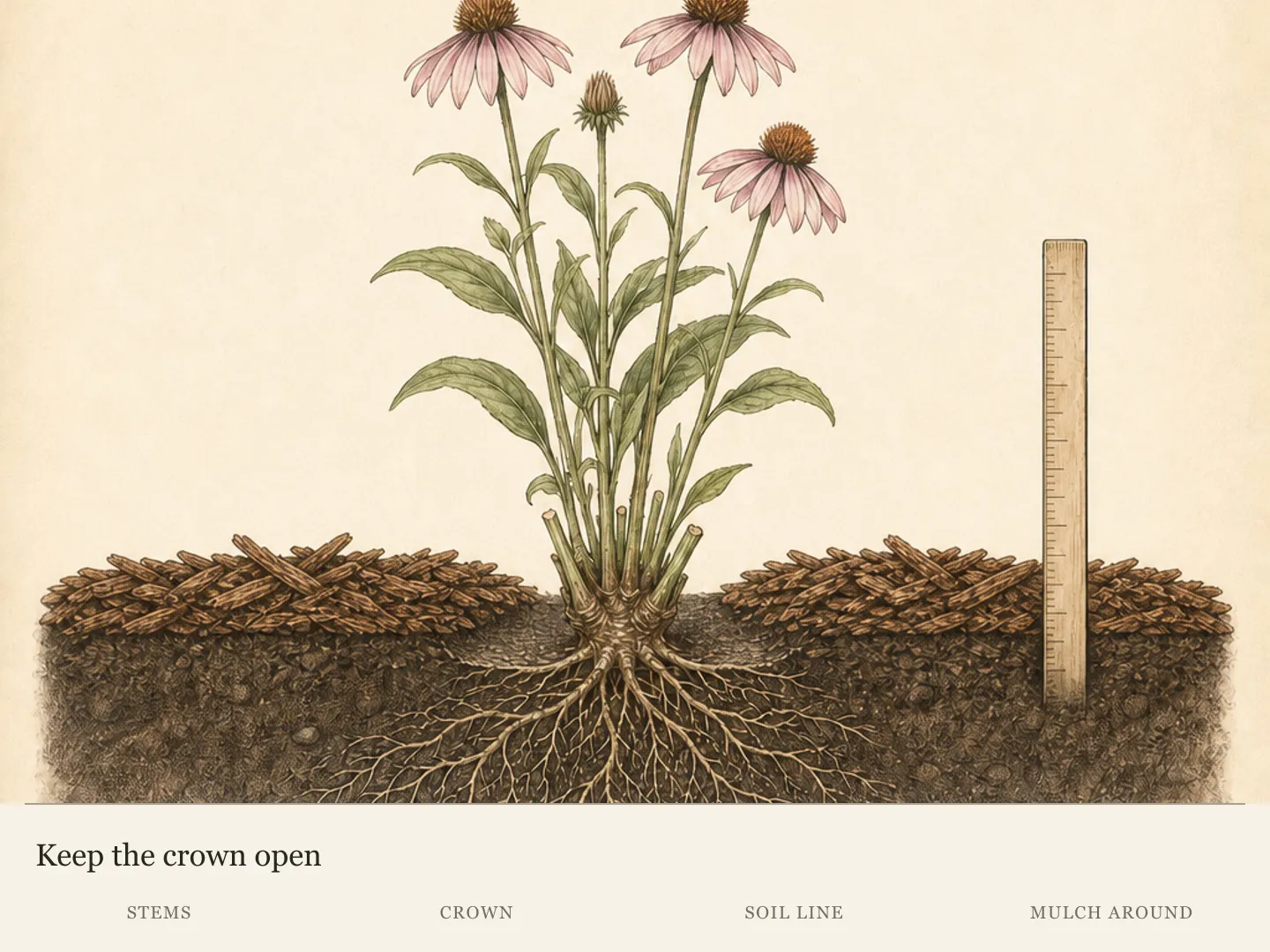
After removal, firm disturbed soil around desirable roots and water only if needed. Replace a moderate mulch layer while leaving crowns and stems clear. A bare sunlit patch invites another germination wave. Use compatible ground-layer plants or repeated foliage where a true design gap exists, but respect mature spread and access.
Correct the condition that favored the weed. Compacted path edges, excess irrigation, thin turf, imported soil, bird feeding areas, and open construction ground create different routes. Adjust water, repair edging, clean equipment, and avoid bringing contaminated mulch or plants into the bed. The weed record should include how it likely arrived and where it first established.
Do not fertilize the opening to help neighbors recover unless soil evidence supports it. Weeds often respond faster than ornamentals. Preserve healthy foliage and stable moisture. A designed surface and closed canopy will reduce opportunities over time, but they will not eliminate monitoring.
Use herbicides only from identification and label
In a flower border, nonselective herbicides can injure any contacted green tissue, while selective products may not be safe for all ornamentals. Confirm the weed, desired plants, local registration, application site, timing, and label before choosing a product. The label is the law. This guide does not prescribe a universal herbicide.
Spot treatments require drift control and physical separation. Do not spray in wind, heat, or near open water contrary to the label. A shielded applicator or cut-stem method may be locally recommended for specific weeds, but the active ingredient and concentration still require exact compliance. Homemade transfer to an unlabelled bottle is unsafe.
Judge chemical control from new growth over the expected interval, not immediate leaf color alone. Some systemic treatments act slowly, and repeated application too soon increases injury risk. Keep treated seed heads contained if they can mature. Chemical action does not replace reproductive control and follow-up mapping.
Follow the patch until the life cycle is broken
Mark every treated area and inspect at intervals tied to the weed’s growth. Pull annual seedlings before flowering, cut perennial regrowth while small, and search the border after soil disturbance and rain. Photograph from the same view. Fewer new shoots and no seed production are meaningful progress even when the patch is not cleared in one season.
Keep records by species, not only by bed. A seed-bank annual may emerge for years after adults are controlled. A rhizomatous perennial requires fragment and edge checks. A biennial needs rosette identification before its flowering year. The strategy becomes efficient when it anticipates the next stage instead of rediscovering mature plants each July.
Share clean plants and mulch only. Inspect divided perennials and nursery stock for hitchhiking roots, bulbs, and seeds. Wash tools after invasive patches. The final goal is a healthy ornamental bed with a declining reproductive pipeline, not a single dramatic excavation that spreads fragments and leaves desirable roots exposed.
Protect wanted self-sown flowers from the weed pass
Mark desirable seedlings before weeding, using the parent plant and leaf pattern for comparison. Calendula, foxglove, columbine, poppy, and other garden self-sowers can be mistaken for weeds when small, while an unwanted species can hide among them. Keep uncertain seedlings in a labeled observation patch until identity is clear enough to act.
Thin wanted volunteers to mature spacing and remove those in paths, crowns, and drainage lines. A plant can be desirable in the border and a weed at the gate. Do not allow the wish to preserve every volunteer to block access or recreate the seed pressure the containment pass is reducing.
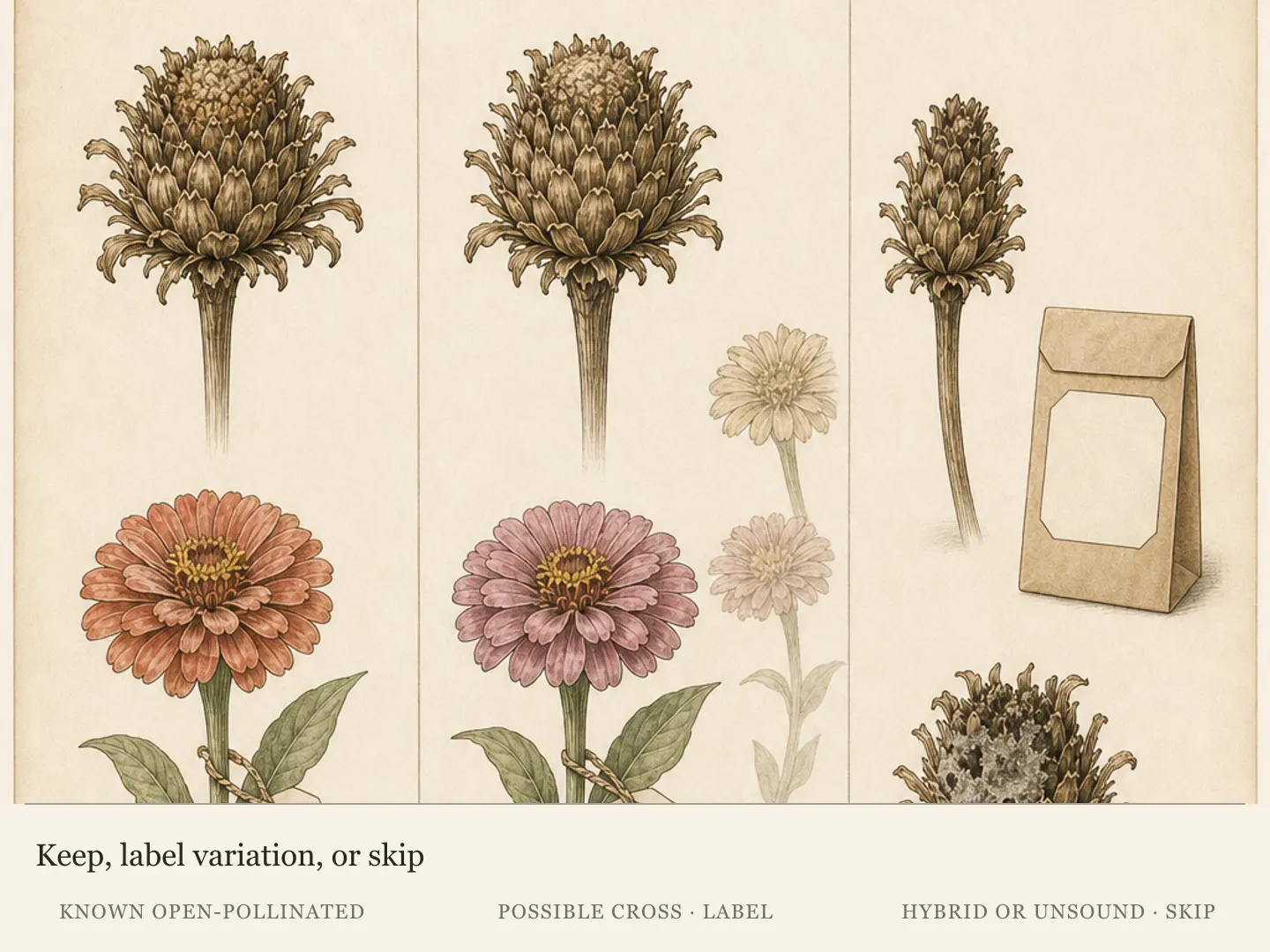
Record which species and colors came true and whether crossing or hybrid origin changed them. Preserve only seedlings that strengthen the design and remain locally responsible. Seed saving and self-sowing are managed propagation, not exemption from identification and editing.
Close the loop on imported plants and materials
Inspect nursery pots, divisions, compost, mulch, and borrowed equipment before they enter clean beds. Remove unknown seedlings and creeping roots from pot surfaces and drainage holes. Quarantine or repot valuable plants when a persistent weed is intertwined, using local guidance and preserving the ornamental root system.
Ask suppliers about weed-free certification or material source where relevant. Keep deliveries on a hard inspectable surface until they are spread. One contaminated load can create a property-wide seed problem that hand weeding cannot quickly reverse. Photograph suspect material and contact the supplier before distributing it.
Clean wheelbarrows, tarps, mowers, and soil tools after infested work. Dispose of wash water and debris where propagules cannot enter drains or beds. Add the source to the patch record. Prevention at the property boundary usually consumes less time than years of root and seed follow-up.
Steps
- Level
- moderate
- Time
- 30 to 90 minutes per small section, with scheduled follow-up
- Tools
- Narrow hand fork, Pruners, Gloves, Labels
- Materials
- Closable seed bags, Separate root-debris container, Moderate mulch
- 1Bag mature seed heads first
Carry closed containers into the bed, enclose flowering or seeding tops, and cut with minimal shaking. Work from clean areas toward infestations, then inspect clothing, pads, tools, and shoes before leaving.
- 2Identify life cycle and spread route
Photograph foliage, flower, seed, and roots; use regional keys to distinguish annual, biennial, and perennial systems. Confirm invasive status and required disposal. Mark uncertain seedlings unless seed containment cannot wait.
- 3Protect desirable crowns and roots
Map bulbs, tree roots, irrigation, and perennial crowns. Divide the bed into reachable sections. Schedule lifting of entangled ornamentals for the right season and use repeated top cutting meanwhile instead of blind destructive digging.
- 4Choose pull, cut, or root work
Pull annuals from workable soil, loosen taproots at the crown, trace rhizomes in small patches, and collect brittle propagules. Avoid deep hoeing and rototilling that damage ornamentals or distribute roots and seed.
- 5Restore the opening
Firm soil around desired roots, water disturbed plants only as needed, and replace moderate mulch without burying crowns. Correct excess water, contaminated inputs, open edges, or design gaps that favored the weed.
- 6Use products only from the label
When physical work is insufficient, confirm weed and ornamentals, current local recommendation, product site, timing, drift controls, and label. Do not substitute household acids, salt, boiling water, or flame in a mixed border.
- 7Follow until reproduction stops
Mark the patch, inspect for seedlings and regrowth, and record by species. Prevent every new flowering event, remove perennial shoots while small, clean shared plants and tools, and judge progress by declining shoots and no new seed.
- 8Mark wanted volunteers first
Identify desirable self-sown seedlings from parent, leaf, and label records. Thin them to mature spacing and remove those in paths, crowns, and drains. Keep uncertain plants in a marked observation patch rather than confusing unmanaged self-sowing with garden intent.
- 9Inspect every imported input
Check pots, divisions, soil, mulch, and equipment for seedlings, rhizomes, bulbs, and mature seed before entry. Hold suspect deliveries on an inspectable surface and contact the supplier before spreading contamination.
- 10Clean transport equipment
Remove soil and seed from wheelbarrows, tarps, mower decks, tools, shoes, and vehicles after infested work. Dispose of debris where propagules cannot reach drains or beds, and retain the source in the patch record.
- 11Schedule the next life-stage check
Set a return date based on the identified weed: before annual seedlings can flower, when biennial rosettes are visible, or soon after perennial shoots regrow. Put the patch and expected stage in the calendar. Timed follow-up is more efficient than waiting until another mature seed head makes the work urgent.
- 12Keep one verified specimen record
Store clear photographs of leaf, flower, seed, stem, and root with the confirmed name and disposal rule. Use the record to identify early seedlings and train helpers, then update it if local authorities revise invasive status or control guidance.
- 13Audit the patch after soil work
Return after rain or irrigation exposes disturbed soil and look for fresh seedlings, missed crowns, and fragments at the edge. Restore mulch only after the surface is stable, and update the map before neighboring foliage closes over the patch.
- 14Keep timing visible
Date every follow-up visit clearly.
Related reading
Sources
- Weed Management in Landscapes. University of California Integrated Pest Management. Source record · Accessed 2026-08-19.
- Controlling weeds in home gardens. University of Minnesota Extension. Source record · Accessed 2026-08-19.
- How do I control weeds in my garden?. Iowa State University Extension and Outreach. Source record · Accessed 2026-08-19.