Grow · fall garden mum establishment
Plant Fall Garden Mums Early—or Treat Them as a One-Season Display
Decide whether a flowering fall mum is a hardy garden plant or a temporary display, then plant early, water the shallow roots, and protect them from winter heaving.
Published Last updated
In this guide
- Decide whether the mum is a perennial attempt
- Read the label before judging the flowers
- Count backward from local cold, not a sales display
- Choose a site for roots, not just flowers
- Plant without burying the crown
- Keep the shallow root zone evenly moist
- Carry the plant through freeze-thaw
- Let spring growth give the verdict
- Steps
Decide whether the mum is a perennial attempt
In a cold-winter garden, spring is the safest time to plant a chrysanthemum you want to keep. A flowering mum bought in late summer or fall can still go into the ground, but its winter survival is less dependable because it has little time to establish roots before freezing weather. Plant a labeled hardy garden cultivar as early as possible; treat an unlabeled florist or display mum as seasonal color unless reliable local information says otherwise.
This distinction prevents a bright flower mound from becoming a promise the plant cannot keep. Iowa State reports that florist mums generally fail outdoors in Iowa and that even hardy garden mums planted in fall often lack enough establishment time. New Hampshire Extension likewise advises spring planting for the best survival and describes many late-season retail mums as annual displays. The flower color or double form alone cannot settle the question; the cultivar identity, regional hardiness, and intended use must.
Read the label before judging the flowers
Look for a cultivar name, a stated hardiness range, mature height and spread, and language that clearly identifies a hardy garden mum. Keep the nursery tag. A generic sleeve printed only with “mum” or a color name supplies no basis for predicting winter survival or next year's bloom time. If the seller cannot identify the plant, buy it for the porch or an annual bed and enjoy it without building a perennial plan around it.
Regional performance still matters after the label says hardy. North Carolina's plant profile notes that garden mums overwinter more readily in the South and can need protected treatment in colder climates. Iowa State recommends early-flowering, cold-hardy cultivars for its conditions because a late cultivar may not finish before frost. Match the named selection to local Extension or botanic-garden guidance instead of translating one broad hardiness claim across every winter and soil.
Count backward from local cold, not a sales display
A garden-center bench can look most convincing when the planting window is already narrowing. University of Illinois Extension uses at least six weeks before the first expected frost as its fall-planting threshold for mums. Treat that as a regional planning cue, not a national guarantee: the relevant dates, soil cooling, snow cover, and freeze-thaw pattern differ. Check a local frost calendar and current forecast, then choose the earliest workable planting day rather than waiting for peak bloom or a holiday display.
If that establishment window has largely closed, keep the mum in a draining container for seasonal use or place it in an annual gap with no expectation of return. Do not respond to a late purchase by forcing a rushed transplant into cold, saturated soil. The perennial decision can wait until spring, when a locally proven young garden cultivar has a full season to root.
Choose a site for roots, not just flowers
Use a position with at least six hours of direct sun in a cool-temperate garden and soil that is moist but drains freely. Both Iowa State and New Hampshire Extension place garden mums in full sun and well-drained soil; North Carolina notes that protection from harsh afternoon sun can be useful in warmer regions. A low pocket that holds water after rain is a poor trade for a perfect view from the window, because winter wet and repeated freezing work directly on the shallow root system.
Keep the plant away from strong night lighting. Chrysanthemums initiate flowers in response to long nights, and Iowa State documents delayed or missing bloom where artificial light interrupts darkness. Also leave the mature width shown on the cultivar label rather than spacing compact retail mounds edge to edge. The plant you are placing is a perennial framework, not the temporary silhouette created by growth regulators and a nursery pot.
Plant without burying the crown
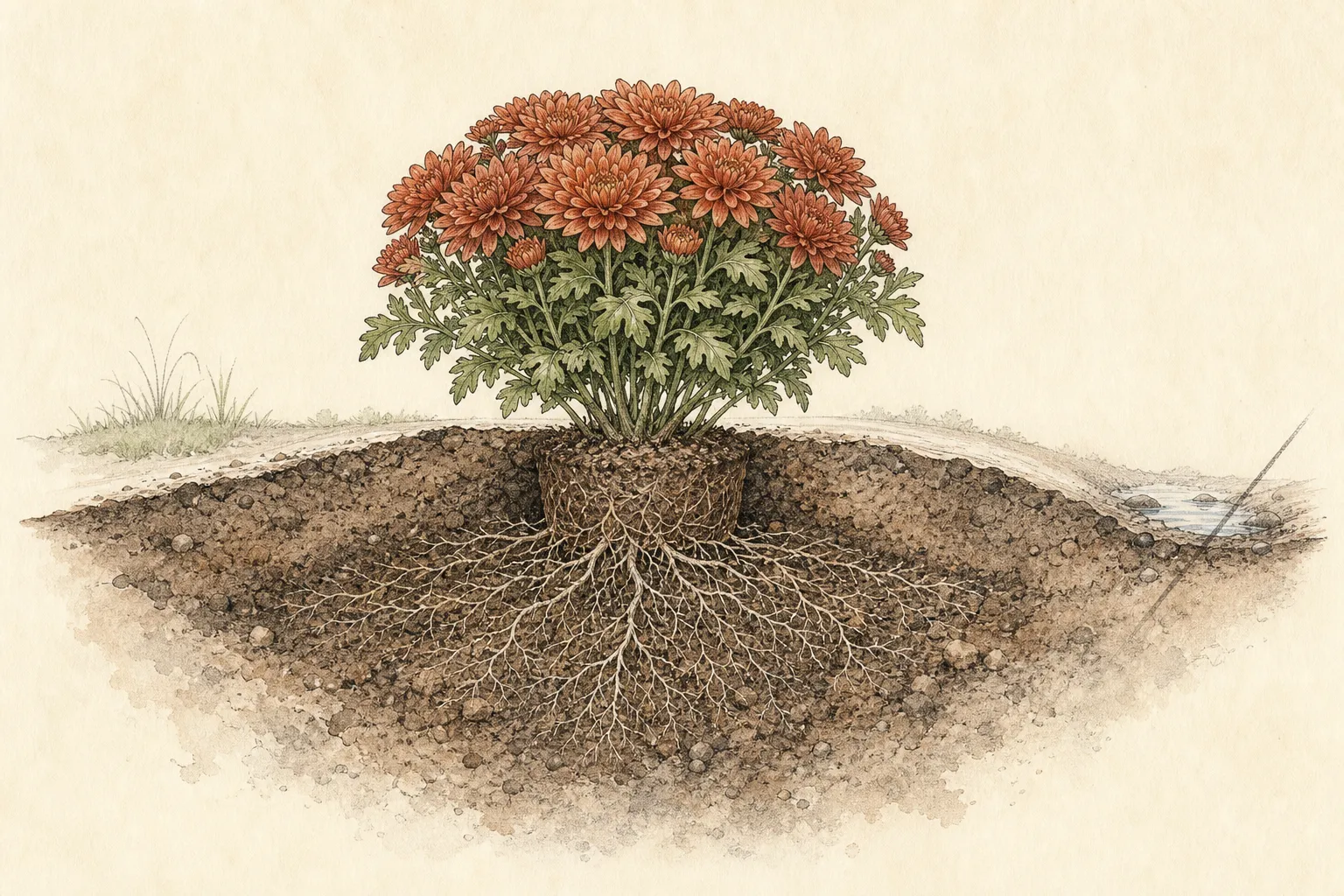
Water the pot before planting if the root ball is dry, remove any decorative sleeve, and confirm that the container drains. Dig only deep enough to set the top of the root ball level with the surrounding finished soil; Iowa State specifically directs planting garden mums at the same depth they occupied in the container. Backfill so there are no open pockets, water the planted root zone thoroughly, and leave the crown visible rather than mounding soil or mulch against the stems.
Preserve the flowers unless a broken stem needs removal. The immediate job is root contact and steady moisture, not reshaping the mound, stimulating soft growth, or repeating the early-summer pinching program on a blooming plant. Mark the cultivar and planting date. Those two facts will matter next spring when you decide whether a returning shoot represents successful establishment and when future pinching should stop.
Keep the shallow root zone evenly moist
Check both the original potting mix and the surrounding garden soil during establishment. A peat-rich root ball can dry while the bed still feels damp, or remain wet inside a poorly draining hole after the surface looks dry. Water thoroughly when the occupied root zone needs it, then let excess water leave. Do not use a fixed daily sip or allow the root ball to cycle between wilt and saturation.
Continue checking through dry autumn weather until the ground freezes. Iowa State and Illinois both emphasize consistent moisture because garden mums have shallow, fibrous roots, but neither moisture nor mulch can turn a florist cultivar into a hardy one. If water stands around the crown, solve the drainage or move the plant while conditions are workable rather than compensating with less frequent surface watering.
Carry the plant through freeze-thaw
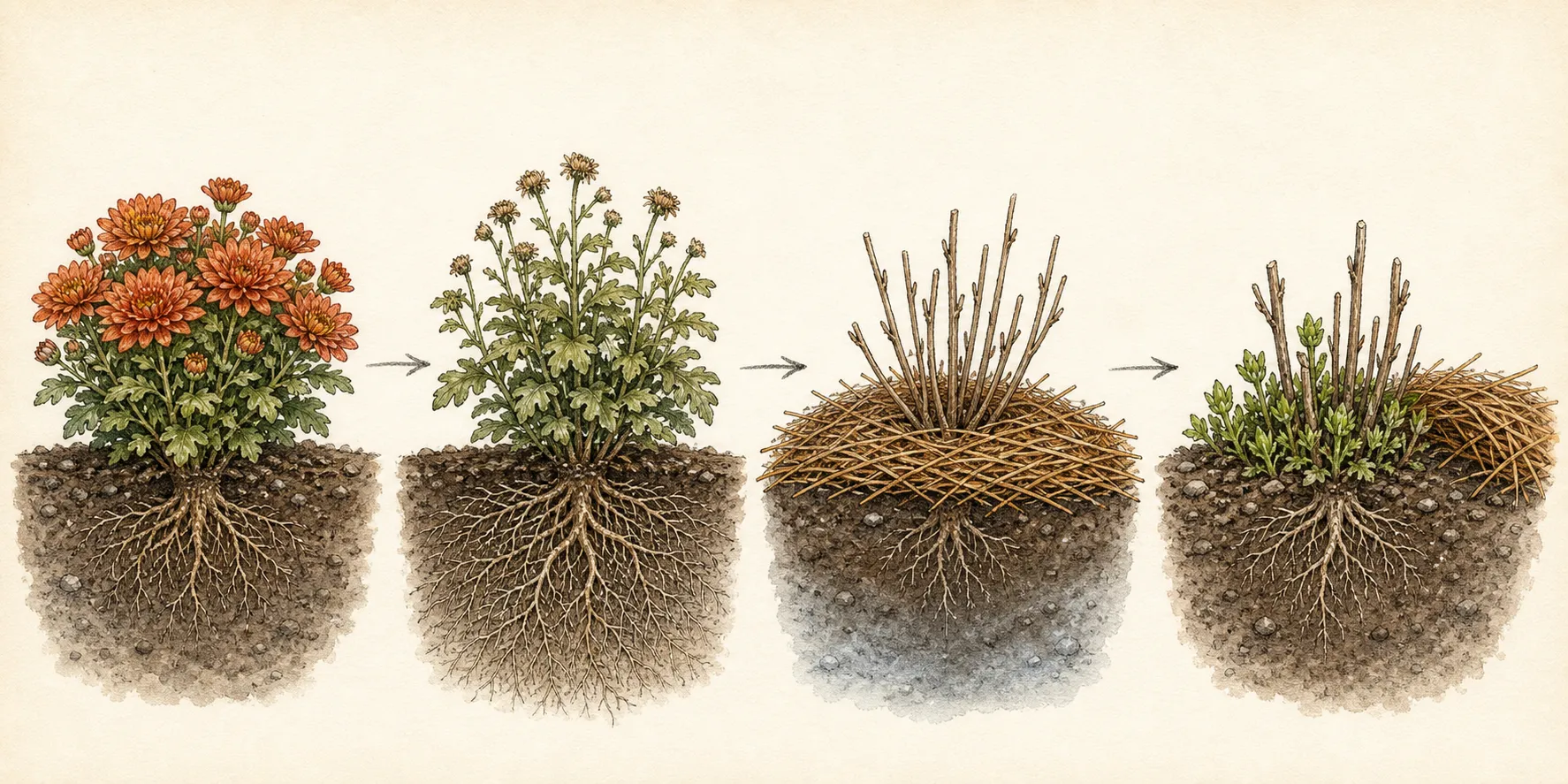
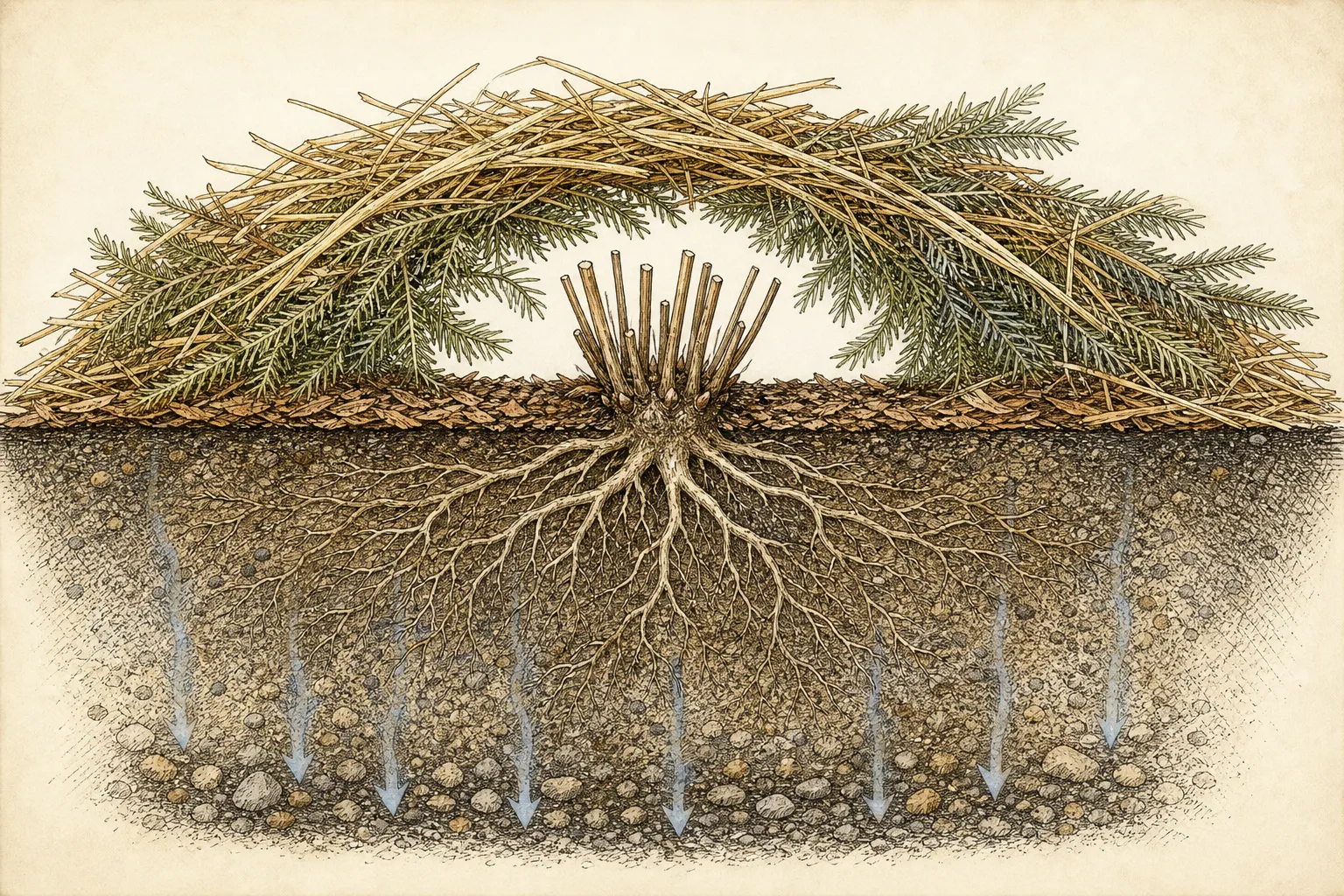
In cold-winter regions, leave the dead stems standing after dormancy instead of cutting the plant level in fall. Iowa State and New Hampshire Extension both connect retained top growth with better winter protection. Wait until the ground has frozen, then place a loose insulating mulch over the crown and root zone to reduce repeated freezing and thawing. New Hampshire gives a two- to four-inch layer for its conditions; Iowa State describes several inches of straw or pine needles. Use the locally recommended material and depth rather than packing wet leaves against the crown.
Mulch timing is as important as mulch presence. Applied too early, a thick layer can hold unwanted moisture and delay soil cooling; applied after freezing, it helps keep the soil temperature more uniform. Keep the plant label visible and note where the crown sits before snow or debris hides it. This protection improves the odds for a suitable plant but does not guarantee survival of a late-planted mum.
Let spring growth give the verdict
Remove or loosen the winter cover after the ground thaws, following local timing, and look for new shoots at the crown before removing the old stems. Cut the dry stems only when the new growth is visible and the protection is no longer needed. Keep mulch from settling into the crown, resume moisture checks as growth starts, and compare emergence with established garden mums nearby rather than with a date from a warmer climate.
If the plant returns, its next season begins as a garden perennial: record its emergence, mature spread, and bloom start, and use the separate early-summer pinching schedule for that cultivar if branching is needed. If it fails, do not repeat the same late purchase in the same wet pocket. Choose a proven cultivar in spring, improve the site, or accept flowering fall mums as one-season color. The useful result is an honest role for the plant, not a promise that every autumn pot will overwinter.
Steps
- Level
- easy
- Time
- Thirty to forty-five minutes to assess and plant one mum, plus autumn moisture checks and winter mulching
- Tools
- Cultivar label and local frost calendar, Hand trowel or spade, Watering can or hose
- Materials
- Labeled hardy garden mum, Loose winter mulch recommended for the region, Weatherproof plant marker
- 1Choose the role
Confirm a named hardy garden cultivar for a perennial attempt. Use an unidentified florist or display mum as seasonal color rather than assuming the flowers prove hardiness.
- 2Check the remaining window
Compare the purchase date with local frost and freeze timing. Aim for the earliest workable day and use the regional six-week guidance only where local conditions support it.
- 3Verify the site
Choose adequate sun, uninterrupted night darkness, and soil that drains after rain. Reject low wet pockets even when they provide the most visible display position.
- 4Set the original grade
Remove the sleeve, water a dry root ball, and plant with its surface level with the surrounding soil. Backfill, water thoroughly, and keep soil away from the crown.
- 5Maintain root-zone moisture
Check the potting mix and neighboring soil separately through dry autumn weather. Water the whole occupied root zone when needed and let excess water drain.
- 6Protect after the ground freezes
Leave dormant stems standing and add the loose mulch material and depth recommended locally only after freezing. Keep the marker and crown location identifiable.
- 7Read spring emergence
Pull back winter cover after thaw, wait for crown shoots, then remove old stems. Record whether the plant returns before changing the cultivar, site, or future planting season.
Related reading
Sources
- Growing Chrysanthemums in Iowa. Iowa State University Extension and Outreach. Source record · Accessed 2026-08-23.
- Can Fall Mums Be Planted in the Garden?. University of New Hampshire Extension. Source record · Accessed 2026-08-23.
- Mums and Asters: Fall Favorites for a Colorful Landscape. University of Illinois Extension. Source record · Accessed 2026-08-23.
- Garden Mum — Chrysanthemum x morifolium. North Carolina Extension Gardener Plant Toolbox. Source record · Accessed 2026-08-23.