Grow · outdoor dahlia tuber planting
Plant Dahlias Outdoors After Frost Without Burying or Waterlogging Tubers
Wait for warm workable soil, identify the crown and eye, set the tuber horizontally in a draining bed and make moisture decisions from the soil rather than the calendar.
Published Last updated
In this guide
- Wait for the garden, not just the package
- Separate dormant tubers from leafy transplants
- Choose sun and drainage together
- Read the tuber before making the hole
- Prepare support before the tuber disappears
- Set the tuber without turning the hole into a basin
- Make the first watering decision from existing moisture
- Protect the emerging shoot without burying it
- Train growth onto support without constricting stems
- Troubleshoot delayed or collapsing emergence
- Carry planting records into autumn decisions
- Steps
Wait for the garden, not just the package
Dahlias are frost tender. University of Minnesota and the Royal Horticultural Society place outdoor planting after frost risk has passed and soil has begun to warm. A date printed for another region cannot establish those conditions in a particular bed. Use the local average frost guidance as context, then check the actual forecast, soil temperature trend, drainage and exposure before bringing stored tubers outside.
The American Dahlia Society describes soil near 60°F as a planting cue used by many growers, but this should remain a practical range rather than a universal guarantee. A warm afternoon reading at the surface can hide cold wet soil below. Take repeated measurements at planting depth if using temperature, or follow current local extension and dahlia-society guidance for the district.
If a late cold event is forecast after planting, protect the emerging shoots according to local frost guidance or delay planting while tubers remain sound in storage. Do not compensate for cold ground by burying the clump more deeply. Extra cover slows warming, can hold water around the crown and does not make a tender dahlia reliably frost hardy.
Separate dormant tubers from leafy transplants
A dormant dahlia division is a crown with one or more storage tubers and at least one viable eye. It has no leafy canopy to lose water through, so its immediate irrigation needs differ from a rooted plant already growing in a pot. This guide's placement method centers on dormant or just-sprouting tubers. Keep each plant labeled because cultivar height, flower form and support needs vary widely.
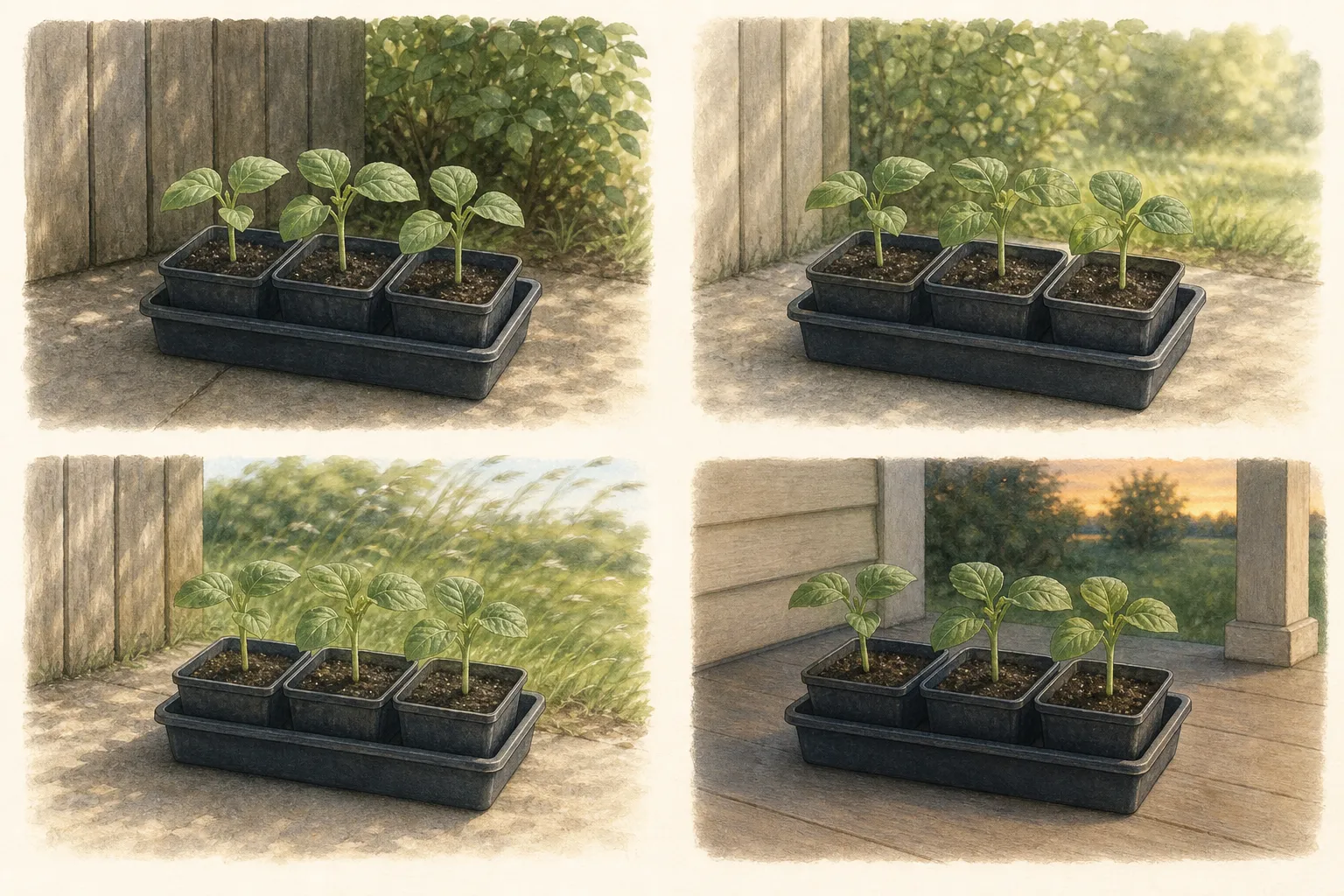
A pre-started leafy dahlia must be hardened off before permanent outdoor exposure. Acclimate it gradually to sun, wind and temperature following local transplant guidance, protect it from frost and plant the root ball at its existing grade unless its grower directs otherwise. Do not break the pot apart to force the roots into the horizontal dormant-tuber arrangement.
Never treat loose dahlia storage tubers as independent bulbs. A detached plump tuber without a piece of crown and a viable eye cannot be assumed to produce a shoot. If anatomy is uncertain, keep the whole labeled clump intact and seek identification from a reputable dahlia group rather than cutting it into attractive but nonviable pieces.
Choose sun and drainage together
The RHS recommends a warm sunny position and free-draining soil. Observe the bed after substantial rain: water should move through rather than stand in the intended root zone. A site beside a downspout, at the foot of a slope or above compacted subsoil may look sunny while remaining unsuitable. The tuber's stored reserves make prolonged cold wet contact especially risky before active roots and shoots develop.
Avoid planting directly into an isolated pocket of soft compost surrounded by dense native soil. Such a pocket can behave like a container without a drain, collecting water around the tuber. Improve a broad area when soil structure genuinely needs amendment, blending materials through the surrounding soil according to local soil guidance. Where drainage cannot be corrected, use a properly draining raised bed or container instead.
Reserve the mature plant's space and airflow using the cultivar label or reliable grower description. Tall decorative dahlias and compact bedding forms do not share one spacing or support plan. Keep the site away from tree-root competition and avoid positions where irrigation intended for lawn repeatedly saturates the crown. Plan access for staking, tying, cutting flowers and inspecting the soil without stepping on the root zone.
Read the tuber before making the hole
Identify the old stem base and crown first. Eyes form on crown tissue close to that stem, not across the swollen body of every storage tuber. In spring, an eye may look like a small raised point or emerging shoot. The narrow neck connects a tuber to the crown and must remain intact. Handle the clump by supporting its mass, not by swinging it from the old stem.
Reject or trim clearly rotten tissue only with clean tools and knowledgeable guidance. Sound tubers are generally firm, though storage conditions can leave some wrinkling. Wet soft collapse, foul odor or decay entering the crown is a different problem. If one damaged storage tuber can be removed while a firm crowned division remains, make a clean cut and allow the surface to dry as appropriate before planting.
Do not divide merely because a clump looks crowded. Each intended division needs viable crown tissue, an eye and an attached tuber with an intact neck. Keep the cultivar label with every piece. When eyes are not visible, retaining a larger section reduces the risk of making blind cuts that separate storage tissue from the growth points it must support.
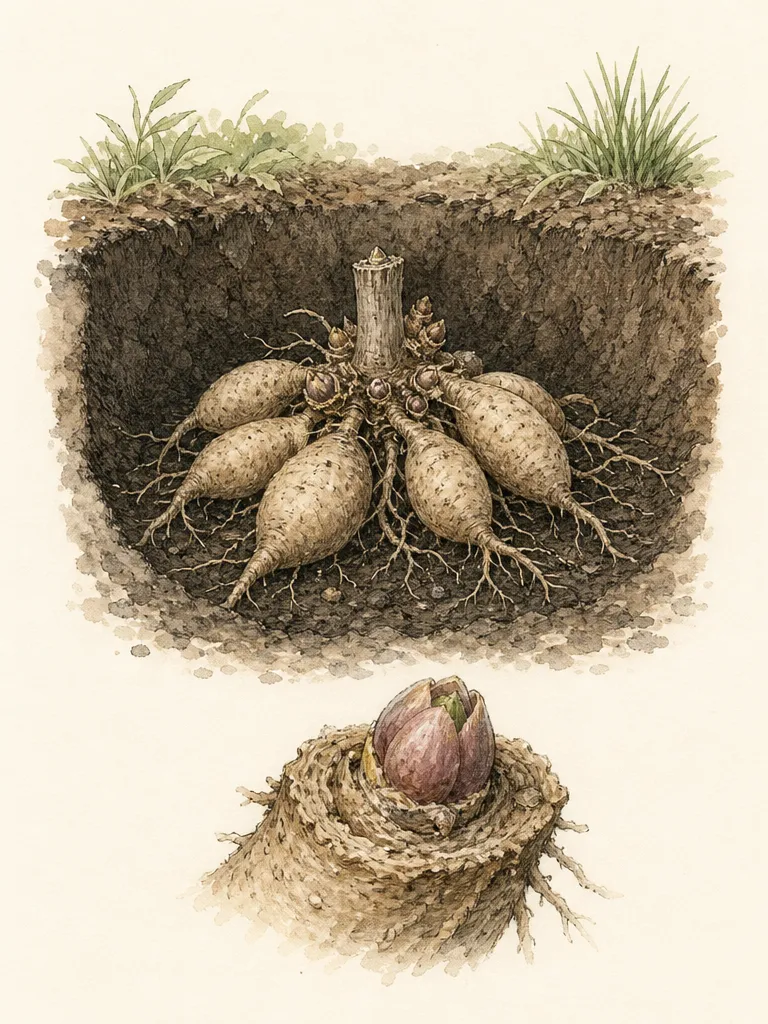
Prepare support before the tuber disappears
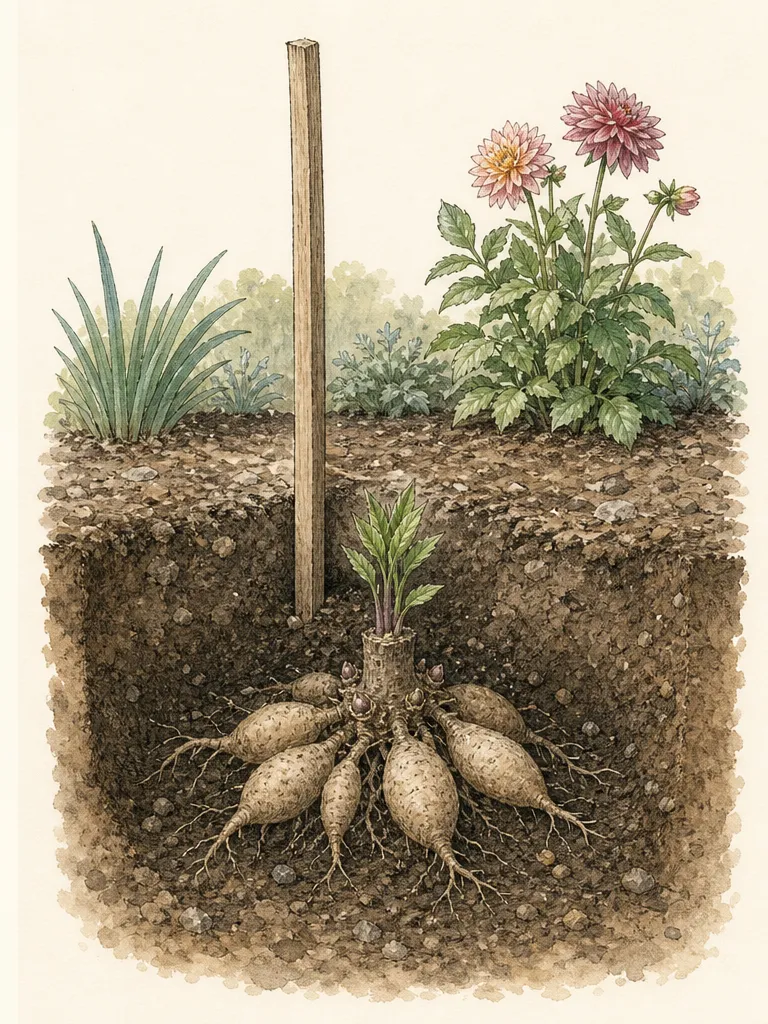
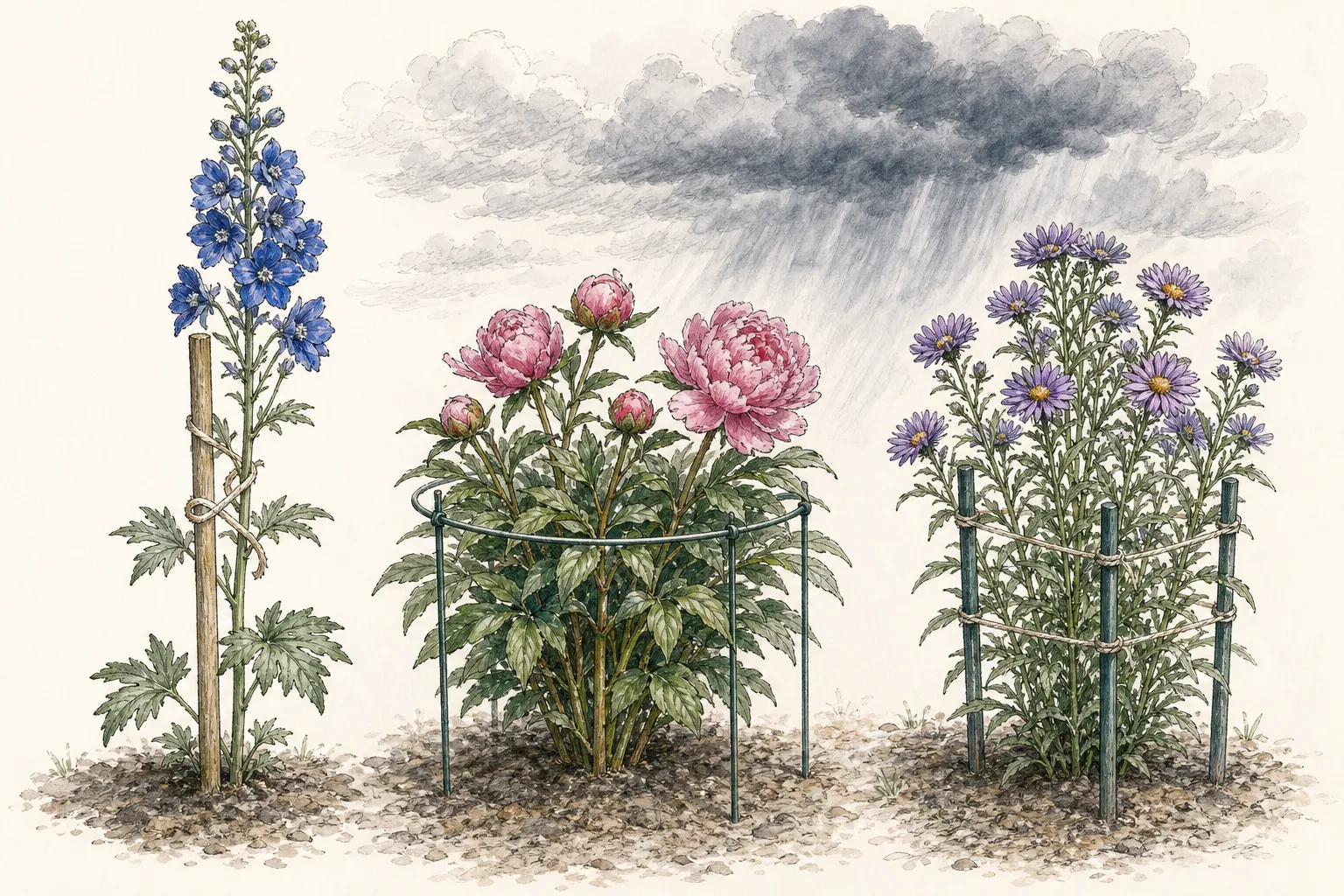
The American Dahlia Society recommends placing a stake as part of planting for forms that will need support. Setting it before or beside the tuber makes the underground position visible and reduces the chance of spearing the crown later. Choose a support suited to expected cultivar height and local wind, and confirm that no underground utility or irrigation line lies below it.
Place the stake at the old-stem or eye end without touching the crown. The exact system may be a substantial single stake, an open cage or a perimeter support, depending on plant size and garden design. It must allow stem ties to be added as the plant grows without cinching foliage into a wet column. Compact cultivars may need no stake, so use the label rather than assuming all dahlias grow tall.
Write the cultivar name on a weather-resistant marker and map its position. The bed may remain bare for a period, and labels prevent accidental digging, overplanting or repeated watering of an uncertain spot. Marking also helps align later ties with the correct main stem rather than pulling new shoots across the crown.
Set the tuber without turning the hole into a basin
Open a broad shallow planting area in workable soil and loosen the base without polishing or compacting it. The American Dahlia Society describes a broad hole several inches deep for laying the tuber horizontally, while the RHS emphasizes placing the top of the tuber or crown just below the soil surface. These statements describe different parts of the operation: total hole space is not the same as final soil cover above the crown.
Lay the tuber horizontally with the crown and eye toward the support. Arrange multiple tubers gently rather than snapping their necks to make a tidy bundle. Adjust soil beneath them so they are supported and the crown finishes close to grade, then return soil around the shape. Do not stand the clump on one tuber like a bulb, and do not force every piece to the same depth.
Finish with modest cover, using the tuber's labeled grower guidance and local soil conditions. Avoid a deep mound above the crown and avoid a depressed planting bowl. In heavy soil, excess cover holds cold moisture; in very light soil, the surface can dry faster, but that does not justify burying the crown deeply. The finished bed should shed excess rain while keeping the planted outline level and marked.
Make the first watering decision from existing moisture
There is no single first-day watering rule that fits a dormant tuber in damp clay and one planted into dry free-draining soil. The RHS warns that overwatering tubers can cause rot, while dahlia-society practice varies with climate and soil. Before adding water, feel the soil through the intended root zone and consider recent rain. The goal is soil contact without a saturated cold pocket.
If the prepared soil is evenly moist and rain is expected, settle it gently by hand and withhold extra irrigation. If it is dry and will not close around the tuber, apply a measured amount to moisten the surrounding zone, then confirm that it drains. Never leave the crown in standing water. Record what was done so another gardener does not repeat the watering moments later.
As shoots and roots develop, water demand increases. Shift from protecting a nearly dormant tuber to supporting an actively growing plant, using soil moisture, weather, canopy size and local restrictions. Deep watering followed by drainage is generally more useful than frequent surface sprinkles, but heavy soil may need a different interval from a raised bed. Continue probing rather than relying on a fixed daily schedule.
Protect the emerging shoot without burying it
Inspect the marked site for cracks or a pointed shoot. Remove only loose crust that physically blocks emergence, working with fingers well away from the crown. Do not keep topping the bed with soil as the shoot rises. A dahlia is not earthed up by repeatedly burying its stem during ordinary ornamental planting.
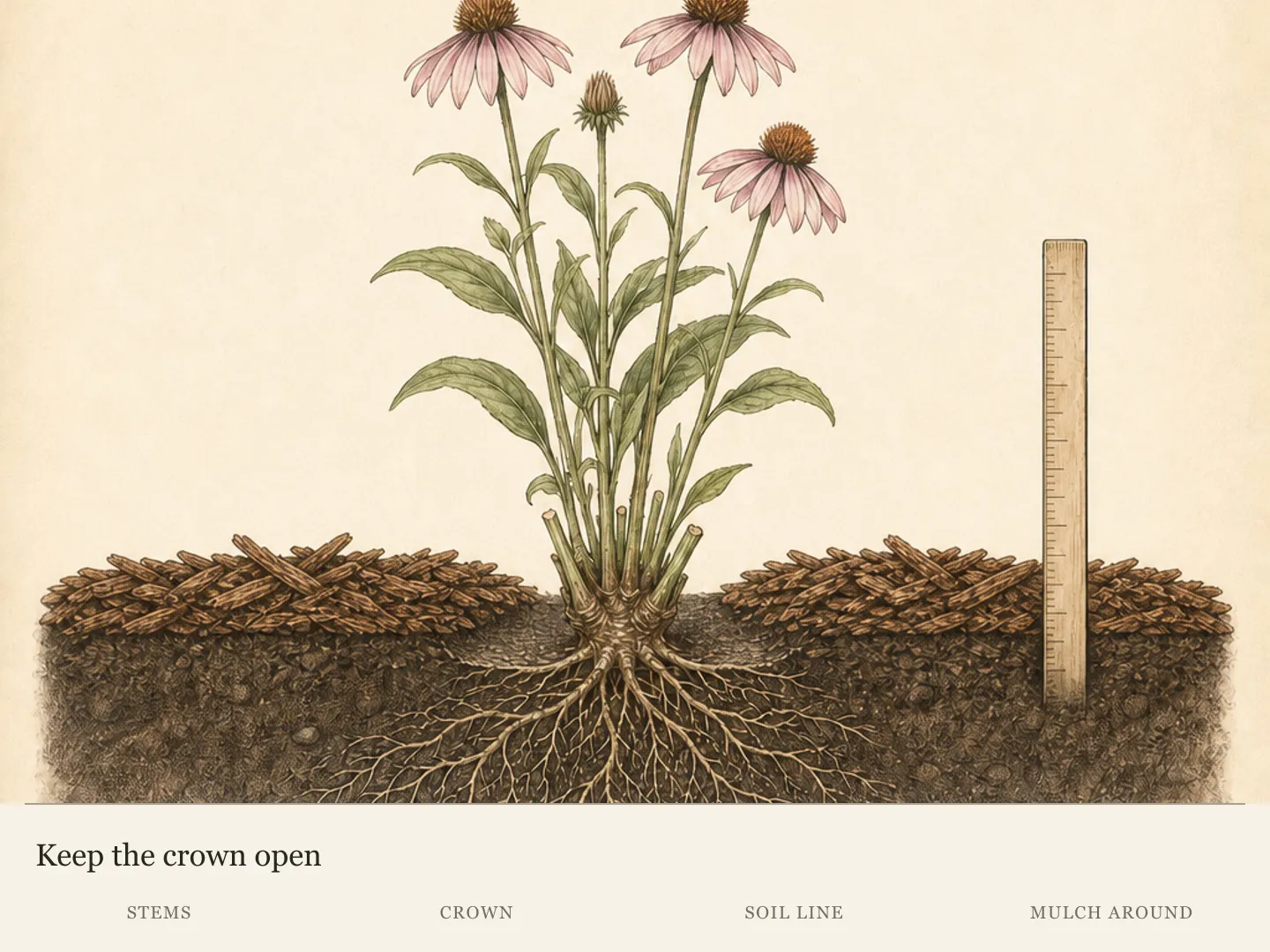
Use a light locally appropriate mulch only after the soil has warmed and shoots are easy to see, if mulch suits the climate and irrigation plan. Keep it away from the stem base and preserve the label. A thick wet mulch layer over an unseen tuber delays drying and can hide rot, while a coarse dry layer can also conceal the place from routine inspection.
If a cold night threatens, use temporary frost protection that does not crush the shoot and remove or vent it when conditions moderate. In climates with recurring late frost, local extension guidance should determine protection. Do not assume one covered night makes the plant safe for a prolonged freeze, and do not pour warm water over the site as a substitute for weather planning.
Train growth onto support without constricting stems
Begin tying a tall cultivar while stems are still manageable. Use soft broad ties in loose figures of eight so the stem can expand and does not rub directly against the stake. Add ties upward as growth extends rather than pulling the top down to one low fastening point. Check after wind and rain because a loosened plant can twist at the crown.
Where several shoots arise, follow cultivar and display goals before removing any. Pinching and disbudding are separate choices from planting and vary with dahlia type and desired flower size. This installation guide does not prescribe them universally. First establish a healthy rooted plant, preserve enough foliage and make support secure.
Keep the root area open to observation. If mulch, neighboring plants or irrigation hardware hides the stem base, pull them back. A stake that begins leaning may indicate loose saturated soil or inadequate depth; reset support outside the tuber zone rather than driving blindly beside the crown.
Troubleshoot delayed or collapsing emergence
A marked tuber that has not emerged may simply be responding to cool soil or cultivar timing. Check the label, planting date and temperature trend before excavating. Repeatedly digging for proof can break the first shoot. If the waiting interval exceeds reliable local expectations, expose the crown carefully from one side and assess firmness without pulling the clump by its stem.
Soft dark tissue and sour or foul odor in wet soil indicate decay rather than slow emergence. Stop watering and examine drainage. Remove compromised tissue only if sound crown, eye and attached storage tissue remain, cleaning tools between cuts. A fully rotted crown cannot be restored by fertilizer. Replace the water-holding site before planting another tuber there.
A shriveled but firm tuber in very dry soil needs a different response. Confirm that the crown and neck remain viable, restore even moisture gradually and protect the bed from rapid drying without flooding it. If no eye or crown tissue is present, watering the storage tuber will not create the missing growth point. Seek a dahlia specialist's assessment when identity is uncertain.
Carry planting records into autumn decisions
Record planting date, soil condition, cultivar, source, support and first emergence. These notes help distinguish a naturally later cultivar from a site that stayed cold and wet. Add mature height, flowering start and any lodging. Next spring's placement can then be adjusted from this garden's evidence rather than a generic tuber packet.
Winter survival differs by climate, soil drainage and cultivar, and dahlias are not reliably hardy in cold-winter regions. Follow current local guidance on whether to lift after frost, protect in place or treat plants as annuals. If lifting, keep labels attached and avoid using this planting article as a storage protocol; storage temperature, curing and humidity need their own regionally appropriate instructions.
When planning next year's bed, correct the causes discovered this season. Move dahlias out of a persistent wet pocket, select a smaller cultivar for a windy exposed site or improve support access before planting. The soundest outdoor start is not the deepest hole or most water. It is a viable labeled crown placed near grade in warm workable soil that can drain.
Steps
- Level
- moderate
- Time
- 20 to 40 minutes per planting site, excluding soil correction
- Tools
- Hand trowel or narrow spade, Soil thermometer if used for local timing, Clean bypass pruners for damaged tissue, Gloves, Soil moisture probe or hand trowel
- Materials
- Labeled viable dahlia tuber or clump, Cultivar-appropriate stake or support, Soft plant ties, Weather-resistant plant label
- 1Confirm frost has passed and soil is warming
Use current local frost guidance, the forecast and repeated soil conditions rather than a package date alone. Warm workable soil matters as much as air temperature. Delay while ground remains cold or saturated; planting deeper does not protect a tender dahlia from frost.
- 2Identify the planting material
Distinguish a dormant crowned tuber from a hardened-off leafy transplant. On a tuber, find the old stem, viable crown eye, intact neck and storage body. Keep a doubtful clump whole; a detached tuber without eye-bearing crown tissue may not grow.
- 3Approve the site's sun, drainage and space
Choose warm sun and free-draining soil, checking the bed after rain and avoiding downspout pockets or lawn overspray. Reserve mature spacing and support access from the named cultivar, and correct a broad drainage problem rather than filling one basin with compost.
- 4Set support and label before planting
Install an appropriate stake where it will not pierce the crown, tubing or utilities later. Place the cultivar label and map the location. Compact selections may not need support, while tall forms require a system matched to their expected scale and local wind.
- 5Lay the tuber horizontally near grade
Prepare broad workable soil, support the tuber horizontally and orient the eye toward the stake. Keep necks intact. Treat the total hole depth and final soil cover as separate measurements, leaving the crown or top just below finished grade rather than under a deep mound.
- 6Close the soil without making a bowl
Return soil around the tuber gently, eliminate large voids and finish level so rain can drain away. Do not stand the clump like a bulb or compact wet soil with boots. Use the labeled supplier and local soil guidance for small depth adjustments.
- 7Water only after reading the root zone
Feel the soil and account for rain. Withhold additional water when the bed is already evenly moist; apply a measured settling amount when dry soil will not contact the tuber, then verify drainage. Increase water gradually only as roots and leafy growth expand.
- 8Watch emergence and tie growth early
Keep the marked crown visible, protect emerging shoots from forecast frost and avoid adding soil over them. Add soft loose ties as a tall plant grows. Diagnose a delayed shoot from temperature, planting records, crown firmness and drainage before watering repeatedly or digging aggressively.
Related reading
Sources
- How to Grow Dahlias. Royal Horticultural Society. Source record · Accessed 2026-08-19.
- Planting Bulbs, Tubers and Rhizomes. University of Minnesota Extension. Source record · Accessed 2026-08-19.
- Planting and Staking Dahlias. American Dahlia Society. Source record · Accessed 2026-08-19.